How to protect outdoor furniture in winter: a material-by-material guide
Most people treat a furniture cover as the finish line for winter prep. It's often the starting line for new problems. Trapped condensation under a poorly fitted cover can do more damage over a season than leaving furniture exposed to open air, according to BHG. Learning how to protect outdoor furniture in winter means more than draping a tarp over the patio set in November and forgetting about it. It means knowing what each material actually needs, when covering helps and when it backfires, and why furniture that could last a decade with proper care sometimes falls apart in two or three winters without it.
The stakes are higher than they look. Furniture that could last 10 or more years with proper care might survive only two to five years if left exposed to winter weather, says Natasha Parikh, a home insurance expert, in comments to Martha Stewart. Wood makes the problem especially visible: it's hygroscopic, meaning it constantly trades moisture with the surrounding air, so the shrinking, swelling, and finish failure that show up each spring are predictable chemistry, not bad luck, per Oregon State University Extension. Even covered furniture isn't automatically safe. Breathability, fit, and how dry a piece is before you cover it all matter more than what the cover cost, BHG notes.
This guide walks through the sequence that actually works: clean and repair first, decide whether to store or cover, cover correctly if furniture stays outside, and then apply the right care to wood, metal, aluminum, wicker, resin, and cushions, each of which fails in its own way.
Clean, dry, and repair before you cover anything
Video of the Day
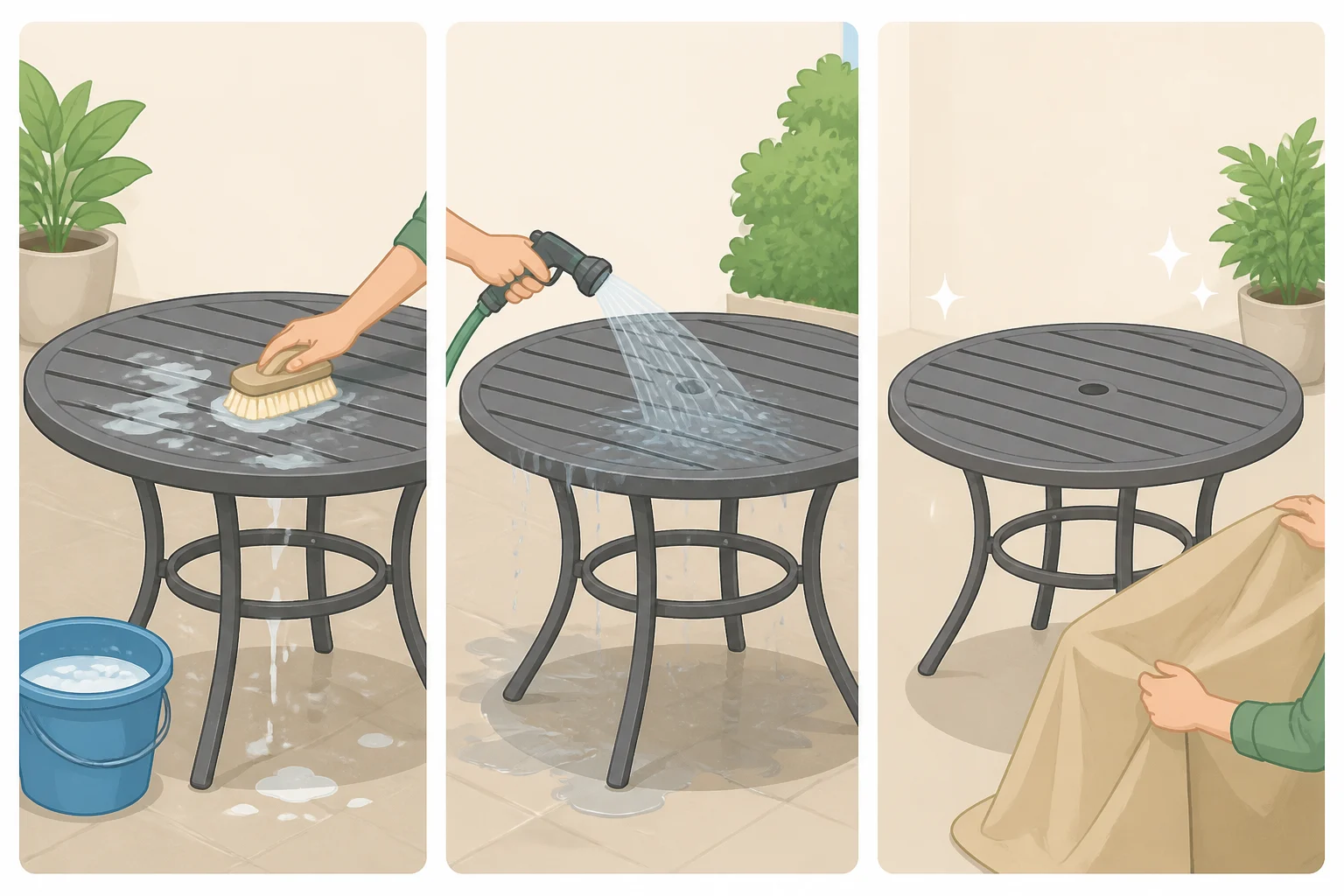
Covering or storing furniture while it's still damp is one of the easiest ways to cause the exact mold damage you're trying to avoid. "If you store furniture damp, it only further develops mold, mildew, and freezing," warns outdoor playset expert Janet Malin, speaking to Martha Stewart. This single step is where most winterizing routines succeed or fail, which makes it the real starting point for how to winterize patio furniture, regardless of what it's made of.
Start by washing every surface with mild soap and water. "Dish soap, a scrub brush, and some elbow grease go a long way on just about every material," says furniture design expert Matt Scallions, via Martha Stewart. Rinse thoroughly and let everything air-dry completely before it goes under a cover or into storage. Skip the power washer on softer woods like cedar, aspen, or pine; aggressive washing can damage the surface, Martha Stewart reports.
While furniture is out and accessible, handle the repairs you'll regret ignoring later. "Tighten loose screws, touch up paint, or spot sand and reseal any exposed wood," advises furniture craftsman Elvin Zimmerman, per Martha Stewart. Address rust spots and paint chips on metal pieces right away; even small scratches can worsen into rust over the course of a winter if left untouched, Martha Stewart notes. None of this takes long, but it's the difference between furniture that looks tired in April and furniture that looks fine.
Video of the Day
How to cover outdoor furniture for winter without trapping moisture
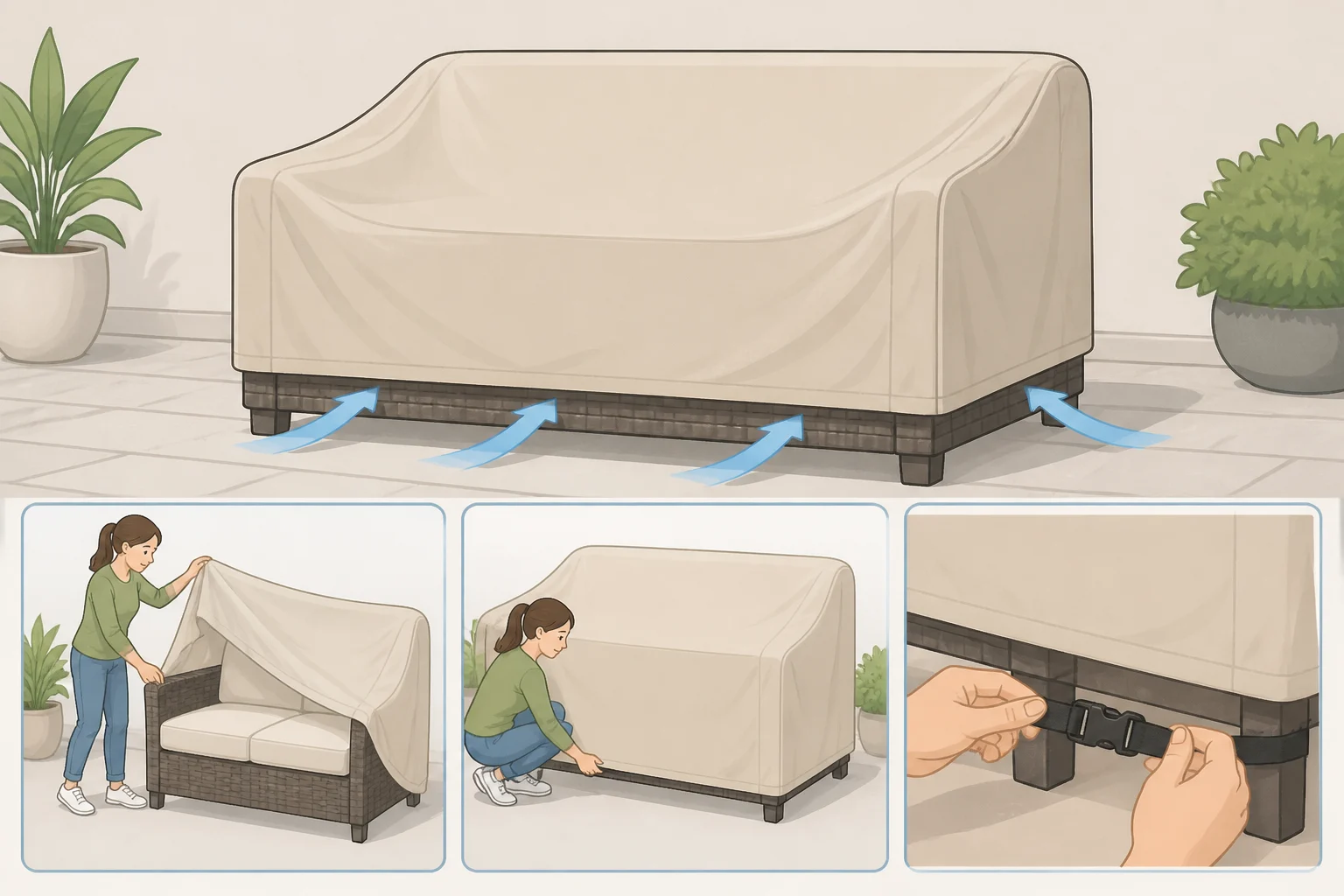
A winter cover's job is to shed weather while still letting moisture escape. Not a vacuum seal, not a raincoat zipped to the chin, something in between. "You'll want the cover to be water-resistant, but not fully airtight," says Malin. "The breathability helps prevent mold." That one principle explains almost every mistake people make with covers.
Fit matters more than most buyers assume. Measure each piece before shopping, since an oversized cover can catch wind and blow off while an undersized one strains at the seams, says Brian Shaunfield, a Lowe's store manager, in BHG. Lindsay Foster, senior director of merchandising for Frontgate, recommends letting the cover rest on the furniture's frame rather than draping it loosely, with a slight gap left at the bottom. That gap does double duty: it improves airflow and keeps water from pooling inside, which is one of the more effective ways to prevent mold under outdoor furniture covers before it ever starts.
Secure the cover so wind can't get underneath it. Straps and hooks work, but "a weighted system keeps wind from lifting the cover," Foster says, and in windier spots, clips or sandbags add extra insurance, BHG adds. Just don't over-cinch; pulling straps too tight restricts the airflow that gap at the bottom was supposed to provide.
Fabric choice involves real trade-offs. PVC and vinyl-coated polyester offer excellent waterproofing but poor breathability, letting heat and moisture build up underneath, per BHG. Solution-dyed acrylic breathes better and holds color longer but costs more and weighs more. Olefin resists UV, mildew, and stains and dries fast, though it may be less durable under heavy use. Standard covers run around $50, with premium or custom options between $200 and $400, Shaunfield notes; Foster puts a universal-fit lounge chair cover around $150 and a sofa cover near $230, with fully custom versions often costing double.
Once the cover is on, the work isn't finished. Brush off standing water or heavy snow after storms, since that weight can sit on top of the fabric and strain the seams, Foster advises. Check straps and fasteners periodically to make sure they're still secure, and inspect occasionally for animal activity, says Kenneth Huening, CEO of CoverSeal, in BHG. And never pack away a wet cover; storing it damp invites the same mold problem you were trying to keep off the furniture.
Deciding whether to store furniture indoors or leave it outside, covered
When space allows, moving furniture into a garage, shed, or barn is the option experts reach for first. Richie David, CEO of Totally Home Furniture, recommends storing pieces somewhere elevated, ventilated, and dry, via Martha Stewart, and a dehumidifier or moisture absorber in that space adds another layer of protection against mildew, Parikh notes. For anyone trying to protect patio furniture from snow and freezing temperatures without buying anything new, indoor storage does more work than any cover can.
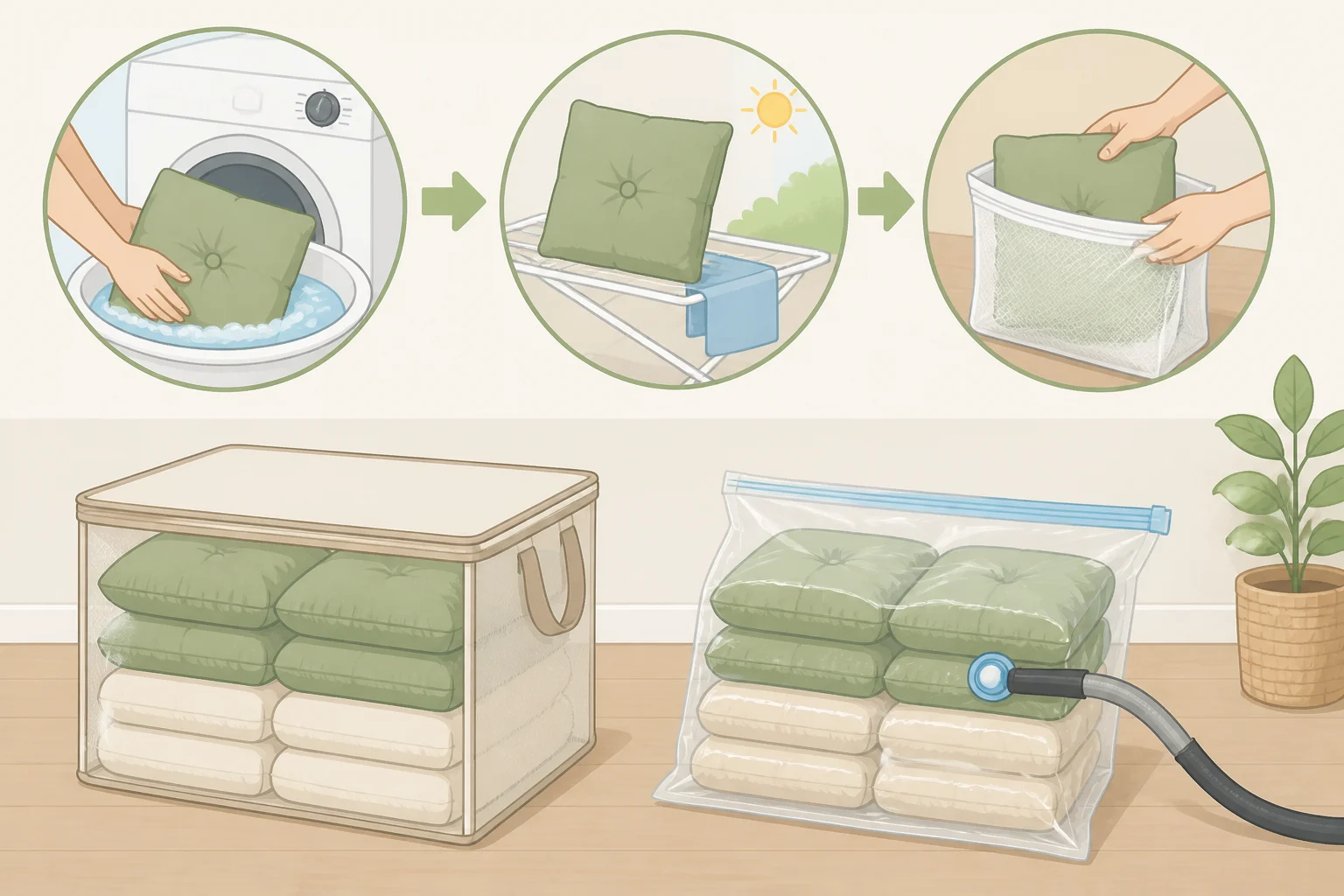
Cushions deserve special attention no matter what else you do with the rest of the set. Fabric and foam deteriorate faster than any other material outdoors; mold and fading can set in after just one season left exposed, Parikh says. Wash and fully dry cushions before storing them in breathable or vacuum-sealed bags, ideally in totes kept inside the house.
If some furniture has to stay outside, a few adjustments reduce the damage significantly. Position pieces against a solid wall to block wind and drifting snow, Zimmerman suggests. Keep legs elevated off bare concrete. "Keep legs up off concrete because concrete draws moisture up," says David, who treats this as one of the simplest fixes available. Never store furniture upside down: water can creep into drain holes, freeze, and crack aluminum frames or split wood joints, warns Scallions.
Timing should follow the weather, not the calendar. Watch for first frost warnings and night temperatures dipping into the 30s rather than a fixed date, Zimmerman advises; once a sustained deep freeze below 20°F is in the forecast, Scallions says it's time to get everything into a garage or climate-controlled space. For a quick set of winter storage tips for outdoor furniture, keep this short list handy before the first cold snap:
- Wash and fully dry every piece, cushions included, before storage
- Store cushions in breathable or vacuum-sealed bags, indoors when possible
- Keep legs off bare concrete and never stack furniture upside down
- Position any furniture left outside against a wall, away from wind and drift
- Move everything into enclosed storage once a sustained freeze below 20°F is forecast
How to prevent mold, rust, and fading: a material-by-material guide
Different materials fail in different ways, and a routine built for one can be useless, or even harmful, on another.
Wood. Sand lightly and apply a sealant or weatherproof oil once a year, then keep pieces elevated and covered with airflow underneath. Left untreated, expect cracking, warping, or rot within two to three years, per Martha Stewart. A good finish won't stop moisture exchange entirely, but it slows it considerably and cuts down on the swelling and shrinking that eventually splits joints, according to Oregon State University Extension.
Metal. Apply a rust-resistant spray or wax coating before the cold sets in, treat joints with silicone spray, and touch up any chips immediately so they don't worsen over the winter. Rust and corrosion can appear after just one or two winters on steel or iron, Parikh cautions, via Martha Stewart.
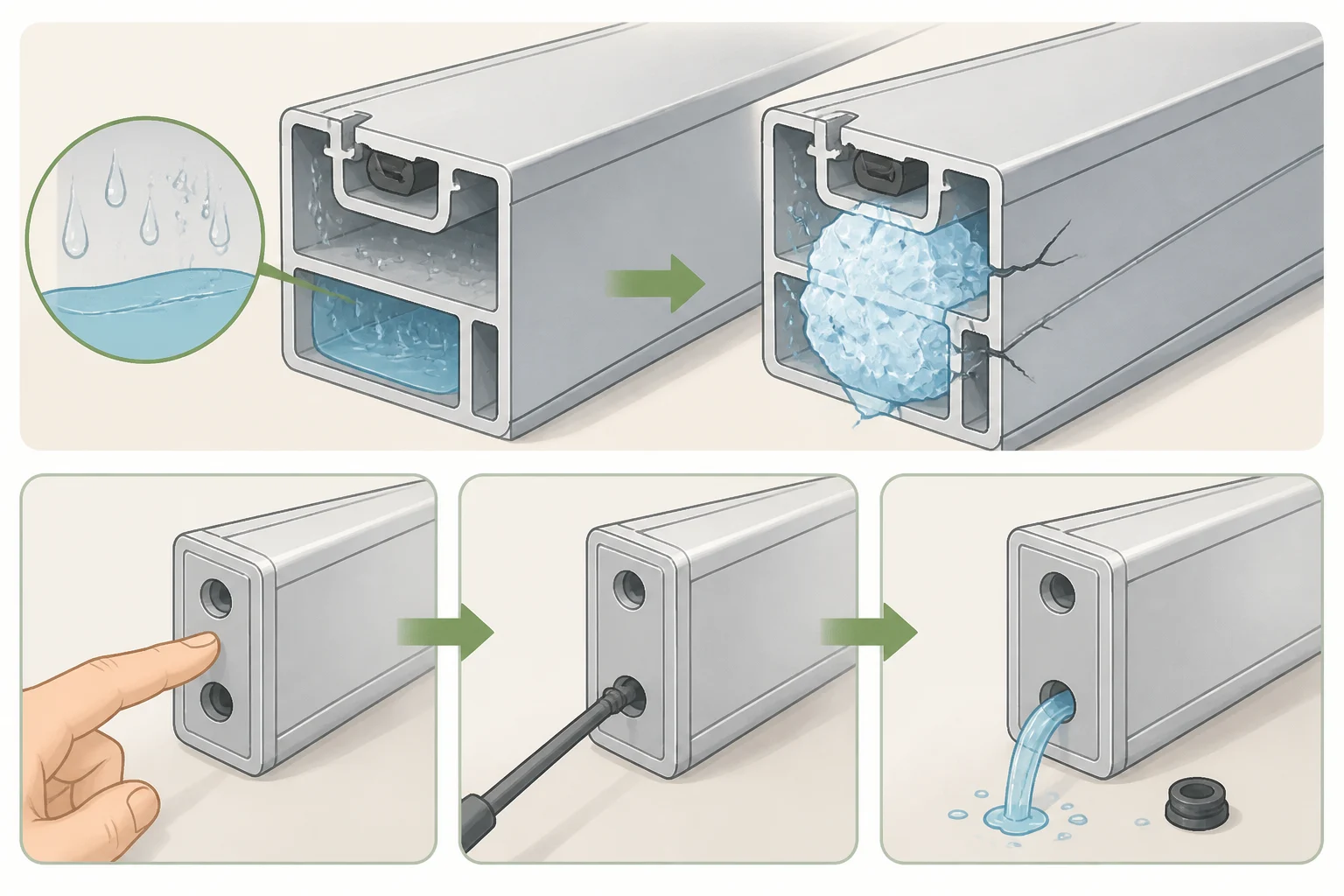
Aluminum. Hollow frames have a weak point most people never think to check: condensation can collect inside the tubing, and if that water freezes, it can crack or burst the frame. Check periodically and drain any trapped water, advises Boender Outdoor.
Wicker and resin. Natural wicker is highly sensitive to moisture and should go indoors whenever there's room for it, per Martha Stewart. Wicker and plastic weave also turn brittle in frost and shouldn't be used or moved during cold snaps; if you need a piece for an event, bring it indoors for a few hours to reach room temperature first, Boender Outdoor suggests. Plastic and resin left exposed year-round can turn brittle and crack within two to four years, Martha Stewart reports.
Knowing this stops the common mismatches: a wood sealing routine applied to resin furniture does nothing useful, and an aluminum frame left unchecked for three winters can crack from the inside without a single visible scratch on the outside.
Treat winter care as a routine, not a one-time chore
Regional timing beats any date circled on a calendar. Zimmerman frames it as three variables worth tracking, night temperatures, storm patterns, and whatever the "turning point" into cold weather looks like where you live, rather than waiting for a specific day in November to act.
Winter care isn't a single afternoon of work done once and forgotten. It's a short list of checks that need repeating any time the weather turns: after a heavy snowfall, after a hard freeze, after a stretch of high wind. The furniture that lasts the longest isn't necessarily the most expensive. It's the furniture that went away clean and dry, got the specific care its material actually needs, and was checked on more than once between the first frost and the first warm weekend of spring.