What to plant now for a fall harvest: a frost-date formula
Most fall garden advice boils down to one line: plant in August. That's too vague to be useful, and it's exactly why "just plant fall crops now" fails so often. Figuring out what to plant now for a fall harvest actually depends on two separate deadlines: a first-frost cutoff that governs frost-sensitive crops everywhere, and, in far-northern regions like Minnesota, a second cutoff tied to shrinking daylight that governs leafy greens regardless of temperature. Confuse the two and a gardener either wastes seed on something that never finishes, or pulls greens weeks too early because daylight, not cold, was the real limiting factor.
Virginia Tech Extension calls timely planting the key to a successful fall garden, and its method for nailing that timing is straightforward arithmetic: count backward from the local first-frost date, a formula revised five months ago. Separately, extension agents in Minnesota describe fall and winter planning as "a game of planning around daylight," since growth there slows sharply once day length drops far enough, regardless of frost (University of Minnesota Extension, two weeks ago). Kansas State University Extension adds a third wrinkle worth knowing before buying seed: fall crops face more heat and pest pressure early in their run, but the late-maturing vegetables that survive that stretch often taste better than their summer counterparts (last month).
This guide walks through, for a mid-to-late-August starting point, how to calculate a personal frost-based deadline, how to get seeds through warm soil and disease-prone fall conditions, and exactly which vegetables to plant for a fall harvest still fit, depending on how many frost-free weeks remain.
Calculate your real planting deadline before you buy seeds
Video of the Day
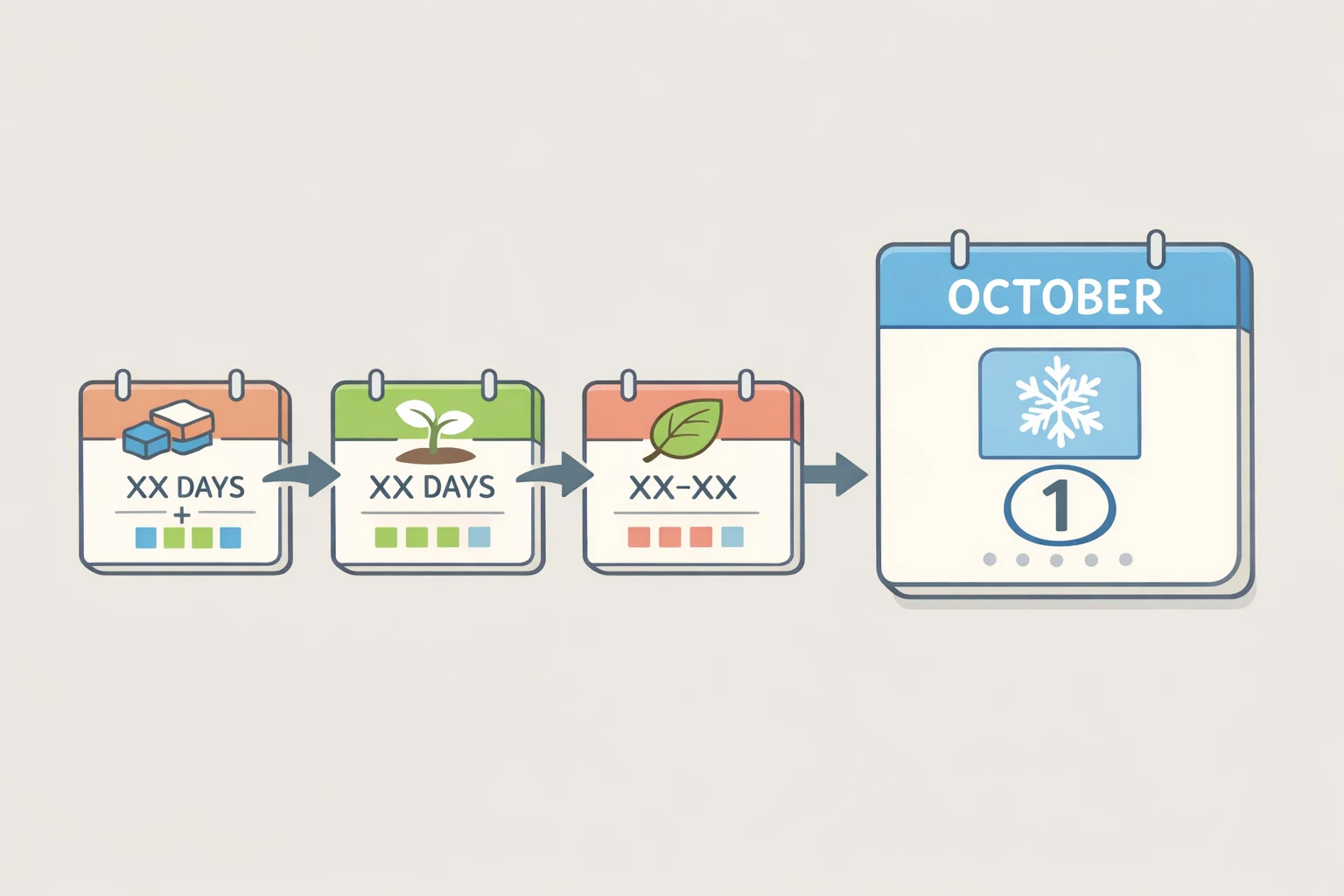
There's no universal August cutoff. The actual deadline is local frost date minus days-to-maturity minus a couple of buffer factors, and working it out takes about five minutes with a seed packet and a calendar.
Virginia Tech Extension built a formula for this: local first-frost date minus [packet days-to-maturity + Fall Factor + Frost Tender Factor, when it applies] equals the latest planting date. The Fall Factor adds roughly two weeks to account for slower growth as days shorten and cool (Virginia Tech Extension, 5 months ago). For crops sensitive to frost, corn, beans, cucumbers, tomatoes, squash, tack on a second buffer called the Frost Tender Factor, also about two weeks, since these need to finish maturing before frost or the harvest is wasted (Virginia Tech Extension, 5 months ago). Presprouting seeds indoors until they reach about an inch of growth can claw back two to five days against that countdown, a handy trick for anyone already tight on time (Virginia Tech Extension, 5 months ago).
The table below shows how those pieces stack up. Swap in the actual days-to-maturity from a seed packet in place of the placeholder; that number varies by variety, so use the figure printed on the specific packet being planted, not a rounded guess.
| Crop type | Fall Factor | Frost Tender Factor | Minimum days needed before frost |
|---|---|---|---|
| Cool-season, frost-tolerant (spinach, lettuce, beets, carrots, peas) | +14 days | not applicable | packet days-to-maturity + 14 |
| Frost-sensitive (corn, beans, cucumbers, tomatoes, squash) | +14 days | +14 days | packet days-to-maturity + 28 |
A worked example makes the arithmetic concrete, using a hypothetical frost date rather than a regional forecast. Say first frost typically lands around October 15, and a spinach variety needs 40 days to maturity on the packet. Add the 14-day Fall Factor and the total climbs to 54 days. Counting back from October 15 puts the planting deadline around August 22. That's the answer to what to plant in late summer for a fall harvest: a specific, calculable date, not a vague "sometime in August."
A narrow margin between that number and the days actually remaining isn't a guarantee of success. Heat can delay germination, transplants can sulk for a week after going into the ground, and a stretch of bad weather eats into a schedule fast. Treat a tight fit as real risk, not a rounding error.
Northern gardeners face an additional constraint that has nothing to do with frost. In Minnesota, once daylight drops below 10 hours a day, around November 1 in that state, growth slows way down no matter how far off the first frost still is (University of Minnesota Extension, two weeks ago). That specific threshold and date are calculated for Minnesota's latitude. Gardeners farther south, or at a different latitude entirely, should check with a local extension office for a comparable daylight cutoff rather than borrowing that date outright. Anyone gardening where both frost and shortening daylight are real concerns should run both calculations and plant to whichever deadline arrives first.
Everything that follows assumes this math has already been done. Crop lists only become useful once the number of days left is known.
Video of the Day
Before you sow: fixing what actually stops fall seeds from germinating
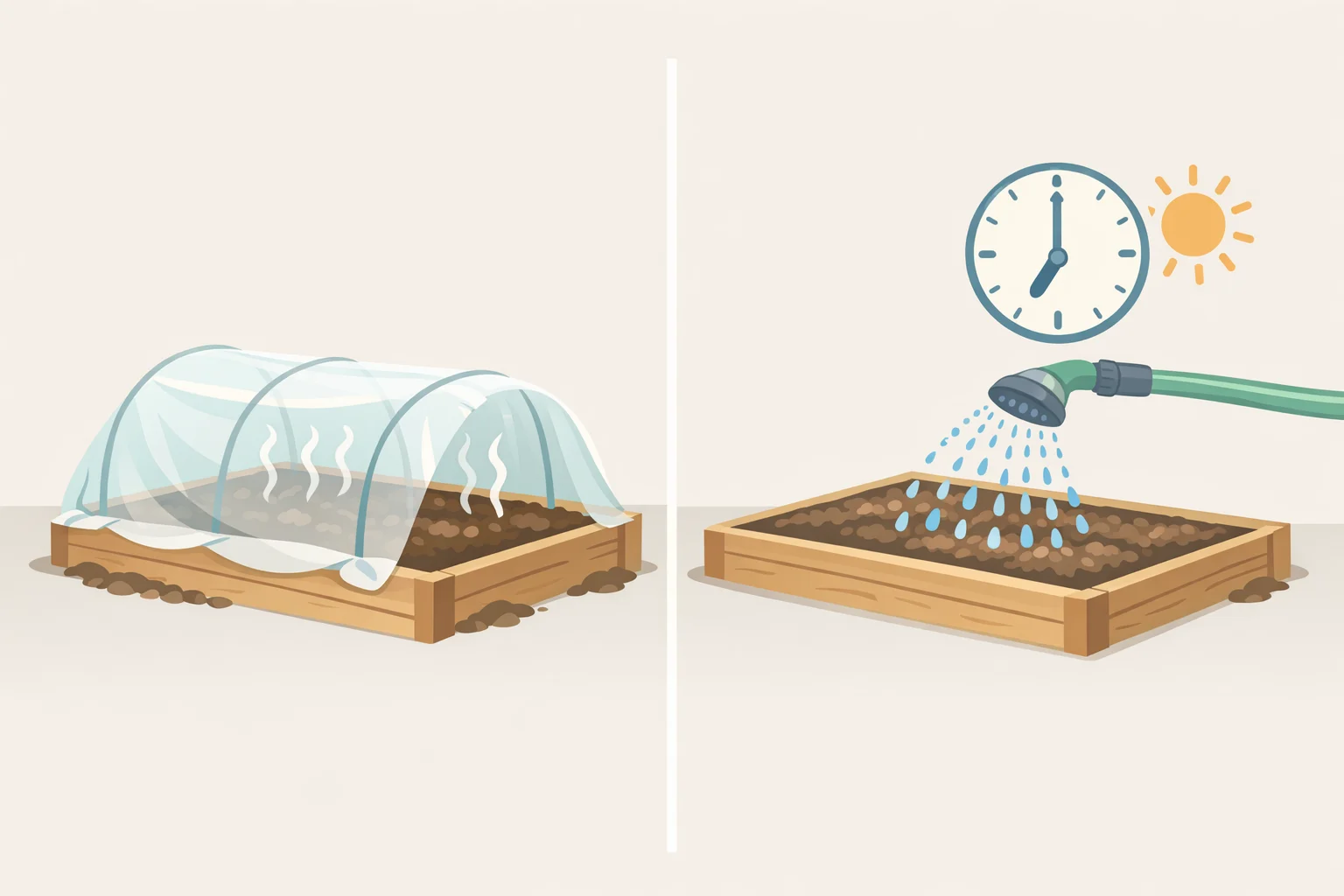
Cold isn't the obstacle to an August planting. Heat is, and it shows up first at the germination stage, before frost or disease ever enter the picture.
Kansas State University Extension recommends watering more frequently right after seeding to keep seeds from drying out in warm soil. Covering rows lightly with vermiculite or compost, or switching to drip or soaker irrigation, stops the soil crusting that keeps seedlings from pushing through (Kansas State University Extension, last month). The same source suggests planting slightly deeper than a spring sowing would call for, since deeper placement reaches cooler, moister soil (Kansas State University Extension, last month).
Transplants need their own adjustment period once they go into the ground. Oregon State University Extension recommends hardening plants off by gradually exposing them to outdoor conditions over several days before planting, then watering them in with a transplant solution or liquid kelp to cut down on transplant shock (Oregon State University Extension, 8 months ago).
Once seedlings are up and growing, a second and separate problem takes over, and it has nothing to do with heat. Cooling nights bring morning dew that creates the wet conditions fungal diseases need to establish, and helps bacterial diseases spread (University of Minnesota Extension, same update). That's the trade fall gardeners make: cooler nights fix the germination problem and open a disease one, so handle plants only when foliage is dry, and scout the densest part of the canopy along with the oldest leaves weekly, since that's usually where problems start (University of Minnesota Extension, same update).
What to plant now for a fall harvest, based on weeks until frost
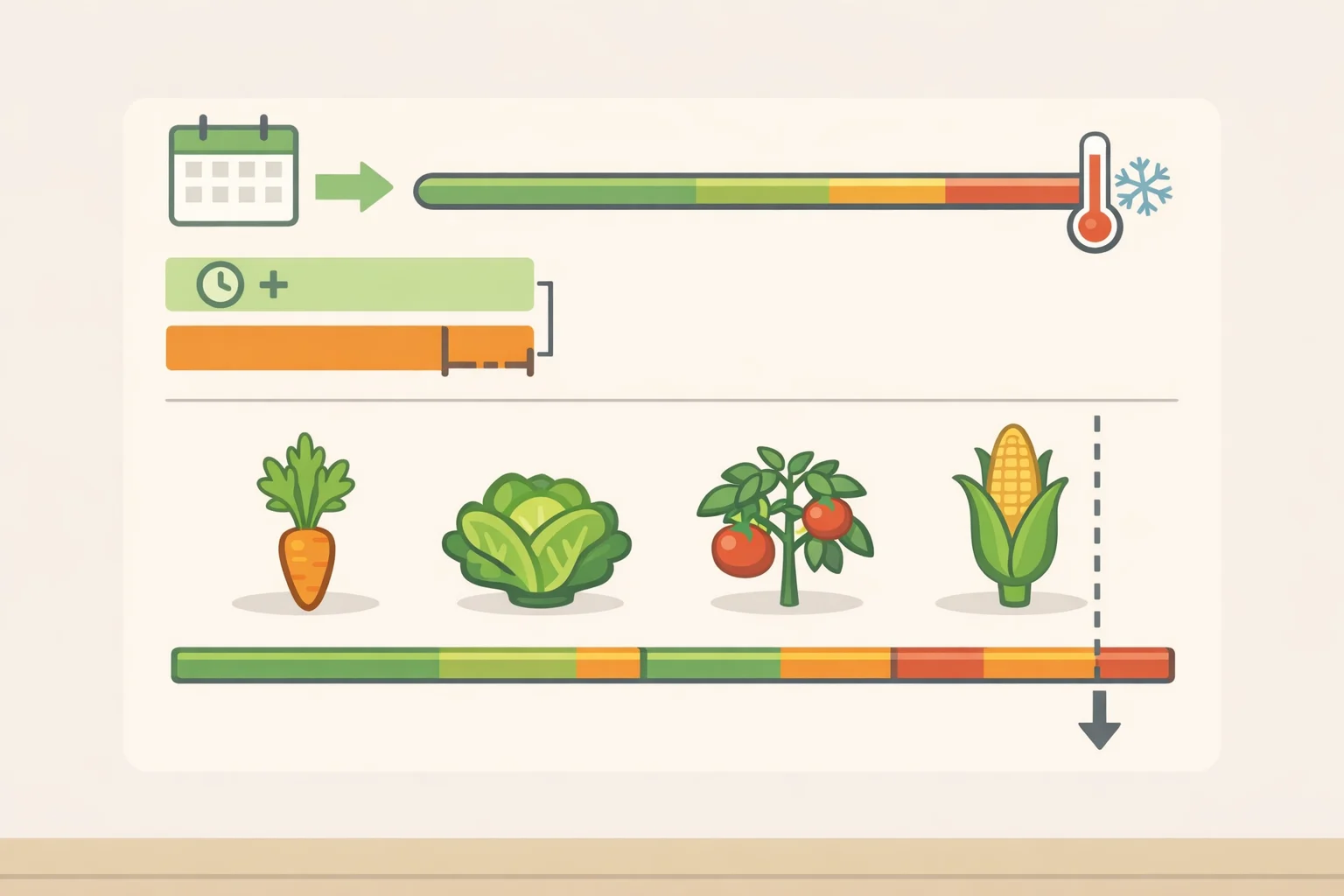
With the deadline math from the first section done, the question turns concrete: given the number of days left, which vegetables to plant for a fall harvest actually still fit?
Run the numbers using the table above as the template. Compare the total, packet days-to-maturity plus the Fall Factor plus the Frost Tender Factor if it applies, against the days remaining before the local frost date. A comfortable margin means real room to work with. A tight one means the crop is a gamble this year, regardless of what a garden center display suggests.
Minnesota's own figures work as one example of how the calculation plays out locally. Leafy brassicas and spinach mature in five to nine weeks there, roughly five weeks for a baby-leaf harvest and nine for full-size leaves (University of Minnesota Extension, same update). Working backward from that state's November 1 daylight cutoff, the last practical planting date for full-leaf spinach and tatsoi lands around August 30, while baby-leaf spinach and brassica greens can go in as late as September 20 (University of Minnesota Extension, same update). Those are Minnesota's numbers, not a national deadline. A gardener elsewhere needs to run the same math against a local frost date or daylight cutoff.
Kansas State runs a similar calculation against a different fall harvest planting schedule. Its extension recommends direct-seeding beets, carrots, and beans in late July, and seeding spinach and long-season lettuce in late July to early August (Kansas State University Extension, last month). Slower crops go in even earlier as transplants: broccoli, cauliflower, and cabbage seeds start indoors in mid-July, then move to their final bed by the second week of August. Kansas State notes that growing transplants is a good choice specifically when soil is too warm for direct seeding, assuming a gardener has grow lights and space to start them indoors (Kansas State University Extension, last month). By mid-to-late August, that same schedule has moved on to direct-seeding radishes and leaf lettuce, the fast crops still able to clear the window in that region (Kansas State University Extension, last month).
Frost-tender crops deserve a direct warning. Virginia Tech's Frost Tender Factor exists because corn, beans, cucumbers, tomatoes, and squash must finish maturing roughly two weeks before frost or the harvest doesn't materialize (Virginia Tech Extension, 5 months ago). Run a candidate crop's packet days-to-maturity, plus 14 for the Fall Factor, plus 14 more for the Frost Tender Factor, against the actual local frost date. If it doesn't fit, that crop belongs in next spring's plan rather than this week's seed order.
Cool-season crops offer more flexibility on the back end. Kale, turnip, mustard, broccoli, and cabbage grow well during cool fall days and withstand light frosts (Virginia Tech Extension, 5 months ago). A handful of crops go further still. Kale, spinach, evergreen bunching onion, lettuce, parsley, parsnip, carrots, and salsify may survive an entire winter in the garden under about eight inches of mulch to keep the soil from heaving (Virginia Tech Extension, 5 months ago). For a gardener with bed space left over once frost-tender crops are cleared out, those are worth planting for a harvest that stretches well into late winter instead of stopping at first frost.
Fewer rules, more arithmetic
The real skill in fall planting is arithmetic, not a memorized crop calendar. Run frost date, days-to-maturity, and the relevant buffers through the formula, and the answer travels to any zip code. A schedule built for Kansas or Minnesota doesn't.
On Kansas State's own mid-to-late-August schedule, radishes and leaf lettuce rank among the best crops for a fall vegetable garden, since both are fast enough to clear even a tight deadline there (Kansas State University Extension, last month). Elsewhere, the same logic applies with different numbers. Full-size roots, heading brassicas, and anything frost-tender depend entirely on how many weeks of growing season remain locally, which is exactly why running the math beats copying a list of crop names.
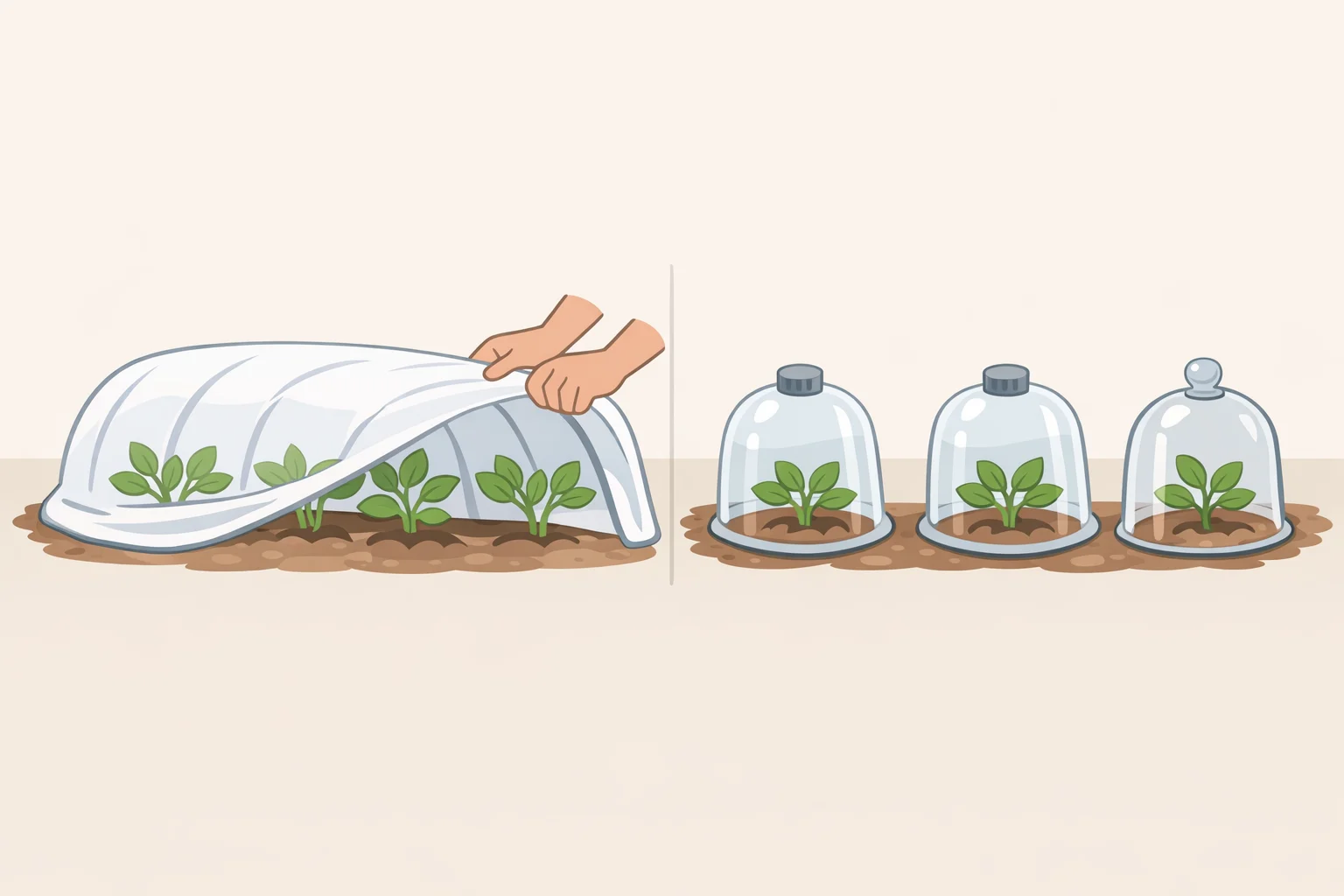
Once seedlings take, the deadline doesn't have to be the final word. Virginia Tech's own guidance notes that covering tender plants ahead of a mild frost warning, one predicting no lower than 30°F, can save a crop still carrying immature fruit (Virginia Tech Extension, 5 months ago). Oregon State University Extension describes cloches extending coastal growing seasons into fall and sometimes winter (Oregon State University Extension, 8 months ago). That's the natural next step once this season's math is settled: a way to buy back some of the days the calculation says are missing.