Is it too late to put up a hummingbird feeder? Season guide
For most people wondering whether it's too late to put up a hummingbird feeder this late in the season, the answer is no. Audubon treats feeder timing as a regional question rather than a fixed date on the calendar, and that's the right way to think about it (Audubon, "Hummingbird Feeding FAQs", 2022). Whether a feeder makes sense right now depends on three things: whether hummingbirds are still moving through the area, whether it's a place they stick around all year, or whether the local birds have already cleared out.
A quick self-check settles most of that. Hang a feeder if hummingbirds have shown up in the yard or neighborhood recently, if the area is one of the year-round ranges along the Gulf Coast, southern Arizona, or parts of the Pacific Coast, or if there's a willingness to keep a clean, well-maintained feeder up in case a late migrant passes through. That third option covers more ground than people expect, since arrival and departure timing varies so much by region (Audubon FAQ, 2022).
Timing matters right now because ruby-throated hummingbirds, the only species that breeds east of the Mississippi, are mid-migration. Many make a nonstop crossing of the Gulf of Mexico, roughly 600 miles that can take more than 16 hours with no chance to stop and feed, and a feeder hung now can supply fuel before that kind of flight (Illinois Extension, five months ago).
What follows is a walkthrough by region: how to tell whether a feeder still makes sense where you live, how to set one up so it actually helps, how long to leave it out, and what a yard needs beyond sugar water.
When to put out a hummingbird feeder in your area
Video of the Day
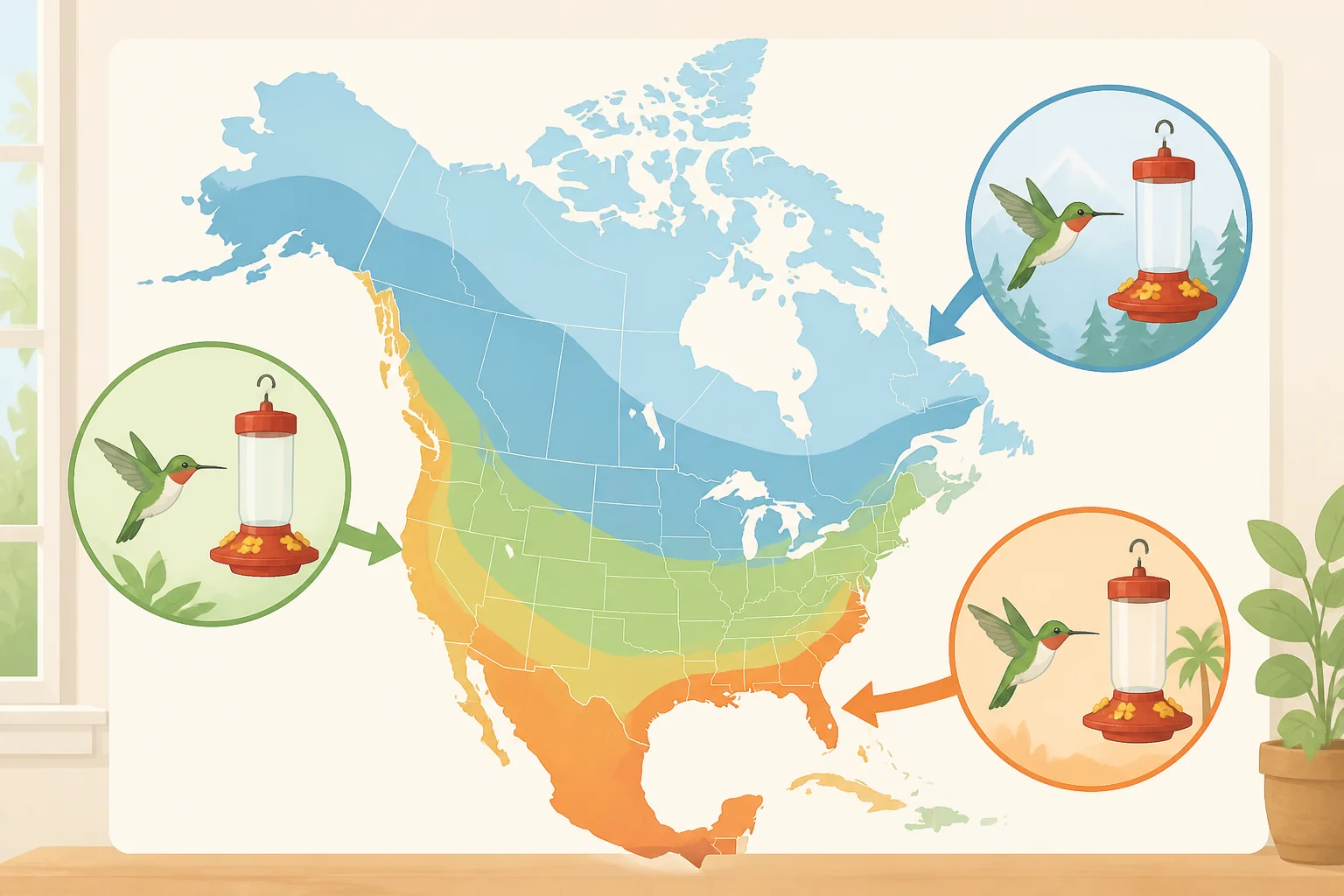
In the eastern breeding range, late summer and early fall are exactly when a feeder earns its keep. Birds are fueling up for the flight south, not just topping off a snack, and a feeder at this point functions as reserve capacity for a demanding trip (Illinois Extension, five months ago).
If it's unclear whether hummingbirds are still around, don't guess. Audubon recommends checking with a local Audubon center, chapter, or bird club when the typical timing for an area isn't known, since that date shifts by region (Audubon FAQ, 2022). Watching for activity around any late-blooming red, orange, or pink tubular flowers still in the yard is a decent low-tech signal too, since hummingbirds are drawn to those shapes and colors (Illinois Extension, five months ago).
Along the Gulf Coast, southern Arizona, and south Florida, the "too late" question mostly doesn't apply. Several hummingbird species regularly overwinter in those regions, so a feeder put up in September or later is arriving right on time for local birds and passing migrants alike (Audubon FAQ, 2022).
On parts of the Pacific Coast, feeding is close to a year-round proposition. Anna's Hummingbirds are resident from northwestern Baja California up the coast into British Columbia, Allen's Hummingbirds are resident in coastal Southern California, and Costa's Hummingbirds stick to Baja California, southeastern California, and western Arizona (Audubon FAQ, 2022). In those ranges, the calendar question driving this article barely applies.
If most local birds have already gone but one hummingbird keeps showing up, keep feeding it. Late migrants and out-of-range birds can turn up into early winter, and a clean, maintained feeder gives them somewhere to refuel on the way through (Audubon FAQ, 2022). Where nights are dropping below freezing, check the feeder for ice; sugar water freezes at a lower temperature than plain water, but a hard freeze can still solidify it (Audubon FAQ, 2022).
One myth is worth clearing up here: a feeder left out too long does not delay migration. What sends hummingbirds south isn't food supply or falling temperatures, it's shortening days and the changing angle of the sun (Audubon FAQ, 2022). A maintained feeder that nobody's draining doesn't hold anyone back from leaving on schedule.
Temper expectations too. A newly hung feeder, especially one local birds haven't used before, can sit untouched for a while even in active areas. Placing it near red or orange tubular flowers may help hummingbirds find it faster, but there's no guarantee of a quick visit (Illinois Extension, five months ago; Audubon FAQ, 2022).
Video of the Day
Setting up a late-season hummingbird feeder the right way
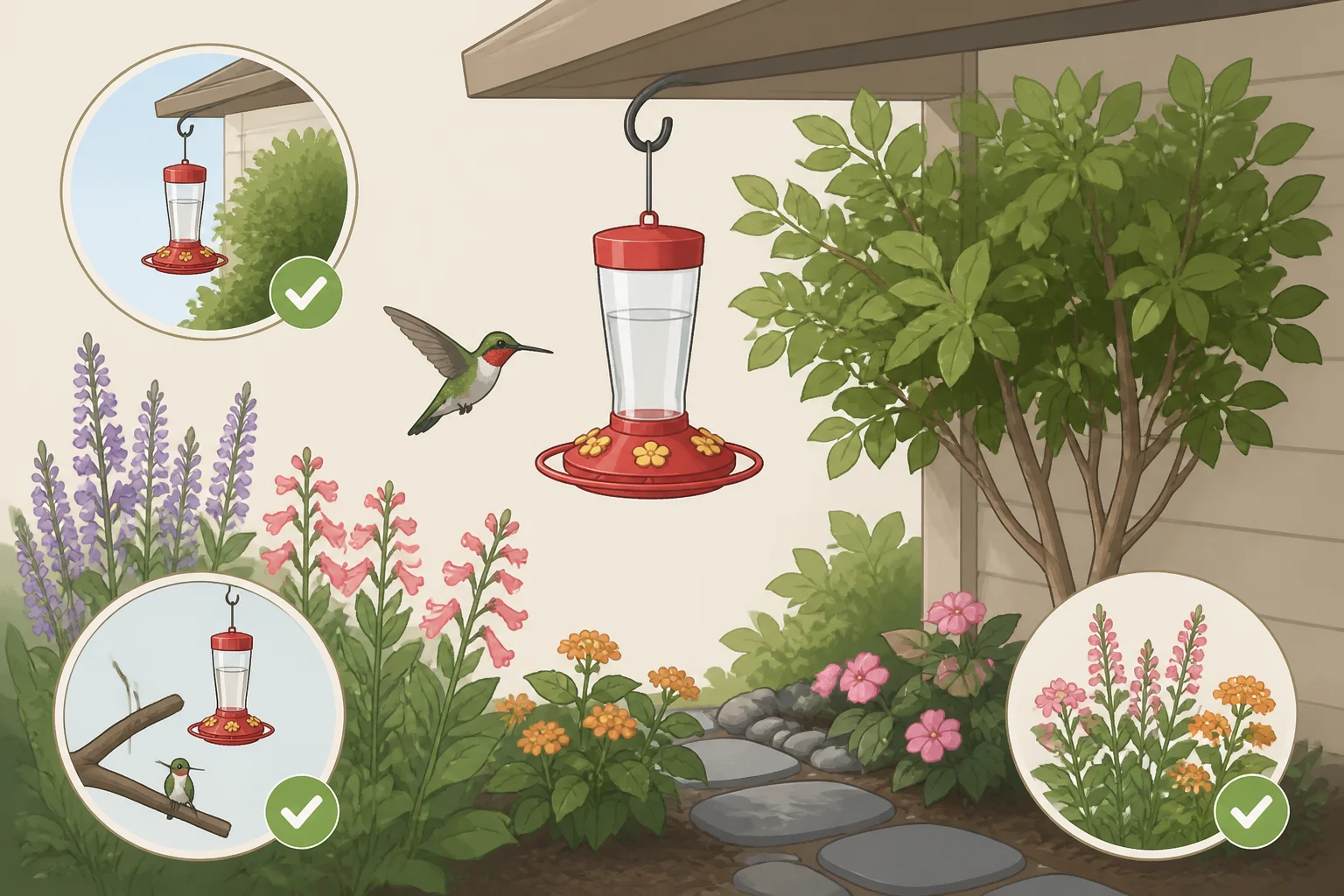
Once the decision is made, setup matters more than the date on the calendar.
-
Mix the nectar correctly. Combine one part refined white sugar with four parts water, bring it to a boil, then let it cool before filling the feeder. Skip red dye, honey, brown sugar, corn syrup, and artificial sweeteners; they can ferment quickly or create health risks for hummingbirds (Audubon FAQ, 2022; Illinois Extension, five months ago).
-
Pick a smart spot. Hang the feeder in partial shade, near shelter and perches, and close to flowering plants where possible. If putting up more than one feeder, space them 10 to 15 feet apart; males are territorial and will fight over feeders that sit too close together (Illinois Extension, five months ago).
-
Clean on a schedule tied to the weather, not convenience. Empty and clean the feeder every day or two in hot weather, every three days in temperate weather, and twice a week in cooler weather. Clean it immediately, regardless of schedule, the moment there's mold, insects, or a sick bird at the feeder (Audubon FAQ, 2022).
-
Use the right cleaning tools. Hot water with hydrogen peroxide or a weak vinegar rinse works well. Skip dish soap, which can leave harmful residue behind (Audubon FAQ, 2022).
-
Watch for freezing nights in colder regions. Check the feeder if overnight temperatures start dropping below freezing. Cold nectar itself does not appear to harm hummingbirds that drink it, despite the popular idea that it might (Audubon FAQ, 2022).
None of this works without follow-through. An unmaintained feeder can develop mold, so it's not worth hanging one unless the cleaning schedule above is realistic for the weeks ahead (Audubon FAQ, 2022).
When should you take down your hummingbird feeder?
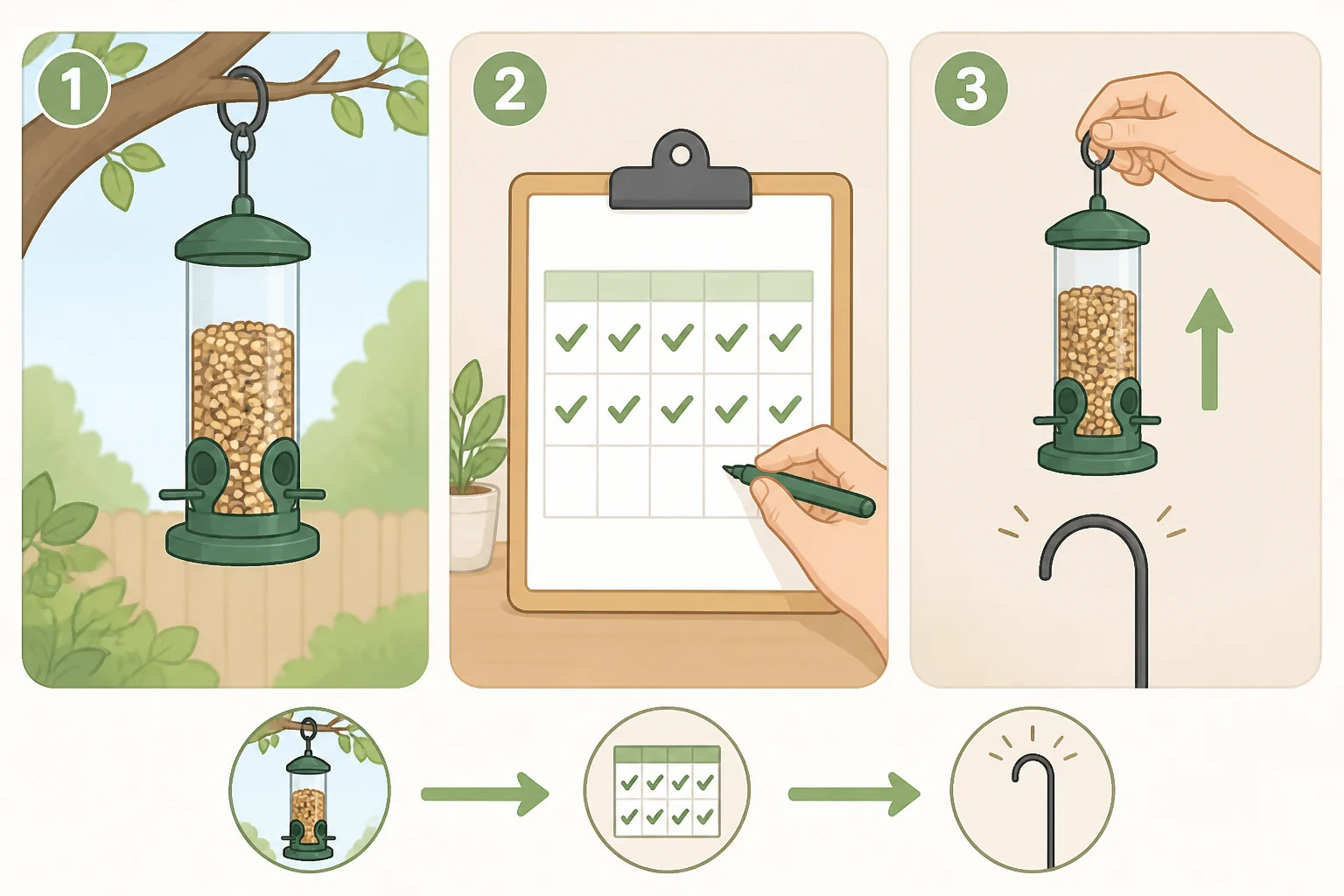
There's no fixed removal date. The same logic that governs putting a feeder up applies to taking it down: leave it out for as long as hummingbirds are actually using it (Audubon FAQ, 2022).
Watch activity at the feeder rather than the calendar. Once visits taper off and stop for good, discard any unused nectar before cleaning and storing the feeder for the season (Audubon FAQ, 2022).
Same year-round ranges, same answer: no removal question to worry about. Keep feeding indefinitely in the Gulf Coast, southern Arizona, south Florida, and Pacific Coast ranges, as long as the cleaning schedule holds up alongside it (Audubon FAQ, 2022).
What your yard needs beyond a feeder
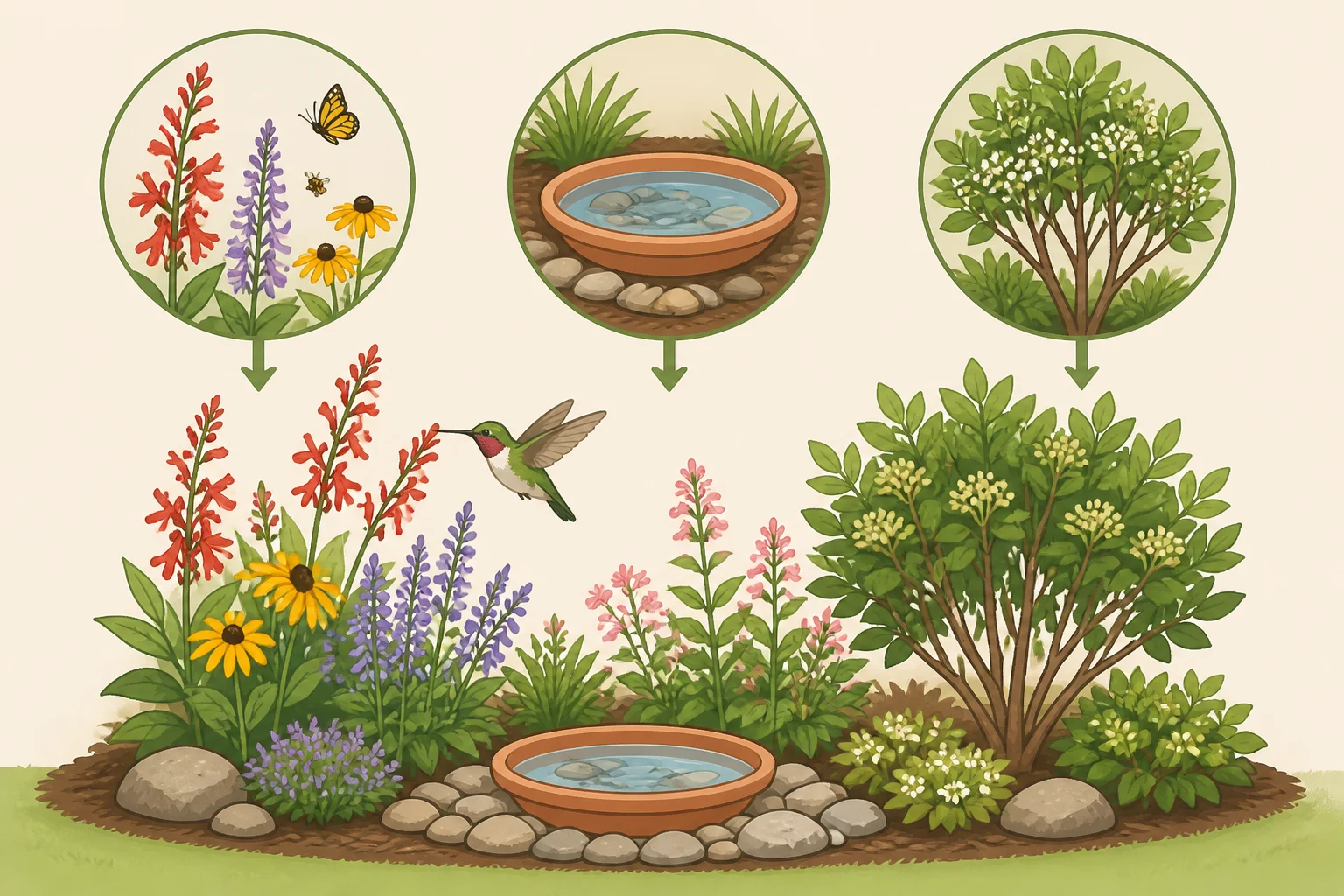
A feeder is a supplement, not a food source on its own. Native flowering plants remain the best nectar source for hummingbirds; the feeder just fills gaps between blooms and during nesting season (Audubon FAQ, 2022).
Insects matter more than most people assume. Nectar provides energy, while insects supply an essential, often overlooked part of a hummingbird's diet, especially during egg-laying and while raising chicks; an adult female can eat up to 2,000 insects a day at that stage (Illinois Extension, five months ago).
Round out the habitat with a shallow water source for bathing and drinking, plus small deciduous trees and shrubs that give hummingbirds places to nest, perch, and take cover (University of New Hampshire Extension, 2022).
The payoff isn't limited to this season. Hummingbirds tend to return to reliable habitat year after year, so a feeder and a few well-placed plants set up now can keep paying off well into next spring (Illinois Extension, five months ago).
When spring returns
The same local-sighting rule that decides whether to take a feeder down in fall also decides when to put one back up. Spring arrival is just as regional, and just as variable year to year, as fall departure.
Last spring, all Canadian provinces except Alberta recorded their first ruby-throated hummingbird sightings within the first two weeks of May; Alberta's first report didn't come in until May 17 (Journey North, earlier this year). That kind of spread shows up within individual states too. Illinois Extension notes that arrival timing there can shift meaningfully from one year to the next (Illinois Extension, five months ago).
There's no single date that works for both ends of that migration. Check local sightings again next spring instead of relying on a fixed one, and the feeder will go up exactly when it needs to, whether that's this month or next April.