How to make pumpkins last until Halloween: a Costco guide
Whole and untouched, a good pumpkin can hold up for months. Carve it, and that timeline collapses fast: as little as 8 to 11 days, even with preservation steps, according to N.C. Cooperative Extension. That gap between whole and carved is most of what anyone needs to know about how to make pumpkins last until Halloween, and it matters right now: there are 38 days until October 31, and an heirloom pumpkin bought at Costco this month has a long stretch of shelf life to get through before trick-or-treaters show up.
Common jack-o'-lantern pumpkins can hold up for several months in cool, dry conditions, according to Oregon State University Extension. Costco doesn't identify its heirloom pumpkins by variety in any of the research cited here, so treat that window as a general guide, not a guarantee for the specific pumpkin sitting on the porch.
This guide covers picking a pumpkin built to last, how to store heirloom pumpkins correctly, choosing a display spot that won't hasten decline, and timing the carving so a finished jack-o'-lantern doesn't collapse before Halloween night. One caveat worth stating upfront: the research behind this guide comes from university extension work on pumpkin storage generally, not from testing on Costco pumpkins specifically. Retail pumpkins have already been through a harvest and supply chain before landing on a pallet, so some curing advice written for homegrown squash doesn't map cleanly onto them, a point this guide returns to below.
How to choose pumpkins that last longer at the store
Video of the Day
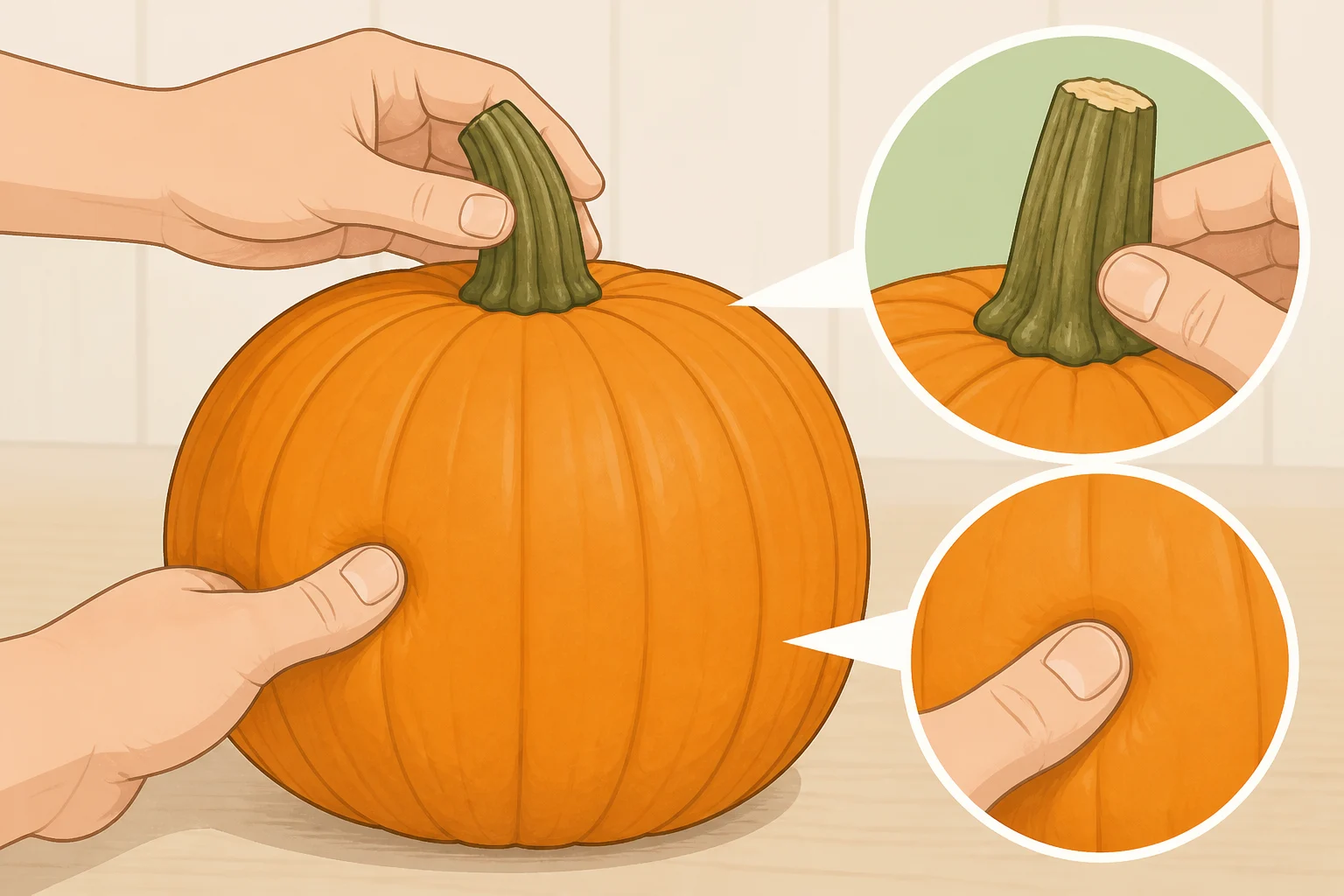
When shopping for a pumpkin that needs to go the distance, size and color are the least useful things to check. Press a thumbnail into the rind instead. A mature pumpkin resists a scratch and won't dent under firm thumb pressure, a useful sign the rind has matured (Oregon State University Extension; University of Minnesota Extension).
Check the stem next. Extension guidance calls for leaving several inches of stem attached at harvest, and a pumpkin with a stem that's snapped off is a weak candidate for long-term display (N.C. Cooperative Extension).
Run a hand over the whole surface, feeling for soft spots, cracks, or bruised patches, and set aside anything that shows them. Pumpkins exposed to freezing temperatures before harvest are especially poor candidates, since that stress causes fast deterioration regardless of how carefully the pumpkin is stored afterward (Oregon State University Extension).
A pumpkin at Costco has already been harvested and handled before reaching the pallet, so selection at checkout is one decision, not the whole game. What happens next, storage conditions, exposure to rain and freezing air, and when the knife comes out, still matters just as much.
Video of the Day
How to store heirloom pumpkins so they don't rot
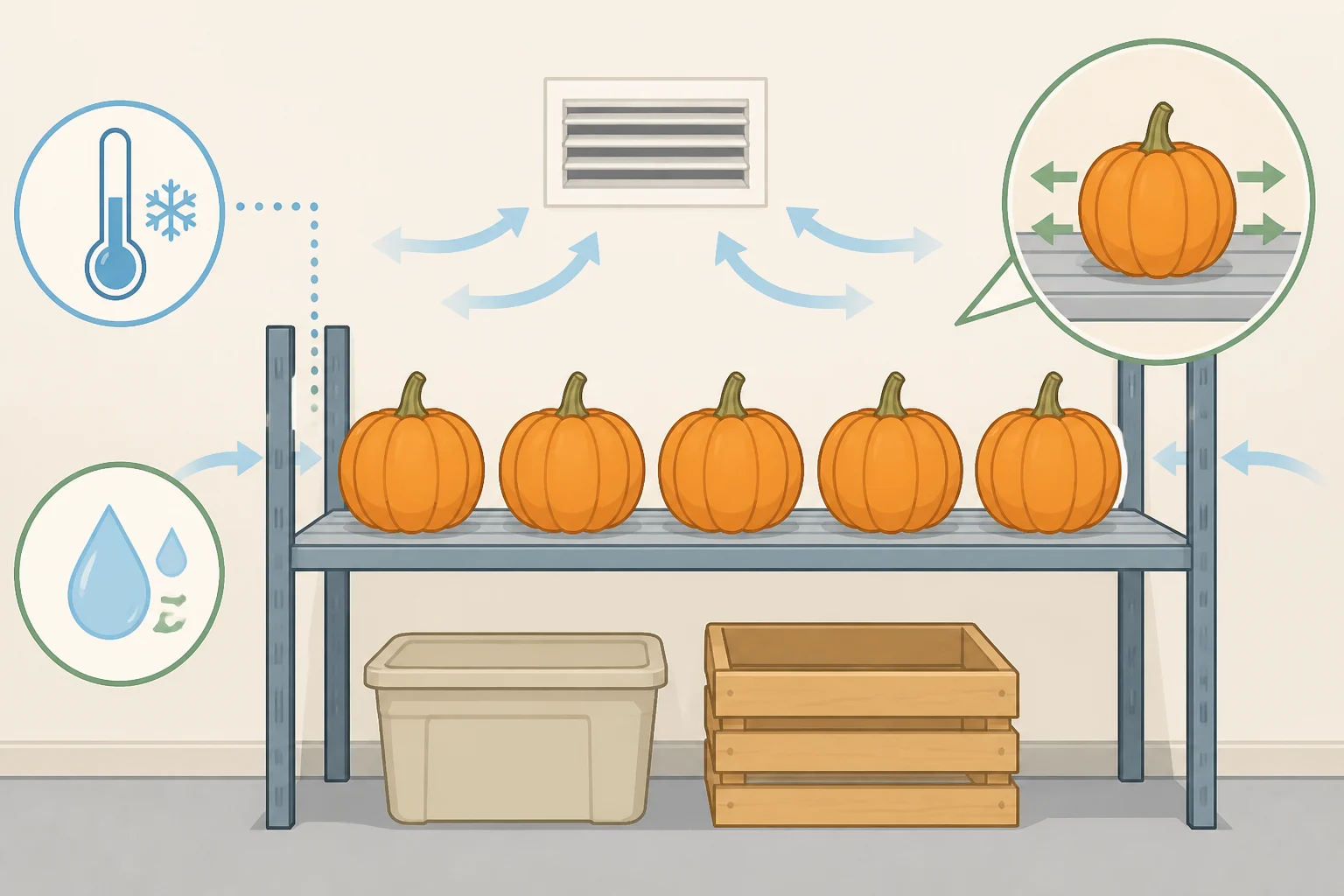
Anyone buying more pumpkins than they'll display at once needs a real storage spot, and "somewhere cool" isn't precise enough. Sound, well-cured pumpkins keep longest between 50°F and 55°F with 50 to 70 percent relative humidity (Oregon State University Extension). Below that range, pumpkins suffer chilling injury and deteriorate quickly (Penn State Extension), which rules out spots people default to, like a cold garage floor or an unheated shed in a frost-prone climate. A cheap thermometer left in the storage spot overnight beats guessing, since interior closets often run warmer than 55°F and basements can run colder or damper than the range calls for.
Airflow matters more than most people expect. Pumpkins should sit in a single layer, not touching each other, ideally on a shelf rather than directly on cold concrete, since stacking traps heat and speeds up rot (Washington State University Extension). Keep the surface dry, too. Moisture on the rind invites decay fungi and bacteria, the same extension source notes.
Keep stored pumpkins away from apples and pears. Ripening fruit gives off ethylene gas, which yellows squash skin and shortens how long it keeps (Oregon State University Extension).
Curing matters mostly for pumpkins harvested fresh or slightly underripe, and the guidance here diverges depending on the source. Extension research calls for a warm, ventilated rest before cool storage, but the numbers vary: one publication suggests roughly 5 to 7 days at 80°F to 85°F, another calls for 10 days at 80°F to 85°F with about 80 percent humidity, and N.C. Cooperative Extension recommends 7 to 10 days at 70°F to 80°F (Oregon State University Extension; Washington State University Extension; N.C. Cooperative Extension). None of that maps neatly onto a pumpkin bought at a warehouse club, since it's already been harvested and handled well before reaching a pallet. Skip trying to build a curing setup at home. Inspect the pumpkin, keep the rind dry, avoid adding new scratches or bruises, and move it straight to the cool storage conditions above.
Check stored pumpkins regularly. If one starts to soften, develops a sunken patch, or smells off, remove it so it doesn't sit against the others (Washington State University Extension).
Where to display pumpkins so they don't rot early
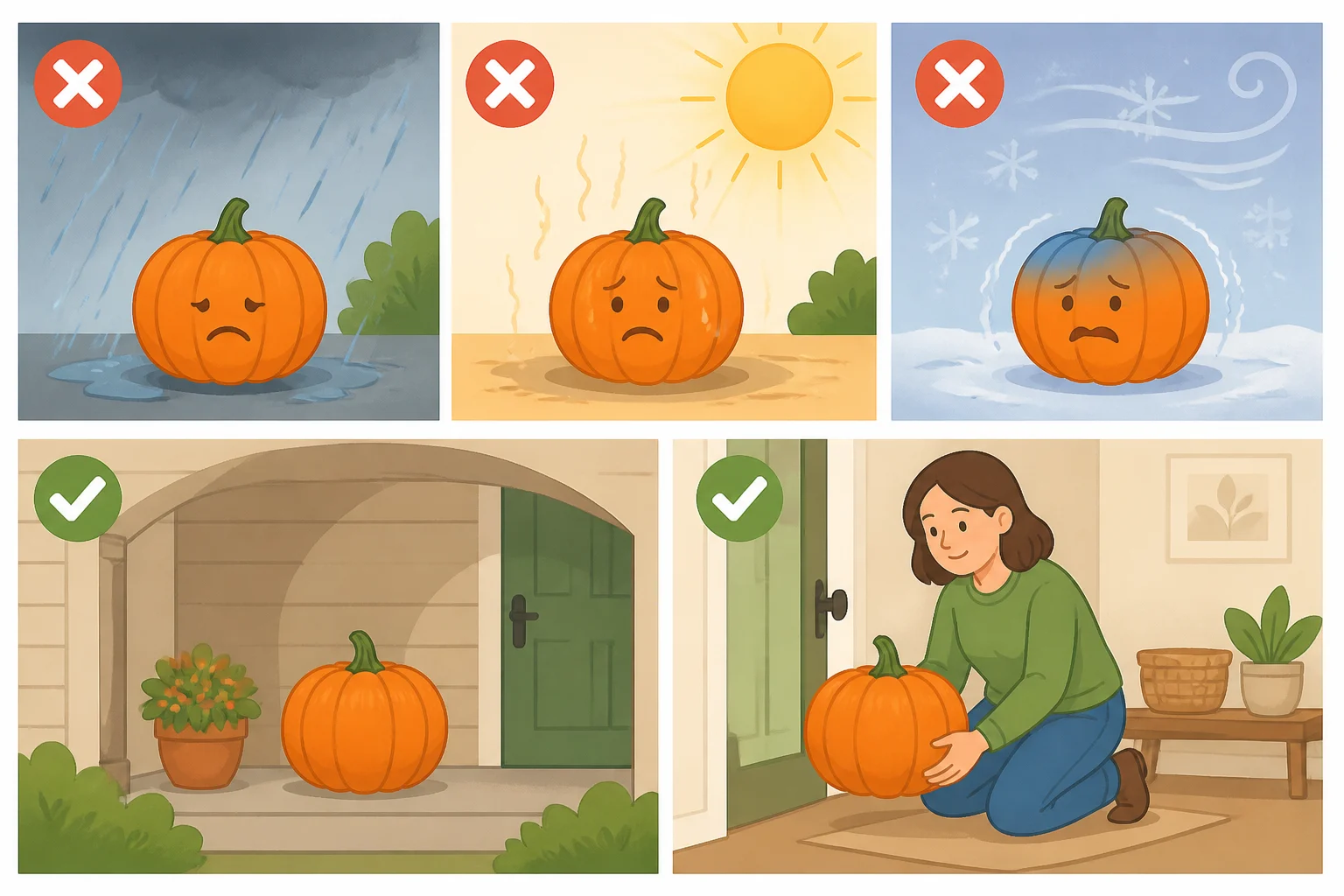
A pumpkin that survives storage can still fail on display if it's parked in the wrong spot. Decorative cucurbits decay once left in rain or direct hot sun, which makes an exposed stoop or a full-sun porch railing worse than a shaded, covered entryway (University of Minnesota Extension). That's the main thing to get right in learning how to keep decorative pumpkins from rotting once they're outdoors.
Cold behaves differently outdoors than it does in storage. A hard freeze, below 28°F, weakens the rind and opens the door for bacteria, and that damage can cut a pumpkin's remaining life short even if it looked fine the day before (Penn State Extension). If a hard freeze is in the forecast, bring the display pumpkin inside for the night rather than risk it.
Wildlife is a factor too. Deer and squirrels will eat an unguarded pumpkin (University of Minnesota Extension). The research confirms that risk without testing whether an elevated or covered porch actually prevents it, so treat that placement as a reasonable precaution rather than a proven fix.
How long do uncarved pumpkins last, and when to carve
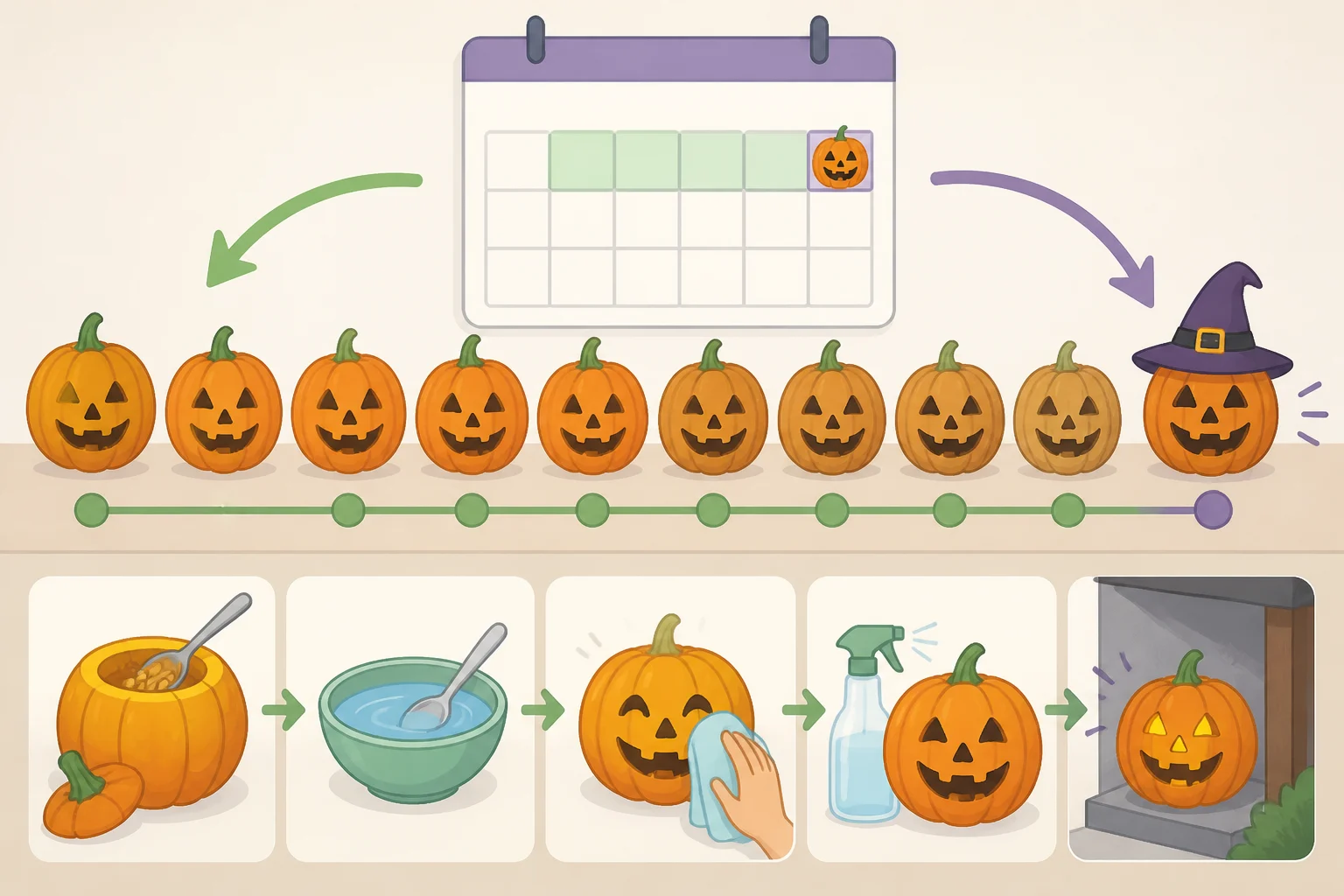
This is where most of a pumpkin's fate actually gets decided. Left whole, a properly stored pumpkin can look good for two to three months, but once it's carved, a jack-o'-lantern gets moldy and collapses far faster, especially in warm weather (Penn State Extension; University of Minnesota Extension).
N.C. Cooperative Extension reports that a carved pumpkin should last between 8 and 11 days even with a full preservation routine, not a guarantee, but a rough estimate tied to its recommended steps (N.C. Cooperative Extension). Count backward from Halloween using that range: carving between October 24 and October 27 leaves four to seven days of buffer inside that 8-to-11-day window, rather than pushing right up against the edge of it.
For anyone determined to carve early anyway, N.C. Cooperative Extension outlines a specific regimen, not just a quick rinse. Wash the pumpkin in a 10 percent bleach solution (nine parts water to one part chlorine bleach) before cutting, then after carving, submerge the whole pumpkin in that solution for 24 hours and dry it completely. From there, spray the carved pumpkin with the same solution daily, and light it with a glow stick or an LED candle rather than a flame, since heat from a real candle speeds up decay (N.C. Cooperative Extension). Anyone trying this should follow the bleach product's label instructions, work in a ventilated space, and keep the solution away from kids and pets; never mix bleach with other cleaning products. It's a fair amount of upkeep for a pumpkin that, by the same source's estimate, will still only last 8 to 11 days.
The lower-effort option skips the knife entirely. Painting or decorating with markers instead of cutting lets a pumpkin last substantially longer, since the rind stays intact (N.C. Cooperative Extension). Carving about a week before Halloween, and letting whole pumpkins do the decorating until then, is the closest thing to a rule for how to preserve pumpkins for Halloween without them sagging early.
What to do this week
For anyone who already has a Costco pumpkin sitting at home, the checklist looks like this:
- Inspect the rind for scratches, soft spots, or bruising, and check that the stem is intact.
- Wipe off any surface moisture before putting it into storage or on display.
- If storing extras, place them on a shelf in a single layer, not on cold concrete, at 50°F to 55°F.
- Check the forecast, and bring any displayed pumpkin indoors ahead of a hard freeze.
- Check stored pumpkins regularly and pull any that soften or smell off.
- Plan to carve between October 24 and October 27, giving several days of buffer before Halloween.
If the Costco pumpkin is a large decorative or jack-o'-lantern type, the flesh will be stringy and bland, nothing like the smaller pie pumpkins meant for baking (University of Minnesota Extension). Anyone who wants to cook with the flesh anyway should freeze the puree, since that's the method extension sources recommend and no research-backed process exists for safely home-canning it (Washington State University Extension).