When do hummingbirds arrive in my area? Track migration
If you've typed "when do hummingbirds arrive in my area" into a search bar hoping for one firm date, the honest answer is that it depends on where you live and which species is headed your way. Some hummingbirds fly nonstop for 18 to 20 hours across roughly 500 miles of open water, crossing the Gulf of Mexico each spring, according to the U.S. Fish & Wildlife Service. That is a long nonstop crossing, and it's worth keeping in mind when deciding when a feeder should go up: better to have it cleaned and filled ahead of time than to scramble once tired, hungry birds start showing up.
There's no single national arrival date because there's no single migration. Rufous, Black-chinned, Broad-billed, and Ruby-throated hummingbirds all migrate north from Mexico and Central America starting in spring, per BirdNote. Anna's Hummingbirds, meanwhile, live year-round across parts of the U.S. and Canada, and the migratory subspecies of Allen's Hummingbird may reach its breeding grounds as early as January, according to the U.S. Fish & Wildlife Service. The answer can differ sharply from one region to the next, and even more from one species to the next.
This guide covers how to check real-time migration data for a given location, when to put a feeder out, the right nectar recipe, and how to build a yard that keeps hummingbirds fed and safe well past opening day, along with a rough regional guide for anyone who wants more than a single pin on a map.
When do hummingbirds arrive in my area? Use a migration map, not a calendar
Video of the Day
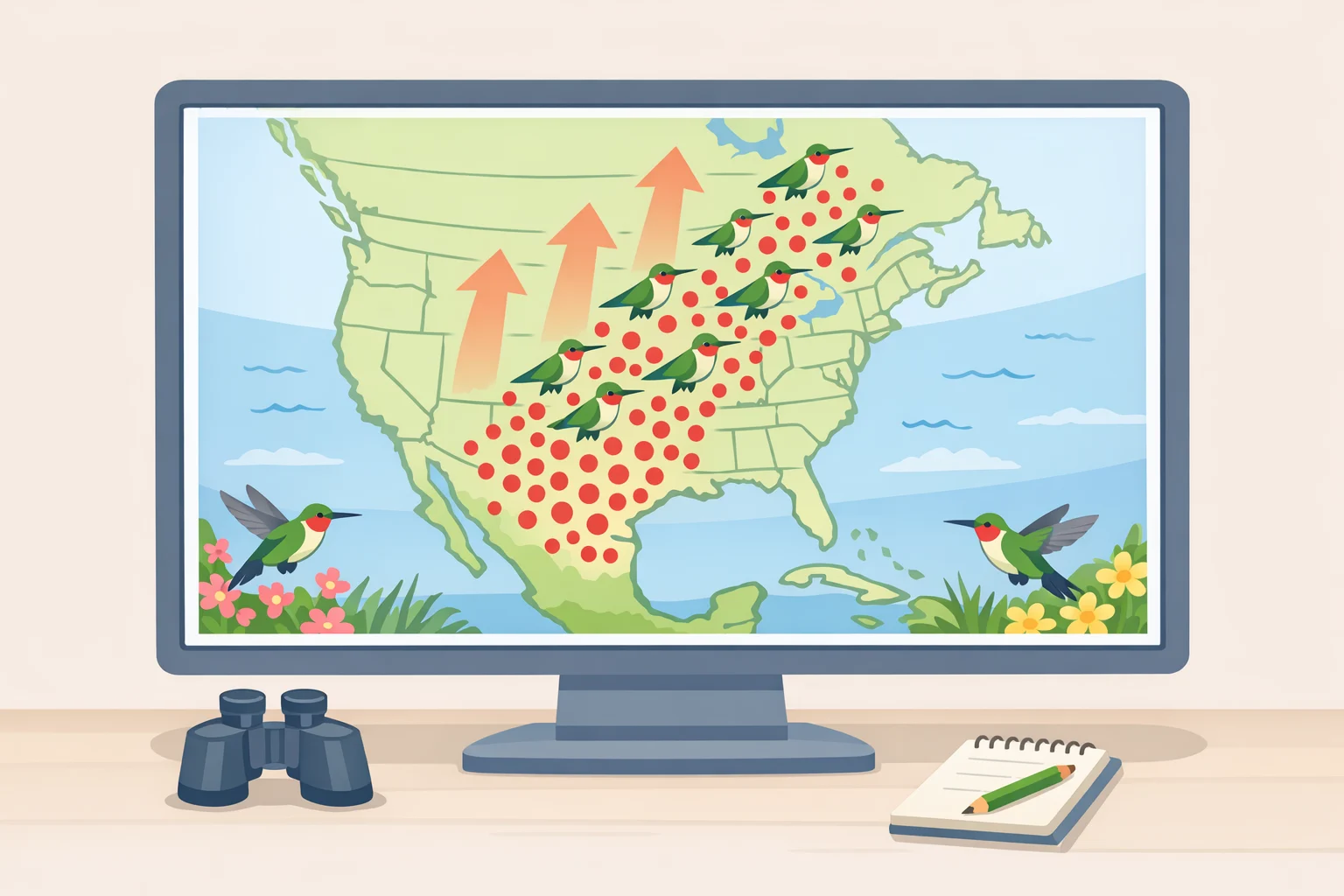
A fixed arrival date doesn't work because timing depends on species and geography, not a page on a calendar. Searching for "hummingbird arrival dates by state" tends to disappoint for the same reason: a date that fits one part of a state can be off by weeks somewhere else in that same state, and it says nothing at all about California, where Anna's Hummingbirds never really leave in the first place.
Journey North gets around this by tracking actual observations instead of averages. The site's migration maps show where birdwatchers are reporting hummingbird sightings as the birds move north each spring, which means current reports rather than a single historical average. Sightings get logged year-round, though most of them cluster between spring migration and fall, roughly the same stretch when monarch butterflies are making their own return trip to Mexico and Central America, per Journey North.
Check the map as spring approaches, and watch sightings move toward home turf rather than working off last year's date.
Species matter as much as geography here. Black-chinned Hummingbirds are strictly migratory, wintering mostly in Mexico and arriving in the U.S. only in spring, per the U.S. Fish & Wildlife Service. Rufous Hummingbirds make one of the longest migrations of any bird relative to body size, roughly 4,000 miles one way between Alaska or Canada and Mexico, according to the same source. A Gulf Coast reader waiting on Ruby-throateds is on a different clock than a Pacific Northwest reader waiting on Rufous, and the map gives both a better starting point than guesswork.
That reframes the whole question. Instead of asking what date hummingbirds arrive, the more useful question is how to track them as they move, which sets up a rough regional guide before getting into feeders.
Video of the Day
Hummingbird arrival dates by region, not by state
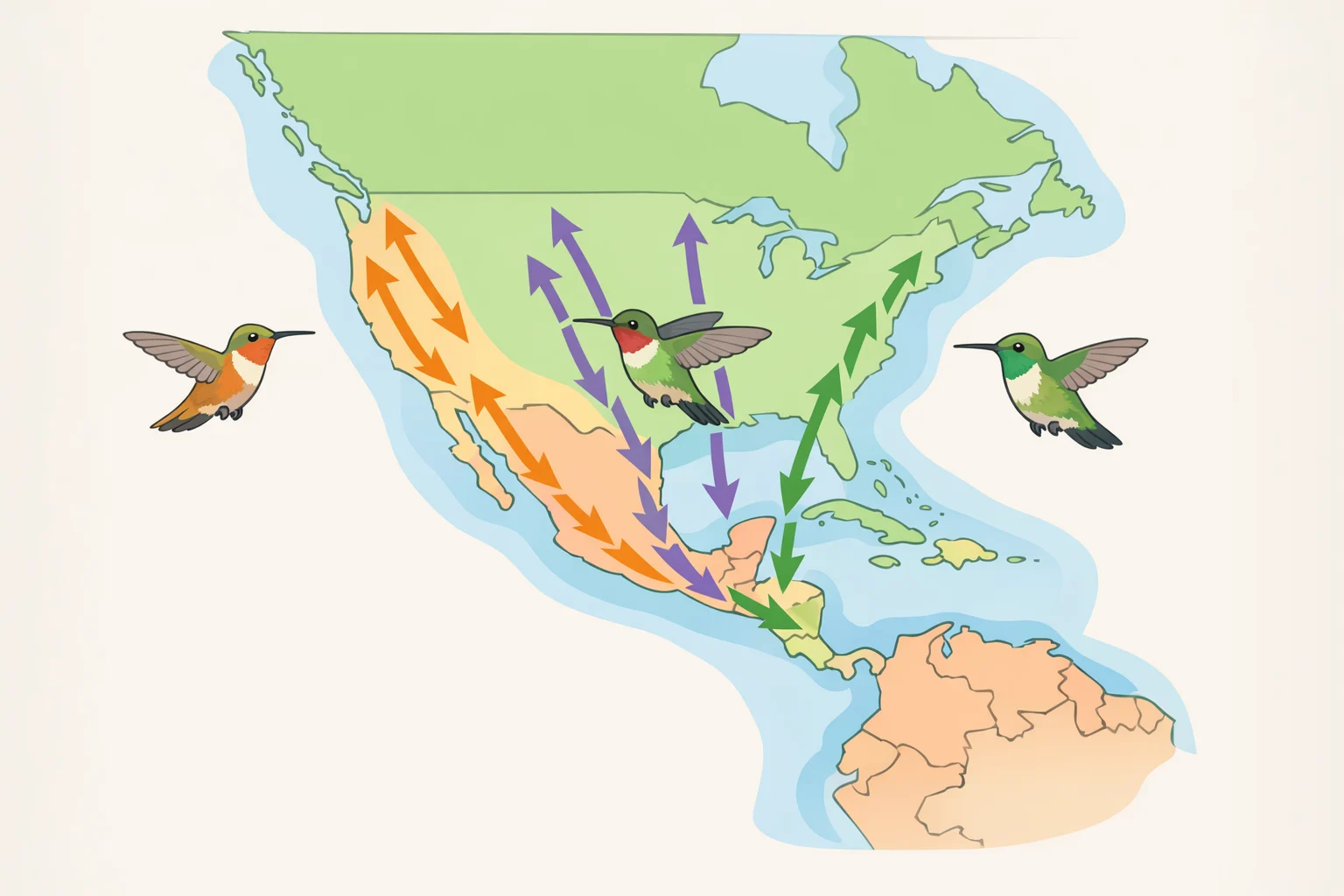
State lines don't mean much to a hummingbird. Broad patterns tied to geography and species offer a better substitute than any single date, though the only way to know what's happening this week is still Journey North's sightings map.
- Gulf Coast and Southeast: Ruby-throated Hummingbirds cross the Gulf of Mexico nonstop after wintering in Mexico or Central America, moving north each spring, per BirdNote.
- Desert Southwest (Arizona, New Mexico, west Texas): Costa's Hummingbirds tolerate extreme desert heat above 110°F, and Broad-billed and Buff-bellied Hummingbirds also concentrate here; Black-chinned Hummingbirds arrive in spring and head back to Mexico by fall, per the U.S. Fish & Wildlife Service.
- Mountain West: Broad-tailed Hummingbirds occupy elevations between 3,500 and 5,500 feet from around March to September before heading south to Mexico, according to the U.S. Fish & Wildlife Service.
- Northern states and southern Canada: Rufous Hummingbirds travel farther than any other U.S. species, roughly 4,000 miles one-way between Alaska or Canada and Mexico, so far-north arrivals tend to lag well behind Gulf Coast ones, per the same source.
- Where hummingbirds never really leave: Anna's Hummingbirds hold the northernmost range of any North American hummingbird and live in the U.S. and Canada year-round, so there's no spring arrival to watch for in places they already call home, per the U.S. Fish & Wildlife Service.
- The earliest arrivals anywhere: the migratory subspecies of Allen's Hummingbird can reach its breeding grounds as early as January, after leaving non-breeding grounds as early as December, ahead of nearly every other North American species, according to the U.S. Fish & Wildlife Service.
Treat these as broad patterns tied to species range, not fixed dates. The map is still the only source with this week's actual sightings.
When to put out hummingbird feeders
Put a feeder up once Journey North shows sightings approaching a region, not on a fixed date carried over from last year. That's the short answer. The mechanics of choosing and maintaining that feeder matter just as much once birds start showing up regularly.
Choose a feeder that's easy to clean on the inside, and one with plenty of red on it, since red is what draws hummingbirds in, per BirdNote.
Hummingbird feeder nectar recipe

Mix four parts water to one part plain white table sugar, according to BirdNote's feeding guidance. Skip brown sugar, artificial sweeteners, and red food dye; none of it is recommended, per the same guidance. Honey belongs on that same list. BirdNote's feeding guidance is specific here: plain table sugar only, no honey and no sugar substitutes, per BirdNote.
Hang the feeder in the shade and swap the nectar every three to four days, which helps avoid the pathogen growth that can make hummingbirds sick, according to BirdNote. If a freeze rolls through, bring the feeder indoors at dusk and set it back out at dawn filled with lukewarm nectar, per the same source.
Clean on a schedule, not just when it looks dirty. Every 10 days, wash the feeder with a dilute bleach solution, no stronger than one part bleach to nine parts water, let it stand, then rinse thoroughly several times before refilling, per BirdNote.
A common worry doesn't hold up under scrutiny: feeders don't make hummingbirds dependent or pull them away from natural foraging. Birds visiting a feeder still keep up a healthy balance of nectar, small insects, and sap on their own, according to BirdNote. Set one out properly, and a hummingbird may be hovering around it before long, per the same source.
How to attract hummingbirds to your yard beyond the feeder
A feeder helps, but it isn't a complete food source. Hummingbirds need to consume several times their body weight in food each day, which is why they also hunt down flowering plants to keep up with that need, per BirdNote.
Native plants do more work than most yards give them credit for. They form the foundation of the local food web, since insects, birds, and other wildlife evolved alongside them and often can't survive without them, according to Cornell Lab's Bird Academy. Most of North America's terrestrial bird species, roughly 96%, raise their young on insects rather than seeds or berries, per the same source.
That insect connection applies directly to hummingbirds. As much as 20% of a hummingbird's diet is insects, caught midair or picked off plants in gardens, forests, and grasslands, according to the U.S. Fish & Wildlife Service. Skip the pesticides where possible, and let some "messy" native growth stand near a feeding area; it's food, not clutter.
How much native planting is enough? Cornell's Bird Academy points to roughly 70% native vegetation as a workable threshold, enough to support nesting birds without requiring a full teardown of an existing yard, according to Cornell Lab's Bird Academy. That guidance is aimed at nesting birds broadly, not hummingbirds specifically, so treat it as solid general yard practice rather than a documented hummingbird guarantee.
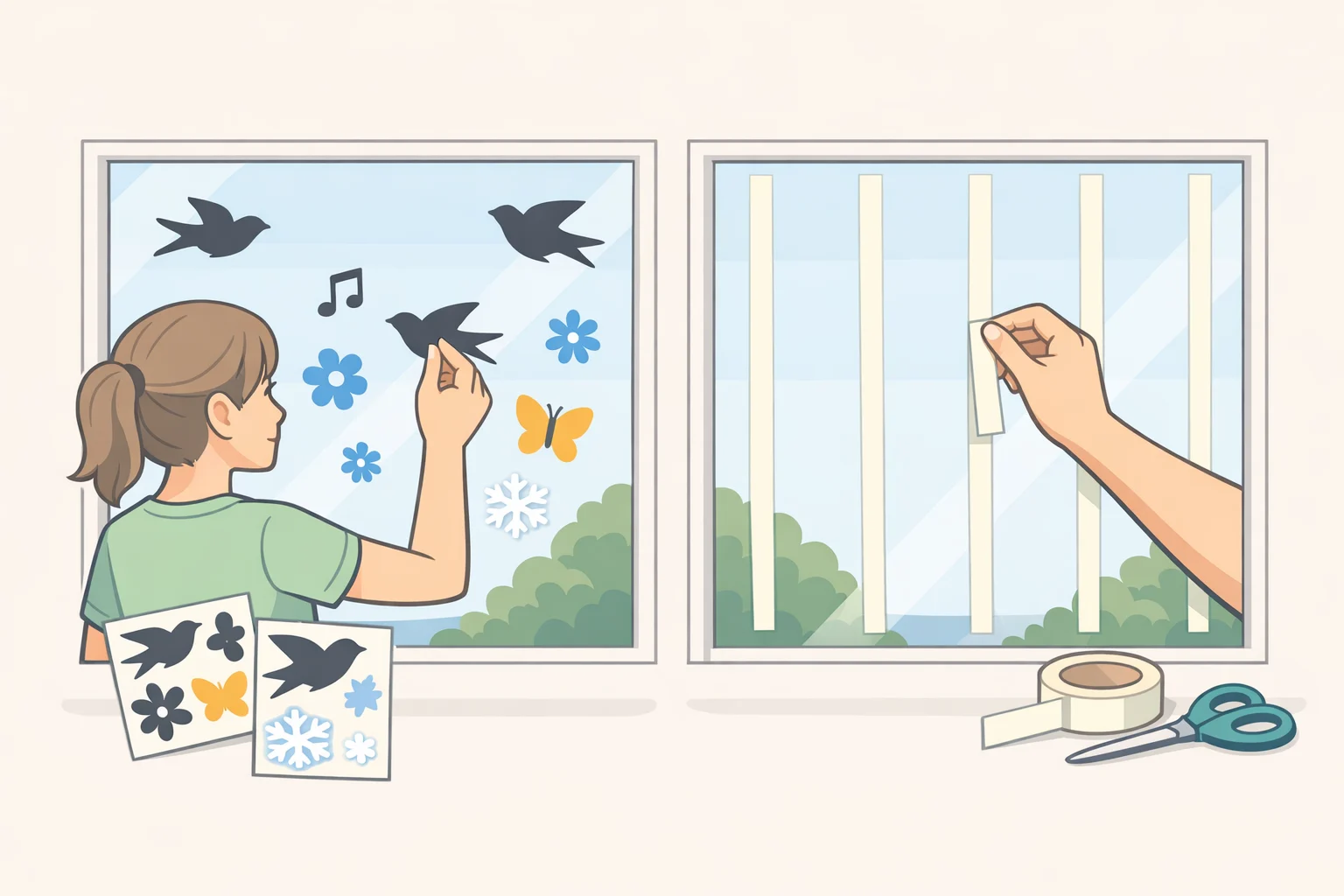
One more yard fix costs nothing but attention: windows. Hummingbirds and other small birds can't always tell glass from open air, and collisions become a real hazard once birds are visiting a yard regularly. Spacing exterior patterns, tape, decals, or film no more than 2 by 2 inches apart on windows near feeders can help smaller birds recognize the glass as something to avoid, according to the U.S. Fish & Wildlife Service.
That precaution carries a bit more weight given the bigger picture. Six U.S. hummingbird species, including Rufous and Calliope, are currently listed as Birds of Conservation Concern, per the U.S. Fish & Wildlife Service. A single yard with safer windows and better food sources won't reverse a population trend, but it can reduce two avoidable risks for a bird making a migration that, for species such as Rufous Hummingbirds, already runs thousands of miles.
Putting it together
Track migration by species and location instead of a single date:
- Identify the species likely to pass through based on region, then check Journey North's migration map for current sightings nearby.
- Put out a clean feeder once sightings start approaching, rather than working off last year's date.
- Mix nectar at one part plain sugar to four parts water, skipping honey, dye, and sugar substitutes, per BirdNote's feeding guidance.
- Keep the feeder shaded, replace the nectar every three to four days, and run a full bleach-solution cleaning every 10 days.
- Add regionally appropriate native plants and treat nearby windows to cut collision risk.
None of that requires guessing a date off a calendar. Feeder upkeep is the one task that repeats for as long as the feeder stays hung: a few minutes every few days, a proper scrub every ten. Everything else, checking the map, mixing the nectar right, thinking through the yard, matters most in the weeks before the first sighting shows up nearby. Once Journey North's map shows hummingbirds working their way north, the birds arriving hungry after a journey that, for some species, runs thousands of miles will find a yard that's already ready for them.