Plum upside-down cake recipe: how to get a clean flip
The flip is the dramatic moment in a plum upside-down cake recipe, but the result is decided long before that. Bon Appétit's test kitchen found that hot caramel thickens fast once it comes off the heat, so the pan and fruit have to be fully arranged before the sugar ever touches the stove, not scrambled together after. Firm-ripe fruit keeps its shape instead of collapsing into puree, and waiting too long to invert risks a caramel layer that's already re-set and glued to the pan.
This guide works from one fully specified recipe as its backbone: Food52's plum and cardamom cake, with a few reinforcing details pulled from other tested methods where they sharpen a specific step. Published plum cake methods don't agree on basics. Serious Eats runs a skillet version that skips inversion entirely, topping the batter with fruit and baking it 25 to 30 minutes (Serious Eats), while Food52's version builds a fruit-and-caramel base first and inverts only after 40 to 45 minutes in the oven. This guide follows the second approach: an easy plum upside-down cake, provided the pan and fruit are ready before the caramel goes on the stove.
Food52 lists the cake as a 9-inch round serving 10 to 12, with 10 minutes of prep and about an hour ten total (Food52). The result is a caramelized plum cake with a tender cardamom crumb. By the end of this guide, that means the full ingredient list, the correct assembly order, doneness cues for both caramel and cake, and a fix for a cake that won't unmold cleanly.
Equipment and choosing plums for a fresh plum upside-down cake
Video of the Day

A 9-inch round cake pan, greased on the sides and lined with parchment on the bottom, is the setup this recipe uses. That snug parchment circle is what separates a clean release from a stuck cake in a pan with a removable bottom. Cast iron skillets skip the step entirely, since the surface is continuous with no seam for the caramel to grip (Eat Cottage).
Eat Cottage bakes a comparable version in a 9-inch enamelled skillet at the same 350°F, over a slightly longer window of 40 to 50 minutes, and gets a darker caramelization for it. Both vessels are documented for this style of cake, but stick with the pan and timing specified here rather than mixing steps from two different recipes.
The fruit rule holds no matter the variety: firm-ripe, never soft-ripe. Soft plums collapse into puree during the bake and leave the top of the cake wet, a problem Food52 and Eat Cottage both flag independently (Food52; Eat Cottage).
Victoria plums, in season from July into early September in the UK, hold their shape through a 45-minute bake and keep a deep ruby color against the caramel (Eat Cottage). Italian prune plums, peaking in August and September in the US, run smaller, denser, and a touch tarter. Ordinary supermarket red plums work fine year-round when neither is in season.
Slice and arrange every plum before the caramel goes on the stove. Once the sugar starts cooking, it won't pause for anyone.
Video of the Day
Ingredients for the plum and cardamom cake
These quantities follow the proportions in Food52's original recipe.
For the fruit and caramel:
- 3 to 4 medium plums, very thinly sliced
- ½ cup (100g) granulated sugar
- ¼ cup (56g) water
- ¼ tsp Diamond Crystal kosher salt
For the batter:
- ½ cup (113g) unsalted butter, room temperature
- 1½ cups (150g) granulated sugar
- 1 tablespoon whole black cardamom seeds, coarsely ground
- 1 tsp vanilla extract
- 2 large eggs, room temperature
- 1½ cups (180g) all-purpose flour
- 1½ tsp baking powder
- ¾ tsp Diamond Crystal kosher salt
- ½ cup (125g) whole milk
Food52 calls for whole black cardamom seeds, ground just before using; buying whole pods and grinding them fresh right before mixing is the recipe's own tip for keeping the spice fragrant. If Diamond Crystal isn't what's in the pantry, check the manufacturer's conversion for another kosher salt, or weigh it instead of measuring by volume.
Fresh plums are the default here. Frozen fruit works too, but as a separate, adjusted method rather than a straight swap into the recipe above. Thaw 700 grams of frozen, halved, stoned plums fully, either overnight in the fridge or about 2 hours at room temperature, then drain them on a double layer of paper towels for 10 minutes. Thawed plums release roughly twice the juice fresh ones do, and that extra liquid waters down the caramel if it isn't blotted first (Eat Cottage). Add 10 grams, about a tablespoon, of extra flour to the batter in that version to absorb whatever moisture the paper towels miss.
Bring the butter and eggs to room temperature before doing anything else. Cold butter and eggs are a known cause of a flat cake, and Bon Appétit's test kitchen treats room-temperature butter and eggs as essential too (Eat Cottage; Bon Appétit).
Assembling the fruit and caramel base
- Preheat and prep the pan. Set the oven to 350°F (180°C) with a rack in the center. Grease the sides of the pan and line the bottom with a parchment circle; this keeps the caramelized fruit from sticking to the metal once the cake cools (Food52).
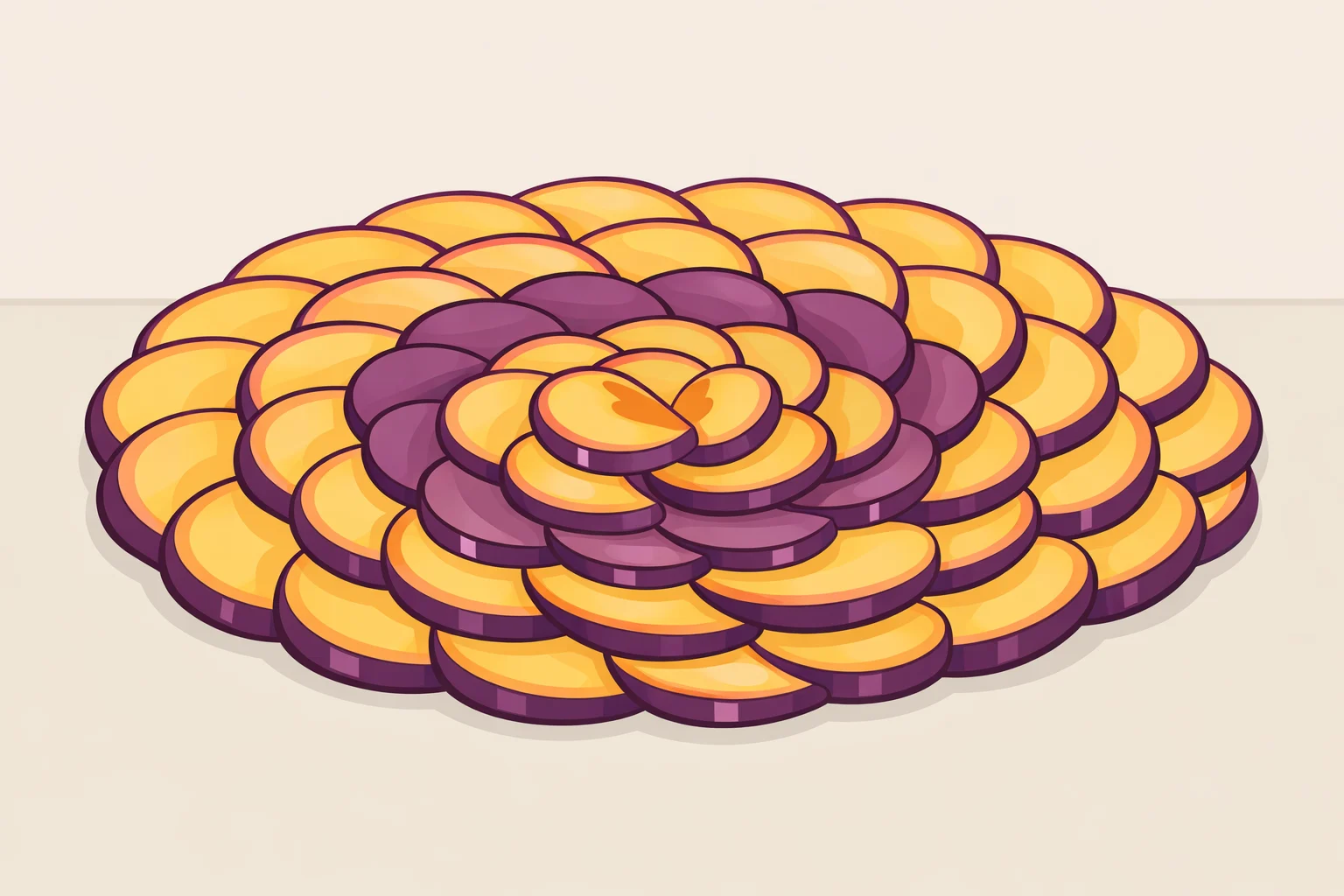
- Arrange the plums. Starting in the center of the pan, layer the sliced plums in overlapping circles, working outward. The recipe's author used three full rings to cover a 9-inch pan; thinner, more even slices bake more uniformly and read more cleanly once flipped.
- Make the caramel. In a small saucepan over medium heat, bring the sugar, water, and salt to a boil. Stop stirring once it boils and let it cook undisturbed for 5 to 7 minutes until golden brown. The color shifts fast near the end, from light gold to noticeably darker within about 10 seconds, so watch it rather than the clock (Food52; Bon Appétit).
- Pour immediately. Pour the hot caramel over the arranged plums right away. It thickens fast as it sits, which is exactly why the pan and fruit had to be ready first (Bon Appétit).
Mixing the batter and baking
- Cream the butter and sugar. Beat on medium-high speed until fully combined, about 1 minute. Add the ground cardamom and mix another 30 seconds, then beat in the eggs and vanilla until light and fluffy (Food52).
- Add the dry ingredients. Whisk the flour, baking powder, and salt together in a separate bowl. Add it to the butter mixture in a few additions, alternating with the milk, mixing on low speed only until each addition is combined before adding the next. Overmixing once the flour goes in is a common cause of a flat cake (Eat Cottage).
- Bake. Pour the batter gently over the fruit and caramel and bake on the center rack for 40 to 45 minutes, until the top is golden and a toothpick inserted in the center comes out clean (Food52). Test the crumb between fruit slices rather than through a plum directly; testing through the fruit can read as wet batter even when the cake itself is fully baked.
Cooling, inverting, and serving
- Cool briefly in the pan. Move the pan to a wire rack rather than letting it return fully to room temperature. Food52 calls for this partial cooldown without specifying an exact time; Bon Appétit's closely comparable wet-caramel method puts that window at roughly 15 to 20 minutes, a reasonable target here too (Food52; Bon Appétit).
- Don't wait longer than that. King Arthur's baking team warns that if the cake sits too long in the pan, the caramelized topping can stick and fail to unmold properly (King Arthur Baking).
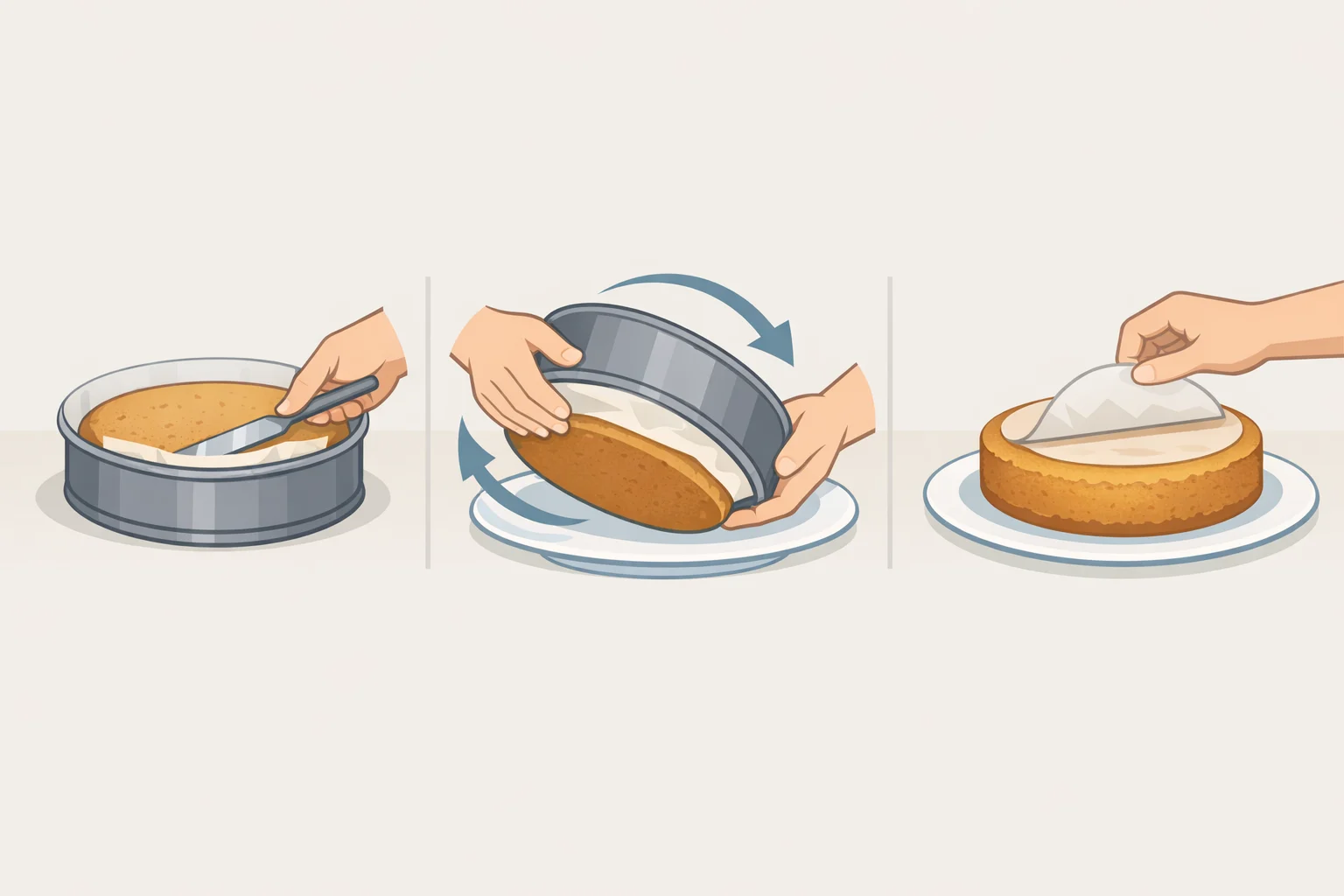
- Invert. Run a thin knife or offset spatula around the edge to loosen the cake. Set a serving plate face-down over the pan, invert both together in one motion, lift the pan away, then peel off the parchment last (Food52; King Arthur Baking).
Serve warm with whipped cream or vanilla ice cream, or let it cool fully to room temperature; the caramel sets into a tacky, glossy layer either way (Food52; Eat Cottage).
Make-ahead and storage
The cake holds up well ahead of serving. Baked up to 4 hours in advance, it can sit at room temperature on the plate. Baked the night before, it keeps for 18 to 36 hours loosely covered with parchment rather than plastic wrap, which traps moisture and softens the top (Eat Cottage).
A fully cooled cake also freezes whole, wrapped in parchment and then foil, for up to a month. Thaw it overnight at room temperature and warm it in a 150°C oven for 10 minutes, uncovered, before serving (Eat Cottage).
Troubleshooting a flat cake or a stuck flip
A flat cake usually comes down to one of three things, per Eat Cottage: an overmixed batter, butter and eggs that went in cold, or baking powder past its prime. That last one is the easiest to miss, since baking powder loses strength after about six months once the tin is open; drop a pinch into hot water and look for a fizz before trusting it in the batter.
A stuck cake is a separate problem, and it's fixable. If the caramel has already re-set and gripped the pan, slide the whole thing back into a warm oven for a few minutes to loosen it, then try the flip again (King Arthur Baking).
Variations on the base method
Damson plums, which peak in September in the UK, run sour; balancing that means stirring 30 grams of extra brown sugar into the caramel (Eat Cottage). Mirabelles, tiny and golden, can go in whole, stoned through a small slit rather than sliced.
For an Italian prune plum upside-down cake, halve the fruit rather than slicing it thin, and pack the halves tightly. That's a different format from the thinly sliced medium plums in the base recipe above, so treat it as its own approach rather than a straight swap (Eat Cottage).
A brown sugar caramel is a separate, documented alternative to the wet-sugar version used here. Melt brown sugar and butter together and cook for 3 to 4 minutes until fully dissolved into a smooth, pourable amber pool rather than a clear syrup; poured in too soon, the sugar stays grainy and grips the pan as it sets (Eat Cottage). That swap turns this into more of a brown sugar plum cake, with a deeper, more molasses-forward flavor than the clear caramel above.
The fruit itself is flexible too. Food52 notes that peaches, oranges, apples, and pears all work in place of plums, though unpeeled orange slices need a quick simmer in sugar syrup first to soften the peel (Food52). King Arthur's fall version of the same technique uses pears or Granny Smith apples, with the apples' tartness balancing the maple in that recipe's topping (King Arthur Baking). Swapping fruit changes moisture and timing enough that it's worth watching the bake rather than assuming the exact minutes above will hold.
The short version
A clean flip comes down to three habits: firm-ripe fruit, a caramel poured the second it hits color, and an unmolding done while the cake is still warm. Get those right, and the cardamom, the pan, even the fruit itself turn into details worth adjusting rather than variables to fear.