How to Save Money on Grocery Bills: 3 Principles That Work
Store brands don't just undercut name brands. Sometimes they beat them outright. Consumer Reports' expert taste testers compared ten private-label pantry staples with better-known brands and identified several store versions that equaled or beat their name-brand rivals: Kroger's Creamy Ranch dressing was judged superior to the Hidden Ranch version at less than half the cost per serving, and Aldi's Chef's Cupboard condensed chicken noodle soup beat Campbell's, which costs nearly twice as much (Consumer Reports, 3 months ago). That's the starting point for anyone working out how to save money on grocery bills: cheap doesn't automatically mean worse. Save money with store-brand groceries by comparing the one on the shelf against whatever's normally in the cart, not by assuming either one wins.
In the U.S., where these comparisons were run, private-label groceries typically sell 25 to 30 percent below name-brand prices, and a 2023 industry survey found 96 percent of shoppers buy store brands at least occasionally, mainly for price and perceived value (Consumer Reports citing FMI, 3 months ago). Those figures come from U.S. research, in U.S. supermarkets, in ounces and pounds. The three habits built on that research are arithmetic and behavior, not brand loyalty: check what's already in the kitchen before shopping, compare true cost per kilogram or litre rather than shelf price, and make sure whatever gets bought actually gets used. They apply the same whether the shopping happens at a supermarket, a wholesaler, or a market stall; only the units and price tags change.
This guide walks through those three habits in order: deciding what belongs on the list before leaving home, comparing true cost at the shelf or stall, and locking in the saving after checkout by using what got bought. One hypothetical household runs through all three steps to show how they connect. Nothing special is required, just a phone or notepad, ten to fifteen minutes before the next trip, and a look inside the fridge, freezer, and pantry before a single item goes on the list.
Check the kitchen before you write the list
Video of the Day
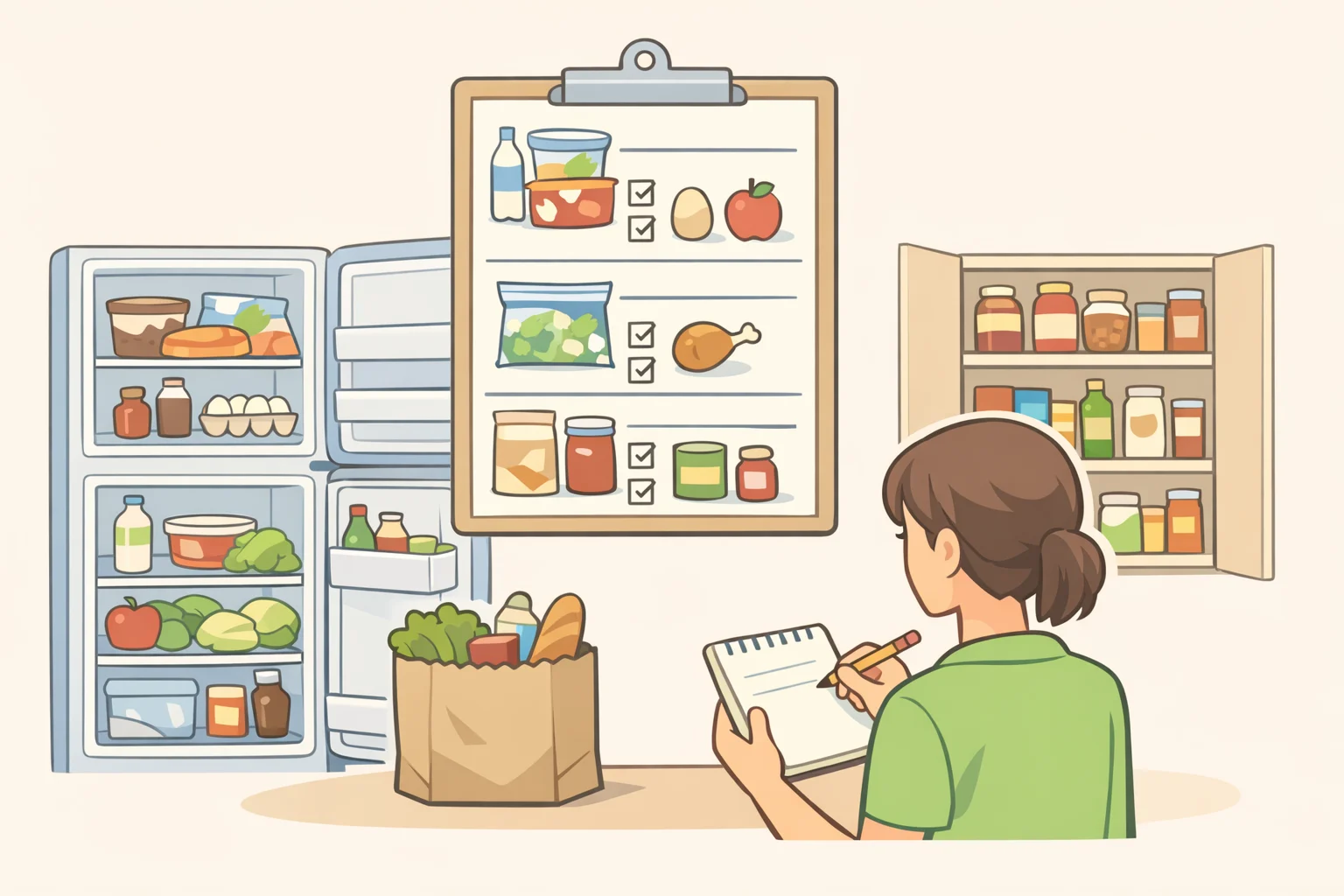
Before any list gets written, open the fridge, freezer, and pantry. Note what's close to spoiling and what staples have genuinely run low. The list should start from that inventory, not a blank page (Utah State University Extension, about 4 years ago).
From there, turn the inventory into a short meal plan, a schedule of specific meals and snacks for the coming week or two. It doesn't need to be elaborate, just specific enough to shop with purpose (Michigan State University Extension, 14 months ago). Build at least one meal around a lower-cost protein such as beans, lentils, or tofu, which generally cost less than meat and poultry (Michigan State University Extension, 14 months ago). Consumer Reports' in-house dietitian points to beans in particular as a low-cost protein swap with real nutritional upside (Consumer Reports, nearly 3 years ago).
Give the sales flyer a fixed window instead of an open-ended scroll. One consumer expert estimates that roughly 15 minutes spent checking store ads before a shop can save around $30 on a typical trip. That's a single person's estimate, not a guarantee, but it's a reasonable case for a short planning window over none at all (Consumer Reports citing Annette Economides, nearly 3 years ago).
Picture a household doing this on a weekday evening, a hypothetical case to show how the habit plays out. The pantry check turns up half a bag of rice and some sukuma wiki that needs cooking soon, but no beans on hand. The list ends up short: beans to replace what's missing, cooking oil because the bottle is nearly empty, and nothing else, since everything the week's meals require is already sitting in the kitchen.
That's the test for every item before it lands on the list: does it replace a staple that's run low, complete a planned meal, or cover a genuine sale on something bought regularly anyway? If none of those apply, it's an impulse buy wearing a shopping list's clothing. This is the part of budget grocery shopping tips that actually changes a total, not the part that just feels productive.
Video of the Day
Compare true cost, not the price on the shelf
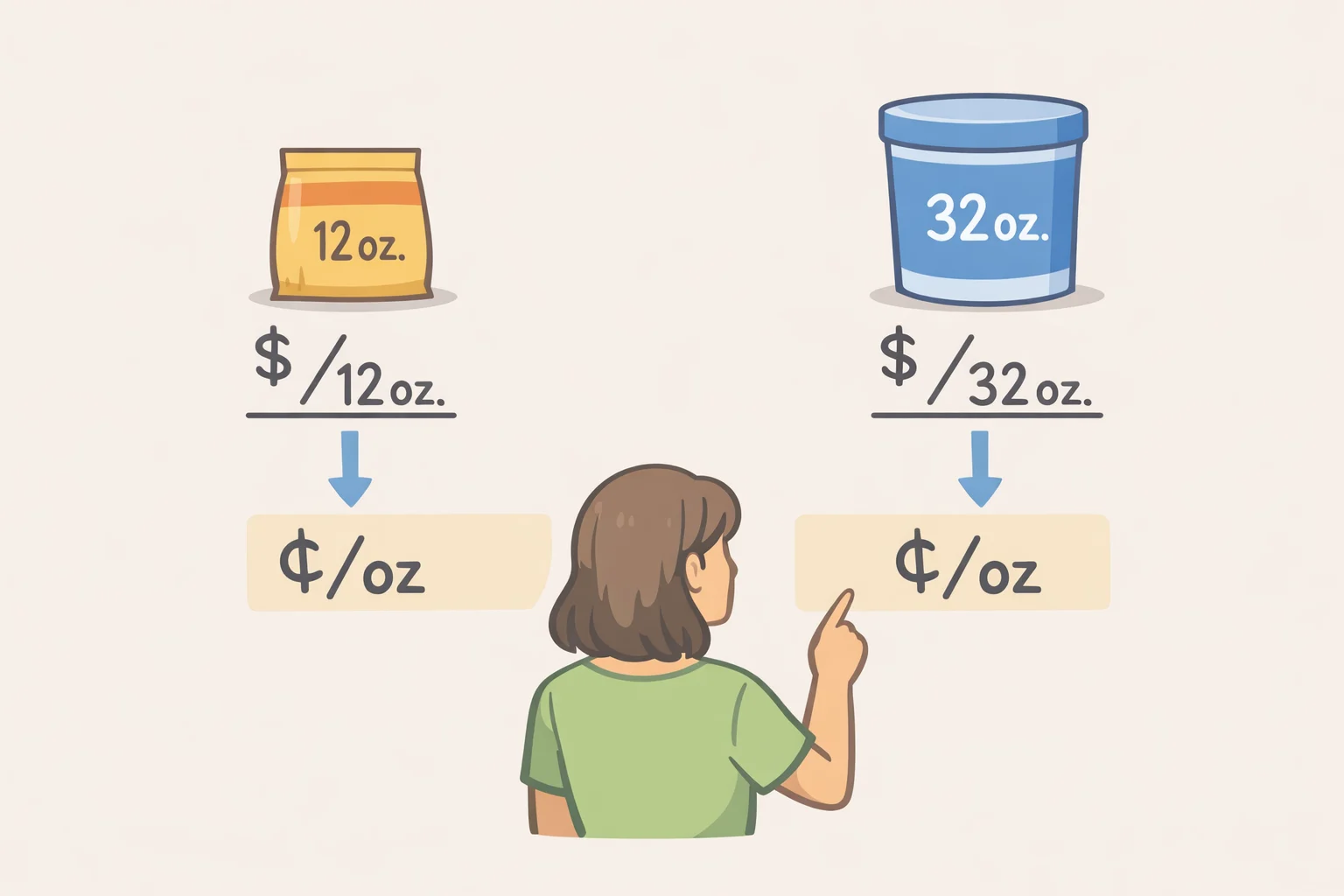
Before comparing prices, confirm the comparison is fair. Two bags of dried beans, two bottles of cooking oil, two packs of the same cut of meat: matching product type and usable quantity comes first, because a smaller pack of a premium cut will never compare honestly against a larger pack of a basic one. It's one of the more overlooked ways to reduce supermarket grocery costs, since plenty of shoppers skip straight to the number on the tag.
Once the categories match, divide price by quantity to get a true unit cost per kilogram, litre, or item, rather than judging by the price printed on the package (Michigan State University Extension, 14 months ago). In one illustration from that guidance, a 32-ounce product priced at $3.99 works out to 12.4 cents an ounce, while a smaller 5.3-ounce version at 89 cents costs 16.7 cents an ounce; in that example, the larger package is the better value per ounce (Michigan State University Extension, 14 months ago). The dollars and ounces are American, but the arithmetic, divide price by quantity and compare the result, travels fine. If a 2 kg bag of maize flour costs KSh 480, divide 480 by 2 for a unit price of KSh 240 per kilogram, then hold that number against whatever the smaller pack or the loose version at the next stall costs per kilogram. The rule that trips people up: keep the basis consistent, price per kilogram for dry goods, price per litre for liquids, never one against the other.
Check the nutrition label separately from the price tag, since the two answer different questions. Serving size affects the nutrition comparison, not the cost one: a smaller stated serving doesn't automatically mean a higher cost per meal, that depends on how much the household actually eats. Scan sodium and sugar if it's processed or packaged, and confirm the ingredient list matches what was intended. Consumer Reports found real differences in sugar and sodium between some name-brand and private-label versions of the same product, so a lower price doesn't guarantee equal nutrition (Consumer Reports, 3 months ago).
Watch package size too, not just price, because that's how shrinkflation hides. One consumer advocate tracked competing orange juice brands shrinking from 59 ounces to 52, then 46, while a private-label version held steady at 64 ounces the entire time. A price comparison that ignores package size can miss that kind of change entirely (Consumer Reports, 3 months ago).
Supermarket shelf tags that show price per unit make this step easy. At a wholesaler or open-air stall, ask for the price per kilogram or litre if it isn't posted, or weigh the item and do the division by hand. Store-brand quality and availability vary by retailer everywhere; U.S. data showing private label accounting for about two-thirds of U.S. egg and frozen vegetable sales in 2025 (Consumer Reports, 3 months ago) says something about that market specifically, not about any given shelf elsewhere, so it still has to be checked case by case.
Back at the household from the earlier example: two bags of dried beans sit side by side at the shop, a 1kg local pack and a 2kg bulk bag from a different producer. Dividing price by weight shows the 2kg bag costs less per kilogram, and the ingredient list on both is just beans, so there's nothing further to check nutritionally. The only open question left is whether all 2kg gets used before it spoils.
Switch brands or sizes only when all three checks agree: the unit price is genuinely lower, the nutrition holds up, and the quantity will realistically get used before it spoils.
How to save money on grocery bills by using what you buy
A cheaper unit price only becomes a real saving once the food actually gets eaten. Everything up to checkout is a plan; everything after is proof. A lower per-kilogram price on food that ends up in the bin isn't a saving, it's waste with better math attached to it (Michigan State University Extension, 14 months ago).
The scale of that risk is bigger than most people assume. A family of four could lose at least $1,500 a year to wasted food, a figure that shows how easily a good unit price gets erased once groceries sit too long in the kitchen (Consumer Reports, nearly 3 years ago; Utah State University Extension, about 4 years ago).
Attach a specific plan to every bulk or larger-than-usual purchase before it leaves the store: a named meal, a freezer portion with a date on it, or a preservation method. No plan, no purchase.
For households where fresh produce routinely goes unused before it spoils, frozen or canned versions can cut that particular waste, since they generally have a longer storage life than fresh vegetables and fruit (Penn State Extension, over 3 years ago). That's a fix for a specific pattern, not a blanket upgrade over fresh food, worth applying only where the pattern actually shows up.
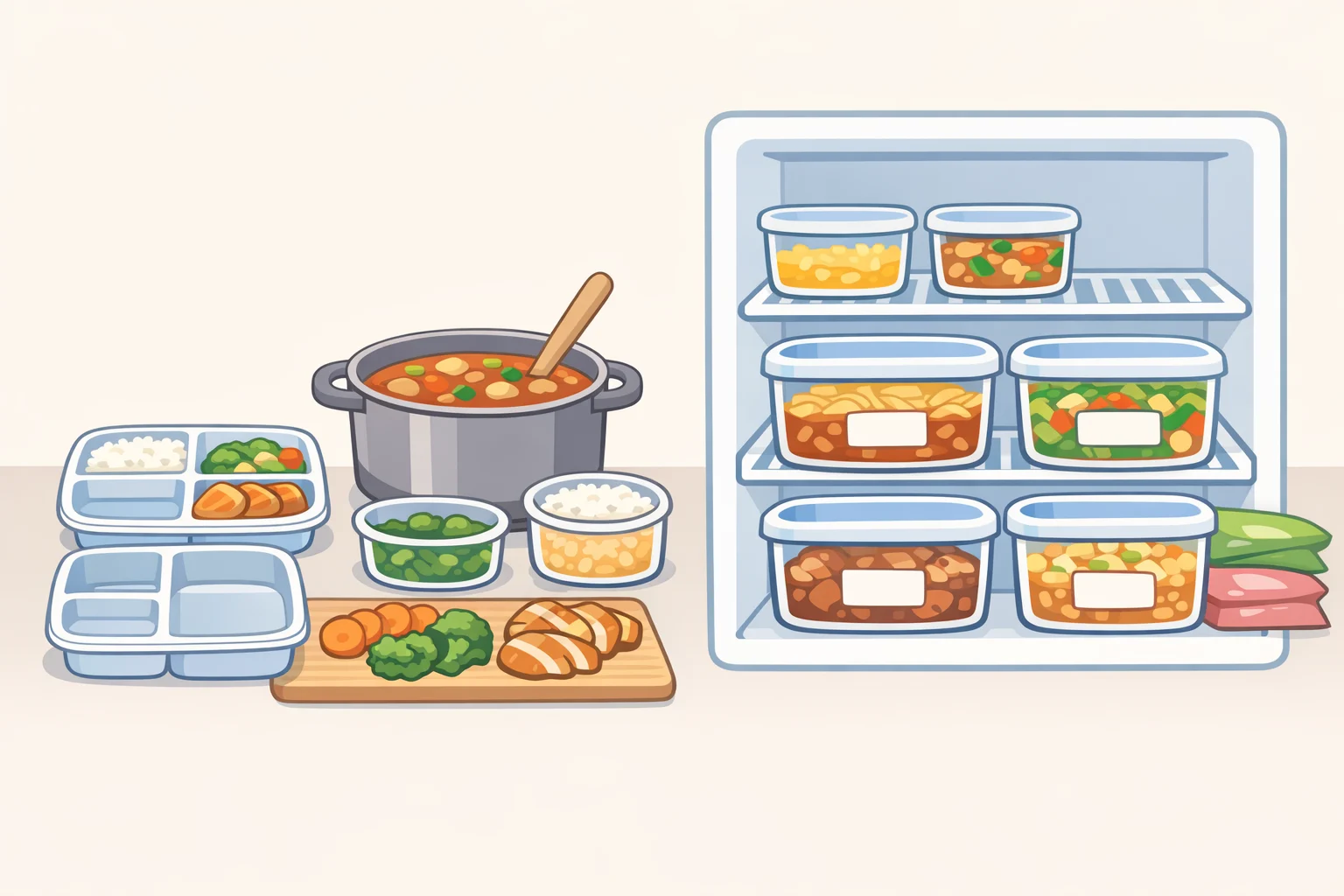
Batch cooking helps on its own terms, separate from freezing. Making a large pot and freezing half can stretch one shopping trip into several more meals from ingredients already bought. One comparison found homemade dishes averaged $1.83 per serving against $3.92 for premade ones, a gap of $2.09 a meal (Penn State Extension, over 3 years ago); that gap is the reward for cooking from scratch, and freezing the extra portion is what keeps a bigger batch from going stale before anyone gets to it. Among practical ways to cut grocery costs, this pairing is one of the few with a measured dollar figure behind it.
Back to the household one last time: the 2kg bag of beans gets cooked into a large pot along with the rice and sukuma wiki already on hand. Half gets eaten that night, the other half goes into two meal-sized portions in the freezer, each labeled with the date. The 2kg purchase now has a name and a use attached to it, not just a lower unit price on a receipt.
Track the number yourself
The three habits here, purposeful list-building, true-cost comparison, and using what gets bought, work as a sequence, not a menu of separate tips, and skipping any one weakens the effect on the bill. Skip the comparison step and money gets left on the shelf; skip the plan for using what's bought and the same risk just moves from the shelf to the kitchen bin. Together, that's what actually lowers your food budget over time, not any single trick.
The U.S. figures in this piece won't map onto any other receipt. What will is a short experiment: pick three or four items bought on nearly every trip, log their unit price for the next two or three shops, and note the total bill and whatever gets thrown out that week. Kept for a few weeks, that record is what shows which of the three habits is actually moving the number.
The prices and brands cited here are American because that's where they were measured. The arithmetic behind a unit price and the discipline of checking the fridge before writing a list don't need a currency conversion to work.