7 August Gardening Tasks From UMN and Clemson Extension
August looks like a lull: the heat sits heavy and growth slows, making it tempting to treat the month as pure maintenance before fall planting begins. Extension guidance treats it as an active month instead. The August gardening tasks handled now, watering, mowing, harvesting, dividing, can shape how well the garden handles the transition into fall.
This guide compares practical guidance from two Cooperative Extension programs, the University of Minnesota and Clemson University's Home & Garden Information Center, both of which published August 2025 checklists (UMN Extension; Clemson HGIC). They're two credible regional voices, not a national consensus, so where their advice reflects different growing conditions, this guide says so directly.
A few examples show how climate shapes the advice. Potted plants and raised beds can dry out quickly in summer heat and need a bit of extra water, though Clemson cautions against overwatering established areas of the yard at the same time (Clemson HGIC). For warm-season lawns, Clemson recommends stopping nitrogen fertilizer around August 15 to avoid disrupting the grass's prep for dormancy (Clemson HGIC). UMN Extension, meanwhile, flags nighttime lows: orchids and other cold-sensitive houseplants may need to come indoors once temperatures drop below 50°F later in the month (UMN Extension).
The seven tasks below run in order of urgency: survival-critical watering and lawn restraint first, the harvest-to-fall handoff next, and longer-view jobs like dividing and planning after that. Confirm exact planting dates and treatment approaches with a local Extension office; these two programs cover different climates, and yours might be a third.
Your August garden checklist: what applies to you
Video of the Day
Not every task fits every yard. Use this as a shortcut:
- Every reader: watering (Task 1), pest and disease scouting (Task 5), the season audit (Task 7)
- Vegetable and herb gardeners: Tasks 2 and 3
- Anyone with a lawn: Task 4, plus the armyworm portion of Task 5
- Mature perennial beds or leggy annuals: Task 6
- Storm-prone or early-cold-snap regions: see "Check your region" after Task 7
Video of the Day
1. Water with intention before you irrigate
Applies to: nearly every garden
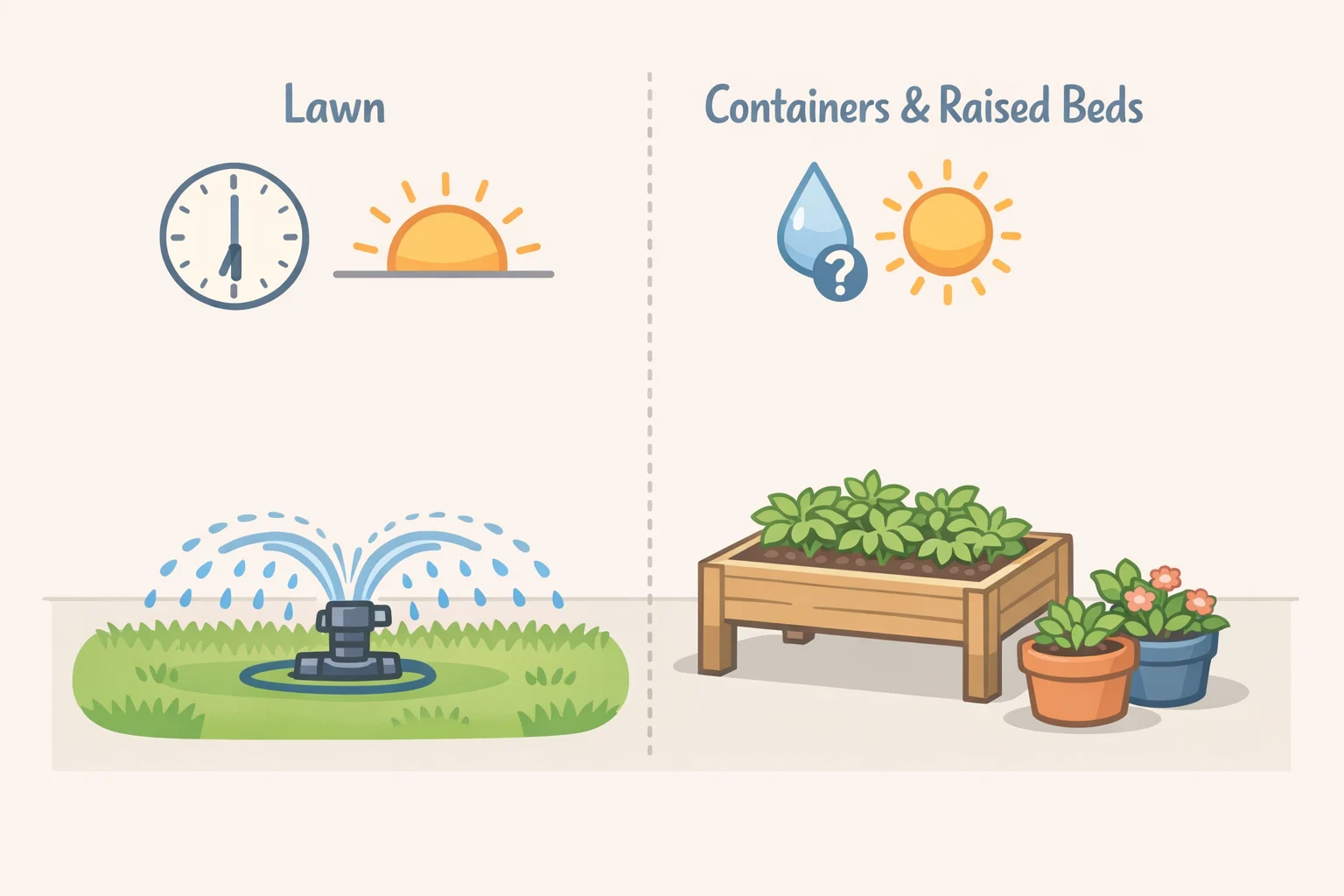
Lawn irrigation and everything else in the yard don't run on the same schedule. Most lawns need about an inch of water a week, split across two or three deep sessions rather than a daily light sprinkle (Clemson HGIC). Clemson recommends watering in the early morning, when cooler temperatures cut evaporation and give the grass time to dry before evening (Clemson HGIC).
Containers and raised beds work on a faster clock. They can dry out quickly in summer heat and need extra attention, though Clemson cautions against overwatering established areas of the yard at the same time (Clemson HGIC). Newly planted trees and shrubs need similar care: water them and add a layer of mulch to help the soil hold moisture (UMN Extension). Established trees, shrubs, and perennials should also get their watering done in the early morning, for the same evaporation reasons as the lawn (Clemson HGIC).
Houseplants are easy to forget once attention shifts outdoors, but UMN Extension recommends keeping up regular watering and fertilizing through the month (UMN Extension).
- If an irrigation system runs only overnight, switch it on manually during the day at least once this season to confirm every head still works (Clemson HGIC).
- Soaker hoses or drip irrigation conserve water; during active drought, check regional conditions at drought.gov before adding extra watering (Clemson HGIC).
2. Keep harvesting, and pinch back herbs
Applies to: vegetable and herb gardeners
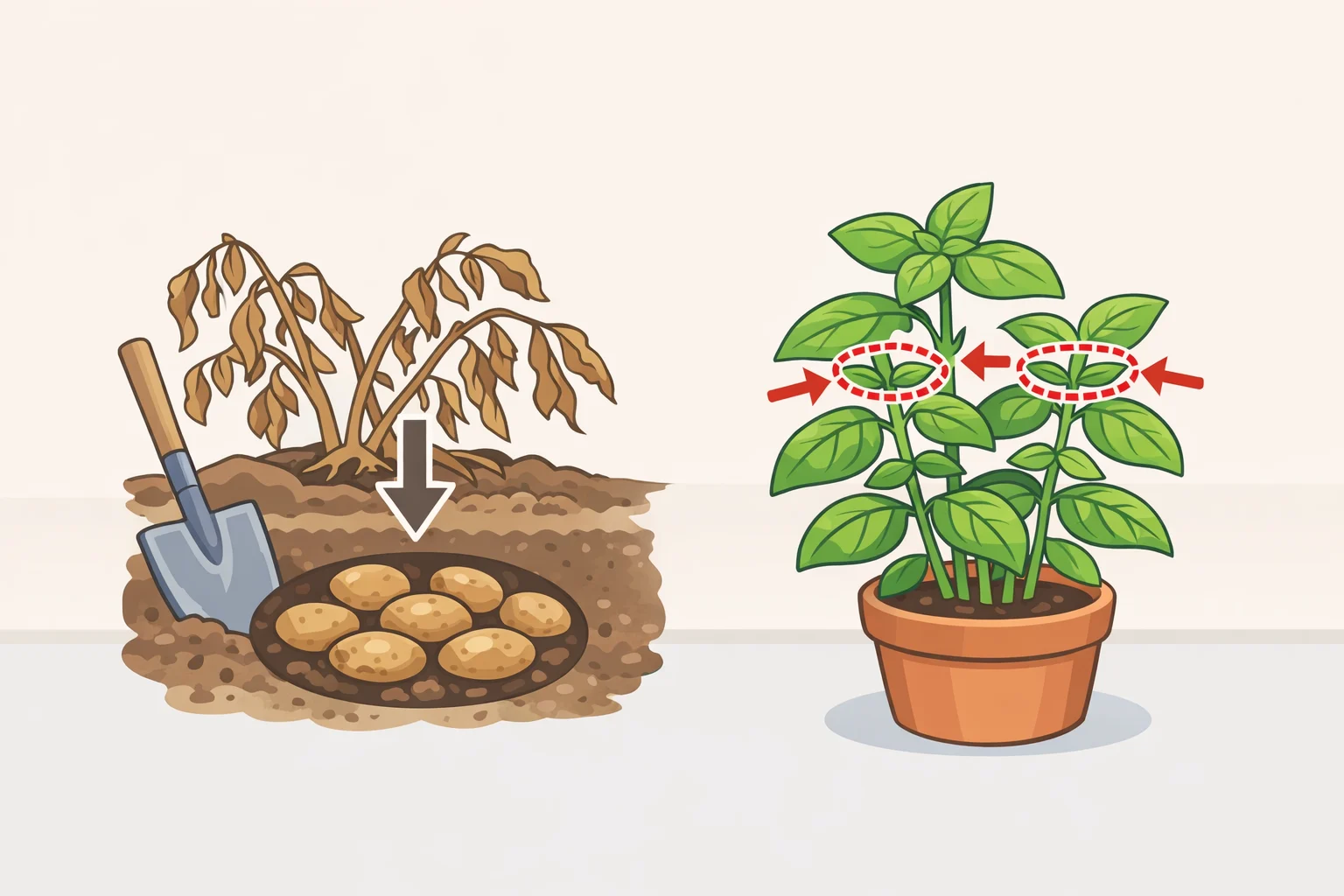
Regular harvesting keeps vegetable and herb plants productive through the last stretch of summer (UMN Extension; Clemson HGIC). Potatoes offer a clear visual cue: once the vines have died back, the tubers underneath are ready to dig (Clemson HGIC).
For basil, UMN Extension includes a short video walkthrough on pinching plants back to keep new growth coming (UMN Extension). Remove declining plants now, before preparing the same space for fall crops (Clemson HGIC).
3. Build a fall planting plan, then plant it
Applies to: vegetable gardeners; the crop list below reflects Clemson's Southeastern calendar, so confirm timing locally
Clemson treats fall planning as its own August task, pointing readers to a separate Planning a Garden resource for exact sowing dates by region (Clemson HGIC). Transplant cool-season vegetables like broccoli, Brussels sprouts, collards, mustard, and kale, and direct-sow beets, carrots, spinach, turnips, and radishes (Clemson HGIC). Beans, beets, and collards are among the vegetables that can go into the ground mid-to-late August (Clemson HGIC).
Climate changes this task. This sowing window reflects a Southeastern growing season. The right dates shift with local climate, so lean on Clemson's planning resource in that region, or a local Extension calendar elsewhere.
4. August gardening tasks for stressed lawns
Applies to: anyone with a lawn; the nitrogen cutoff below is specific to warm-season turf
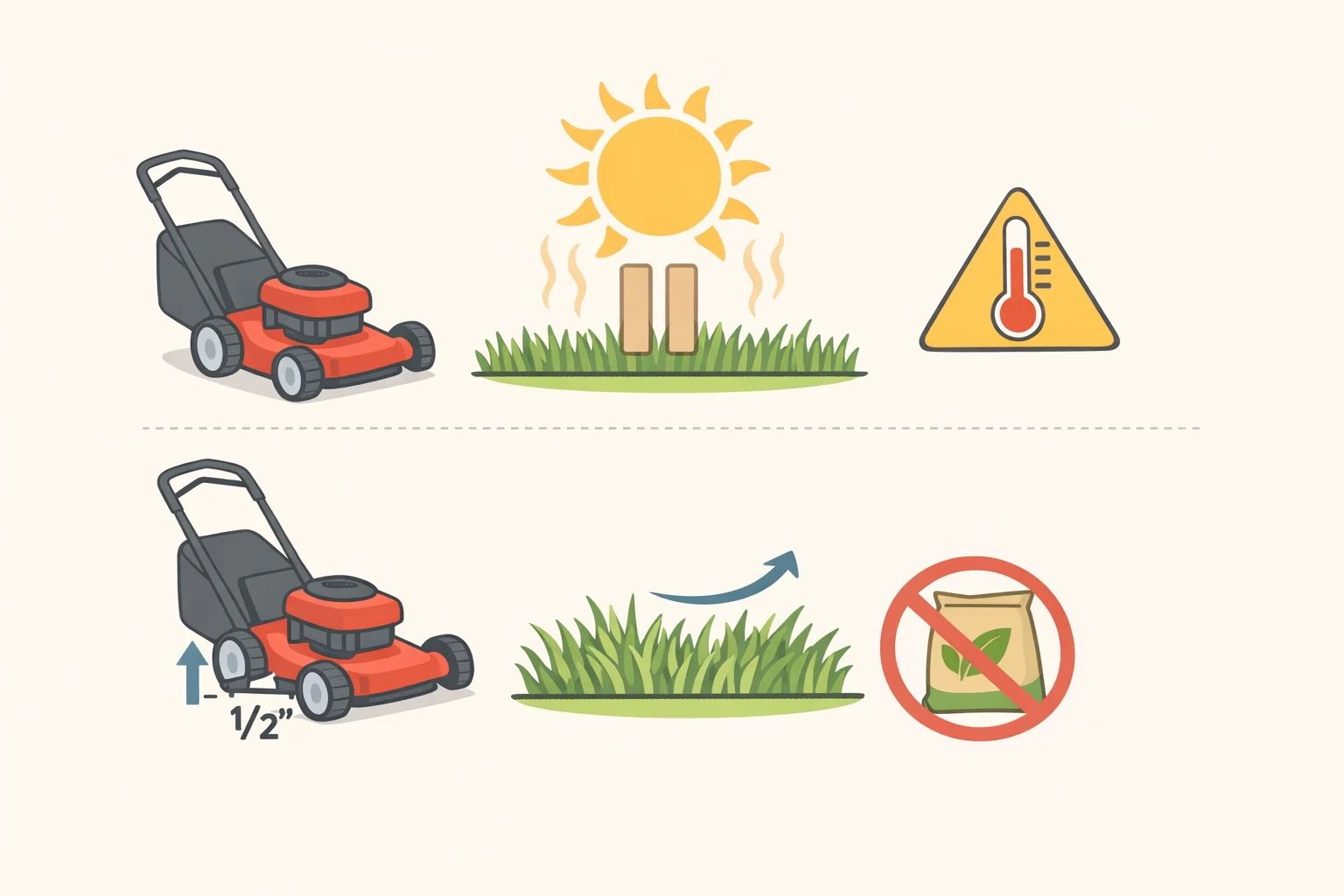
Don't mow a lawn that's drought-stressed or heat-stressed (UMN Extension). If August brings drought or stretches of days above 85°F, hold off until rain returns or day and evening temperatures cool down (UMN Extension). When mowing resumes, raise the deck by about half an inch (Clemson HGIC).
Climate changes this task. Clemson's cutoff applies to warm-season lawns: stop nitrogen fertilizer after August 15 so the grass isn't pushed into new growth right before dormancy (Clemson HGIC).
- Keep fallen tree leaves raked off warm-season lawns until they're fully dormant, since trapped leaves can smother turf that's already under stress (Clemson HGIC).
5. Scout weekly for pests and disease
Applies to: every garden; lawn owners have one lawn pest to watch for
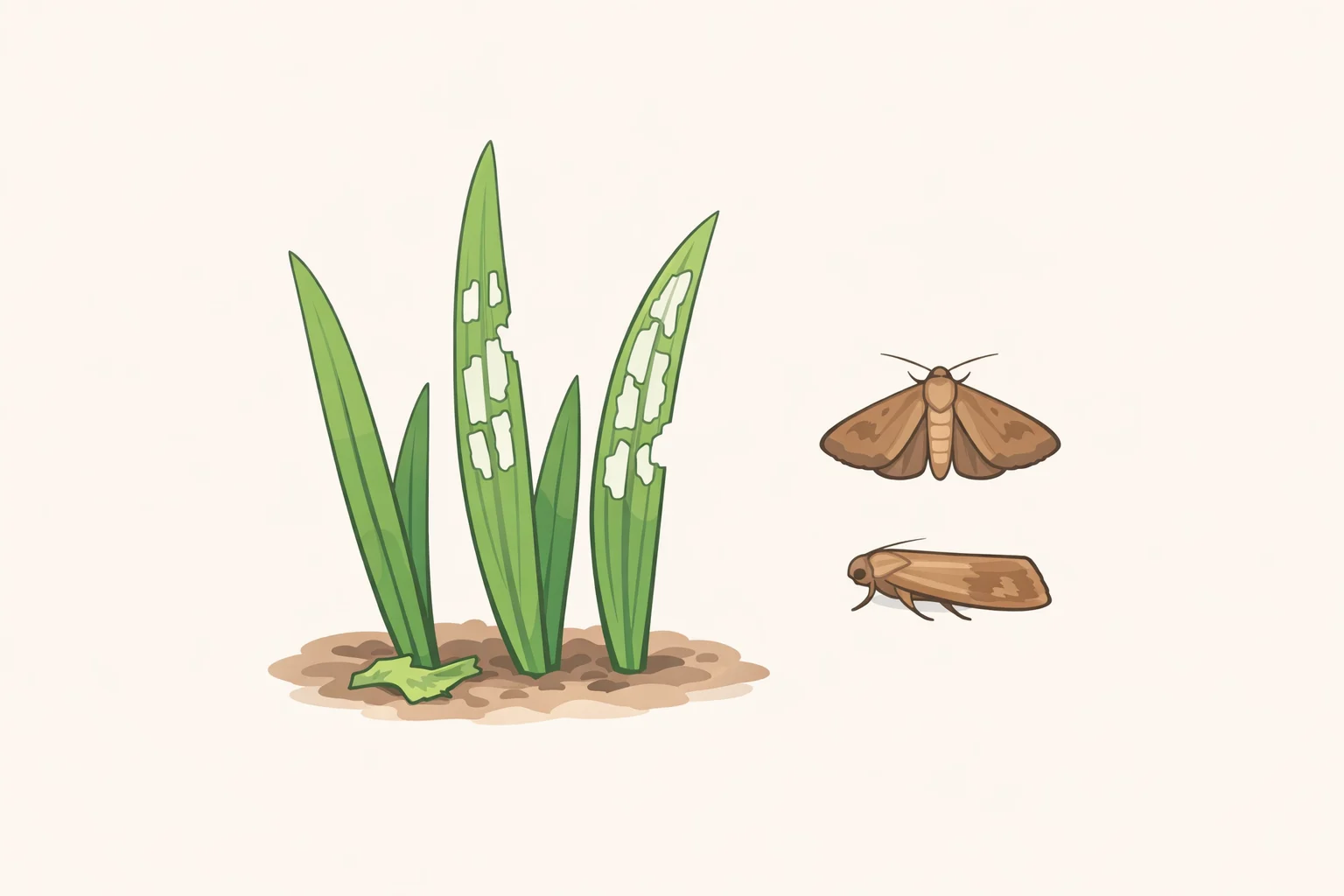
Late-summer heat and humidity give disease and insect pests room to build up, and drought weakens plants further, making them more vulnerable to both (Clemson HGIC). Fall armyworms are the priority check on lawns this month. Two signs give them away: small brown moths, and the "windowpane" feeding pattern the caterpillars leave on grass blades, particularly on bermudagrass and tall fescue, though brassicas in the vegetable garden are also at risk (Clemson HGIC).
Armyworms can do serious damage in a short window, so Clemson recommends treating them as soon as they're spotted rather than waiting to see how bad it gets (Clemson HGIC). Beyond that, a local Extension office is the practical resource for what's currently approved for treatment in a given area, since specific products fall outside what these two checklists cover.
- For disease, remove diseased or dying plants promptly, and keep that material out of the compost pile to avoid spreading pathogens (Clemson HGIC).
6. Divide finished perennials, cut back leggy annuals
Applies to: gardens with mature perennial beds or tired annual displays
Perennials that have already finished blooming this year are fair game for dividing: daylilies, bearded iris, rudbeckia, and purple coneflower are all good candidates (UMN Extension; Clemson HGIC). Fall bloomers work on the opposite schedule. A plant like a perennial mum is just gearing up to flower, and dividing it now risks the plant, so UMN Extension recommends waiting until spring (UMN Extension).
- Pick a cloudy day, ideally just ahead of rain, to minimize transplant shock when dividing (Clemson HGIC).
- For annuals that look ragged from the heat, cut back by about one-third to trigger a second flush of blooms before fall (Clemson HGIC).
7. Do an end-of-summer garden audit
Applies to: all gardeners, regardless of what's growing
Record-keeping is close to essential for improving next year's vegetable garden (Clemson HGIC). Jot down which pests showed up and which varieties underperformed, and note anything worth changing next year (Clemson HGIC).
- No vegetable plot or lawn to speak of? A late-summer container planting, chosen for varieties that hold up into fall, can provide a smaller fall-color project, and existing hanging baskets will keep performing with basic upkeep (Clemson HGIC).
Check your region: late-summer garden tasks that shift by climate
The checklists also add a few jobs that depend almost entirely on regional weather.
Storm-prone regions: August marks the beginning of the most active stretch of hurricane season (Clemson HGIC). Handle this in sequence: inspect trees and shrubs now and remove damaged, dead, or diseased limbs that could become hazardous in high wind, then clear gutters, storm drains, and water features so they drain properly before a storm arrives (Clemson HGIC). If flooding does hit, wait for the soil to dry before cleanup to avoid compacting it, and discard any edible plants that were submerged (Clemson HGIC). Anyone replacing a tree lost to a summer storm can generally plant 3 to 6 feet from the old stump, though in some instances that distance may need to stretch past 10 feet (UMN Extension).
Cooler climates heading toward fall: start watching nighttime lows near the end of the month. Cold-sensitive houseplants like orchids may need to come indoors once temperatures drop below 50°F (UMN Extension).
Everyone doing any of the above: schedule outdoor work before 11 a.m. or after 3 p.m., and build in sunscreen, hydration, and shade breaks. Heat and humidity are a hazard to the gardener, not just the garden (Clemson HGIC).
Looking ahead
The specifics here are local. A frost date in Minnesota and a frost date in South Carolina aren't the same conversation, and neither is a nitrogen cutoff or an armyworm response. Use these two Extension programs as a framework, then check a local Cooperative Extension office for the dates and approaches that actually apply where the garden is.
This month's choices still matter: which crops go in, which perennials get divided, and how much stress the lawn takes on. Those choices influence the garden's transition into fall. Once the first cool nights actually arrive, that's a different list entirely.