Costco closet trend: how it works and when to skip it
The Costco closet trend is simultaneously a home organization story, an anxiety management strategy, and a case study in who actually benefits when personal finance advice says "buy in bulk." All three framings are accurate. Which one applies to your household determines whether building one makes sense or just feels like it does.
Good Housekeeping editor-in-chief Jane Francisco encountered a textbook example while touring homes in the New York City area: a finished basement with a walk-in closet fitted with deep, tall shelves stocked floor to ceiling. Paper towels, toilet paper, tissues, giant condiment bottles, tuna cans, cereal, laundry detergent. "Basically everything you'd need if the apocalypse hit tomorrow," she wrote. The realtor called it smart home design. Francisco's description is funnier, and probably more honest about what's actually driving demand.
The organizational case is real. So is the anxiety underneath it. So is the economic constraint that makes the whole concept inaccessible to the households with the most to gain from it. Understanding how those three threads interact is more useful than the lifestyle coverage of this trend tends to be.
What is a Costco closet, exactly?
Video of the Day
The concept is simpler than it sounds. A Costco closet is a dedicated storage space, typically a garage or basement area, kept separate from the everyday kitchen pantry and fitted with deep shelving for warehouse-scale quantities of household staples, according to Good Housekeeping. It can accommodate bulk purchases from any warehouse retailer, Costco, Sam's Club, or otherwise. The defining feature isn't the brand. It's the separation.
That separation matters more than it might seem. Keeping a bulk reserve physically distinct from the working kitchen solves a friction problem that accumulates quietly: warehouse-sized packages disrupt everyday organization, make things harder to find, and create the conditions for accidental duplicate purchases. When the reserve lives in the garage and the kitchen stays stocked only with what's in active rotation, both spaces function better, House Beautiful notes. The closet isn't just storage. It's a system.
Costco's U.S. footprint makes plain how many households are already wired for this. The retailer runs more than 600 domestic warehouses and posted roughly $250 billion in sales last year, per House Beautiful. The bulk-shopping habit is already embedded in tens of millions of American households. What's newer is the deliberate, organized space built to contain it cleanly.
Video of the Day
Why the Costco closet trend is taking off now
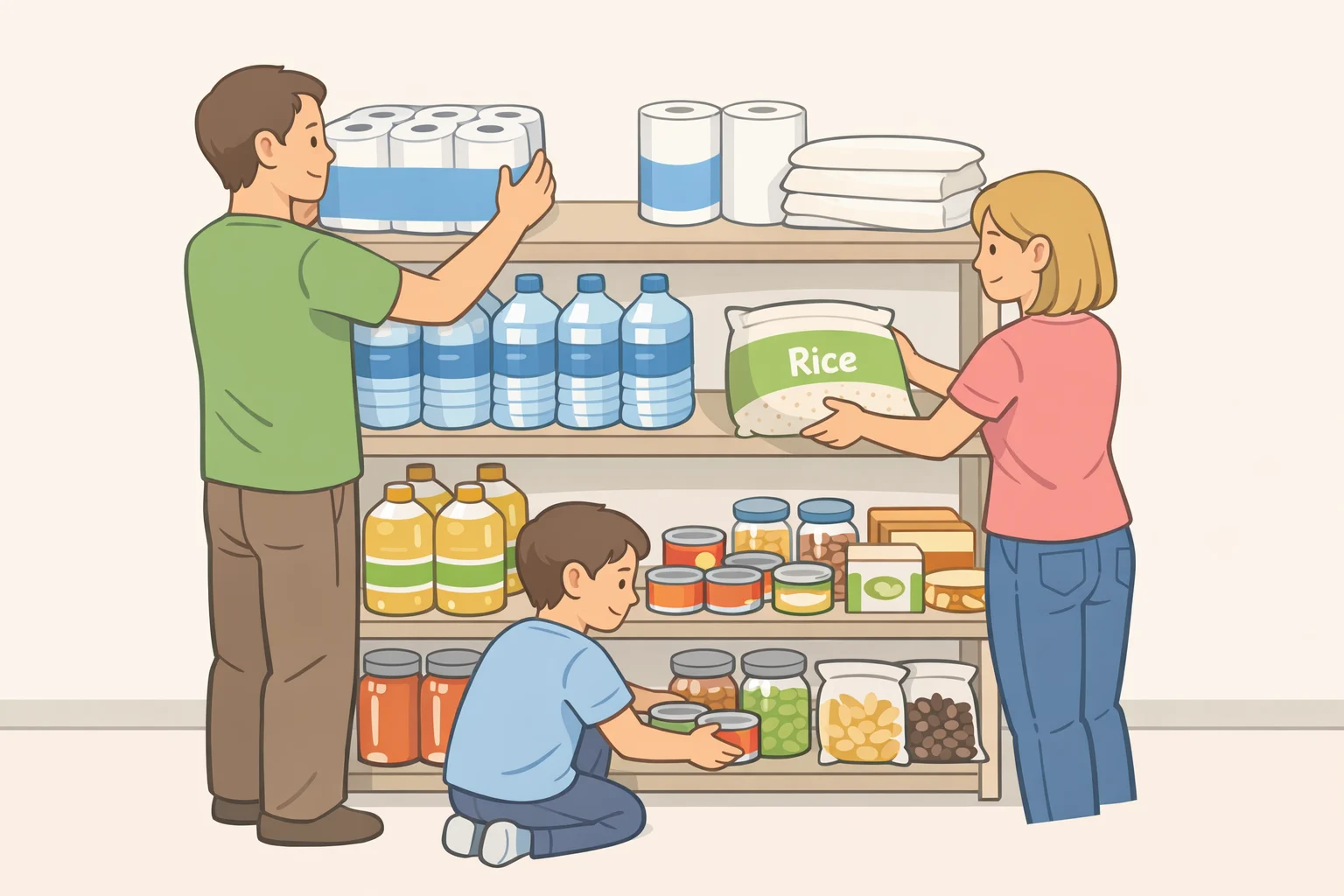
The organizers who work with these setups point consistently to the same cluster of forces: the COVID-19 pandemic's aftershocks, more frequent climate-related disruptions, and economic uncertainty. Shira Gill, organizing expert and author of LifeStyled, frames the whole thing as a proactive move, describing it as "a practical strategy for safeguarding families by keeping essential food and emergency supplies within reach," as Good Housekeeping reported this month. That framing sits closer to emergency planning than kitchen organization.
Professional organizer Stephanie Treantos of Lemonaid Solutions puts it more plainly. "It gives people a sense of security," she told Good Housekeeping. Her clients joke about having a "Doomsday Closet," capable of carrying the household through another shutdown. The humor is real, and so is the underlying feeling. The joke lands because the anxiety is still there.
There's also a purely practical case that has nothing to do with catastrophizing. A Costco run can eliminate routine grocery shopping for weeks at a time, House Beautiful notes. For households burning through staples at high volume, that's a genuine time savings regardless of any preparedness motive. Some households are doing this for the convenience. Some are doing it for the comfort. A lot are doing it for both, without drawing much distinction between them.
One thing worth being clear about: the trend's actual scale is difficult to pin down. The reporting comes primarily from professional organizers and lifestyle editors, credible observers of how people are using their homes, but not a population sample. What the coverage confirms is that organizers are fielding client requests for these setups. Whether that demand extends broadly beyond their client base, which skews affluent, is genuinely unclear.
How to create a Costco closet without overbuilding it
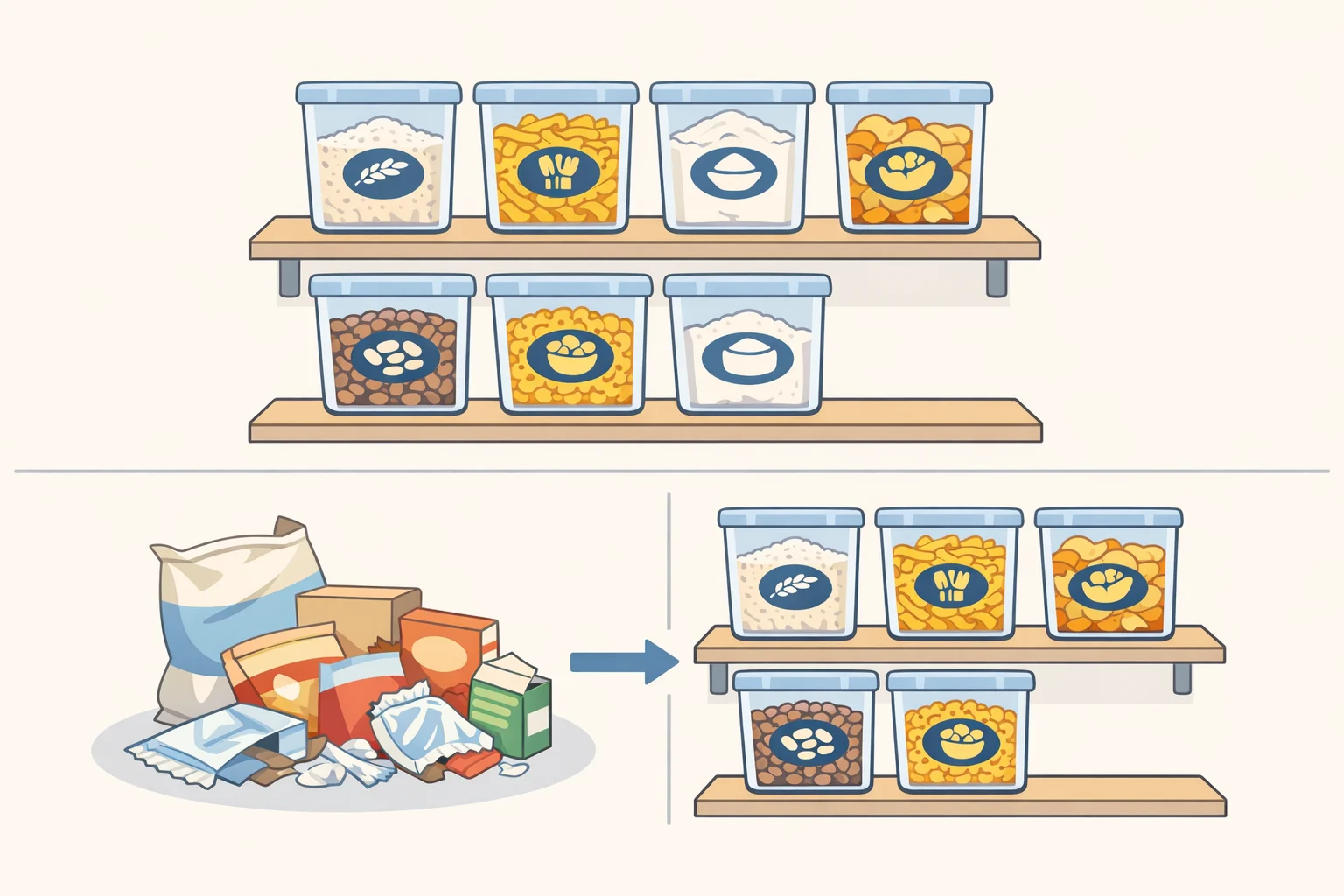
The version that gets photographed involves a finished basement, custom deep shelving, and enough stock to survive a supply-chain disruption. That's one way to do it. Not the only way, and organizers are clear on this point.
Treantos recommends choosing any accessible space, a garage corner, a basement wall, even a spare closet near the kitchen, somewhere easy to reach and straightforward to restock, per Good Housekeeping. The goal is a dedicated zone, not a renovation project. Gill's approach is even more scaled-down: strip the excess packaging from warehouse purchases to reclaim shelf space, swap custom built-ins for large floor bins or a labeled IKEA Billy bookcase with container inserts, and the same logic applies without the contractor, House Beautiful reported. "Every square inch counts, especially in smaller spaces," she noted.
The organizational rules are the same regardless of budget or square footage. Keep the reserve space separate from the active kitchen. Label everything. Rotate stock so older items cycle forward. Restock on the same schedule as your warehouse runs. The discipline matters more than the shelving.
The setup pays off most reliably when a household burns through staples fast enough to outrun spoilage. Treantos's go-to example: families with multiple kids in sports, churning through snacks, paper goods, and beverages at a pace where bulk quantities disappear well before expiration dates become a concern, per Good Housekeeping. High consumption velocity is the variable that turns a bulk deal into actual savings. Without it, you're just storing things longer.
The case weakens quickly under three specific conditions.
Perishables don't work in bulk. Nancy Wong, a consumer science professor at the University of Wisconsin-Madison, stopped her warehouse membership after repeatedly throwing out food she couldn't finish. "I realized that I could only make a dent in the quantity. I ended up throwing out the rest," she told Marketplace. The per-unit savings disappear the moment half of it goes in the trash.
Bulk isn't always the cheaper option, item by item. Most stores display per-unit pricing, and a regular grocery's sale price sometimes beats the warehouse price on the same item, an economist noted in the same Marketplace piece. Comparison shopping still matters. The warehouse price is often better. Not always.
The membership fee has to pencil out. Warehouse club memberships run $55 to $120 annually, per Marketplace. That fixed cost only makes sense if shopping is frequent and volume is high. Small households or occasional shoppers often find the math doesn't close.
The access problem: who the trend actually serves
This is where the Costco closet story gets more complicated.
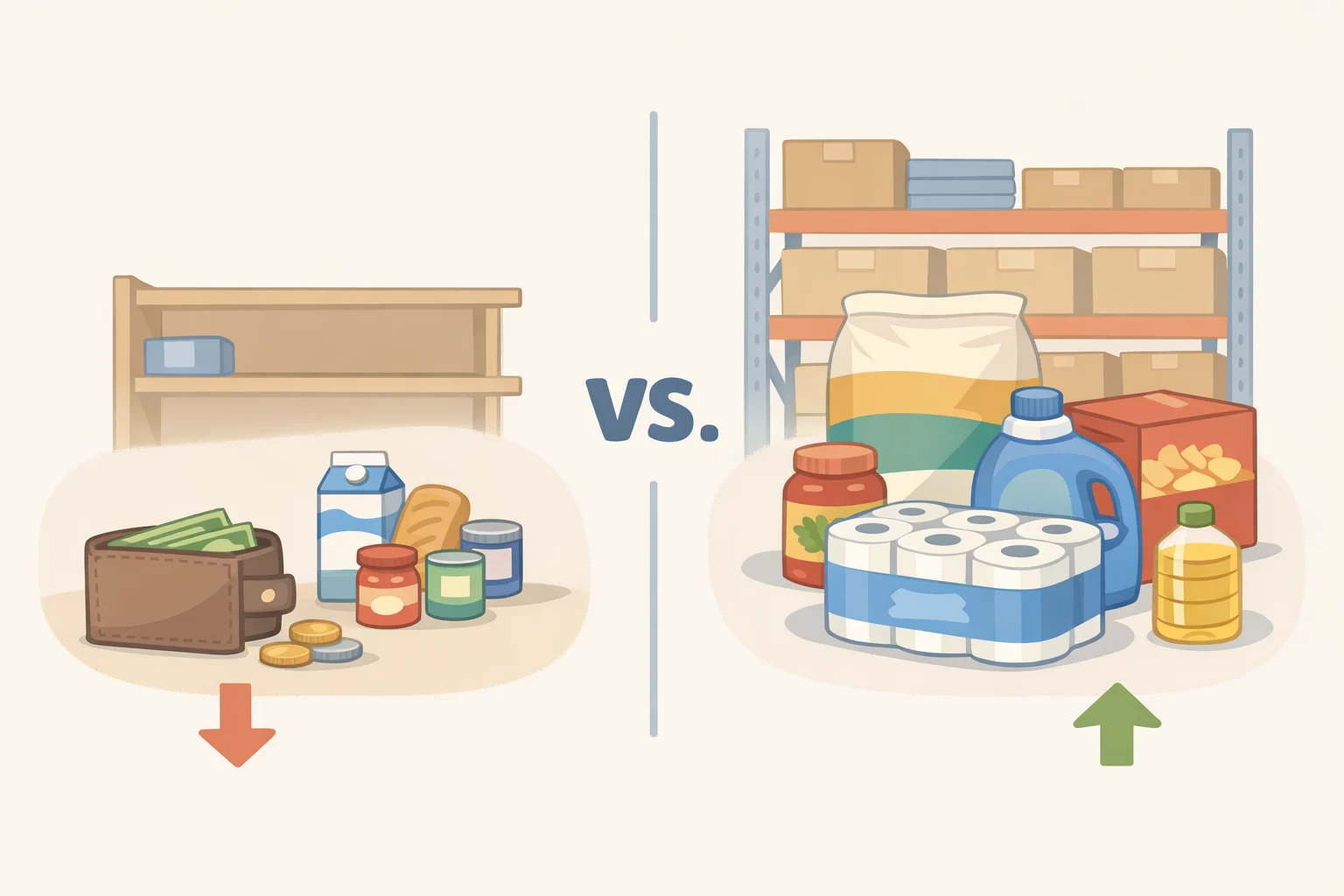
Consumer analytics firm Numerator profiled the typical Costco shopper as earning more than $125,000 a year, per Marketplace. The bulk-buying culture feeding the closet trend is already concentrated among higher-income households. The trend is rising in a demographic that already had the storage space and cash flow to support it.
The deeper problem is that the households with the most to gain from bulk pricing are structurally least positioned to access it. A 2016 University of Michigan working paper found that lower-income households buying toilet paper in smaller packages paid roughly 5.5% more per roll than higher-income households purchasing in bulk, as Marketplace reported. The mechanism is straightforward: without the upfront cash to absorb a large purchase, or a spare basement to store it, you buy small. Buying small costs more per unit. The gap compounds over time.
The same research found that lower-income households do take advantage of bulk discounts when they have more liquidity, per Marketplace. The constraint isn't preference. It's access to capital at the moment of purchase. As one source in that piece put it: "There are ways to save money if you have money. And you can't do that if you don't have any money."
The proponents' case isn't wrong. There's a real cost to not having a buffer: paying full retail during a shortage, absorbing price spikes, making more frequent small-purchase trips. The expense of being unprepared is genuine and often undercounted. The problem is that building the buffer requires capital that functions as a prerequisite. It's not just a matter of choosing to be more organized.
The practical workarounds are worth naming. Splitting bulk nonperishable purchases with a neighbor or friend spreads both cost and storage burden without requiring a membership, per Marketplace. Regular grocery stores carry large-format options that sidestep the annual fee; buying in bulk at the everyday grocery level is an underused option for households where warehouse club math doesn't work, an economist noted in the same piece. Neither workaround is as efficient as the full Costco closet setup. Both are meaningfully better than nothing.
What to actually take from this
The Costco closet is a physical response to accumulated uncertainty. Pandemic disruptions, climate-related supply shocks, economic volatility: the last several years taught a lot of households that buffers matter, and a dedicated bulk storage space is one way to act on that lesson, as Good Housekeeping reported this month. The behavioral shift is real even if its spread beyond upper-income households is hard to measure.
Whether it makes sense for any specific household comes down to four factors: nonperishable goods, high consumption rate, adequate spare space, and shopping frequency that justifies the membership cost. All four need to be present. Pull any one out and the economics thin quickly.
For households that meet those conditions, the bookcase-and-bins version is achievable without a renovation budget, and the organizational payoff is genuine. For those who don't, the underlying goal, fewer supply shocks, less financial exposure, some cushion against disruption, is still worth pursuing through smaller-scale routes: splitting bulk orders with a neighbor, buying large-format at the regular grocery store, or building up a nonperishable reserve gradually without the warehouse markup. The closet is one solution to a problem that's broadly shared. It just requires resources that aren't.