Jacques Pépin Ice Cream French Toast: The No-Custard Method
Forget whisking eggs into milk and sugar. Jacques Pépin's ice cream French toast skips the custard step entirely: he melts vanilla ice cream and soaks the bread in that instead, according to his own recipe and video for American Masters. The trick traces back to his years as a breakfast cook at Paris's Hôtel Plaza Athénée in the 1950s, when the kitchen needed to turn out a lot of French toast fast, a detail confirmed by both PBS American Masters and Food Republic.
The published recipe calls for three real ingredients: melted vanilla ice cream, a slice of bread, and butter for the pan (PBS American Masters). It gets called a two-ingredient trick online sometimes, which undersells it a little, since the butter matters as much as the ice cream and bread do. Toppings like banana and maple syrup are optional extras layered on top of that base.
This piece covers why the swap works, how to execute each step without scorching the sugary coating, which ice cream actually delivers the custard effect Pépin is after, and how to vary the dish once the basic method clicks.
Why melted ice cream replaces a French toast custard
Video of the Day
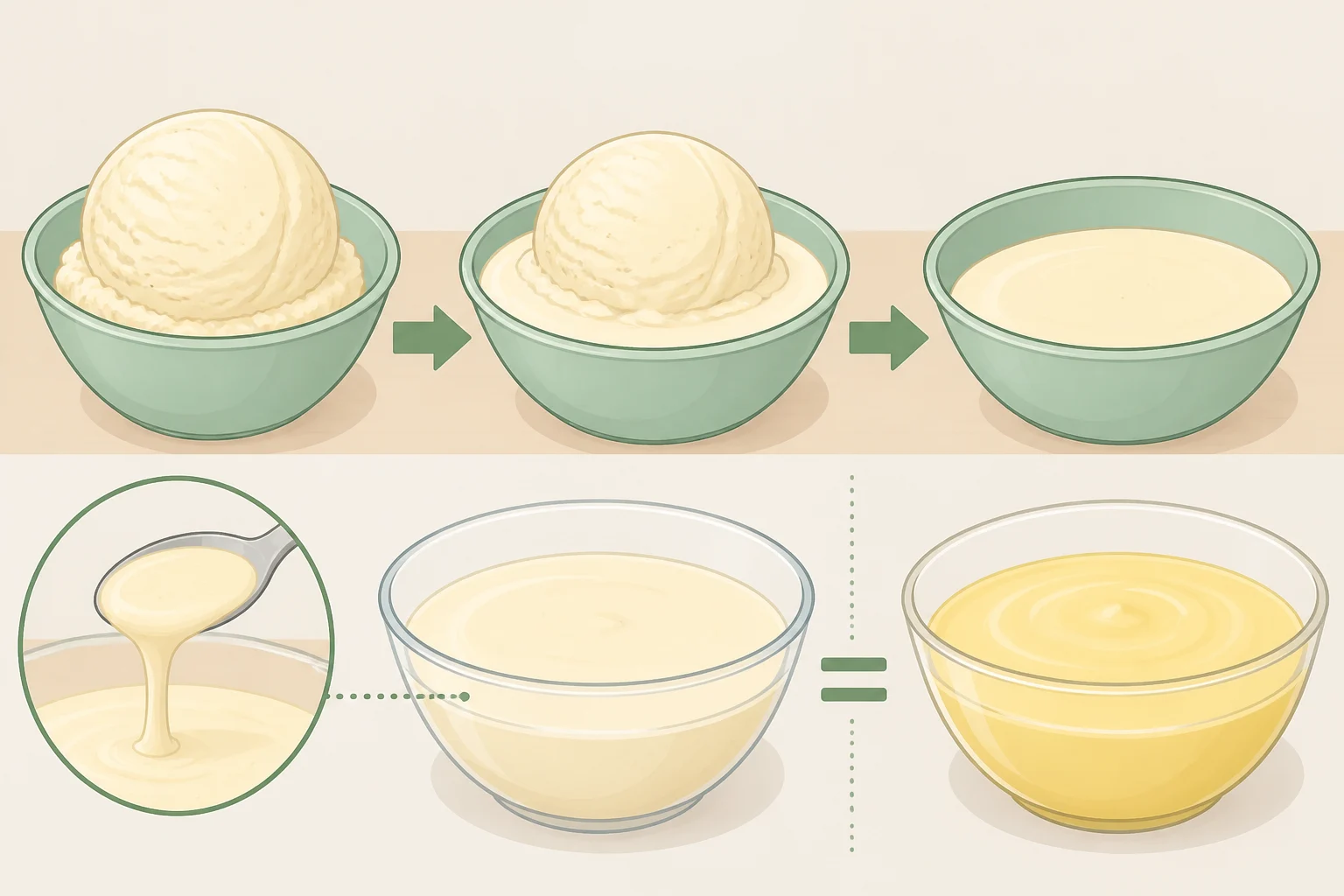
A standard French toast soak means measuring milk, sugar, vanilla extract, and whole eggs, then whisking them into something close to custard. Pépin's version collapses that list into a single melted ingredient: French-style vanilla ice cream (Food Republic). The result is French toast made with melted ice cream instead of a separately built soak, and it tastes closer to the original than the shortcut might suggest.
The reason it works comes down to what's already in the carton. Vanilla ice cream contains dairy, sugar, and vanilla flavoring, the same building blocks as a custard soak, so melting it is less a substitution than a shortcut to an already-finished mixture (Food Republic). French-style vanilla specifically is traditionally made with egg yolks, which is what gives standard French toast custard its golden color and richness in the first place (Food Republic).
Pépin makes the logic explicit in his own telling of the story. During a busy breakfast shift, he grabbed "the very eggy" ice cream sitting in the pastry kitchen specifically "to go faster" (PBS American Masters). That's a chef solving a volume problem on the line, not a novelty hack dreamed up for a camera. One product was already doing the job of four; he just had to notice it.
Video of the Day
How to make Jacques Pépin's ice cream French toast, step by step
The full recipe serves one and calls for 1 to 1½ cups of vanilla ice cream, melted; 1 slice of firm white bread; and 1 tablespoon of unsalted butter (PBS American Masters). Firm bread matters here. A soft sandwich slice falls apart once it's saturated with melted ice cream, while a sturdier loaf holds its shape through the soak and the pan. Optional finishing touches are half a sliced banana and 2 tablespoons of maple syrup (PBS American Masters).
-
Melt the ice cream. Pépin melts it in a bowl, helped along by 10 to 15 seconds in the microwave, then pours the melted ice cream onto a serving plate (PBS American Masters). It should pool like a thin custard, not a thick milkshake. If there are still solid chunks, give it another few seconds.
-
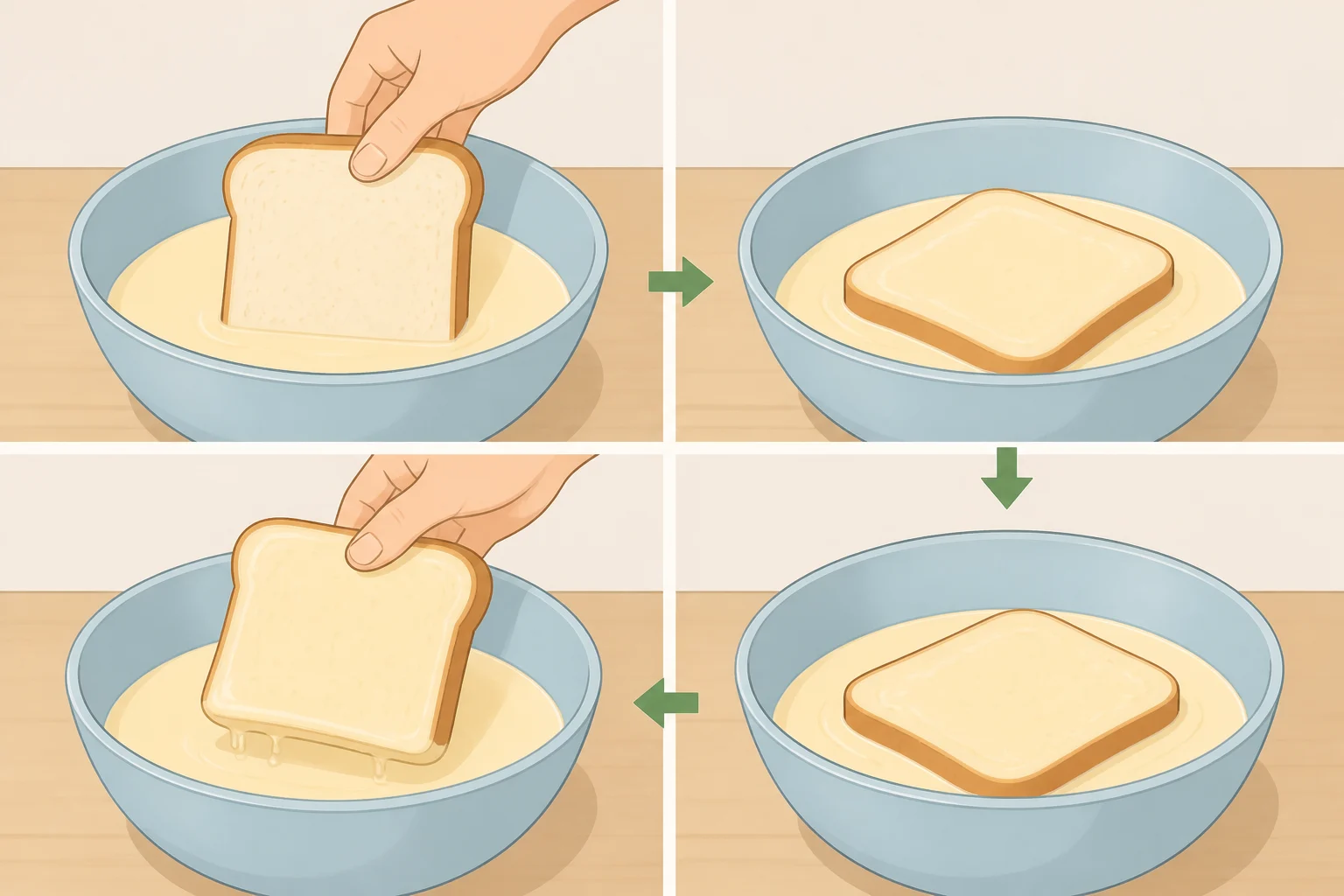
Soak the bread. Dip the slice in the melted ice cream, turning it to coat both sides, then let it rest for a couple of minutes so it absorbs as much of the liquid as possible (PBS American Masters). Done right, the slice looks saturated and slightly translucent at the edges, heavier than when it went in but still intact.
-
Melt the butter and pick your heat. This is where the sources disagree with each other. The written recipe says medium-high heat, while Pépin says in the video that he wants to "cook that at low temperature" (PBS American Masters). Neither version resolves the conflict, so treat the next part as editorial advice rather than settled instruction: gentler heat gives the sugar in the soaked bread room to brown evenly instead of scorching before the inside cooks through.
-
Fry the bread, about 2 minutes per side, until golden (PBS American Masters). Watch the edges rather than the center. Because the soak is sugary, it browns faster than a plain custard would, so pull the slice as soon as the surface hits deep gold rather than waiting for the darker brown a standard slice of French toast would need.
-
Return the toast to the same plate, landing it back in whatever melted ice cream is still pooled there. Pépin treats that leftover liquid as part of the dish, functioning almost like a crème anglaise poured under the finished toast rather than something to wipe out of the bowl (Food Republic).
-
Finish and serve immediately with banana slices and maple syrup, or whatever topping suits the ice cream flavor in use (PBS American Masters).
One thing not to fix: a little melted ice cream pooling on top of the finished toast isn't a mistake. Pépin says plainly that it's "fine" and simply part of how the dish comes together (PBS American Masters).
Choosing the right ice cream for French toast
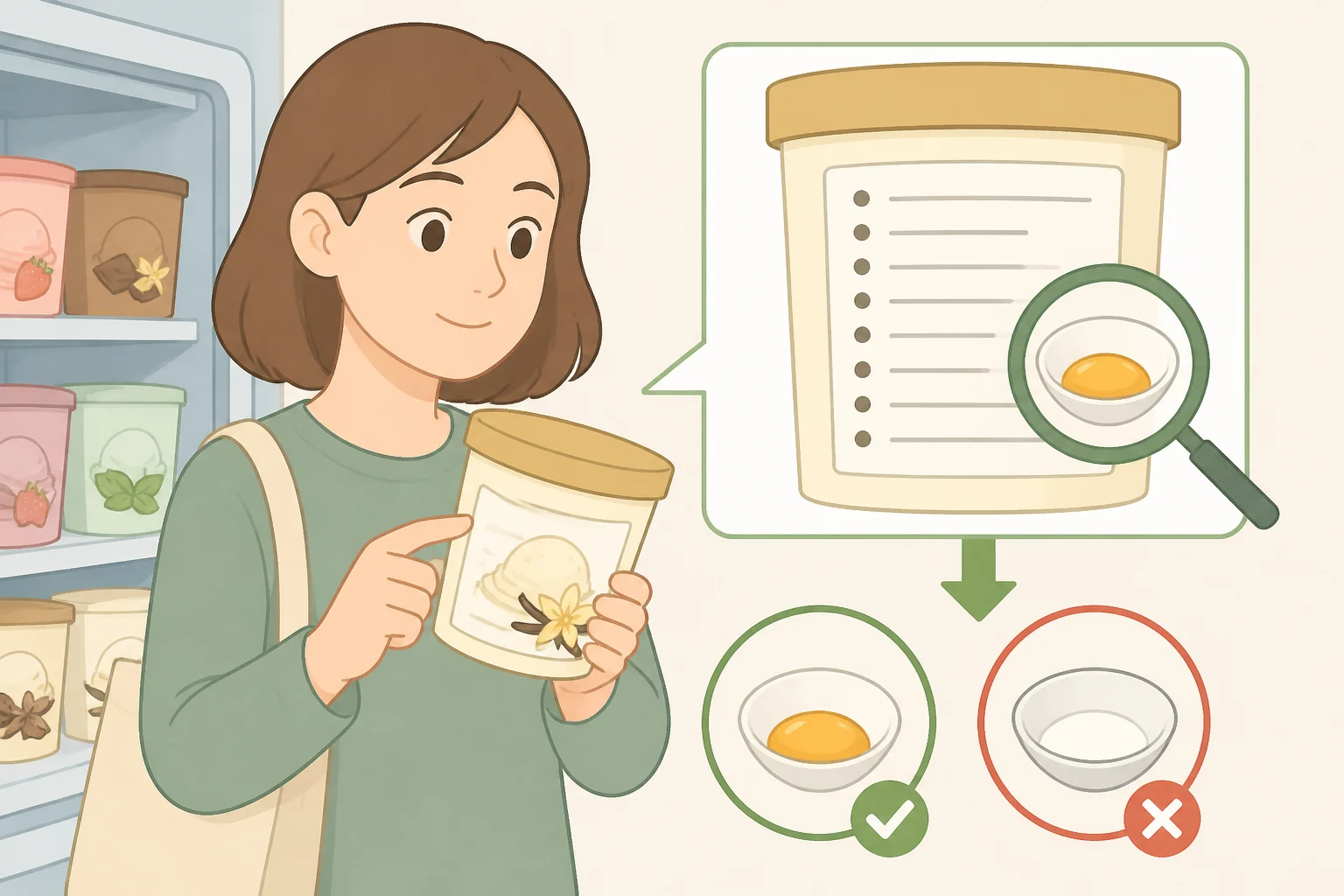
Walk down the ice cream aisle and old-fashioned vanilla, vanilla bean, and French vanilla sit side by side looking interchangeable. They aren't. Each style is made with a different ingredient profile, even though the labels all say some version of "vanilla" (Food Republic).
The detail that matters for this recipe is egg yolks. French-style vanilla is traditionally made with them, and they're what build the rich, golden custard effect Pépin is relying on (Food Republic). Reading the ingredient list before buying, rather than trusting a carton's label copy from memory, is the simplest way to confirm that richness is actually in there (Food Republic).
Pépin's own description backs this up. He calls French vanilla ice cream specifically the kind "done with that lot of eggs," which is why it's his default for this method (PBS American Masters). Egg-rich French vanilla ice cream French toast is the richer version of this dish, though, not the only valid one. Pépin says elsewhere that any flavor works for the technique itself; French vanilla simply mimics a traditional custard most closely.
Ice cream formulations shift over time as manufacturers adjust recipes, so a brand that listed real egg yolks last year isn't guaranteed to still list them today. Checking the current label before buying beats relying on a brand's reputation from memory.
Flavor variations beyond vanilla and banana
Pépin's standard plate pairs vanilla ice cream with sliced banana and maple syrup, but he's upfront that it's a starting point, not a rulebook (PBS American Masters). In his own words, "you can do it with strawberry ice cream, chocolate ice cream," treating the vanilla version as one option among several rather than the only correct one (PBS American Masters).
Toppings follow the same logic. Berries and "most fruit" pair well with the dish generally, which leaves plenty of room to match a topping to whatever ice cream happens to be in the freezer (PBS American Masters). If vanilla and banana is the known quantity, strawberry ice cream with fresh strawberries or chocolate ice cream with banana are reasonable next combinations to try, following the same pairing logic rather than any formula Pépin has tested on camera.
There's a smaller detail in the video worth repeating for anyone who tosses a banana at the first brown spot. Pépin keeps his in the refrigerator, where the skins turn black but the fruit inside stays "creamy and firm," which he describes as simply his way of making bananas keep longer (PBS American Masters). It's a personal habit of his, not a documented food-storage rule, but it explains why he's rarely short a ripe banana when breakfast calls for one.
A one-plate breakfast, not a crowd recipe
Pépin's ice cream French toast turns a multi-step custard into a single melted scoop, a method forged under the pressure of real restaurant breakfast service in 1950s Paris (PBS American Masters). The recipe as published serves one (PBS American Masters), and that scale is part of the point. One plate, one skillet, no extra bowls beyond the one the ice cream melted in.
That size also makes the method worth remembering past a single Saturday morning. It isn't built to feed a table of six, but as a solo breakfast assembled around a partial carton of vanilla, strawberry, or chocolate ice cream, there's nothing else quite like it. The next time there's just enough ice cream left for one bowl and a craving for something warm, that's the moment to reach for this instead of cereal.