Baked Apple Cinnamon French Toast: Bread & Custard Ratios
Baked apple cinnamon French toast often goes wrong for one reason: moisture, not flavor. Pack in too many juicy apples, or skip drying the bread first, and a custardy casserole collapses into a wet, loose mess. Recipe developer Passport Kitchen names the failure point directly, warning that overloading the dish with apples "will break the custard" (Passport Kitchen, earlier this year).
This is a make-ahead dish by design. Bread soaks in custard, often overnight in the fridge, so "most of the work is done before you even turn on the oven" (The Kitchn, 4 days ago). The recipe comes from a professionally trained baker and recipe developer with more than a decade in food media, which is worth knowing before trusting her ratios over a dozen other versions online (The Kitchn, 4 days ago).
What follows is one method for an apple cinnamon French toast casserole, built around bread, apples, and custard in proportions that hold together, plus the timing calls that separate clean slices from a soggy bottom layer. The quantities below follow Passport Kitchen's apple casserole formula specifically. Comparisons to The Kitchn and Bake & Bacon throughout show how other versions of this dish handle the same bread-drying and soak-timing questions, not that they validate this exact ratio.
What you'll need
Video of the Day
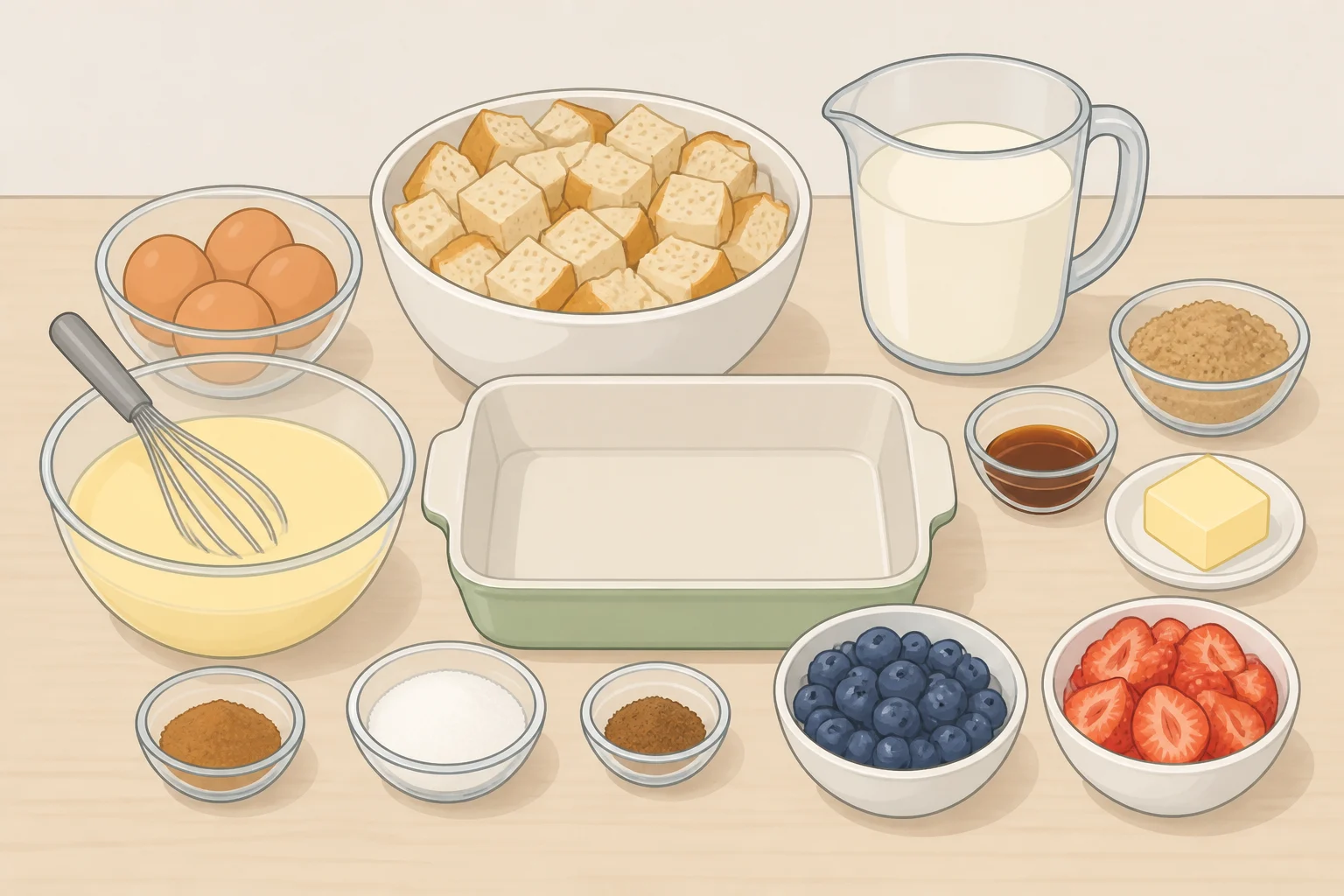
This method centers on a 1-pound loaf of brioche or challah, 2½ to 3 apples, and a custard built from pantry staples. Plan for roughly 25 minutes of active prep and 40 to 50 minutes in the oven, plus either a 30-minute rest or an overnight chill (Passport Kitchen, earlier this year).
- 1 lb brioche or challah, cut into 1-inch cubes and dried
- 2½-3 apples (Honeycrisp and Granny Smith work well together), sliced ⅛ inch or thinner
- 2 tablespoons brown sugar, 1 teaspoon cinnamon, a pinch of salt, and an optional teaspoon of flour for the apples
- 6 large eggs, 2 cups whole milk, ½ cup heavy cream, ⅓ cup sugar, 1 tablespoon vanilla extract, ½ teaspoon kosher salt
- 2 tablespoons butter, cubed, for the top
- Maple syrup and powdered sugar for serving
- A buttered 9-by-13-inch baking dish
Video of the Day
Start with the right bread, dried on purpose
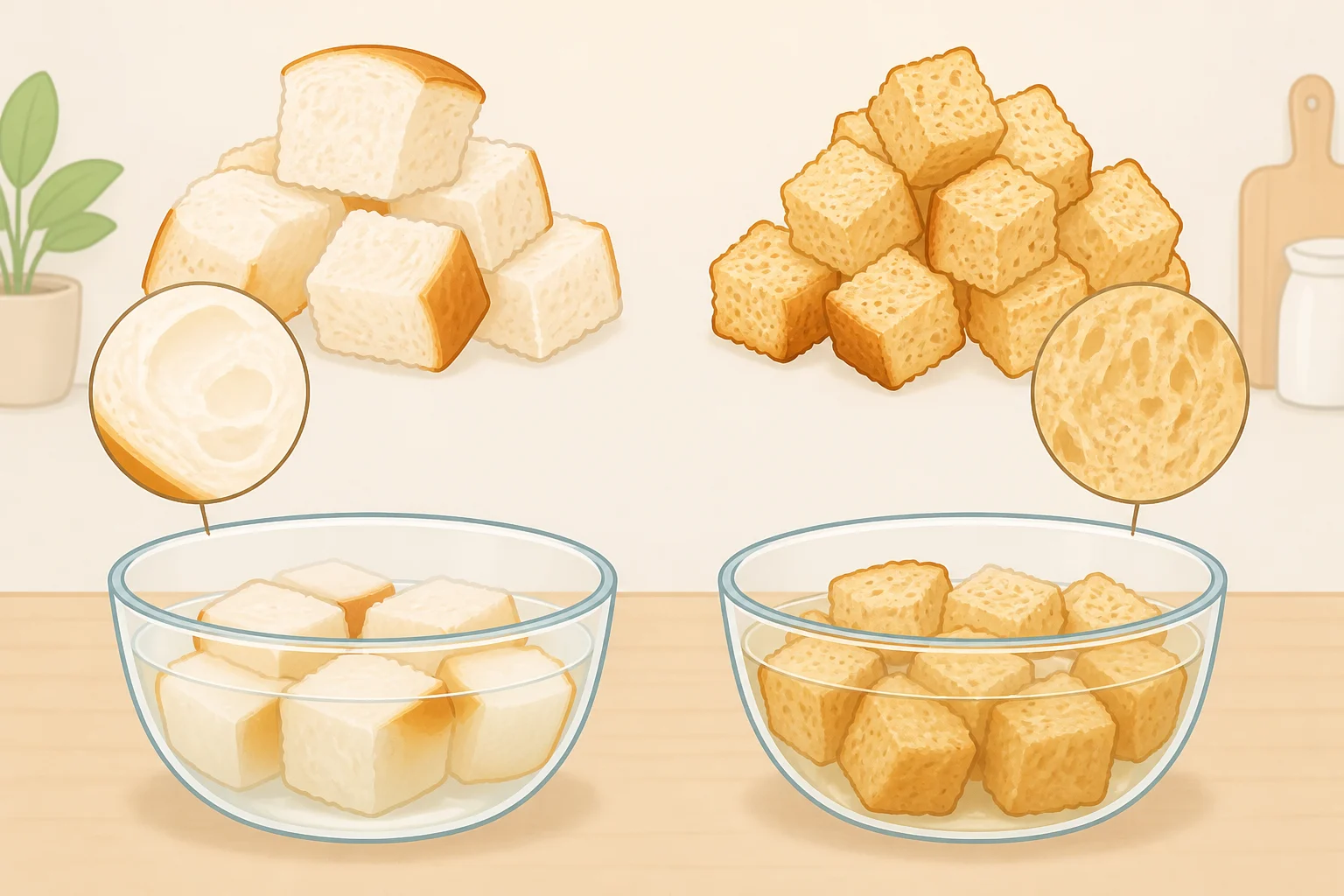
Brioche and challah show up again and again in tested versions of this casserole because their texture lets them absorb custard "without falling apart" (The Kitchn, 4 days ago). Bake & Bacon makes the stronger case against substitutes, warning that ordinary white or wheat bread "just won't do," though challah, Texas toast, or a sturdy French loaf can stand in for brioche if needed (Bake & Bacon, nearly two years ago).
Day-old or deliberately dried bread is, in Passport Kitchen's words, "essential for structure" (Passport Kitchen, earlier this year). There are two ways to get there: leave cubed bread out at room temperature for several hours, or speed things up at 300°F for 10 to 12 minutes (same source).
Dried bread's job here is purely structural. It needs to hold its shape as it soaks instead of dissolving into paste, and that's true whichever loaf you use. Skip this step and no amount of careful apple measuring will rescue the texture later.
How to make baked apple cinnamon French toast without a soggy center
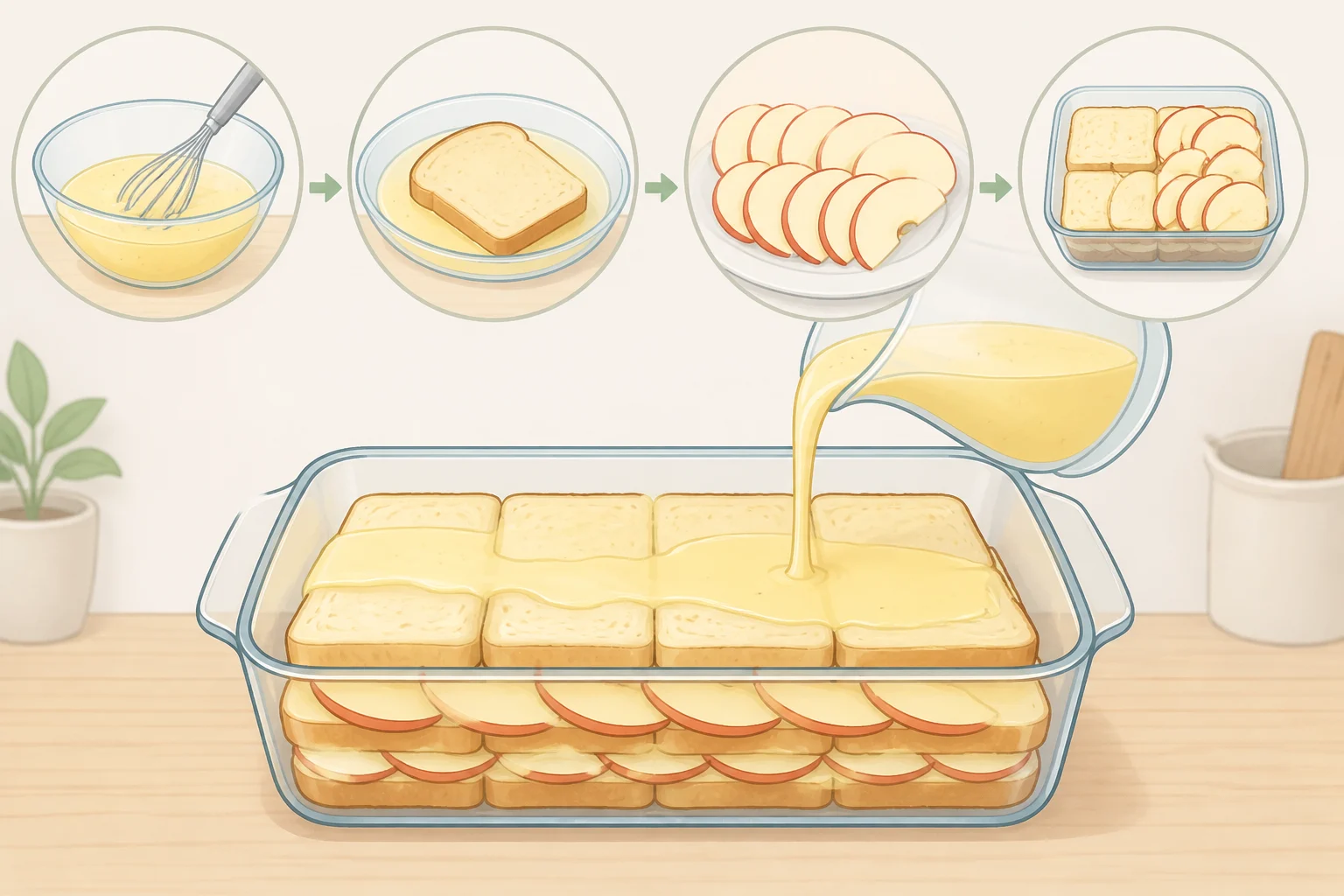
This recipe uses a 9-by-13-inch, 3-quart dish, the same size The Kitchn's standard casserole recipe calls for (The Kitchn, last year).
- Dry and cube the bread, as described above.
- Slice the apples thin. Cut 2½ to 3 apples to ⅛ inch or less; Passport Kitchen calls thickness "the" variable that determines final texture (Passport Kitchen, earlier this year). Toss the slices with 2 tablespoons brown sugar, 1 teaspoon cinnamon, and a pinch of salt; a teaspoon of flour is optional and helps soak up excess liquid if the apples are especially juicy. Recipes disagree on peeling: Bake & Bacon peels its apples before slicing, while Passport Kitchen's version skips that step entirely (Bake & Bacon, nearly two years ago). Either choice works. Stick to the 2½-to-3-apple range, though: more than that releases enough extra liquid during baking to break the custard and leave a wet layer at the bottom.
- Layer bread and apples together in the buttered dish, spreading the apples through the bread rather than piling them on top. This distributes the apples and their juices evenly through the bake instead of concentrating them in one spot (Passport Kitchen, earlier this year).
- Whisk the custard. Combine 6 large eggs, 2 cups whole milk, ½ cup heavy cream, ⅓ cup sugar, 1 tablespoon vanilla extract, and ½ teaspoon kosher salt, then pour it evenly over the bread and apples, pressing gently so every cube gets soaked (Passport Kitchen, earlier this year).
- Choose a soak path. For same-day baking, let the assembled dish rest at least 30 minutes at room temperature before it goes in the oven (Passport Kitchen, earlier this year). For a more evenly custardy overnight apple French toast bake, cover the dish and refrigerate it instead; Passport Kitchen treats overnight as the preferred option because it "ensures even absorption and a cohesive bake" (same source). The Kitchn's standard casserole recipe backs the same logic, allowing refrigeration overnight or up to 24 hours, with a 1-hour room-temperature rest as the same-day fallback (The Kitchn, last year). If the dish has spent the night in the fridge, don't pull it straight into a hot oven: uncover it and let it sit at room temperature for 30 minutes while the oven heats, taking the chill off before baking (same source).
- Bake at 350°F for 40 to 50 minutes, topped with a few small cubes of butter, until the top is golden brown (Passport Kitchen, earlier this year).
- Check for doneness. The center should be just set with a slight jiggle, not liquid, and the top should be deeply golden (Passport Kitchen, earlier this year). The Kitchn describes the same marker for its standard casserole: a finished bake is "puffed, golden-brown, and set" (The Kitchn, last year).
- Rest 10 to 15 minutes before slicing so the custard finishes setting and the slices hold together cleanly (Passport Kitchen, earlier this year).
Troubleshooting a soggy center or an overbaked top
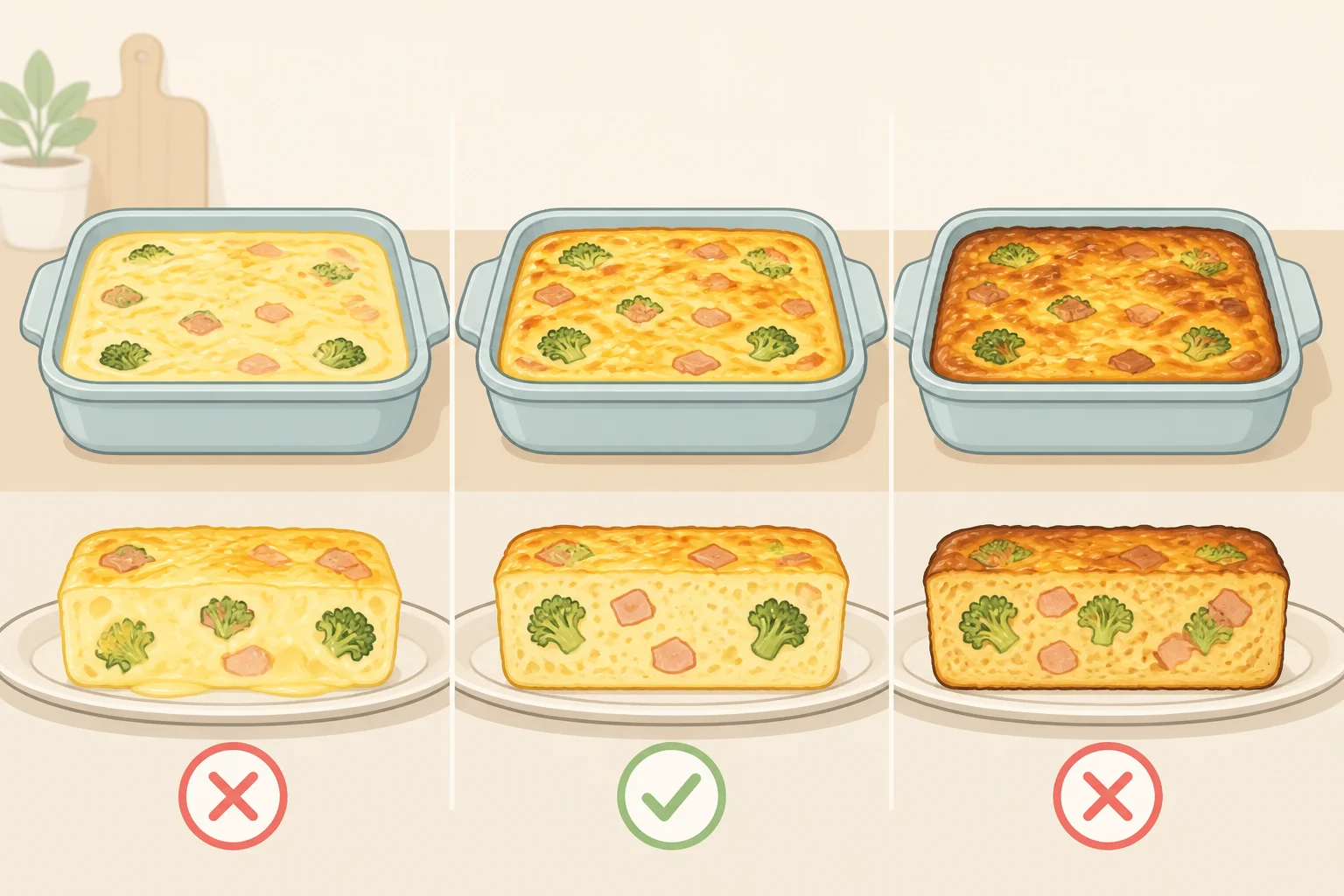
A slight jiggle in the center is normal and signals the casserole is done, not undercooked (Passport Kitchen, earlier this year). If the center still looks liquid rather than lightly wobbling, it needs more time; keep baking until it sets, loosely tenting the top with foil if it's already browning too fast. If it firms up more than expected once rested, a drizzle of warm syrup or a splash of cream loosens it back up (same source).
The overnight soak and the 30-minute rest aren't interchangeable in reliability. An overnight chill gives the custard more time to work all the way into the bread, which is why Passport Kitchen lists it as the preferred option and why The Kitchn's standard casserole recipe allows up to 24 hours in the fridge for the same reason (Passport Kitchen, earlier this year; The Kitchn, last year). A 30-minute rest is faster but leaves less time for custard to reach the center of dense bread cubes, a tradeoff worth weighing rather than a result either recipe measured directly.
Serving and storing a make-ahead apple cinnamon French toast
Keep it simple with maple syrup and a dusting of powdered sugar, or build a quick brown-sugar whipped cream, which The Kitchn describes as light, fluffy, and just sweet enough to complement the warm apples (The Kitchn, 4 days ago). "This cinnamon apple version is an instant upgrade on the nostalgic classic! I loved the textural difference from the apples, and the bit of tartness they added to cut through the sweetness," wrote Topher, a commenter on The Kitchn's recipe, last month.
An oat streusel topping is a legitimate variation to consider, though it describes a different build of the dish and adds workload. Bake & Bacon's version pre-cooks the apples in butter, brown sugar, and maple syrup on the stovetop, then cuts a separate crumble of cold butter, flour, brown sugar, and oats to scatter on top before baking, a stovetop step this method otherwise skips entirely (Bake & Bacon, nearly two years ago).
For this specific method, the conservative call is the one Passport Kitchen gives for its own apple casserole: refrigerate leftovers for up to 2 days and skip the freezer (Passport Kitchen, earlier this year). Other developers publish longer windows for their own, differently built versions. The Kitchn's standard French toast casserole holds up to 3 days refrigerated in an airtight container (The Kitchn, last year), and Bake & Bacon's streusel-topped casserole, which uses a different ratio of butter and sugar, keeps up to 5 days refrigerated or up to 2 months frozen if wrapped tightly or sliced into a freezer-safe container, with a 30-to-60-second microwave run to reheat (Bake & Bacon, nearly two years ago). That 2-month freezer window belongs to Bake & Bacon's streusel version specifically; it isn't a guarantee for the plain apple bake described here.
Overnight or same-day: picking a path
For a weekend brunch where clean slices matter most, the overnight soak is the safer bet. Passport Kitchen calls it the preferred option because it "ensures even absorption and a cohesive bake" (Passport Kitchen, earlier this year), and The Kitchn's standard casserole recipe builds its own timing around the same idea, letting the dish sit covered in the fridge for up to 24 hours before baking (The Kitchn, last year).
When the dish needs to happen the same morning, a shorter rest still works. Passport Kitchen calls for at least 30 minutes at room temperature, while The Kitchn's casserole gives it a full hour when there's no time to chill, enough for the bread to take up most of the custard even without a trip to the fridge (Passport Kitchen, earlier this year; The Kitchn, last year). It just asks a little more attention at the doneness check, since the bread has had less time to absorb.
Once the dried-bread base and the capped apple quantity are locked in, the format travels well. Swap in pears or stone fruit by season, add the oat streusel for a holiday table, or finish with maple syrup instead of whipped cream. None of that touches the bread-to-custard balance that keeps the dish from turning soggy in the first place.