Maritozzi recipe: an overnight schedule for Roman cream buns
This maritozzi recipe from Serious Eats gives the dough an unusually wide refrigeration window, anywhere from two to 24 hours before shaping, per the recipe published last year. That's generous enough to build an entire overnight plan around it. This guide settles the dough into the fridge for roughly 12 to 16 hours, comfortably inside that range, and turns the process into a two-day project: mix and knead after dinner, then shape, proof, bake, and fill the buns the next morning.
Maritozzi are Rome's classic cream buns, brioche-like dough split open and piped full of whipped cream, a fixture on breakfast counters across Rome and the Lazio region (GialloZafferano, last year; Serious Eats). This Italian maritozzi recipe follows one complete method start to finish, then closes with a section on variations, substitutions, and what to do if the schedule slips.
The catch: this doesn't shrink the total workload, it just relocates it. Mixing and kneading move to the night before, so day two still carries a bench rest, about two and a half hours of proofing, baking, cooling, and filling (Serious Eats). Think of it as a weekend project built around a full night's sleep, not a shortcut.
What maritozzi are
Video of the Day
A maritozzo is a brioche-like bun, split lengthwise and filled with whipped cream, the classic Roman maritozzi with whipped cream that shows up on bakery counters with nothing more than a dusting of confectioners' sugar on top. Some shops dress theirs up further with chopped nuts, chocolate curls, or fresh fruit (Serious Eats, last year).
The backstory is tradition more than verified history. GialloZafferano traces these Italian cream buns to honey-and-raisin loaves eaten in Roman times, later adopted as a Lenten food by the Middle Ages (GialloZafferano, last year). Serious Eats hedges the same claim, noting the pastry has "apparently" existed since medieval times. Neither source treats it as settled fact, and neither should this article.
Maritozzi also don't have one codified recipe. The introduction to chef Fabrizio Fiorani's recipe says every baker develops a personal method for getting the dough soft (GialloZafferano, early last year). Rather than blend approaches, this guide commits to a single formula, Serious Eats' cold-fermented dough, which suits an overnight schedule especially well.
Video of the Day
The full schedule at a glance
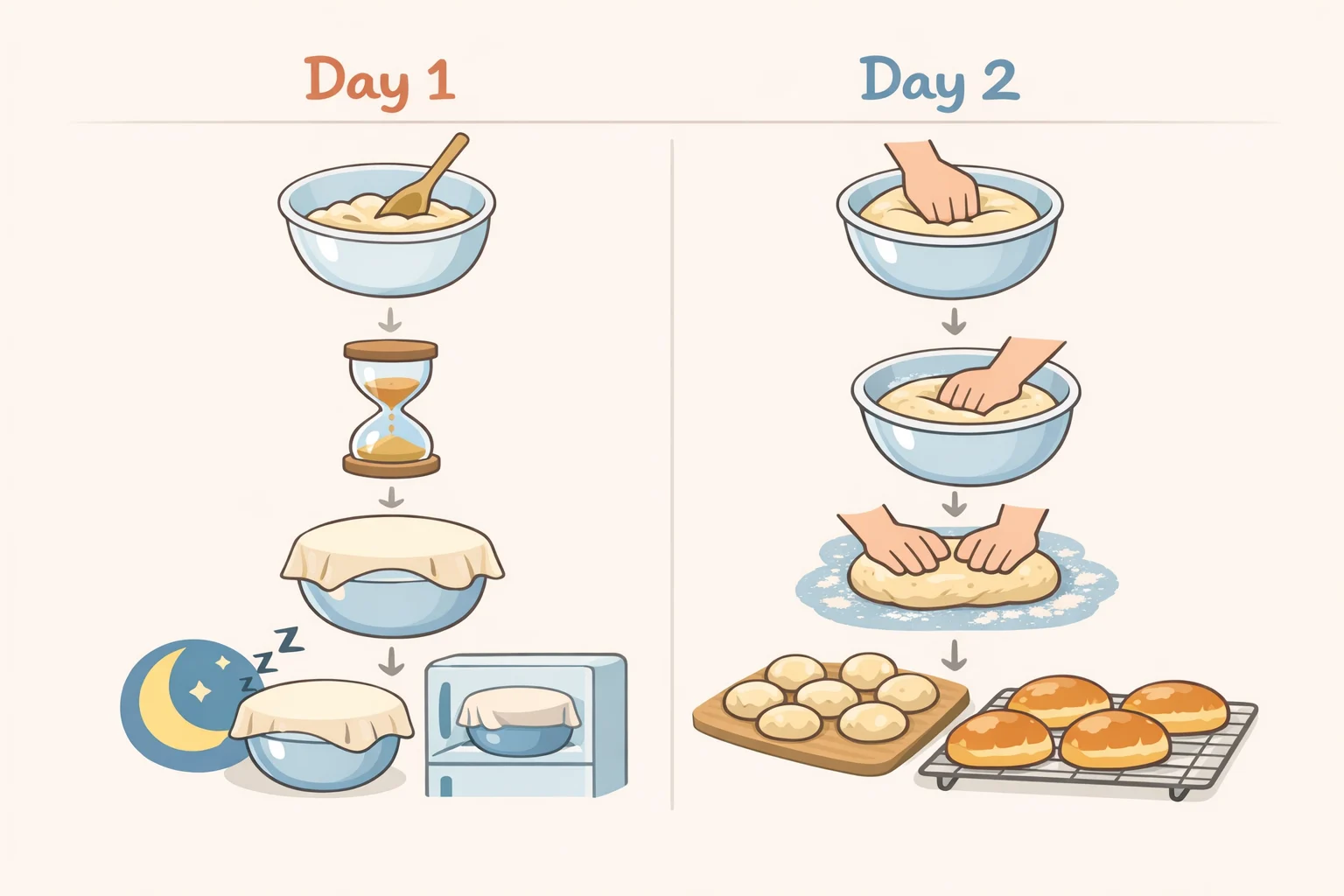
Here's the whole timeline in one place, before committing to any of it.
| Stage | Time |
|---|---|
| Mix and knead dough (active)* | ~15 min |
| Room-temperature ferment | up to 90 min |
| Refrigerate | 2–24 hrs (this guide targets ~12–16 hrs) |
| Divide and pre-shape (active)* | ~10 min |
| Bench rest | 30 min |
| Final shape and proof | ~2.5 hrs |
| Bake (after brushing with egg wash) | ~20 min |
| Cool | ~20 min |
| Whip and pipe filling (active)* | ~10 min |
*Rows marked with an asterisk are editorial estimates for planning purposes. The fermentation, refrigeration, bench rest, proof, bake, and cooling times come directly from the recipe (Serious Eats, last year).
Hands-on work across both days runs an estimated 35 minutes total. The waiting is where the real time goes: up to 90 minutes of room-temperature fermentation, 12 to 16 hours in the fridge by design, and about three hours and forty minutes on day two, counted from the moment the chilled dough comes out of the fridge to the moment it's ready for filling, covering bench rest, proofing, baking, and cooling (Serious Eats).
The 90-minute room-temperature rest jumpstarts fermentation before the cold slows it down, and the fridge step firms the dough enough to shape easily the next day (Serious Eats). Treat 24 hours as a hard ceiling: past that point the dough overproofs, by the recipe's own warning. If an overnight stretch is creeping close to a full day, shape and bake earlier rather than pushing right up to the line.
How to make an overnight maritozzi recipe
Makes 8 buns (the ingredient list is headed "makes 10 buns," but the shaping instructions divide the dough into eight portions; this guide follows the eight-portion instruction, since that's the step actually described). Active time: roughly 35 minutes, an editorial estimate rather than a figure from the recipe. Refrigeration: 12 to 16 hours. Oven: 350°F (175°C). Before starting: a stand mixer or the patience to knead by hand, a covered bowl for the room-temperature rest and the fridge stage, and glutinous rice flour, which this formula requires (more on sourcing it below).
Day 1: mix, ferment, and refrigerate
Ingredients (dough): bread flour or other high-protein flour (283 g), glutinous rice flour (70 g), whole milk (209 g), honey (45 g), yeast (¾ tsp), and one large egg, lightly beaten, reserved separately for the egg wash brushed onto the shaped buns just before baking (Serious Eats, last year).
- Combine and knead. Mix the flour, glutinous rice flour, milk, honey, and yeast, and knead until smooth and elastic. By hand or with a stand mixer's dough hook, that generally means the dough stops tearing and springs back slowly when pressed, a standard bread-baking cue rather than a detail spelled out in the recipe itself. Serious Eats lists glutinous rice flour among the dough ingredients without explaining the mechanism behind it; treat it as a required component of this particular formula rather than a technique that needs unpacking (Serious Eats).
- Rest at room temperature, covered, for up to 90 minutes to jumpstart fermentation before the fridge slows it back down (Serious Eats).
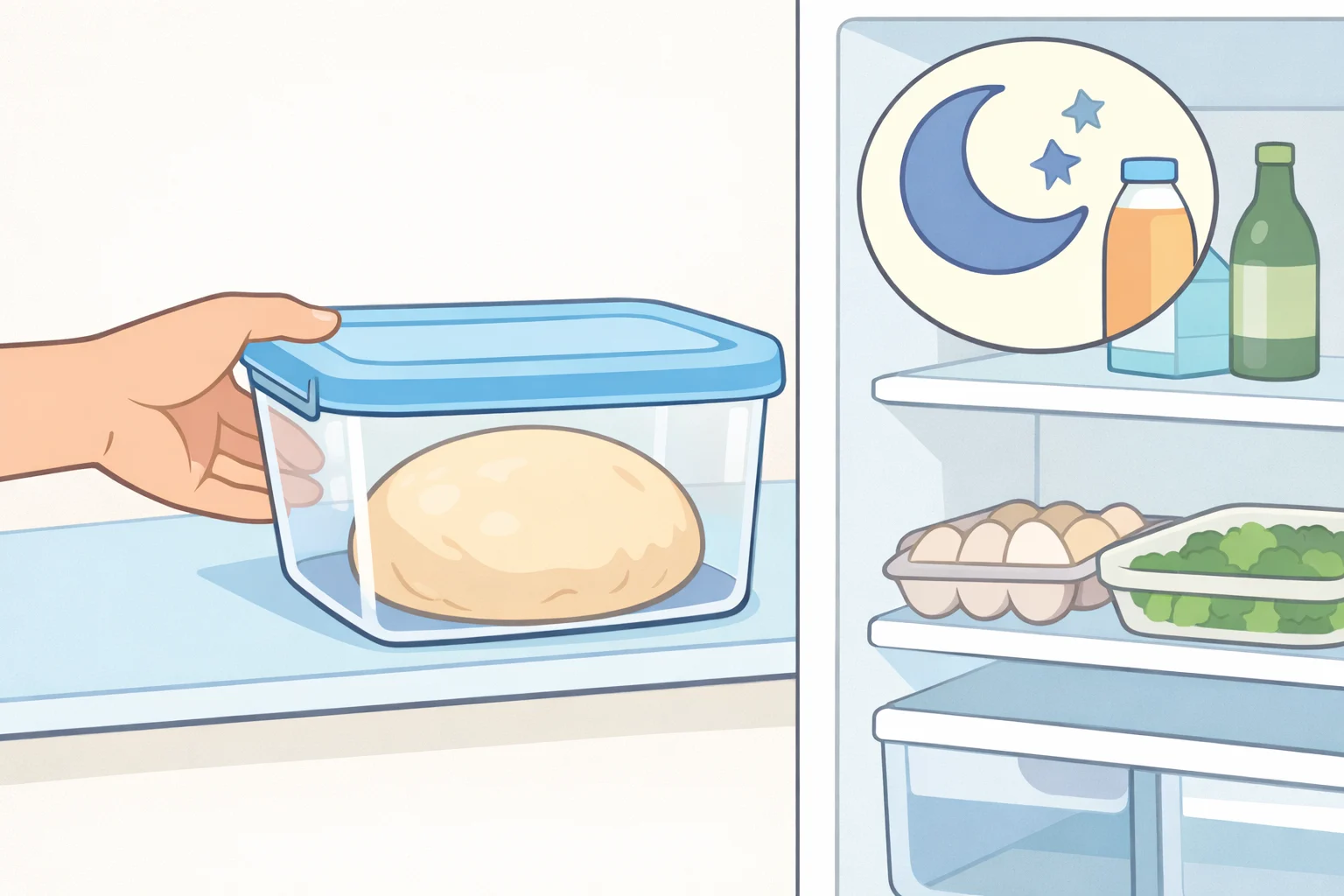
- Refrigerate, covered, for at least two hours. This firms the dough up and makes it far easier to shape than handling it warm and slack. For the overnight version here, aim for 12 to 16 hours, and don't push past 24 (Serious Eats). If evening plans change, the two-hour minimum means baking the same day is still an option.
Day 2: shape, proof, bake, and fill
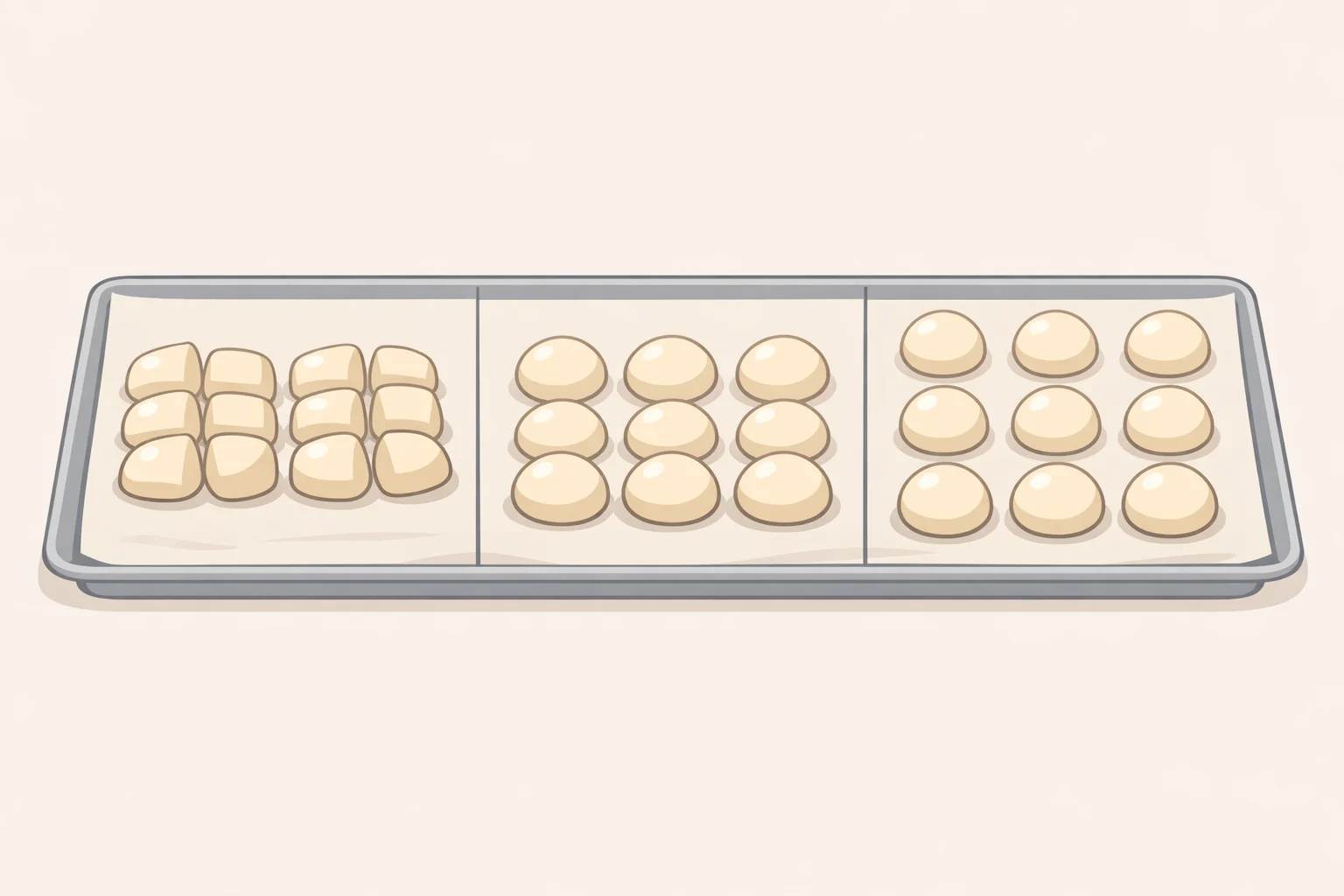
- Divide and pre-shape. Turn the chilled dough onto a floured surface and divide it into eight equal portions. Roll each into a tight round; pre-shaping aligns the gluten strands so the final shape holds together during baking (Serious Eats). Space the rounds a few inches apart on a parchment-lined tray, since they'll expand through bench rest, proofing, and baking.
- Bench rest the rounds, uncovered, for 30 minutes so the gluten relaxes and the dough won't spring back during final shaping (Serious Eats).
- Final shape and proof. Elongate each rested round into its oblong shape and let the buns proof for about two and a half hours (Serious Eats). Use that 2½ hours as the recipe's own timing, not a promise; if the kitchen runs warmer or cooler than average, check the dough itself rather than treating the clock as a guarantee.
- Brush and bake. Once proofed, adjust oven racks to the second-from-top and second-from-bottom positions and preheat to 350°F (175°C). Brush the buns with the reserved egg wash and bake until golden brown and puffed, about 20 minutes (Serious Eats).
- Cool completely. Five minutes on the tray, then about 15 minutes on a wire rack, following the recipe's own sequence, which finishes cooling before filling begins (Serious Eats).
- Make the filling. Combine mascarpone (113 g) and heavy cream (240 ml) and whip until the mixture holds its shape (Serious Eats). The recipe doesn't specify a sugar quantity. If sweetened cream is the goal, that's an adjustment beyond the documented method: add confectioners' sugar to taste.
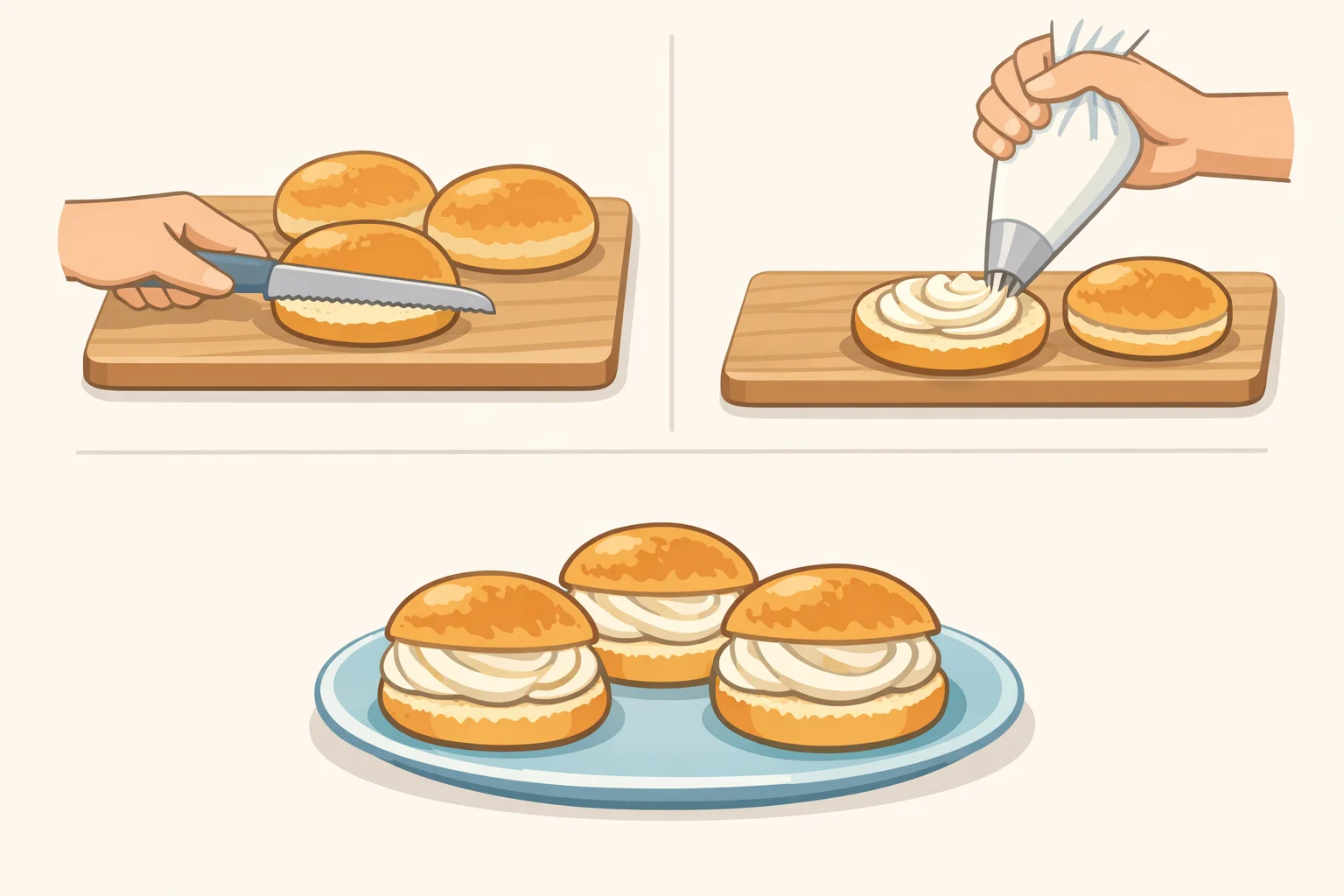
- Fill and finish. Slice each cooled bun most of the way through lengthwise, pipe in the filling, and dust with confectioners' sugar, the simplest and most common topping (Serious Eats).
Notes, substitutions, and schedule adjustments
The recipe says mascarpone's thickness helps the filling hold for an hour or two at room temperature, useful for a brunch or picnic (Serious Eats). That's guidance from the recipe developer, not a food-safety rule, so refrigerate anything not headed straight to the table.
Unfilled baked buns keep under a covered dome for a couple of days, or can be frozen individually before bagging together (GialloZafferano, late last year). The source doesn't spell out thaw times or texture cues beyond that; as a practical serving recommendation, thaw and fill shortly before eating rather than well ahead of time.
GialloZafferano's other version brushes the hot buns with a separate sugar syrup before filling. That syrup belongs to a separate formula, one built with pine nuts, raisins, and candied orange peel, not the Serious Eats dough this guide follows (GialloZafferano). Worth trying on its own terms later, not worth grafting onto this recipe.
Glutinous rice flour is required in this formula, not an optional add-in. There's no documented substitute, so if it's not on hand, save this recipe for a week when it is rather than swapping something else in.
For a genuinely different maritozzi recipe, Fabrizio Fiorani's version uses a pre-ferment, an overnight refrigeration, and a honey-orange-vanilla dough studded with raisins and pine nuts (GialloZafferano, early last year). It's a separate formula, worth attempting once this base method feels routine.
Serving and what's next
Bake the buns in the morning, then cool and fill them close to whenever they'll actually be eaten. For a weekend brunch, that means starting the bake around the time coffee goes on, not hours ahead of guests arriving.
Once this schedule feels automatic, Fiorani's pre-fermented, dried-fruit version is a natural next recipe to try for a different style of maritozzo altogether.