Fall Gardening Mistakes to Avoid for Perennials Explained
Rake everything up, cut every stem to the ground, bag the leaves for pickup: for years that counted as a tidy fall garden. A University of Maryland study found that plots stripped bare in autumn held 45% fewer moths and butterflies and 67% fewer spiders than plots left alone, according to Penn State Extension.
That's the wildlife cost. The fall gardening mistakes to avoid for perennials carry a plant-health cost too, and it starts with the roots. Starting in late summer, plants push carbohydrates down into storage there, and that reserve decides whether they survive winter and how strong their spring comeback is, per Illinois Extension. Cut the canopy at the wrong moment, and that supply line gets cut too.
The stakes go beyond one backyard. Research cited by Illinois Extension points to roughly a 40% decline in the world's insect population and a comparable drop in bird populations, and a garden is one of the few places an individual gardener can nudge that trend the other way.
This guide walks through seven of the most common mistakes, from premature cutback to bad mulch choices, using guidance from Extension programs in Illinois, Minnesota, Pennsylvania, and Colorado. Work through it and you'll know how to prepare perennials for winter without undoing the habitat benefits a slightly messy garden provides.
Mistake 1: should you cut back perennials in fall?
Video of the Day
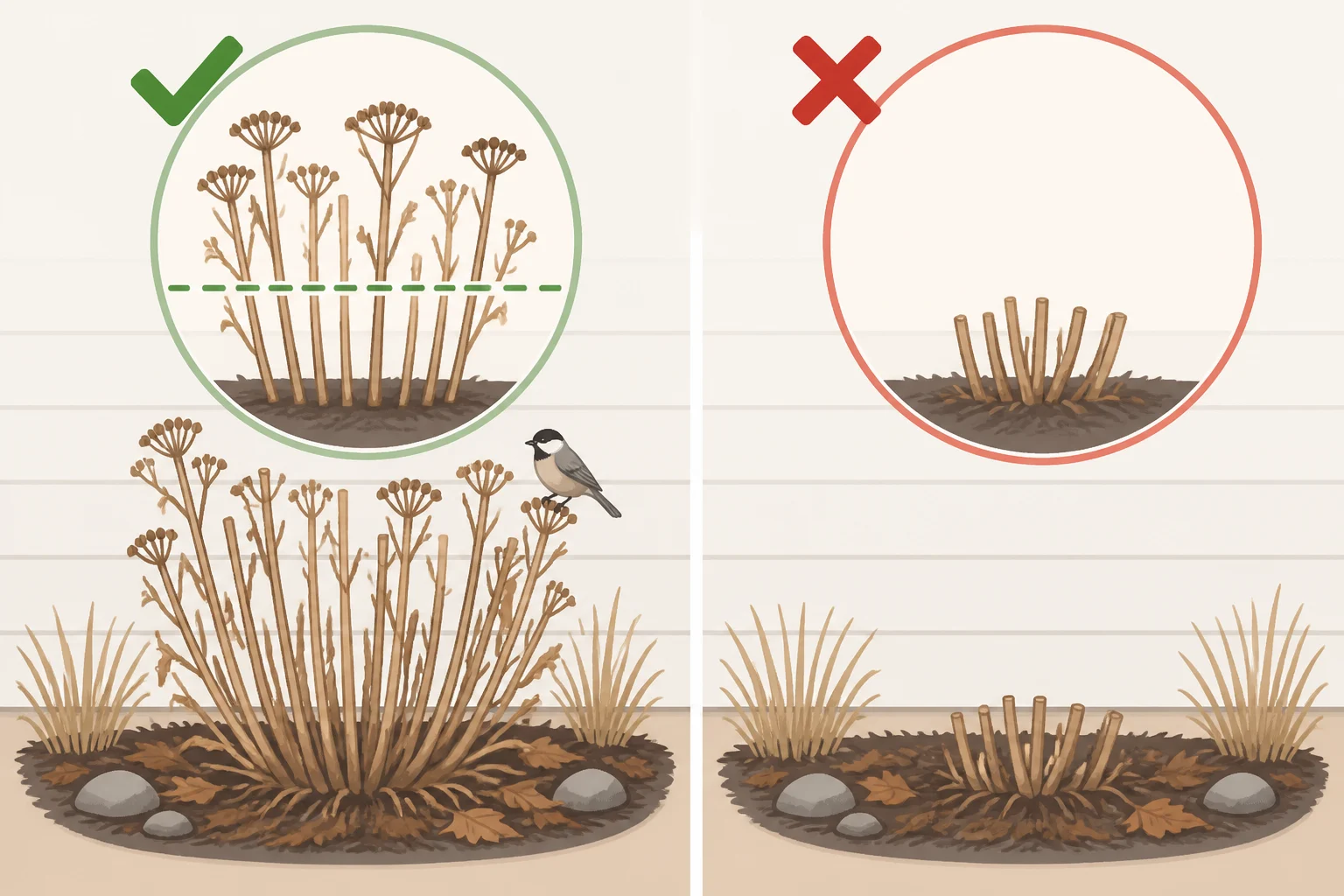
Mostly, no. Illinois Extension advises against removing a plant's canopy early in the season, because that's exactly when the plant is storing the fuel it needs to survive winter and restart growth in spring.
There's a second reason to wait. Hollow and pithy stems double as winter housing: native bees overwinter inside them, and other insects shelter in standing plant material generally, per Illinois Extension and Penn State Extension. Cut a bed to the ground in October and that housing is gone before anything moves in.
The fix isn't necessarily to leave every stem standing until April. Penn State Extension recommends trimming stems back to roughly half to two-thirds of their original height. That still leaves enough hollow stem for insects to crawl in and hibernate, without leaving six-foot dead stalks flopped across the bed all winter. It's a workable middle ground for gardeners who can't stomach total untidiness.
Video of the Day
Mistake 2: treating fallen leaves as trash
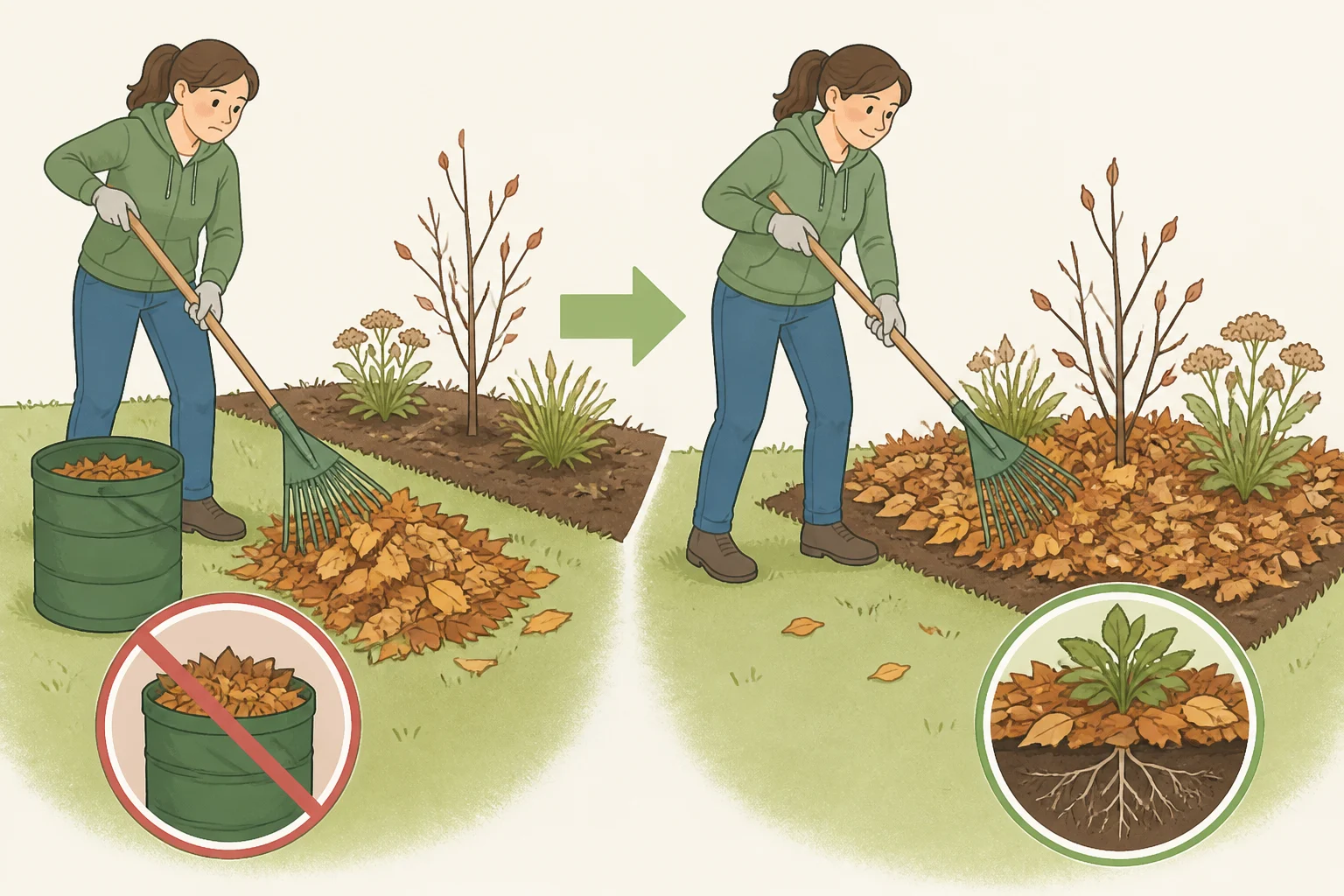
Bagging leaves and hauling them off the property throws away a mulch layer, a fertilizer delivery system, and a wintering shelter, all at once. Illinois Extension notes that leaves insulate roots against low and swinging temperatures through winter, then break down in spring and feed the soil as they decompose.
Many native insects also spend the cold months living underneath that leaf layer or in the soil just beneath it, per the same source. If space allows, the simplest fix is to leave some or all of the leaves where they land, or rake them into beds and under shrubs rather than removing them from the property entirely. It's free mulch, free fertilizer, and shelter for the insects that show up as food for birds come spring.
Mistake 3: letting leaves smother the lawn or pile in the street
Leaving leaves in place is good advice with limits. Piled thick across turf, they block light and smother the grass underneath, so a lawn disappearing under leaf cover needs some intervention, per Penn State Extension. The fix isn't to remove those leaves from the property; it's to move them. Rake or blow them into garden beds, under shrubs, or into an out-of-the-way pile in a corner of the yard where they can break down undisturbed.
Streets and roadways are the other exception, for a different reason. When leaves collect on pavement, rain mixes with them and creates a phosphorus-rich runoff that eventually reaches local waterways and can fuel algae growth downstream, according to Illinois Extension. Keep leaves off pavement and away from storm drains. Whether they end up composted, collected for municipal pickup, or moved onto a garden bed matters far less than keeping them off the street to begin with.
Mistake 4: shredding every leaf for a tidy look
Running a mulching mower over the whole yard feels efficient, but it costs more than most gardeners realize. Shredded leaves don't provide the same cover as whole ones, and the shredding itself can destroy the eggs, caterpillars, and cocoons sheltering inside them, contributing to a drastic decline in overwintering moths and butterflies, per Penn State Extension.
The fix is simple: swap the mower for a rake or a leaf blower wherever leaves are headed into a bed or a pile, so they stay whole. It costs a few extra minutes and preserves habitat that a mower would grind up in seconds.
Mistake 5: skipping the last deep watering before the ground freezes
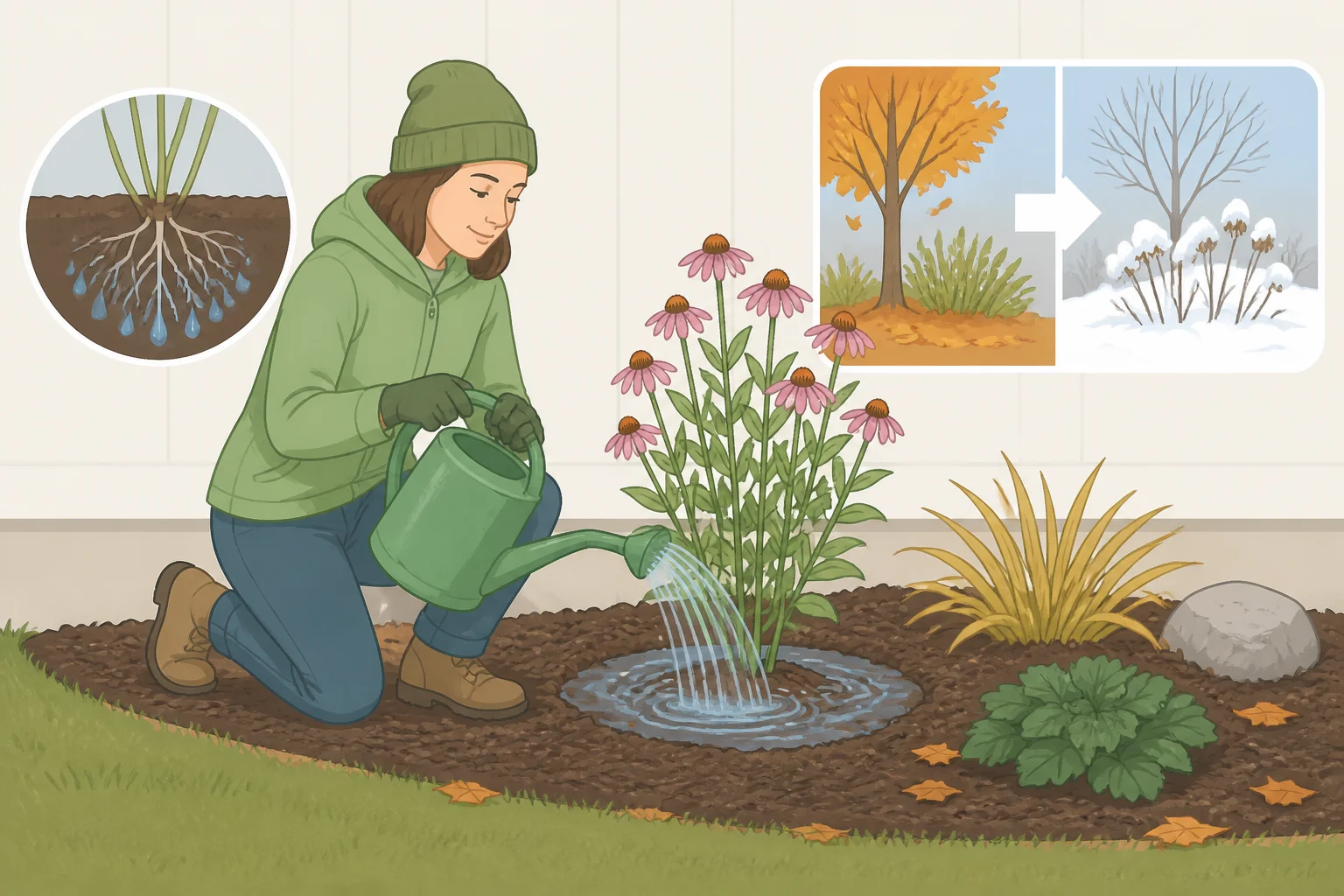
Every tree, shrub, and perennial should go into winter well-watered, according to University of Minnesota Extension. That matters even more for anything planted this fall: new plantings need four to six weeks in the ground before the soil freezes solid, per the same source, so a late-fall planting comes with a real deadline rather than a "whenever there's time" window.
Evergreens carry an extra burden, since they need moisture through the entire winter. Illinois Extension recommends having mulch down by early November in Illinois to help hold that moisture in place, and notes that fall droughts have become more common there in recent years, which makes a deep watering before the first hard freeze more important for evergreens in drought-affected areas.
Dry-climate gardens have their own version of this problem. In Colorado, irrigation systems typically shut off in November, but dry, low-snow stretches can continue into February, according to Colorado State University Extension. The fix there is to keep watering through the cold months, early in the day, whenever temperatures climb above freezing.
Mistake 6: picking the wrong mulch or ground barrier
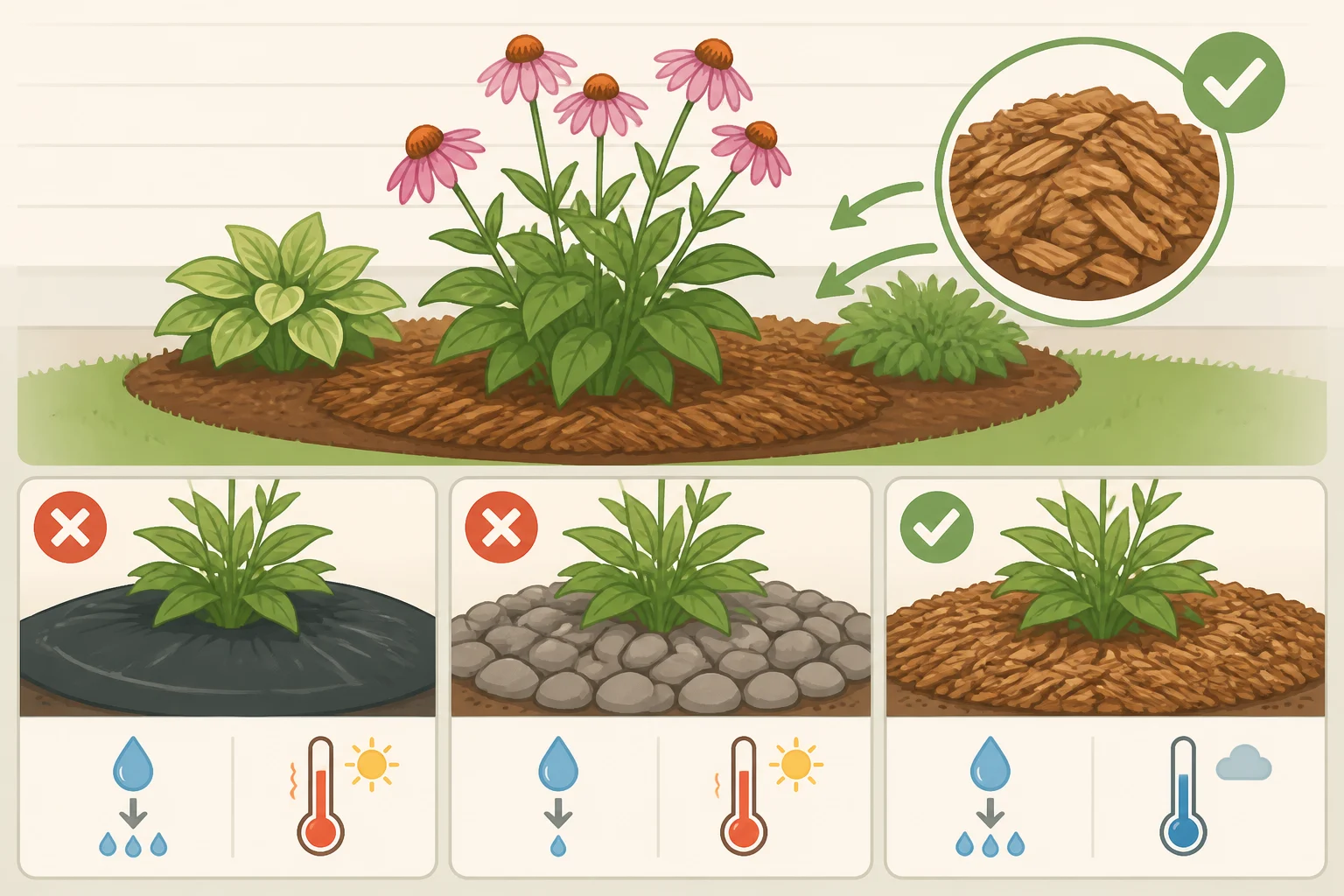
Not everything marketed as mulch behaves like mulch. Landscape plastic blocks water from moving through the soil at all, which can leave beds either too dry or waterlogged depending on the season, per University of Minnesota Extension. It's a reasonable choice for a pathway or another non-planting area, but it has no business under living perennials.
Rock is a subtler mistake. Large stone mulch can heat up considerably in summer, and that heat can stress sensitive plants growing nearby, while the sheer weight of bigger rocks can compact the soil above shallow root systems, according to the same source. That doesn't rule rock out everywhere, but it's worth reconsidering around anything with roots close to the surface.
Shredded bark or wood chips remain the safer default for planting beds. They hold moisture, moderate soil temperature, and break down over a few years into the soil itself, per University of Minnesota Extension.
Mistake 7: getting fall planting, dividing, and cleanup timing wrong
Fall is a good season to plant, transplant, and divide, because the soil is still warm from summer while heat stress on the plant has dropped off, per Illinois Extension. But timing matters within the season itself: warm-season plants like coneflowers and ornamental grasses should go in the ground in September while the soil is warmest, while cool-season and fall-blooming perennials can wait until October. Treat those windows as regional guidance to adjust around a local first-frost date, not as a hard deadline.
Dividing follows a different clock, tied to bloom time rather than the calendar. Colorado State University Extension recommends dividing spring- and summer-blooming perennials in fall, but holding off on mid-to-late-summer and fall bloomers, such as daylilies and yarrow, until spring, before new growth begins.
All the advice about leaving stems and leaves alone comes with one real exception: disease. Where a known pest or disease problem, such as powdery mildew, has shown up in a bed, a thorough fall cleanup is the right call instead of the usual light touch, per Colorado State University Extension and Penn State Extension. A handful of plants break the "leave it standing" rule on their own merits, too: peonies, irises, and lilies should be cut back to 3 to 5 inches and have their foliage removed every fall, and any diseased material should be bagged and discarded rather than tossed onto the compost pile, according to Penn State Extension.
What comes next
The throughline across all seven mistakes is the same: perennial survival depends on root reserves, moisture, and steady soil temperature, not on how clean a bed looks by Thanksgiving. Skip the deep watering, and drought stress catches up with a plant in January. Strip out the leaf litter, and the insulation and the shelter go with it.
None of the specific dates here, early November mulching, September planting windows, are universal deadlines. They're regional guideposts pulled from Extension programs in colder climates, and the right move is to work backward from a local first-frost or ground-freeze date rather than a fixed square on the calendar. The same logic runs in reverse come spring: hold off on cutting back stems and clearing leaf litter until the weather has reliably warmed, since that's when whatever moved in for the winter starts moving back out.