Types of mixing bowls: which material actually wins for baking
A splash of leftover grease trapped in a plastic bowl's microscopic scratches can be enough to keep egg whites from reaching stable, glossy peaks. That single detail turns a mixing bowl from a background object into an active ingredient in the recipe (The Garden Loaf).
Working through the different types of mixing bowls, and what each one does under heat, cold, and a vigorous whisk, changes how a kitchen actually performs. Stainless steel, glass, plastic, ceramic, and copper each behave differently, and those differences show up in the finished bake, not just on a spec sheet (The Garden Loaf).
There is no single best mixing bowl for baking. For most kitchens, stainless steel should be the default: light, durable, and non-reactive with anything acidic. Glass earns its place next to the microwave and anywhere visibility matters. Plastic covers dry ingredients, proofing, and low-stakes daily prep. Ceramic and copper are legitimate specialists, worth owning once a specific task comes up often enough to justify the cabinet space.
Mixing bowl materials: stainless steel vs. glass vs. plastic
Video of the Day
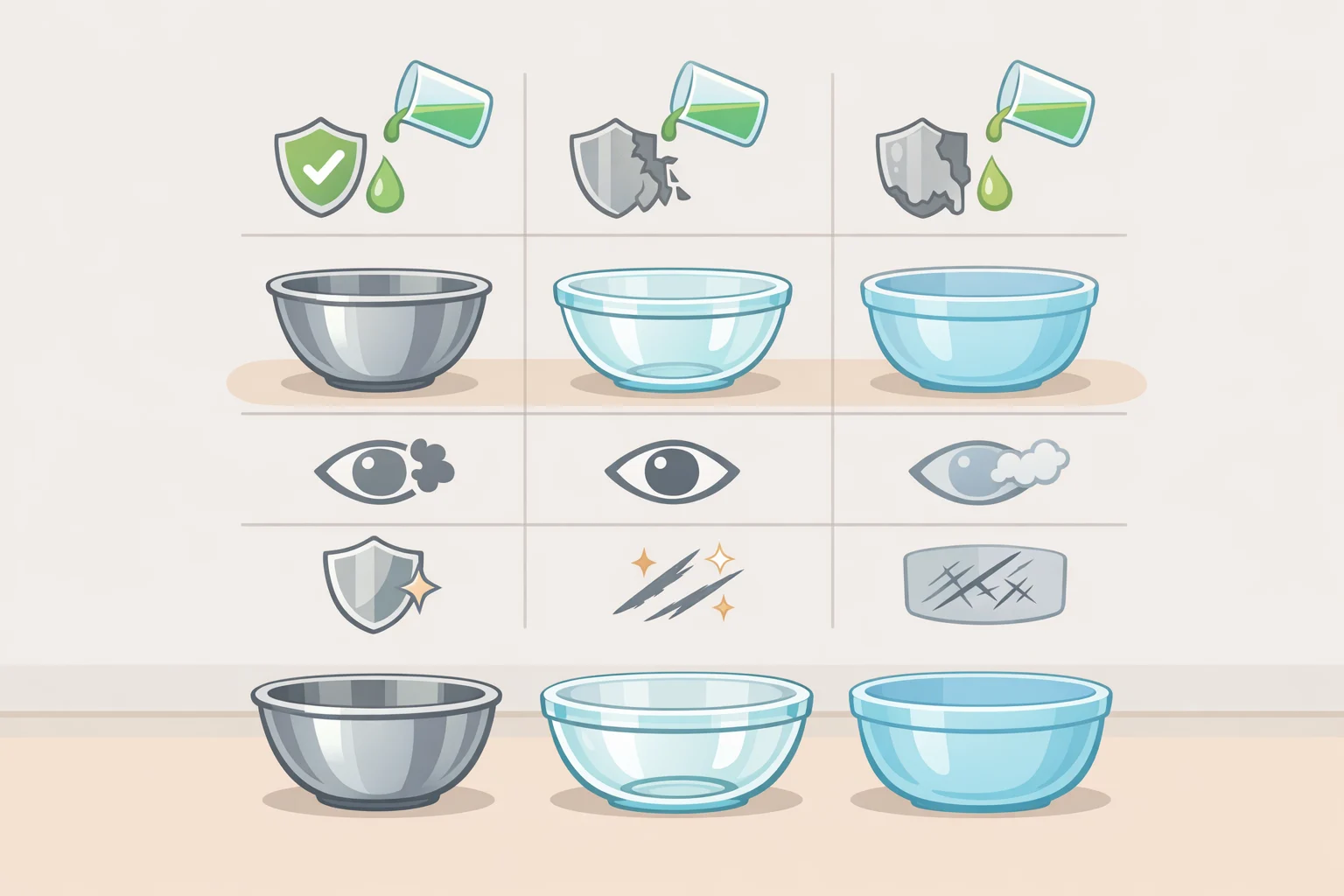
Stainless steel is the workhorse for a reason: professional bakers and pastry chefs favor it for its thermal properties, and it conducts both heat and cold efficiently. It's lightweight and easy to handle even with large volumes of dough or batter, and because it doesn't react with acidic ingredients like lemon juice, vinegar, or buttermilk, it's a safe default for most everyday mixing (The Garden Loaf).
Glass, usually thick tempered glass in bowl sets, earns its keep through transparency and weight. It's clear enough to check whether ingredients are fully incorporated at the bottom of the bowl, and its heavy, weighted base keeps it stable during vigorous mixing rather than sliding across the counter (The Garden Loaf). The tradeoff is speed. Glass conducts heat slowly, so it takes longer to warm, but once hot it holds that heat far longer than steel, which makes it unsuitable for anything that needs to cool quickly.
Traditional plastic is cheap and convenient, which is exactly why it's everywhere. Its real limitation is structural: the surface is porous and scratches easily, and those microscopic scratches trap detergent residue, odors, and grease even after a thorough wash (The Garden Loaf). That sounds minor until it ruins a meringue, which the whipping section below covers in full. Plastic is best reserved for mixing dry ingredients and proofing dough, not for whipping anything that depends on a grease-free surface.
Video of the Day
Why porous surfaces matter beyond baking
The scratched-plastic problem isn't just a kitchen quirk. Federal food-safety rules draw a similar line between smooth and porous surfaces, for a different but related reason: bacteria. The FDA regulates food-contact surfaces through the Food Code and a set of federal regulations covering material safety, and equipment standards require surfaces that touch food directly to stay smooth, easily cleanable, and free of pits or crevices where organic matter can hide beyond the reach of normal washing (Legal Clarity).
Those same standards require internal corners in food-contact areas to be sealed and coved, and they largely prohibit exposed fasteners like bolt heads and rivets, since both create harborage points bacteria can exploit (Legal Clarity). These specific rules govern commercial food equipment, not the bowl sitting in a home kitchen cabinet, but the underlying physics is identical: a rough or scratched surface gives grease, odor, and microbes somewhere to hide that a smooth one doesn't.
That logic extends to ceramic and enamel bowls, too. Once one chips or ages badly, the exposed base material underneath can leach into food, so retiring visibly damaged bowls is a reasonable habit no matter how well the material performed when new (The Garden Loaf).
Temperature-sensitive prep: chilling, melting, and proofing
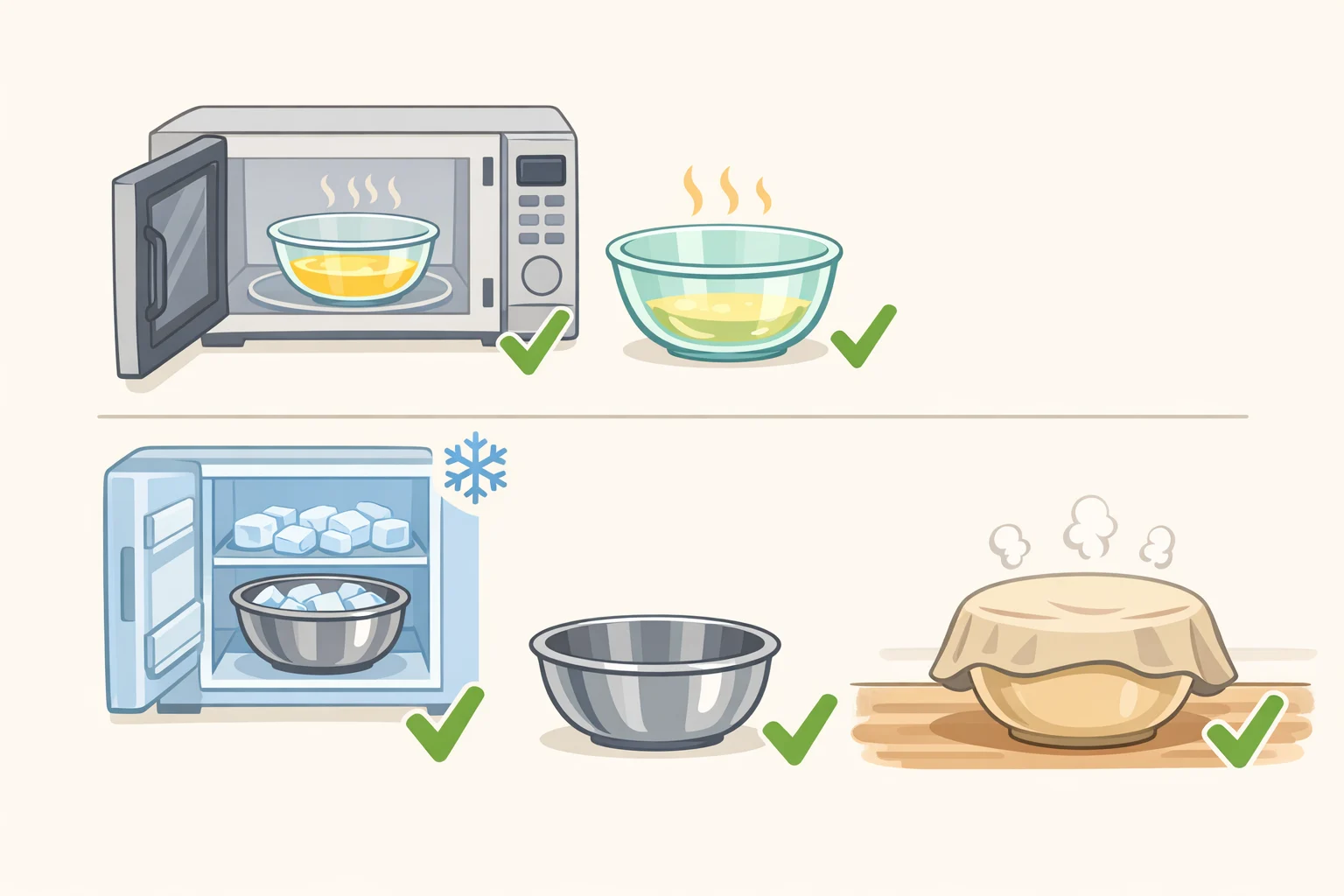
Steel's speed cuts both ways. A few minutes in the freezer chills a steel bowl almost instantly, and set over simmering water as a makeshift double boiler, that same conductivity transfers heat fast enough for controlled melting or chocolate tempering (The Garden Loaf).
Glass behaves differently depending on the method. In the microwave, it's the best and safest option for melting butter, chocolate, or honey (The Garden Loaf). The catch: glass holds onto heat long after it leaves the microwave, so anything delicate can keep cooking well past the point it should stop, which makes it a poor fit for chocolate tempering, where precise cooling matters.
Plastic is the material best suited for a job that seems to reward the opposite of speed: proofing yeast dough. It retains warmth better than glass or steel, creating the gentle, steady environment dough needs to rise, a case where slow and steady beats fast and responsive (The Garden Loaf).
Whipping: why egg whites and whipped cream aren't the same job
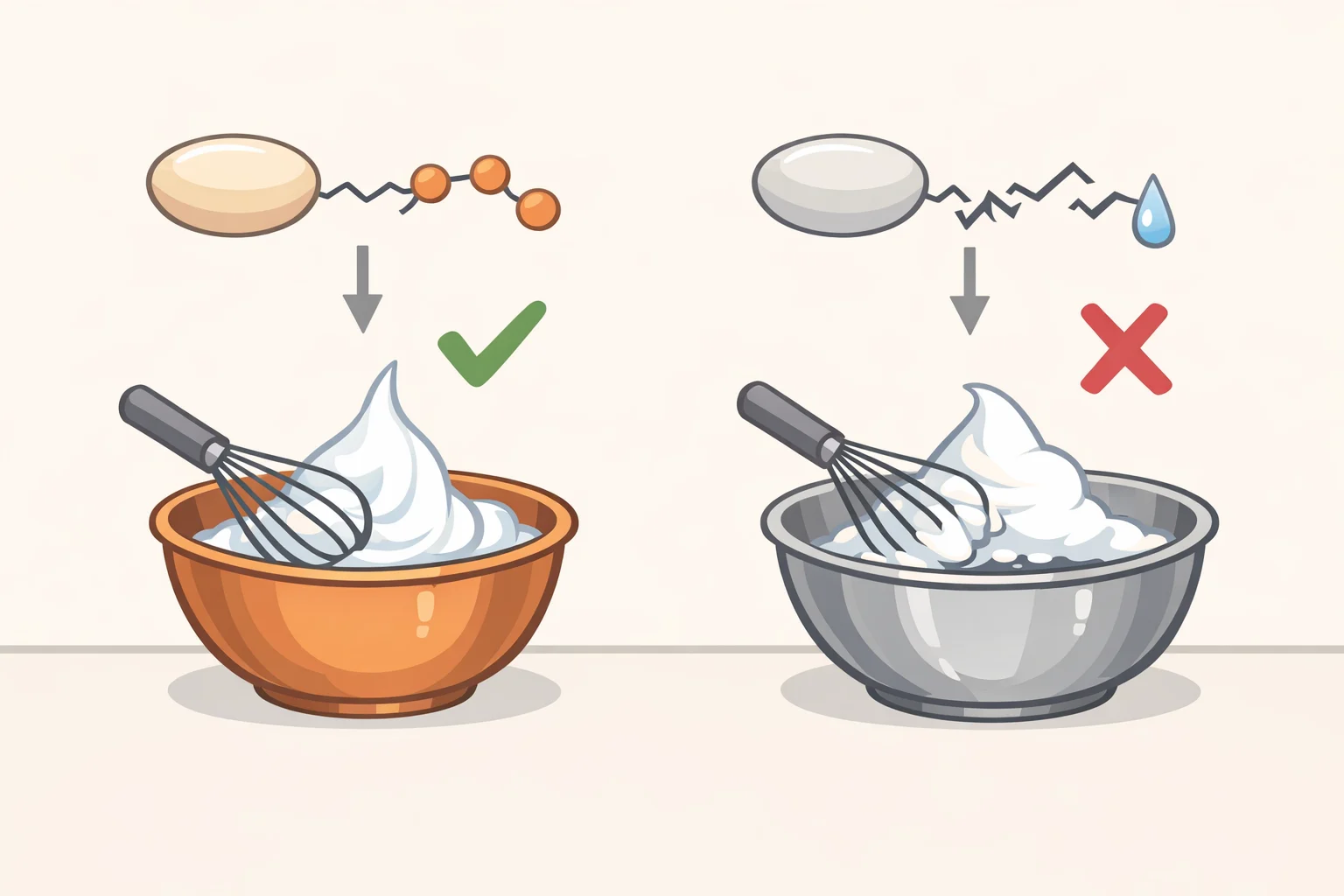
Chilled stainless steel is the undisputed winner for whipping both egg whites and cream. Its non-porous surface stays grease-free, and pre-chilling gives egg-white proteins a head start on setting into a stable structure (The Garden Loaf).
Plastic's risk here isn't hypothetical. Invisible grease hiding in scratches and pores disrupts the protein network egg whites need to hold a stable foam, which is why plastic should never be used for whipping egg whites or heavy cream (The Garden Loaf). Plastic can technically work for whipping, but it's not ideal, since it's harder to be certain the surface is entirely free of fat or oil traces (Science Notes).
Glass isn't the answer either. Its surface is so smooth and flat that foam struggles to grip and hold its shape, which is part of why metal and plastic generally outrank glass for whipping egg whites (Science Notes).
Copper's advantage is real, but narrow. Chefs have relied on copper bowls for whipping egg whites for more than two centuries, and research published in Nature in 2021 and Food Biophysics explains why: whisking releases trace copper ions that bond with a protein called conalbumin, forming a golden-yellow complex more resistant to weeping and collapse than conalbumin on its own (Science Notes). Foam takes a little longer to form in a copper bowl, but it holds. Stainless steel doesn't offer the same trick. Iron and zinc also form complexes with conalbumin, but neither stabilizes foam the way copper does, so a steel bowl alone won't replicate the effect (Science Notes).
That chemistry is specific to conalbumin, a protein found only in egg whites, so copper has nothing comparable to offer when whipping cream, which relies on fat structure rather than protein chemistry to hold its shape.
For anyone unwilling to buy and maintain a specialty bowl, the workaround is simple. Cream of tartar, lemon juice, or vinegar all lower egg-white pH, which slows the disulfide bond formation that leads to overbeaten, weeping foam (Science Notes). Cream of tartar is generally preferred because it adds no extra liquid to the recipe, at roughly an eighth to a quarter teaspoon per egg white; lemon juice and vinegar work almost as well, at a quarter to a half teaspoon per egg white (Science Notes). Bowl material aside, cleanliness and egg temperature matter too: any trace of oil from a whisk, bowl, or fingertip can flatten a foam before it starts, and cold whites hold their structure better than room-temperature ones, which is why bakers chill whites for meringue but let them warm for cakes (Science Notes).
Best mixing bowl for baking: matching material to the task
The table below distills the tradeoffs above into a quick reference. Nothing here requires memorizing chemistry, just matching the bowl to the job in front of it.
| Task | Best material | Acceptable alternative | Key caveat |
|---|---|---|---|
| Egg whites (meringue, soufflé) | Copper or chilled steel | Steel with cream of tartar | Copper's benefit is chemical, tied to egg-white protein specifically (Science Notes) |
| Whipped cream | Chilled stainless steel | Skip scratched plastic; hard to be sure the surface is fat-free (Science Notes) | |
| Melting butter or chocolate (microwave) | Glass | Steel over a double boiler | Glass keeps cooking after it's pulled out (The Garden Loaf) |
| Tempering chocolate | Stainless steel, double boiler | Needs fast, controlled heat changes (The Garden Loaf) | |
| Proofing yeast dough | Plastic | Retains warmth better than glass or steel (The Garden Loaf) | |
| Acidic batters (buttermilk, citrus) | Steel or glass | Both are non-reactive with acidic ingredients (The Garden Loaf) | |
| Everyday mixing and prep | Stainless steel | Lightweight and easy to handle for large volumes of dough or batter (The Garden Loaf) |
The functional assignments hold up across nearly every task in that table: metal for cold work and quick heat changes, glass for the microwave and for watching ingredients come together, plastic for the low-stakes jobs where slow, steady warmth is an advantage rather than a flaw (The Garden Loaf).
Ceramic and copper stay optional, and neither replaces the core three. Retire a ceramic or enamel bowl once it chips or shows real wear, since exposed material underneath can leach into whatever is mixed in it. Copper is worth the expense and the polishing only once meringues or soufflés turn into a habit worth planning around, a benefit backed by more than two centuries of kitchen practice and confirmed by peer-reviewed food chemistry rather than marketing copy (Science Notes).
None of this calls for a cabinet full of specialty bowls. It calls for knowing which one is actually doing the work the next time a recipe says "in a large bowl." The material in hand is already shaping the outcome before the whisk ever touches it.