Miso chocolate chunk cookies recipe: a starting ratio worth testing
Two bakers, working independently, landed on nearly the same amount of miso relative to butter. One built her dough around mellow white miso, the other around assertive red miso, using different flours and butter quantities that differ by nearly two and a half times. That convergence in ratio, not the size of either finished batch, is the useful data point here.
This isn't a single miso chocolate chunk cookies recipe with a fixed bake time and yield. It's a method for finding a starting ratio in a recipe already in the kitchen, and adjusting it from there.
King Arthur built a full recipe around white miso cutting the sweetness of butterscotch chips (King Arthur Baking, 2026). Serious Eats developed its own white miso, brown-butter formula built around pecans and butterscotch (Serious Eats, 2025). A Simply Recipes contributor who baked more than 1,000 cookies over the past two years says red miso showed up in at least half of them (Simply Recipes, 2025). Wordloaf's barley miso chocolate chunk cookie pairs red miso directly with chocolate rather than butterscotch or oats (Wordloaf, 2023). That same savory-sweet contrast is what makes miso appealing in chocolate cookies, not just the oat and butterscotch versions built around it first.
This guide compares the two most directly relevant tested recipes, Serious Eats' white miso cookie and Wordloaf's red miso chocolate chunk cookie, to see where they agree. It explains what miso changes in dough beyond flavor, then lays out a conservative test-batch method for adapting that range to a dough of your own. A quick-reference table below compares the key ratio inputs, not a full ingredient list; treat this article as the reasoning to run before a test batch, not a finished recipe with its own bake time and yield.
What miso actually changes in cookie dough
Video of the Day
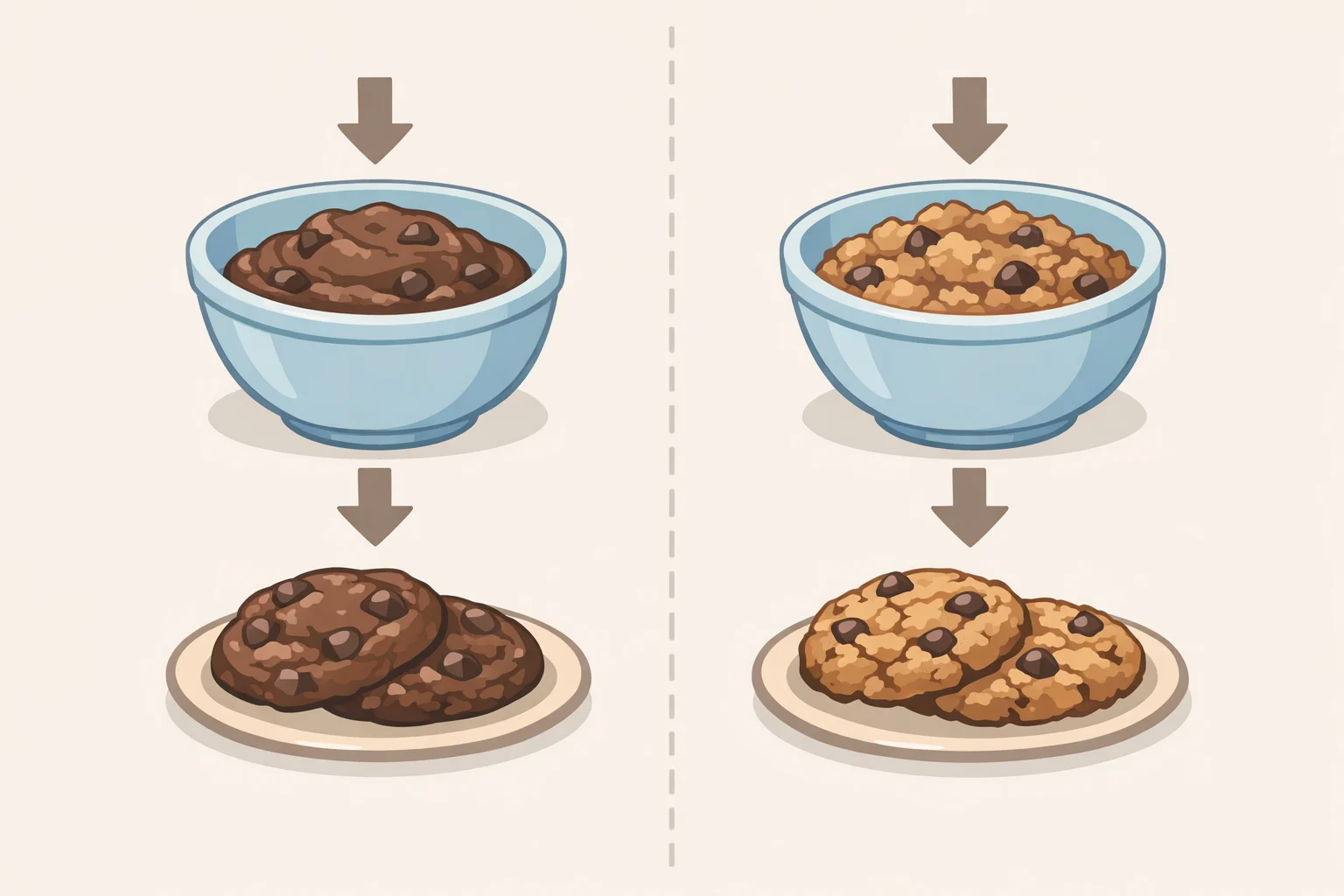
Every source frames miso's basic job as similar to salt. Simply Recipes describes red miso as tempering sweetness while adding "salinity, depth, and balance," comparable to a pinch of salt or using salted butter (Simply Recipes, 2025). Wordloaf calls it "like salt but with tons of umami" (Wordloaf, 2023). King Arthur describes white miso's contribution as "nutty, salty, umami-ness" that balances butterscotch's assertive sweetness (King Arthur Baking, 2026).
But miso isn't only seasoning. Serious Eats warns against swapping red or yellow miso for white and cutting the amount to avoid overpowering the cookie, because that swap produces a crumblier result (Serious Eats, 2025). That's evidence the paste is doing more than flavoring the dough, though the source doesn't spell out the mechanism. Moisture and solids are plausible explanations for the texture change, worth testing rather than treating as settled.
Texture outcomes support the idea that miso and technique work together. Serious Eats' white miso cookie, made with a 50/50 spelt-AP flour blend, turns out "fudgy" (Serious Eats, 2025). King Arthur's miso oatmeal cookies come out "soft, chewy, and very snackable" (King Arthur Baking, 2026). Neither result happens from miso alone; flour choice and mixing method matter just as much.
Because miso is a salted, fermented paste added in a meaningful quantity, it changes a dough's total sodium the moment it adds flavor complexity, and it may affect moisture too, based on the texture differences noted above. That's why salt and flour ratios both get a second look later in this guide, not just the miso amount on its own.
Video of the Day
A starting ratio for chewy miso chocolate chunk cookies
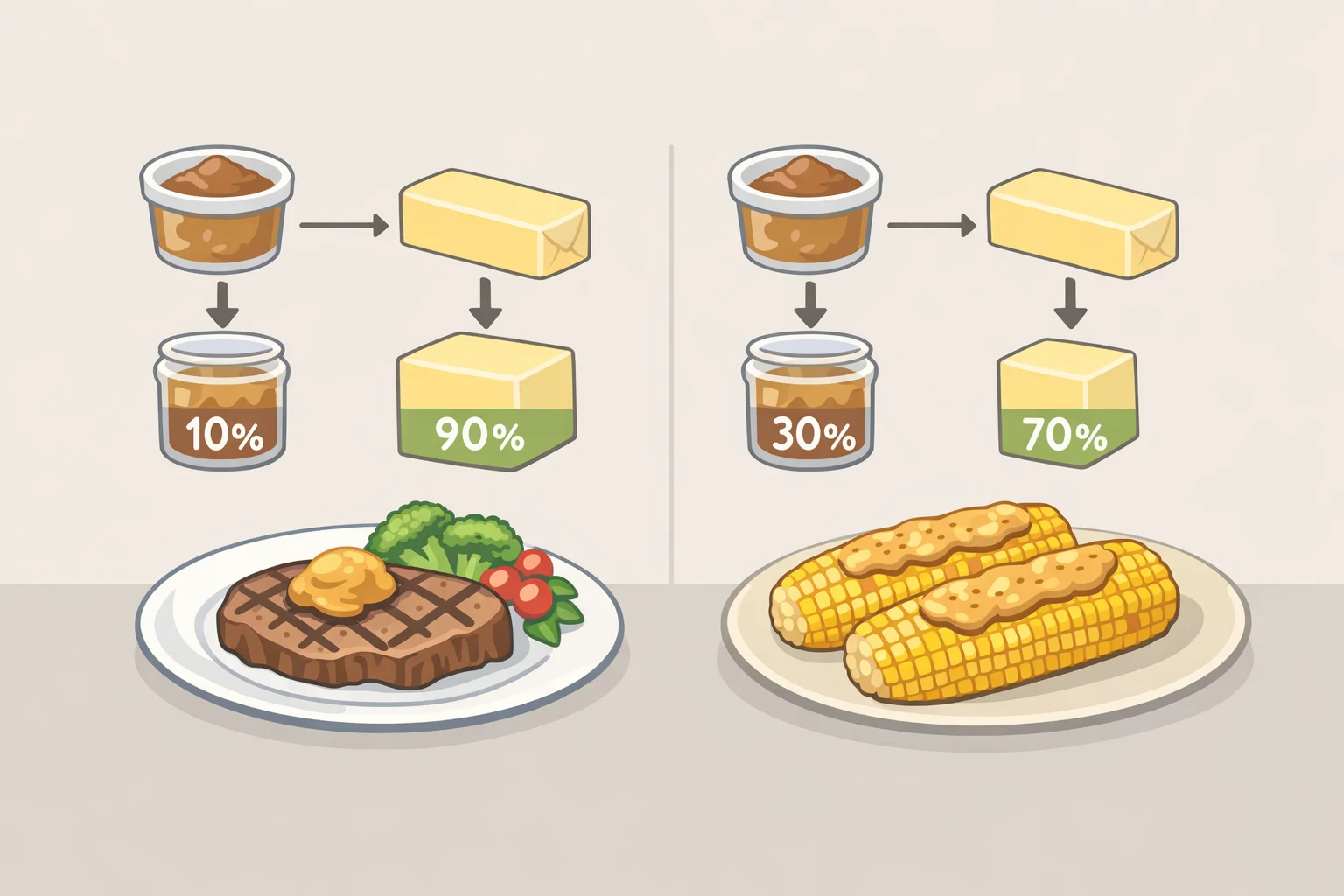
Serious Eats' white miso anchor uses 225g butter, 200g white sugar, 215g brown sugar, two eggs, 70g white miso, 225g all-purpose flour plus 225g spelt flour, a teaspoon of baking soda, and a teaspoon (4g) of Diamond Crystal kosher salt. It yields 24 cookies (Serious Eats, 2025).
Wordloaf's red miso anchor uses 550g butter, 150g red miso, 500g dark brown sugar plus 350g granulated sugar, three eggs, 150g barley flour plus 650g all-purpose flour, 8g salt, and a mix of 200g dark chocolate and 350g milk chocolate. It yields 24 to 30 large cookies (Wordloaf, 2023).
| Serious Eats (white miso) | Wordloaf (red miso) | |
|---|---|---|
| Butter | 225g | 550g |
| Miso | 70g | 150g |
| Miso as % of butter | 31.1% | 27.3% |
| Total flour | 450g | 800g |
| Miso as % of flour | 15.6% | 18.75% |
| Yield | 24 cookies | 24 to 30 large cookies |
Line them up and a pattern shows up despite different miso colors, different flour blends, and butter quantities nearly two and a half times apart. Measured against butter, the two land at 31.1% and 27.3%. Measured against total flour, they land at 15.6% and 18.75%. Both figures come directly from each recipe's published ingredients (Serious Eats, 2025; Wordloaf, 2023).
The yield each recipe reports, 24 cookies versus 24 to 30 large cookies, reflects different portioning more than a matched batch size, so it isn't part of the comparison above.
Butter is the more useful number to calculate against. It's the one ingredient every creamed-butter cookie recipe already measures precisely, while flour blends vary more from dough to dough: spelt here, barley there, straight all-purpose somewhere else. Anchoring to butter also means one less conversion when scaling a recipe up or down.
The evidence here supports one observation and one cautious experiment, not a formula to copy outright. The observation: two independently developed recipes land at 27.3% and 31.1% of butter weight. The experiment worth running is a first batch at roughly 25% of butter weight, a touch under that range and extrapolated rather than tested in either source.
Use butter, not flour, as the number to calculate against; the flour percentages above describe where the two anchors happen to fall, useful for context, not a second target to hit. Whether this range holds for melted-butter doughs, other flour systems, or other miso brands remains untested, and Serious Eats explicitly warns that white and red miso aren't interchangeable at the same dose (Serious Eats, 2025). Treat 25 to 31% of butter weight as a zone worth testing on a first batch, not a guaranteed conversion for an unrelated dough.
Adapting your own recipe: a conservative test-batch method
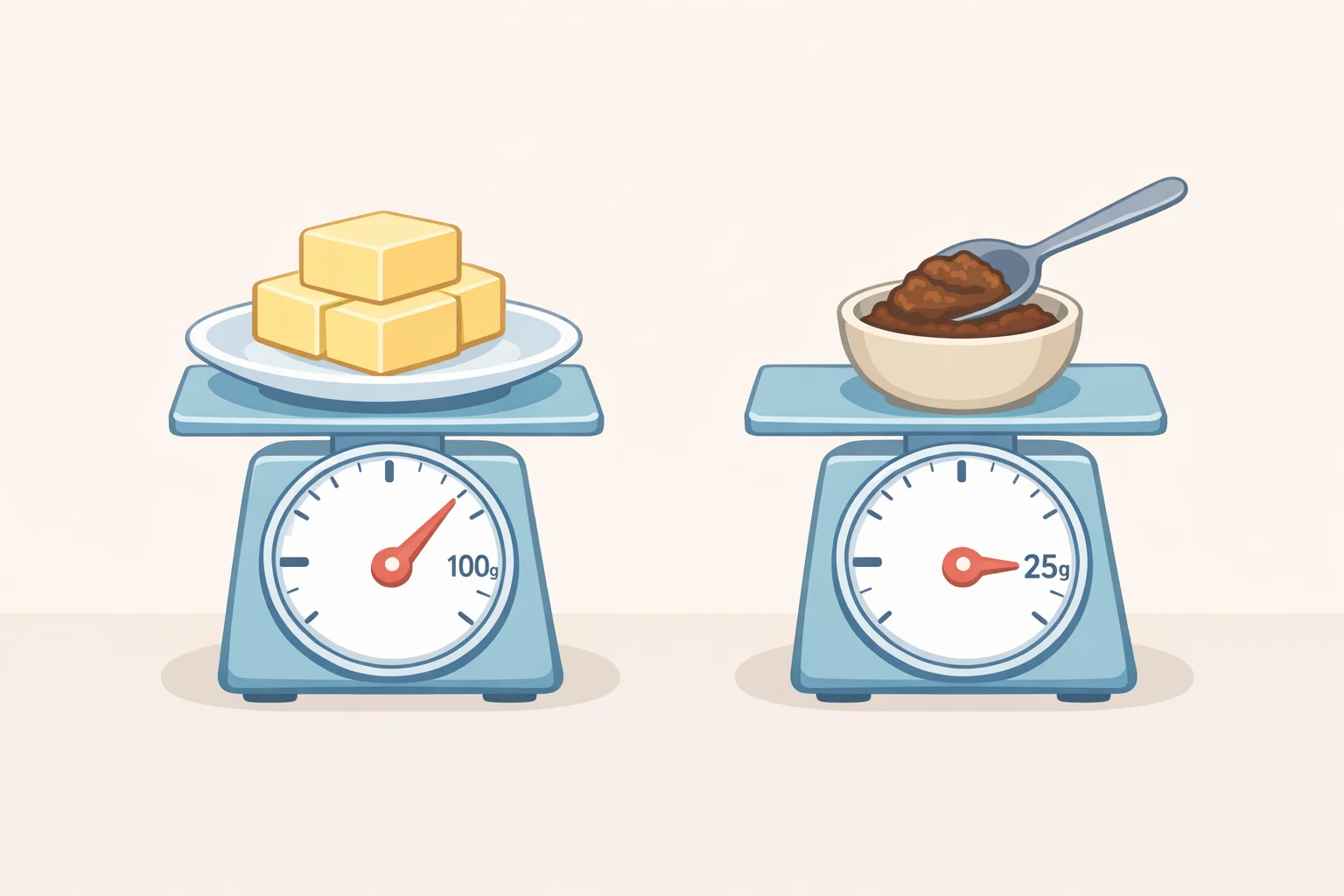
Before starting, gather a kitchen scale, a base creamed-butter chocolate chip cookie recipe, and one baking sheet set aside for a single test cookie.
Both anchor recipes use a creaming stage once the butter is in a workable solid state, even though they get there differently. Serious Eats browns its butter and cools it to about 62°F before creaming, while Wordloaf creams room-temperature butter directly (Serious Eats, 2025; Wordloaf, 2023). That shared creaming stage is one reason the two recipes can sit side by side in this guide, not proof they behave identically; they still differ in flour, sugar, leavening, chocolate, and yield.
The following ranges describe where the two anchors sit, useful for judging how closely a recipe resembles them, not a pre-qualification for adaptation: both anchors run roughly 1.4 to 2 times as much flour as butter by weight, and roughly 1.5 to 1.85 times as much sugar as butter by weight. A recipe that falls well outside those ranges, much leaner in butter, or built entirely on melted butter, should treat the numbers below as a rougher first guess and lean conservative.
- Weigh the butter in the recipe. That's the number every calculation below runs against. Weighing the flour too is useful only for checking how closely the recipe resembles the two anchors above.
- Calculate a starting miso weight at 25% of the butter's weight. For 200g of butter, that's 50g of miso. White miso is the safer choice for a first attempt at white miso cookies with chocolate chunks, before trying anything more assertive. Karolyn Pho, who developed a brown-butter miso cookie with white chocolate chips, says using something "mellow and sweet" is essential to the formula, and Serious Eats cautions against swapping in red or yellow miso 1:1 (Karolyn Pho, 2025; Serious Eats, 2025).
- Leave the recipe's salt as written for this first test. Serious Eats uses 4g of kosher salt across 450g of flour; Wordloaf uses 8g across 800g. Neither anchor cut its salt sharply to make room for miso, so there's no evidence here to support an across-the-board reduction on a first pass (Serious Eats, 2025; Wordloaf, 2023).
- Cream the miso in with the butter and sugar at the start. Both Simply Recipes and Wordloaf add miso during the butter-and-sugar creaming stage, so it disperses evenly through the dough (Simply Recipes, 2025; Wordloaf, 2023).
- Chill the dough at least one hour before baking. An hour is enough to prevent unwanted spread; an overnight rest further hydrates the flour and improves flavor (Serious Eats, 2025).
- Bake one test cookie before committing the rest of the dough. Portion and bake a single cookie from the chilled dough, using the same size and bake time as the full batch. Let it cool before tasting, then judge saltiness, spread, and chew before deciding on the changes below.
After the test batch: what to adjust, and what to save for later
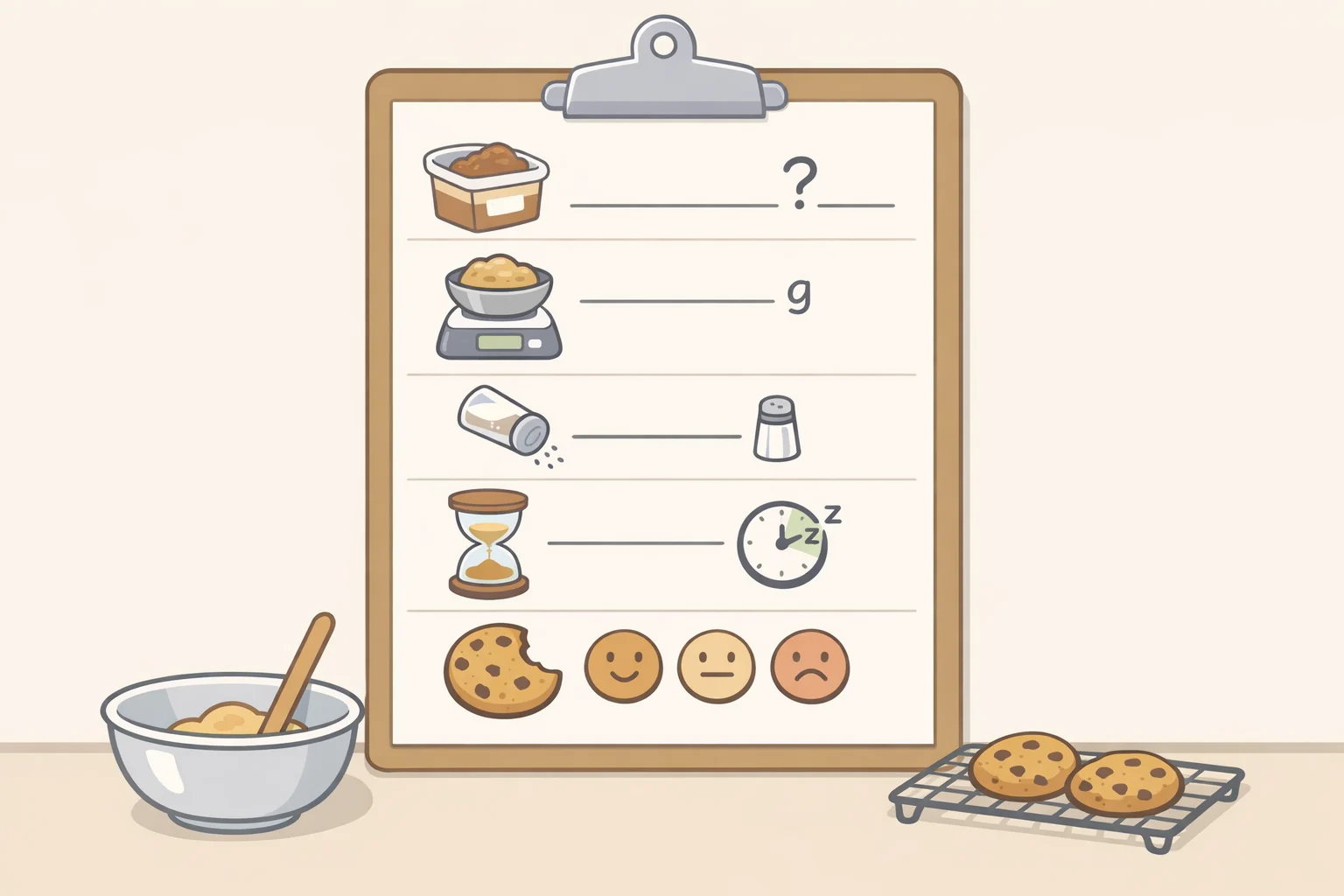
Change one variable at a time, not several at once, and adjust the miso weight itself rather than jumping toward the flour percentages from the ratio section above; those describe the two anchors, not a second dosage target for this dough.
- Too salty or savory: reduce the miso by a fixed amount in the next batch, for instance 10g less than what went into this one, and hold everything else steady.
- Miso barely noticeable: increase the miso by a similar fixed amount in the next batch.
- Dough spreads more than expected, or bakes dry and crumbly: hold the miso level steady and test chill time or butter handling before changing several variables at once.
- Whichever way it goes, write down the miso type and brand, its weight, the flour weight, salt amount, chill time, and how the test cookie actually tasted and baked. That record is what turns one test cookie into a working formula.
Dry, crumbly dough after changing the miso type or amount mirrors what Serious Eats found when swapping to a more intense miso and cutting the quantity to compensate; the cookie turned crumblier (Serious Eats, 2025). Treat that as a reason to revisit the miso choice itself rather than adding flour to compensate.
One bolder, optional path treats red miso as its own recipe rather than a swap. Simply Recipes recommends one tablespoon of red miso per stick of butter as a starting point, adjusting by taste from there, while Wordloaf weighs its red miso at 150g against 550g of butter and states a preference for red miso's intensity without documenting a taste-adjustment process of its own (Simply Recipes, 2025; Wordloaf, 2023). The two sources start from different points rather than following one shared method.
One advanced variation needs its own testing: brown butter miso chocolate chip cookies. Serious Eats cools its browned butter to about 62°F before creaming, and that step is what lets the butter and sugar cream into the light, aerated mixture the recipe depends on (Serious Eats, 2025). Because that starting point differs from room-temperature butter, a browned-butter version of either anchor recipe needs its own tested formula rather than a same-day substitution.
Two ingredients are worth exploring in later batches. Spelt flour already earned its place in the white miso anchor, contributing a tender chew alongside all-purpose flour (Serious Eats, 2025). Dry milk powder, added in small amounts to cookie dough generally, contributes milk solids that promote browning and help retain moisture without adding extra liquid (Serious Eats, 2026). None of the sources here documents combining dry milk powder with a miso chocolate chunk dough specifically, so treat it as a variable for a third or fourth batch, not the first.
Where to go from here
Wordloaf's dough holds up well enough to make this a multi-round project instead of a single bet. It keeps two weeks refrigerated or three months frozen, time enough to test more than one miso level before settling on a house ratio (Wordloaf, 2023).
Start the next batch by weighing butter and calculating miso at 25% of that weight, bake one test cookie, and let the result decide the next move: a little less miso, a little more, or a change in chill time. That's a more useful outcome than any single number could give on its own.