Strawberry Icebox Cake Recipe: No-Bake Graham Cracker Cake
A stack of dry graham crackers turns into something that eats like cake, no oven, no batter, no baking involved. That's the whole appeal of a strawberry icebox cake recipe: it looks like a project and behaves like a shortcut. The trick isn't magic. It's moisture, managed carefully enough that stale-tasting crackers soften into something that slices clean. Once you understand how that exchange works, the recipe stops feeling like a gamble.
Icebox cakes take their name from the icebox itself, the chilled cabinet that let households keep food cold before electric refrigerators became standard equipment in most kitchens. The format caught on in the 1920s and 1930s as a way to make dessert without touching a hot stove, an appealing trade-off in the days before central air conditioning (A Pinch of Adventure). The basic engineering hasn't changed since: dry, porous layers sit against a dairy filling and slowly draw in moisture until they take on a cake-like texture (Betty Crocker).
Active prep for the version below runs about 20 minutes. The fridge does the rest of the work over a chill of six hours or more (A Pinch of Adventure). This article walks through why that softening happens, a full recipe built around controlling it, one variation worth trying, and how long the finished cake actually keeps.
Why a no-bake strawberry icebox cake works
Video of the Day
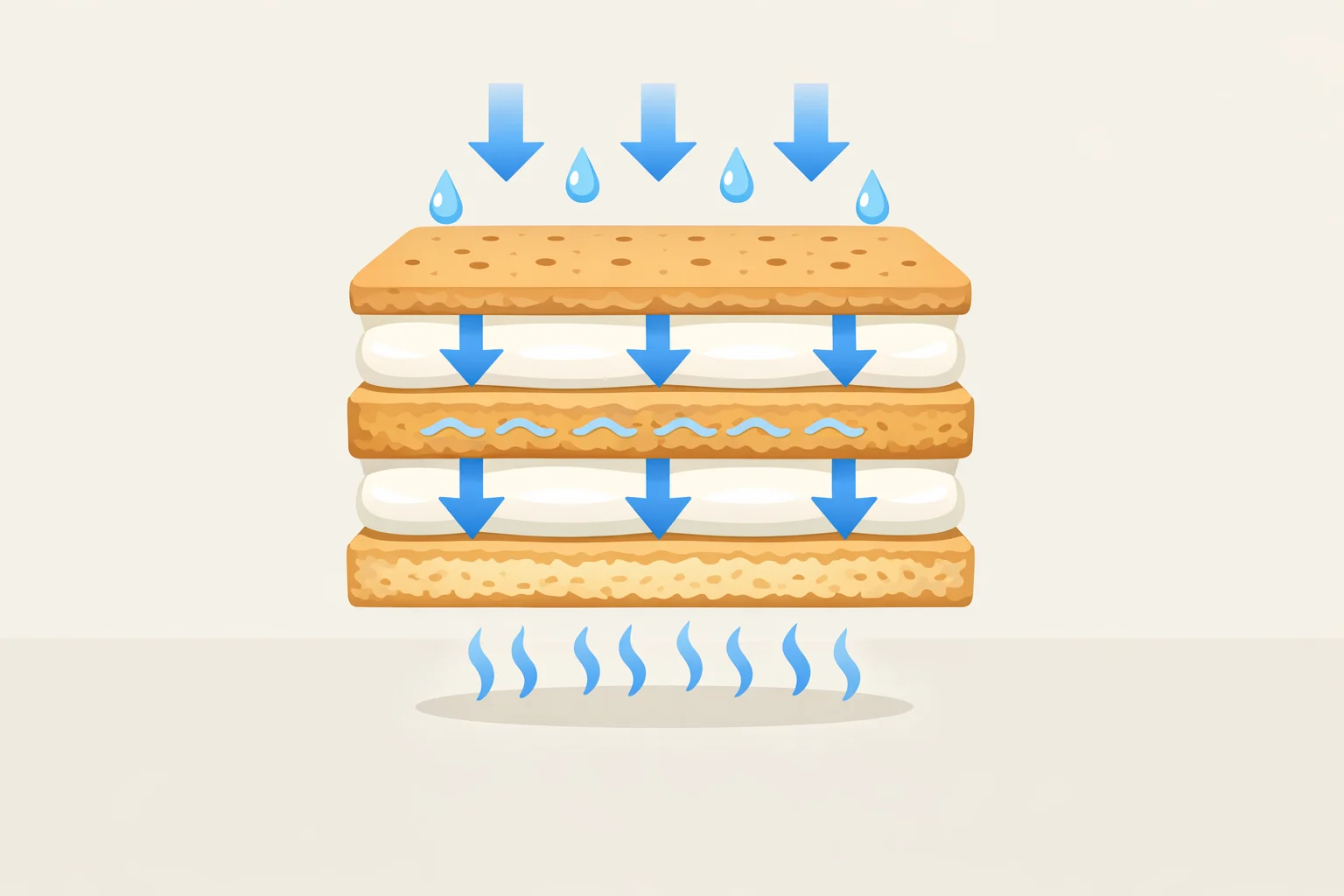
Think of it as a balance rather than a single trick. The crackers need to pull in enough moisture to soften, but the filling and the fruit can't add so much liquid that the layers turn watery instead of cake-like. Too little moisture and you're left with a crunchy cracker sandwich. Too much and the whole thing slumps.
That absorption mechanism holds up even in versions that don't use graham crackers at all. Betty Crocker's take on the format bakes vanilla sugar cookies first, then layers them with mascarpone whipped cream; after a rest in the fridge, those baked cookies absorb cream the same way plain graham crackers do and soften into something cake-like (Betty Crocker). Different cookie, same physics.
Excess water works against that balance, and berries are the most common source of it. Fruit that hasn't been dried thoroughly before layering releases liquid into the cake as it sits, and that's identified as the single biggest cause of soggy layers (A Pinch of Adventure). Firmness matters too: choosing berries that are ripe but still firm, rather than soft, helps them hold their shape through the chill (Betty Crocker).
The filling side of the equation depends on temperature. Cream that isn't fully cold won't whip into firm peaks, and warm cream simply refuses to aerate the way cold cream does (A Pinch of Adventure; Fresh Savory). Keep the cream in the fridge until the moment it goes into the bowl. Between dry, firm berries and properly whipped, cold cream, most of what makes an icebox cake succeed or fail is decided before the layering even starts.
Video of the Day
How to make this strawberry icebox cake recipe
Before starting, know the shape of the project. This recipe yields one 8x8-inch cake, about nine servings (A Pinch of Adventure). Active prep takes roughly 20 minutes, but plan for a minimum six-hour chill, with overnight producing more fully softened layers (A Pinch of Adventure; Fresh Savory). It keeps well for up to three days refrigerated, a point worth planning around if you're making it for a weekend gathering.
You'll need an 8x8-inch baking dish, a hand mixer, and a sharp knife. Covering the dish with plastic wrap or a tight-fitting lid works fine for the chill. For ingredients: 1.5 pounds fresh strawberries, 14 to 16 sheets of graham crackers, 8 ounces of softened cream cheese, ¾ cup powdered sugar, 2 cups cold heavy whipping cream, 2 teaspoons vanilla extract, and a pinch of salt (A Pinch of Adventure).
-
Prep the berries. Rinse the strawberries and pat them completely dry, then hull and slice into even ¼-inch pieces. Pick berries that are ripe but still firm rather than soft, so they hold their shape through the chill. Set aside a handful of whole or halved berries for the top (A Pinch of Adventure; Betty Crocker).
-
Make the filling. Beat the softened cream cheese with the powdered sugar until smooth and free of lumps. Add the cold heavy cream, vanilla, and salt, then beat on medium-high until the mixture holds stiff, fluffy peaks, about 2 to 3 minutes. Don't overbeat, and don't skip the cold-cream step; it's what lets the mixture hold peaks at all (A Pinch of Adventure).
-
Layer. Spread a thin layer of filling across the bottom of the dish, then lay down a layer of graham crackers, breaking pieces to fit the edges. Spread about a third of the remaining filling over the crackers, then top with a layer of sliced strawberries. Repeat until you have three layers total, finishing with filling on top (A Pinch of Adventure).
-
Cover and chill. Wrap tightly and refrigerate for at least six hours, ideally overnight. Check doneness with a sharp knife: it should slide through with smooth resistance rather than a hard crunch, which signals the crackers have finished softening (Fresh Savory).
-
Finish and slice. Just before serving, arrange the reserved berries on top. Cut into squares with a sharp knife, wiping the blade clean between cuts for neat edges, and serve cold (A Pinch of Adventure).
If you want to cut a corner without losing the technique, one version of this recipe swaps the cream cheese filling for a 16-ounce tub of thawed whipped topping, turning it into a three-ingredient dessert (A Pinch of Adventure). It's a reasonable trade for a weeknight version, though the cream-cheese filling above holds its structure better over multiple days.
A chocolate wafer variation worth trying
Once the base method clicks, it's worth knowing how far it stretches. One related recipe swaps graham crackers for chocolate wafer cookies, alternating them with a whipped cream cheese filling and fresh strawberries in the same style of dish (Ina Garten Cooks). After chilling for at least six hours, the wafers soften into a cake-like texture the same way graham crackers do in the original (Ina Garten Cooks).
It's worth being precise about what carries over and what doesn't. That chocolate-wafer version isn't a straight one-for-one substitution into the recipe above: it uses its own filling built with granulated sugar rather than powdered, whipped cream and cream cheese folded together separately rather than beaten as one mixture, and a slightly larger dish (Ina Garten Cooks). Treat it as a related build rather than a drop-in swap. What does carry over is the underlying logic: dry, firm berries, cold cream whipped to stiff peaks, and a full chill are still what make the layers soften correctly, regardless of which cookie sits underneath.
Storing an easy icebox cake with strawberries
Refrigerate leftovers in an airtight container, and plan to finish the cake within three days. Past that window, the fresh strawberries start releasing liquid and the layers soften further than intended (Fresh Savory; Betty Crocker). If you're planning ahead for a gathering, the dish can be assembled up to 48 hours before serving, which makes it a genuinely useful make-ahead dessert rather than a last-minute scramble (Fresh Savory).
Freezing is where the guidance gets murkier, and it's worth laying out the disagreement rather than pretending it doesn't exist. Betty Crocker advises against freezing its mascarpone-and-baked-cookie version of the cake, though that recipe uses a different filling than the one in this article (Betty Crocker). Meanwhile, both Fresh Savory's fresh-berry, cream-cheese-based icebox cake and Ina Garten Cooks' chocolate wafer version, which also uses a cream-cheese filling with fresh strawberries, say the assembled dessert can be frozen for up to a month, then thawed overnight in the fridge before serving (Fresh Savory; Ina Garten Cooks). That's a real conflict in the available guidance, not a settled answer, so treat freezing as something to test carefully with your own batch rather than a rule to follow blindly.
However you store it, this is a cold dessert through and through. Serve slices straight from the fridge rather than letting the cake sit out, since the point of chilling the filling to stiff peaks is to give it structure it can only hold at a cold temperature.
An icebox cake softens through a controlled moisture exchange, not baking, and the whole method comes down to a handful of variables working in concert: dry, firm berries, a properly whipped cold filling, and a full chill of six hours or more. Once that balance feels automatic, the format travels well, as the chocolate wafer variation shows. The next place to experiment is the cookie layer itself, whether that means dark chocolate wafers, a different cracker, or another format entirely, as long as the same cold, dry, patient logic stays in place underneath it.