How to Cook With a Stainless Steel Skillet Without Sticking
A stainless steel skillet's real selling point isn't ease. It's what happens at high heat that a nonstick pan simply can't replicate. Learning how to cook with a stainless steel skillet takes a short adjustment period, not a workaround for a flawed design.
Bare metal, no coating: that's the whole design. Stainless is built for browning, searing, and building pan sauces, and food release comes down to technique rather than a slick surface, which is exactly why it beats nonstick for certain jobs. Stainless skillets brown proteins, onions, and vegetables particularly well, and they leave behind rich pan drippings that a nonstick surface never produces, according to recipe developer Ann Taylor Pittman (Martha Stewart, 11 days ago). Because stainless is nonreactive, it also handles acidic ingredients like tomatoes, wine, and citrus without picking up the metallic taste cast iron can leave behind (Serious Eats, 7 weeks ago). Pittman, who has spent more than two decades developing recipes and running test kitchens, says stainless is still the pan she reaches for most in her own kitchen (Martha Stewart, 11 days ago).
What follows: why stainless earns its keep, the routine for how to prevent food from sticking to stainless steel, what to check before buying one, and the specific situations where another pan still wins.
What a stainless skillet does that other pans can't
Video of the Day
Before getting into how to use a stainless steel pan day to day, it helps to be clear about what you gain by switching. A stainless skillet produces a deep sear while staying light enough to stir and toss. A 12-inch version can roast a whole chicken and turn the drippings into gravy afterward (Serious Eats, 7 weeks ago).
Nonstick pans are specifically discouraged for anything meant to develop a sear or a pan sauce. Part of the reason is that nonstick coatings shouldn't be overheated in the first place, and part of it is that they simply don't build fond, the browned bits stuck to the pan bottom that turn into sauce, the way bare metal does (Martha Stewart, 11 days ago).
Stainless also has a thinner profile than cast iron, so it responds quickly when you adjust the burner. Turn the heat down while browning onions and the pan follows along almost immediately, instead of coasting on stored heat the way cast iron would (Martha Stewart, 11 days ago). That responsiveness matters most mid-recipe, when a pan of onions can go from golden to scorched in the time it takes to answer the phone.
Video of the Day
How to cook with a stainless steel skillet: a step-by-step routine
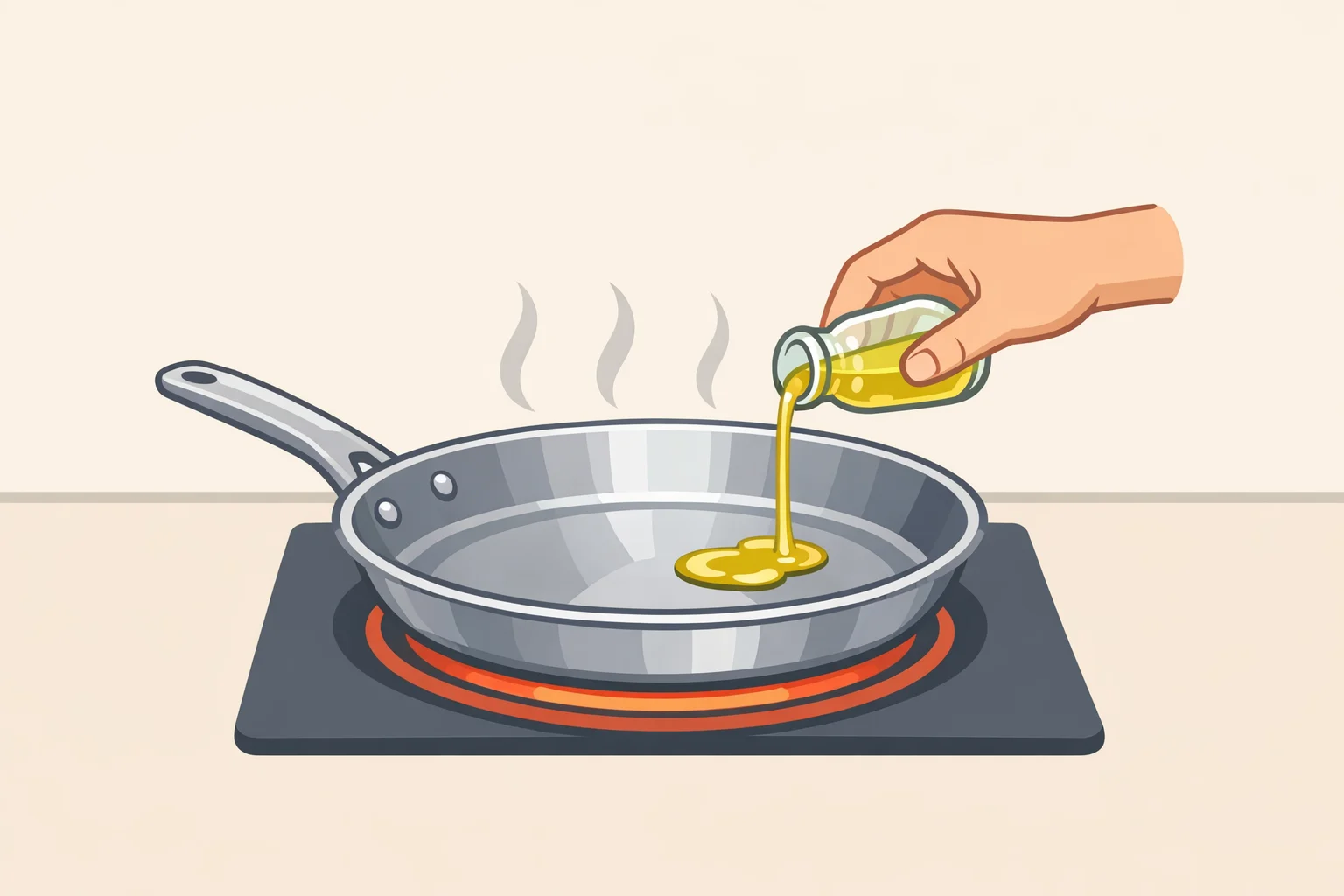
Sticking is rarely one mistake. It's usually some combination of a cold pan, the wrong oil, food added too soon, or a pan packed too full. The sequence below handles all of those variables in order, though ingredient type and pan thickness still play a role in how it goes.
1. Preheat before anything else touches the pan. A cold pan is a sticky pan. This is the single habit most people skip, and it's the foundation for how to preheat a stainless steel pan correctly: give it two to three minutes over medium heat before oil ever goes in (Tramontina, 9 days ago). An independent culinary source and a cookware manufacturer agree on the order: heat first, fat second (Martha Stewart, 11 days ago; Tramontina, 9 days ago).
2. Run the stainless steel pan water test. Flick a few drops of water into the pan. There are three possible outcomes, not one. Droplets that sizzle and vanish mean the pan isn't hot enough yet. Droplets that scatter into many frantic little beads mean it's overshot, so pull the heat back. Droplets that form a single bead and glide across the surface, a phenomenon called the Leidenfrost effect, mean the pan has hit its cooking window (Tramontina, 9 days ago). That window generally sits around 350 to 375°F (176 to 190°C), a useful guideline for searing rather than an exact rule for every dish (Tramontina, 9 days ago).
3. Add oil to the hot pan, not the other way around. It should shimmer within seconds of hitting the surface. Choose a high-smoke-point oil, since smoke point marks the temperature at which oil breaks down and turns bitter instead of searing cleanly (Tramontina, 9 days ago). Medium to medium-high heat covers nearly everything you'll cook, because stainless holds heat efficiently and rarely needs the burner cranked all the way up (Tramontina, 9 days ago).
4. Leave the food alone. This is the step people struggle with most. If food resists a gentle nudge, it hasn't finished searing yet; a properly browned piece releases on its own (Tramontina, 9 days ago). What's happening at the surface: stainless is porous at a microscopic scale, and as the metal heats, those pores shrink and briefly grip whatever's touching them, which is why food seems stuck early on and then lets go once it's ready (Serious Eats, 7 weeks ago).
5. Don't crowd the pan. Stainless doesn't hold onto heat as well as cast iron, so give food room to breathe rather than stacking it in (Martha Stewart, 11 days ago). A packed pan cooks less evenly, and that's reason enough to work in batches when a recipe calls for more than a single layer of food.
Run through those five steps in order and nearly every common cause of sticking is accounted for, though no sequence guarantees a perfect result every time. Ingredient moisture, cut thickness, and how well a particular pan is made all still play a part.
What actually matters when buying one
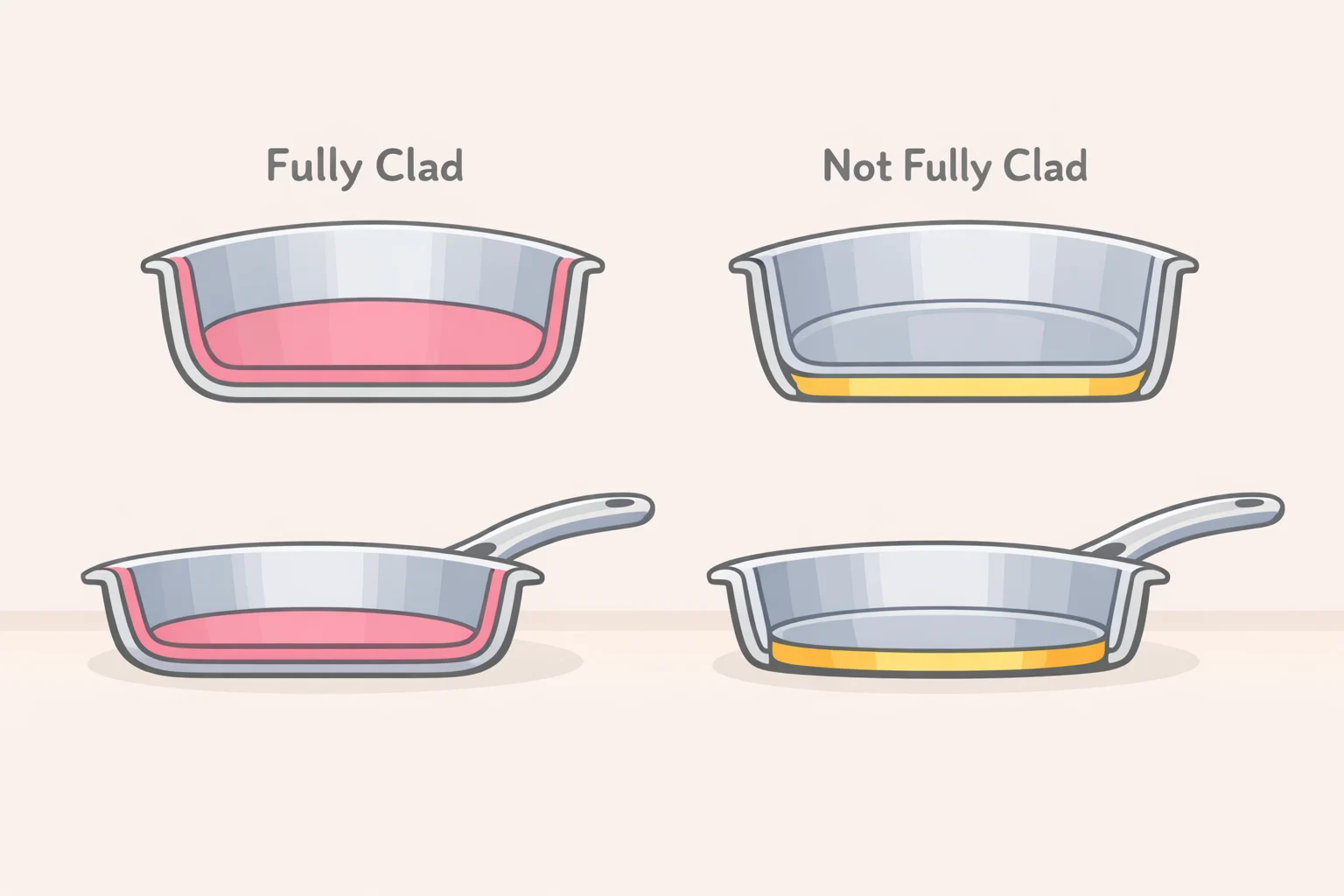
Construction quality and fit for your cooktop matter more than marketing terms like "five-ply." The priciest pan on the shelf isn't automatically the best-performing one.
Start with cooktop compatibility. A pan works on induction only if its exterior layer is magnetic, and that's not guaranteed just because a label says stainless or fully clad (Stainless Steel Guide, 19 days ago). Plain stainless is a poor heat conductor on its own, which is why cheaply made pans develop hot spots that scorch food in one ring and leave it pale everywhere else. A bonded aluminum or copper core is what actually spreads heat evenly, and cladding coverage, meaning whether that core reaches the sidewalls or only sits under the base, is the detail that determines how a pan performs, not the ply count printed on the box (Stainless Steel Guide, 19 days ago).
A thick three-ply pan can actually contain more conductive metal than a thinner five-ply one, so a higher number on the label isn't automatically the better buy. Full cladding is a real advantage specifically for skillets and sauté pans, where the walls take part in cooking, but it's not a guarantee of even heating by itself (Stainless Steel Guide, 19 days ago).
Price matters less than people assume. In a hands-on test of 27 stainless skillets, the most expensive pans didn't perform noticeably better than moderately priced ones, and usability factors like handle comfort, weight, and how easily a pan cleaned up did more to separate the winners from the rest (Serious Eats, 7 weeks ago).
On sizing, skillets typically come in 10- and 12-inch versions. Consider a 12-inch pan for more surface area when searing multiple portions or roasting a whole chicken; a 10-inch pan is lighter and easier to maneuver for smaller batches. It's a tradeoff between cooking area and everyday handling, not one size being objectively better (Serious Eats, 7 weeks ago).
When another pan still wins
Stainless is a workhorse, not a universal replacement, and acknowledging its limits is what makes the recommendation worth trusting.
Delicate, breaded foods are the clearest exception. Pittman specifically advises against cooking them in stainless because they tend to stick regardless of technique (Martha Stewart, 11 days ago). Nonstick remains the better choice for scrambled eggs, other quick breakfast foods, and thin coated cuts like breaded cod, where easy release matters more than deep browning (Martha Stewart, 11 days ago).
Cast iron's density gives it the edge for heat retention, which makes it the better tool for deep-frying and dishes like cornbread. Its seasoning can react poorly with acidic ingredients such as tomatoes and citrus, though, which is exactly where stainless takes the advantage back (Martha Stewart, 11 days ago).
The decision going forward
Stainless is durable enough that surface scratches stay purely cosmetic and won't affect how the pan cooks (Tramontina, 9 days ago). Cleanup is usually just soap, water, and a sponge, with a stronger cleaner like Barkeeper's Friend reserved for stubborn staining (Serious Eats, 7 weeks ago).
Next time a recipe calls for a seared chicken breast, sautéed mushrooms, or caramelized onions, run the water test before the oil goes in and resist the urge to nudge the food early. That's the whole method, repeated until it becomes muscle memory. Most kitchens eventually end up stocked with stainless, nonstick, and cast iron side by side, each earning its shelf space for a different job. Stainless just happens to be the one that gets pulled out without a second thought.