What to Order at a Barbecue Restaurant, According to a Pitmaster
Most people walk up to a barbecue counter and either order whatever sounds familiar or point at whatever looks good in the case. Reasonable approach to lunch. Not how a pitmaster does it.
An experienced pitmaster uses three specific items as a diagnostic: brisket, ribs, and sausage. Together, they reveal almost everything worth knowing about a restaurant before the tray is empty. This guide walks through exactly what to order at a barbecue restaurant, what to look for when those items arrive, and what a well-constructed first tray tells you about the kitchen that prepared it.
The framework draws primarily from Texas-style barbecue expertise. The three-item approach a mix of moist and lean brisket, one rib, one signature sausage link is what Exploring BBQ called "one practical first tray" earlier this year. The underlying principles translate broadly: tenderness control, seasoning restraint, bark development. Regional conventions differ, but the diagnostic logic holds across traditions.
Step 1: Order brisket first. It's the benchmark.
Video of the Day
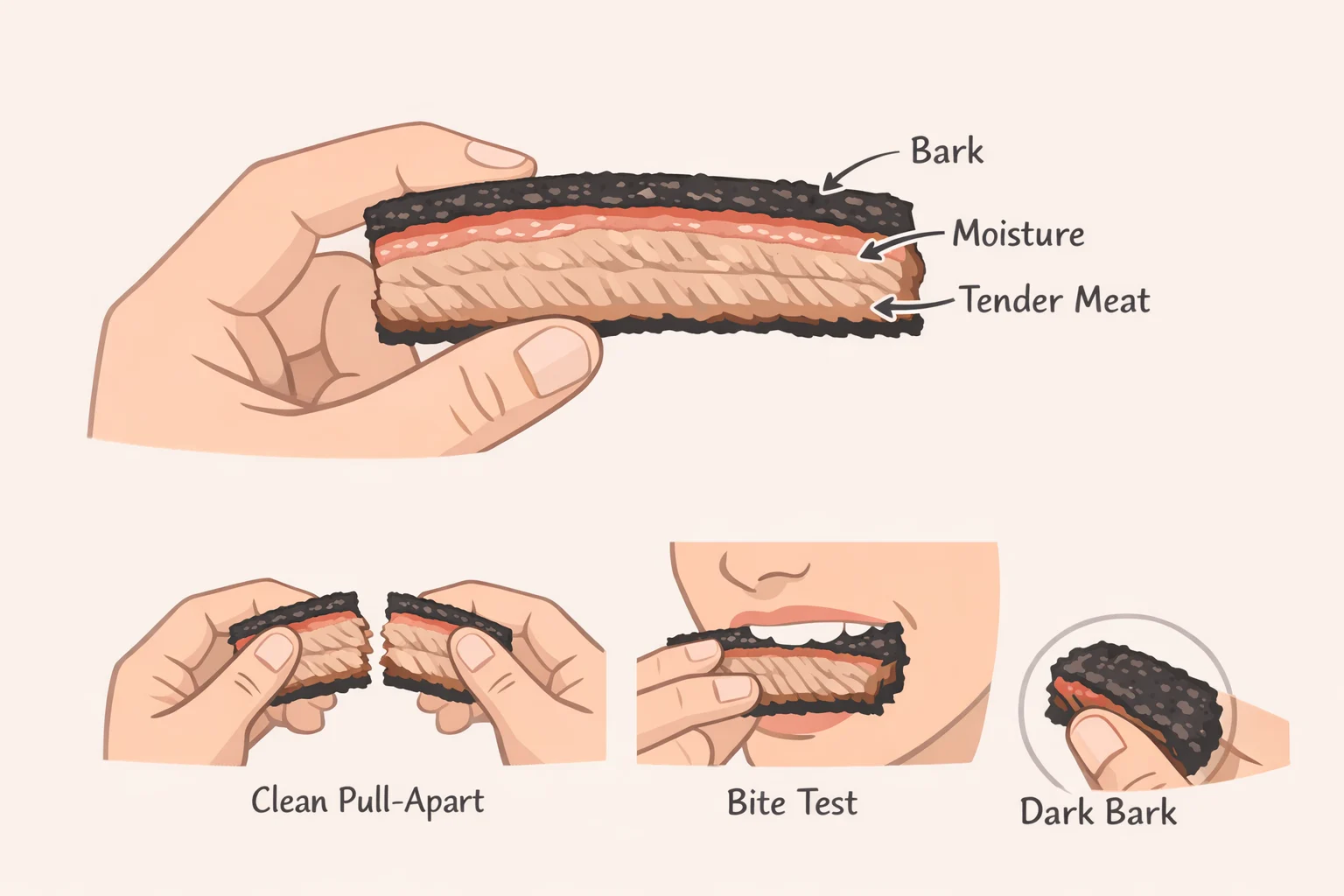
Brisket is a useful benchmark because small mistakes in tenderness, moisture, and bark are easy to spot. Texas Barbecue argues that well-executed brisket needs no sauce. If it stands on its own, the pitmaster has already done the work. Reaching for the sauce bottle before tasting isn't a crime, but it is a missed opportunity to judge the kitchen fairly.
When the brisket arrives, assess it in order: structure first, then moisture, then bark. A properly cooked slice should hold together when lifted and release cleanly with a single bite, no resistance, no tearing, per Texas Barbecue. Meat that collapses on the way to your mouth is overcooked. Meat that fights back like jerky needed more time on the pit.
Specify your cut at the counter. Exploring BBQ recommends asking for a mix of moist and lean, point and flat, in a single order. State the amount first, then your preference: "Half a pound of brisket, mostly moist." If an outside slice with heavy bark is available, ask for one.
The flat (lean end) should be tender and flavorful, not dry or stringy. The point (fatty end) should be juicy, with fat that has fully rendered, rich without feeling greasy, as Texas Barbecue describes it.
The bark signal: Before anything else, look at the exterior crust. According to Exploring BBQ, bark develops from a combination of smoke exposure, rendered fat, seasoning, moisture evaporation, and the natural proteins and sugars on the meat's surface. A deep, well-set bark, dark and textured, tells you more about how the brisket will actually eat than anything else visible from across the counter, the same source notes.
The smoke ring myth: Don't be swayed by a dramatic pink halo beneath the crust. It's mostly visual. Weather, humidity, cooker type, and wood choice all affect smoke ring development independently of quality, Texas Barbecue notes, and the ring makes a brisket slice look striking in a photograph, which is exactly why Exploring BBQ describes it as the detail people love to post. A smoke ring doesn't guarantee better flavor or tenderness.
The more useful red flag runs in the opposite direction. BBQ expert Jim Carroll told Tasting Table earlier this year that gray, barkless brisket typically signals steaming, boiling, or oven cooking: slow-cooked roast, not barbecue. That's the color to watch for, not the pink halo.
One final note on seasoning: some of the best brisket in Texas has historically been built from nothing more than salt, coarse black pepper, smoke, and time, according to Texas Barbecue. A complex rub isn't a sign of quality. Restraint usually is.
Video of the Day
Step 2: Add ribs. They expose how well the kitchen controls doneness.
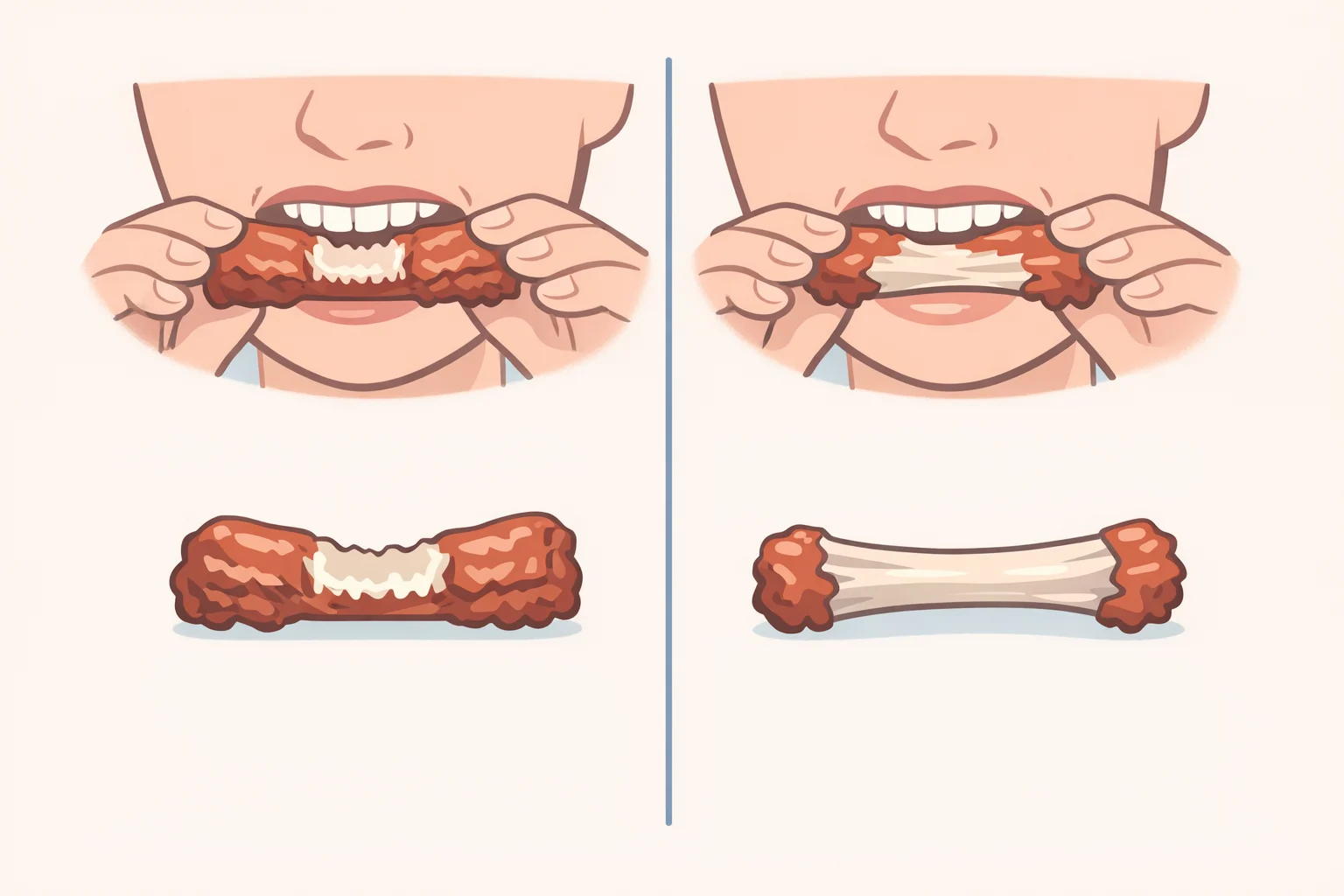
Ribs earn a spot on this tray for a specific reason: they catch a mistake that brisket can sometimes hide. A kitchen that overcooks brisket can still produce a slice that looks passable on the plate. Overcooked ribs are harder to disguise, and the most common way they're overcooked is the one most diners actively celebrate.
"Fall-off-the-bone" is not a compliment. This is the biggest myth in casual barbecue culture. According to Texas Barbecue, ribs that surrender without any resistance have almost certainly been on the pit too long. A properly cooked rib leaves a clean bite mark exactly where you bit; the rest of the meat stays attached to the bone. That's the sign of a kitchen that pulled the ribs at the right moment rather than one that kept going until they gave up entirely.
At the counter, Exploring BBQ recommends asking "Which ribs are eating best right now?" rather than defaulting to whatever's listed first. The question gives the person behind the counter room to actually guide you, and it tends to produce better answers than passive pointing.
What to look for on the plate: Seasoning should support the pork rather than bury it. Whether the ribs carry a dry rub or a light glaze, Texas Barbecue is clear on the standard: the pork itself should register first. The flavor on top is context, not the main event. Excess in either direction, too sweet, too salty, too sauced, usually means the meat underneath needed the cover.
The ribs will confirm or complicate whatever the brisket told you. Together, the two cuts give a reasonably complete picture of the kitchen's patience and precision. The third item tests something different.
Step 3: Order a sausage link. It reveals the house's attention to detail.
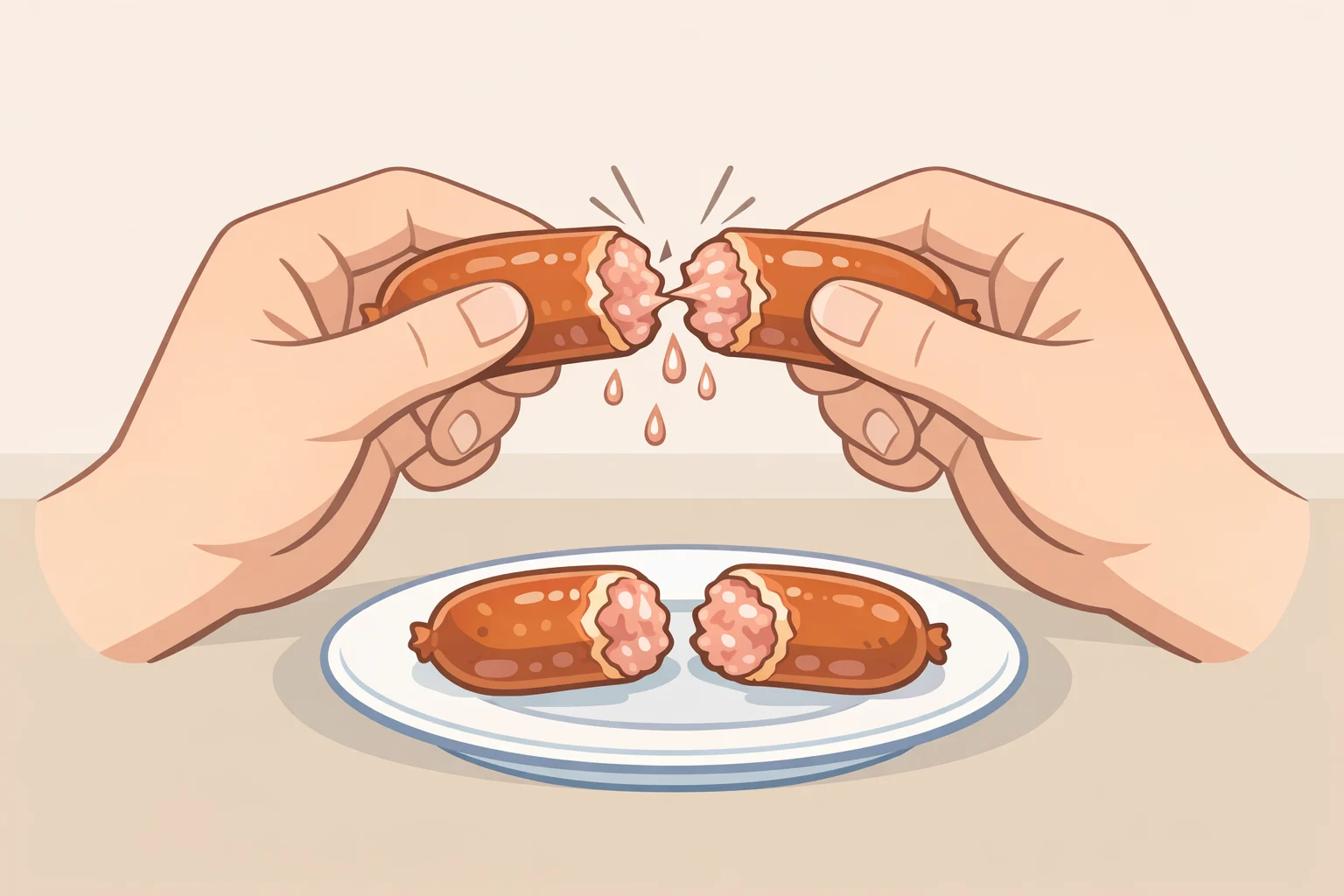
Sausage is the most telling item on this tray precisely because it's easy to underestimate. First-timers skip it in favor of brisket and ribs. That's a mistake. Sausage is where a kitchen demonstrates whether its discipline extends beyond the marquee cuts, and it surfaces a different set of skills than either of the first two meats.
The snap test is the single most reliable indicator of a well-made link. Bite through the casing and pay attention. A good sausage snaps, meaning the casing has integrity and wasn't left on heat long enough to dry out, per Texas Barbecue. No snap usually means the casing split, dried, or turned leathery.
Inside the casing, lean and fat should be evenly distributed and working together. The sausage should be juicy without turning greasy. If it eats greasy rather than juicy, the balance is off, Texas Barbecue explains.
Exploring BBQ recommends ordering one signature link rather than a house-branded variety, because the house's own sausage recipe is where its identity tends to live. Prime beef, for what it's worth, is not a prerequisite for any of this. Texas Barbecue points out that some of the most respected briskets in Texas have come from Choice or Certified Angus beef. The pitmaster matters more than the sticker on the box, and that's as true for sausage as it is for brisket.
If you're not eating Texas-style barbecue
The three-item framework was built on Texas expertise, and a few of its specific cues assume that context. Step outside Texas and the diagnostic still works, but the items anchoring it may shift.
In Carolina traditions, pork shoulder or whole-hog pulled pork often matters more than brisket. Order pulled pork or chopped pork as your benchmark and apply the same principles: does it hold its texture without dissolving, does the seasoning complement rather than bury the meat, and does the vinegar or mustard sauce feel like part of the dish or a correction?
Memphis-style barbecue puts ribs at the center. Dry-rubbed ribs are the clearest test of a Memphis kitchen, and the clean-bite standard applies directly: pull cleanly from the bone, leave a mark, don't surrender.
Kansas City changes what "balance" looks like. Sauced meats and burnt ends are legitimate focal points, and the sauce itself carries more evaluative weight than it does in Texas. Look for a sauce that's complex and not purely sweet, and for burnt ends that have genuine texture rather than falling apart on the paper. The snap test for sausage still holds.
The underlying questions are the same regardless of region: does the meat hold together, does the seasoning support rather than rescue, and does the kitchen show the same discipline on every item or only the headliners? Ask those and the tray tells you what you need to know.
Rounding out the tray: sides and the counter conversation
Three meats cover the diagnostic work. The rest of the tray tells you whether the restaurant is thinking about the whole meal.
Texas Barbecue makes the point plainly: the sides reveal as much about the kitchen as the meat does. Fresh potato salad, pinto beans, coleslaw, mac and cheese, homemade desserts, these reflect the same qualities the best meat reflects: care and consistency. A kitchen that takes pride in its brisket but sources generic sides is telling you something about where its attention stops.
The ordering approach: Exploring BBQ recommends pairing one classic side with one that's specific to the house. The classic gives you a point of comparison; the house specialty shows you what the kitchen is actually proud of.
The most useful question at any barbecue counter is asking the cutter what's eating best right now. Texas Barbecue notes that some of the best bites come from items you didn't arrive planning to order. The people slicing meat all day know exactly what's in form. Frame it as curiosity rather than a demand, and they'll usually point you somewhere worth going.
What three items tell you about a whole restaurant
Brisket, ribs, and sausage form a complete picture because they test different dimensions of pitmaster skill. Brisket tests tenderness, moisture control, and whether the kitchen knows when to stop seasoning. Ribs test doneness precision and whether the kitchen resists the cultural pressure to overcook. Sausage tests fat balance, casing integrity, and consistency on items that aren't the headliner.
Texas Barbecue puts the underlying standard directly: great barbecue doesn't come from a secret rub or a particular smoker. It comes from doing the small things correctly, every single day.
Carry this into any new spot: start with "What looks best right now?", as Exploring BBQ puts it, and let the answer shape the tray. Then inspect the brisket's bark before tasting anything else. Watch for gray, barkless meat, the clearest single red flag on the tray, per Tasting Table. Bite the rib and look for a clean mark. Listen for the snap in the sausage casing.
If the restaurant passes all three, it has earned a return visit. If it doesn't, a single tray found that out, which is considerably better than committing to the full menu.