How to Protect Plants During a Heat Wave: A Practical Guide
That drooping tomato plant on a 95°F afternoon probably isn't thirsty. On hot, windy days, leaves lose moisture faster than roots can replace it, so a fully watered plant can still wilt, curl, and look desperate by noon (UMN Extension, this week). Grabbing the hose is the instinct. It's also frequently the wrong move.
Knowing how to protect plants during a heat wave starts with reading the right signals. Temperatures above 90°F reduce growth, disrupt photosynthesis, and cut crop yields, with effects that compound when heat lingers for days (Wisconsin Horticulture, earlier this year). Tomatoes make the clearest case study: their heat thresholds are specific, their symptoms familiar, and the mistakes gardeners make with them repeat across every other crop in the bed.
This guide works through a heat-wave response in the order it should happen: diagnose first, water correctly, then protect with shade, mulch, and wind management. The final section covers what to expect when the heat breaks.
How to protect plants during a heat wave: start with diagnosis
Video of the Day
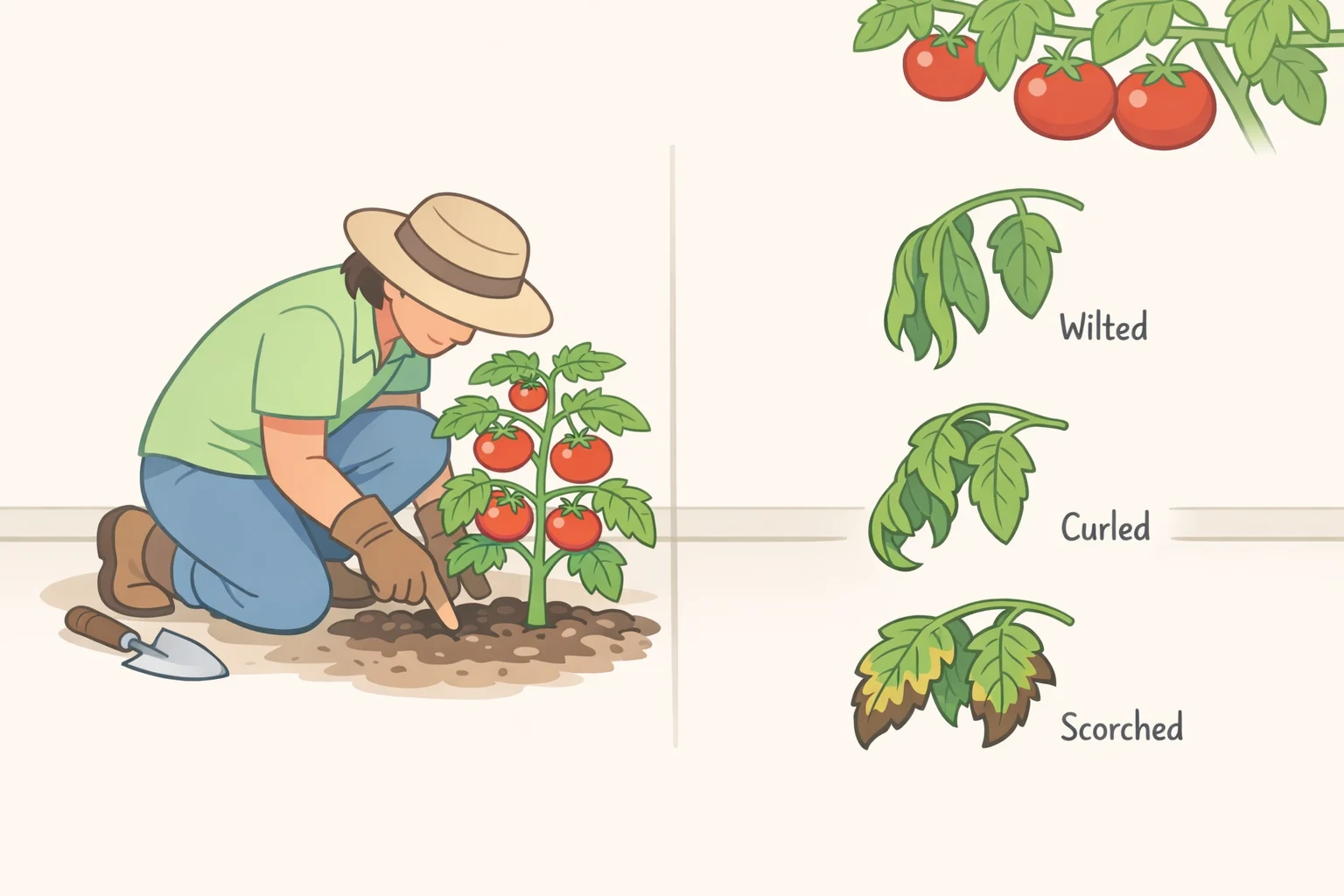
Wilting is not a reliable indicator of dry soil during a heat wave. Heat alone causes leaves to droop even when moisture is adequate, so reading the leaves will lead you to the wrong conclusion (UMN Extension, this week). Insert a finger about two inches into the soil near the root zone before watering. If it's still moist, the plant's distress is heat-driven, not drought-driven, and more water won't resolve it. Sandy soils dry out faster than clay, so check them more frequently (Wisconsin Horticulture, earlier this year).
Leaf curl on tomatoes and peppers is a protective response, not a distress signal. These plants fold their leaves inward to conserve moisture during peak heat (UMN Extension, this week). Under more severe heat, plants may slow transpiration by partially closing their stomata that's a survival mechanism, not a crisis requiring intervention (Wisconsin Horticulture, earlier this year).
What heat damage actually looks like is different. Brown or scorched leaf edges and bleached patches are dead tissue; they won't recover (NCSU Extension, last year). Blossom clusters that dry out and drop before setting fruit mean heat has already interrupted reproduction watering after the fact won't undo that. For tomatoes specifically, two distinct fruit problems can develop. A hardened yellow patch near the stem shoulder signals pigment disruption: temperatures above 85°F can inhibit the compounds responsible for red coloring in the fruit (Illinois Extension, last year). Separately, white or bleached patches on otherwise green fruit indicate sunscald, which develops when the plant can't move enough water to exposed surfaces during hot, windy conditions (Illinois Extension, last year).
Overwatering makes heat stress worse. Waterlogged soil damages roots directly, cutting off both oxygen and moisture uptake, so confirm the soil is actually dry before reaching for the hose (Wisconsin Horticulture, earlier this year).
Video of the Day
How to water plants in hot weather
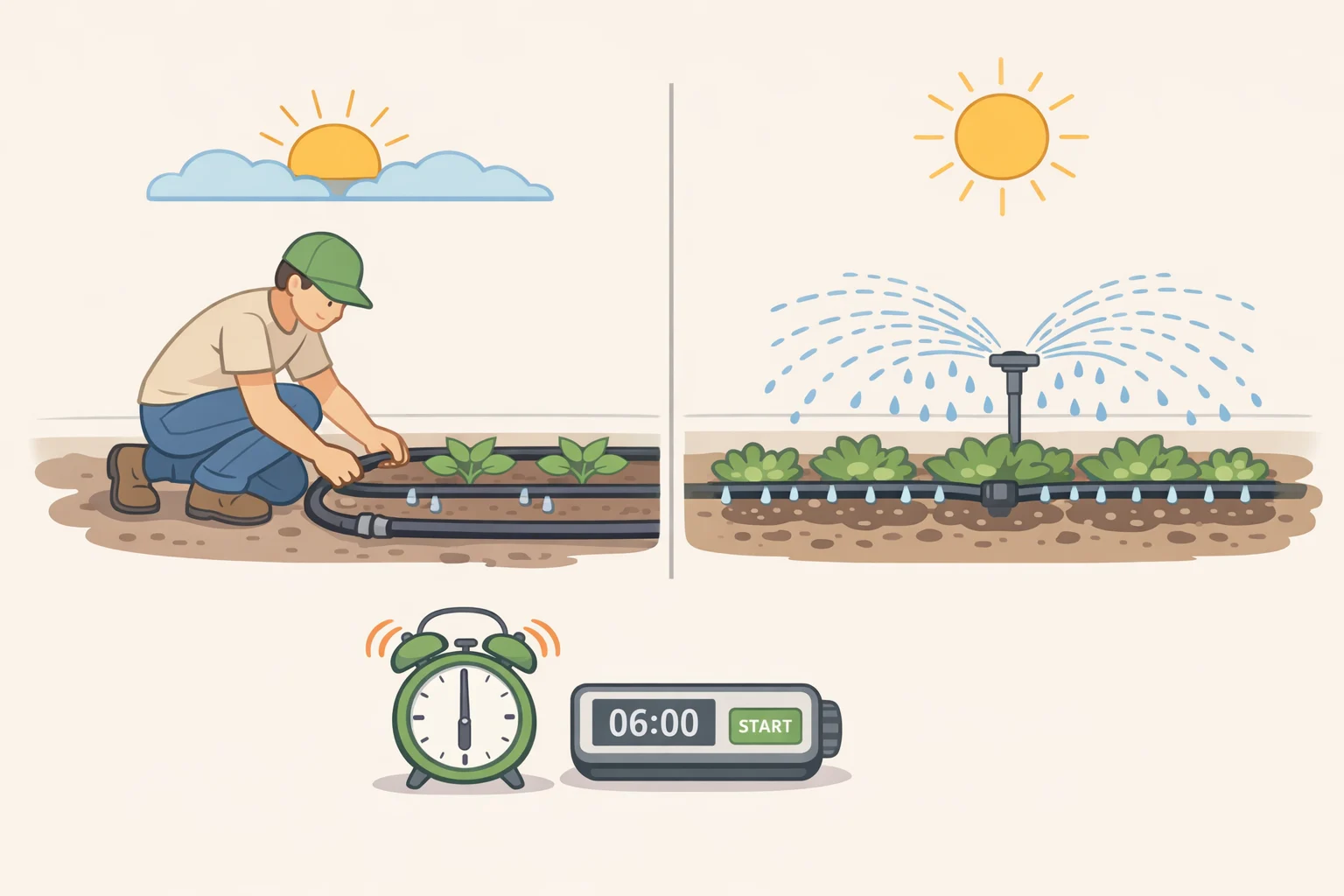
A soaker hose or drip line is the right tool here. A standard hose on a slow trickle works fine. Overhead sprinklers waste water to evaporation in hot wind and leave foliage wet skip them during a heat wave.
1. Water between 5 and 9 a.m. Morning is the best window: temperatures are lowest, evaporation is minimal, and any moisture that reaches foliage dries before midday (UMN Extension, this week; Wisconsin Horticulture, earlier this year). The evening window also works slow, deep watering during cooler hours minimizes evaporation loss and gives foliage adequate drying time (NCSU Extension, last year). Skip midday, when evaporation is highest and the effort-to-benefit ratio is worst.
2. Water containers first. Pots dry out dramatically faster than in-ground beds and can reach crisis point within hours on a hot day (UMN Extension, this week). They may need watering more than once a day simply because they lose moisture so quickly (Wisconsin Horticulture, earlier this year). Check by feel if the top two inches are dry, water again. Don't wait for the schedule; wait for the soil.
3. Water slowly and deeply at the base of the plant. A sustained soak lets water move down into the root zone rather than running off the surface. Quick, shallow sprays wet only the top inch of soil, which trains roots to stay near the surface and leaves plants more exposed in future heat events (UMN Extension, this week). Keeping water off foliage also reduces the risk of fungal problems (Wisconsin Horticulture, earlier this year).
4. Override timing if a plant is actively collapsing. The guidance above assumes you're ahead of the problem. If the soil is bone dry and a plant is wilting hard at midday, water it now. Timing is a best practice, not a rule that supersedes a plant in genuine crisis (Wisconsin Horticulture, earlier this year).
Shade, mulch, wind protection, and containers
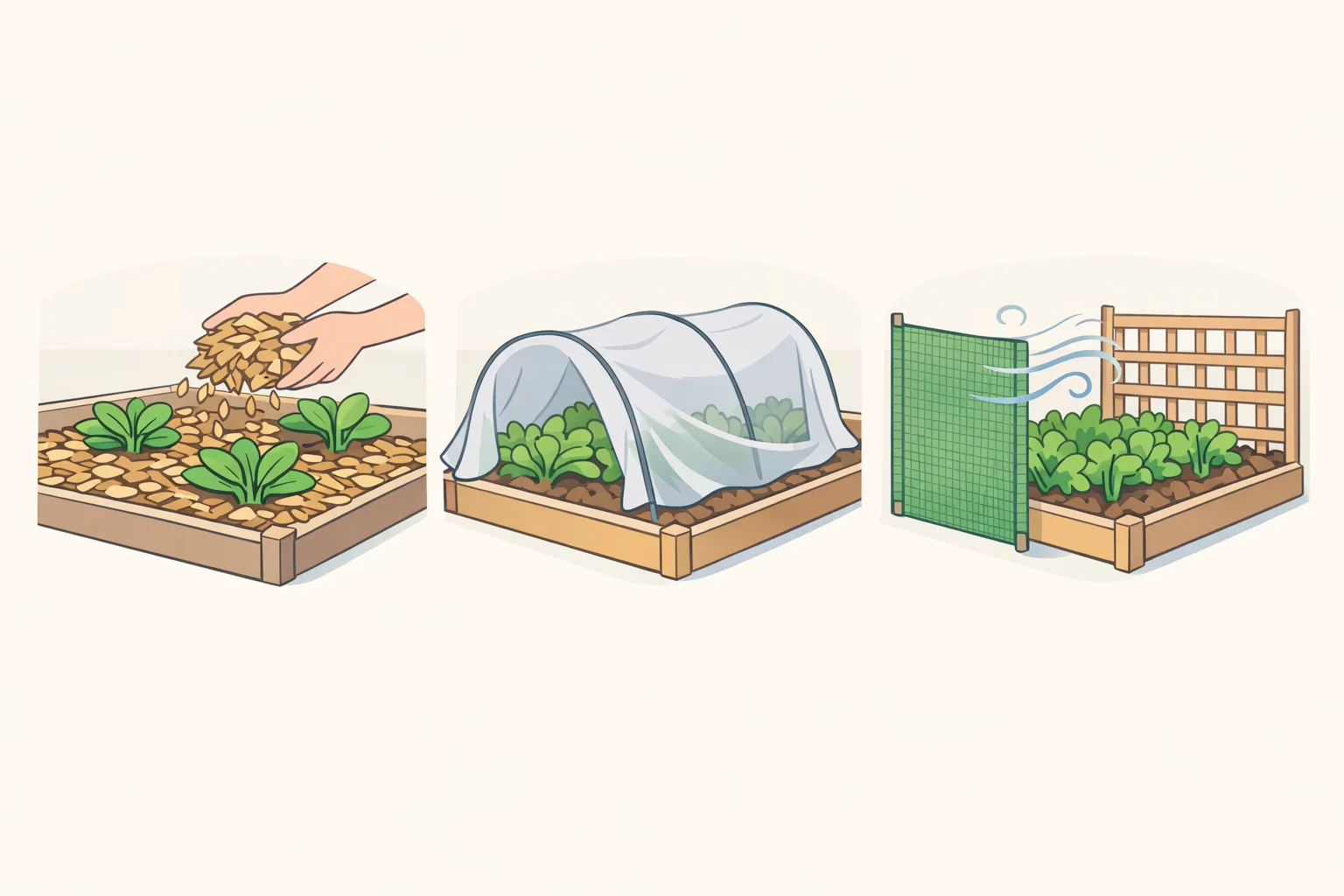
Mulch first. A fresh 1-2 inch top-off of mulch around the base of plants keeps soil temperature down and slows evaporation, reducing both how often you need to water and how much heat reaches the root zone (UMN Extension, this week). For in-ground beds, this is the highest-use move available.
Rig shade during peak afternoon heat. An old bedsheet draped over a frame, a lawn chair set at an angle, or purpose-made shade cloth can meaningfully drop the temperature around vulnerable plants. For tomatoes and peppers, cloth that blocks roughly 30% of sunlight provides cooling while still allowing enough light for photosynthesis (Illinois Extension, last year). Leafy greens need more: around 50% shade cloth, and anything close to mature should be harvested now rather than left to bolt (Illinois Extension, last year).
Block the wind. Hot wind accelerates leaf moisture loss beyond what heat alone causes, and it's a frequently overlooked driver of heat-wave damage. Use fencing, trellises, or strategically placed plants to interrupt southwest afternoon winds from hitting your most vulnerable crops (UMN Extension, this week).
Move or insulate containers. Shift pots to a spot with morning sun and afternoon shade. If a pot can't be moved, nest it inside a larger container the air gap insulates roots from radiant heat. Recent transplants and drought-sensitive plants deserve close daily attention during a heat wave (Wisconsin Horticulture, earlier this year).
Which crops need attention first
Tomatoes. Leaf curl is protective leave it alone. Blossom drop is a different matter. Flower abortion in tomatoes can occur across a range of temperatures from roughly 75 to 95°F, with risk climbing as heat builds (Illinois Extension, last year); blossom shedding becomes common around 90°F (UMN Extension, this week). At around 92°F, pollen in very young flowers can stop developing, meaning those blossoms may not set fruit regardless of what happens next (Illinois Extension, last year). Fruit already forming may develop sunscald or blossom end rot, both linked to heat disrupting water uptake in developing fruit (Illinois Extension, last year). None of this means the plant is dying. Keep it alive with deep morning watering, mulch, shade cloth, and wind protection new flowers will follow once temperatures drop.
Peppers. Expect blossom drop and growth slowdown at temperatures around 90°F (UMN Extension, this week). Mulch heavily and keep water at soil level.
Cucumbers. Prone to scorching, and under sustained heat, cucumbers can develop increased bitterness as a stress response (University of Maryland Extension, last year). High nighttime temperatures can also push zucchini toward producing more male flowers than female, directly reducing fruit set (University of Maryland Extension, last year). Water at soil level and shade during peak afternoon hours.
Lettuce and cool-season greens. Broccoli, lettuce, snap peas, and carrots begin developing bitter flavors once temperatures push consistently past 60°F; sustained heat triggers bolting, which ends the crop's productive life (Illinois Extension, last year). Shade immediately and harvest anything close to mature. Don't wait.
What not to do
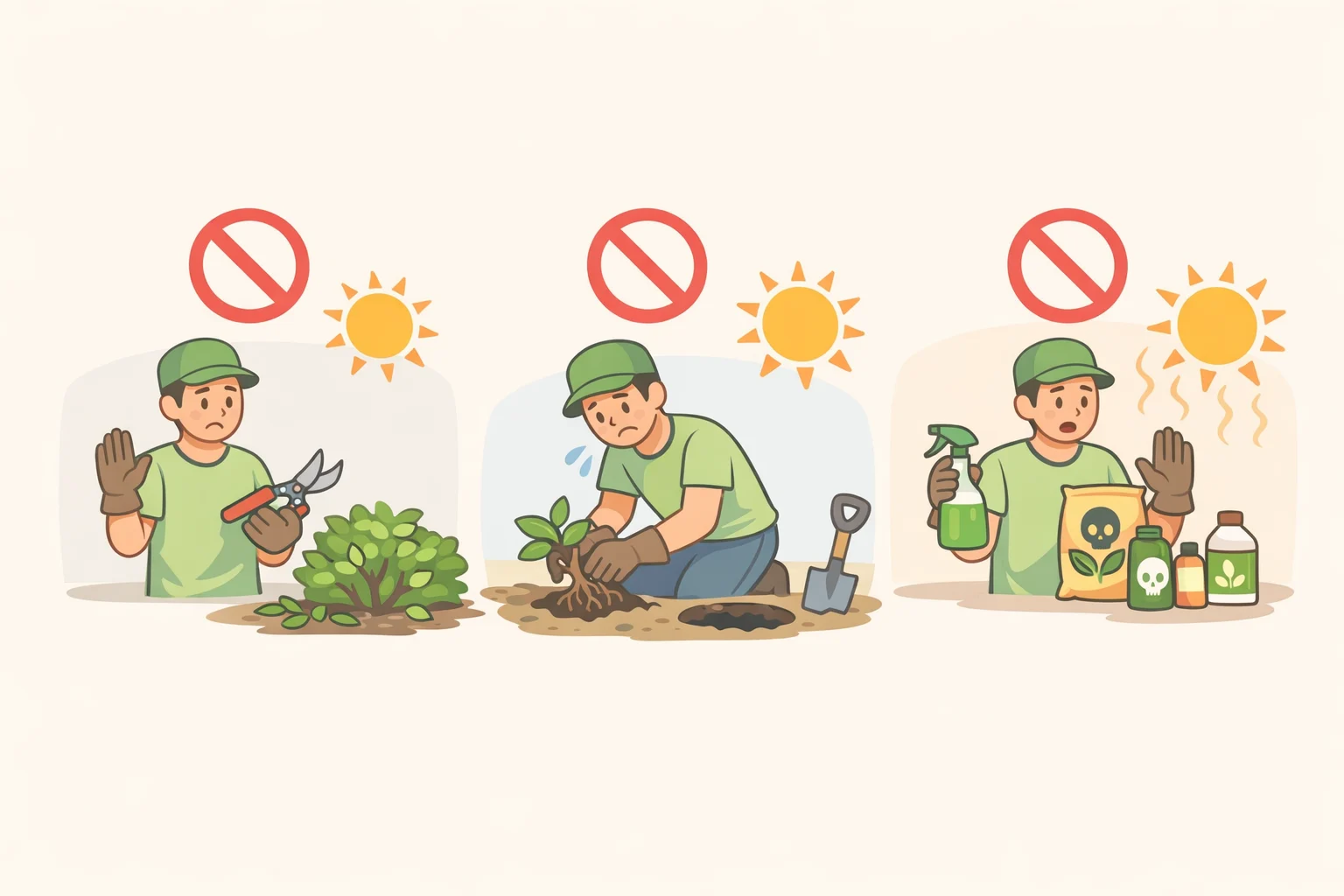
Don't prune during a heat wave. Removing foliage increases water loss and exposes more of the plant, including fruit, to direct sun (University of Maryland Extension, last year). Wait until temperatures moderate, then lightly trim scorched annuals to encourage fresh growth (UMN Extension, this week).
Don't transplant on hot days. Young seedlings are especially vulnerable; getting them established during a heat wave adds stress they can't easily absorb (University of Maryland Extension, last year).
Don't apply fertilizers or pesticides above 80°F. Both carry phytotoxicity risk under heat stress and can compound damage to already struggling plants (University of Maryland Extension, last year).
What to expect when the heat breaks
Most vegetable garden plants recover once temperatures ease. The practical rule: if a plant shows no improvement after a thorough, deep watering over the course of a day or two, it's likely beyond saving (Wisconsin Horticulture, earlier this year). Most won't reach that point, but knowing the threshold tells you when to stop intervening and start replacing.
Scorched leaf edges, dropped flowers, and sunscalded fruit are done those losses happened. What watering does now is keep the plant healthy enough to produce the next flush, which is where the remaining season's harvest comes from. New flowers will set once nights cool down, and the fruit forming after the heat breaks will look and taste normal.
Woody plants are where most gardeners underestimate the lasting damage. Trees and shrubs stressed by a severe heat event can show branch dieback in the months that follow and become significantly more vulnerable to pest and disease pressure for years afterward (Wisconsin Horticulture, earlier this year). Keep watering them deeply through fall, well after the vegetable garden has stabilized. A bad summer doesn't always show its full cost until the following spring.