How to make spaghetti sauce stick to pasta: the pasta granny trick, explained
Pour the spaghetti into a colander, dump it into the sauce, and watch the sauce slide right off, pooling at the bottom of the bowl while the noodles sit there looking unimpressed. If that scene is familiar, the fix for how to make spaghetti sauce stick to pasta has less to do with the sauce and more to do with what happens in the moments before it touches the pasta at all.
Earlier this year, Serious Eats made the case for skipping the colander altogether: lift the pasta straight from the pot into the sauce instead, and the result is glossier and better-emulsified, with far less mess at the sink. The technique has deep roots. In a recipe posted in January, Pasta Grannies documented 88-year-old Maria of Cisternino doing exactly this with her orecchiette, moving it "directly into the hot sauce with a little pasta water" rather than draining it first.
This piece walks through that method step by step: what to do, why it works, how to adjust it for different sauces, and the one habit (oiling the pasta water) that works against all of it.
Why draining pasta in a colander isn't always the move
Video of the Day
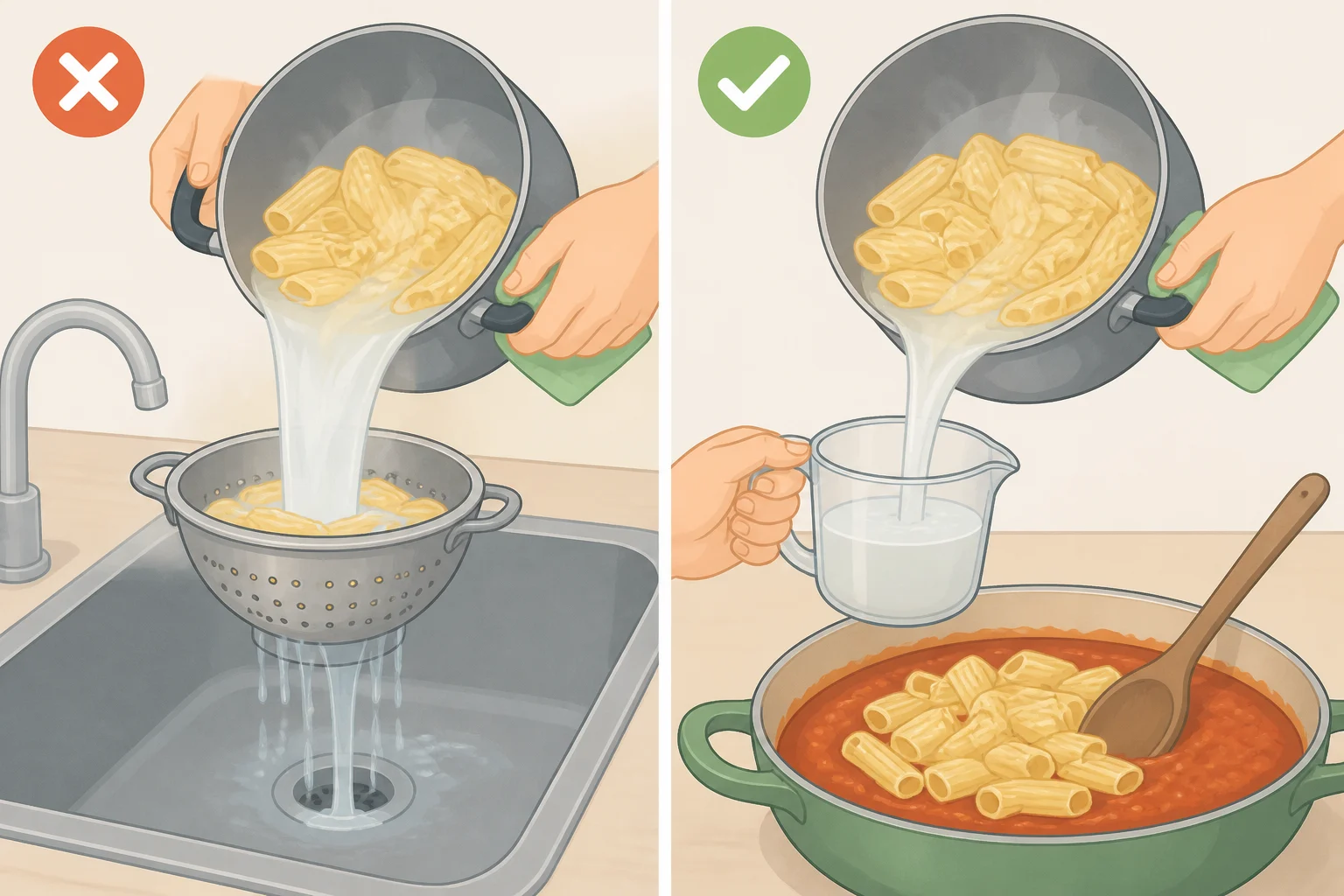
Pour spaghetti through a colander and most of the starchy water clinging to each strand goes straight down the drain. Serious Eats identifies that clinging liquid as a key building block of a cohesive sauce, so losing most of it matters. Direct transfer preserves that water on the trip from pot to pan. Draining doesn't erase it completely, but it leaves far less behind, which is why reserving pasta water before you pour becomes important if you're sticking with a colander.
There's also a practical upside to skipping the colander that has nothing to do with chemistry. It avoids the rushed trip across the kitchen with a pot of boiling water, something Serious Eats notes is better handled on your own timeline, once dinner is already plated and the stakes are lower.
None of that makes draining a mistake, exactly. Pasta Grannies documented 97-year-old Pasqualina of Riccia, Molise, in a recipe published last year, and her method is the opposite of Maria's: she drains the ciufoli and immediately tosses it with generous amounts of tomato sauce. The comparison suggests the real variable isn't the colander itself, but the gap it can create if the pasta sits around waiting.
So the honest version of this rule is narrower than "never drain pasta." If a colander is part of your routine, reserve a mugful of the starchy cooking water before it disappears down the drain, then fold it back in once the pasta hits the sauce. That reserved water does the same emulsifying job the direct-transfer method relies on, just added back in a separate step instead of carried over automatically.
Video of the Day
How to make spaghetti sauce stick to pasta, step by step
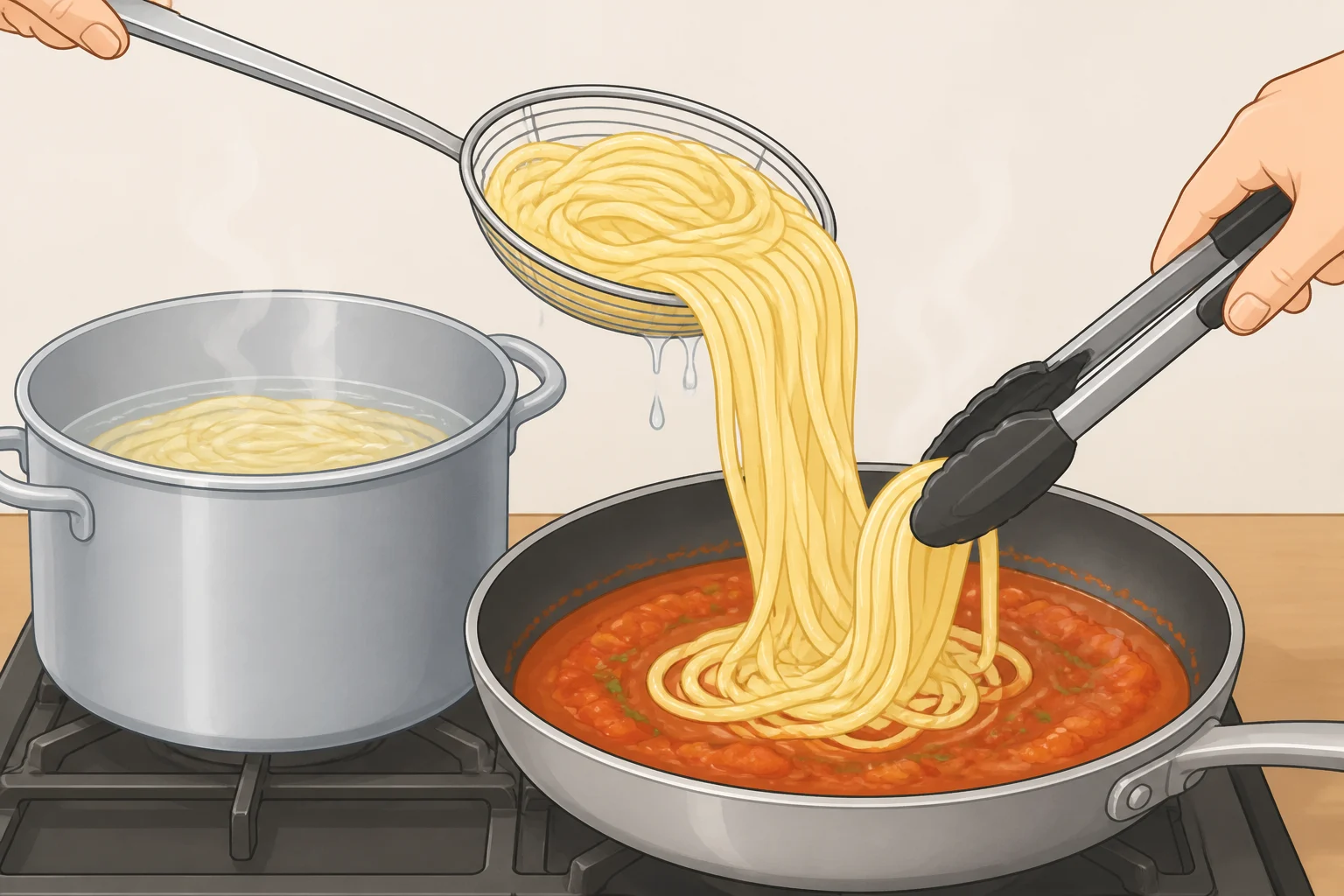
Start warming the sauce in a wide skillet a few minutes before the pasta is done, so it's gently simmering rather than cold by the time the noodles arrive. Keep tongs nearby for long noodles, or a spider strainer if you're working with a shorter shape like orecchiette or ciufoli. Everything after the pasta goes into the pot happens at the stove, not the sink.
-
Salt the water generously and skip the oil. Oil poured into a pot floats in a thin slick and never disperses through the water, so it only reaches the noodles for a moment, when they're lifted out through that surface film at the end of cooking. That brief contact is enough to leave a slippery coating that works against the sauce later (Serious Eats).
-
Stir during the first couple of minutes instead of reaching for the oil bottle. A few good swirls early in cooking keep the strands from bonding into clumps, which is the actual problem oil was supposed to solve in the first place (Serious Eats).
-
Pull the pasta just shy of al dente. A minute or so before the package's suggested cook time, fish out a strand and bite it. The center should still have a firm, slightly undercooked core, since the pasta finishes cooking once it hits the sauce (Serious Eats).
-
Lift the pasta straight into the sauce. Use tongs for spaghetti, a spider strainer for shorter shapes, and don't bother shaking off the water clinging to the noodles on the way over. That water is the whole point (Serious Eats). It's the same move Maria makes with her orecchiette, transferring it directly into the hot sauce along with a little pasta water and tossing gently for one minute before serving (Pasta Grannies).
-
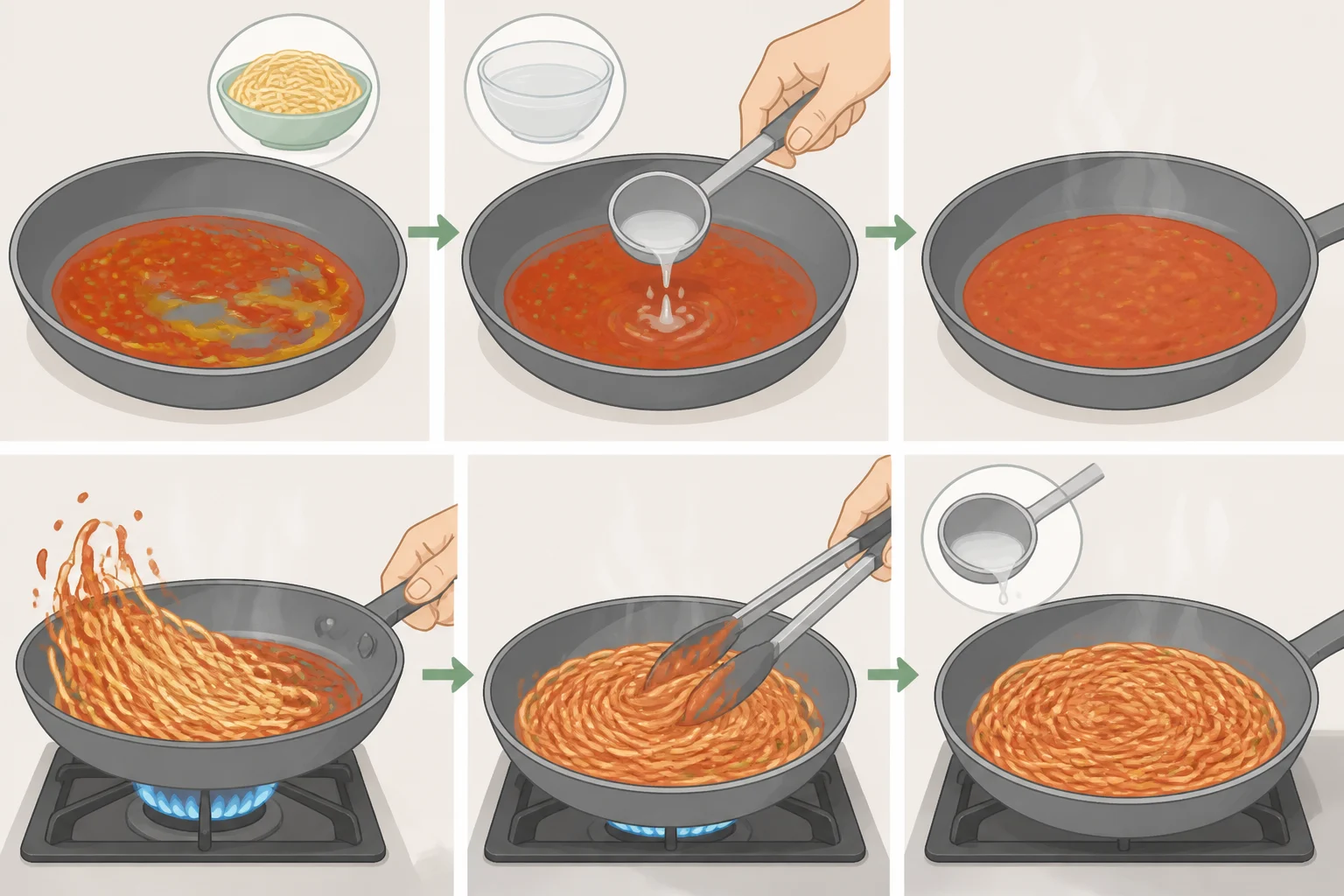
Toss everything over heat for a minute or two, adding pasta water gradually as you go. Start with a small splash, judge the sauce by eye, and add more only if it looks tight rather than pouring in a set amount upfront. Watch it shift from loose and separated to something that actually coats the noodles instead of sliding off them (Serious Eats).
What step five looks like changes with the sauce. A thick, meat-heavy ragù like Pasqualina's needs more water worked in to loosen it enough to coat every strand evenly. A thinner tomato sauce usually needs the opposite: less added liquid and a slightly longer toss over heat so it tightens rather than thins further. Cream-based sauces behave similarly to thin tomato sauces here, since extra pasta water loosens them fast and a little goes further than it looks like it will.
If the sauce still looks too loose after a full minute of tossing, don't panic and don't add more water. Keep the heat on for another minute so the liquid reduces on its own.
Fixing a sauce that won't cooperate
A sauce that's seized up and gone pasty usually means it was too thick before the pasta ever arrived. A splash of pasta water loosens it back up without diluting flavor, since the starch in that water is still doing the emulsifying work rather than just adding plain liquid.
A greasy finish, oil pooling separately instead of blending in, is often a sign there wasn't enough starchy water in the mix to bind it. Folding in another small splash while tossing over heat usually pulls everything back together, the same mechanism that makes the whole method work in the first place.
Bland is a different fix entirely. No amount of pasta water solves an underseasoned sauce. Taste it before the pasta goes in, and salt the sauce itself rather than leaning on the pasta water's dissolved salt to carry the whole dish.
Why starchy pasta water helps sauce stick to spaghetti
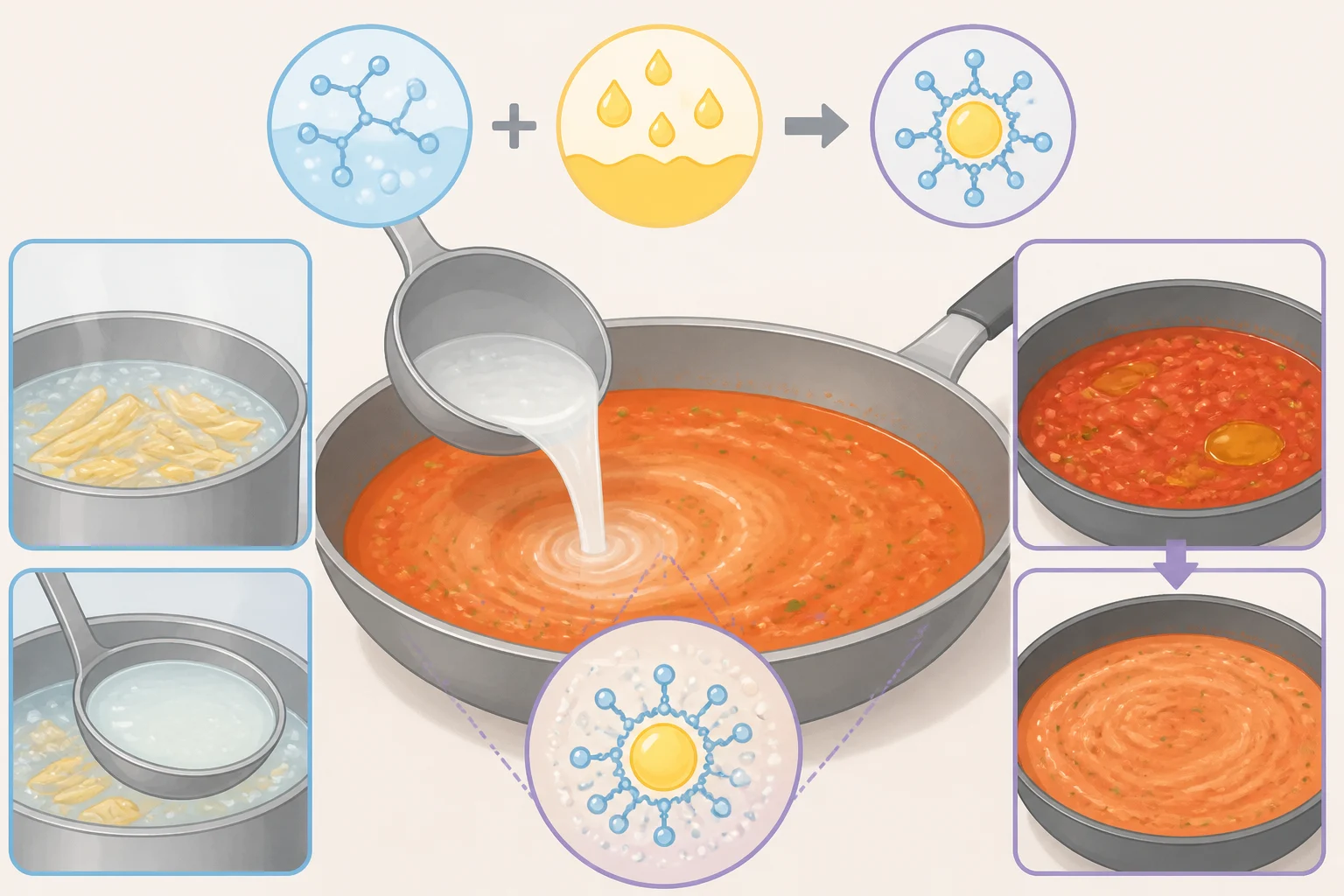
The mechanism is simpler than it sounds. Starch dissolved in the cooking water acts as a natural emulsifier, binding fat and water together into one glossy coating instead of letting them separate into a slick of oil floating on a watery puddle (Serious Eats). This is how to emulsify pasta sauce with pasta water in practice: add it gradually while tossing the pasta over heat, rather than dumping it all in at once.
Pasta clings to sauce in large part because of that same surface starch, released during cooking and left on the noodles once they come out of the pot (Serious Eats). Drain that layer away without bringing some of it along, and the sauce has less to grab onto.
Oil works against this in the opposite direction. It's hydrophobic, so any film left on the noodles creates a barrier between the pasta's surface and the sauce. Oil-coated noodles tend to shed sauce rather than hold it, which is how a dish ends up with sauce pooled at the bottom of the bowl instead of coating each strand (Serious Eats). Carrying pasta water along with the noodles, as in step four above, isn't garnish or an accident of sloppy technique. It's the ingredient doing the emulsifying.
An extra flavor trick from Maria's kitchen
Maria's orecchiette recipe illustrates the direct-transfer technique well, but the dish's flavor comes from somewhere else entirely. Pasta Grannies notes that Maria credits a homemade vegetable stock concentrate as her "real trick," a separate project from how the pasta gets sauced.
It's made by blending vegetables with salt and olive oil into a thick paste, then cooking that paste over very low heat for 45 to 60 minutes, stirring often, until it turns thick and glossy with no liquid remaining. Once cooled, it keeps in the fridge for three to four months, or it can be frozen in ice cube trays for whenever a sauce needs a boost (Pasta Grannies).
That's a slower weekend project, not something to start on a Tuesday when dinner needs to happen in twenty minutes. Worth filing away for later, separate from the sauce-sticking method above.
The usable rule
A colander isn't a cardinal sin in the kitchen. Pasqualina's ciufoli proves that draining and saucing can still produce something worth eating, as long as the gap between the two steps stays short and some of that starchy water comes along for the ride. But the more reliable path, the one both Serious Eats and Maria's orecchiette point to, is simpler: warm the sauce first, lift the pasta straight from the pot with tongs or a strainer, let some cooking water cling to it on the way over, and toss everything together over heat until the sauce coats rather than pools.
Skip the oil in the boiling water. It only works against that same process. Try the tongs-and-splash method once on an ordinary weeknight bowl of spaghetti, and the difference shows up before the first bite.