How to prevent clutter from taking over your home: a 5-step system
A cluttered home usually has one of two very different causes, and most advice on how to prevent clutter from taking over your home treats them as the same problem. That's a mistake. Peer-reviewed research distinguishes "disorder-as-untidiness," where an item has a home but isn't in it, from "disorder-as-clutteredness," where there's genuinely too much to fit anywhere sensible. The distinction comes from 35 in-depth interviews with people actively trying to declutter their homes (Journal of Consumer Research, 2024).
The stakes go beyond aesthetics. A survey of 501 adults found home clutter was associated with more negative mood, lower life satisfaction, and weaker overall well-being, though the authors are careful to note the study is cross-sectional and correlational, not proof that clutter causes unhappiness (Journal of Environmental Psychology, last year). Professional organizers interviewed by Good Housekeeping six weeks ago make a related point: storage alone doesn't create an organizing system. Bins and baskets can hide disorder without fixing why it keeps happening.
What follows is a five-step loop, not a one-weekend purge: diagnose, redesign, cue, reset, and limit. Treated as a repeating cycle rather than a single project, these clutter prevention tips address why mess returns instead of just where it goes.
Step 1: Diagnose whether it's a tidiness problem or a clutter problem
Video of the Day
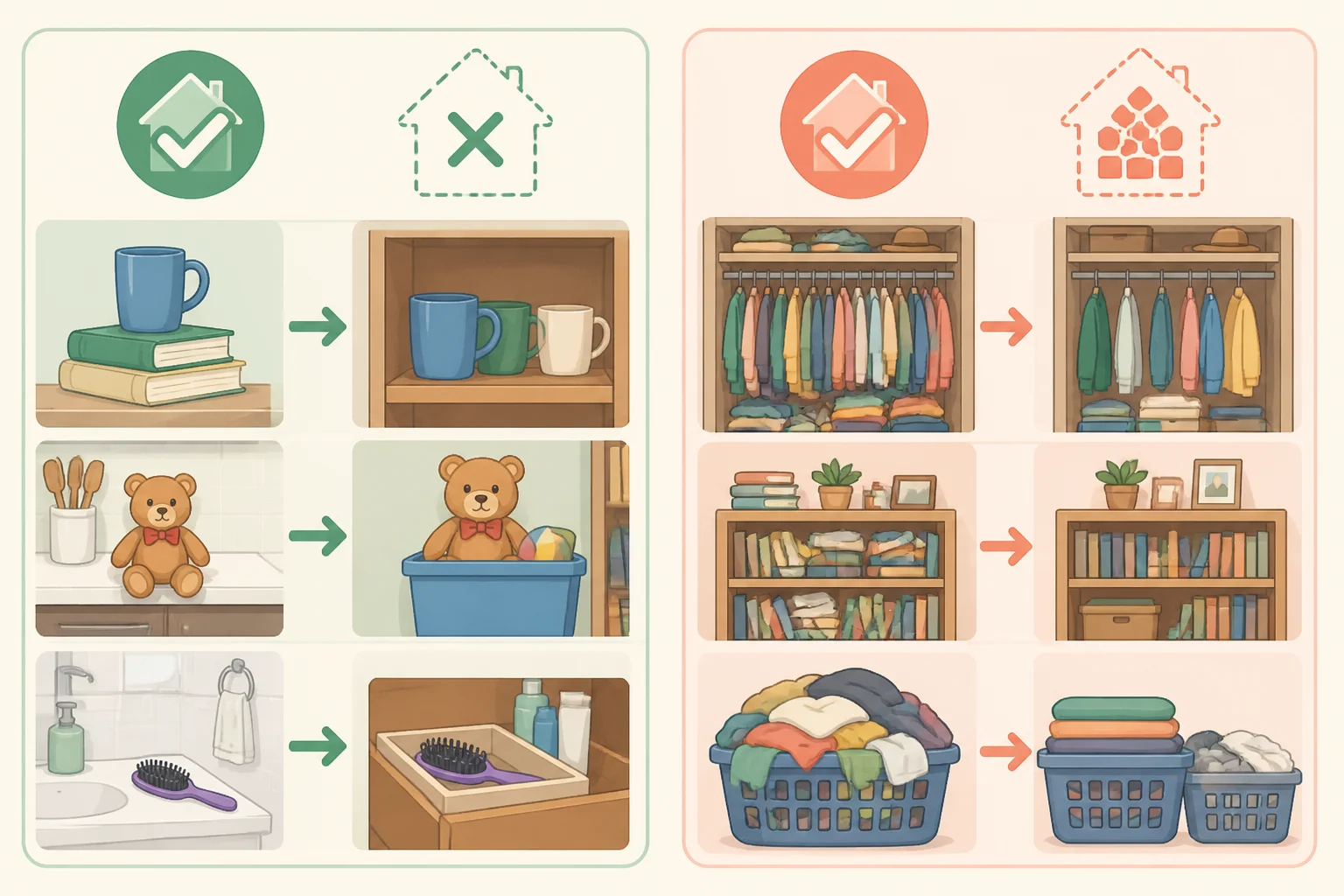
Before buying a single bin, figure out which disorder is actually at play, because untidiness and clutteredness need different fixes. Untidiness means a possession's placement has shifted: a jacket on a chair instead of a hook. Clutteredness means the volume itself is the issue, and no rearranging will make it disappear without also reducing what's there (Journal of Consumer Research, 2024).
Professional organizer Ashley Mickits suggests a low-effort way to tell them apart: for one week, log routine breakdowns in a phone note, whether that's the morning scramble, school pickup, dinner, or bedtime. It's nearly impossible to redesign a system while standing in the middle of a chaotic moment, so the goal is just to capture the pattern for later (Good Housekeeping, six weeks ago). Mickits also points out that every home has a few predictable pile-up zones, often the front door, a mudroom, or the kitchen table, and those are worth watching closely during that week (Good Housekeeping, six weeks ago).
By the end of the week, the log usually sorts itself into two categories. A recurring pile at a point of use, backpacks always on the floor, mail always on the counter, signals a space that needs redesigning. An item with genuinely nowhere to live signals something closer to clutteredness, which gets addressed later by reducing volume rather than reorganizing it.
Video of the Day
Step 2: Build home organization systems that work at each hotspot
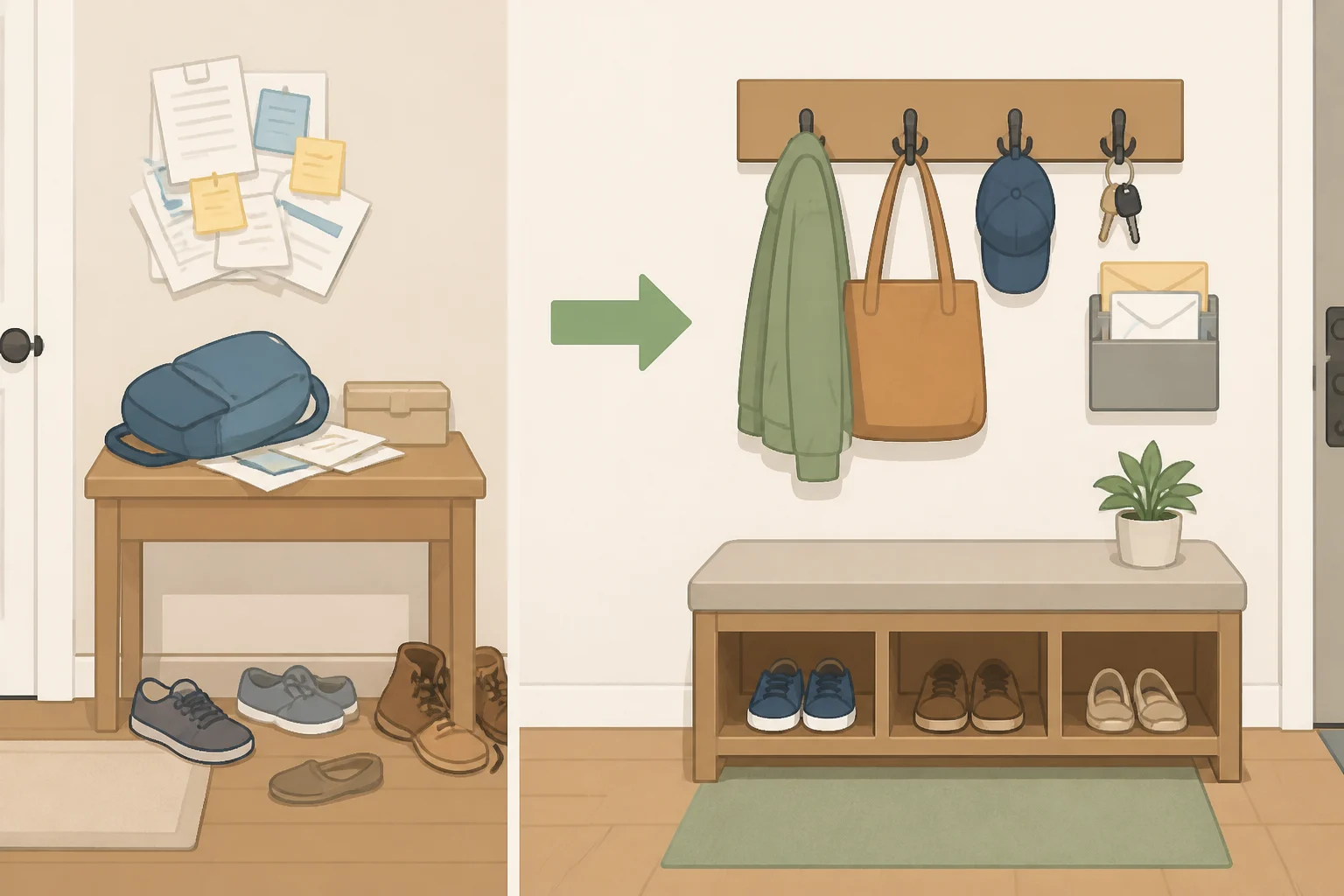
Once a hotspot is identified, the fix isn't more storage. It's redesigning that spot around the behavior already happening there. Certified professional organizer Robyn Reynolds puts it plainly: putting things in bins and baskets isn't the same as organizing them, and a pile of shoes at the entryway can still look messy even when it's technically contained (Good Housekeeping, six weeks ago).
Mickits calls the alternative a "behavior zone," a space designed around a specific activity with everything that activity needs kept exactly where it's used. A reading zone might pair a chair with a book basket and a lamp. A craft zone groups hobby supplies into their own basket rather than scattering them across drawers (Good Housekeeping, six weeks ago). Applied to the friction points from Step 1: hooks address backpacks dropped at the entryway, and a basket contains mail and school papers piling up on the counter (Good Housekeeping, six weeks ago).
This is where home organization systems that work actually diverge from ones that don't. Reynolds notes that designing around a household's existing tendencies, instead of fighting them, tends to take less effort and hold up better over time (Good Housekeeping, six weeks ago). The goal isn't willpower. It's making the tidy option the easy one.
Step 3: Add visible cues to stop clutter from building up
A behavior zone only earns its keep if someone actually uses it, and that requires it to be more noticeable than the old habit it's replacing. Organizer Lauren A. Williams handles this by placing anything she needs to take with her directly in front of the door, an unmissable visual cue instead of a mental note she might forget (Good Housekeeping, seven weeks ago).
Other organizers apply the same logic elsewhere in the house: a note taped to a mirror, the fridge, or wherever it will land at the right moment (Good Housekeeping, seven weeks ago). Laying out clothes the night before is another common tactic, framed by organizers as a way to trim the number of decisions waiting each morning. That decision-fatigue framing comes from lifestyle reporting rather than a cited study, so it's worth treating as a practical habit rather than a proven psychological mechanism (Good Housekeeping, seven weeks ago).
Cues close the gap between having a system and actually using it under time pressure, which is precisely where Step 1's tracking exercise usually finds the breakdowns.
Step 4: Use daily habits to reduce clutter before it compounds
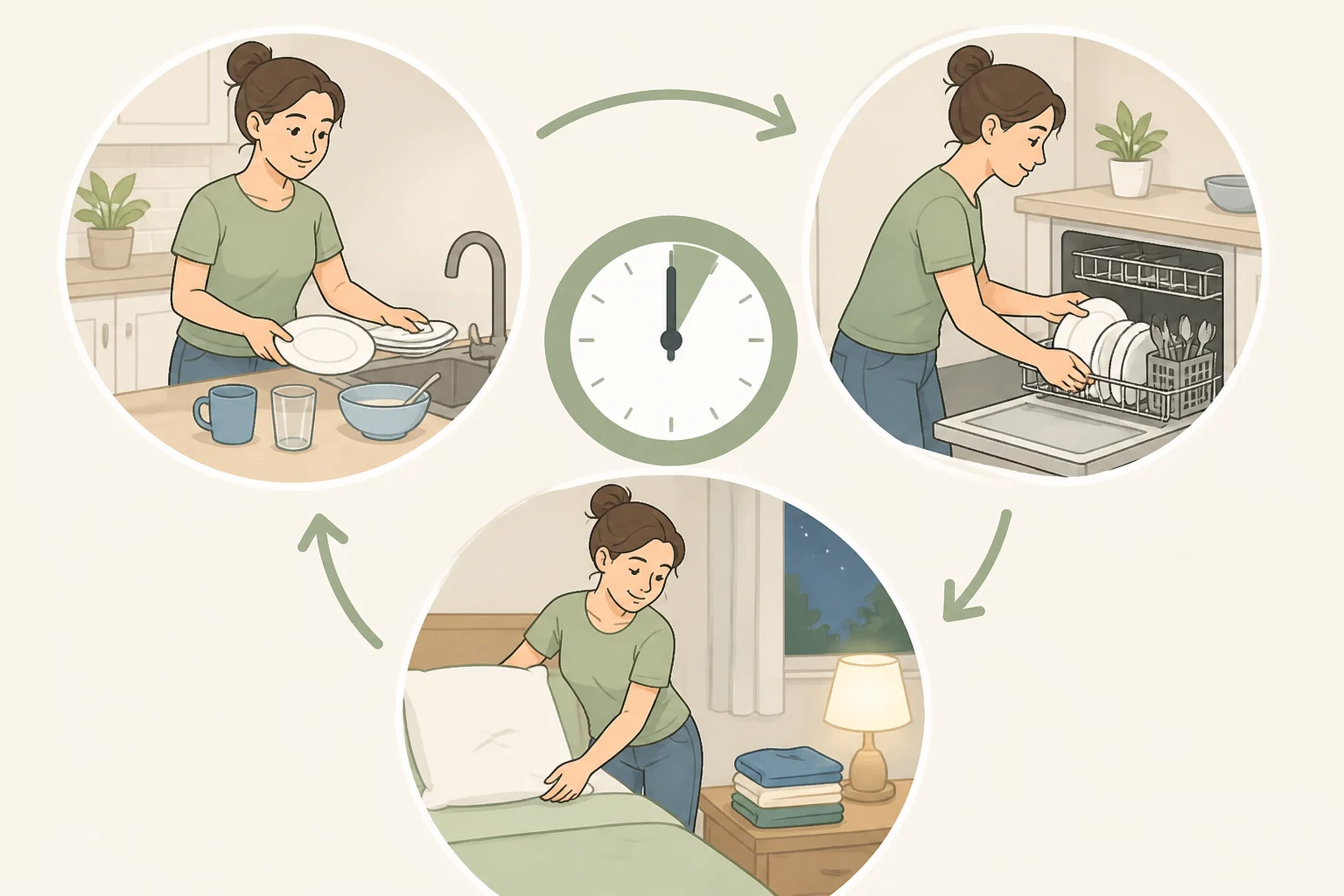
Zones and cues only hold up if someone closes the loop each day, which is why a short reset matters more than an occasional deep clean. Utah State University Extension recommends a "ten-second tidy" as a daily habit specifically to keep small mess from snowballing into weekend-consuming overwhelm (USU Extension, 2022).
Organizer Laura Kinsella runs a version of this each evening: clearing the kitchen, running the dishwasher, prepping the coffee maker, and laying out clothes for the next day. It's a routine aimed at reducing both clutter and the number of decisions waiting in the morning (Good Housekeeping, seven weeks ago). Organizers also point to making the bed as a fast, visible win that keeps a room looking tidy and can build momentum toward other tasks, though that mood benefit is reported anecdotally rather than through a cited study (Good Housekeeping, seven weeks ago).
None of this replaces the redesign work from Step 2. It's the maintenance layer underneath it, the daily habit that keeps a good system from quietly reverting to an old one.
Step 5: Limit what comes in and schedule small decluttering sessions
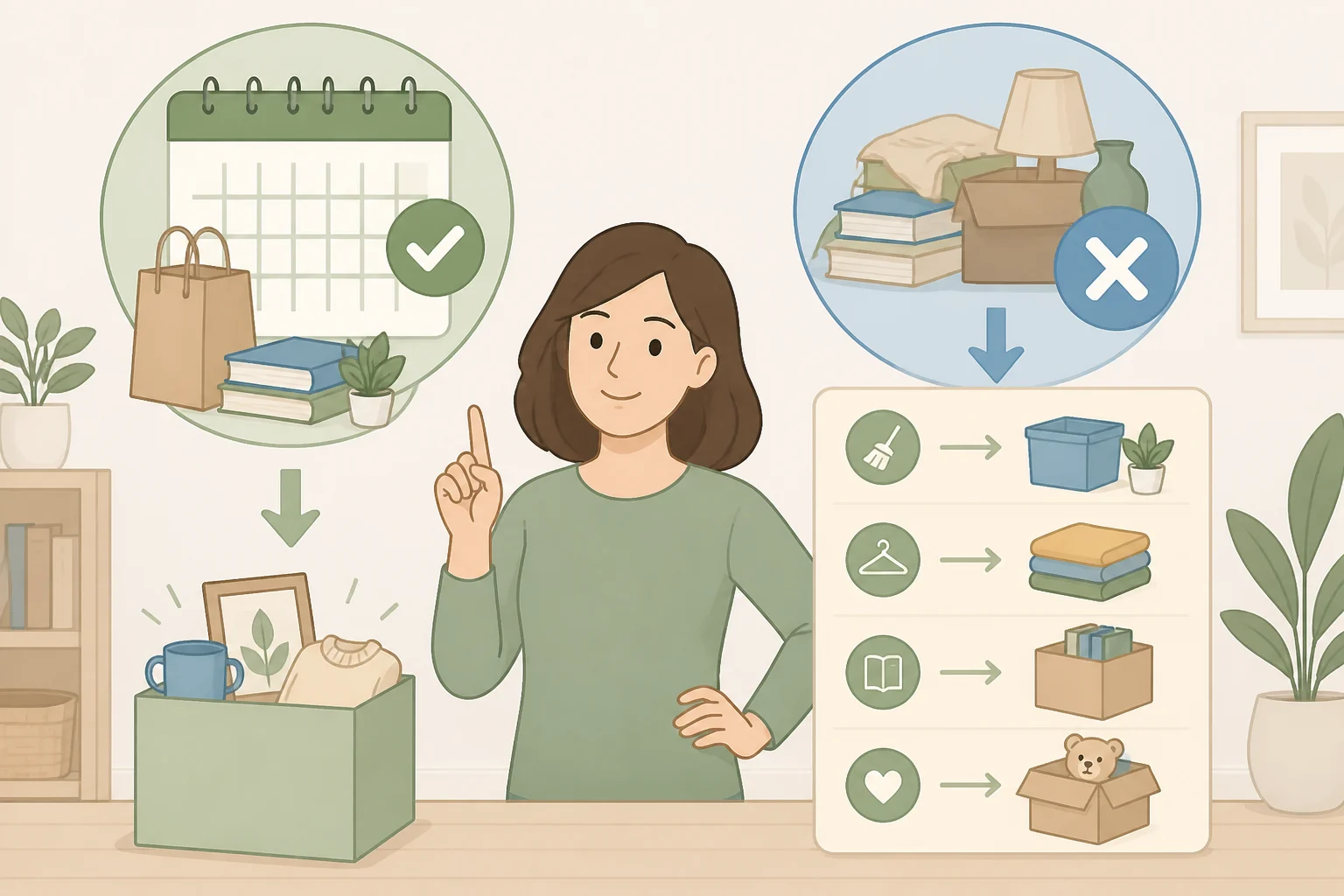
Everything so far manages what's already in the house. The other half of prevention is controlling what enters it, plus periodically reducing what's built up. One participant in the Journal of Consumer Research study capped herself at 20 new home-furnishing and clothing items for an entire year, a way to interrupt constant acquisition rather than just organize around it. It's a single illustrative case, not a tested rule, but it's a concrete model readers can scale to their own limit (Journal of Consumer Research, 2024).
The same research found that clutteredness rarely disappears completely, largely because people consistently struggle with the decisions involved in what to keep and what to let go (Journal of Consumer Research, 2024). Intake limits help, but they don't replace ongoing removal. USU Extension's advice for that removal is to trade perfectionism for "good enough," tackling one contained area per week instead of attempting a whole-house overhaul in a single weekend (USU Extension, 2022).
This is the piece that resolves the "no realistic home for it" diagnosis from Step 1. Some clutter can't be organized away. It can only be reduced, in small, scheduled doses, before it becomes a recurring source of friction rather than a one-time fix.
The next two weeks
Psychologist Joseph Ferrari's research has found a negative correlation between clutter and reported life satisfaction (APA, 2023). The five-step loop above targets exactly what that finding implies causes the friction: unclear systems, invisible cues, and unchecked volume.
That's a different claim from saying this system will make anyone happier. The wellbeing research behind that idea is still exploratory; its authors flag a need for longer-term study before anyone calls the link causal (Journal of Environmental Psychology, last year). It also says nothing yet about the question that matters most for long-term prevention: how much people should be acquiring in the first place. The research base here is strongest on daily habits and hotspot design, thinnest on acquisition, and readers who run this loop and still watch volume creep back up aren't failing at organizing. They're running into a question nobody has fully answered.
A practical way to test the loop: run it for two weeks, then look at whatever pile comes back anyway. If it's things with a designated spot they just aren't reaching, the zone needs a second look. If it's things with nowhere realistic to go, only reducing the volume fixes that. Knowing which one is happening is most of the work behind learning how to keep a house clutter-free: deciding whether to reorganize something or let it go.