11 September home organization tips for fall routines
September doesn't call for a weekend-long purge. It calls for fixing the exact spots where mornings and evenings keep snagging: the backpack nobody can find, the mail pile swallowing permission slips, the desk buried under June's loose paper. These September home organization tips take that narrower approach, breaking things down into eleven habits built around the routines that restart this month, more useful as a running September decluttering checklist than as one big weekend project.
Professional organizer Rachel Rosenthal's central rule is the starting point: "Decluttering should be a lifestyle, not a one-time event," she told Good Housekeeping this week. Skip a strategy, she warns, and "you'll get frustrated and burnt out quickly, especially if you've been procrastinating" (Good Housekeeping, this week). The fall-specific details below, backpacks, school forms, holiday shopping, are this article's own extension of her general principles; where the advice is hers directly, it's cited as such.
There's a reason follow-through matters more than the initial burst of effort. Research on 50 Seoul households dealing with severe clutter found that a professional organizing and storage service improved cleanliness, functionality, and daily-task efficiency, and reduced stress and anxiety. But initial satisfaction was high and declined over time, which the researchers said indicated a need for ongoing support and education rather than a one-time fix (Journal of the Korean Housing Association, in 2024). Those households had extreme accumulation and hired professionals; most readers are dealing with a jammed hallway closet, not that. Still, the pattern, a fix that fades without upkeep, is exactly why fall home organization ideas need to be built as habits rather than a single reset.
What follows are eleven numbered habits across three stages: decluttering with intention, fixing the one zone causing the most friction, and maintaining the system once the calendar fills up.
Declutter with intention, on a timer
Video of the Day
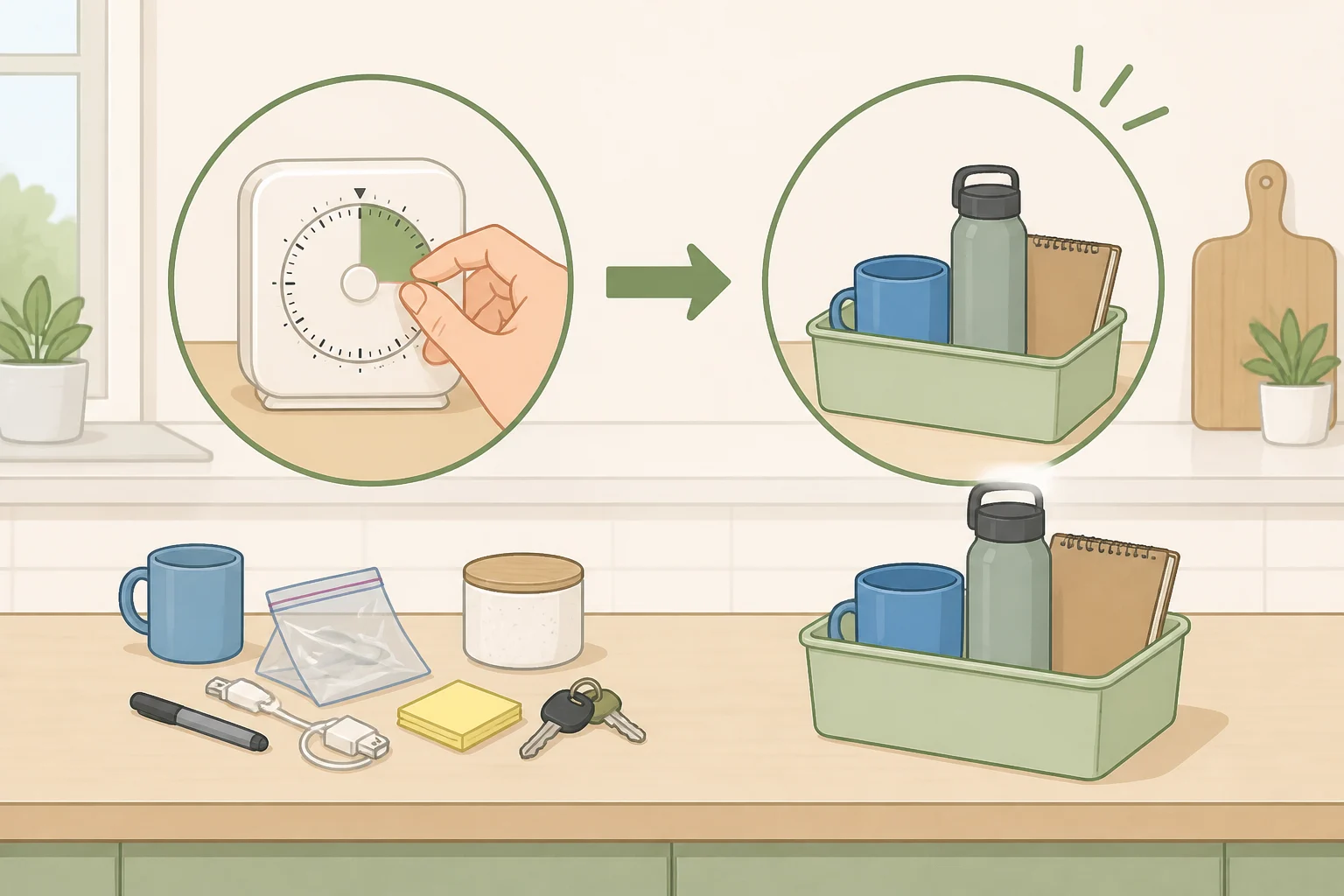
1. Work in a fixed 25-minute block. Rosenthal's advice is to pace the work and stay honest about how much time and energy it takes, moving room by room or even space by space, with breaks built in rather than attempting the whole house at once (Good Housekeeping, this week). As a suggested routine, not a rule from her directly: pick one zone, an entryway, a coat closet, a desk corner, set a timer for 25 minutes, and stop when it goes off. A defined stopping point beats a vague plan to get to it eventually.
2. Pull one category out and count it. Rosenthal describes clients who don't register their own excess until items are grouped together; seeing 30 pairs of jeans in one pile, she says, makes the volume impossible to ignore (Good Housekeeping, this week). Applied to fall, that means pulling every jacket, backpack, or water bottle in the house into one spot before deciding what stays.
3. Apply one filter and skip the maybe pile. Rosenthal's test is whether something is used, loved, or something you feel a genuine attachment to, with a practical cutoff: unused for a year and no longer fitting the way this household actually lives (Good Housekeeping, this week). One exception worth stating outright: seasonal items like holiday decor or snow gear don't fail that test just because they've sat untouched since spring. The sled hasn't moved since February because it's not supposed to.
4. Clear the "just in case" tier first. Unworn clothes, kitchen gadgets nobody uses, a drawer of hotel toiletries, these are Rosenthal's examples of low-effort clutter that quietly compounds (Good Housekeeping, this week). It's a relatively low-stakes place to begin, since none of it requires a sentimental decision, and clearing it first makes the harder categories easier to face afterward.
Video of the Day
How to organize your home in September: fix the one zone causing the most friction
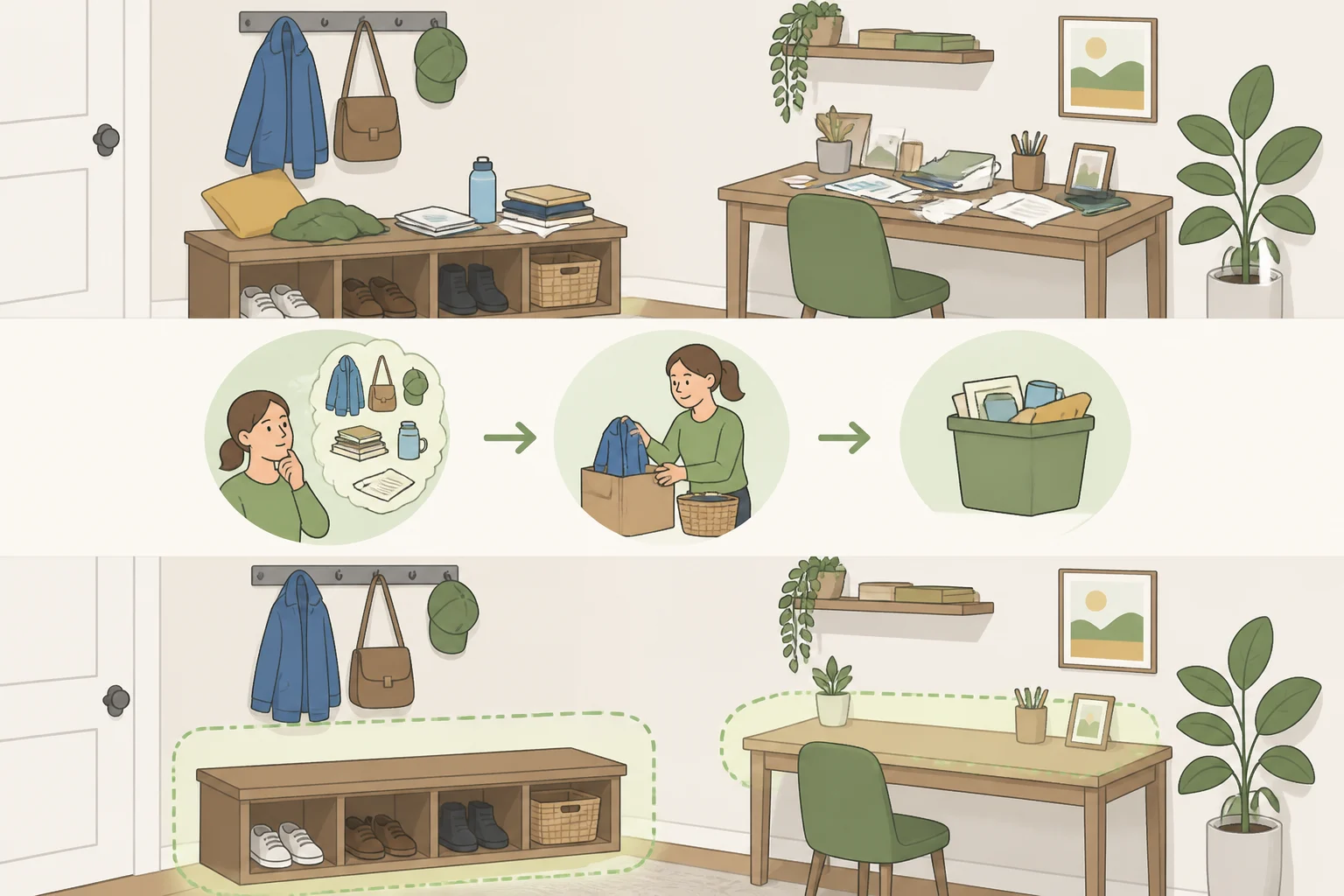
5. Name the exact routine that's breaking down. Before organizing anything, identify the specific friction point: the school-morning scramble for a backpack, the mail-and-permission-slip pileup on the kitchen counter, or a desk buried under summer's loose paper. This step isn't from Rosenthal directly; it's how her general method turns into a project that can actually get finished this weekend, instead of a whole-house overhaul that stalls by October.
6. Clear that zone using the filter from step 3. Run the used/loved/needed test specifically on what's piled in that one spot. This is where the general principle turns into a fall-specific result: an entryway bench without last winter's outgrown boots, a desk without June's field-trip forms still sitting on it.
7. Assign one visible home per recurring item. Rosenthal's rule is that every piece should have a designated home (Good Housekeeping, this week): a hook at kid height for each backpack, a shallow tray for keys and badges, a shelf for shoes. She also cautions that what works for one person might not work for you (Good Housekeeping, this week), so build the layout around how this specific household moves through the door, not a setup copied from somewhere else.
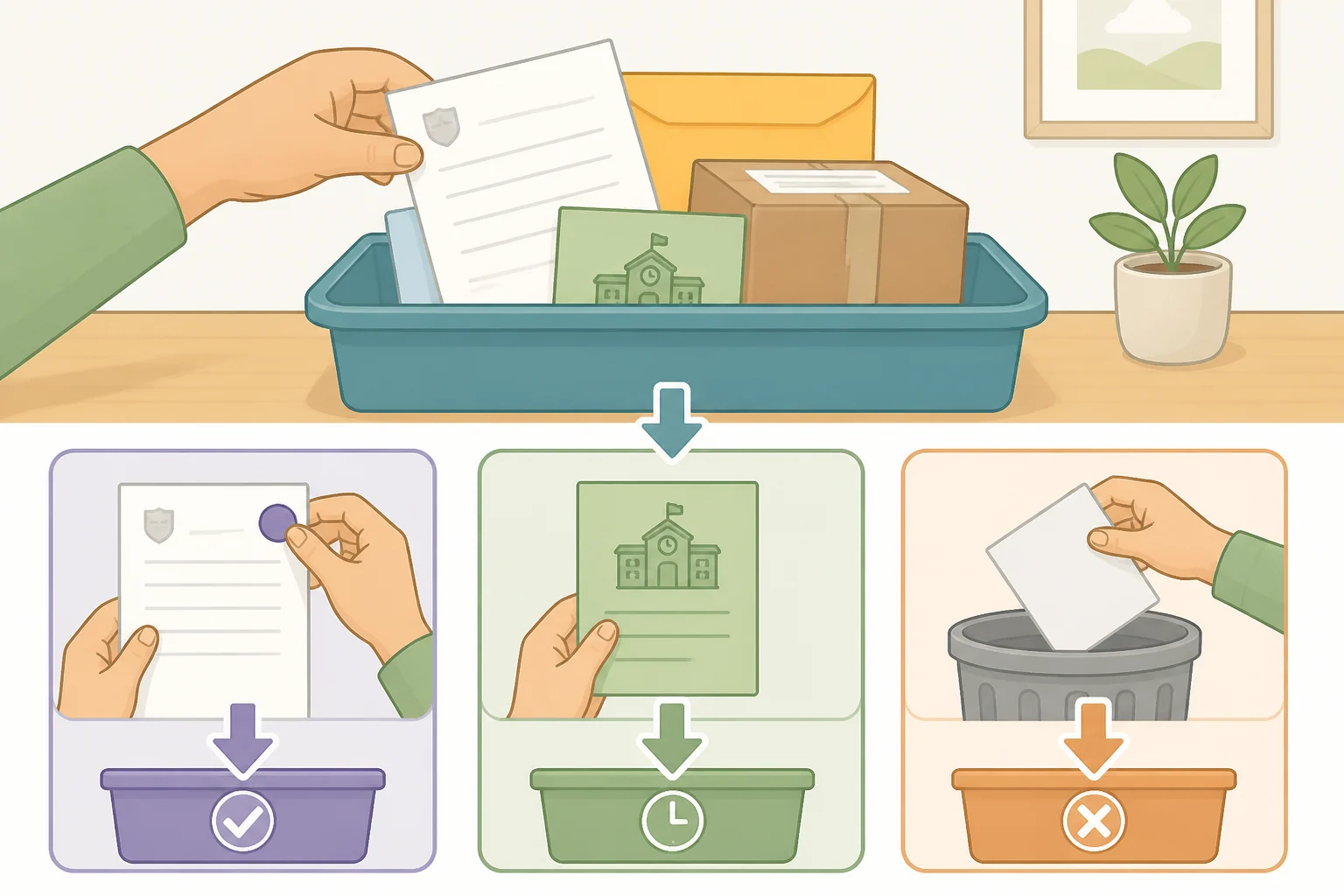
8. Create one intake point for what's arriving now. Rosenthal's point is that unmanaged incoming items, not a shortage of bins, are the real reason spaces re-clutter (Good Housekeeping, this week). School papers, online orders, and the first colder-weather gear all start arriving in September, so give that category exactly one landing spot instead of letting it spread across three surfaces: a bin by the door for boots, a folder for forms, a tray for receipts and packaging slips.
A simple rule keeps the tray from becoming its own pile: anything that needs a decision or a signature goes in, anything that's obviously trash or clearly belongs elsewhere doesn't. Assign the job of emptying it to whoever already handles the mail or school communication, since that's usually the person who'll notice a deadline first, and set a standing day, say every Sunday night, rather than leaving it to whoever happens to walk by.
Deadline items get pulled out immediately instead of waiting for the next sweep: a permission slip due Friday, a return that needs to go back before the window closes, a form that requires a signature before Monday. The tray is for holding things briefly, not for storing them.
The intended payoff shows up within a week or two of running this consistently: less time standing at the door hunting for a specific backpack, one place for forms instead of three competing piles, a quicker evening reset instead of a nightly excavation.
Maintain the system before fall gets busy
9. Set a personal input rule. Rosenthal is blunt about what happens without ongoing attention: clutter comes back "no matter how many bins or baskets you have" if nobody's minding what comes in (Good Housekeeping, this week). As a suggested routine, not something she specifically prescribes: a one-in-one-out rule for whichever zone got fixed in step 5, useful heading into a shopping-heavy fall and holiday stretch when new items tend to arrive faster than old ones leave.
10. Close the loop weekly, not eventually. The part most systems fail on isn't the organizing, it's the follow-through. As a suggested weekly routine: split the reset into three separate five-minute jobs instead of one vague "straighten up" task. Drop the donation bag at a donation bin, thrift store, or curbside pickup on a set day each week; file the week's paperwork into its category folder; and clear anything past its return window or already handled out of the intake tray. Treat these as distinct tasks. Lump them together and the donation bag sits by the door for a month while the tray quietly turns into a second junk drawer.
11. Put a short check-in on the calendar. The Seoul study found that satisfaction after an organizing service started high and declined over time, which the researchers said indicated a need for continued support and education, not that any particular follow-up schedule reverses that decline (Journal of the Korean Housing Association, in 2024). As a working suggestion rather than a research finding: ten minutes once a month, checking the same zone from step 5 and resetting whatever's slipped since the last pass.
Where to start this week
For households with school-age kids: a 25-minute session at the entryway, a backpack-and-coat audit using the grouping trick from step 2, and one designated hook or bin for whatever's causing the most morning delay. For everyone else, the same three moves apply to a kitchen counter, a laundry drop zone, or a home-office corner; the method doesn't require kids in the house, just a spot where things keep piling up.
The real test isn't how that spot looks on September 30. It's whether the hook is still empty and the tray hasn't quietly refilled by the time Halloween decorations go up. Set the November check-in on the calendar now, before the fall schedule gets crowded enough to make it easy to skip.