Fall Lawn Care Tips: Tasks Your Lawn Needs Before Winter
When leaves are piling up faster than you can rake them, that's the most consistently supported first step among all the fall lawn care tips making the rounds this season. A thick layer of fallen leaves and debris blocks sunlight and traps moisture against the turf underneath, conditions that can suffocate grass over winter, according to University of Minnesota Extension. Fertilizer, seeding, and irrigation shutdown are conditional, not automatic. What a lawn actually needs depends on grass type, climate, and soil test results most homeowners don't have sitting in a drawer yet.
This guide walks through late fall lawn care in sequence: clear leaf cover first, run a quick diagnosis on grass type and soil condition, then match the remaining tasks to what that diagnosis turns up. Treat it as a decision path rather than a chore list everyone runs through in order.
Clearing leaves: the most broadly applicable fall lawn care task
Video of the Day
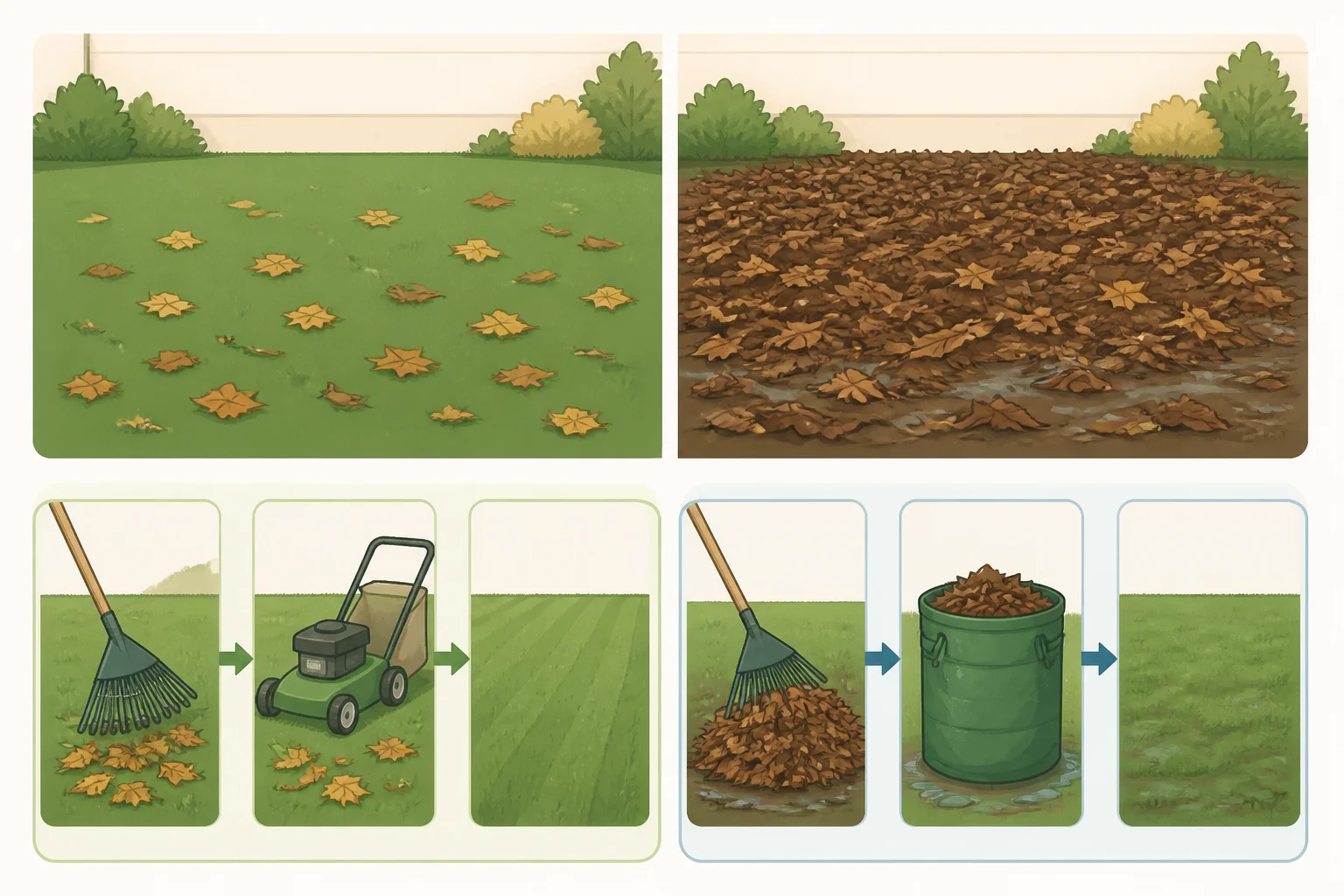
The trigger here isn't a date on the calendar; it's the leaves themselves. A light scattering that a mower shreds in passing isn't a problem. A heavier layer that blocks sunlight and traps moisture is, and that's the condition UMN Extension warns can suffocate turf over the winter.
In practice, the method depends on how much has come down and how wet it is. A thin, dry layer can usually be mowed right over with a mulching blade, which chops the leaves fine enough to settle into the lawn without smothering anything. Once leaves pile up into a thick or soggy mat, mowing just pushes them around instead of breaking them down, so raking or blowing them off the grass works better. Dry stretches make the job faster, since wet leaves clump and weigh far more than dry ones.
Where the leaves go afterward still matters. Whole or shredded leaves added to a compost pile break down into useful soil additions over time, and the same leaves work directly as mulch in flower beds, where they suppress weeds and hold moisture (UMN Extension). That's a separate destination from grass clippings, which UMN Extension recommends bagging into compost specifically to feed the pile for the next growing season.
There's a wrinkle worth planning around before hauling everything to the curb. Penn State Extension notes that sending raked leaves off to the dump or a township recycling program isn't the best choice for beneficial insects that overwinter in leaf litter. Move them to a compost pile or an area where leaf litter is intentionally retained, if that fits the yard and local guidance, rather than defaulting to disposal.
That distinction is also why the removal advice above is about turf specifically, not the whole yard. A bed or a natural corner where leaf litter is left on purpose for overwintering insects is a different zone than the lawn. The lawn needs the leaves off; the bed edge might not.
Video of the Day
A two-minute diagnosis before you touch mower or spreader
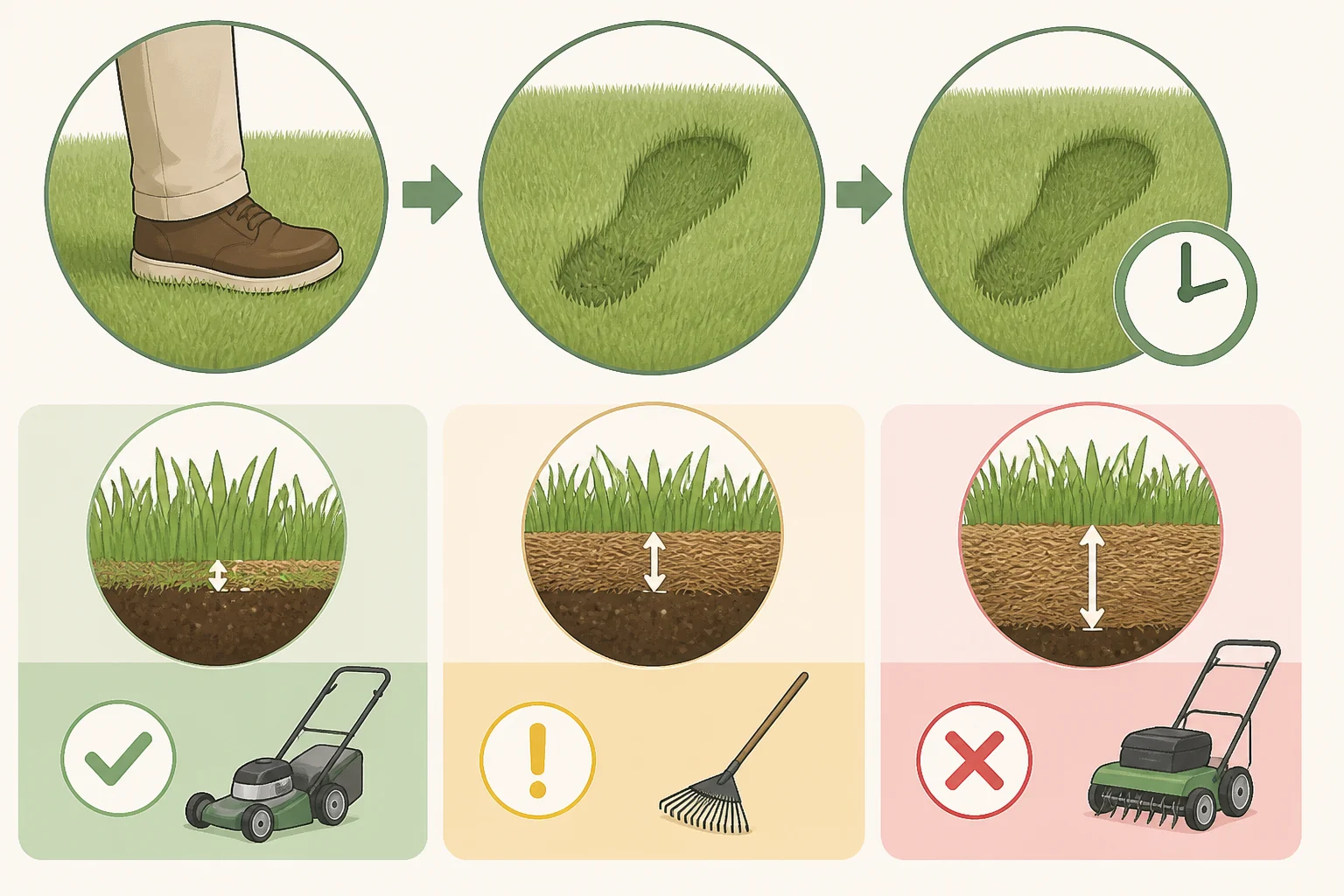
Two facts determine almost everything that follows: what kind of grass is growing, and what shape the soil is in.
Grass type matters because warm-season and cool-season species respond to falling temperatures on very different schedules. Buffalograss, a warm-season species common across the Great Plains, breaks dormancy later in spring than bluegrass and fescue, and turns brown and dormant with the first hard fall frost, well before most cool-season lawns stop growing (CSU Extension). That gap changes when mowing should stop and when dormant seed can safely go into the ground.
Soil condition is the second check, and it's easy to spot on a walk across the yard. Persistent footprints, ones that don't spring back within an hour, are a sign the lawn may need closer inspection for compaction or thatch (CSU Extension).
Thatch itself is a tight, spongy layer of living and dead grass stems that builds up above the soil, and it's worth managing once it exceeds about half an inch thick (CSU Extension). Past that point, fertilizers and pesticides applied to the lawn work less effectively, since they have a harder time reaching the soil underneath (CSU Extension).
Core aeration can help address some compaction and water-infiltration problems by pulling plugs of soil and thatch out of the lawn (CSU Extension). With enough passes to create roughly 2-inch spacing between holes, a machine with half-inch tines removes about 10 percent of the thatch layer (CSU Extension). If the footprint test flags a problem, that's the fix worth researching further; the sources here establish what aeration does, not a specific calendar window for doing it.
Fall lawn maintenance checklist: match each task to the condition
Mow while the lawn is still growing
Cool-season lawns can be mowed a little shorter heading into winter, but not below two inches (UMN Extension). CSU Extension's preferred range for common cool-season species, including bluegrass, ryegrass, and fescue, is 2.5 to 3 inches, with no more than a third of the blade removed in a single cut (CSU Extension). Keep mowing at that height for as long as the grass is putting out new growth, and stop once it isn't.
Test the soil before buying a winterizer bag
Fall is a good window for a soil test, since the results and recommendations can come back in time for any needed amendments to be worked in before spring planting (Penn State Extension). That's an argument for testing before buying fertilizer, not an argument against fertilizing altogether.
If a test turns up a deficiency, nitrogen is the nutrient most consistently tied to turf color and growth, so it's the one worth evaluating first (UMN Extension; CSU Extension). That's a call to make from test results and local extension guidance, not a reason to apply nitrogen out of habit every year. Winterizer blends typically pair nitrogen with potassium, but if the lawn isn't already deficient in potassium, the benefit may be minimal (UMN Extension). In the Midwest, UMN Extension notes, phosphorus is rarely needed because soils there are typically already high in it. Skip the bag until a test says what, if anything, is actually missing.
Irrigation winterization: how to prepare your lawn for winter
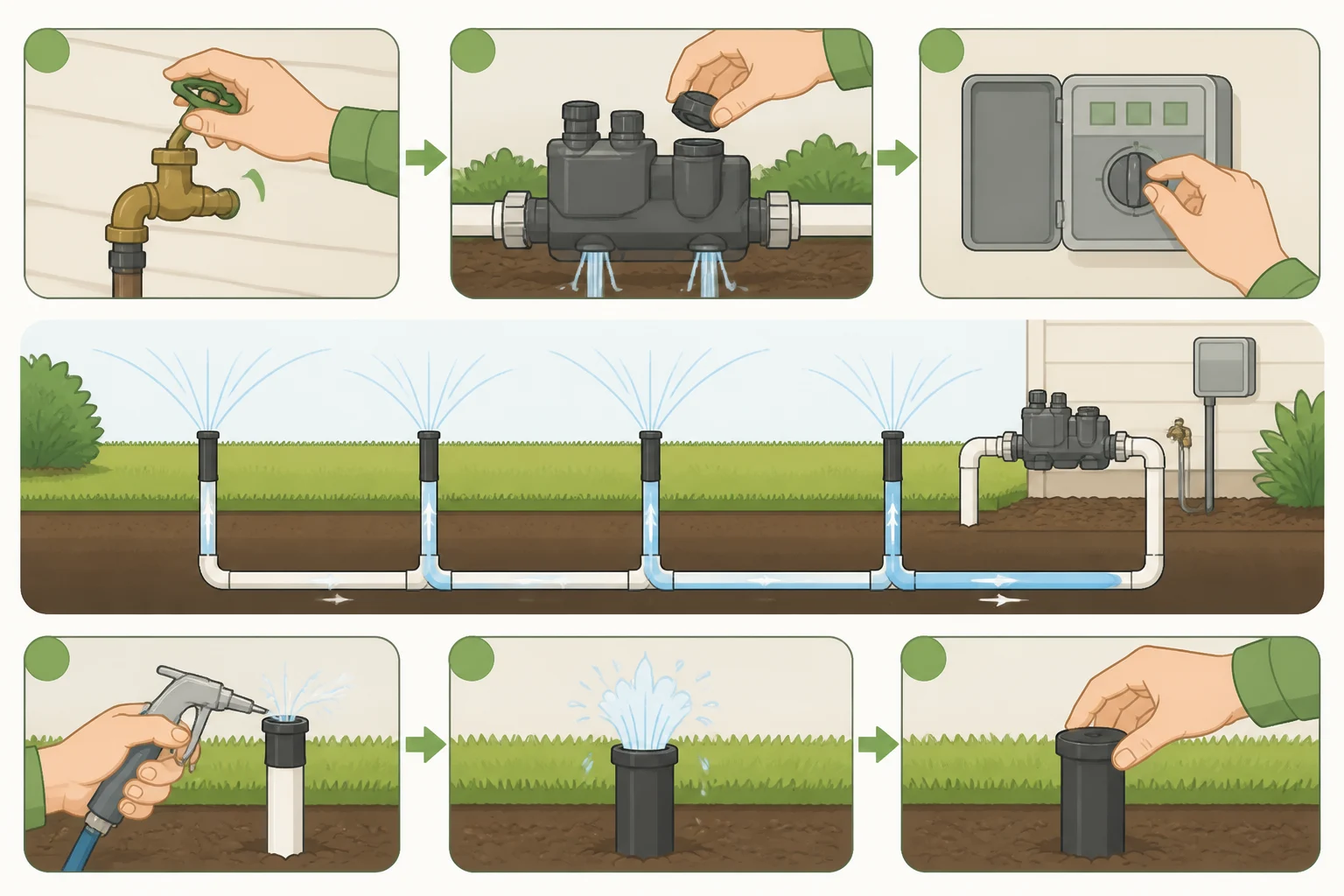
If a lawn has an irrigation system, this is the point in the season to deal with it. Emptying the lines and blowing out the system keeps water from expanding and contracting inside the pipes as temperatures swing, which is what cracks them over the winter (UMN Extension).
Beyond the system itself, let conditions rather than a calendar dictate any late-season watering. In Colorado, for instance, extended dry stretches from late fall into spring can call for watering every four to six weeks, but only once the ground has thawed enough to actually absorb it (CSU Extension). Treat that interval as a regional example; freeze timing and soil type vary enough across climates that it shouldn't be read as a national rule.
Dormant seeding lawn: how to seed bare spots in fall
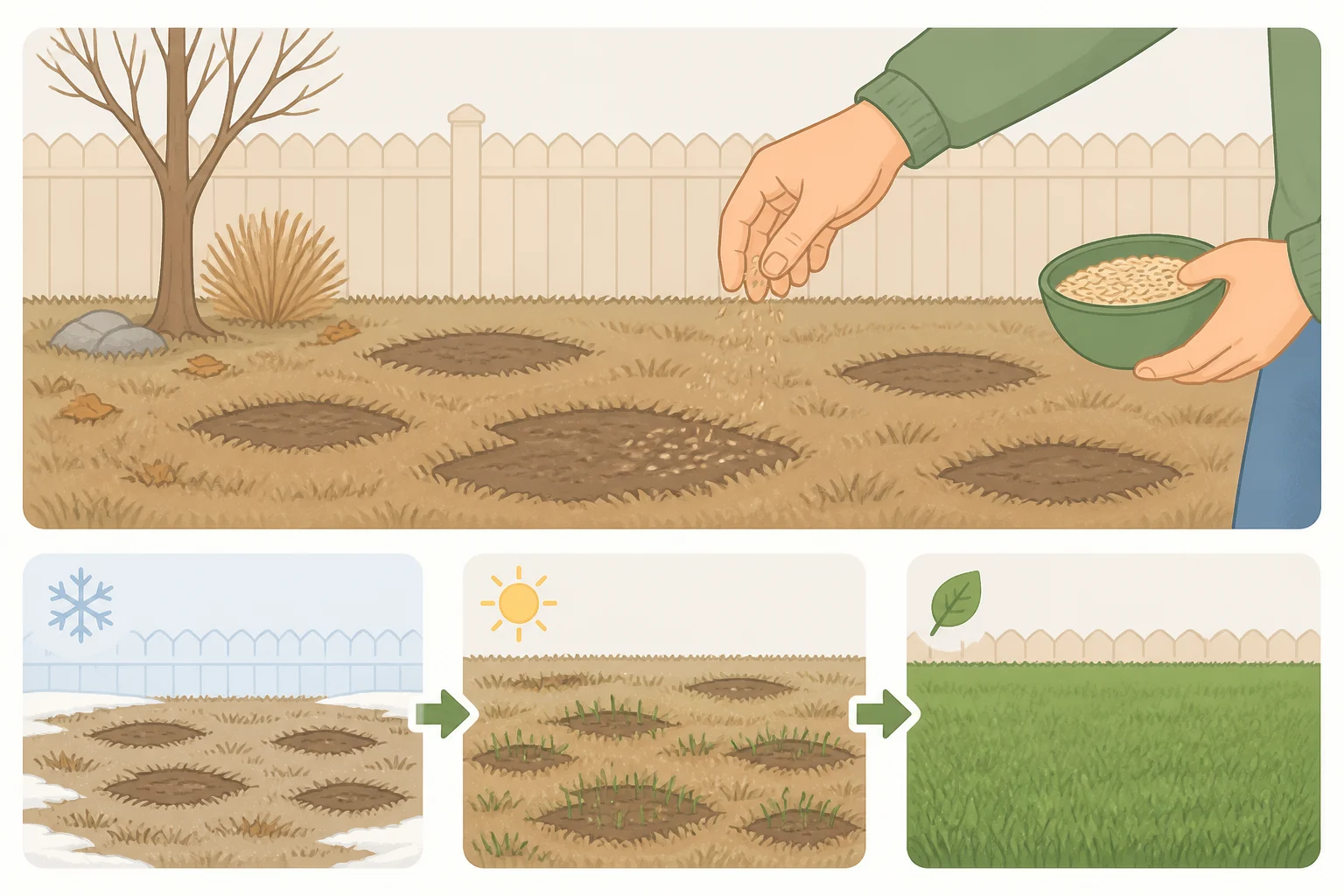
Dormant seeding means spreading seed when growing conditions are minimal, with germination waiting until spring. UMN Extension recommends doing this any time before the first major snowfall, and notes it works for both patching bare spots and thickening a lawn overall, not just filling in dead patches (UMN Extension).
Timing isn't universal, though. Colorado guidance for buffalograss puts the safe dormant-seeding window at October through December; seed planted between August 1 and October 1 can germinate too early and get killed off before spring arrives (CSU Extension). That's a warm-season-specific detail worth checking against local extension timing rather than copying directly. Whatever the window in a given region, skip pre-emergent herbicide at the time of seeding (CSU Extension).
An alternative worth considering: bee lawns
Fall is also when UMN Extension suggests planting a bee lawn, which mixes flowering plants into turfgrasses like fine fescue or Kentucky bluegrass (UMN Extension). Bee lawns run on lower fertilizer and pesticide inputs than conventional turf, can attract more than 50 species of native bees, and can still be used recreationally like a regular lawn (UMN Extension). It's not a fix for bare patches so much as a different long-term choice for the whole lawn, worth weighing separately from a straightforward reseeding decision.
The five-minute checklist
Run through these instead of grabbing whatever the garden center is pushing this season:
- Leaves matting the turf: clear them off and route them to compost or bed mulch.
- Grass still actively growing: mow it within the species-appropriate range above.
- Irrigation system in a freeze-prone climate: winterize it now.
- Bare or thin patches: check local dormant-seeding timing and skip the pre-emergent herbicide.
- Considering fertilizer: test the soil first and follow what the results say.
Each line only applies if its condition is actually true in the yard. A lawn without bare patches doesn't need seed, and a lawn that isn't short on potassium gets nothing extra from a winterizer bag advertising it.
The leaf mat is the one problem that demands action the moment it shows up; wait too long and it's already doing damage. Everything else on this list, the fertilizer, the seed, the aeration, the watering, waits on evidence from a soil test, a grass ID, or a hard freeze before it's worth doing at all.