Box Rule for Decluttering Explained: The 30-Day Method
The hardest part of decluttering isn't figuring out what you actually use. It's that you can invent a reason to keep almost anything the second you're holding it in your hands, which is exactly the pressure the box rule for decluttering is designed to ease. "One of the biggest reasons people struggle with clutter isn't that they don't know what they use. It's that we can come up with a reason to keep almost anything when we're standing there holding it," says Lynda Reider, founder of Cut the Clutter RVA (Good Housekeeping, published today).
Instead of forcing an immediate keep, donate, or toss verdict, uncertain items go into a sealed box that gets set aside for a fixed stretch of time. The pressure of a permanent decision disappears, replaced by something closer to a trial separation. Organizers describe it as one of the simpler, stress-free decluttering tips available, precisely because it removes the need to decide anything on the spot (Good Housekeeping). Organizer Caroline Solomon puts it more bluntly: "The box rule works because it gives training wheels to anyone who has a difficult time decluttering. It's a nice place to park your 'maybe items' that deep down you know you're not going to wear or use again," she says (Good Housekeeping).
This piece walks through what the box rule actually is, how to run the 30-day decluttering box method without turning it into a stalling tactic, and the one habit, or lack of one, that decides whether the whole experiment works or just relocates your clutter to the garage.
What is the box rule for decluttering?
Video of the Day
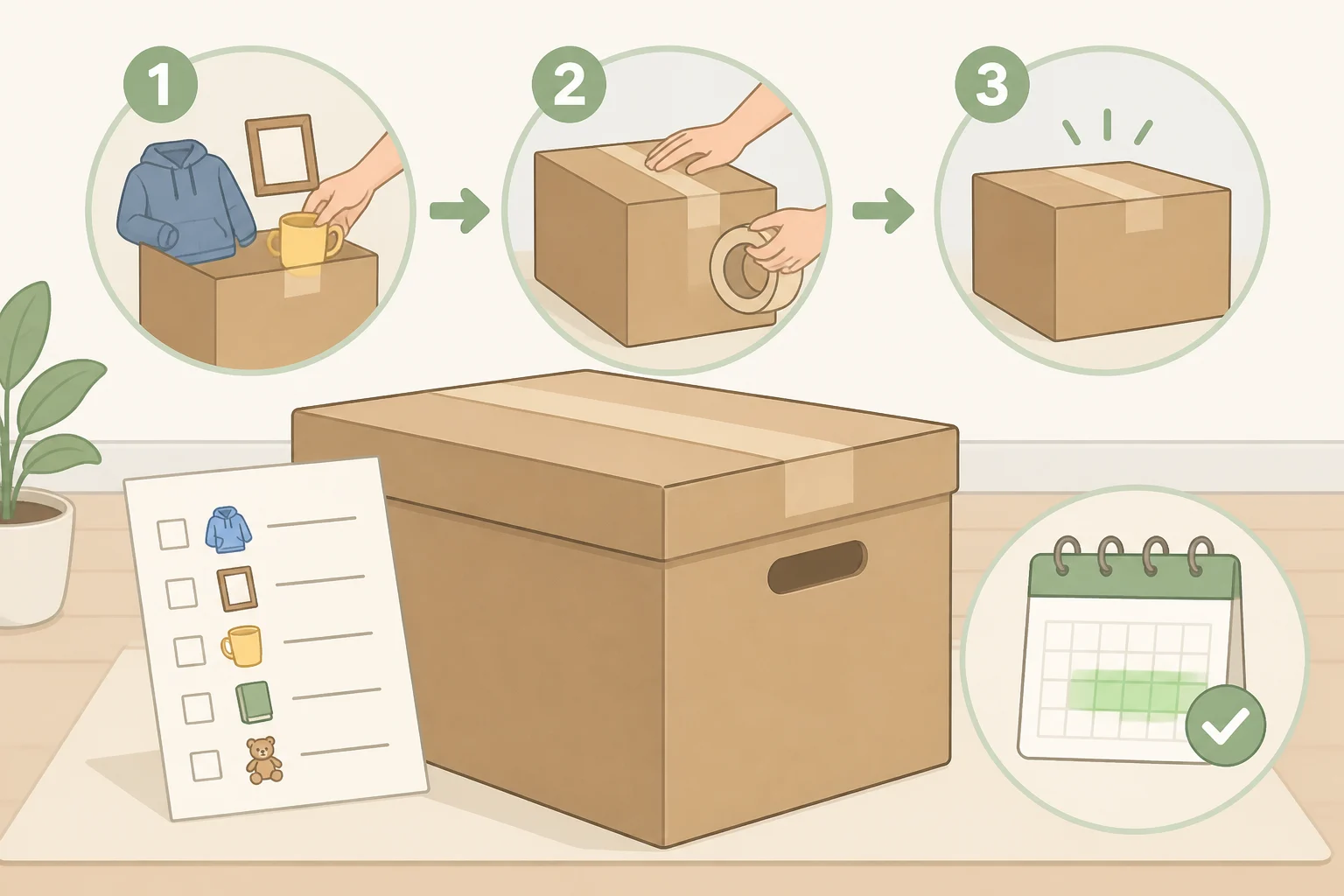
The mechanics are simple. When you hit an item you can't confidently keep or release, it goes into a box instead of a pile. Reider recommends sealing that box for 30 days before revisiting it: "The box rule is a simple way to make decluttering feel a little less permanent. If you come across items you're struggling to make a decision about, instead of forcing yourself to immediately keep or get rid of them, you put them in a box, close it up, and set it aside for 30 days," she says (Good Housekeeping).
Reider calls it a "maybe box," and the framing matters. "You're not saying goodbye yet. You're just agreeing to take a little break from each other," she says (Good Housekeeping). That reframing does real work. If tossing or donating an item right away feels like too big a commitment, the box buys time to gather actual evidence instead of forcing a guess (Good Housekeeping).
It's worth contrasting this with the four-box decluttering method, which sorts every item into Keep, Donate, Trash, or Relocate and deliberately refuses to allow a fifth, "maybe" category. That system depends on giving each item one decision and one handoff in the same motion (Clutterless Nest, published in June 2026). The box rule takes the opposite bet: some decisions genuinely need more time, and forcing them prematurely produces worse outcomes than a short delay would. That's also where the risk lives. Deferring a decision only helps if the delay has an actual endpoint, which is the entire subject of the next section.
Video of the Day
How to use the box rule for decluttering
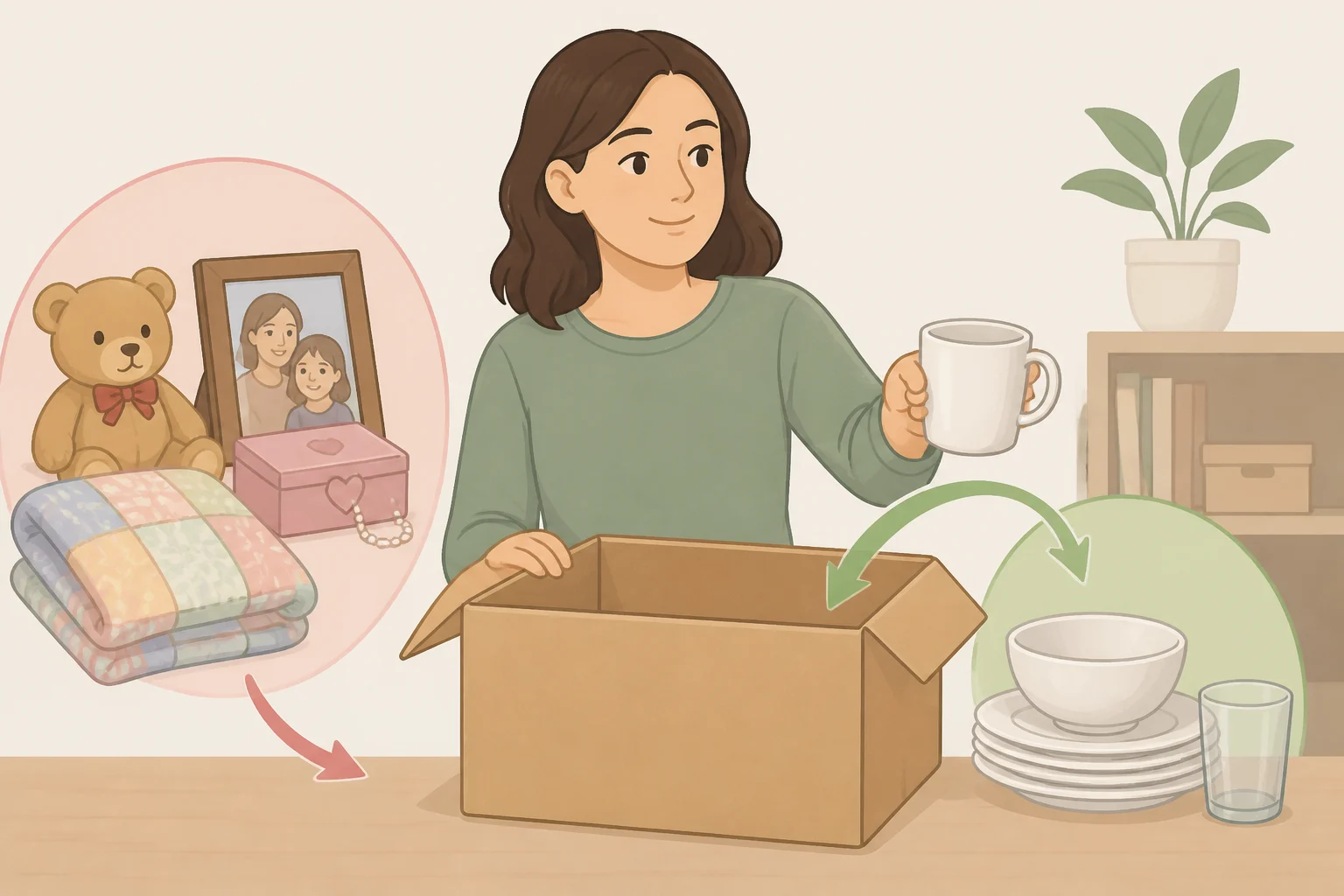
Running the maybe box decluttering method correctly comes down to five steps. Skip any one of them and you've traded a clutter problem for a storage problem.
-
Sort only genuine "maybes" into the box. If you already know you don't like something, don't use it, or wouldn't buy it again today, it doesn't need 30 more days of deliberation. "The box is really for the things you're genuinely unsure about," Reider says (Good Housekeeping). Anything you can decide on right now should skip the box entirely and go straight to donate or trash.
-
Start with low-sentiment categories. Beginners do better starting somewhere emotionally low-stakes. Solomon suggests kitchen utensils as a starting point rather than jumping straight into photo albums or childhood keepsakes (Good Housekeeping). Getting comfortable with the process on items you don't care much about builds the confidence to apply it to harder categories later.
-
Choose a timeline: 30 or 90 days. Reider's version runs 30 days. Solomon recommends a longer, 90-day window instead, arguing the extra time produces stronger results: "Revisiting those forgotten items after 90 days gives homeowners more concrete evidence and demonstrable proof they no longer need them. In other words, it gets them unstuck from their emotional attachment and more in step with their logical reasoning," she says (Good Housekeeping). Either timeline works. What matters is picking one and sticking to it.
-
Label the box with a real date. Borrowing a safeguard from the four-box method's relocate box, write an actual month on the outside, not "someday" (Clutterless Nest). This is the step people skip most often, and it's the one that makes the whole system function. Without a specific date, there's no trigger to ever open the box again.
-
Set a calendar reminder and put the box away. Store it somewhere out of daily view and resist the temptation to peek. "Put the items in a box and put the box away and don't peek. Push yourself to put in more items than you think you should as an experiment and then see how it goes," advises Amelia Meena of Appleshine (Good Housekeeping).
Skip step four, and the consequences show up later than you'd expect. "Otherwise, your 30-day experiment can very easily turn into a box you discover in the garage three years from now and think, 'What in the world is in here?'" Reider warns (Good Housekeeping). An undated box doesn't fail immediately. It fails quietly, sitting untouched until it becomes exactly the clutter it was supposed to eliminate.
Why the maybe box method makes decluttering easier
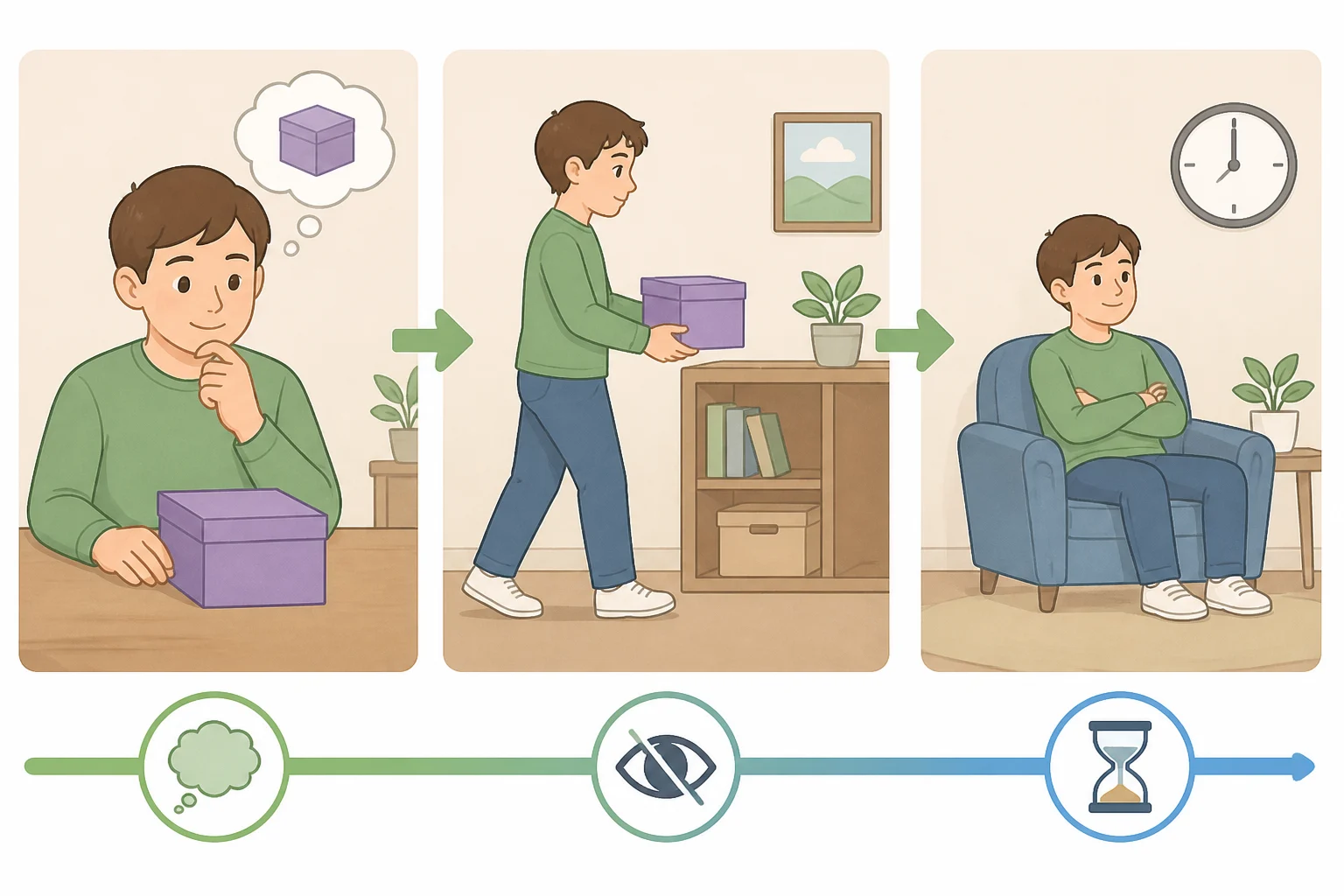
The waiting period does something a snap decision can't: it turns a guess into evidence. If 30 days pass and you never thought about or needed something in the box, that absence is itself the answer (Good Housekeeping). You're no longer deciding based on how attached you feel standing in front of the item. You're deciding based on what actually happened while it was out of sight.
Solomon's case for the longer 90-day version leans on the same logic, just with more runway. The extra time is meant to shift people from emotional reasoning toward something closer to a documented pattern of not missing an item at all (Good Housekeeping).
Reider strips the pressure out of the review date itself. "Most importantly, don't treat the 30-day mark as a test you can fail. Decluttering isn't about proving you can get rid of the most stuff. It's about making your home work better for the life you're actually living," she says (Good Housekeeping). There's no wrong outcome here. Miss something and you keep it; go the distance without thinking about it and that's information you wouldn't have had otherwise.
The tradeoff is patience. You won't see the payoff of the box rule the day you seal it shut. The value shows up weeks or months later, in the form of a decision you can trust rather than one you talked yourself into on the spot (Good Housekeeping).
What to do with items after the 30-day decluttering box trial

When the review date arrives, the test is straightforward: did you think about or need anything in the box during the waiting period? If the answer is no, that's your signal to let it go. If something specific comes to mind, pull that item back out and move on.
The four-box method offers a useful discipline to borrow here, even though it was built for a different kind of storage box. A box only avoids becoming permanent clutter if it carries three things spelled out on the outside: what's in it, where it's going next, and when it gets reviewed (Clutterless Nest). Miss any one of those three, and you've built what Clutterless Nest bluntly calls a doom pile with a lid, a container that looks organized but behaves exactly like the mess it replaced (Clutterless Nest).
A practical rule for review day: items you never thought about go to donation, and anything you retrieved goes straight back into active use rather than sitting in limbo. Neither source spells out a formal protocol for partial retrievals, where you reclaim one or two items but not the rest of the box's contents. A reasonable approach is to return only what you actually use and let the clock keep running on everything else, or reset the timeline entirely if most of the box ends up back in circulation. Treat it as a judgment call, not a rule to overthink.
The box rule for decluttering isn't meant to replace a decisive sort. It's built for the narrower category of decluttering items you are unsure about, the ones where an immediate decision would just be a guess dressed up as a choice. Reserve it for that, date it the moment it leaves the room, and let the four-box, decide-now approach handle everything you already know the answer to. The two methods aren't competitors. Run them in the same session and each does the job the other can't.