How to make spanakopita without a soggy bottom: 3 fixes
Search "how to make spanakopita" and dozens of recipes promise the same thing: a crisp, golden crust wrapped around a bright green filling. Follow one closely and still end up with a soggy bottom, and the recipe's headline instructions usually aren't the problem. With this recipe, three decisions made before baking have the greatest effect on moisture and structure, and none of them show up in the ingredient list.
Spanakopita, the Greek spinach and feta pie, is probably one of the most popular pies in Greek home cooking, built from spanáki (spinach) and pita (pie) layered with feta and fresh herbs inside crisp dough (Olive & Mango). This guide walks through Olive & Mango's from-scratch method start to finish, the version built on homemade rolled dough rather than sheets of packaged phyllo, and flags the three points where moisture problems usually start (Olive & Mango, updated nearly two years ago).
One terminology note before starting: in this recipe, a "layer" means one rolled disc of homemade dough, not a paper-thin commercial phyllo sheet. The recipe makes eight discs total. That distinction matters because the layer counts below are specific to this dough and won't transfer directly if you switch to store-bought phyllo.
What you'll need
Video of the Day
For the dough: 2 cups all-purpose flour (plus more for kneading), 5 teaspoons olive oil, ½ teaspoon fine salt, 2 teaspoons white wine vinegar, ¾ cup warm water, ¼ cup melted butter for brushing, and a mix of flour and cornstarch for dusting (Olive & Mango).
For the filling: 2 tablespoons olive oil, 1 sliced leek, 3 sliced spring onions, 11 ounces (312g) spinach, ¼ cup chopped dill and parsley, 1 cup (about 200g) crumbled feta, 3 tablespoons ricotta, 3 eggs, and salt and pepper to taste (Olive & Mango).
Video of the Day
Step 1: mix and rest the dough
Combine the flour, olive oil, salt, vinegar, and warm water in a bowl and mix until a rough dough comes together. Turn it out onto a floured surface and knead until smooth, about two to three minutes, then keep kneading for another five minutes or so until the dough turns supple and elastic (Olive & Mango).
Wrap the dough in plastic and let it rest at room temperature for at least 30 minutes, up to three hours. If working ahead, it can be wrapped and refrigerated for up to two days before use (Olive & Mango). This rest is also the window for building the filling, so the two processes run in parallel rather than one waiting on the other.
Step 2: dry the filling before it touches the dough
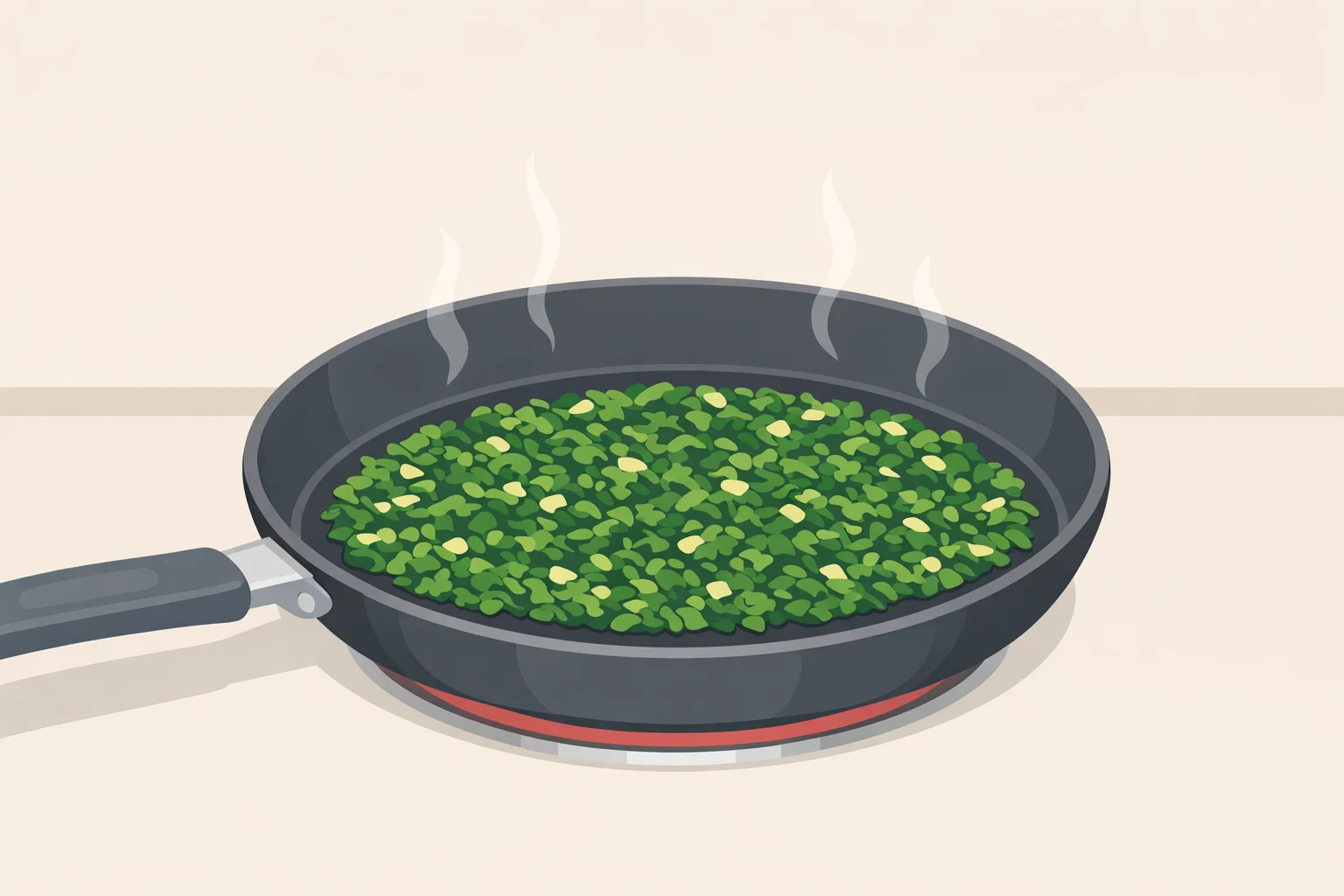
Spinach holds a lot of water, and getting rid of it is the single biggest factor in whether the finished pie stays crisp on the bottom.
Cook the sliced leek and spring onions in two tablespoons of olive oil for three to five minutes until softened. The leek is doing more than filling space here; Olive & Mango adds it specifically because it brings a sweetness plain onion doesn't (Olive & Mango). Add the spinach and cook another five to seven minutes until wilted, then keep it on the heat for one to two more minutes specifically to cook off whatever liquid remains (Olive & Mango).
A quick way to check the result: push the spinach to one side of the pan. No liquid pooling in the cleared space means it's dry enough.
This step is the one that can't be fixed later. Once the filling sits under a stack of dough, there's no way to cook off leftover liquid; the crust underneath just absorbs it, slowly, over the better part of an hour in the oven.
Step 3: cool the filling before mixing in eggs and cheese
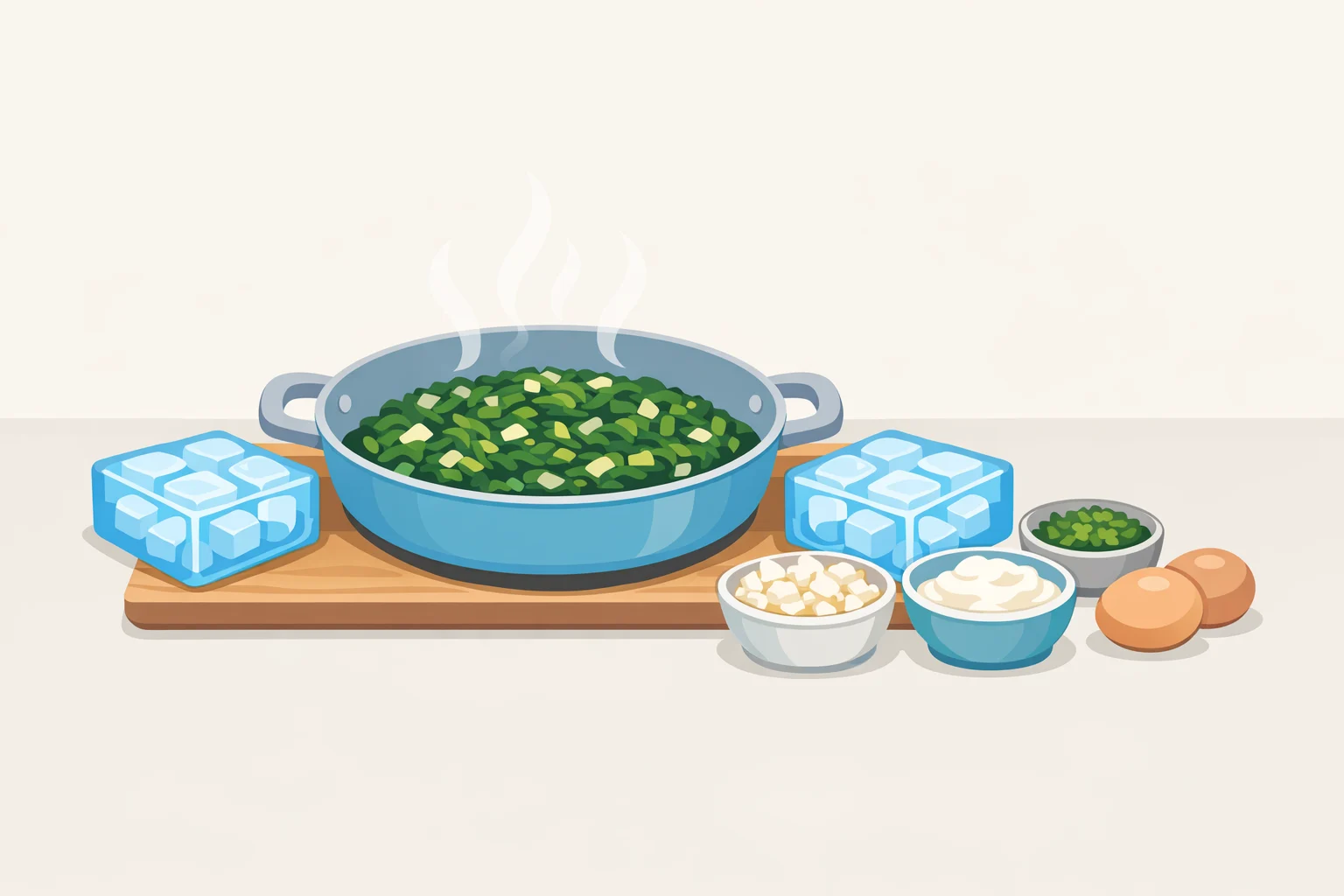
Once the spinach mixture is dried, set it aside to cool (Olive & Mango). Stir in the chopped dill and parsley, feta, and ricotta, season with salt and pepper, then fold in the eggs only once the mixture is no longer hot (Olive & Mango).
This step carries less weight than Step 2, and it's worth saying why. Cooling isn't a drying technique; it's a handling precaution. Eggs added to a still-warm filling can start to cook on contact instead of blending in smoothly, which is a texture issue, not a moisture one. Cooling won't rescue a filling that's still wet. That problem gets solved earlier, or not at all.
Step 4: roll the dough into discs
Roll the rested dough into a log roughly 10 inches long, then cut it into eight equal portions: halve it, halve each half, then halve those pieces again (Olive & Mango). Flatten each portion with your fingers and roll it out into a flat disc about five inches across, dusting with flour or cornstarch as needed to keep the dough from sticking (Olive & Mango).
How to make spanakopita that stays crisp underneath
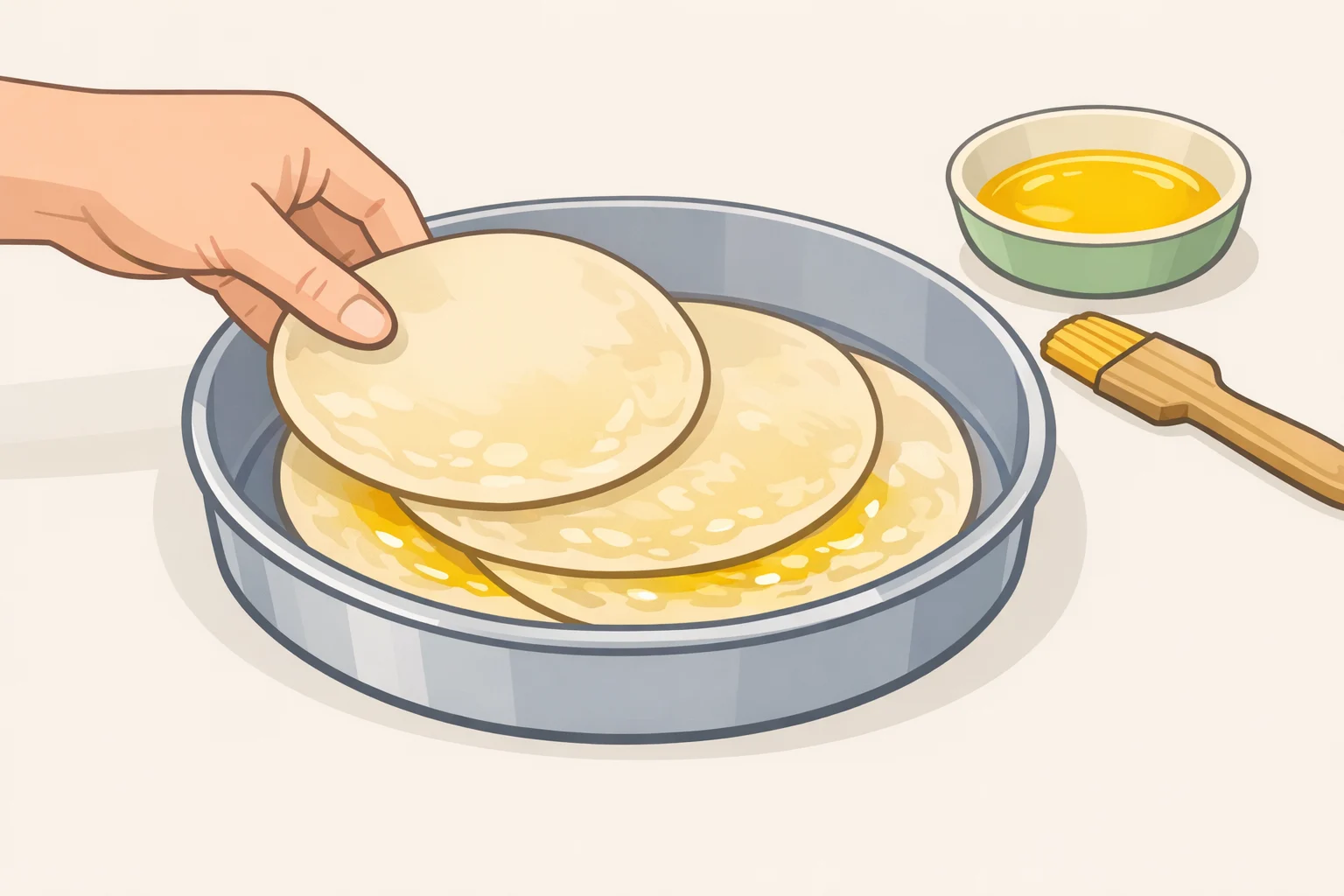
This is the step where a soggy bottom gets decided, well before anything goes near the oven.
The core layering fact: the recipe splits its eight discs into five for the bottom of the pie and three for the top. Olive & Mango is specific about the minimum: don't go below three to four bottom layers, since that's what keeps the crust from collapsing under the filling (Olive & Mango).
Pan size changes the math. This dough quantity is sized for a 10 to 12 inch round pan, and it can stretch to a 9-inch pan too, though the layers will run thicker. For anything larger, a rectangular pan or a full sheet pan, double both the dough and filling quantities rather than spreading the original amount thin across more surface (Olive & Mango).
Coverage matters as much as count. Each rolled disc measures about five inches across, so covering the floor of a 10 to 12 inch pan means overlapping the edges of the bottom discs rather than laying them side by side with gaps (Olive & Mango). A gap in that bottom stack leaves the crust with less material between it and any liquid the filling releases during baking.
Brush melted butter between each layer as you stack. Add the cooled filling once all five bottom layers are in place, top with the remaining three discs, and press the edges together firmly to seal. Score the top layer only, as a guide for cutting later (Olive & Mango).
Bake and check your work
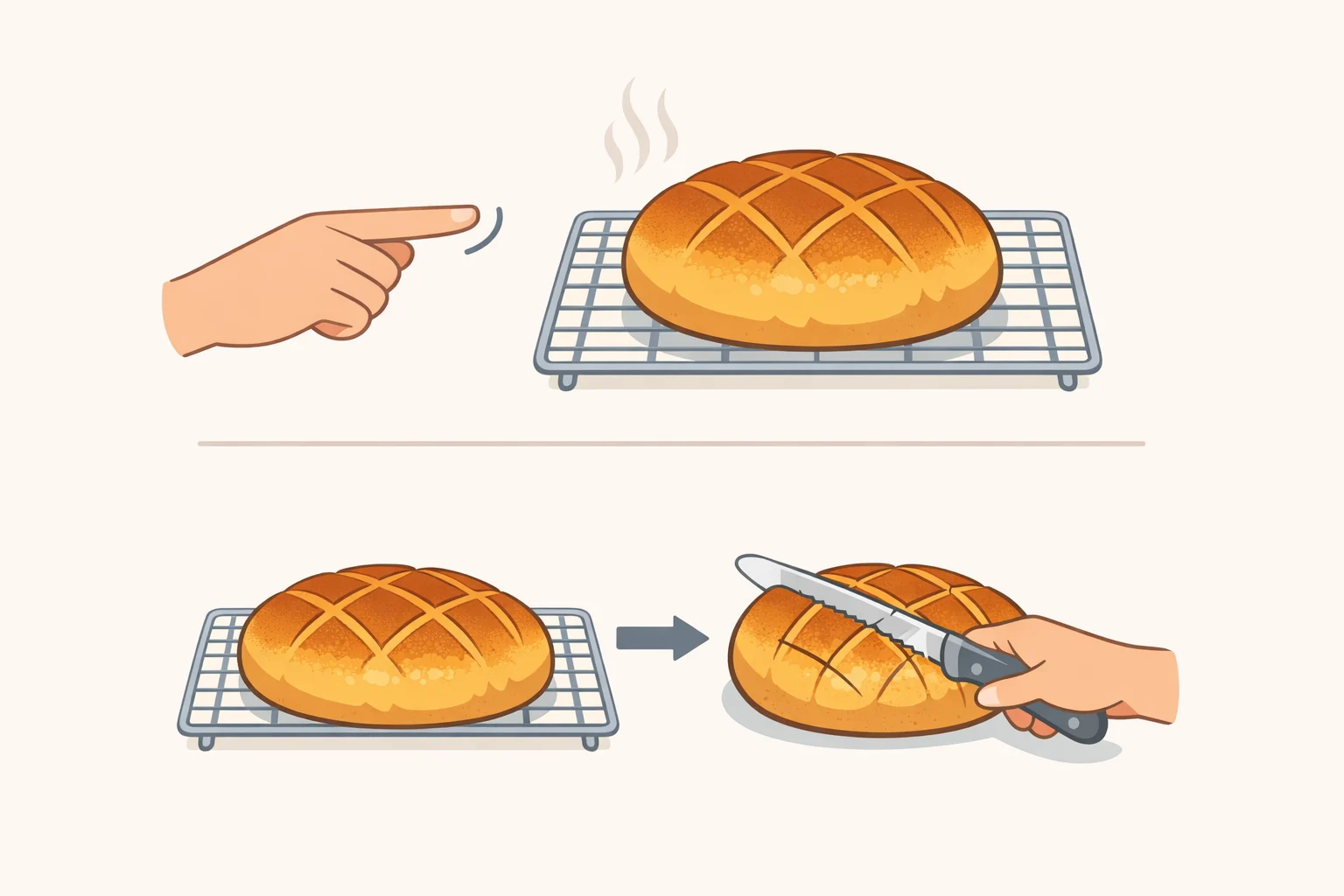
Baking is where the first three decisions get tested, not a fourth fix in its own right. If the filling was dried properly and the bottom stack has enough layers, the oven mostly confirms that.
Bake at 350°F for about 55 to 60 minutes. The recipe's actual doneness marker isn't the timer, it's a top that's deeply golden brown and crisp, so treat the clock as a rough guide and the color as the real signal (Olive & Mango). Let the pie rest five to ten minutes before cutting along the scored lines (Olive & Mango).
If the bottom still comes out soggy, two things are worth checking before the next attempt: whether the filling held visible liquid before it went into the pan, and whether the bottom stack came in thinner than the three-to-four-layer minimum. Those are the two variables the recipe's own guidance points to.
If filling leaked out during baking, look at the edge seal first. The recipe calls for pressing the top and bottom layers together firmly before baking, and any gap left along that edge gives the filling's moisture a route out once the pie hits heat (Olive & Mango).
Leftovers keep in a sealed container in the fridge for two to three days, and reheating in the oven is the method the recipe recommends for bringing back the texture (Olive & Mango).
Conclusion
Three decisions carry the most weight in this recipe: how thoroughly the filling gets dried, how the dough gets built into a bottom-heavy stack, and how tightly the edges get sealed before baking. Everything else, the exact bake time, the resting window, the reheating method, is secondary to those three.
Before the next pie goes into the oven, check the filling for visible liquid and run a finger along the edge to confirm the seal is continuous. Those two checks apply beyond this specific dough, to any pastry that traps a wet filling inside a sealed crust.
Once the technique is dialed in, the pie earns its keep well past the dinner table. Olive & Mango serves it as an appetizer, a light meal alongside a Greek salad, or packed cold for a picnic (Olive & Mango). A dry filling and a properly sealed edge are what make that kind of portability possible in the first place.