How to Cook Frozen Pizza So the Crust Actually Crisps Up
Four chefs, interviewed separately for an Allrecipes piece published earlier this month, landed on the same diagnosis for a soggy frozen pizza: it's a heat problem, not a product problem. "Putting the pizza in before your cooking tool is up to temp will create a soggy pizza," says chef Jeanette Donnarumma (Allrecipes). Learning how to cook frozen pizza well mostly comes down to managing that heat, not hunting for a better box in the freezer aisle.
This guide walks through the method all four chefs approved, plus what changes if the box requires a pan, if a stone or steel is sitting in the cupboard, or if the oven's occupied and a grill is the only option. It closes with a couple of chef tips for frozen pizza that fix results even after a technically correct bake, and a note on picking a better pizza altogether.
Here's the short version before the details: default to the package instructions, since they're tested for that exact pizza. Reach for the 475°F rack-or-stone method only if the box allows direct-rack or stone cooking and a slower, higher-heat approach appeals more than convenience that night. Use the grill when the oven's busy or the kitchen's too hot to run one. These frozen pizza cooking tips break into those three paths, plus what to do if the crust still comes out wrong.
How to cook frozen pizza in a standard oven
Video of the Day
Start by reading the box. Note the printed temperature and time, whether it calls for a pan or sheet, and anything it says about thawing. Chef Schaefer calls package instructions "the most fail-safe method" because they've been tested specifically for that product, and skipping the preheat is the single mistake the whole panel warns against (Allrecipes).
If the box says use a pan
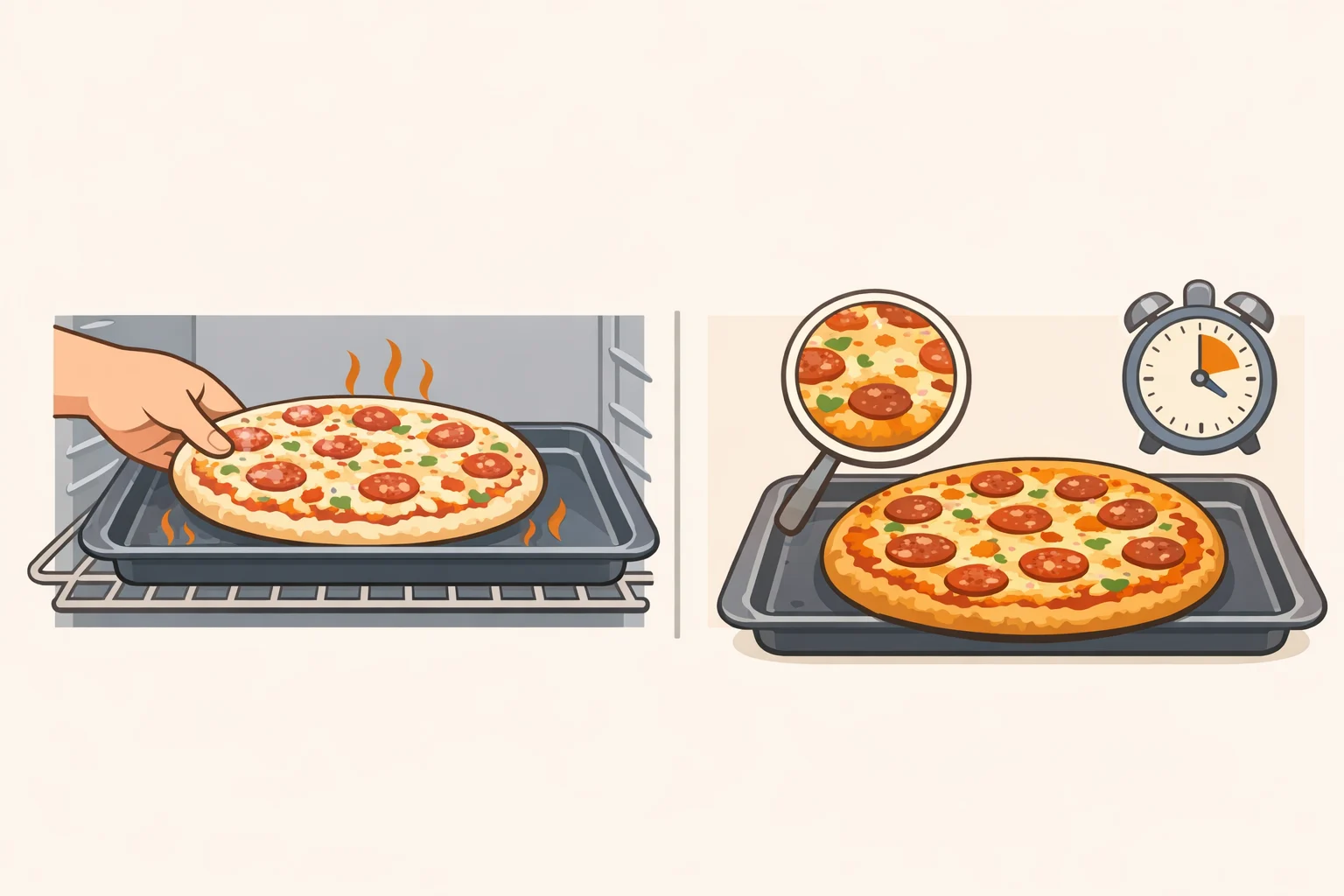
Follow it as written. Preheat the oven fully to the printed temperature before the pizza goes in, and place it on the pan or tray the box specifies rather than a bare rack. Watch the pizza instead of the clock, since ovens vary enough that identical settings can finish at different times.
Getting a crispy frozen pizza crust here means watching for cheese that's fully melted and just starting to brown at the edges. That browning is caramelization, and Schaefer credits it with deepening the flavor. Check often, and look past the top of the pie: the panel recommends confirming golden-brown cheese along with an undercarriage, the underside of the crust, that shows real color and some crunch, rather than pulling the pizza the moment the top looks done.
If the box allows a rack or stone
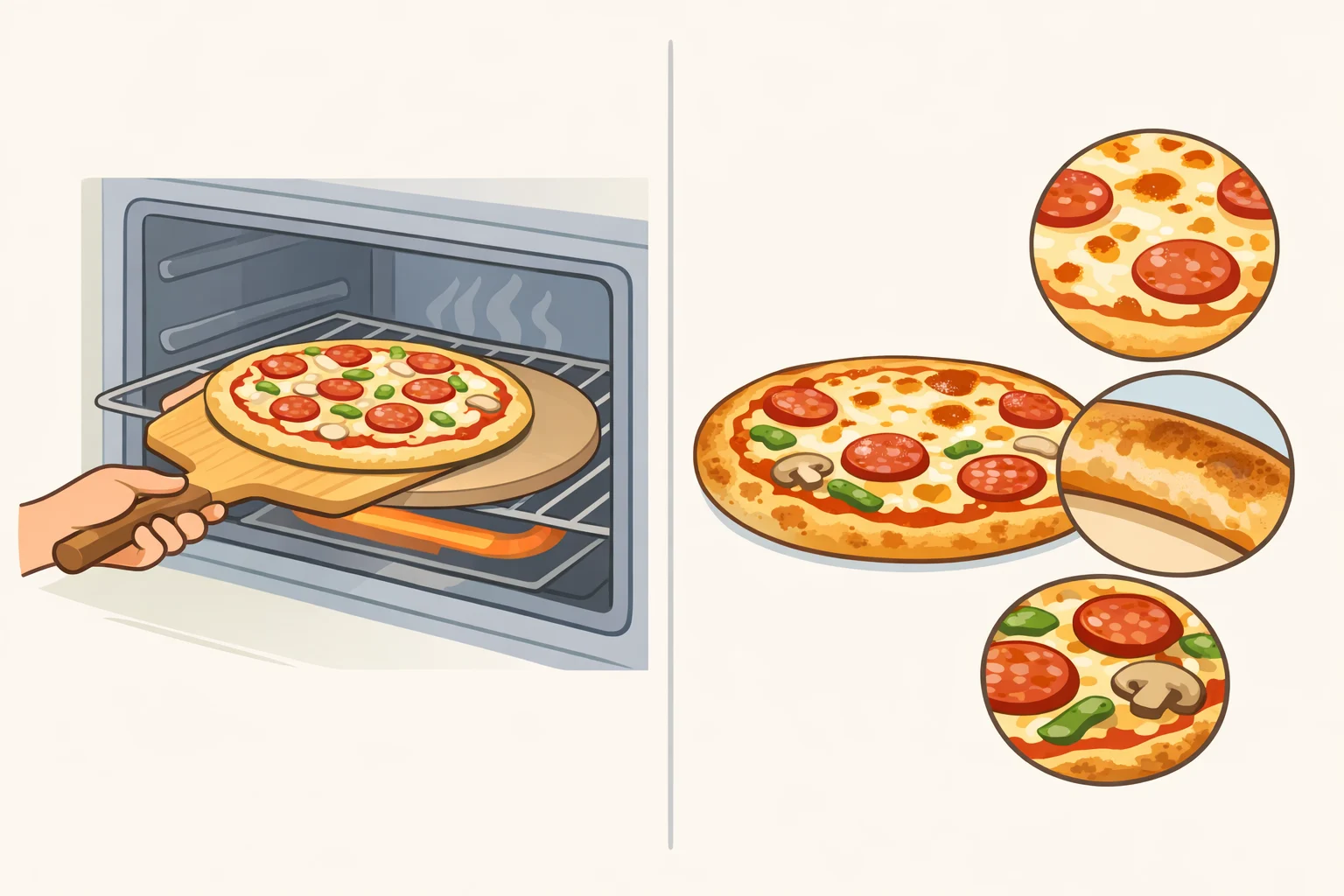
This is a chef-preferred alternative, not a replacement for the box if the box insists on a pan. "In the oven, either directly on the rack or on a preheated pizza stone if you have one, is the unanimous best way to cook frozen pizza," according to the panel (Allrecipes). Use it only when the packaging permits direct-rack or stone cooking, and default to the printed instructions otherwise.
- Preheat the oven to 475°F. Give it at least 30 minutes, and extend to 60 if there's time.
- Pull the pizza from the freezer when the oven goes on and let it thaw on the counter for about 30 minutes. That thaw helps the crust crisp rather than steam.
- Slide it onto the preheated stone, or set it directly on the center rack.
- Cook until the crust is crispy and the cheese is bubbly, a little browned, and fully melted, as Donnarumma describes it.
- If a thermometer is handy, check that the center reads at least 165°F, the doneness mark the chef panel uses. Package directions come first; 165°F is an additional benchmark, and USDA guidance separately confirms fully cooked or ready-to-eat frozen foods should be heated to that same temperature (USDA).
- Move it to a wire rack and rest it before slicing: about 2 minutes for thin crust, up to 5 for rising or thick crust. Skip this step and a slice turns into what Donnarumma calls "a literal hot mess."
The panel presents both a direct rack and a preheated stone as acceptable options, without ranking one above the other. If one surface leaves a soggier bottom than the other in a given kitchen, that's worth noting for next time, not a verdict from the research. Either way, moving a pizza onto a rack or a hot stone calls for a wide spatula or a peel, not bare hands.
Video of the Day
If you have a pizza stone or baking steel
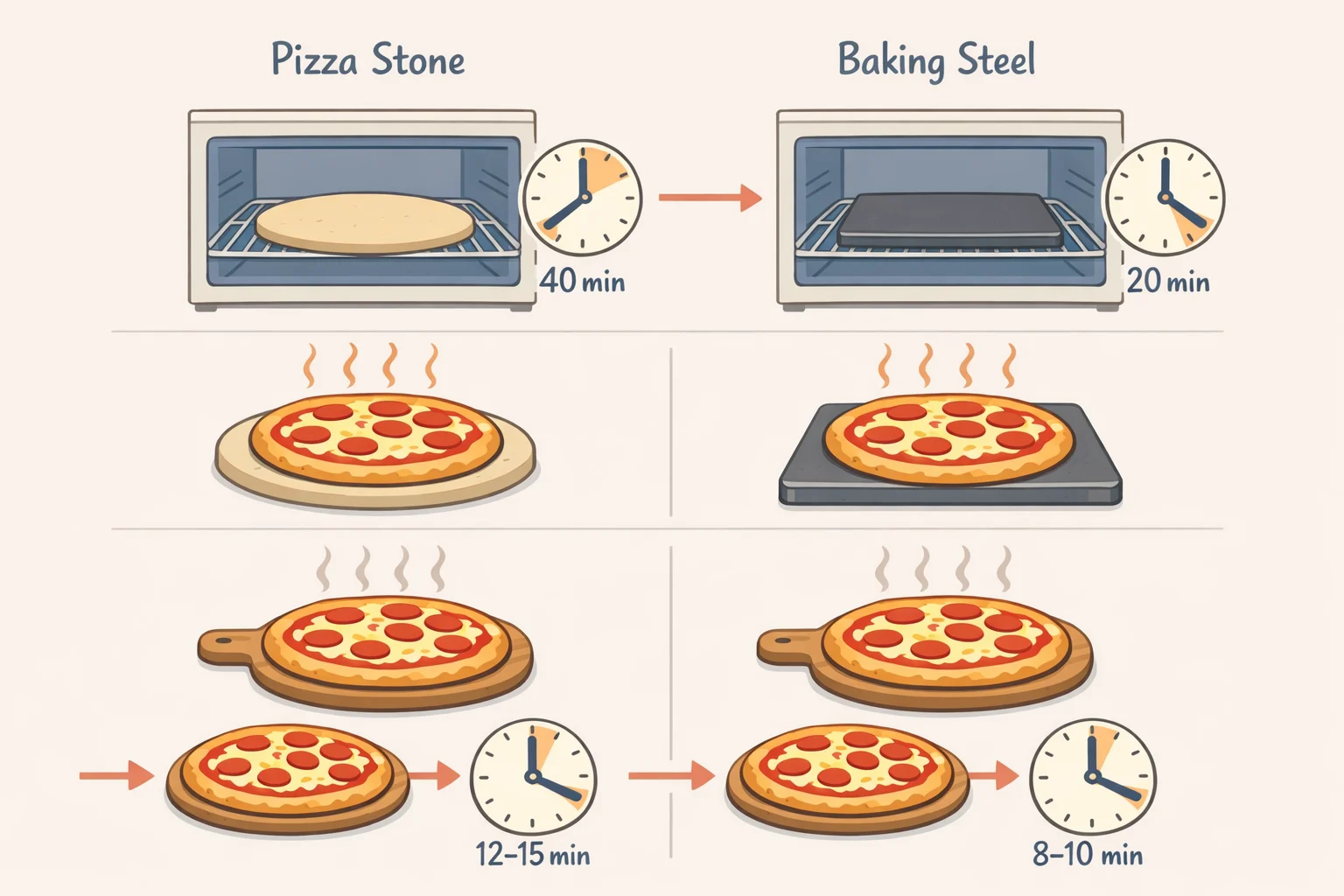
A pizza stone fits into the rack-or-stone method above: preheat it along with the oven during that same window, then handle it the same as the bare rack once the pizza's on it.
A baking steel runs on a different process entirely. Baking Steel, the company behind the product, recommends a 45-minute preheat, an oven temperature about 25°F below whatever the box says, and sliding the pizza on straight from frozen, arguing that steel delivers more intense, direct heat to the bottom of the crust than a bare rack or stone can manage (Baking Steel). That's the manufacturer's own guidance, not an independent test, and it directly contradicts the Allrecipes panel's take on the bare rack, as the table below shows. Treat a steel as a different tool with its own instructions, not an upgraded version of the rack method.
Signs it's ready, on any surface: a crispy crust, cheese that's fully melted, edges starting to brown, and an underside with real color and some crunch (Allrecipes).
A separate Serious Eats review, published in 2024, lends some independent support to the steel's speed claim, though not on frozen pizza. Baking handmade New York-style dough, the steel browned and bubbled a pie in about six minutes against roughly eight minutes on a stone, which tracks with steel's faster heat transfer (Serious Eats). That explains why steel heats faster; it says nothing about how either surface performs on a specific frozen pizza. The steel used in that review weighed about 16 pounds and was priced between $110 and $129 at the time.
Comparing the guidance side by side
| Setup | Preheat | Baking Steel's published guidance | Allrecipes chef panel |
|---|---|---|---|
| Pan or tray, per box | Whatever the package specifies | Not addressed | Calls package instructions the "most fail-safe" method |
| Bare oven rack | 30 to 60 minutes | Prone to an uneven, soggy bottom | One of two chef-endorsed options |
| Pizza stone | Preheated alongside the oven | Calls the result "decent," can still be soggy | Equally valid alongside the rack |
| Baking steel | 45 minutes | Crispy, golden crust in 10 to 12 minutes at 425°F | Not evaluated |
| Gas grill | Until the grill hits its max temperature (Schaefer: roughly 625 to 650°F) | Not addressed | Preferred for thin crust, since a grill runs hotter than most ovens |
The rack row is where the two sources disagree outright: Baking Steel's own materials call a bare rack soggy-prone, while the Allrecipes panel calls it a top choice. Neither one tested the same product under the same conditions, so treat the mismatch as a reminder that equipment claims are only as good as what they were tested against.
How to cook frozen pizza on a grill
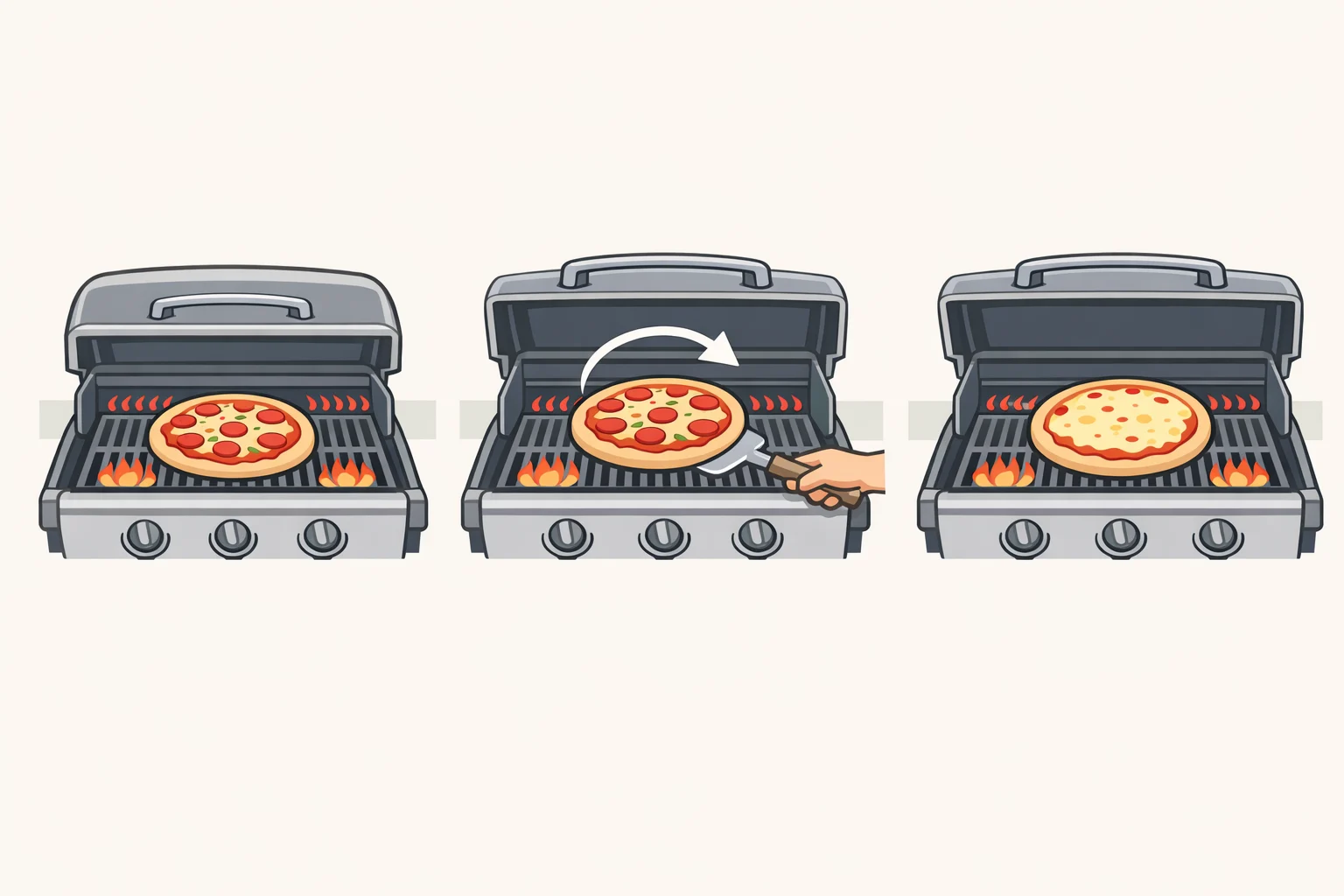
A gas grill earns its place when the oven's busy or the kitchen's already too hot to run one. Schaefer favors it especially for thin crust, since a grill can reach higher heat than most home ovens manage (Allrecipes).
Turn all burners to high and let the grill reach its maximum temperature, which for Schaefer typically lands around 625 to 650°F. Once the whole surface is hot, shut off the middle burner and place the pizza over that section with the lid closed. After 5 minutes, rotate the pizza 180 degrees and close the lid again. Check it after another 3 minutes, then rotate a quarter turn every few minutes until the cheese is fully melted and the center hits 165°F.
Thick or rising crust wants gentler heat: use medium-low burners instead of high, with the same indirect setup and rotation pattern. Rest it the same 2 to 5 minutes before slicing once it's off the grates.
If the crust still won't crisp
A soggy underside after a full preheat on the rack-or-stone method is worth troubleshooting with more time before blaming the equipment, though the research here only backs stretching that specific method's preheat, not swapping surfaces or tenting with foil. Try pushing toward the 60-minute end of the range next time. Beyond that, lean on the visual cues already covered: fully melted cheese, browned edges, and an undercarriage with real color, rather than lifting the pizza mid-bake to check the bottom.
Sometimes the pizza itself is the ceiling, not the technique. In a blind taste test of 28 grocery-store frozen pizzas cooked to package directions, two pies rose to the top at very different price points: the Wegmans Italian Classics Wood-Fired Crust Margherita, priced at $6, and the Table 87 Coal-Fired Margherita, priced at $15.88 (Serious Eats). Testers consistently valued a crust that was neither soggy nor tough, a sauce-to-cheese ratio where neither element disappeared, and sauce that was tomato-forward and well-seasoned rather than bland. Past that point, trying a different pizza is likely the more productive move than tinkering further with equipment.
One tested customization is worth trying regardless of method: layer cooked, crumbled bacon on the pizza before baking, then add sliced tomato, mayonnaise, and shredded lettuce once it comes out, turning a plain cheese pizza into a BLT-style pie in about a minute of extra prep (Allrecipes). It's a simple way to make frozen pizza taste better without touching a single oven setting.
Picking the right method
Package instructions remain the safest bet, since they're tested against that specific box, crust thickness, and topping load. The 475°F rack-or-stone method earns the extra attention when the box allows it and a slower, higher-heat approach matters more than convenience that night. A stone or steel can sharpen the result within whichever method applies, but preheating fully and watching for those doneness cues, not the equipment underneath, decides whether the crust turns out crisp or soggy.
Next time, set a timer for the preheat itself, not just the bake. It costs nothing extra, and it's the one habit the chefs keep coming back to.