How to keep zucchini lasagna from getting watery: 4 stages
A Couple Cooks calls its recipe "Easy Zucchini Lasagna (Not Soggy!)" right in the title, which says something about how often the alternative happens (A Couple Cooks, last month). Zucchini is over 90% water, and swapping it in for pasta doesn't make that water disappear (A Couple Cooks, last month). It has to go somewhere before the dish reaches the oven, and if it doesn't, it pools in the pan.
How to keep zucchini lasagna from getting watery comes down to four separate stages, not one trick. The zucchini, the sauce, the cheese, and the way the dish gets layered all either remove moisture or add it back in. A soggy bottom is rarely one mistake; it's usually three or four small ones stacking up.
Eat Healthy 365 breaks the fix into three explicit steps: salt, pat dry, then par-bake (Eat Healthy 365, earlier this year). That three-part method comes from one developer's testing, worth treating as a detailed reference rather than a rule every recipe follows the same way.
What follows walks through four stages, prep, pre-cook, build, and bake, plus a short troubleshooting list for when the lasagna still comes out wrong.
Stage 1: how to remove moisture from zucchini for lasagna
Video of the Day
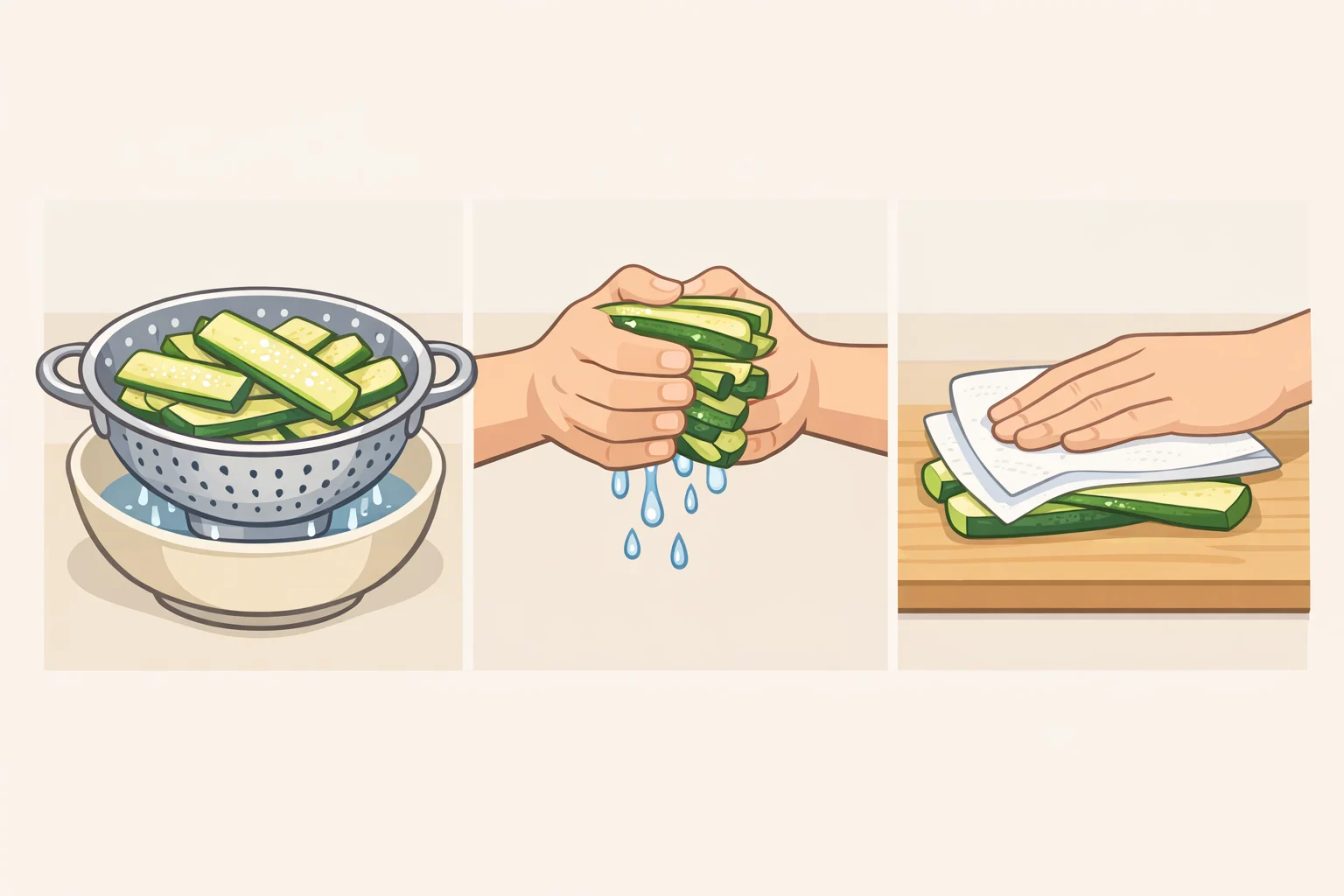
Slice zucchini into planks between 1/8 and 1/4 inch thick, using a mandoline or a sharp knife (A Simple Palate, earlier this year). Staying consistent across the batch matters more than hitting an exact number, since planks of different thickness dry at different rates.
Set the planks in a colander or on a wire rack rather than stacking them flat on a plate, so the liquid draining out has somewhere to go instead of pooling right back against the zucchini. None of the zucchini lasagna recipes here give an exact salt measurement for this step; a light, even sprinkle on both sides is a reasonable amount, since the sauce and cheese add more salt later. Salting pulls water out of the zucchini through osmosis, and Eat Healthy 365 points to that step, skipped or rushed, as the primary cause of a watery lasagna (Eat Healthy 365, earlier this year).
How long to leave it depends on the recipe. Eat Healthy 365 recommends 20 to 30 minutes (Eat Healthy 365, earlier this year). Pressed for time, A Simple Palate lets thin planks sit just 5 to 10 minutes before moving on (A Simple Palate, earlier this year). Twenty to thirty minutes is a solid default, especially with larger or thicker planks that release more water. After that time, pat the planks dry and check them; if they still feel wet, give them a few more minutes.
Pat the planks dry, firmly, on both sides, before they go anywhere near the oven. Eat Healthy 365 treats this as non-negotiable, warning that skipping it "will almost certainly result in a soupy dish" (Eat Healthy 365, earlier this year). A Simple Palate uses a lighter touch beforehand but adds a second pat right after the zucchini comes out of the oven, catching whatever moisture surfaced during cooking (A Simple Palate, earlier this year). That second pat is optional, borrowed from a different recipe's method rather than a proven requirement, but it costs almost nothing to add.
Video of the Day
Stage 2: salt and roast zucchini for lasagna
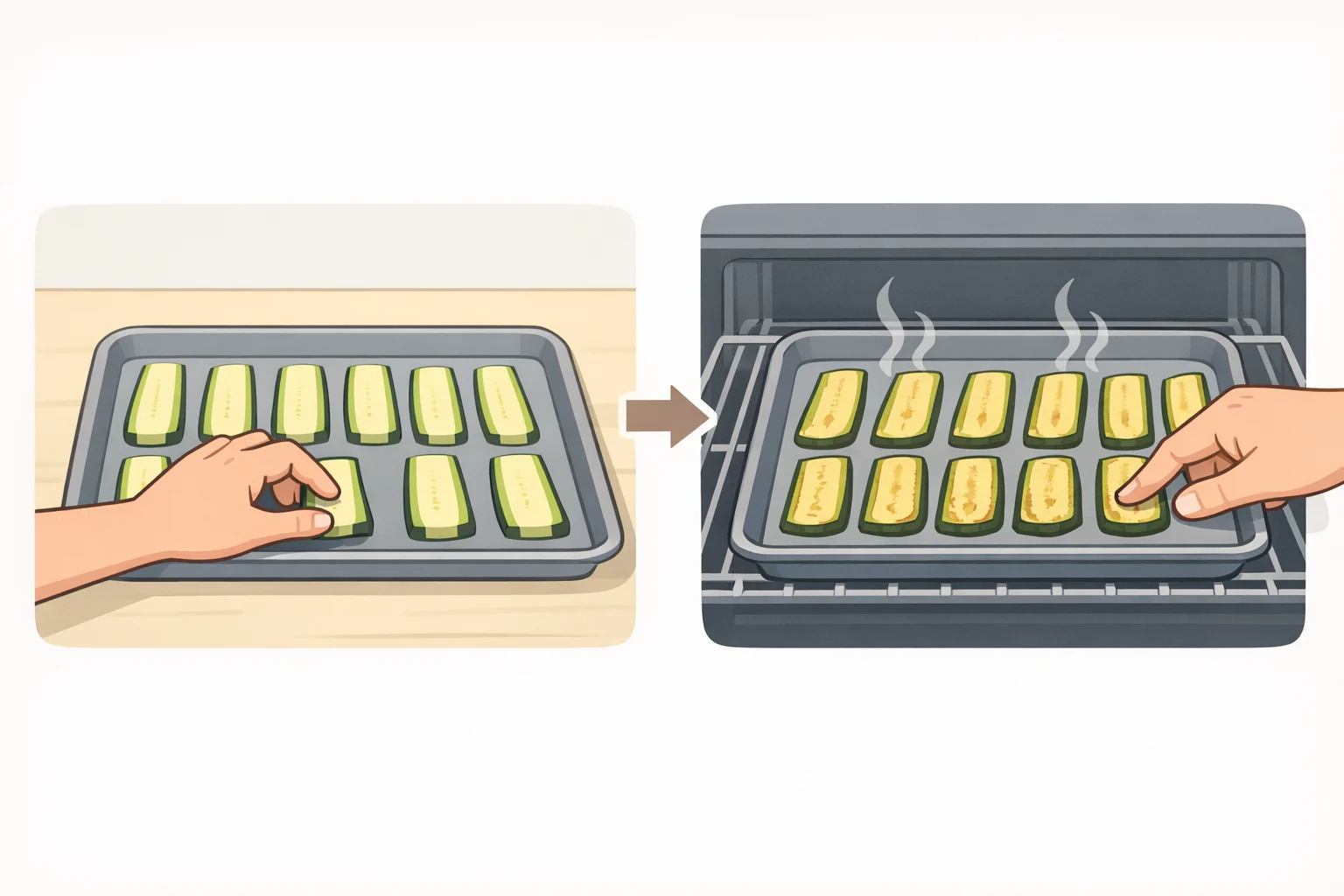
Roasting is where the remaining moisture actually leaves the zucchini instead of just moving around inside it. Eat Healthy 365 frames its three-step method as removing water through osmosis first and evaporation second; roasting is the evaporation half of that pairing (Eat Healthy 365, earlier this year).
For this guide, roast the dried planks at 450°F for 10 to 12 minutes in a single layer on a parchment-lined sheet, leaving space between pieces so their surfaces can dry instead of touching. Then reduce the oven to 375°F, the same temperature the assembled lasagna bakes at later. A Couple Cooks uses this exact sequence and notes a practical batch limit: about 2 pounds of zucchini is as much as fits on a sheet pan without crowding, enough for one 9x9 pan of lasagna (A Couple Cooks, last month). Larger recipes need more than one batch.
Judge doneness by touch rather than color. Zucchini is ready when it looks slightly softened and feels dry rather than glistening or limp, a sign that water has actually left the vegetable instead of just redistributing (Eat Healthy 365, earlier this year).
If a different oven schedule fits your kitchen better, expect the numbers to shift. A Simple Palate pre-bakes at 375°F for 8 to 10 minutes (A Simple Palate, earlier this year), while Eat Healthy 365 bakes at 400°F for 15 to 20 minutes, flipping the planks halfway through (Eat Healthy 365, earlier this year). Either works; just watch for the same dry, slightly softened finish before moving on. Roasting is the simpler, more forgiving route, and the one worth defaulting to for a standard zucchini lasagna.
Stage 3: build a low-moisture lasagna
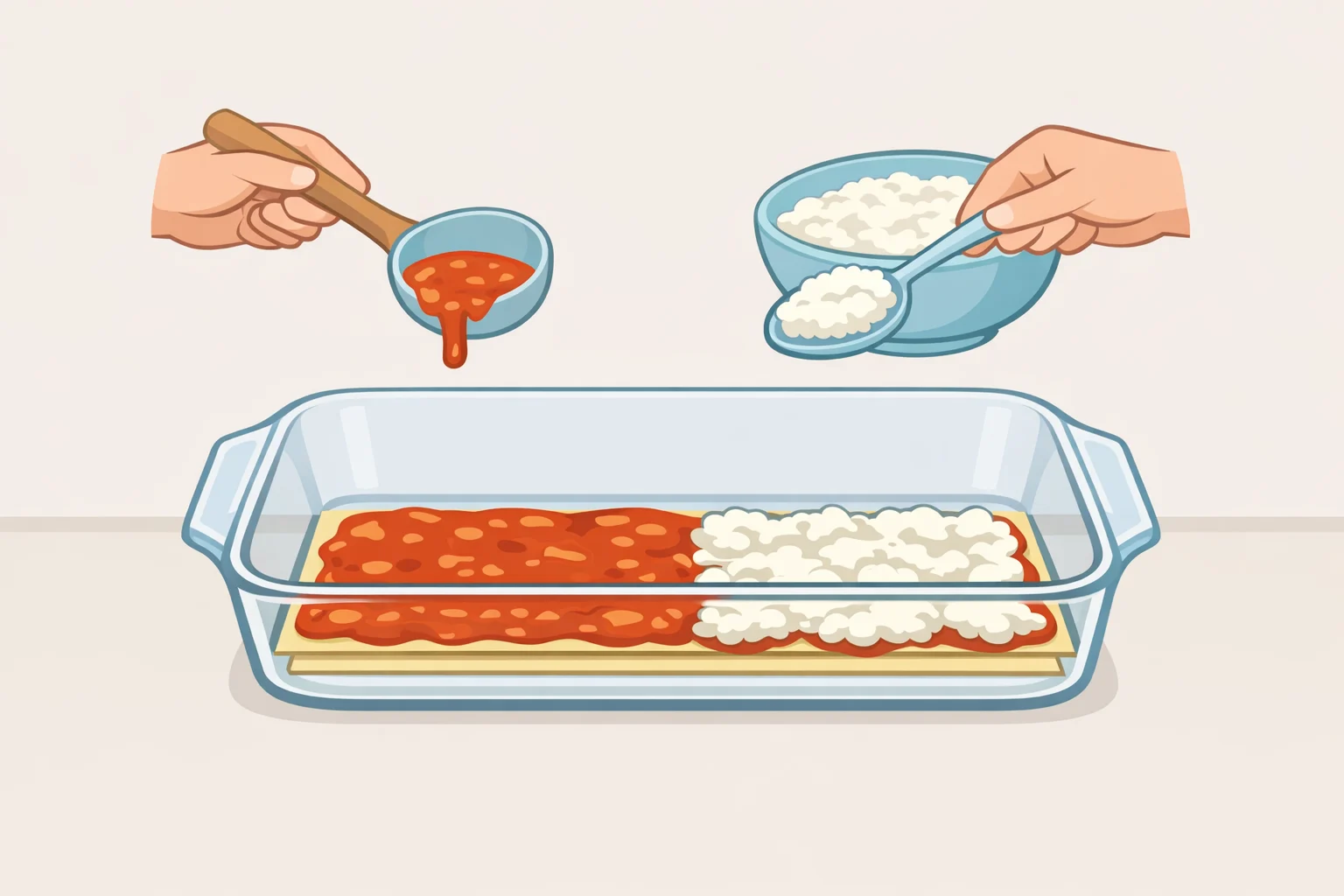
Even dry zucchini will not save a lasagna made with thin sauce, wet ricotta, or oversized layers. Sauce, cheese, and portioning each add their own water back in if left unchecked.
A Couple Cooks measures sauce precisely for the size of the pan and stirs in a bit of cornstarch to thicken it and cut its water content (A Couple Cooks, last month). Eat Healthy 365 takes a different route, simmering a thin marinara for 10 to 15 minutes to reduce it before it goes anywhere near the pan (Eat Healthy 365, earlier this year). Use enough sauce to coat each layer without leaving it runny; if it's thin enough to run off a spoon, it needs more time on the stove.
Cheese matters too. Eat Healthy 365 notes that whole-milk ricotta holds less water than the part-skim version, so it's worth reaching for on purpose (Eat Healthy 365, earlier this year). If the ricotta still looks watery once it's in the bowl, strain it before mixing it into the filling (A Simple Palate, earlier this year).
Portioning is where discipline tends to slip. A Simple Palate's developer identifies over-layering sauce and ricotta as her biggest recurring mistake and now uses noticeably less of both per layer (A Simple Palate, earlier this year).
Before anything goes in the oven, check the assembly. Don't proceed if the zucchini still looks wet or glistening, if the sauce runs off a spoon, if the ricotta hasn't been drained, or if any layer is noticeably thicker than the rest. Fixing these now is far cheaper than fixing a zucchini lasagna watery bottom after 40 minutes in the oven.
Stage 4: bake, rest, and slice
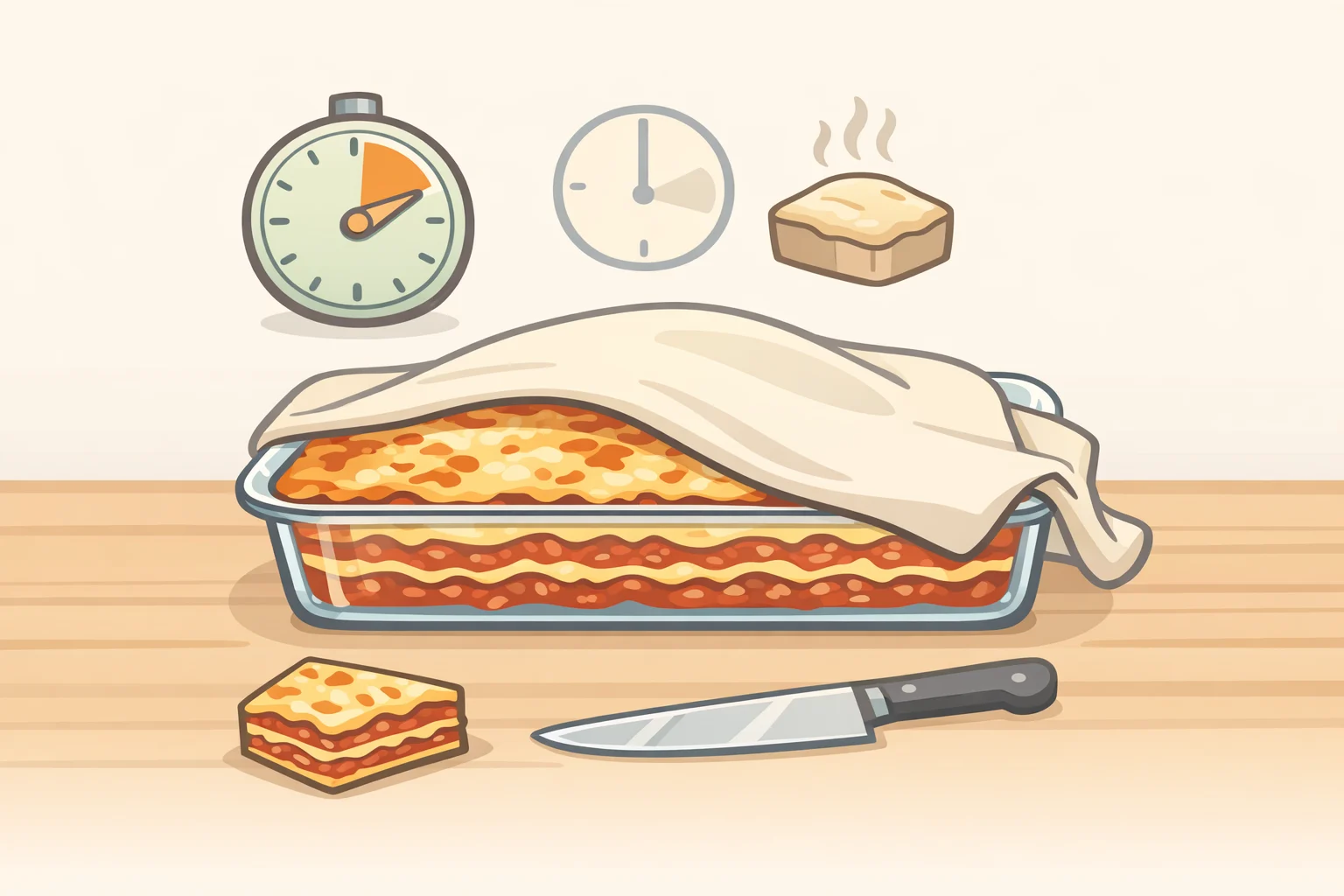
Bake uncovered. A Couple Cooks bakes the assembled lasagna at 375°F for 40 minutes, uncovered (A Couple Cooks, last month). Eat Healthy 365 also bakes at 375°F, uncovered, for 30 to 40 minutes, until the cheese turns bubbly and lightly browned (Eat Healthy 365, earlier this year).
Resting matters as much as baking. It's easy to skip when the dish comes out bubbling, but the layers need time to settle and the sauce needs time to be reabsorbed, which is what produces a clean slice instead of a puddle. Eat Healthy 365 recommends 15 to 20 minutes and calls the rest essential for clean slicing (Eat Healthy 365, earlier this year), and A Couple Cooks lets its own lasagna cool the same 15 to 20 minutes before serving to let it set (A Couple Cooks, last month). Fifteen minutes is a reasonable floor. If nobody's in a hurry, let it go closer to twenty.
Troubleshooting a zucchini lasagna watery bottom
If liquid still pools at the bottom, work backward through the same three causes Eat Healthy 365 traces watery results to: zucchini that wasn't patted dry enough after salting, marinara that went into the pan too thin, or a lasagna that didn't rest long enough after baking (Eat Healthy 365, earlier this year).
- Liquid at the bottom: recheck the drying step and the sauce consistency before blaming the zucchini itself.
- Mushy zucchini instead of firm planks: it likely needed more time in the oven. Look for the dry-to-the-touch finish from stage 2 rather than judging by color alone.
- Clean layers but slices that fall apart: the lasagna didn't rest long enough. Give it the full 15 to 20 minutes before cutting.
Putting the stages together
Four stages, done in order, turn zucchini from a liability into a workable stand-in for pasta: drying it before it cooks, roasting out what's left, keeping the sauce and cheese from adding water back, then giving the baked dish time to rest before slicing. Skip any one of them, and the water finds its way to the bottom of the pan anyway.
A Couple Cooks' developer described watery zucchini lasagna as a repeat failure before rebuilding the recipe around moisture control at every stage, and now says she might choose the zucchini version over a classic pasta lasagna (A Couple Cooks, last month). That's the standard worth aiming for: not a lower-carb consolation, but a lasagna that holds together on its own terms.
Leftovers and make-ahead
Leftovers keep a few days refrigerated. A Couple Cooks recommends 2 to 3 days, reheated in a 375°F oven (A Couple Cooks, last month); Eat Healthy 365 stores its version for up to 4 days and reheats at 350°F (Eat Healthy 365, earlier this year).
Assembling ahead is also possible, though the guidance comes from a single source. Eat Healthy 365 notes an unbaked lasagna can be refrigerated, tightly covered, for up to 24 hours, with 10 to 15 extra minutes added to the bake time to account for the cold start (Eat Healthy 365, earlier this year).