Can You Unshrink Clothes? What the Conditioner Hack Fixes
A viral fix for ruined laundry keeps resurfacing: soak the shrunken sweater in hair conditioner, stretch it back into shape, and let it air-dry until the shrinkage disappears. Good Housekeeping's laundry pros have seen this kind of pitch before and use it as their go-to example of a hack that sounds useful but isn't (Good Housekeeping, two months ago). So, can you unshrink clothes? The honest answer is yes and no. A shrunken garment can sometimes be coaxed back toward its old size, but it rarely returns to its exact original dimensions, and whatever size it regains may not survive the next wash (WonderHowTo, two months ago).
That's a less satisfying answer than the pitch promises, but it's the one backed by actual textile science. A textile scientist writing in The Conversation says the conditioner soak "can't completely reverse extreme shrinkage" but "can help recover some of the lost size" (The Conversation, last year). Good Housekeeping's own textile experts go further. After testing the method themselves, they concluded: "We have never found any of the recommended methods to be successful" (Good Housekeeping, two months ago).
The gap between those two verdicts is where the useful information lives. This piece covers why fabrics shrink in the first place, what the conditioner soak actually changes at the fiber level, which garments are worth trying it on, and how to keep clothes from shrinking so the hack never needs testing at all.
Why clothes shrink in the first place
Video of the Day
Shrinkage isn't damage in the way a stain or a tear is. It's a fiber reverting to the shape it held before manufacturers stretched and aligned it during production (WonderHowTo, two months ago). Cotton and linen are built from long cellulose chains that naturally exist in a crinkled, coiled state. Heat, moisture, and agitation give those chains permission to relax back toward that original shape, and that relaxation is the shrinkage (The Conversation, last year).
Hot water speeds this along by raising the energy of the fibers, which breaks the hydrogen bonds holding the stretched chains in position. Cold water is gentler, but it isn't risk-free. It still penetrates the fibers and makes them swell, and the tumbling in the machine adds mechanical stress no matter the temperature setting (The Conversation, last year).
Wool plays by different rules entirely. Its shrinkage comes from felting: the fiber's cuticles open up during washing and interlock with neighboring fibers, creating a dense structural tangle rather than a simple relaxed coil. That kind of entanglement is considerably harder to undo than cellulose fiber springing back into shape (The Conversation, last year). Synthetics like polyester and nylon mostly sidestep both problems. Their polymer structure is engineered to be more crystalline and ordered, acting like an internal skeleton that resists the kind of fiber reversion natural fibers are prone to (The Conversation, last year).
That's the reason a single fix can't be expected to work the same way across a cotton tee, a wool sweater, and a silk blouse. Shrinkage isn't one problem. It's three or four fiber-specific processes wearing the same name.
Video of the Day
Can hair conditioner unshrink clothes?
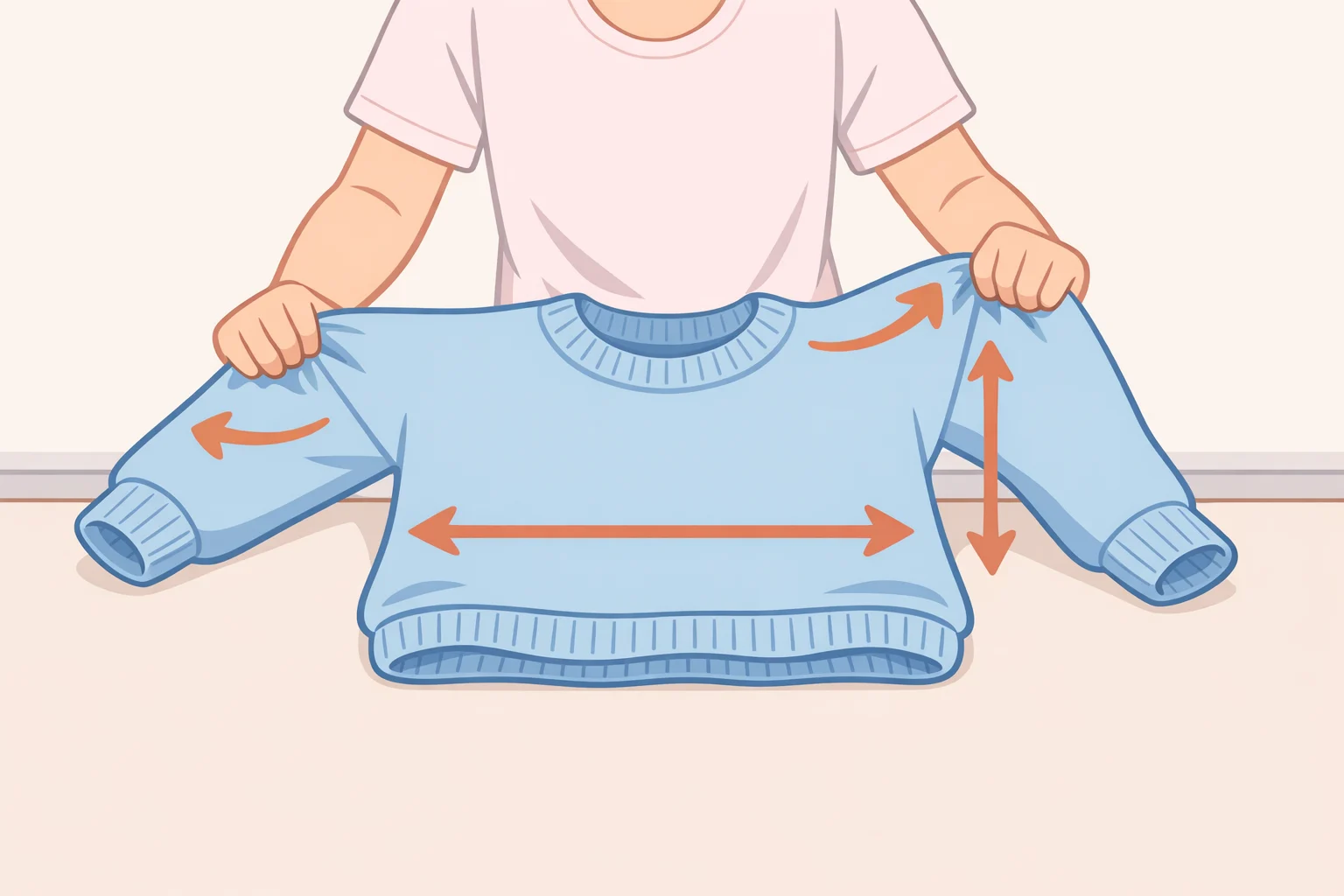
The mechanism behind the viral hack is real, which is part of why it spread so widely. Hair conditioner and baby shampoo contain cationic surfactants, compounds that temporarily coat and lubricate individual fibers, making them pliable enough to stretch (The Conversation, last year). Think of it like oiling a stiff hinge so it swings again. The oil doesn't repair the hinge. It just lets it move.
So does the conditioner unshrinking hack work? At the level of that single soak, partially. The catch is fiber memory. Lubrication wears off, but the fiber's underlying tendency to relax back toward its shrunken shape doesn't go away with it, and any size regained during the soak may simply disappear the next time the garment gets wet (WonderHowTo, two months ago). That's a meaningfully softer claim than "the garment will shrink right back," but it's still a warning: this is temporary reshaping, not a repair.
Good Housekeeping's Textiles Lab found something similar when it tested a commercial product marketed specifically for unshrinking, not the home conditioner method. The product worked the first time, then the garment shrank again after its next wash (Good Housekeeping, two months ago). That's not a direct test of the conditioner soak, but it's a useful data point on just how hard durable results are to achieve with any unshrinking method, homemade or commercial.
The realistic framing, then, is that the achievable outcome sits between "unwearable" and "acceptable," not between "shrunken" and "original size" (WonderHowTo, two months ago). That's a meaningful outcome for a favorite shirt headed for the donation pile. It's not the miracle the captions promise.
Which garments are worth trying the soak on
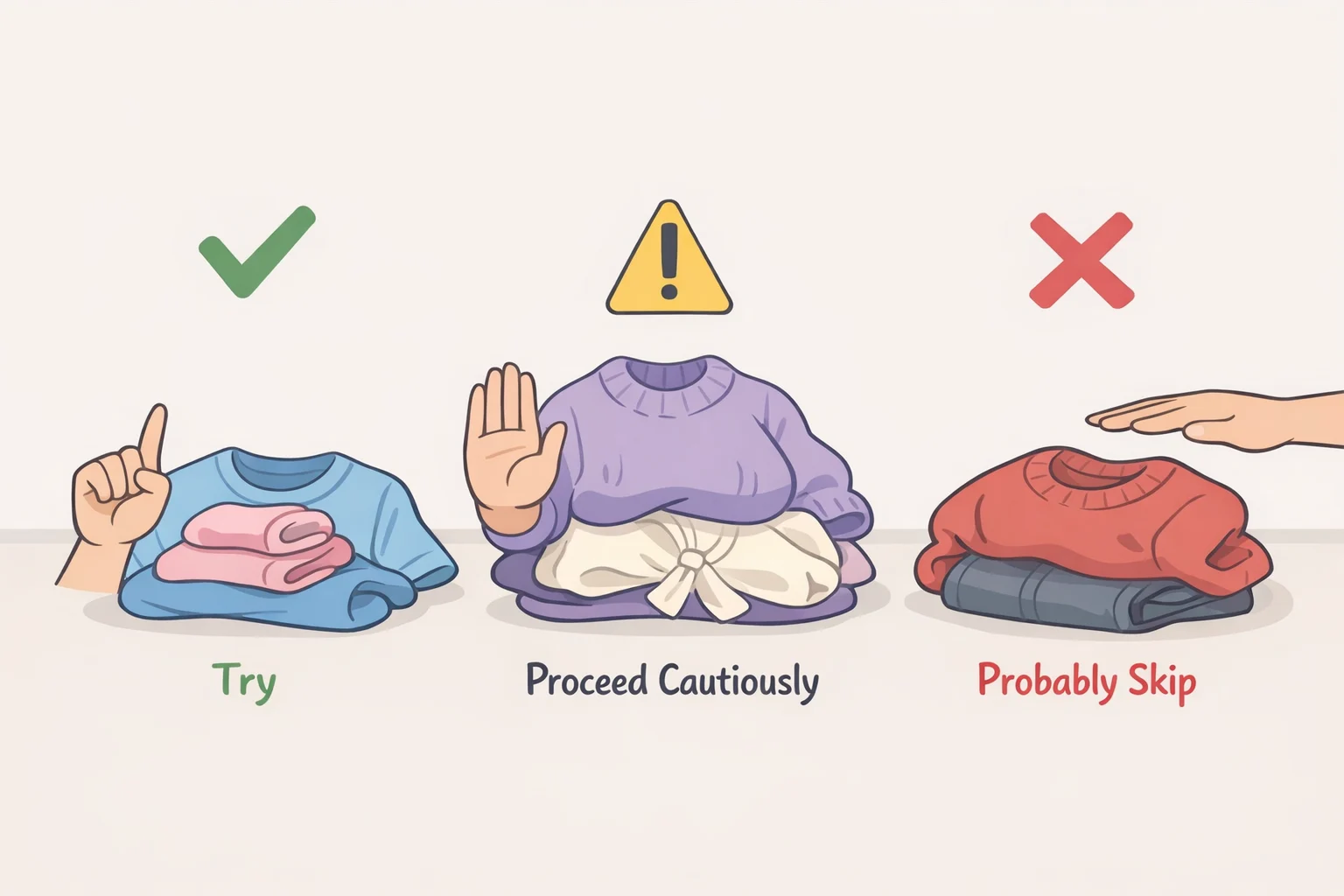
Not every shrunken item is a good candidate, and knowing that before soaking something saves a lot of wasted effort. The fiber science above points to an answer: fabrics that shrank through simple relaxation, like cotton, wool, and cotton-blend knits, have some natural stretch to give back once lubricated. Fabrics that resist through their molecular structure, or that shrank through wool's felting process, have far less room to move no matter how much conditioner gets worked into them.
A quick way to sort candidates:
- Worth trying: lightly shrunken cotton, wool, or knit blends, where the change feels like half a size, not several inches.
- Proceed cautiously: synthetic blends like polyester. Their crystalline polymer structure resists the fiber reversion natural fibers go through (The Conversation, last year), so pulling too hard risks overstretching the fabric rather than restoring its shape.
- Probably skip it: silk and other tightly woven, delicate fabrics, along with wool that has fully felted into a dense, matted texture. Felting is structural entanglement, not fiber relaxation, and that kind of tangle is considerably harder to undo (The Conversation, last year).
For wool specifically, specialized lanolin-based conditioners such as Eucalan may work better than standard hair conditioner, since lanolin is suited to wool and other protein-based fibers (WonderHowTo, two months ago). That's a narrower claim than "it loosens felted bonds," and worth keeping in mind: the evidence supports lanolin being gentler on protein fibers generally, not that it can undo a fully felted sweater.
How to fix shrunken clothes at home
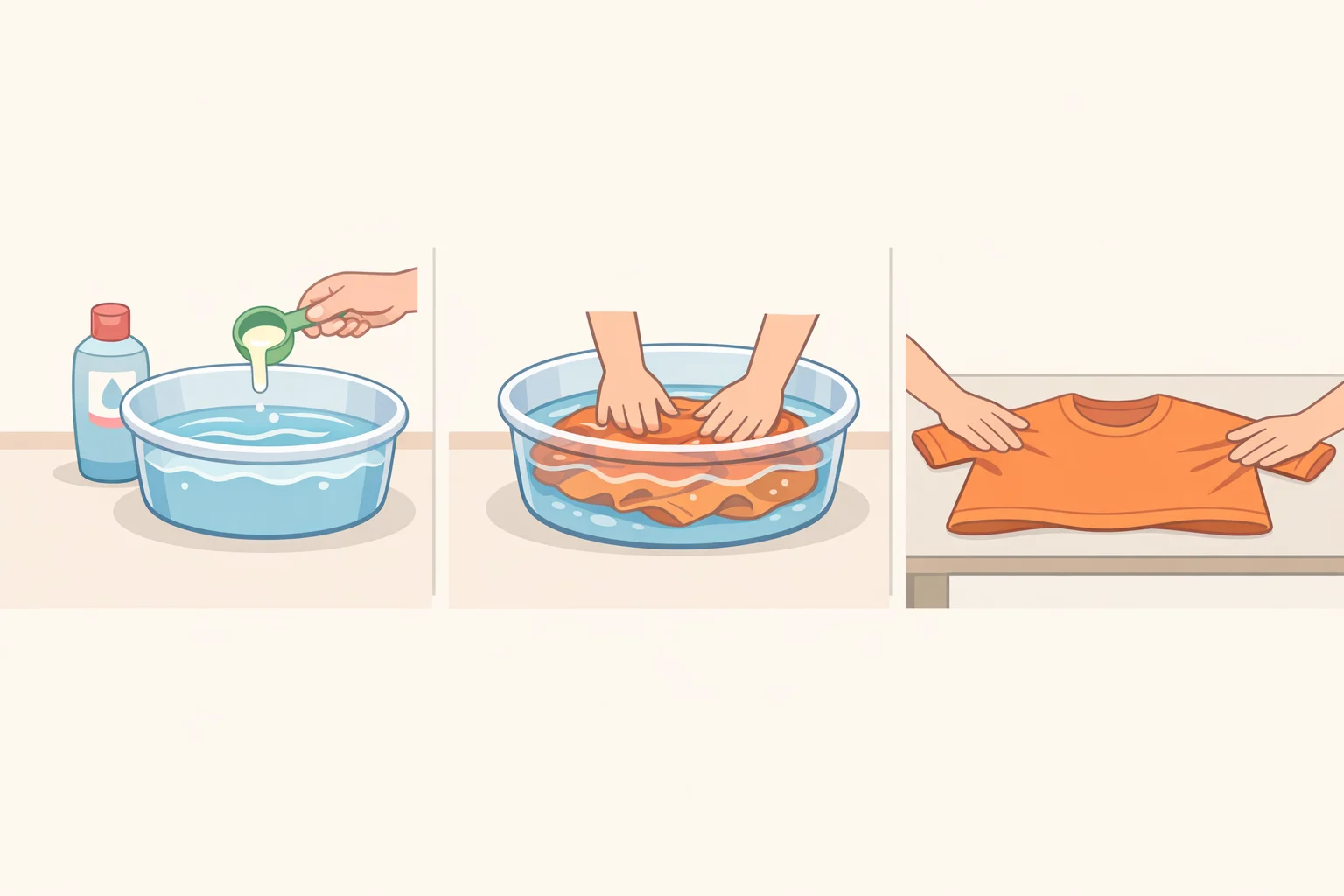
If a garment clears the candidate check, the process itself is straightforward. Mix roughly one tablespoon of hair conditioner per liter of lukewarm water, fully submerge the item, and let it soak for about 30 minutes (The Conversation, last year). Rinse the conditioner out, then gently stretch the fabric back toward its desired shape and lay it flat, or peg it under light tension, to air-dry. If the fabric is unfamiliar, test the technique on a small, hidden area first before committing the whole garment.
Even a careful soak is only half the story. What matters more is whether the size holds after the garment's next trip through the wash, and that's the test most viral tutorials skip entirely.
Preventing shrinkage by fabric type
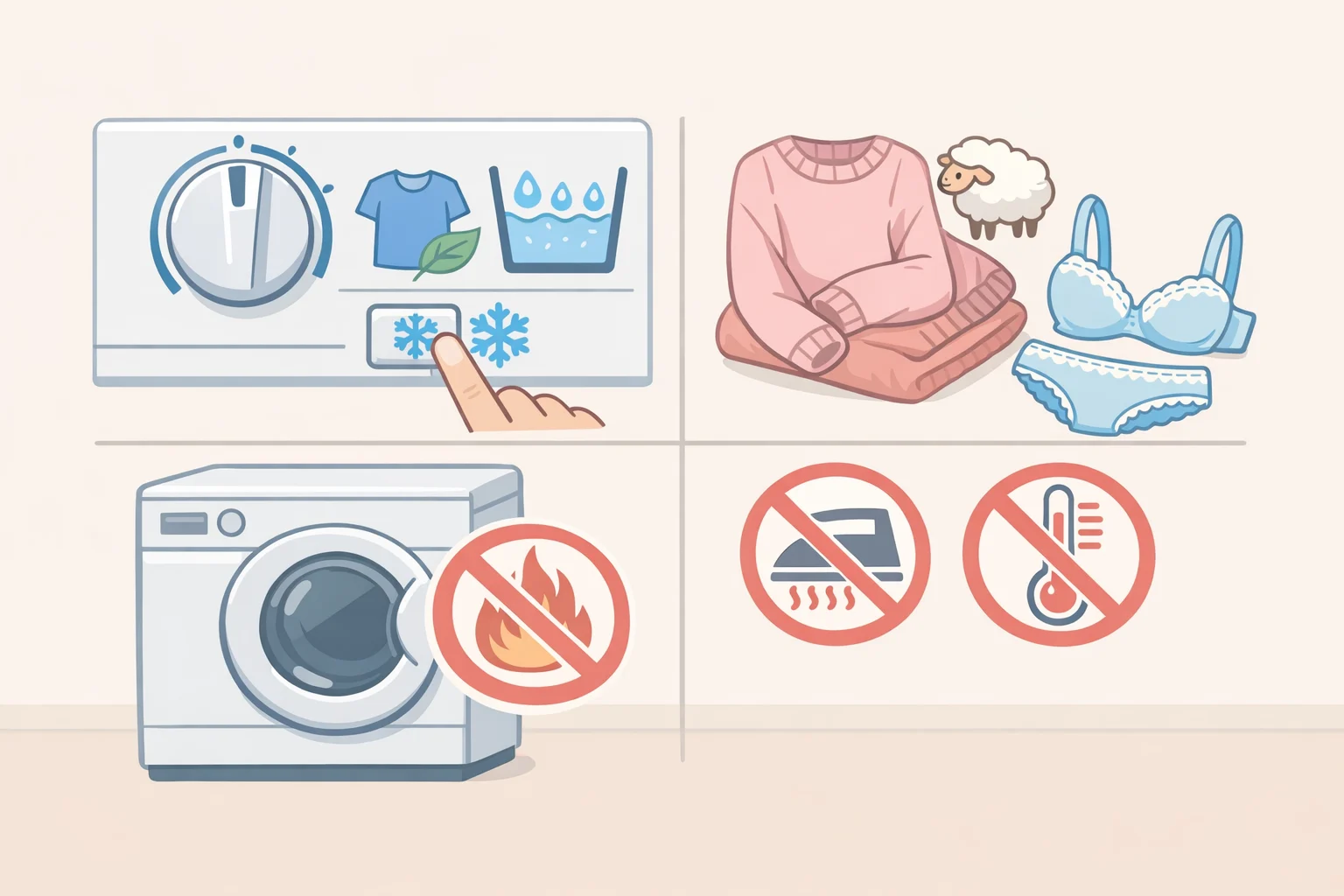
Every credible source on this topic lands in the same place: prevention, not recovery, is the strategy that reliably works (Good Housekeeping, two months ago; The Conversation, last year). The specific habits differ by fiber.
For cotton and rayon, cold water paired with the lowest spin speed and gentlest cycle available preserves the hydrogen bonds keeping cellulose fibers in their extended position. When in doubt, choose the delicate setting (The Conversation, last year). For wool, the culprits are heat and forceful tumbling, the exact combination that triggers felting, so avoiding both in the wash and the dryer matters more than any post-shrink remedy (Good Housekeeping, two months ago). For silk and other delicates, the safer bet is following the care label closely and skipping experimental reshaping altogether, since these fabrics don't respond predictably to stretching. The care label isn't a suggestion (WonderHowTo, two months ago).
The margins here are tighter than most people assume. Shrinkage beyond roughly 2 to 3% is enough to cause a noticeably worse fit, even though the clothing industry itself builds in tolerance for up to about 5% shrinkage as a manufacturing standard (WonderHowTo, two months ago; The Conversation, earlier this year). A garment can shrink within what the manufacturer considers normal and still feel meaningfully tighter to the person wearing it.
What this means for your closet
None of this makes the conditioner hack a scam, exactly. It's real chemistry doing a small, temporary job, not the fix the captions describe, and the hype around it outran what any lubricant can actually deliver.
The right test for any unshrinking method, homemade or store-bought, is whether the result survives repeated washes, not how the garment looks the moment it comes out of the tub (Good Housekeeping, two months ago). By that standard, nothing on the market has fully cleared the bar yet. Until something does, matching water temperature, cycle, and drying method to the fiber in question does more to protect a wardrobe than any rescue attempt ever will. Start there, and the next viral soak becomes a curiosity rather than an emergency.