How to Watch the Perseid Meteor Shower 2026 Tonight
Tonight, August 12 into the early hours of August 13, marks the peak of the 2026 Perseid meteor shower. A new Moon means the sky will be free of moonlight interference, one of the more favorable alignments skywatchers get in a given year, though clouds, haze, and local light pollution can still spoil the view regardless of the Moon's phase (NASA). This guide covers how to watch the Perseid meteor shower 2026: when to head outside, how many meteors you can realistically expect, how to set up your spot, and what to do if clouds or your latitude get in the way.
The short version: don't bother going out right after dinner. The real show builds after midnight and gets dramatically better between 1 and 4 a.m. local daylight time, when the shower's radiant climbs higher in the sky (American Meteor Society). No telescope required. Just a dark spot, a bit of patience, and a willingness to lose some sleep.
When is the Perseid meteor shower peak in 2026?
Video of the Day
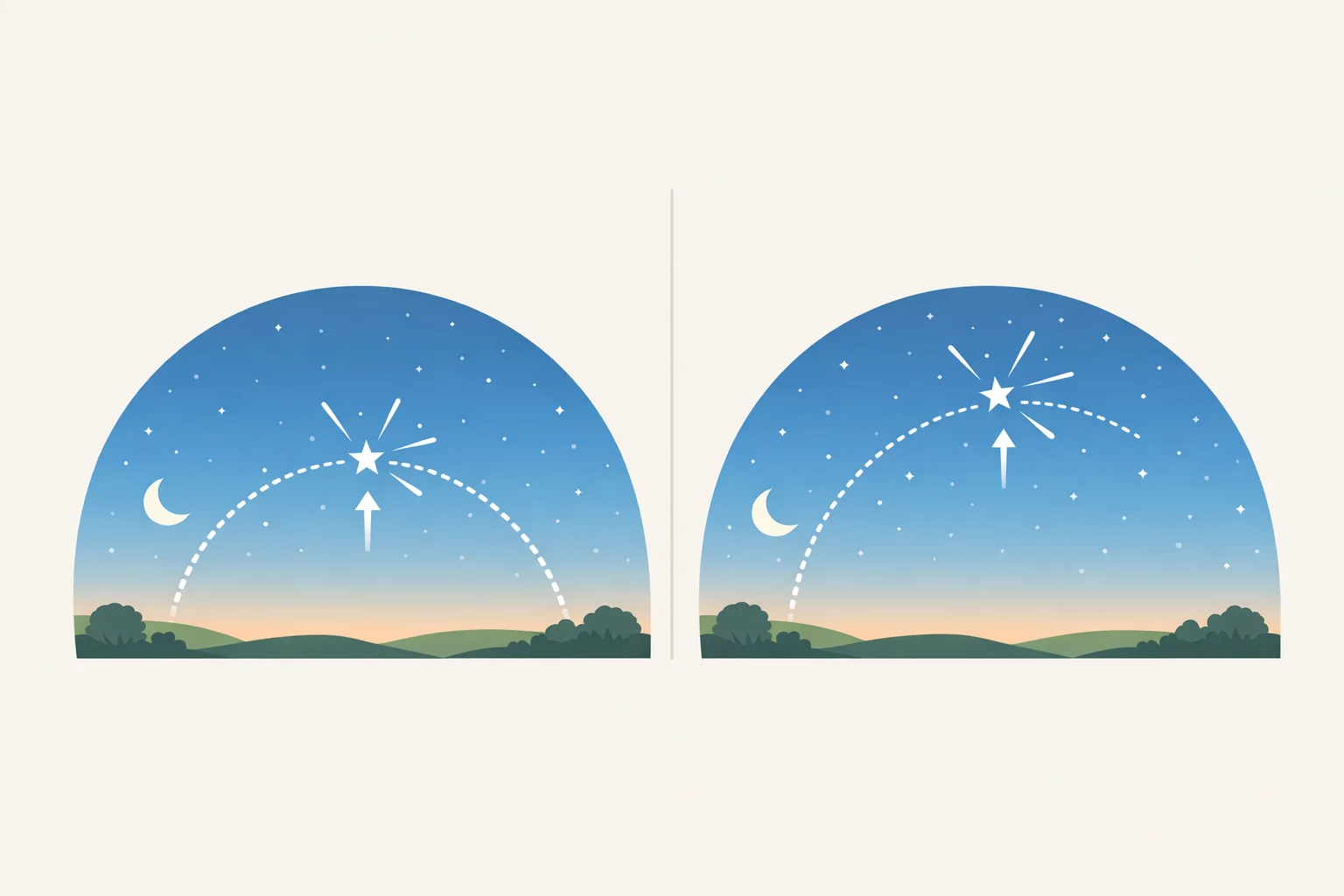
Peak activity spans tonight through dawn tomorrow, and NASA points to the new Moon phase as the reason 2026 offers unusually dark skies for this specific peak (NASA). EarthSky pins the precise moment of maximum at 14:53 UTC on August 13, which falls during daylight hours across North America, making the mornings of both August 12 and 13 the strongest windows for catching the shower near its best (EarthSky).
The run-up to tonight explains why the timing matters so much. The Moon reached its last quarter phase on August 5, and its glow lingered near the Perseid radiant through August 8 as it crossed the constellations Aries and Taurus, washing out fainter meteors during that stretch (AMS). By August 9, a thin crescent had drifted into Gemini and stopped interfering, and it slips into new phase this week, which is why tonight's sky is about as dark as this shower gets (AMS; EarthSky).
AMS's forecast lays out how the night should unfold hour by hour. Expect roughly 5 meteors per hour at nightfall, climbing to about 10 by midnight, then accelerating to nearly 40 per hour by 3 a.m. local daylight time (AMS). That's not a straight line to a plateau. Rates should, in theory, keep climbing until twilight begins, though AMS notes that observers often see activity ease slightly during the final dark hour before dawn (AMS).
The reason later is so much better comes down to geometry. By midnight, the Perseid radiant, the point in the constellation Perseus from which the meteors appear to stream, sits only about a third of the way up the sky. By 4 a.m., it has climbed to roughly two-thirds up, putting an estimated 90% of all Perseid activity within view (AMS). That single fact is the most useful piece of information here: set an alarm for the 1 to 4 a.m. window instead of glancing up after dinner and calling it a night.
Video of the Day
How to watch the Perseid meteor shower 2026: the best viewing plan
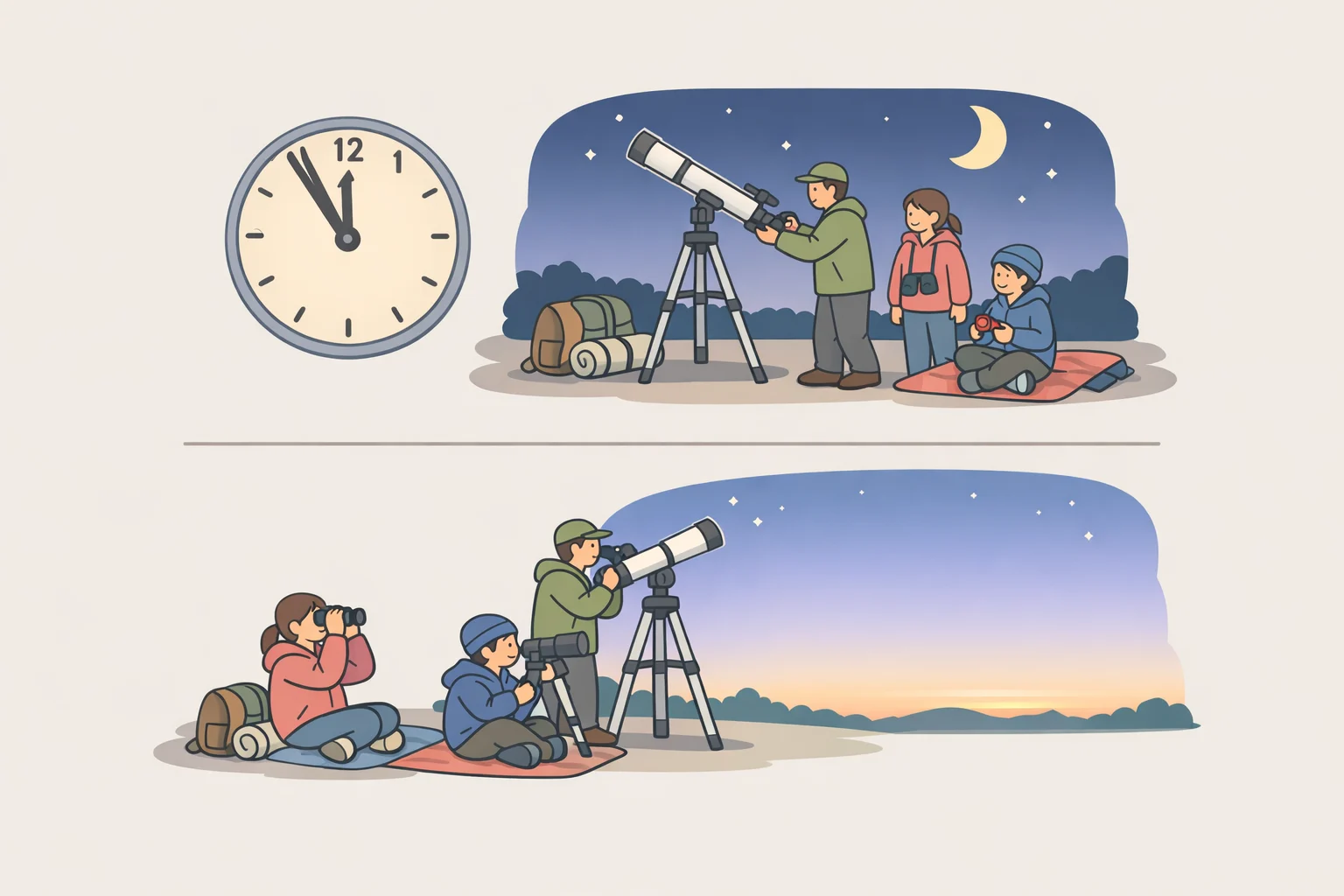
Put simply, the plan is to get to a dark location, arrive before 1 a.m. if you can manage it, and stay until the sky starts to brighten before dawn. NASA's own advice echoes this: find dark skies, give your eyes time to adjust, and look up (NASA).
Timing within that window still matters. Perseid meteors are visible at any hour of the night, but the AMS breakdown makes clear that the payoff for staying up compounds the later you go, from single digits at dusk to nearly 40 per hour heading into predawn (AMS). If you can only manage one alarm tonight, set it for 2 or 3 a.m., not midnight.
How many meteors will you actually see, and why the estimates vary
Different sources disagree on the headline number, and it's worth understanding why before you set expectations. NASA cites a potential 50 to 100 meteors per hour under ideal conditions, and in rare years, brief bursts have reportedly reached as many as 200 (NASA Science). EarthSky says dark-sky observers frequently report 90 or more per hour under a moonless sky (EarthSky). AMS's own forecast, built from direct observation rather than theoretical maximums, tops out closer to 40 per hour, and the organization explicitly flags that this is lower than many other published predictions for this year's shower (AMS).
The gap comes down to a measurement most casual skywatchers have never heard of: the zenithal hourly rate. That figure assumes the radiant sits directly overhead and the sky is dark enough to reveal even faint meteors, a combination that almost never happens in practice. AMS notes that theoretical rates only match what an observer actually sees under superbly dark skies with a limiting magnitude beyond +7.0, a level of darkness most backyards, and even most rural sites, never reach (AMS).
So treat the big numbers accordingly. A realistic, evidence-based expectation for tonight is a rate approaching AMS's local forecast of nearly 40 meteors per hour by 3 a.m. from a genuinely dark site (AMS). Triple-digit counts describe the ideal-conditions ceiling that NASA and EarthSky report, not what most people watching from an actual field or backyard should plan around. One thing works in your favor either way: on the night of maximum, more than 90% of the meteors you spot will actually be Perseids rather than the usual background "sporadics," so there's little guesswork in identifying what streaked past (AMS). Perseids also have a reputation for being colorful and leaving persistent glowing trains, which tends to make even a leaner night feel worthwhile (EarthSky).
Setting up for peak night: a step-by-step guide
No equipment is required. Bring a reclining chair or a blanket, dress warmer than you think you need to, and set aside at least an hour sometime between midnight and dawn.
- Choose the darkest site you can reasonably reach. AMS's advice is straightforward on this point: try to view from the darkest location available, since light pollution has an outsized effect on how many meteors register to the eye (AMS).
- Give your eyes 20 to 30 minutes to adjust before watching in earnest. NASA recommends this window specifically, before you start scanning the sky in earnest (NASA).
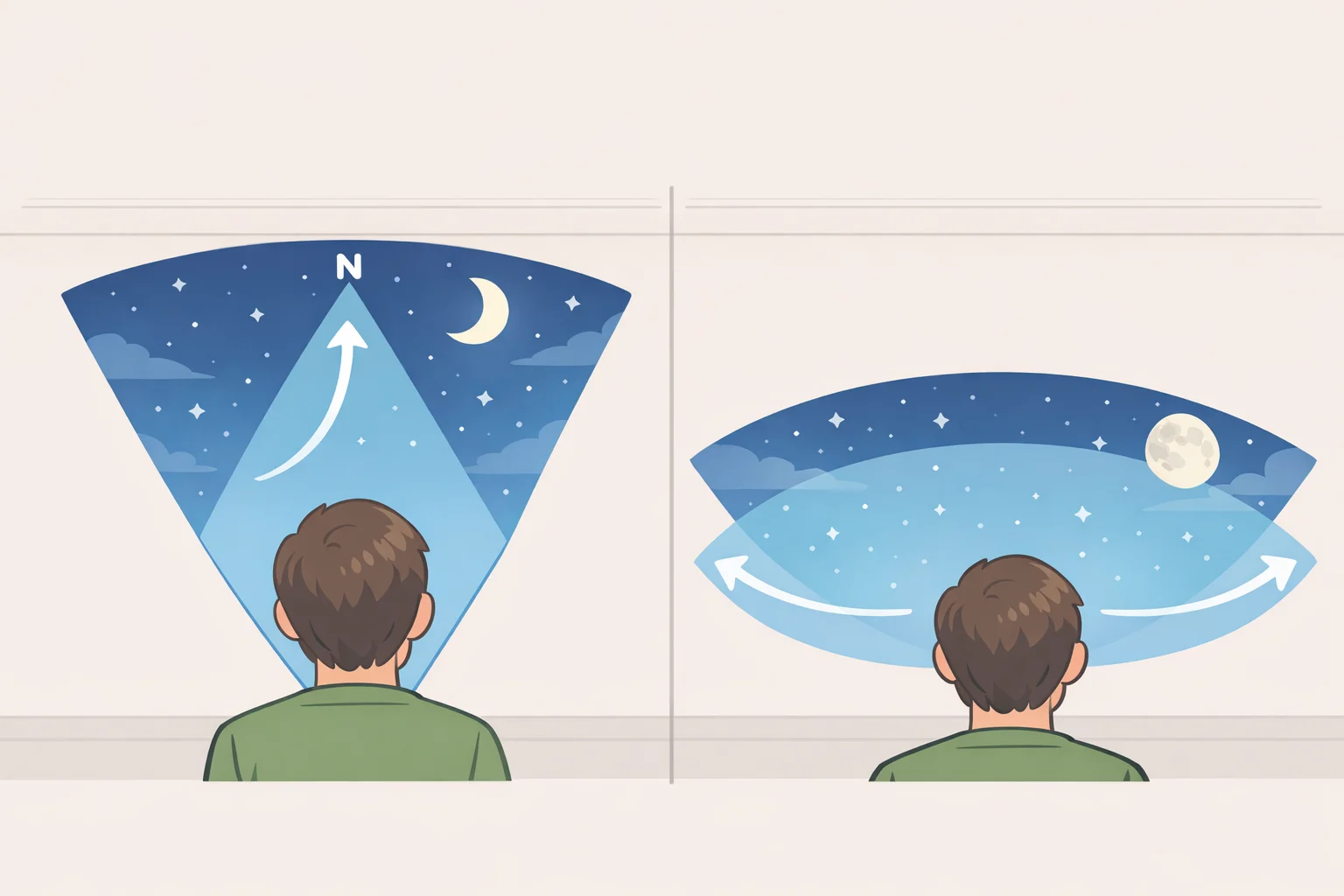
- Orient yourself based on when you're watching. Early in the evening, face north and look about halfway up the sky. After midnight, as the radiant rises higher, meteors will streak from all directions, so a wide, relaxed gaze works better than fixating on one patch of sky (AMS; EarthSky).
- Plan to watch for at least a full hour. Meteor activity comes in lulls and short bursts, and AMS specifically recommends an hour-long minimum so a lucky streak or a quiet stretch doesn't skew your sense of how the shower is performing (AMS).
- Don't stare directly at the radiant in Perseus. Meteors are easier to catch streaking away from that point than arriving at it, so keep your field of view wide rather than locked on one spot.
Anyone planning to photograph the shower should aim the camera at least 45 degrees away from the radiant and frame the shot so the horizon sits near the bottom of the image, which gives meteor trails the longest possible path across the sensor (AMS).
Can't watch tonight? Backup nights and location limits

Clouds happen. If tonight is a bust where you are, the shower doesn't vanish at dawn. NASA Science notes that viewing should stay good on the nights immediately before and after the peak, and Perseid activity continues in smaller numbers through the end of August (NASA Science). AMS's outlook shows the buildup was already underway before tonight: about 10 meteors per hour on the morning of August 9, climbing to roughly 15, then 20, then 30 on the mornings that followed (AMS). The shower itself runs from mid-to-late July through late August, though rates at the very start and end of that window drop below one meteor per hour, the faint tail end of debris shed long ago by comet 109P/Swift-Tuttle (AMS).
Geography sets a hard limit that most viewing guides skip past. Perseids are only visible between roughly 60° N and 40° S. North of that line, the sky never gets fully dark this time of year, washing out the fainter meteors in perpetual twilight. South of 40° S, the radiant never clears the horizon at all, so there's nothing to see regardless of sky darkness (AMS).
For anyone who wants to do more than watch, NASA is livestreaming a meteor watch party starting at midnight ET on August 13 on YouTube, a decent fallback for cloudy skies or apartment dwellers without a dark-sky escape (NASA). AMS also points observers toward the free International Meteor Organization reporting form. Submitting a count takes a few minutes, requires registration but no payment, and feeds the Visual Meteor Database that astronomers use to track long-term changes in meteor activity (AMS).
The plan for tonight
Get to the darkest site available, aim for the window between 1 and 4 a.m. local daylight time, let your eyes adjust before you start counting, and watch for at least an hour. Expect activity approaching AMS's local forecast of nearly 40 meteors per hour under clear, dark skies rather than the triple-digit numbers reserved for theoretical best-case scenarios (AMS; NASA).
If clouds roll in or the timing doesn't work out, the shower stays active into late August, and the nights right around tonight's peak still carry meaningful rates. Either way, the new Moon overhead this week is the rarer piece of luck. Clear skies are the only variable left to hope for.