Easy Home Organizing Ideas for Lazy People: 4 Systems
That basket of mail that reappears on the counter every week isn't a character flaw. A contributor to NAPO's blog put it plainly last month: when something keeps piling up in the same spot, that's not failure, it's a clue about where the household's system actually breaks down.
That's the whole premise behind easy home organizing ideas for lazy people, or what could just as easily be called low-effort decluttering tips. These systems don't work because they ask less of a person. They work because they remove the decision at the exact moment an item enters the house. As the same NAPO contributor puts it, sometimes people don't need more motivation, they need a nudge (last month). Just Organized by Taya draws a related line: cleaning deals with dirt, organizing deals with decisions, and it's the decisions that keep unraveling without a system.
This isn't just a tidiness trend, either. Researchers studying a citizen-science decluttering project in Germany found participants described motivations including overcrowded homes and a desire for fixed places for their belongings and psychological relief (Frontiers in Sustainability, 2022). A separate UK survey of 501 adults, conducted in 2020 and 2021, set out to measure how clutter connects to stress, mood, and life satisfaction, evidence that the question is being taken seriously even if this article won't overstate what the results show (UK Data Service, record published 2024).
What follows works through one system, the entryway, in full: a trigger item, one dedicated home for it, a capacity limit, and a reset. Three more everyday hot spots get the same shape in shorter form, and a final section covers what to do when any of it stops working.
What micro-organizing actually fixes (and what it doesn't)
Video of the Day
The standard here isn't a perfect-looking home. It's, in the NAPO contributor's words, "a system that works, and keeps working" (NAPO's blog, last month). Repeat pileups get treated as design feedback rather than a moral failing: what feels normal eventually becomes automatic, which is why the setup matters more than the motivation behind it.
There's a boundary worth drawing early. A hook or a basket only works up to a point. If a container is consistently overflowing, that's a volume problem, not a placement problem, and the fix is removing or relocating items, or sizing up the container, before buying another organizing product. No source here measures that threshold precisely; treat it as a practical rule rather than a data point.
One more caveat before the practical part starts. "Micro-organizing" is the term this guide is using to describe a cluster of related practices, habit design, drop zones, maintenance rhythms, borrowed loosely rather than pulled from one body of research. Treat the specific numbers and rules of thumb below as tested advice from the people who use them daily, not settled science.
Video of the Day
The full worked example: building an entryway drop zone
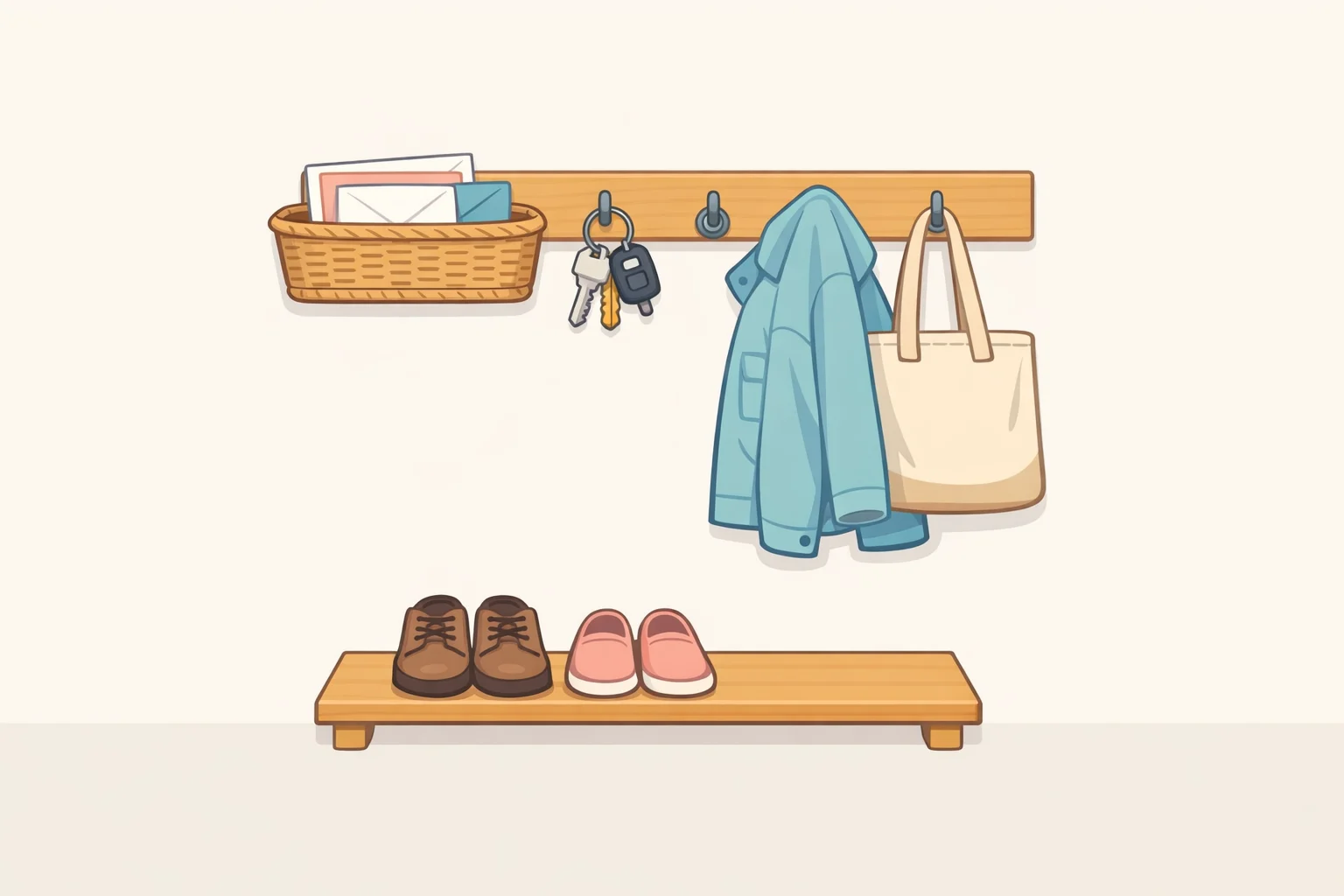
An entryway drop zone doesn't require a mudroom or a renovation. Home Organize Hacks puts the real footprint at roughly 24 to 48 inches of wall, its own working rule rather than a fixed standard (last month). A single hook and a shallow basket on an existing shelf handle the basic version; a shoe tray and a key bowl along that same stretch of wall handle more.
- Give every item one job. Keys go up high in a bowl or on a hook, shoes stay low, bags hang at shoulder height, mail gets one basket, and coats go on hooks, never the bench (Home Organize Hacks, last month).
- Hang the key hook first. Lost keys generate more doorway stress than anything else in the zone, which makes a single wall hook the fastest win before anything else gets added (Home Organize Hacks, last month).
- Scale hooks to the household, not the average. One outlet's rule of thumb, three hooks per person for a coat, a bag, and a wildcard, works out to 12 hooks for a family of four; a person living alone might need only three (Home Organize Hacks, last month). Treat it as that outlet's starting ratio, not a standard.
- Go renter-friendly if the wall isn't yours to drill. Adhesive hooks, an over-the-door shoe rack, and a tension rod set up in an afternoon and leave no damage behind, provided they're rated for the weight of what's hanging and installed and removed according to the manufacturer's surface instructions. In the same outlet's informal test of five adhesive-hook brands, only 3M Command's large coat hooks held a wet raincoat without slipping by dinner; that's one site's test, not an independent review (Home Organize Hacks, last month).
Two gotchas are worth flagging before the wall gets loaded up. A boot tray earns its space if the zone sits over carpet or hardwood: it can help keep wet or snowy footwear off the floor during rainy months, a low-cost add-on that outlet calls out as worth doing (Home Organize Hacks, last month). And whatever gets added, the path to the exit needs to stay clear; an overloaded entryway becomes a safety issue in narrow hallways, not just a clutter one, per the same guide's advice (Home Organize Hacks, last month).
Easy home organizing ideas for lazy people: three clutter hot spots
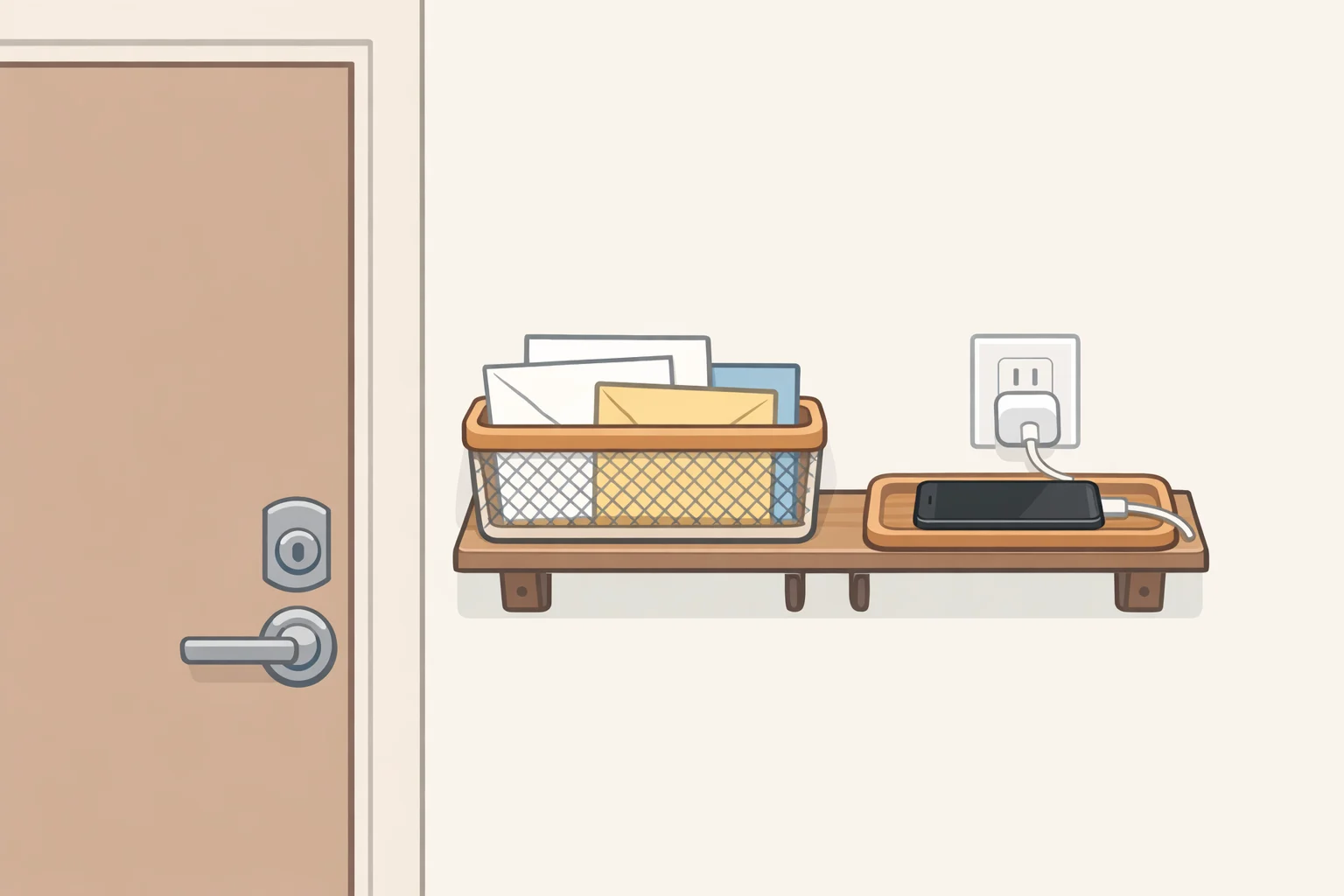
Mail station
- Trigger: mail lands wherever someone is standing when they open the door, usually the kitchen counter, which is already losing that job (Home Organize Hacks, last month).
- Setup: one basket or tray, positioned where the mail actually gets opened.
- Capacity: capped at whatever fits without forcing the lid shut.
- Reset: emptied weekly, so it never turns into a second inbox.
- If it fails: a basket that's full every week might mean too much mail is entering the house in the first place. Cutting junk mail and catalog subscriptions is worth trying before adding a second tray.
Charging station
- Trigger: phones and cords land on whatever surface sits closest to an outlet at day's end.
- Setup: a small tray or drawer divider next to that outlet gives them a default landing place.
- Capacity: capped at the number of cords the household uses daily, not every cord it's ever owned.
- Reset: a nightly two-minute pass, sort, toss, return, adapted from the same routine one organizer recommends for flat surfaces generally (Just Organized by Taya, earlier this year).
- If it fails: cords that keep missing the tray usually mean the tray is in the wrong spot. Move it to where the cord actually gets used, not where it looks tidiest.
Bedroom laundry
- Trigger: worn clothes land on a chair, the floor, or the bed because the hamper is inconveniently placed or already full.
- Setup: one hamper, positioned exactly where clothes come off, not tucked inside a closet.
- Capacity: full means it gets run, not stacked beside.
- Reset: laundry day, whatever cadence works for the household.
- If it fails: a second hamper may only hide the capacity problem rather than solve it. Try running loads more often, or owning fewer clothes than the hamper can hold, before adding more storage.
Any of the above scales down for children: hooks mounted around 40 inches off the floor, a low bin within reach, and photo labels for kids too young to read text, recommendations from that outlet's family setup rather than a universal child-safety standard (Home Organize Hacks, last month). A bin a child can use independently beats a tidy system only one adult can maintain.
Participants in the German citizen-science project described wanting less overcrowding, fixed places for their belongings, and psychological relief (Frontiers in Sustainability, 2022). Those responses show why participants viewed clutter as more than an aesthetic problem; they do not show that organizing directly reduces stress.
What to do when a system stops working
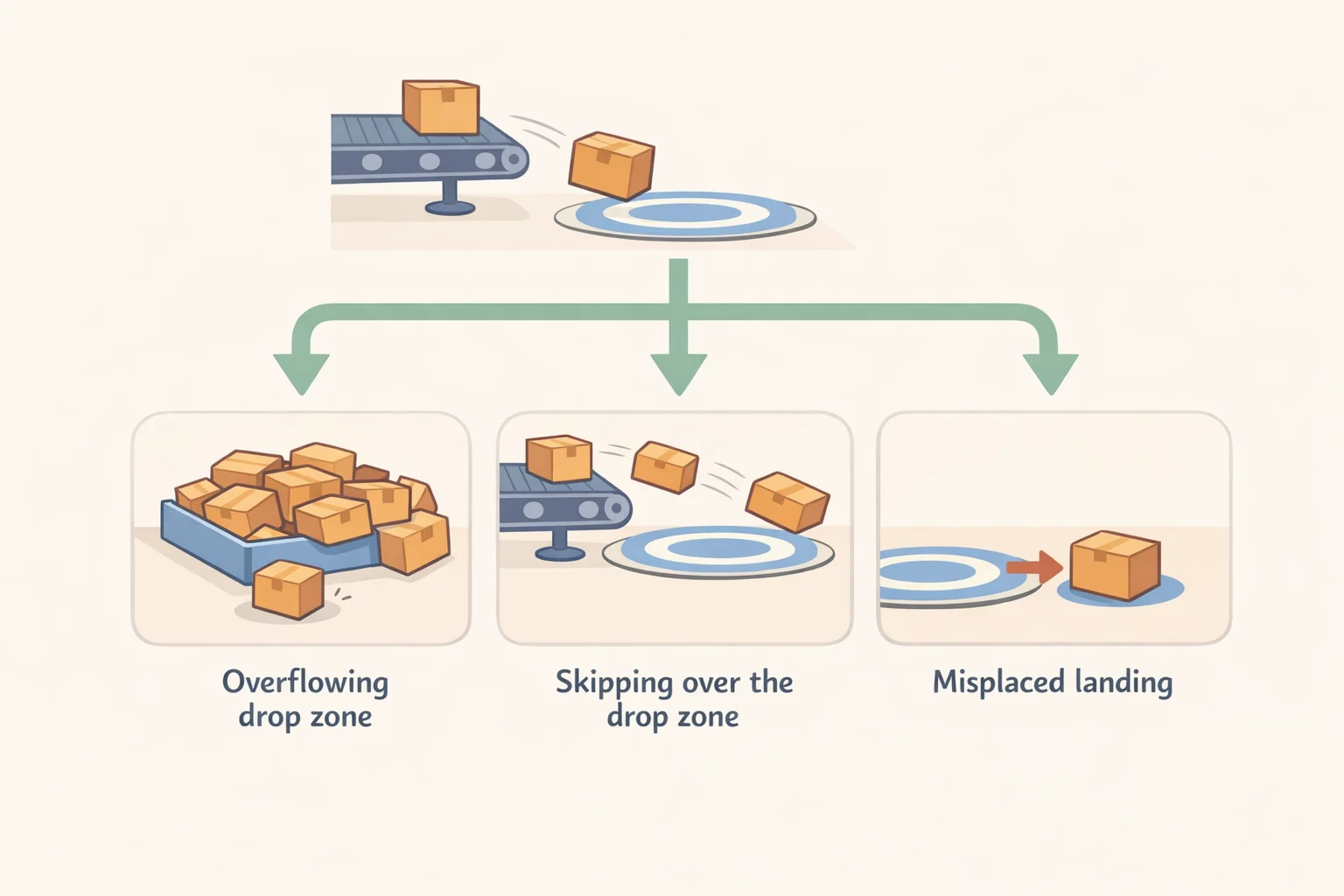
Sometimes a drop zone or a hamper works fine for a few weeks, then quietly fails, and the fix isn't more willpower. Before buying another bin, work through what's actually going wrong.
- Items keep landing somewhere else. Move the storage to that spot for a week before concluding the household is ignoring the system. Often the item is pointing to where it actually wants to live.
- The container overflows every time. Set a visible limit, a specific shelf, a fill line, a maximum stack height, and decide in advance what leaves when that limit is hit.
- People keep skipping it. Count the steps between where the item lands and where it's supposed to go. If it's more than one or two, remove a step rather than adding a reminder.
- One person ends up maintaining it every week. Assign the reset to whoever creates that category of clutter, not automatically to whoever happens to notice it first.
That last point touches on a gap worth naming plainly: none of the sourced material closely examines how maintenance labor gets divided among household members. The default in many homes is one person, and lazy-girl framing can quietly hand that person the weekly reset without anyone deciding it that way on purpose.
A maintenance habit that keeps the system usable
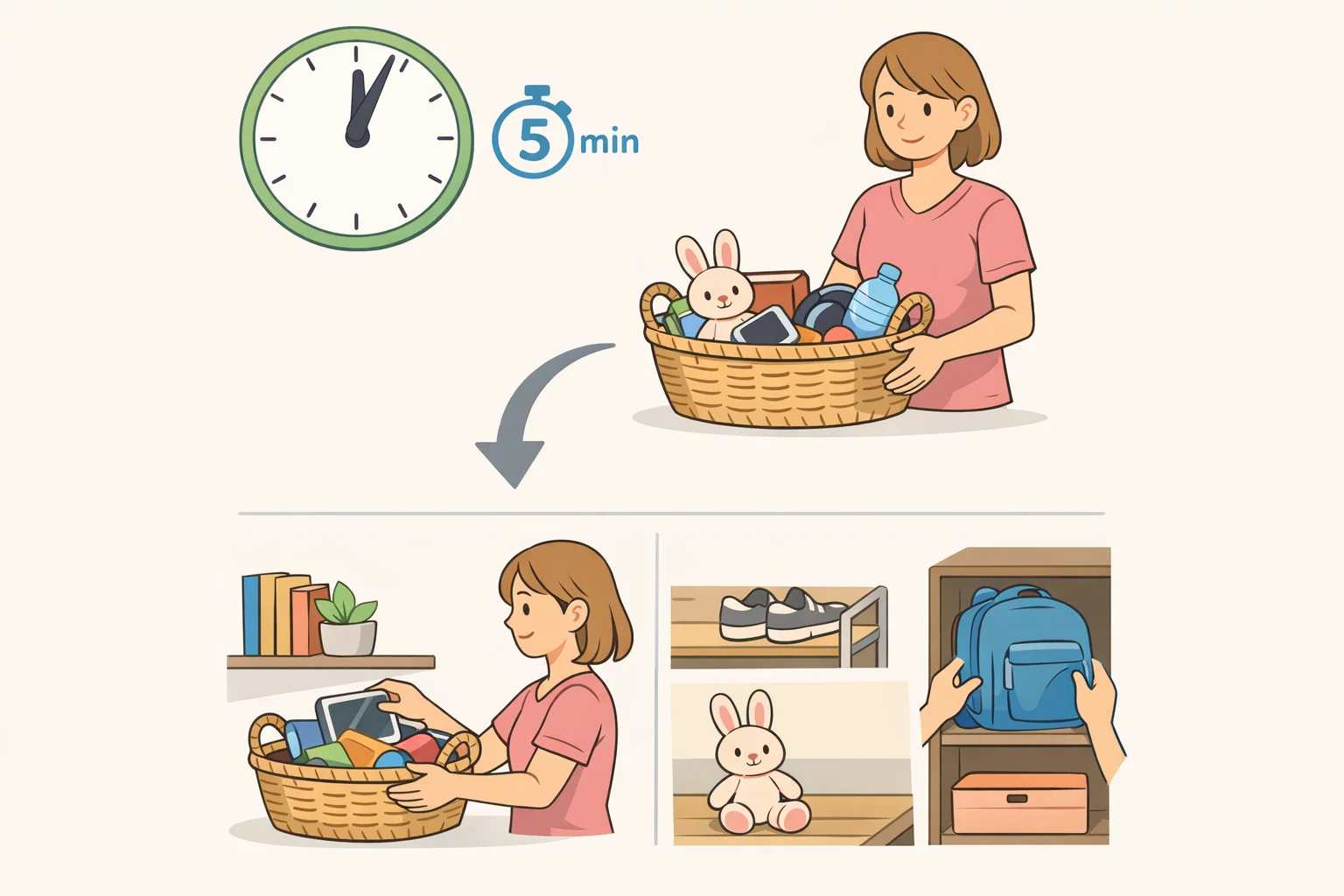
Home Organize Hacks built its own entryway system around a five-minute weekly reset, clearing the mail basket, returning stray items, wiping surfaces, and presents that as enough to keep it functional (last month). That's one outlet's recommendation for its own setup, not a guarantee for every household; anything beyond it counts as optional escalation.
For anyone managing more systems or a larger household, there's a fuller rhythm worth borrowing: a five-to-ten-minute nightly pass on flat surfaces, a monthly 30-to-45-minute session, and a seasonal pass four times a year (Just Organized by Taya, earlier this year). Treat that as an add-on for people who want more structure, not a baseline everyone needs.
Expect the zone to look imperfect within days; even a well-run system tends to collect a stray grocery bag by day three. The bar to aim for, by that outlet's own measure, is a 30-second recovery, not a spotless space (Home Organize Hacks, last month).
Where micro-organizing stops helping
One dedicated home per recurring item, sized to actual capacity, with a weekly reset, is the whole method, and it transfers wherever it's applied.
It doesn't fix a household that owns more than its space can hold. The German researchers behind the citizen-science project flag a version of this gap in their own findings: it's still unclear whether decluttering changes what people buy afterward, or whether the newly freed space just invites more consumption (Frontiers in Sustainability, 2022).
Pick the one spot that collects clutter every single week. Apply the formula to it this weekend, using whatever's already sitting in a drawer somewhere. If next week brings more overflow, treat it as information for a small adjustment, not a reason to start over.