How to prepare for a summer power outage: 9 heat-safety steps
Extreme heat causes more deaths each year than any other weather hazard, according to NWS Springfield, and a summer power outage takes away the tool most homes count on to manage it: air conditioning. Knowing how to prepare for a summer power outage starts with treating it as a heat-safety problem first, not just an inconvenience. The National Weather Service's experimental HeatRisk scale reserves its most severe tier for extended heat that overwhelms people without routine cooling or hydration, along with hospitals and infrastructure, a condition a power outage can make far more dangerous, according to NWS, which ran its national Heat Safety Week two months ago.
Outages aren't only a heat-demand problem. Severe summer storms take down power just as easily: Hurricane Ian caused service interruptions for 2.2 million Florida electricity customers in September 2022, according to the U.S. Department of Energy. Ready.gov notes that outages following a disaster can stretch for several days, a point the agency reiterated in guidance updated earlier this year.
What follows is a nine-step summer power outage checklist, split between what to handle before the power goes out and what to do once it does. Most of it costs nothing but a few minutes of planning. Backup power, covered later, is the one place where budget genuinely shapes the options.
How to prepare for a summer power outage: start with a heat-safety plan
Video of the Day
1. Turn on local weather and outage alerts
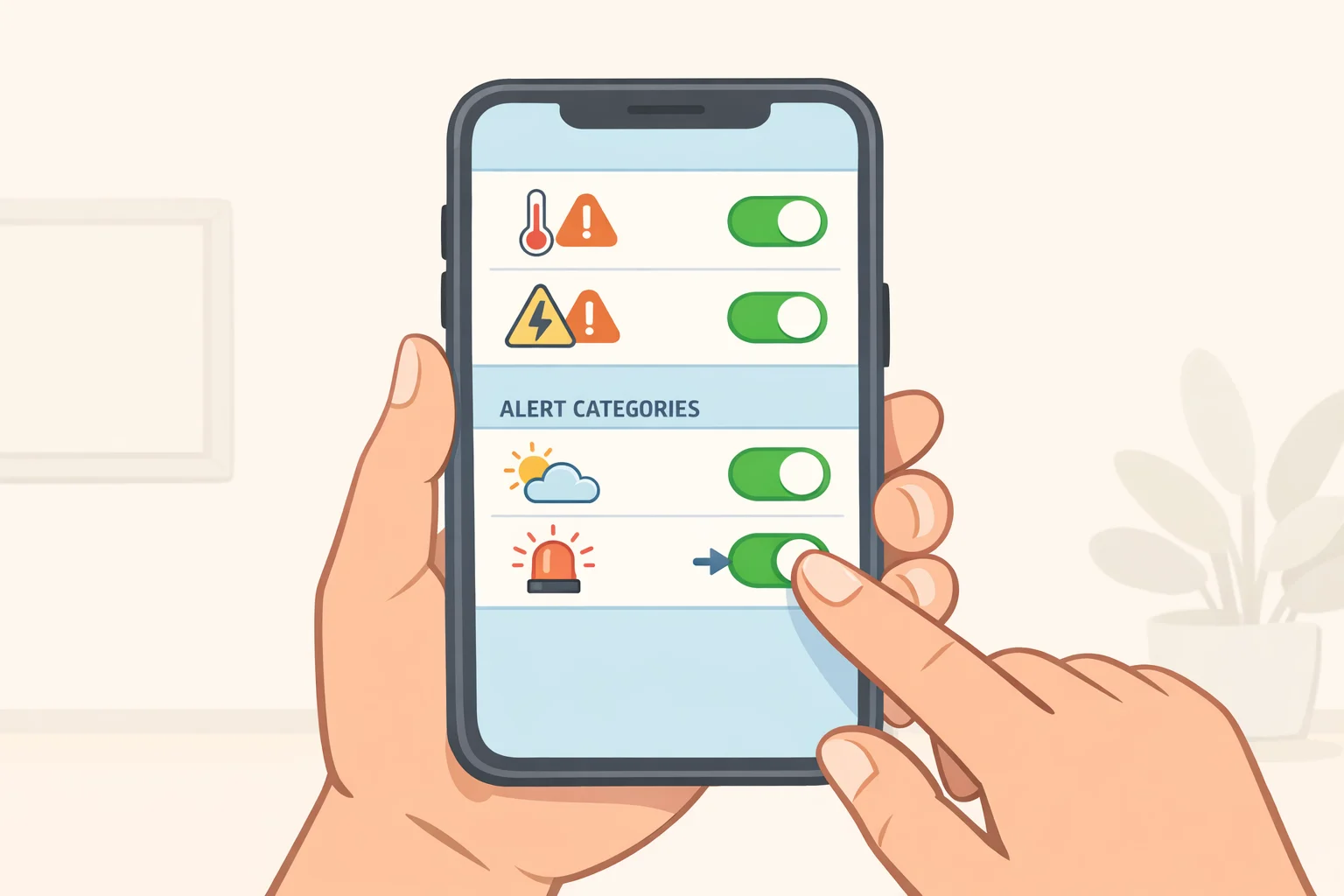
Sign up for local weather alerts wherever the area issues them, since dangerous heat-index values vary by person and by region, according to NWS. A single national number won't tell the whole story for any one household. This is the first move in any summer blackout preparedness plan, and it costs nothing.
Warning language escalates in stages, and it pays to learn them before one fires. In the Springfield NWS material, a "Be Prepared" alert covers dangerous heat expected within 24 hours, while a "Take Action" alert means dangerous heat is already occurring or expected to last 48 hours or more, per NWS Springfield, published three months ago. Those thresholds are regional, so confirm the numbers the local office actually uses.
2. Set a cooling plan, and know who in the house is most at risk
Before the outage: NWS Springfield advises using air conditioning, staying in the shade, and drinking water even without feeling thirsty. Decide now, as a household, where everyone would go if the home stops being livable: a relative's place, a cooled public building, anywhere with reliable air conditioning nearby. This is a planning decision, not a fixed safety rule, so make it before a heat wave forces the question.
Children, older adults, and anyone with a chronic illness face the highest risk from heat exposure, according to NWS. For those households, agree in advance on what triggers the move: a "Take Action"-level alert combined with no working cooling at home is a reasonable line, since that's the point the escalation language treats dangerous heat as sustained rather than passing (see step 1). Waiting to see how someone feels is waiting too long once symptoms start.
Never leave anyone in a closed, parked car, even for a minute. Cracking the windows doesn't help: the source warns that death can occur within 10 minutes, since children's bodies heat up three to five times faster than adults', per NWS Springfield. The same source notes pets face similar danger, with heatstroke possible in as little as 15 minutes, so confirm any cooling destination can take animals too.
Heat cramps, heat exhaustion, and heat stroke are each dangers of extended heat exposure, per NWS. If anyone starts feeling dizzy, don't try to tough it out; seek medical help immediately.
When the power fails, work through the same priorities in order:
- Check on anyone in a high-risk group first: children, older adults, people with chronic illness, and anyone who depends on medication or a powered device (step 5).
- Watch for warning signs of heat illness, especially dizziness, and get medical help right away if they appear.
- Keep drinking water even without feeling thirsty, and keep everyone in the shade or the coolest room available.
- If the home has no working cooling and a vulnerable person isn't improving, move to the backup location decided on above rather than waiting to see how the evening goes.
Video of the Day
How to prepare your home for a power outage: water, food, and the refrigerator
3. Set aside drinking water and a few days of food that needs no cooking
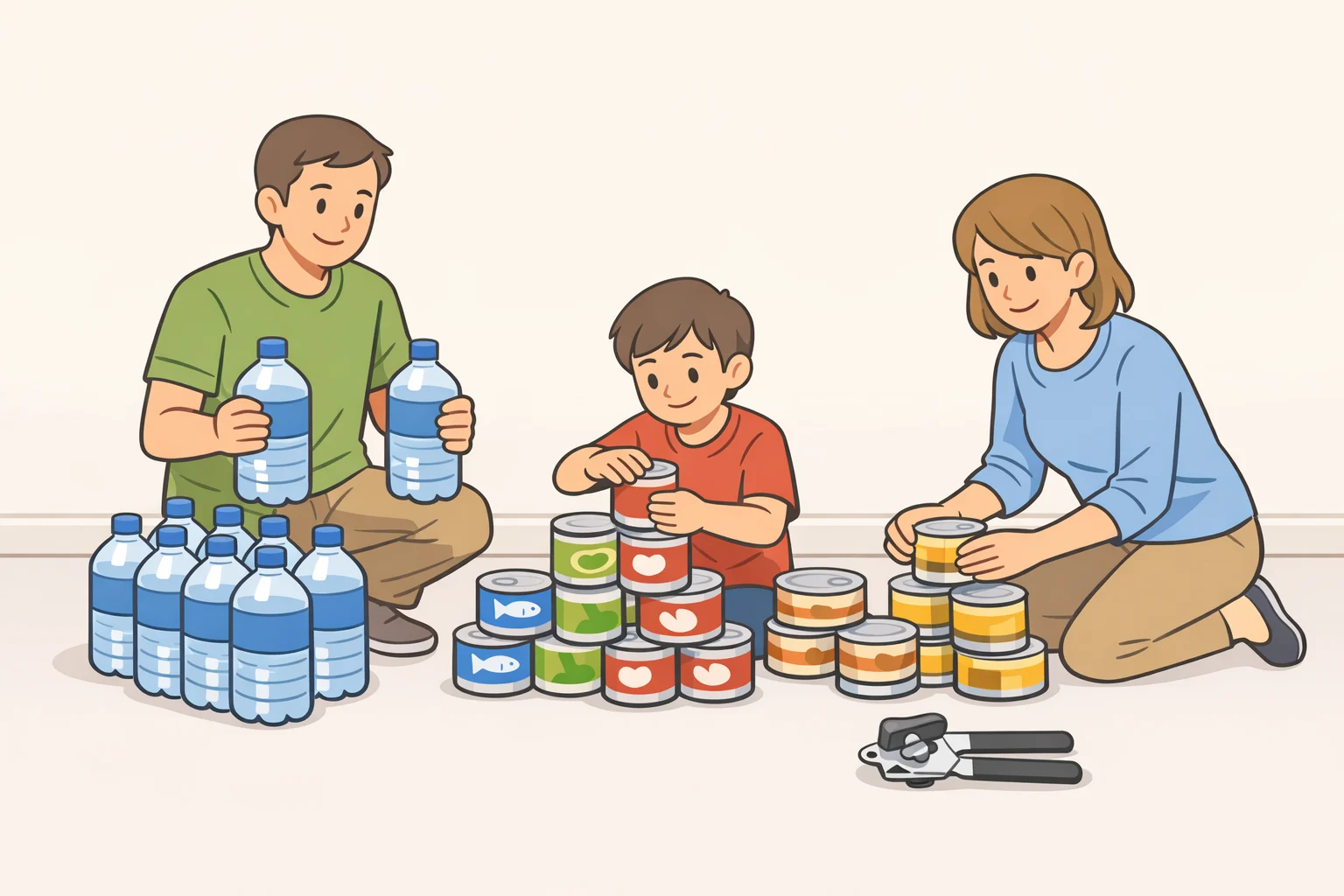
Before the outage: Keep some stored water on hand in case the utility issues a drinking-water or service advisory alongside the outage; a summer blackout doesn't automatically shut off tap water, but the storms that cause one sometimes do. Ready.gov notes that outages following a disaster can last several days, so plan for that stretch rather than assuming service returns quickly. Keep drinking water going even without feeling thirsty, since that habit carries extra weight once air conditioning disappears, per NWS Springfield.
Pair that with a several-day supply of canned goods, dry mixes, and other food that needs no refrigeration, cooking, or water to prepare, which is what Ready.gov recommends. A manual can opener is easy to overlook and essential if the food is canned. Account for special diets, and use ready-to-feed formula for infants; if that isn't available, Ready.gov says to mix formula with bottled or boiled water only as a last resort.
When the power fails: Commercially canned food can be eaten straight from the can without heating, according to Ready.gov, which makes it possible to put together a meal without cooking anything.
4. Get ahead of refrigerator and freezer losses
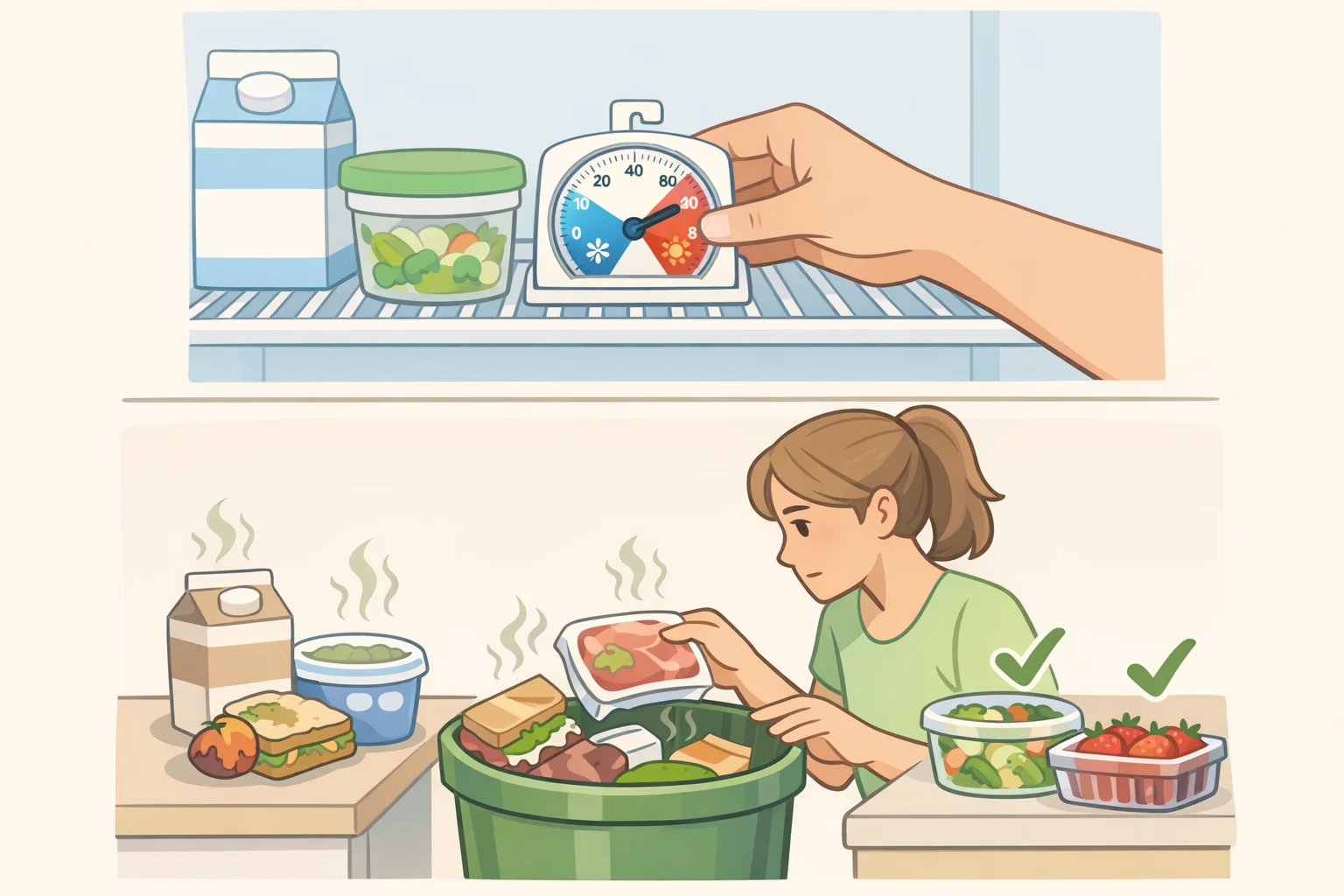
Before the outage: Buy a refrigerator thermometer. Safe storage means 40°F or below; Ready.gov says to discard perishable foods, including meat, poultry, fish, eggs, and leftovers, if they sit above that temperature for two hours or more.
Locate a dry-ice supplier before a heat wave, not during one. About 25 pounds of dry ice can keep a 10-cubic-foot freezer below freezing for three to four days, per Ready.gov. Keep dry ice away from direct contact with food, and handle it only with dry, heavy gloves.
When the power fails: Keep the doors closed as much as possible. A refrigerator that stays closed will keep food cold for about four hours, according to Ready.gov. Thawed food usually stays safe to eat if it's still "refrigerator cold," and can go back in the freezer if it still has ice crystals.
Protect the people who depend on power
5. Plan around medication and any device that needs power or refrigeration
People with chronic illness are among the groups NWS names as especially vulnerable during heat events, which makes this step non-negotiable for those households. If someone depends on refrigerated medication or a powered medical device, such as a CPAP or an oxygen concentrator, contact the pharmacist, prescribing clinician, device manufacturer, and utility before summer arrives and work out an outage plan specific to that medication or device. The two-hour rule that governs food safety doesn't apply to medication, so don't assume it; get a direct answer instead.
Keep a written, updated list of medications and dosages somewhere accessible without power, in case a caregiver or responder needs it fast.
6. Stage lights, batteries, and a way to stay charged
Keep a flashlight, a battery or hand-crank radio, and spare batteries somewhere everyone in the house knows to find. Make charging phones and power banks part of the household routine, not something remembered after the wind picks up.
Storms don't always give much notice. NWS Springfield notes that pulse-thunderstorm microbursts can produce wind gusts over 60 mph with little warning, which is one more reason to keep devices charged as routine rather than waiting on a watch or warning.
Backup power, cooking safety, and staying connected
7. Match backup power to what actually needs to run
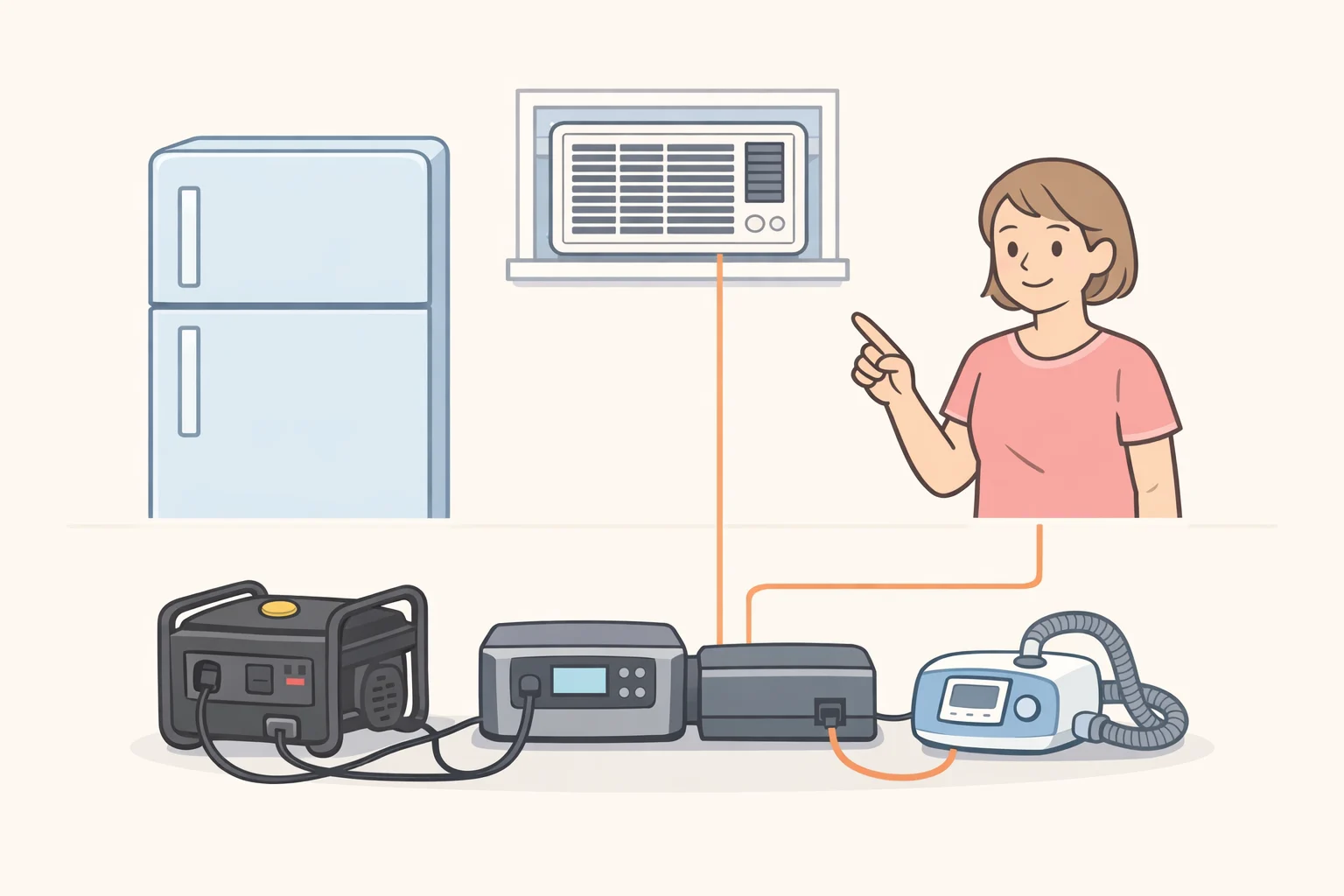
Before the outage: Start with a short list: refrigerator, one window AC unit, a medical device, phones. Weigh backup power options against that list rather than against price alone.
A portable power station can cover phones and small electronics, depending on its capacity and how much you're running off it. A generator can handle bigger loads, a refrigerator or a window AC unit, but it has to run outdoors, well away from windows, doors, and vents. Generator exhaust carries carbon monoxide, which builds up fast in any enclosed or semi-enclosed space, so check the manufacturer's placement instructions before buying or running one.
Whole-home batteries and microgrids sit above both options, and the design varies enormously from project to project, from behind-the-meter setups to campus-scale systems, according to the Department of Energy. During Hurricane Ian, 37 homes in a Tampa development stayed powered through a microgrid even as the broader storm knocked out service across Florida, per the same source. There's no established framework yet for weighing that kind of resilience against affordability, so treat a microgrid as a niche upgrade rather than a baseline expectation.
When the power fails: Run only what's on the essential list first. Stay within the equipment's rated capacity, and follow the manufacturer's instructions rather than guessing.
8. Skip indoor open flames if there's another option
Ready.gov lists candle warmers, chafing dishes, fondue pots, and fireplaces as alternative cooking sources for emergencies, and says charcoal grills and camp stoves are for outdoor use only. None of the four indoor alternatives are risk-free, and Ready.gov doesn't spell out safe operating conditions for each, so treat them cautiously: an open flame still needs clear space around it and constant attention, and a fireplace is only as safe as its flue.
During a summer heat outage specifically, the simpler move is often to skip an indoor heat source altogether and rely on the no-cook food from step 3. Adding flame or extra heat to a house that's already hot rarely makes sense when canned food handles the same need without the risks that come with an open flame.
9. Set up a check-in plan before the outage, not during it
Decide now who checks on vulnerable relatives or neighbors, particularly anyone in the high-risk groups NWS names: children, older adults, people with chronic illness. NWS's core heat-safety message includes checking on neighbors alongside staying cool and staying hydrated, per NWS.
Make the plan specific: assign who checks on whom, set a rough time for the first check once an alert reaches "Take Action" level, and agree on what happens if nobody answers, whether that's a second call, a knock on the door, or a call to emergency services. Include neighbors in that plan, not just people living in the house.
If phone service or roads become unreliable, the battery radio from step 6 works as a fallback for information, and a contact outside the immediate area can help relay messages if local lines are jammed.
Make this a spring habit, not a scramble
The alert sign-up, the cooling plan, and the check-in list can all be done before buying any equipment at all. The steps that do cost money, backup power chief among them, scale with what the household can actually afford.
Grid-damaging weather doesn't always give much warning. A storm that began splitting over eastern Oklahoma intensified into a supercell within about an hour, then produced a hail swath more than 100 miles long through southwest Missouri over roughly two and a half hours, according to NWS Springfield. Set a seasonal reminder to test alerts, check the food and water supply, test and charge any backup batteries, and confirm where the household would go if the cooling ever gave out for good. Do that once a year, and the checklist is ready before the heat wave is, not halfway through it.