Grilled shrimp and pineapple skewers: 3 rules for perfect results
By the end of this guide, you'll be able to pull grilled shrimp and pineapple skewers off the grill with a proper char on the outside and tender, snappy shrimp on the inside. Shrimp finish in 6 minutes on the grill, per Pesto & Potatoes, and everything except the grilling itself can be staged ahead.
Two things trip people up with this dish: surface moisture that blocks a sear, and pineapple contact time that softens shrimp before heat gets a chance to work. Both problems have the same fix a short sequence of steps done in the right order, with attention to a couple of timing windows that most recipes gloss over.
What you need before starting:
- 1 to 1.5 lbs large shrimp, peeled and deveined; 19-to-21-count is the sweet spot for even cooking, per Pesto & Potatoes
- Fresh pineapple cut into 1-inch chunks; canned is worth avoiding since excess liquid works against charring
- Skewers (wooden or metal) and a heat source: outdoor grill, cast iron skillet, or oven
- Your chosen seasoning; three options are covered below. If you're going with an acidic marinade, pick it now, because the shrimp clock starts the moment they go in
Frozen shrimp work fine as long as they're fully thawed and patted dry before seasoning, per The Pioneer Woman and Colleen's Healthy Life. Patting them dry helps seasoning stick and gives the grill surface a real shot at developing char.
The default path: simplest version, dinner tonight
Video of the Day
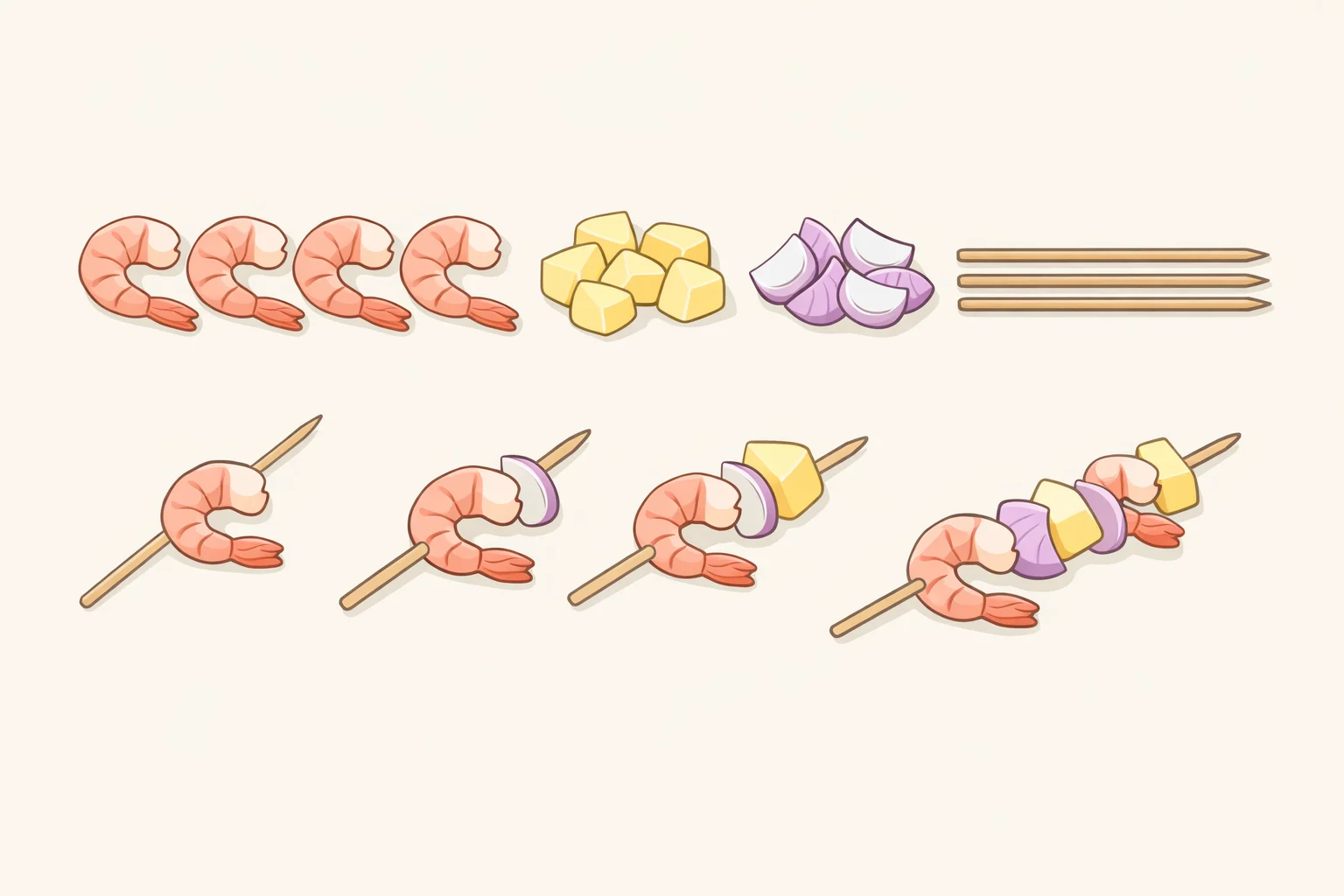
Start here for the no-marinade, no-sauce baseline. No timing decisions beyond the grill itself.
Quick reference: 19-to-21-count shrimp, 1-inch fresh pineapple chunks, red onion in 1-inch pieces, dry rub applied just before threading, wooden skewers soaked at least 30 minutes (metal skewers need no soaking), medium-high heat around 425°F, 2-3 minutes per side, pull when flesh turns pearly white and opaque.
Step 1: Soak skewers and dry the shrimp simultaneously.
If using wooden or bamboo skewers, submerge them in water now. The Pioneer Woman recommends at least 15 minutes; Pesto & Potatoes recommends at least 30. Thirty minutes is the safer target if time allows. Metal skewers skip this step entirely.
While the skewers soak, pat shrimp thoroughly dry with paper towels. Dry shrimp develop a proper sear on the grill; wet shrimp steam instead, per Pesto & Potatoes and The Pioneer Woman. This step also helps the spices adhere.
Step 2: Season the shrimp.
For the default dry rub, combine 1 tsp salt, ½ tsp black pepper, ½ tsp chili powder, ¼ tsp paprika, ¼ tsp garlic powder, and 1½ tbsp olive oil, per Pesto & Potatoes. Toss the dried shrimp in the mixture to coat. Dry rubs don't carry the timing concern that acidic marinades do, so no clock starts here.
Step 3: Thread pineapple shrimp skewers close to grill time, not earlier.
Cut fresh pineapple and red onion into 1-inch chunks. Thread alternating shrimp, onion, and pineapple, with a piece of onion between each shrimp and pineapple piece. The Pioneer Woman uses this structure specifically to keep shrimp and pineapple from sitting in direct contact on the skewer.
Don't let them sit once assembled. Threading skewers more than an hour before grilling can turn shrimp mushy from pineapple's acidity, per The Pioneer Woman. Closer to five minutes before the grill is ready is better.
Step 4: Preheat to medium-high, oil the surface, grill.
Target around 425°F. Brush grill grates lightly with oil before the skewers go on for a clean release. For cast iron, add 1-2 teaspoons of oil to coat the surface, per Colleen's Healthy Life.
Grill 2-3 minutes per side. Sources vary slightly on exact timing: Pesto & Potatoes uses exactly 3 minutes per side at 425°F; Colleen's Healthy Life runs 2-3 minutes; The Pioneer Woman goes up to 4 minutes for larger, vegetable-loaded skewers. Start checking at 2 minutes regardless of which version you're making.
Step 5: Read the shrimp, not the clock.
Shrimp are properly cooked when the flesh is pearly or white and fully opaque, per the food safety guidelines from Foodsafety.gov. A cook's visual shorthand: a loose C-shape means done, a tight O-shape means overcooked. Pull them the moment the C appears.
No grill? Oven method: 425°F for 8-10 minutes, flip halfway, then broil 1-2 minutes for char. Brush on any finishing sauce before serving, per Colleen's Healthy Life.
Video of the Day
Two ways to flavor pineapple shrimp skewers
The five steps above don't change. Only the seasoning and one timing variable shift.
Jerk shrimp skewers
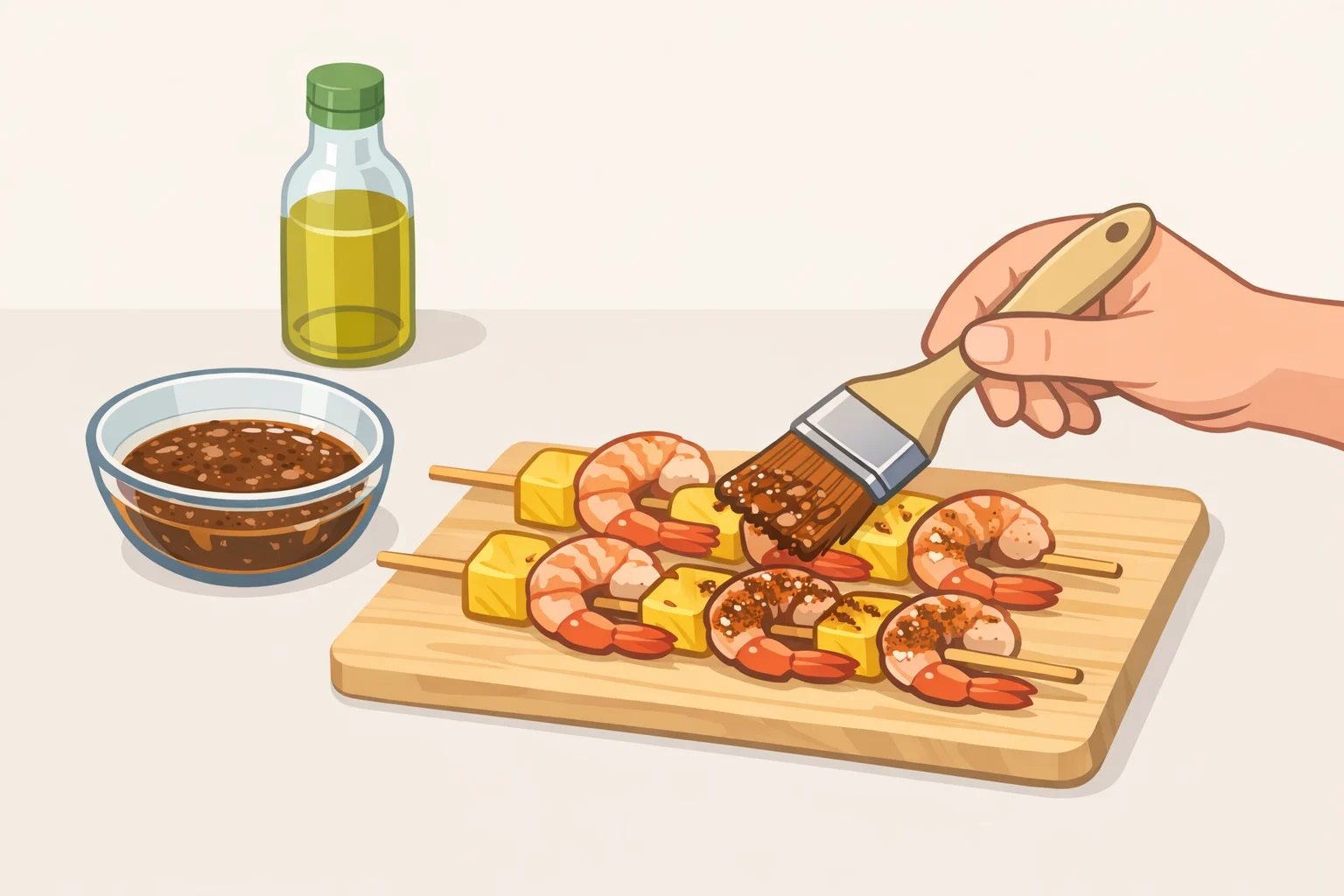
Mix 2 tbsp jerk paste (or 1 tbsp dry jerk rub) with 3 tbsp olive oil, per The Pioneer Woman. Brush over shrimp, pineapple, and red onion after threading. This is a surface coating applied just before grilling, so no marinating clock applies.
Serve over cilantro-lime rice for a complete plate. The rice can be cooked up to a day ahead and reheated just before serving, per The Pioneer Woman, which means if the rice is already done, dinner is only as long as the grill takes to preheat.
Sweet chili glaze
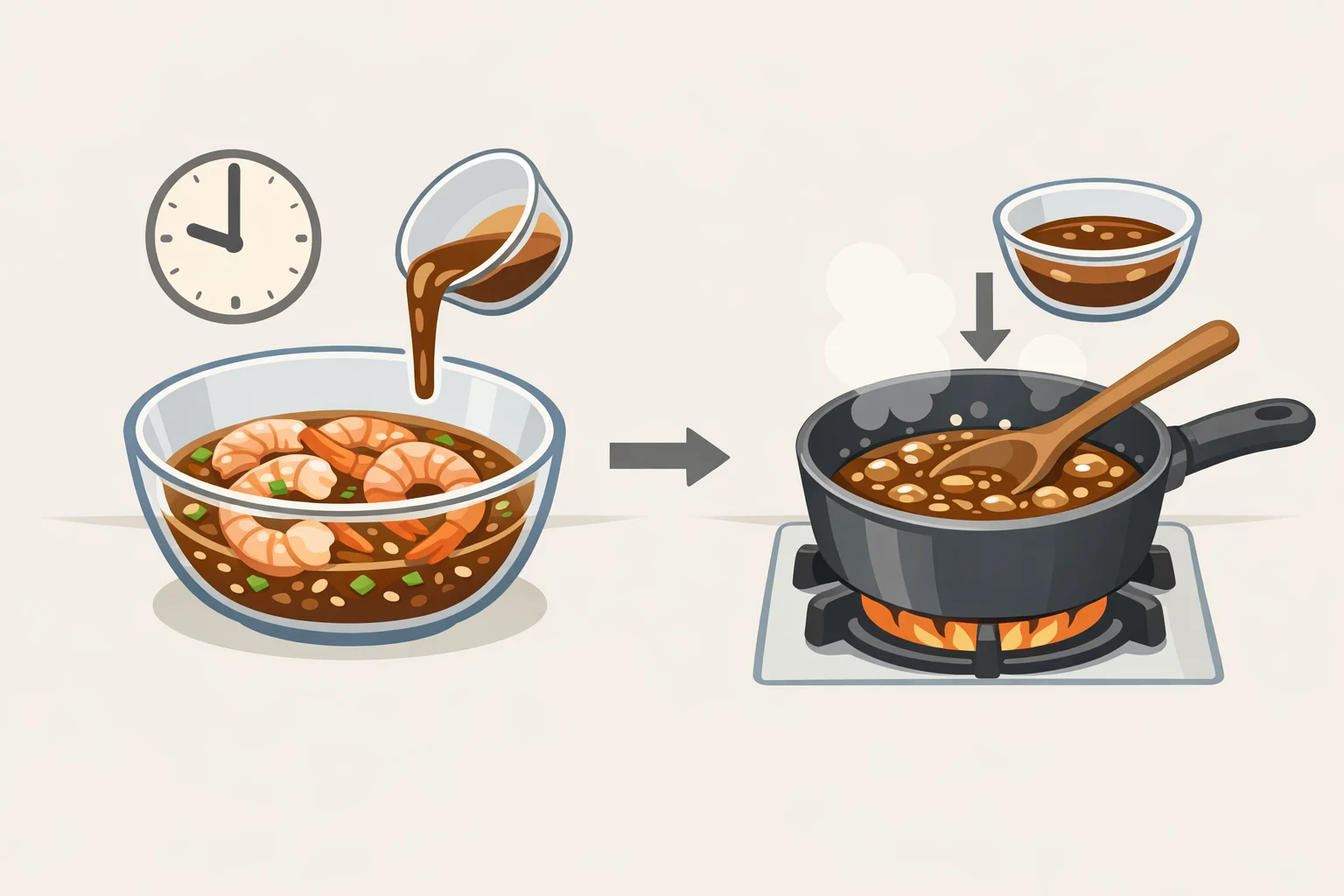
Whisk together 2-3 tbsp sweet chili sauce, 2 tbsp pineapple juice, 1 tbsp soy sauce, 1 tbsp olive oil, 1 tbsp lime juice, 2-3 cloves minced garlic, ½ tsp ground ginger, ¼-1 tsp red pepper flakes, and ¼ tsp black pepper, per Colleen's Healthy Life. Divide in half.
Marinate shrimp in one half for 15-30 minutes maximum. Start the clock when the shrimp go in, not when you start cutting vegetables. Discard the used portion. This glaze contains both pineapple juice and lime juice, so the same acid that makes skewering timing matter works just as fast in a marinade. Past 30 minutes, texture degrades, per Colleen's Healthy Life.
Simmer the reserved half in a small saucepan for 2-3 minutes until slightly thickened, then set aside; it thickens further as it cools, per Colleen's Healthy Life. Brush it on during the last 30 seconds of cooking and again right before serving. On cast iron, adjust heat downward if the sugars begin to darken too quickly before the shrimp finish. The recipe doubles or triples cleanly for a cookout batch, per Colleen's Healthy Life.
Pineapple salsa instead of glaze
Skip the glaze and make a fresh topping: diced pineapple, English cucumber, avocado, red onion, green onion, jalapeño, cilantro, and fresh lime juice, per Pesto & Potatoes. Mix it a few hours ahead and refrigerate. The salsa doubles as a side if you'd rather serve it separately, and it's the lightest finish of the three options no extra cooking, no glaze brushing, and it keeps these tropical grilled shrimp skewers clean enough to work as tacos or a grain bowl if you pull the shrimp off the skewer.
Common mistakes with shrimp skewers with pineapple and red onion
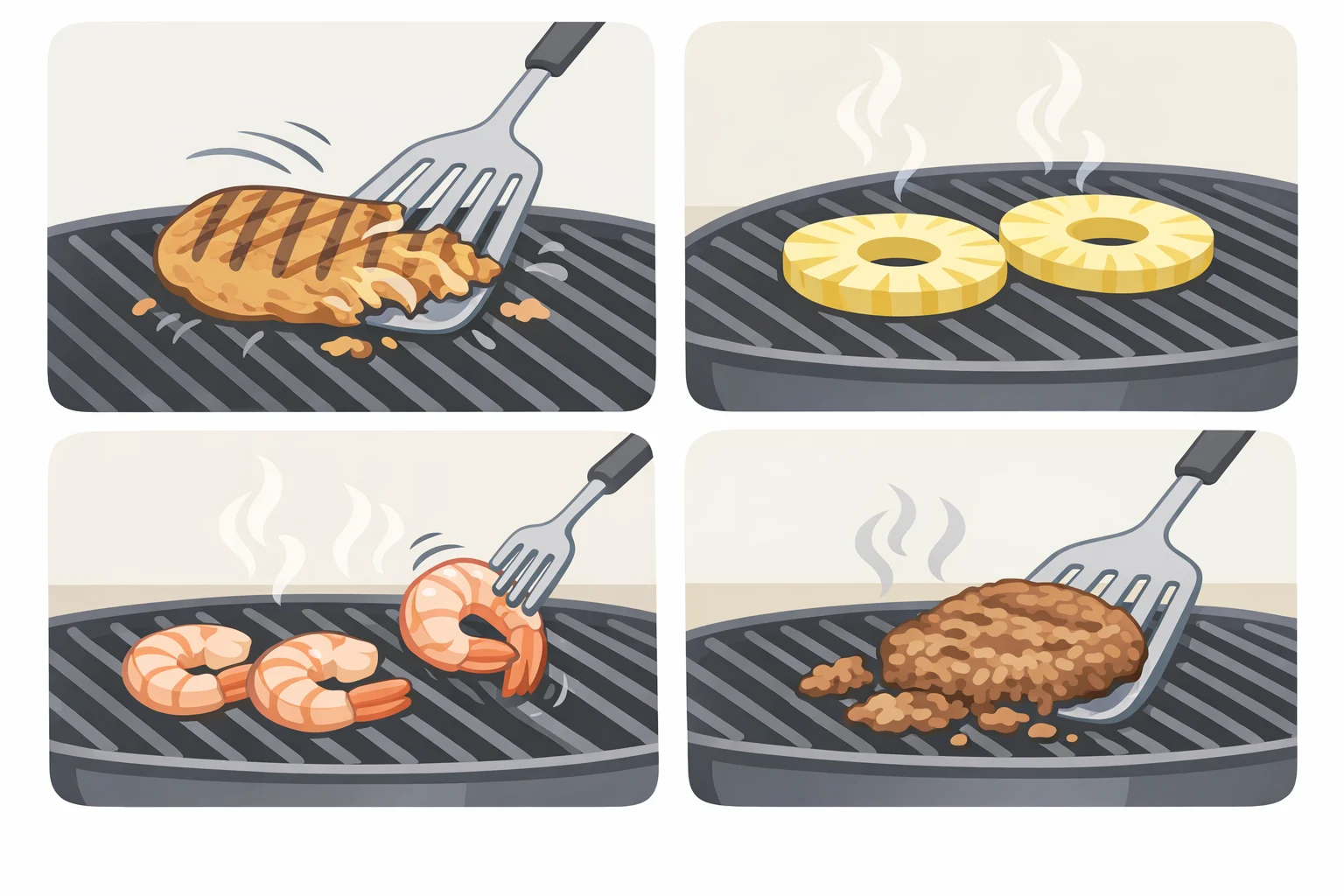
Shrimp stick to the grill. The grates weren't oiled, the grill wasn't fully preheated when the skewers went on, or the shrimp were moved before they were ready. Let them sit. Shrimp release on their own once a crust forms; forcing them before that point tears the flesh.
Pineapple won't char. Chunks were too wet, too small, or the grill wasn't fully up to temperature. Use fresh pineapple cut to at least 1 inch and confirm the grill is preheated. Surface moisture generates steam rather than browning.
Shrimp turned rubbery. Pulled at the O instead of the C the shrimp kept cooking past done. Start checking at 2 minutes and pull the moment the curl loosens and the flesh goes fully opaque, per Foodsafety.gov.
Shrimp turned mushy. Too much pineapple contact before cooking. Either the shrimp marinated too long in an acidic liquid, or the threaded skewers sat for more than an hour before the grill, per Colleen's Healthy Life and The Pioneer Woman. The fix has to happen before the grill is lit, not after.
The three rules that matter
The method is short. These three variables are where most cooks go wrong:
1. Dry the shrimp thoroughly. Pat them dry before seasoning. Residual moisture especially from frozen shrimp steams on contact instead of searing. No drying step means no char, per Pesto & Potatoes and The Pioneer Woman.
2. Limit acidic contact time. If using the sweet chili glaze, marinate shrimp 15-30 minutes maximum, per Colleen's Healthy Life. Once threaded with pineapple, grill within one hour, per The Pioneer Woman. Both windows protect the same thing: texture. Miss either, and the problem is set before the grill is lit.
3. Cook by visual doneness, not the timer. Shrimp are done when they're pearly white and fully opaque, per Foodsafety.gov. Use the C-shape as a visual cue to pull them. The clock is a rough guide; the shrimp tell you when they're ready.
Get those three decisions right and the dish becomes hard to mess up. Which flavor direction to take depends on circumstance: the dry rub version is the fastest path to the table with no marinating window to manage; the jerk version adds almost no extra time if the rice is already cooked; the sweet chili glaze is worth the extra 20-minute marinade window when feeding a crowd; the salsa variation is the freshest finish and the easiest to scale or repurpose.