Cherry Matcha Cookies Recipe: Thick, Chewy Results Every Time
This guide walks you through making chewy cherry matcha cookies using a proven matcha white chocolate base, then adapting it with cherries. By the end, you'll know the full method, what each ingredient actually does, which cherry form works best and why, and how to choose matcha without getting sold an overpriced tin.
One thing up front: the base method draws from tested recipe guidance at Crossing Kitchens. Cherry-specific recommendations, including quantities and preparation, are author judgment based on moisture and flavor logic. That distinction is flagged wherever it matters.
The base recipe produces 6 large cookies with crisp, chewy edges and soft centers. Getting there consistently depends on three things: cooled butter entering the dough, tall cylinder shaping, and dough that is completely cold when it hits the oven. Every failure mode in this recipe traces back to compromising one of those three, as Crossing Kitchens documents. The cherry add-in doesn't change that calculus.
Ingredients: what each component does, and where the cherry fits in
Video of the Day
Yield: 6 large cookies. This is not a standard batch of 24. The technique is calibrated to large portions, so halving the recipe or making smaller cookies will require adjustments to shaping height and bake time, per Crossing Kitchens. No stand mixer needed a large bowl, whisk, and spatula cover it.
Full ingredient list:
- ½ cup granulated sugar
- ¾ cup brown sugar
- ½ cup butter (melted and cooled)
- 1 egg (room temperature)
- 1 teaspoon vanilla extract
- 1¼ cups all-purpose flour (spoon-and-level)
- ½ teaspoon baking soda
- 1 teaspoon salt
- 1½ tablespoons matcha powder
- 1 cup white chocolate (chopped or chips)
- Flaky sea salt (optional finish)
What the key ingredients do:
Brown sugar provides moisture and chew; granulated sugar helps the edges spread and crisp. Removing either entirely shifts the texture, not just the sweetness level, according to Crossing Kitchens. Melted butter produces a denser crumb than creamed butter, but it must be fully cooled before mixing warm butter will make the dough too loose and cause overspreading. Salt balances the sweetness and makes the matcha flavor register more clearly, per Crossing Kitchens. Chopped white chocolate melts into larger irregular pockets for a more bakery-style result; chips work fine too and the choice is aesthetic.
Cherry integration (author judgment, not sourced):
No tested recipe documents cherry quantities or prep for this specific dough. The following is practical guidance based on moisture and flavor logic.
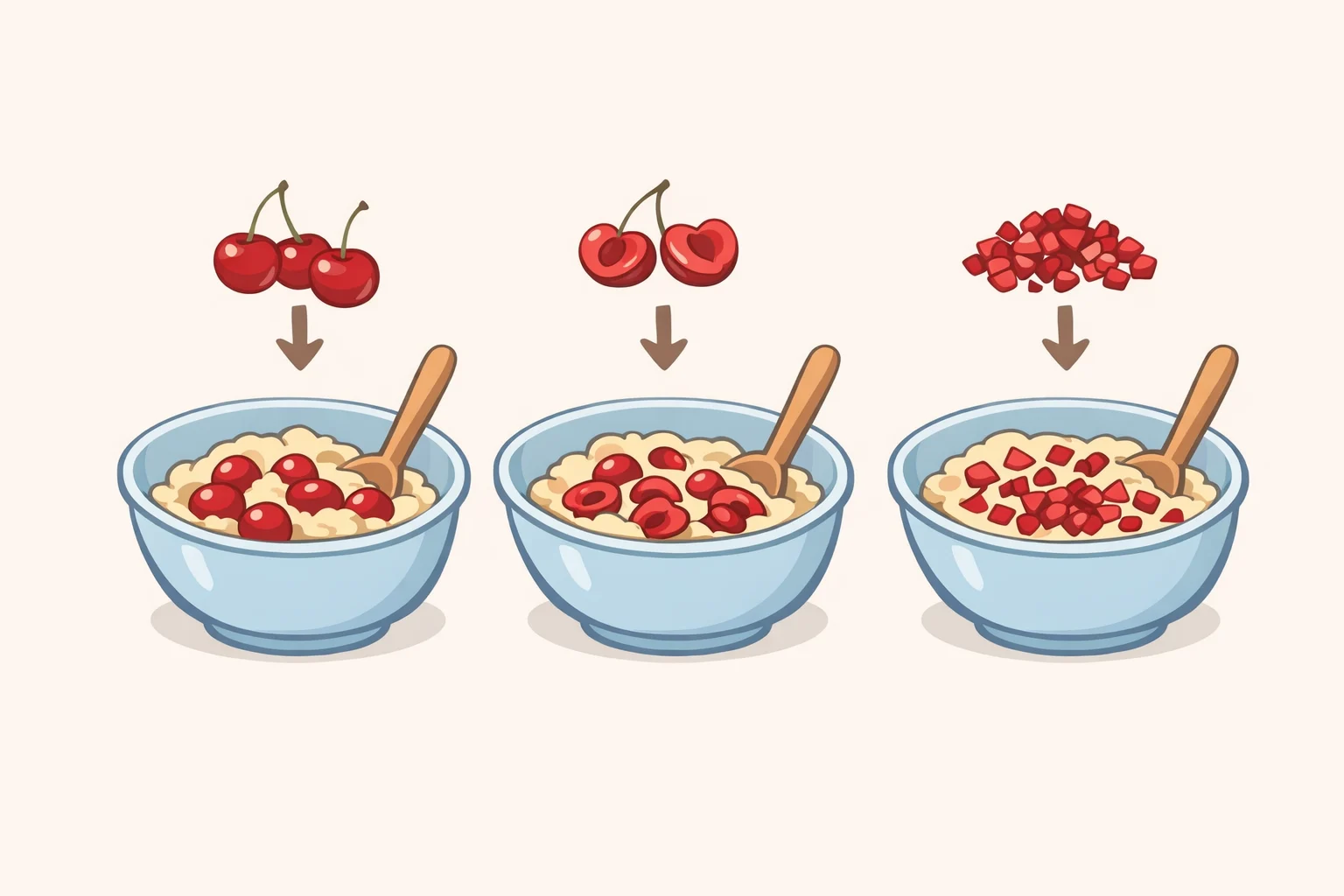
- Dried cherries are the safest starting point. They add concentrated fruit flavor without extra moisture, which keeps dough structure intact. Roughly chop them to pieces no larger than a chocolate chip. Start with ½ cup and adjust to taste.
- Freeze-dried cherries are a strong alternative. They add no moisture at all, hold bright color through the bake, and can go in whole or lightly crushed. The flavor is more intensely fruity and slightly tarter, which plays well against matcha's bitterness.
- Fresh, maraschino, or jammy cherries introduce significant moisture and are not recommended here without compensating adjustments additional flour or a longer chill, at minimum. Skip them unless you're prepared to test.
- When to add: Fold cherries in at the same stage as the white chocolate, last, after the dry ingredients are just combined.
- What changes (author judgment): Either dried or freeze-dried cherries should not materially affect spread if dough temperature controls are followed. Their acidity may very slightly brighten the matcha flavor. Expect a small visual difference in the cut cross-section, not a structural one.
The recipe calls for 1½ tablespoons of matcha powder. For context, First Agri recommends matcha represent 1.0–1.5% of flour weight in cookies below that the flavor disappears in the bake, and above 1.5% bitterness becomes harsh and the dough loses plasticity. Whether this recipe hits that window depends on the actual gram weights of your flour and matcha, so taste your dough if you're uncertain.
Video of the Day
Choosing matcha: skip the grade label, buy on freshness
The "ceremonial" and "culinary" designations are marketing terms, not regulated categories. No government or international body enforces them, meaning any seller can apply either label to any product, as Naoki Matcha explains. Japan doesn't use this two-tier system internally each batch is assessed on its actual characteristics. The ceremonial/culinary split is a Western export convention.
That said, matcha sold as culinary grade tends toward bolder, more assertive flavor. That's exactly what you want in a dough loaded with butter, sugar, and chocolate. The subtlety prized in a drinking matcha simply disappears in the bake, as Crossing Kitchens notes.
What to look for when buying:
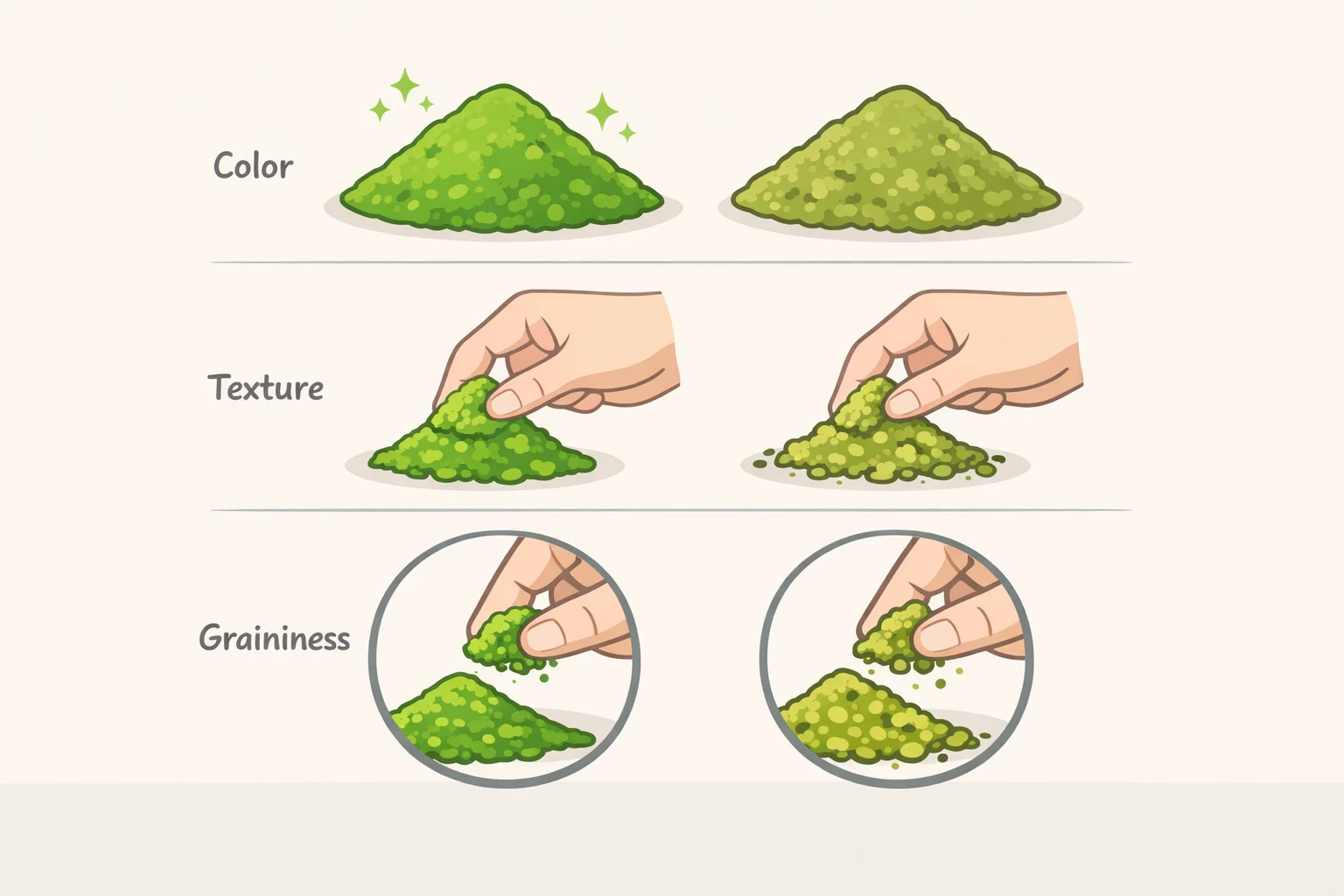
- Color: Vivid, deeply green powder signals freshness. Yellowish or dull green indicates oxidation or lower-quality leaves from the base of the plant, per Naoki Matcha.
- Texture: Fine and silky, similar to talcum powder. Graininess points to coarser grinding, which affects how evenly it distributes in dough, per Naoki Matcha.
- Flavor strength: For baking, the matcha should taste clearly grassy and slightly bitter when sampled straight. If it's mild enough to drink without sweetener, it won't read in the finished cookie.
Buy a fresh, affordable culinary-grade matcha with vivid color. Don't spend $40 on a ceremonial-labeled tin for cookies.
How to make cherry matcha cookies that stay thick and chewy
Step 1: Cool the melted butter.
Melt the butter, then let it sit until it reaches room temperature about 20 to 30 minutes, or faster in the refrigerator. Test it against your wrist: it should feel neutral, not warm. This step is not optional. Warm butter will make the dough too loose and lead to overspreading, per Crossing Kitchens.
Step 2: Whisk the wet ingredients.
Combine both sugars, the cooled melted butter, one room-temperature egg, and vanilla in a large bowl. Whisk until smooth. A cold egg doesn't incorporate as cleanly pull it from the fridge when you start melting the butter.
Step 3: Fold in the dry ingredients. Stop early.
Sift flour, baking soda, salt, and matcha directly into the wet mixture. Fold with a spatula just until no dry flour streaks remain. The moment the dough comes together, stop. Overmixing develops gluten and produces a tough cookie, per Crossing Kitchens. Fold in white chocolate and cherries last.
Flour measurement matters here. Scoop-and-pack measuring significantly over-measures. Use the spoon-and-level method: spoon flour into the cup, then sweep a straight edge across the top. Too little flour is a direct cause of overspreading, per Crossing Kitchens.
Step 4: Shape into tall cylinders.
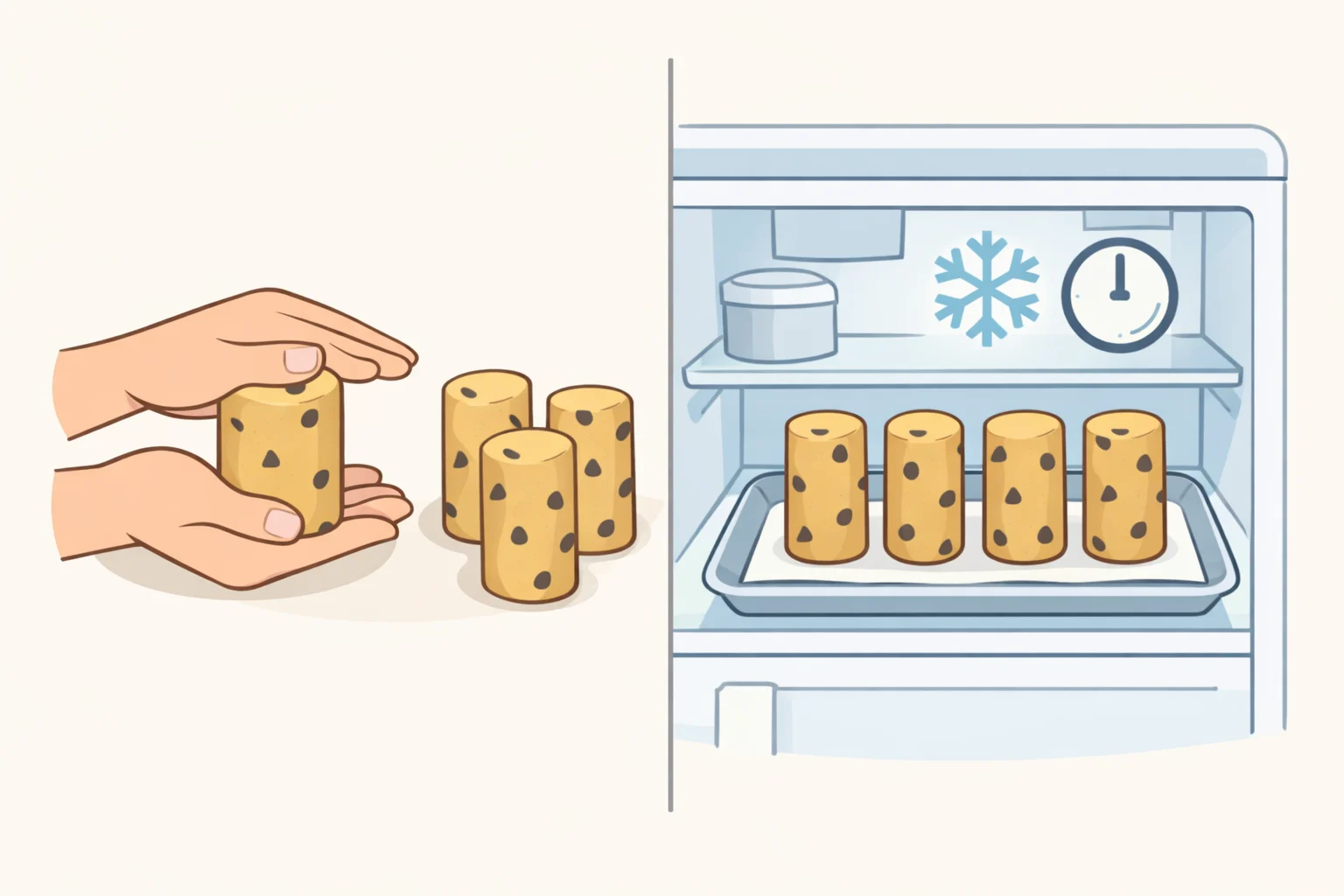
Divide dough into 6 equal portions. Shape each into a tall, upright cylinder rather than a flattened ball. A taller mound retains more vertical mass as the butter melts, which is what produces a thicker finished cookie, per Crossing Kitchens. Place them on a parchment-lined baking sheet with at least 2 inches between each.
Step 5: Chill until rock solid.
Refrigerate the shaped dough for at least one hour, until the cylinders feel completely firm when pressed. Partially chilled dough spreads before the structure sets. The dough can be frozen at this stage transfer to a freezer bag once solid and keep for up to two months. Bake directly from frozen and add 1 to 2 minutes to the bake time, per Crossing Kitchens.
Step 6: Choose your bake temperature.
Preheat the oven, then move dough straight from the refrigerator into the oven no warming on the counter.
- 400°F / 12–14 minutes: Prioritizes chewy texture. High heat sets the edges quickly while the cold dough buys time before the center fat fully melts. Pull cookies the moment the edges look set and the centers no longer appear wet carryover heat on the pan finishes them. The edges will brown slightly, per Crossing Kitchens.
- 320°F / 15–18 minutes: Prioritizes color retention. Lower heat slows browning and preserves a more vivid matcha hue, but produces less defined chewy edges, per First Agri.
These are genuine tradeoffs. Pick one based on what you're after.
Step 7: Cool on the pan, then transfer.
Leave cookies on the baking sheet for 10 to 15 minutes before moving them to a rack they're too fragile to handle while hot, per Crossing Kitchens. If any came out lopsided, place a round glass or cookie cutter over each one immediately after pulling from the oven and swirl gently to reshape. Finish with flaky sea salt if using.
Troubleshooting
| Problem | Most likely cause | Fix |
|---|---|---|
| Cookies spread flat | Butter was warm, dough under-chilled, flour under-measured, or oven runs cool | Verify butter temperature, extend chill time, use spoon-and-level, use an oven thermometer |
| Dull or yellowish green color | Stale matcha or bake temperature too high | Buy fresher matcha with vivid color; switch to 320°F if color is the priority |
| Bitter, harsh flavor | Too much matcha or low-quality powder | Reduce matcha slightly; taste the powder before using it |
| Dry or crumbly texture | Over-measured flour or overbaked | Use spoon-and-level; pull cookies when centers still look slightly underdone |
What to lock in, what to adjust
The three variables that determine final texture are non-negotiable: cooled butter entering the dough, tall cylinder shaping, and dough that is completely cold when it goes into the oven. Compromise any one of them and the cookies will spread, per Crossing Kitchens.
For cherries and bake temperature, the decision comes down to priorities:
- Dried cherries: more chew, deeper fruit flavor, integrates cleanly with white chocolate
- Freeze-dried cherries: brighter acidity, more vivid color in the finished cookie, zero moisture risk
- 400°F bake: superior chewy texture, slightly browned edges
- 320°F bake: greener-looking cookie, softer edge definition
Storage: Room temperature in an airtight container for 3 to 4 days; tuck in a small piece of bread to maintain softness. Refrigerate for up to one week, but bring to room temperature before serving. Baked cookies freeze well for up to two months with parchment between layers, per Crossing Kitchens.
Two things still worth testing: how cherry type interacts with chilling time when moisture is a variable, and whether adding roughly one to two tablespoons of flour better accommodates fresh or jammy cherries without throwing off the matcha-to-flour ratio. The baseline here gives you something concrete to measure against.