How to keep fitted sheet from popping off bed: fix the real cause
Fitted sheets pop off for three reasons: the pocket depth doesn't match the actual mattress height, the elastic has worn out, or a friction and movement problem is pulling the sheet loose despite a correct fit. This guide walks through each cause in order, so you can find the right fix instead of wasting money on the wrong one.
Start with pocket depth. It's the first thing worth checking and the most straightforward to rule out. If that's fine, inspect the elastic. Only then consider accessories they work best on a well-fitting sheet with functional elastic, not as a substitute for either.
Which problem do you actually have?
Video of the Day
Three quick questions will tell you where to start.
- Sheet is new and has been popping off since day one? You have a size or pocket depth problem. Go to Step 1.
- Sheet used to fit and now it doesn't? Suspect elastic wear or post-wash shrinkage. Go to Step 2.
- Sheet slips only on an adjustable base, or slides off a smooth memory foam cover? You have a friction or movement problem. Skip to Step 3.
One thing worth knowing before you start: Consumer Reports washes fitted sheets more than 20 times in their shrinkage tests, checking fit after each cycle. In almost half the samples they tested, shrinkage was severe enough that the sheet no longer fit the mattress it was sold for. A sheet that fits at purchase can stop fitting due to shrinkage, sometimes within the first year. That's relevant whether the sheet is new or old.
Video of the Day
Why does my fitted sheet keep coming off? Start with pocket depth
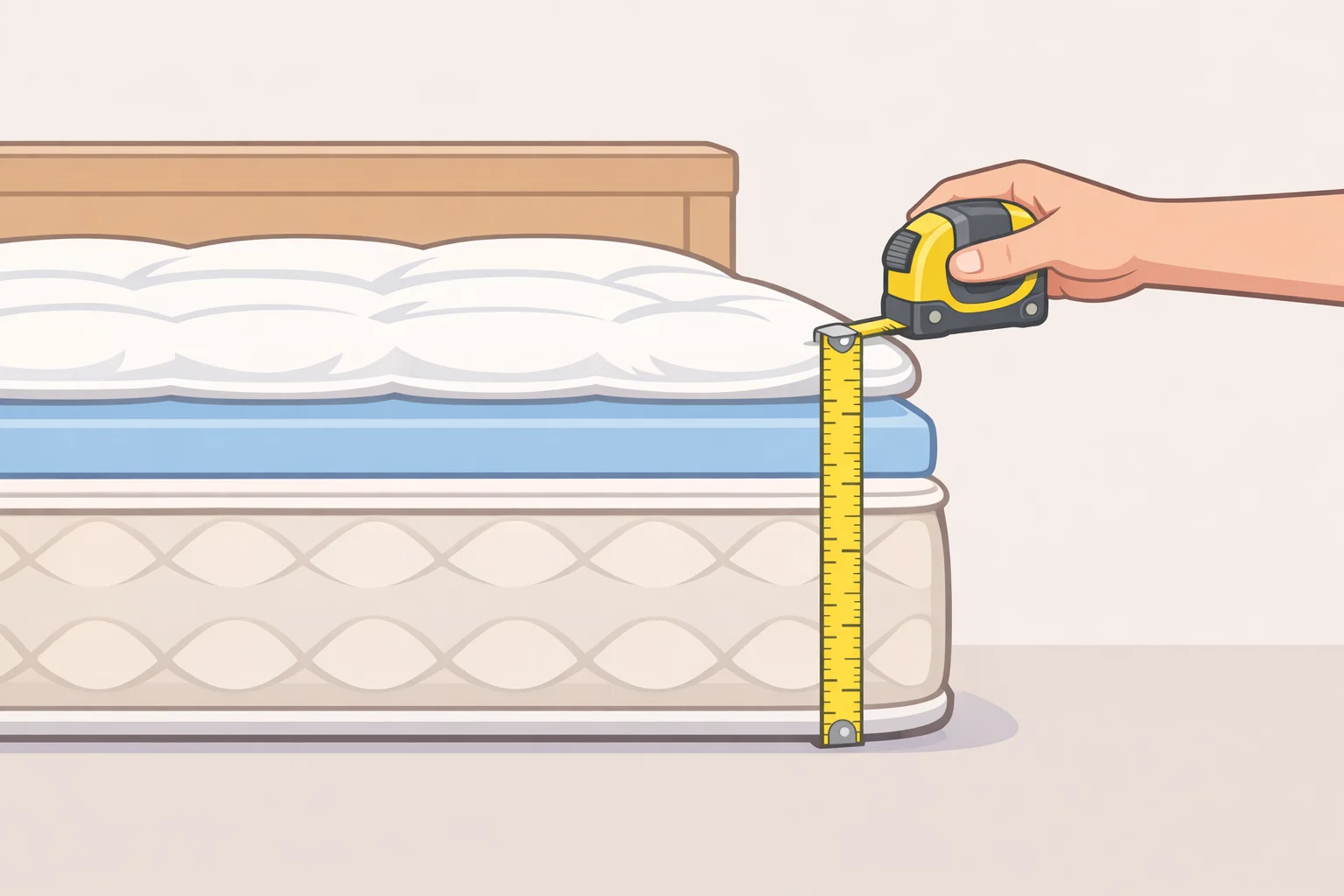
Strip the bed completely. Remove sheets, protectors, and any topper.
Take two measurements:
- Place a tape measure at the base of the mattress, where it meets the foundation or frame, and measure straight up to the top of the sleeping surface. If the mattress has a built-in pillow top, include it that's part of the height.
- If you use a mattress topper, measure it separately while flat, then add both numbers together. Write down the total.
A 14-inch mattress plus a 3-inch memory foam topper equals 17 inches. A sheet with a 12- to 14-inch pocket cannot hold that bed, not because it's cheap, but because the geometry is wrong. Standard sheets are built for mattresses 7 to 14 inches deep, but many modern pillow-top and Euro-top mattresses run 14 to 18 inches (Mattress Miracle).
Target a pocket depth 2 to 4 inches deeper than the actual mattress height. That margin gives the elastic enough fabric to wrap under the mattress and maintain tension (Sleep Foundation):
- Standard pocket (12-14 inches): Basic innerspring mattresses, no pillow top
- Deep pocket (15-17 inches): Most modern mattresses, including many pillow tops
- Extra-deep pocket (18-24 inches): Thick Euro tops, or any mattress-plus-topper combination exceeding 15 inches
Don't assume "deep pocket" means what it says on the label. Consumer Reports tested queen-size sheets marketed as deep-pocket and found that several couldn't cover a 10-inch mattress after a simulated year's worth of washing and drying. Of all cotton sheet sets in their ratings, only three actually met their own deep-pocket claim, and none fit an 18-inch mattress (Consumer Reports).
Going too deep creates its own problem. Excess fabric bunches around the perimeter, creates loose folds, and shifts just as readily as a pocket that's too shallow. The goal is a matched fit, not the deepest sheet available (Bed Sheet Manufacturer).
When evaluating any sheet, look for:
- A stated fit range rather than a single number a range is more honest about tolerances
- Whether dimensions reflect pre- or post-wash measurements
- All-around elastic, not corner-only (covered in Step 2)
- A return or exchange policy that lets you wash it once and check fit before removing tags
Also confirm the sheet's width and length match the actual mattress dimensions, not just the pocket depth. Using a full-size sheet on a queen, or a queen on a king, is a separate and equally common cause of corner failure.
Step 2: Inspect the elastic, then decide whether to keep or replace the sheet
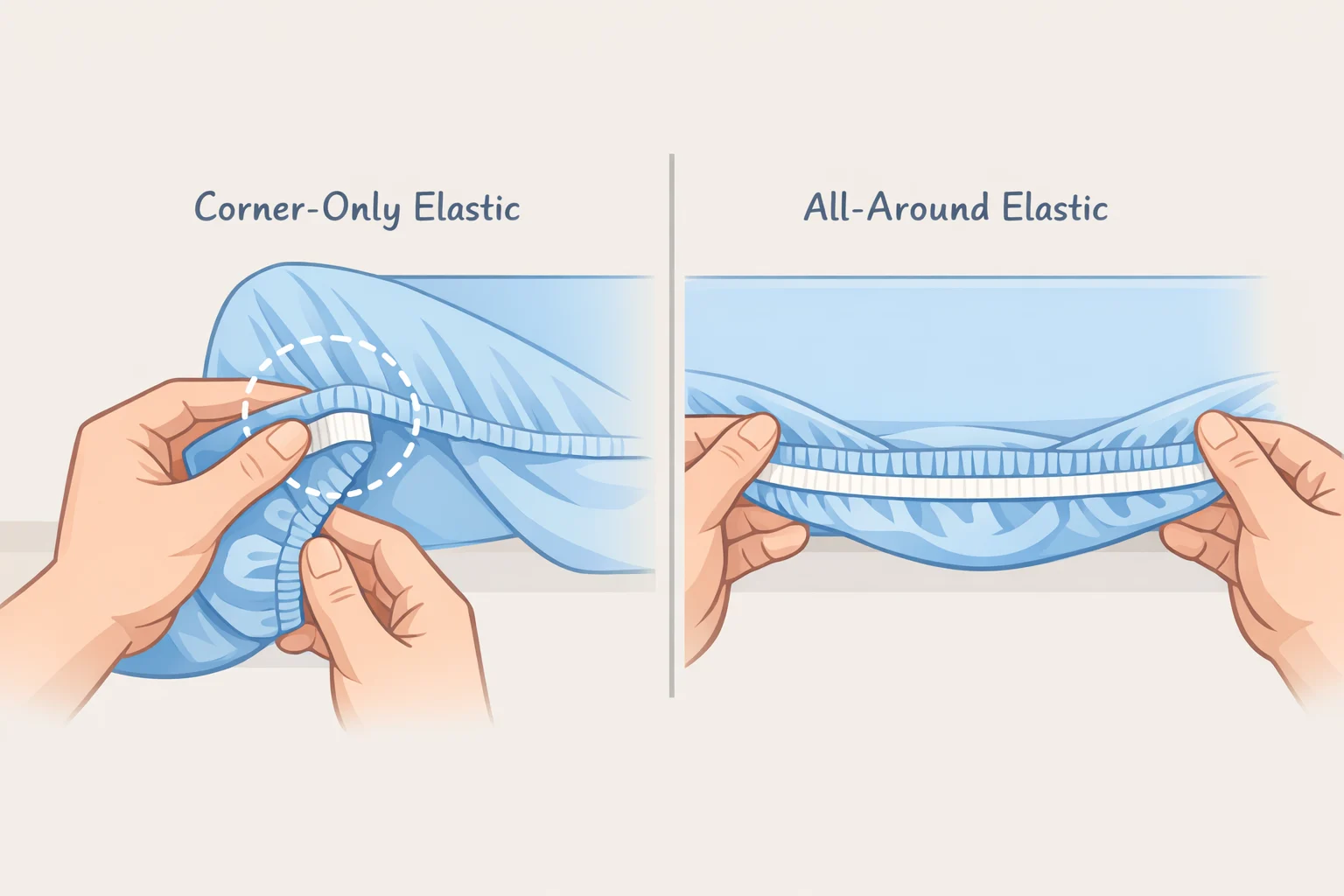
Thread count and fabric feel tell you nothing about whether a sheet will stay put. The elastic does.
Flip the fitted sheet inside out and look at the hem along the bottom edge. If elastic runs only at the four corners small patches at each corner that's corner-only construction. All tension concentrates at four small points. If it runs continuously around the full perimeter, tension is distributed evenly across the entire base. As Brad Grose, founder of Mattress Miracle, puts it: a $200 sheet set with corner-only elastic will pop off faster than a $60 set with all-around elastic (Mattress Miracle; Bed Sheet Manufacturer). The construction, not the price, determines staying power.
To check whether elastic has worn out:
- Stretch the elastic band between your fingers and release. If it feels slack and recovers slowly, it's likely worn out.
- Corners won't stay tucked even when pocket depth is correct
- The sheet feels noticeably looser overall than when new
If the elastic has failed, no accessory fixes it permanently. Suspenders on the two foot corners where stress concentrates first can extend the sheet's useful life while a replacement is being sourced, but they're a bridge, not a solution (Mattress Miracle).
Laundry habits accelerate elastic wear faster than normal use. Hot water and high dryer heat are the two main culprits. Washing at 30-40°C and drying on low heat, or line drying, can extend elastic life two to three times longer than a hot wash and high-heat dry cycle. Chlorine bleach compounds the damage by breaking down the rubber and spandex fibers in the elastic band; use oxygen-based brighteners instead. Rotating between two or three sheet sets spreads wash frequency and slows deterioration across all of them (Mattress Miracle).
Step 3: Specialty fixes for slick covers, active sleepers, and adjustable bases
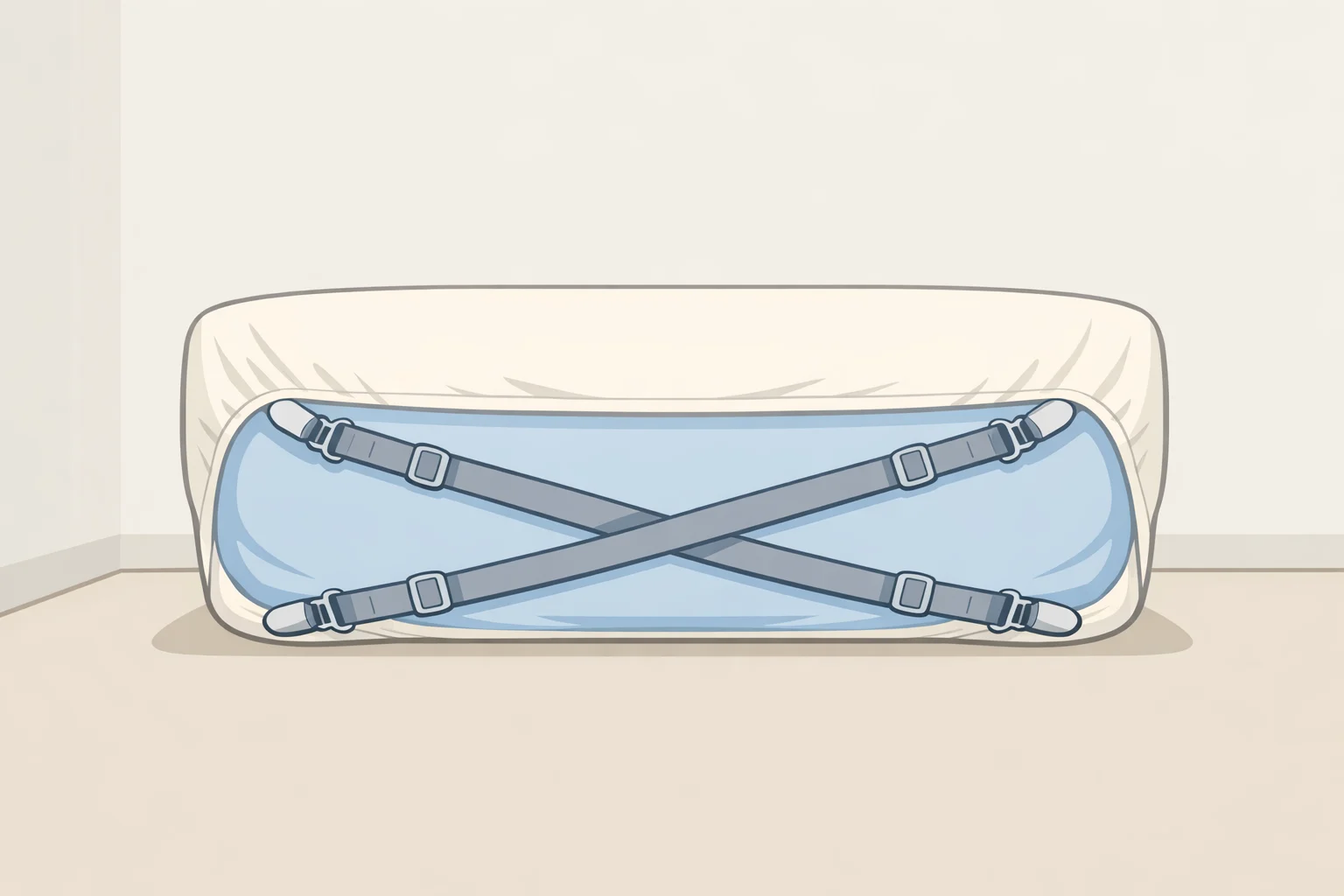
If pocket depth is correct and the elastic is intact but the sheet still slips, the problem is friction or movement, not fit. These fixes are additive they don't substitute for solving a depth mismatch.
The sheet slips on a smooth mattress cover. Some memory foam and hybrid mattresses use slick fabric covers that offer little grip. Bamboo viscose sheets can compound this because the fabric tends to generate less surface friction than cotton (Mattress Miracle). Fix: add a cotton mattress protector underneath. It creates a rougher surface for the sheet to anchor to and protects the mattress at the same time.
An active sleeper pulls the sheet loose at the foot. Foot corners fail first. When legs push downward and outward during sleep, the sheet gets dragged toward the foot of the bed, where there's less mattress underneath to grip. Sheet suspenders on just the two foot corners adjustable elastic straps that clip to the underside of the sheet and form an X pattern beneath the mattress often solve this completely. They run about $10 to $15, leave no marks on the mattress cover, and clip to the sheet fabric rather than the mattress itself (Mattress Miracle).
The sheet pops loose all the way around. For restless sleepers whose sheet works free on every side, or for sheets with corner-only elastic that can't be replaced immediately, a full-perimeter cinch system is more effective than individual corner straps. One option is the Bed Scrunchie, which uses eight wide-mouthed clips and a drawstring cord that tightens under the mattress for 360-degree hold. One reviewer at Apartment Therapy reported it held a fitted sheet through the night without slipping, from laundry day to laundry day, even as a self-described restless sleeper. That's a single firsthand account, not a controlled test, but the design logic tracks: distributed clips with a cinch cord apply even tension across the full perimeter rather than relying on four anchor points. Setup adds roughly 10 minutes to a sheet change; the product runs about $50.
An adjustable base pulls corners loose. When an adjustable frame raises the foot, the mattress bends inward, dragging the foot corners taut and then releasing them repeatedly. Standard elastic can't sustain that cycle. Purpose-made adjustable-bed sheets with reinforced all-around elastic handle this better than accessories. On a split king with two independently moving sides, two twin XL fitted sheets are more reliable than a single king sheet each side flexes without affecting the other (Mattress Miracle).
Before buying another sheet, check these five things
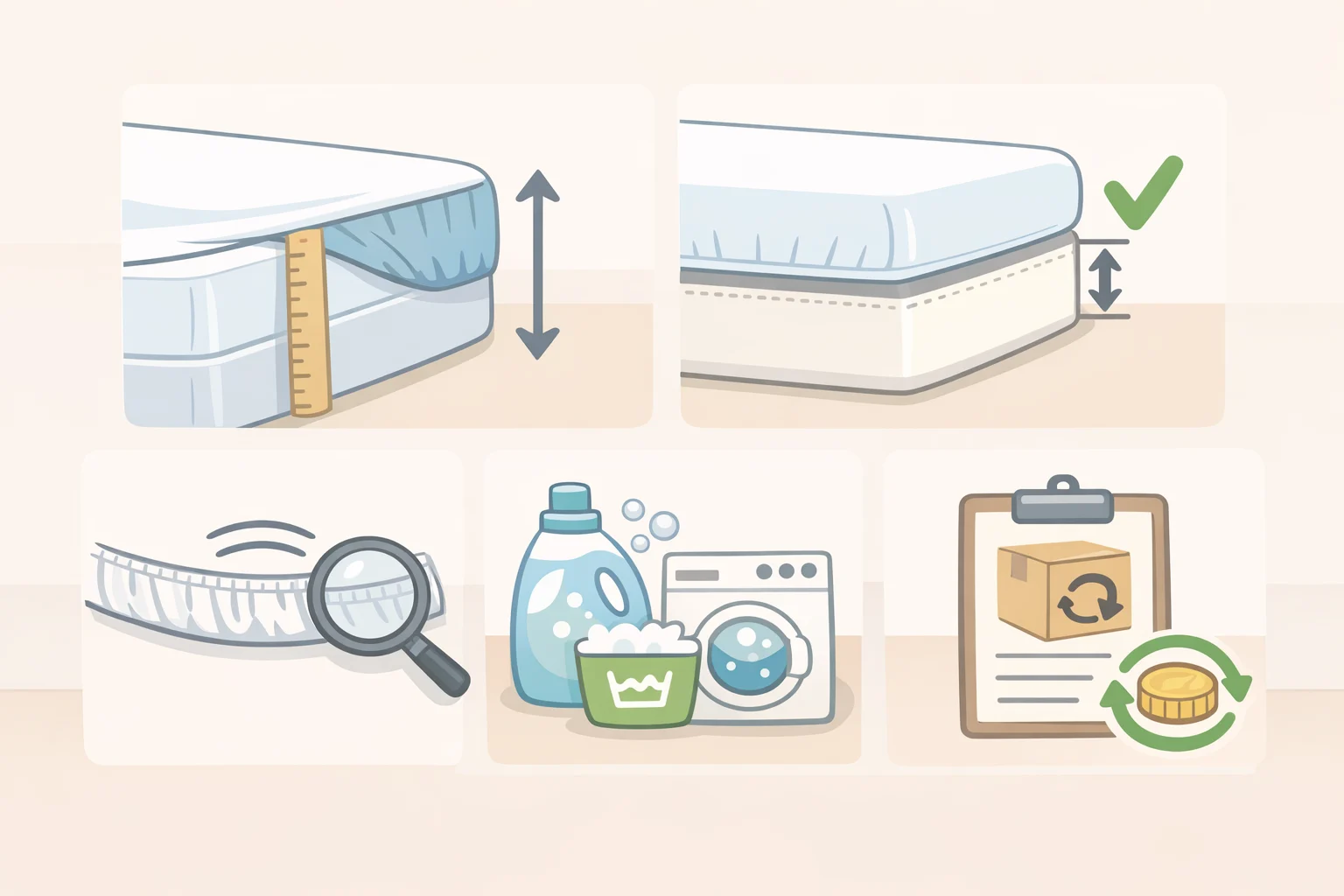
The fix for a popping fitted sheet is almost always found in this sequence: measure actual mattress height, match pocket depth with a real margin above it, verify all-around elastic construction, then add a holding accessory only if the underlying fit and elastic are already sound.
Checklist for evaluating any sheet, new or existing:
- Measured mattress height in inches, including any topper
- Sheet's stated fit range covers that height with at least 2 to 4 inches to spare
- All-around elastic, verified by inspecting the hem rather than trusting the packaging
- Wash care instructions that protect elastic: warm water, low heat, no chlorine bleach
- Return policy that lets you wash it once and return if it doesn't hold
A good cotton sheet with all-around elastic and careful care should hold up for two to four years of weekly washing (Mattress Miracle). If the elastic no longer snaps back, corners won't hold at the correct size, or the fabric has noticeably thinned, no accessory will fix it permanently. A fresh sheet at the right pocket depth will outperform any gadget applied to a worn one.
The Consumer Reports finding is worth keeping in mind when shopping: almost half the sheet sets they tested shrank enough after repeated washing that they no longer fit the mattress they were sold for, and only three cotton sets in their testing genuinely met their own deep-pocket claims (Consumer Reports). The label tells you where to start. A wash cycle tells you whether it actually fits.