Mexican Street Corn Salad Recipe (Esquites) on the Stovetop
This guide walks through making esquites from start to finish on a stovetop. The dish most people search for as "Mexican street corn salad recipe" has a more specific name, a specific technique, and one non-negotiable step that determines whether the whole thing works. That step is the char. Get it right and the rest is forgiving. The full recipe takes about 20 minutes, per Saveur, and can be assembled up to two days ahead.
What esquites is and why stovetop charring is the whole argument
Video of the Day
Elote is corn grilled on the cob, slathered with mayo, cheese, and chile, and eaten standing up. Esquites is the off-the-cob version: same toppings, but mixed through and served in a cup or bowl, which means every bite contains everything. Saveur describes it exactly that way. The bowl format is also what makes the stovetop method possible.
This is a stovetop recipe, and that's the point, not a workaround. Serious Eats is direct: the dish requires no grill, and pan-searing the kernels is just as tasty when the heat is high enough. The method works in an apartment kitchen on a Tuesday in February just as well as it does before a summer cookout.
The flavor target: charred corn tossed with creamy mayo, bright lime, salty cotija, and chile heat. Serious Eats describes the result as "smoky, sweet, spicy, and tangy" that's the benchmark. Everything in this guide serves that result.
Video of the Day
Why cutting the kernels off is the move that makes everything else work
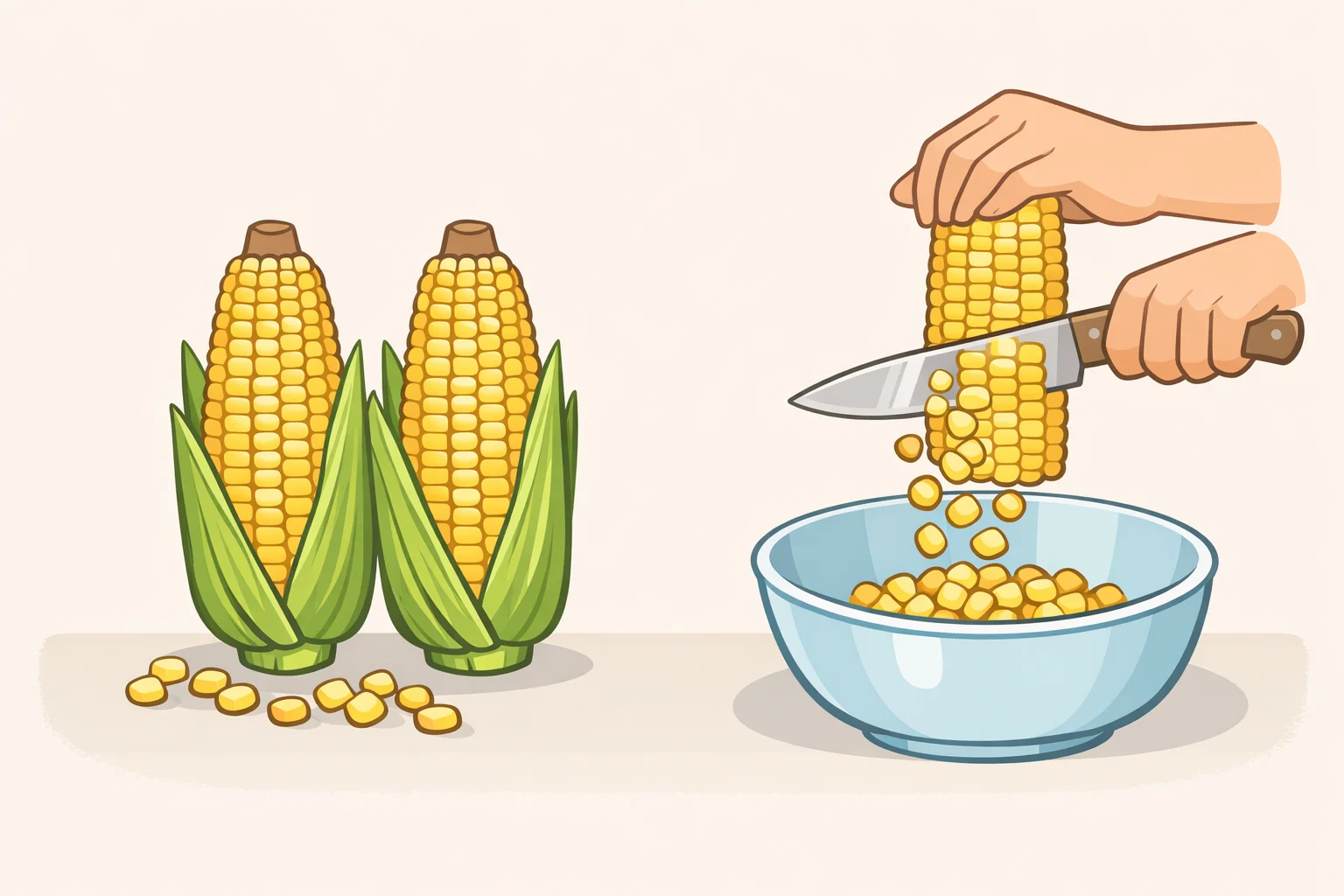
Cutting kernels off the cob before cooking is what makes the indoor method viable. A whole ear of corn in a skillet cannot develop proper char; there's too much mass and too little surface contact with the pan. Individual kernels are different. When spread in a hot, uncrowded pan, they caramelize quickly and develop dark spots on multiple sides. Serious Eats is explicit: removing the kernels first is what unlocks the technique.
What the char actually does is concentrate the corn's natural sugars into something darker and more complex. Pan-searing kernels enhances their inherent sweetness, as Serious Eats describes it. Without that char, you have dressed corn. With it, you have esquites.
The equipment requirements are minimal: a large skillet or wok, high heat, and dry kernels. What's Gaby Cooking and Serious Eats both specify a large nonstick skillet or wok on high heat. The wok's curved walls have a useful secondary benefit: they contain kernels as they pop at temperature, which they will.
Best corn for an easy Mexican corn salad
Before starting, decide on your corn source, because fresh, frozen, and canned all behave differently in the charring step. Everything else can be sorted while the corn cooks.
The five non-negotiables
Every reliable version of this recipe arrives at the same core list: corn, mayonnaise, lime juice, crumbled cheese, and chile seasoning. Cooking in the Keys, Serious Eats, and What's Gaby Cooking all land there independently. These five elements define the dish. Everything else is an adjustment.
Corn: fresh, frozen, or canned, ranked by outcome
- Fresh corn cut from the cob is the best choice. Tastes Better From Scratch notes that white corn is more traditional in Mexico, though yellow corn is a fine substitute and far easier to find.
- Frozen kernels work well and don't need to thaw. Serious Eats cooks them straight from frozen on high heat until browned; the result is nearly identical to fresh.
- Canned corn is a last resort. Drain and dry it thoroughly, because residual liquid will prevent charring and the corn will steam instead. What's Gaby Cooking acknowledges canned works in a pinch but won't deliver the same char. Adjust expectations accordingly.
Cheese: cotija is traditional, substitutes diverge in character
Cotija is firm, salty, and crumbly, and that texture and salinity is exactly what the dish needs. Cooking in the Keys compares it to feta, which is the most useful frame for sourcing purposes. Feta is the closest swap, with similar brininess and crumble; both Cooking in the Keys and What's Gaby Cooking list it as a direct substitute. Parmesan works but reads differently: it's sharper and saltier per gram, so use less. Tastes Better From Scratch recommends it as a fallback.
One practical note: cotija is salty. Dress the salad first, taste it, then add salt.
The dairy balance: mayo alone vs. mayo plus crema
Some recipes use only mayo; others split the base between mayo and sour cream, Greek yogurt, or Mexican crema. Cooking in the Keys uses a combination of mayo and sour cream. Mayo alone produces a richer, denser coating. Adding crema or sour cream lightens the texture and introduces tang, which is useful if the lime isn't doing enough work on its own. Either approach is valid. Just don't overdress: the corn should be coated, not submerged.
Optional add-ins that earn their place
- Jalapeño: direct heat, adjustable by seeding
- Scallions or shallot: allium bite without raw onion sharpness
- Cilantro: freshness
- Smoked paprika or Tajín-style chile-lime seasoning: layered depth
- Avocado: adds richness, but add it just before serving; it won't hold through make-ahead storage or a long rest at room temperature
How to make this Mexican street corn salad: the stovetop method, step by step
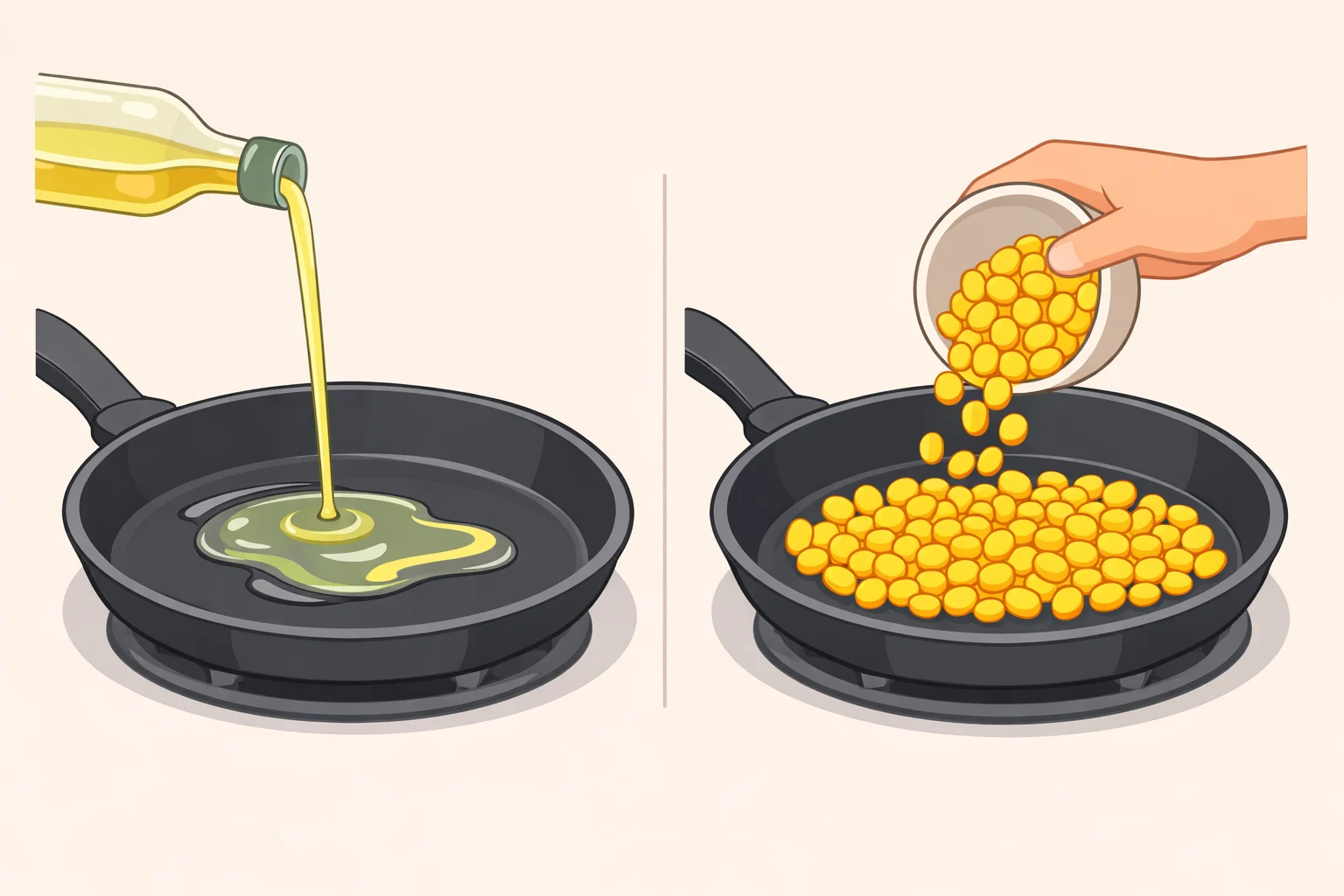
Step 1: Cut corn kernels off the cob. Stand each ear in a wide bowl to catch the kernels. If using frozen corn, skip straight to step 2; no thawing needed. If using canned corn, drain it and spread it on a paper towel to dry for a few minutes first.
Step 2: Heat the pan until the oil shimmers visibly, then add the corn in a single layer. Use a large skillet or wok over high heat. What's Gaby Cooking and Serious Eats both call for oil shimmering before the corn goes in. A pan that isn't hot enough will steam the corn instead of charring it.
Batch size matters most here: Don't pile all the corn in at once for a large batch. What's Gaby Cooking flags this directly: overcrowding traps steam and kills the char. For a double batch, cook in two rounds.
Step 3: Season with salt, then leave the corn alone. Resist the urge to stir. Let the corn sit undisturbed until the bottom develops dark spots, about two minutes, then toss and let it sit again. Serious Eats describes the full charring cycle taking about 10 minutes total: toss, char, toss, char, until kernels are darkened on multiple sides.
Popping is a good sign: At the right temperature, a few kernels will pop like popcorn. Serious Eats notes this confirms you're at the correct heat, not a reason to turn it down. A splatter guard helps.
Step 4: Transfer the charred corn to a large bowl and let it cool briefly. Adding mayo to corn that's still steaming hot can make the dressing greasy and thin. Let the corn settle to warm before dressing.
Step 5: Add mayonnaise, lime juice, and three-quarters of the cheese. Toss to coat. Saveur recommends reserving some cheese for the top, which gives textural contrast between the mixed-in and the fresh-crumbled portions. Taste before adding any extra salt.
Step 6: Add jalapeño, scallions, cilantro, and chile seasoning. Toss again, then taste and adjust. The lime should cut through the mayo; the cheese should anchor the salt; the chile should be felt, not just visible. Balance sweet, salty, creamy, and tangy until nothing is shouting over the rest.
Step 7: Serve warm, at room temperature, or chilled. Serious Eats notes the salad holds well at room temperature, making it genuinely transportable. Cooking in the Keys observes that a few hours of refrigeration actually improves the flavor as everything knits together. Serve warm when the goal is street-food feel; serve chilled when logistics matter more than temperature.
What goes wrong and how to fix it
Corn steams instead of chars: Pan wasn't hot enough, corn was too wet (common with canned), or too much corn went in at once. Fix: ripping-hot pan, dry kernels, single-layer batches.
Salad is over-salted: Cotija is already quite salty, and so are chile-lime seasonings like Tajín. Add cheese and seasoning first, taste, then adjust salt. Saveur builds in a taste-and-adjust step after combining for exactly this reason.
Dressing is greasy or thin: Mayo went onto very hot corn. Let the corn cool to warm before dressing; that brief rest is enough.
Jalapeño heat is wrong: Seeding reduces heat significantly. Leave seeds in for more kick, remove them for a milder result. What's Gaby Cooking notes heat runs mild to medium depending on how the jalapeño is prepped.
Avocado turned brown: It went in too early. Add it just before serving, never during assembly if the dish is being held.
Make-ahead, scaling, and serving
Make-ahead window: Assemble up to two days in advance and refrigerate, per What's Gaby Cooking. Stir well before serving; the mayo redistributes and the flavors deepen. Hold fresh garnishes, avocado, extra cheese, and cilantro until just before it hits the table, per Cooking in the Keys.
Storage: Leftovers keep in a sealed container in the refrigerator for up to three days, per Cooking in the Keys. The texture shifts slightly as the dressing settles in further, but the flavor improves.
Scaling for a crowd: The recipe multiplies easily, but the charring step doesn't scale linearly. More corn means more batches, not a bigger pile in the pan. Expect the charring phase to take longer as you work through each round. Dress everything together at the end. Because the stovetop method runs indoors and concurrently with other cooking, esquites is actually a stronger cookout dish than elote: it doesn't compete for grill space, it holds well, and it can be made ahead entirely.
The dish serves four to six as a side and pairs naturally with tacos and grilled meats, per Cooking in the Keys.
When to use fresh vs. frozen, warm vs. chilled
The corn source and serving temperature are both decision points, not defaults. If corn is in season, use fresh ears and serve the dish warm; that combination is closest to what street vendors in Mexico are actually selling. If it's the middle of winter or you're feeding a large group from a refrigerator, frozen kernels and a chilled finish make more sense. Serious Eats has made this with frozen corn in winter and found the result nearly identical to the summer version.
That flexibility is what makes esquites a better fit for weeknight cooking and transport than elote. Corn on the cob needs a grill, needs to be eaten hot, and needs a napkin. Esquites needs a skillet, keeps for days, and travels without complaint. Make it the night before, pull it from the fridge, stir it, add the avocado and fresh garnishes, and serve it. No last-minute scramble required.