Oven-Baked Skillet Pancake: One Pan, Feeds Four at Once
Summer brunch has one persistent problem: someone always gets a cold pancake. Standing over the stove, flipping one at a time, means the first plate is half-eaten before the last one's poured. America's Test Kitchen named this plainly last fall: batch-cooking pancakes for a group produces some that arrive hot and fluffy and others that come out limp and rubbery. This oven-baked skillet pancake fixes that entirely.
The recipe is straightforward: a mixed-berry puff pancake built in a single 12-inch skillet, on the table in about 30 minutes (Platchaud). No flipping. One pan to wash. The Kitchn calls the cleanup "a breeze," and that's not an exaggeration.
Know what you're making before you start. This is a thick, sliceable pancake: tall edges, tender center, golden crust where butter hit the hot pan. It puffs dramatically in the oven and settles slightly when you pull it out that's expected, not a failure. It's not a Dutch baby, which runs a higher liquid ratio and produces a custardy, crepe-like center, as Serious Eats describes. Not a diner short stack either. It's a proper fluffy skillet pancake, scaled to feed four, cut into wedges, served to everyone at once.
Why this oven-baked skillet pancake puffs
Video of the Day
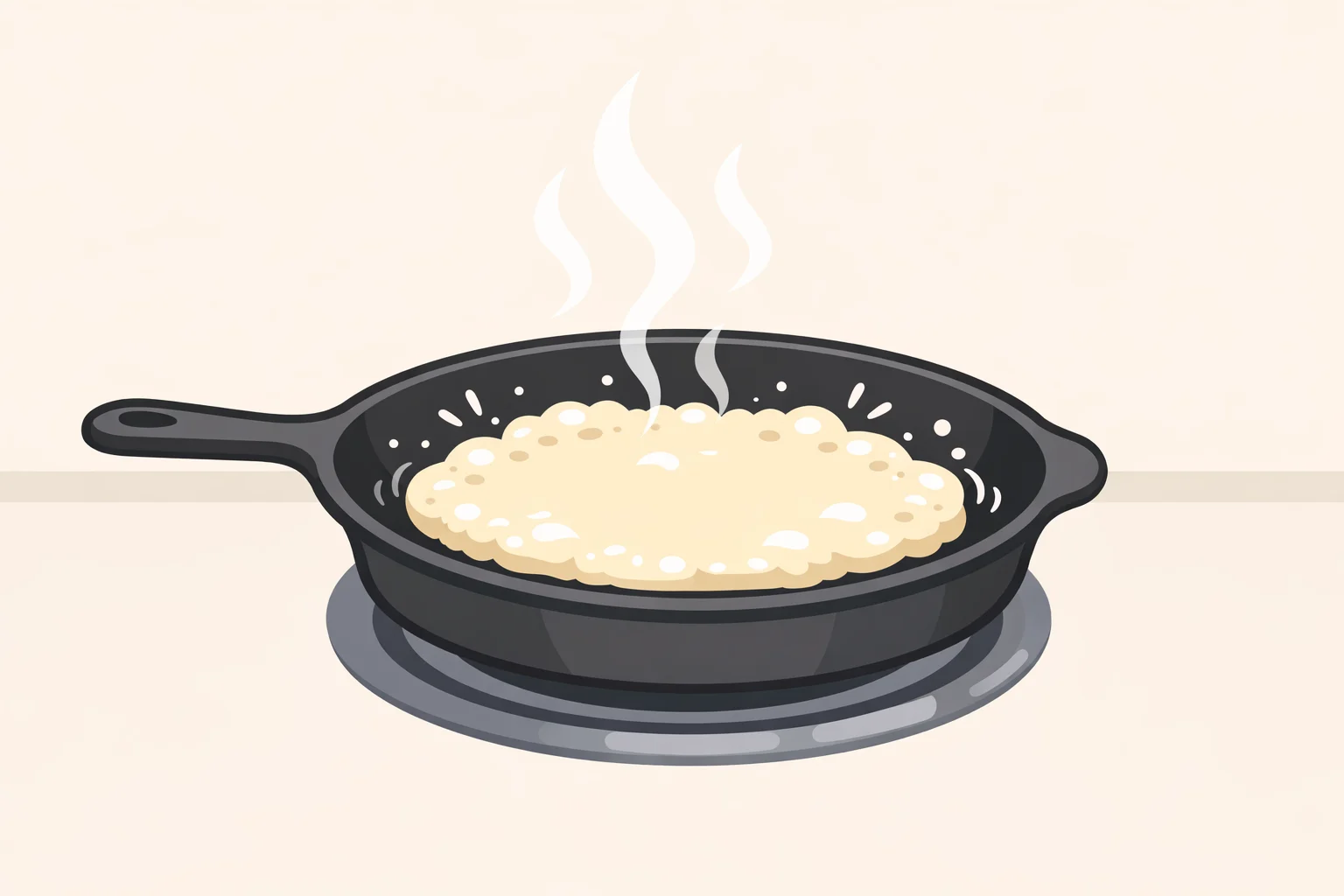
Two decisions determine whether this pancake rises or just sits there, and both happen before the batter touches the pan.
Preheat the skillet inside the oven from the start. Batter poured into a cold pan spreads flat and sets slowly, producing a dense result. A hot pan begins cooking on contact the bottom sets immediately, building structure before the oven's surrounding heat fills in the rest. Serious Eats explains the principle in the context of oven-baked cast iron cooking: preheating the skillet "kickstarts cooking on contact, helping the pancake rise taller and hold its shape." Platchaud identifies a cold skillet at pour time as the direct cause of the most common failure a pancake that simply doesn't puff. The skillet goes into the oven before the oven is turned on. Not after. Not on the stovetop. From the beginning.
Rest the batter while the oven heats. A 10-to-15-minute rest lets dry flour pockets hydrate fully, which is what separates an airy crumb from a tough one. Serious Eats' fluffy pancake testing found that leaving batter slightly lumpy and then resting it produces noticeably lighter pancakes; mixing to a completely smooth finish overdevelops gluten and makes them chewy. America's Test Kitchen builds a 10-minute rest into their oven-baked version for the same reason. Because the oven takes roughly that long to reach temperature, the rest is free: mix the batter, set it aside, and by the time the skillet is ready, so is the batter.
One note on mixing: this batter is an exception to the lumpy-batter rule. Platchaud calls for blending until smooth and free of lumps the oven's even, surrounding heat handles what careful hand-mixing protects against on a burner. Blend until smooth, then rest.
Video of the Day
What you need before you start
Equipment
- 12-inch oven-safe skillet cast iron is the best choice; Platchaud calls it "essential for even heat and a dramatic puff with crisp edges." A nonstick oven-safe skillet or pie plate will work, as The View From Great Island confirms, but expect slightly less puff height and edge crispness. A 10-inch skillet with the same batter produces a thicker pancake that comfortably serves six.
- Blender or large bowl and whisk a blender produces smoother batter faster; a whisk works fine
- Oven mitts rated for high heat the skillet enters the oven empty and exits full of very hot batter
Ingredients (serves 4)
- 4 large eggs, room temperature cold eggs don't blend as smoothly; pull them 20 minutes early (Platchaud)
- 1 cup whole milk
- 1 cup all-purpose flour spoon into the cup and level; don't pack it (Platchaud)
- ¼ cup granulated sugar lightly sweetens the batter without overpowering the berries (Platchaud)
- 1 tsp baking powder provides consistent rise without an alkaline aftertaste (Serious Eats)
- ½ tsp freshly grated lemon zest brightens the batter and complements the berries (Platchaud)
- ¼ tsp salt
- 2 tbsp unsalted butter
- ½ cup blueberries
- ½ cup raspberries, halved halving prevents large pockets of jammy liquid that can weigh down the batter (Platchaud)
- Powdered sugar, maple syrup, or whipped cream to serve
Substitutions
- Dairy-free: swap whole milk 1:1 for full-fat oat milk or almond milk; texture will be slightly lighter (Platchaud)
- Gluten-free: use a 1:1 GF baking flour blend that includes xanthan gum; the pancake will puff but may be more fragile in the center (Platchaud)
- Frozen berries: use straight from the freezer; expect slightly more moisture and a somewhat longer bake time (Platchaud)
How to make it
Step 1: Put the skillet in the oven, then turn the oven on
Set the empty 12-inch skillet on the center rack. Set the oven to 400°F. The skillet needs the full preheat window roughly 10 to 15 minutes to reach temperature along with the oven. Starting with a cold skillet at this stage undoes everything else.
Step 2: Mix the batter while the oven heats
Combine eggs, milk, flour, sugar, lemon zest, baking powder, and salt in a blender or large bowl. Blend or whisk until smooth and free of lumps. Set the batter aside to rest at room temperature until the oven signals it's ready. The timing works out on its own the preheat window and the rest period are the same window.
Step 3: Melt the butter in the hot skillet
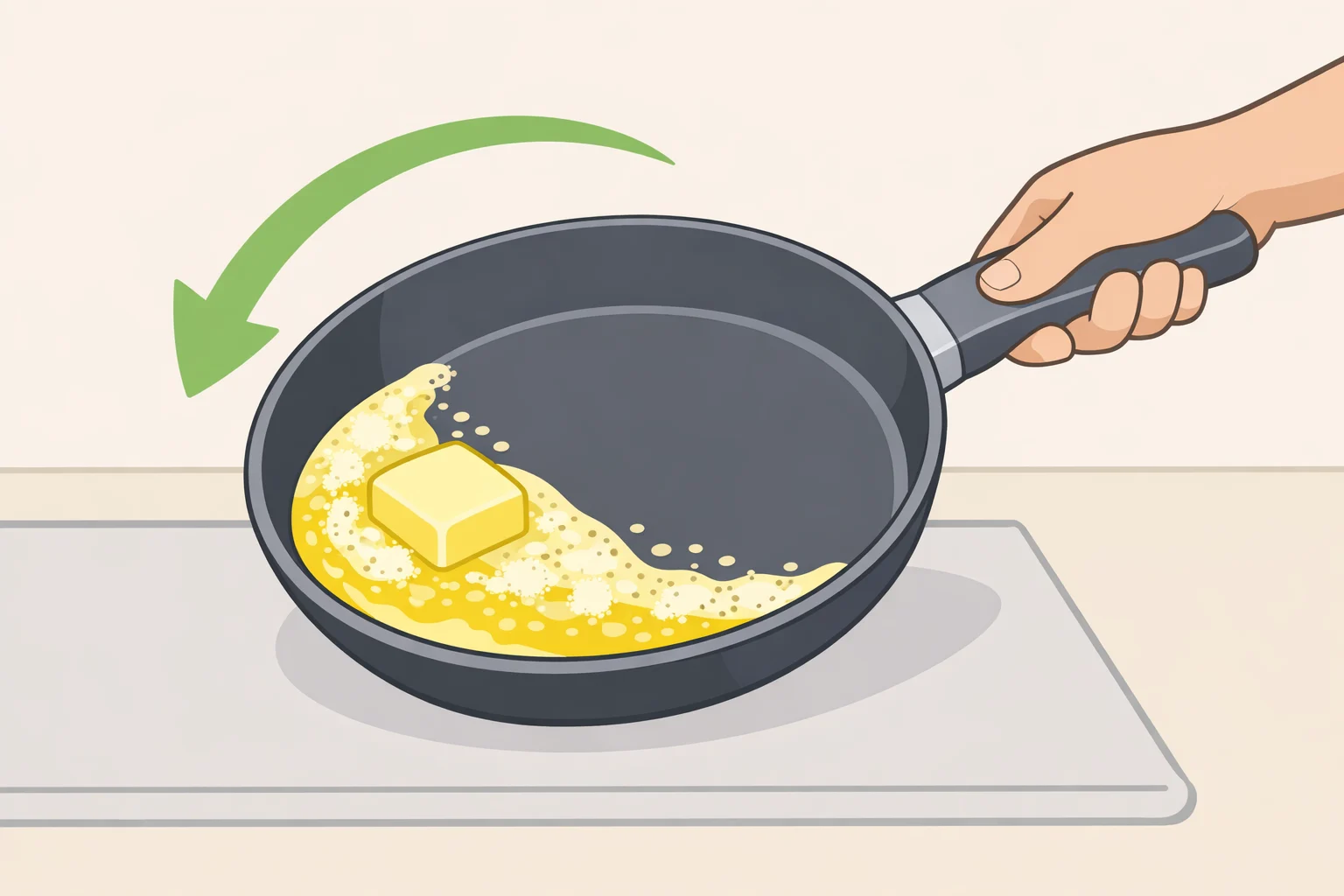
Using oven mitts, carefully pull the skillet from the oven. Add 2 tablespoons of butter and tilt the pan so it melts and coats the entire bottom. The butter should foam and sizzle on contact.
If it doesn't sizzle immediately, the pan isn't hot enough return it to the oven for a couple more minutes. A lukewarm pan at this stage is functionally the same as not preheating at all. Once the bottom is coated, move to the next step without lingering; butter at 400°F burns fast.
Step 4: Pour in the batter and scatter the berries
Pour the batter into the hot, buttered skillet it should sizzle audibly. Immediately scatter the blueberries and halved raspberries evenly across the surface. Don't stir them in. They'll settle slightly as the batter bakes up around them.
If you're worried about berries clumping, toss them lightly in a teaspoon of flour before adding. This keeps them distributed rather than sliding to one side (Platchaud).
Step 5: Bake for 20 minutes, undisturbed
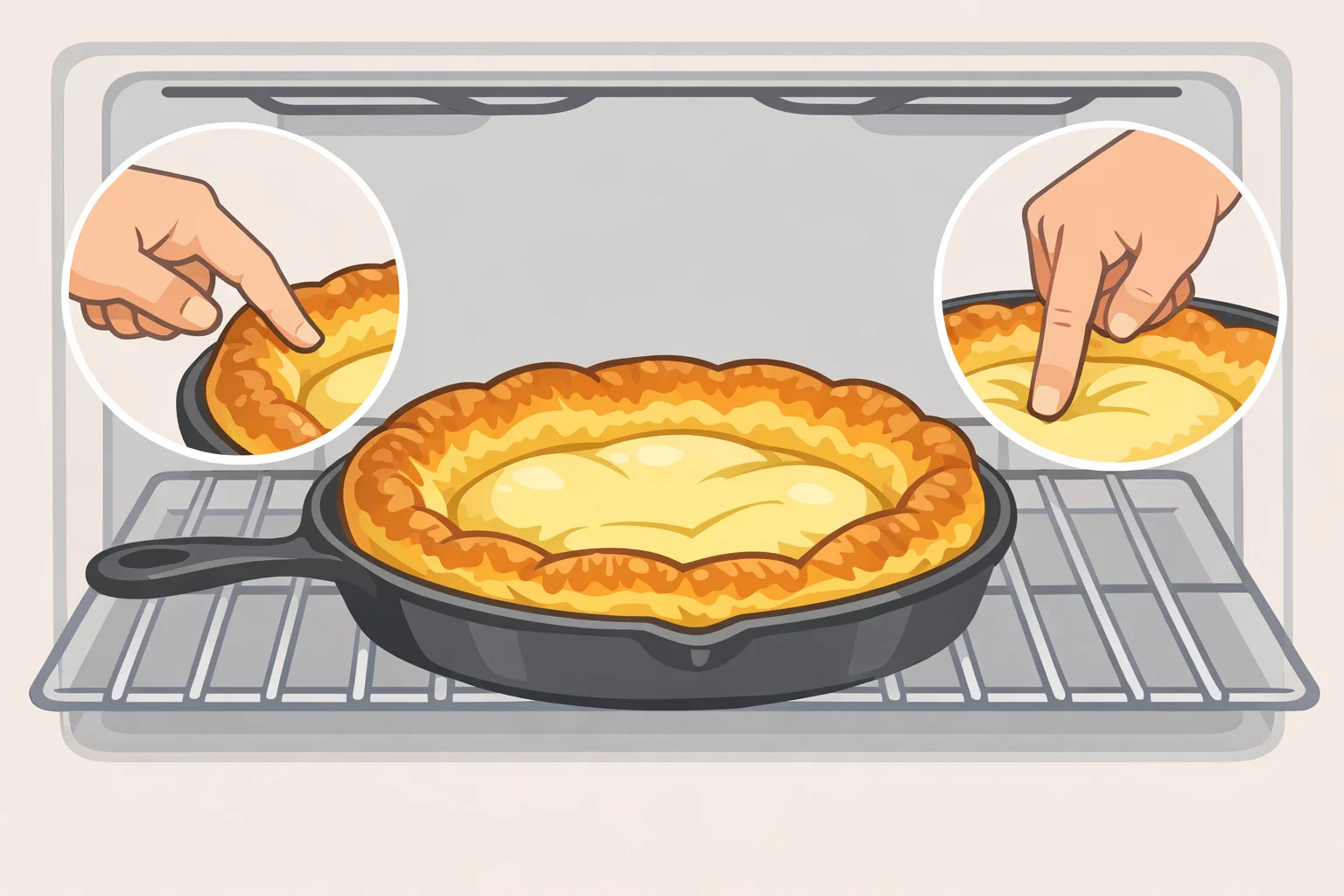
Return the skillet to the center rack and close the oven. Bake for about 20 minutes without opening the door. The pancake is done when the edges are golden and just beginning to pull from the sides of the pan, and the center springs back when pressed gently not soft, not liquid, springy (Platchaud).
If the center is still wobbly at 20 minutes: return to the oven for 3 to 5 more minutes and check again. The most likely cause is a slightly cool oven or a pan that wasn't fully preheated (Platchaud).
If the edges are browning faster than the center: rotate the skillet and make sure the rack is centered, not near the top element (Platchaud).
Step 6: Rest briefly, then slice and serve
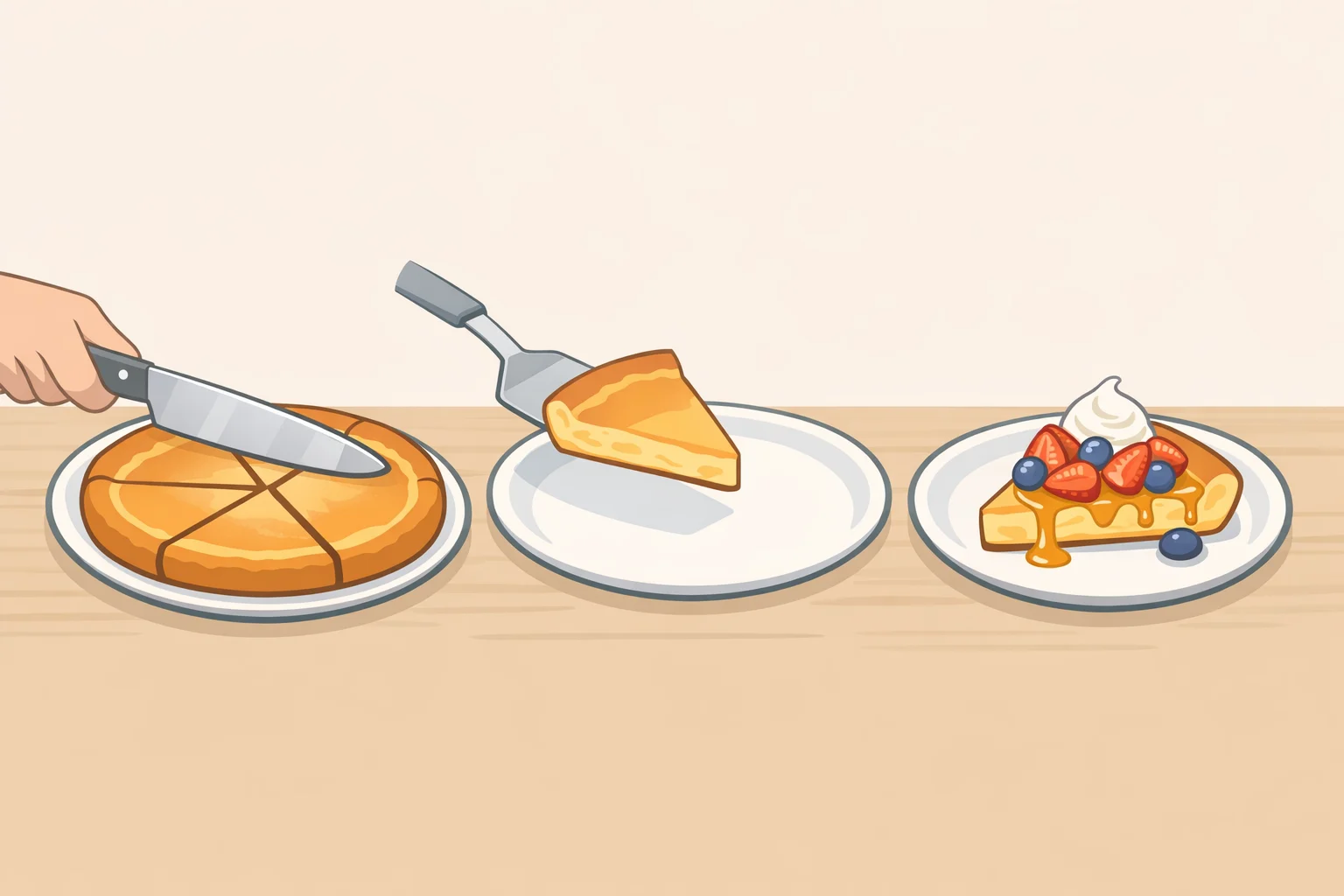
Pull the skillet from the oven and let it sit for a couple of minutes. The puff will settle expected, not a problem. Slice into wedges and serve directly from the pan. The View From Great Island recommends butter and maple syrup and calls it "very satisfying." Hard to argue with that.
Scaling, storing, and reheating
For two: Halve the recipe and use an 8 to 9-inch oven-safe skillet. Start checking for doneness at 12 to 15 minutes rather than 20 (Platchaud).
For six: Use a 10-inch skillet with the full recipe amount. The View From Great Island designed their version for a 10-inch pan and notes it slices cleanly and serves six comfortably.
Storing: Cool completely, cover, and refrigerate for up to 48 hours. To freeze, slice into individual portions, wrap tightly in plastic, and store in a freezer bag for up to one month. Thaw overnight in the fridge before reheating (Platchaud).
Reheating: A 350°F oven for 8 to 10 minutes recovers the most edge texture. A quick broil for the final minute brings back some crispness watch it carefully. The microwave works but makes the pancake rubbery; use it only when speed matters more than texture (Platchaud).
Variations worth trying
The method takes to other fruit without any adjustment. Stone fruit is the obvious next move peaches or cherries, halved and scattered the same way as the berries, work on identical timing. The skillet doesn't care what fruit you use.
The batter also accepts a few quiet additions. Platchaud notes that half a teaspoon of vanilla extract or a pinch of cinnamon both fold in cleanly; the lemon zest keeps things bright either way, so neither addition competes.
Beyond that, the recipe is mostly its own argument. The Kitchn puts the appeal plainly: no flipping, easy to slice, easy to serve regardless of party size. One pan, one oven, everyone eats at the same time.