Summer Household Pests: How to Keep 5 Common Invaders Out
The best time to deal with summer household pests is before you see them. By the time a cockroach turns up on your kitchen counter or a mosquito finds a breeding site in your yard, the conditions that invited them in have already been in place for a while. This guide walks through the five pests most likely to pressure your home this summer, what each one is actually after, and the specific steps that interrupt most infestations before they start.
Do a quick walk of your home's exterior before you begin. Note any moisture sources, gaps in the building envelope, or debris piles near the foundation. Most of what follows can be completed in a single afternoon.
Why summer pest pressure is higher this year
Video of the Day
It's not just heat. The National Pest Management Association warned earlier this year that a winter marked by unusual precipitation and temperature swings allowed more pests to survive and created favorable breeding conditions heading into spring and summer. Erratic weather, not a warm season alone, is what drives higher numbers.
The pattern looks different by pest. Warm, wet conditions boost activity among termites, mosquitoes, and ants. Summer heat then increases fly and cockroach pressure, while tropical storms trigger mosquito surges by creating standing water across large areas. Heavy summer rainfall drives cockroaches and ants indoors as their outdoor habitat floods. The NPMA expects heightened activity this season from pests that threaten both property and health.
Video of the Day
Common summer pests in the house and what draws them in
Each of the five pests on this list is following a different set of cues, but most of those cues come down to three things: water, shelter, and an easy way inside.
Mosquitoes breed in standing water and surge after rain combined with heat. Even a small amount of pooled water is enough to restart a breeding cycle. The NPMA notes mosquitoes can breed in as little as a bottle cap of water.
Cockroaches are drawn to warmth, moisture, and food scraps. The EPA identifies them as pests whose problems can often be resolved by removing what they need: food, water, and shelter. Summer heat accelerates their activity, and flooding pushes them indoors.
Ants forage in warm months and enter through tiny gaps in search of food and water. Like cockroaches, they move inside in greater numbers after heavy rain saturates outdoor habitat.
Flies breed in decaying organic material and peak with heat and moisture. They're a food-contamination risk, and their numbers climb fast when garbage or organic waste is accessible.
Termites are the outlier. Colonies chew wood year-round, but spring and early summer bring dispersal flights, when winged reproductives leave mature colonies to start new ones. UF/IFAS notes that dispersal flights typically run March through May. Termites account for billions of dollars in annual U.S. property damage, and the damage from invasive subterranean species can already be serious by the time any visible signs appear. That's why they get their own section below.
Summer pest prevention tips that matter most
Three actions address the most pests simultaneously and have the highest return on a single afternoon: eliminating standing water, fixing moisture sources and sealing exterior gaps, and getting screens and doors airtight. Start there.
Step 1: Eliminate standing water
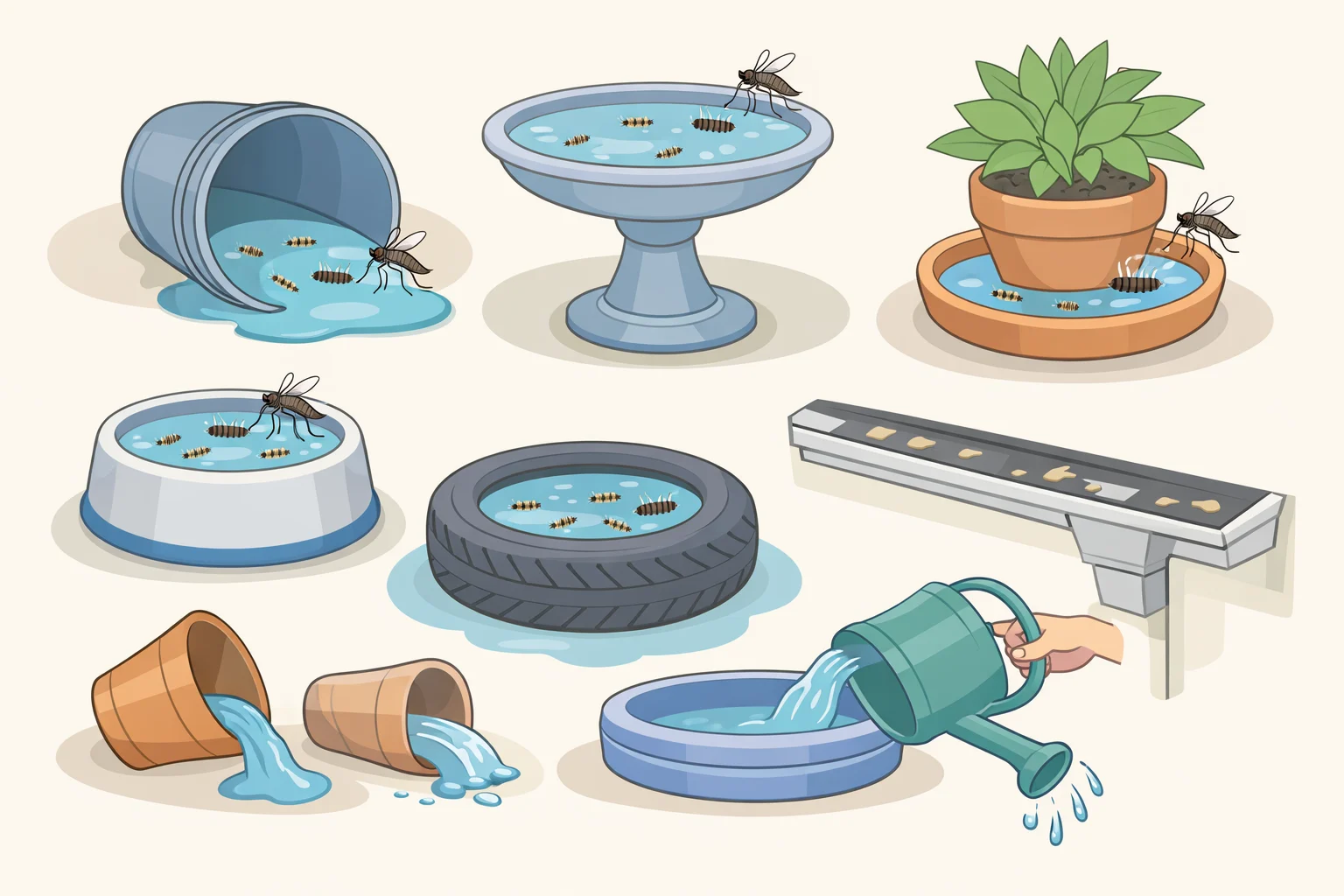
Empty every container in your yard that collects rainwater. Birdbaths, flowerpot trays, clogged gutters, buckets, tarps all of it. The NPMA is clear that mosquito breeding cycles restart after every rainfall, so this is a recurring task, not a one-time check.
The EPA recommends keeping pool water treated and circulating, and draining any temporary pools that can't be maintained. Add plant trays and rain gutters to your check both are consistently missed.
Step 2: Fix leaky plumbing and moisture issues
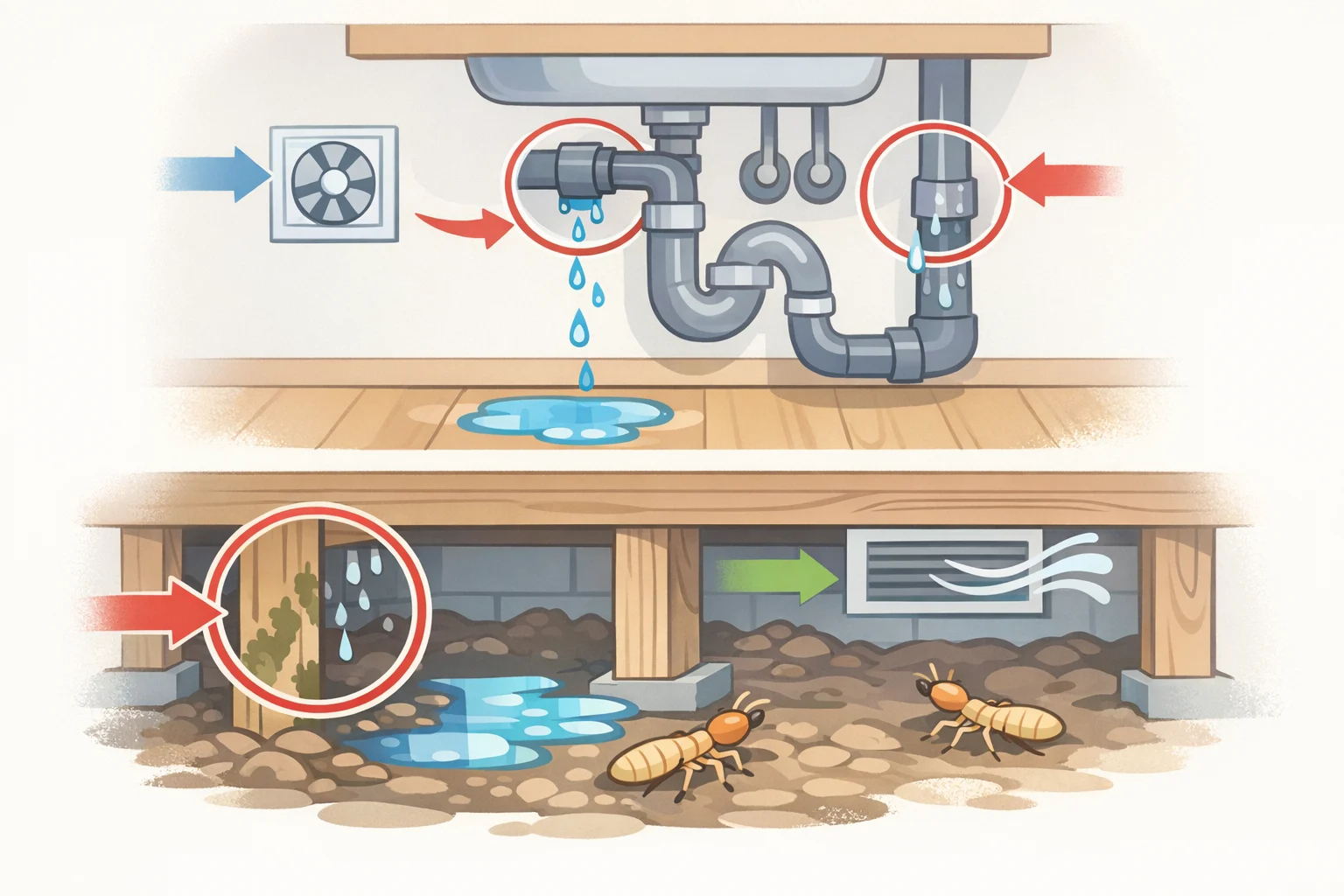
Repair leaky pipes, dripping outdoor spigots, and slow-draining sinks. The NPMA recommends ensuring proper ventilation in basements, attics, and crawl spaces. Damp, poorly ventilated areas under sinks and along foundation walls are high-priority targets subterranean termites depend on moisture to survive and will exploit any persistent wet zone near the structure.
The EPA also flags trays under houseplants as a water source worth fixing.
Step 3: Seal exterior gaps and tighten screens
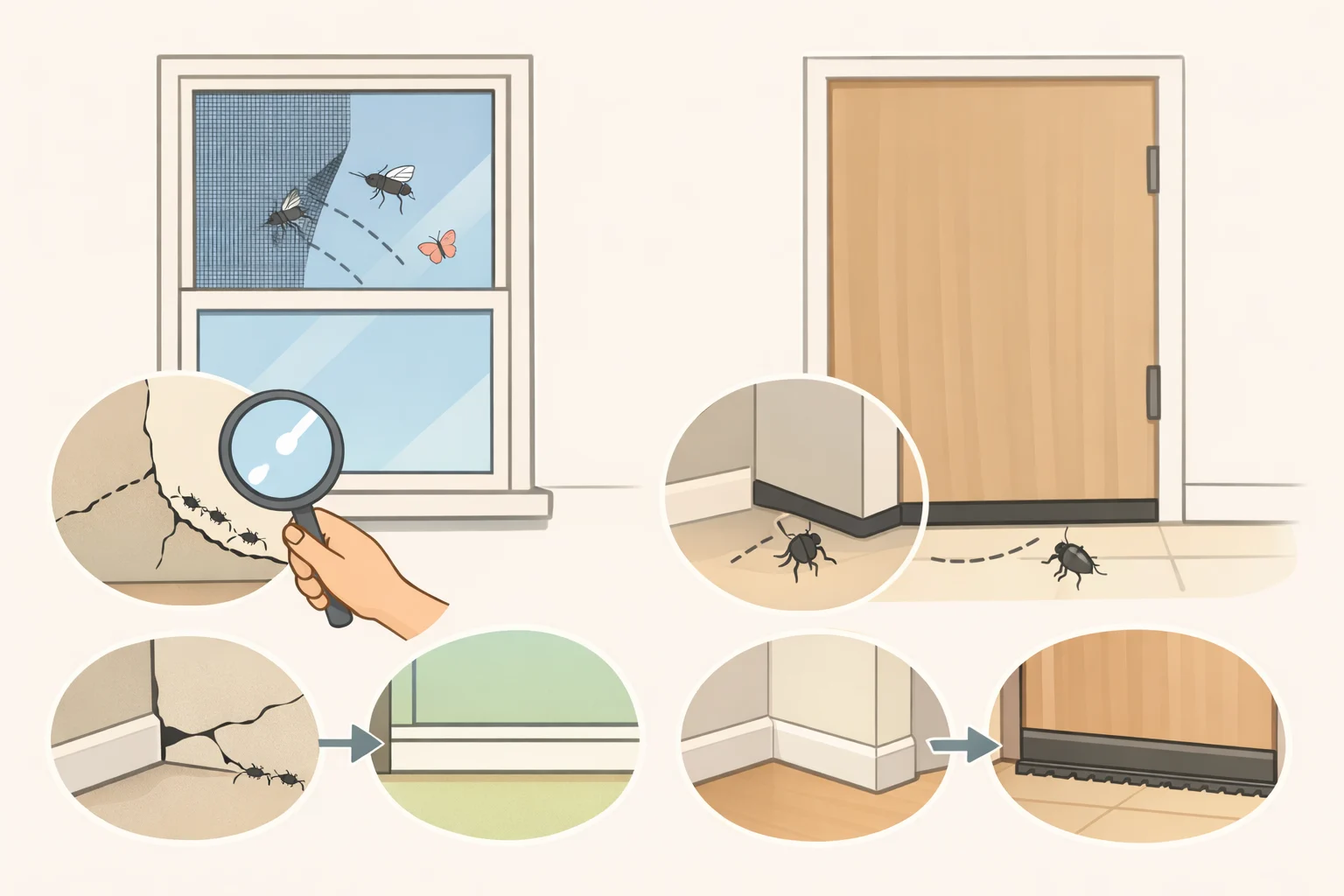
Walk the home's perimeter and look for cracks and gaps around windows, door frames, utility pipe penetrations, and the foundation. The NPMA recommends sealing openings with caulk or weatherstripping. The EPA advises making window and door screens "bug tight" no tears, bent frames, or gaps where the screen meets the sill.
One place people miss: screen doors that don't fully close or latch. Check the tension on the door closer while you're at it. Flies and mosquitoes don't need much of an opening.
Step 4: Tighten up food storage and sanitation
Keep food in airtight containers and clean up crumbs and spills promptly. The EPA specifically flags pet food and water left out overnight as attractants; remove both before bed. Take garbage out regularly rather than letting bags accumulate flies breed in decaying organic waste, and exposed food scraps draw cockroaches.
Step 5: Maintain the yard perimeter
Trim grass and shrubs back from the home's foundation and clear leaf litter and debris from the perimeter. The NPMA notes these provide shelter close to the house. Move firewood storage away from exterior walls wood stacked against the foundation puts combustible, pest-friendly material right at the building line. Keep wood mulch pulled back from the base of the structure as well.
One small upgrade worth making: swap standard outdoor lights near doors and windows for yellow "bug" lights. The EPA notes these attract fewer mosquitoes than ordinary bulbs, though they don't repel them.
Termites: the one pest that requires a different response
Everything above applies to mosquitoes, cockroaches, ants, and flies. Termites follow a different logic, and the threshold for calling a professional is lower.
Established colonies chew wood continuously regardless of season. Spring and early summer add a visible layer: dispersal flights, when winged reproductives leave mature colonies to establish new ones. According to UF/IFAS, these flights typically run March through May. That window has already passed this year, but the underlying colony activity has not stopped.
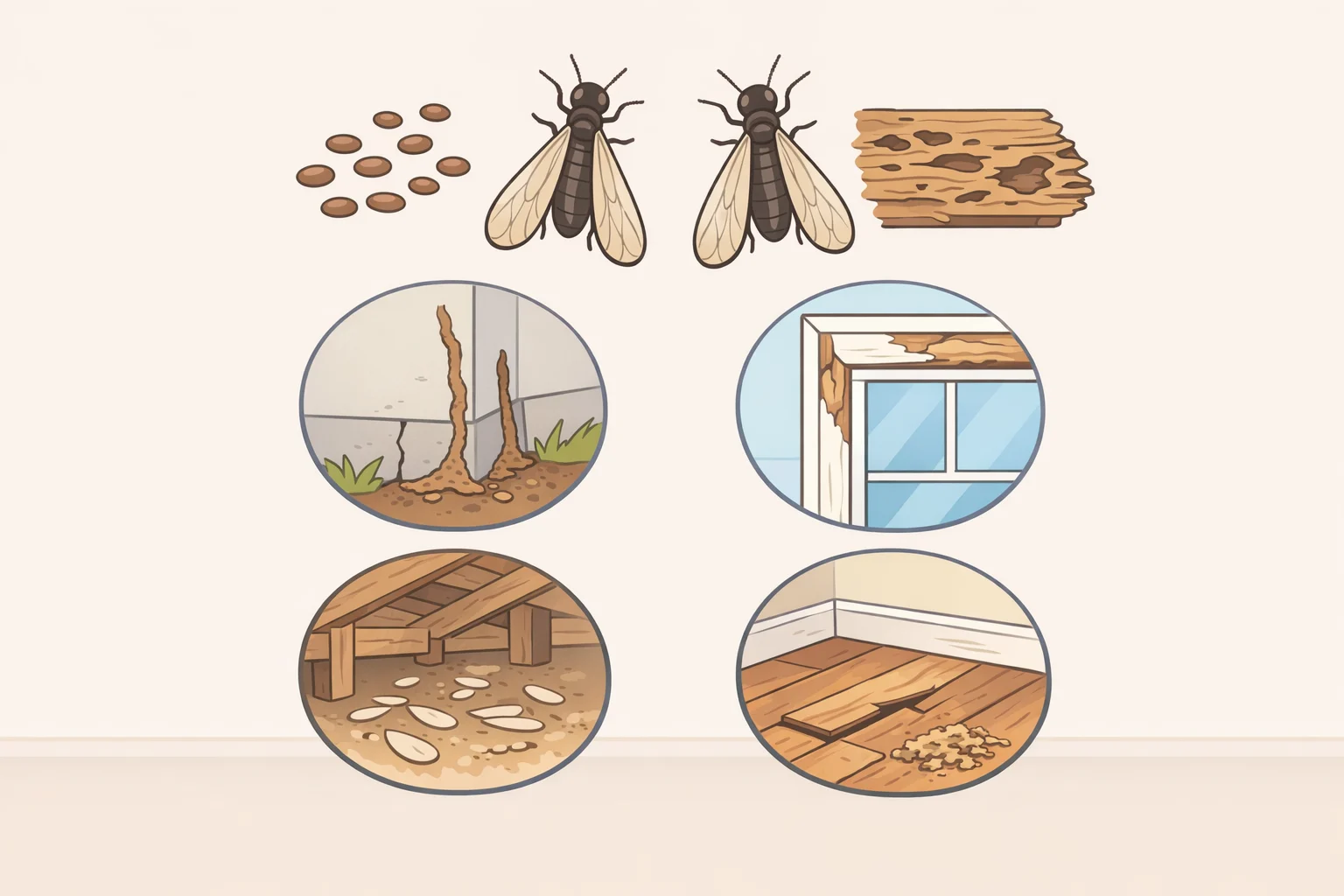
Signs that warrant calling a pest control professional immediately: winged swarmers emerging indoors; discarded wings near windowsills, foundation vents, or light sources; wood that sounds hollow when tapped. If you see termites or evidence of termite activity, contact a pest control provider. UF/IFAS is direct about the stakes: with invasive subterranean species, serious structural damage can already exist by the time swarmers are visible. This is not a wait-and-see situation.
Treatment is species-dependent. UF/IFAS explains that drywood termites are typically treated through fumigation, which eliminates colonies throughout the structure even when they can't be located directly. Subterranean termites, which nest underground and can forage up to a football field away from the colony, require baits or liquid termiticide applied by a licensed professional fumigation doesn't reach them.
Preventive steps on your end: fix moisture intrusion in crawl spaces and basements, eliminate wood-to-soil contact around the foundation, and keep mulch pulled back from the base of the house. If you haven't had a professional inspection and you're in a high-risk region, schedule one. The NPMA notes that a professional inspection can identify problem areas before they become full infestations.
When to escalate: normal sightings vs. signs of a real problem
A single ant on the counter or a fly that slipped in when the door was open is not an infestation. What changes the picture is repetition, pattern, and location.
Normal sightings: Isolated insects, occasional fly or mosquito indoors. Stick with the prevention steps above.
Signs of a breeding source or indoor activity: The same pest appearing in the same area over several days, ant trails leading to a consistent food source, fly activity concentrated near a drain or trash area. Locate and remove the source; consider targeted baits or traps.
Signs requiring a professional: Any termite swarmers or evidence of termite activity; persistent infestation after thorough sanitation and exclusion. Call a licensed pest control professional.
If you do reach for a pesticide, the EPA advises using only products that carry an EPA registration number on the label that number confirms the product has been evaluated for safety and efficacy when used as directed. Read the label first and follow all directions.
What to do this week
The checklist below covers the highest-impact steps. The first three address the most pests simultaneously and belong at the top of the list.
- Empty all standing water containers in the yard; repeat after every rain
- Fix leaky pipes, dripping faucets, and slow drains indoors; ventilate basements, attics, and crawl spaces
- Check and repair window and door screens; confirm screen doors close and latch
- Seal exterior cracks around windows, doors, utility pipes, and foundation with caulk or weatherstripping
- Store food in sealed containers; remove garbage regularly; don't leave pet food out overnight
- Trim grass and shrubs back from the house; clear leaf litter from the perimeter
- Move firewood away from exterior walls; pull back mulch from the foundation
- Inspect for termite swarmers or evidence of termite activity call a professional if found
Related guides: choosing EPA-registered mosquito repellents, indoor cockroach prevention, and how to read a pesticide label.