Lobster base buttered noodles: technique, ratios, and why it works
Buttered noodles are honest food. Pasta, butter, garlic, done. Whisk a single teaspoon of lobster base into your reserved pasta water before building the sauce, though, and the result tastes like something assembled with considerably more intention. The base dissolves into starchy pasta water and, combined with butter, creates a glossy sauce with a savory richness that makes the whole dish feel restaurant-adjacent, according to The Kitchn earlier this year. The noodles stay simple. The flavor doesn't.
Flavor expectations upfront: this is a quiet seafood undertone, not fishy, not briny. The Kitchn describes it as a richness that makes the dish feel "fancy" without changing what it fundamentally is. Not a substitute for lobster bisque, and not trying to be.
What follows is the full method for lobster base buttered noodles, with the ratios, the sequence, and the pitfalls worth knowing before you start.
Before you cook: what to get right
Video of the Day
The margin between subtle depth and aggressively salty is narrower than it looks. Lobster base is concentrated, and The Kitchn is clear on this: a little goes a long way. Get these things sorted before turning on the burner.
- Use 1 teaspoon per half pound of pasta. That's the ratio. More than one teaspoon tips the flavor from subtle to aggressive.
- Use unsalted butter throughout. The base carries significant salt. Between that and well-salted pasta water, salted butter will push the dish over before you've had a chance to taste it.
- Don't adjust mid-cook on the first pass. Once the pasta hits the pan, the window for corrections is short. Make it with one teaspoon, taste the result, and recalibrate for the next batch if you want more intensity.
- Taste before salting at the end. You may not need any additional salt at all.
Video of the Day
How to make lobster base buttered noodles
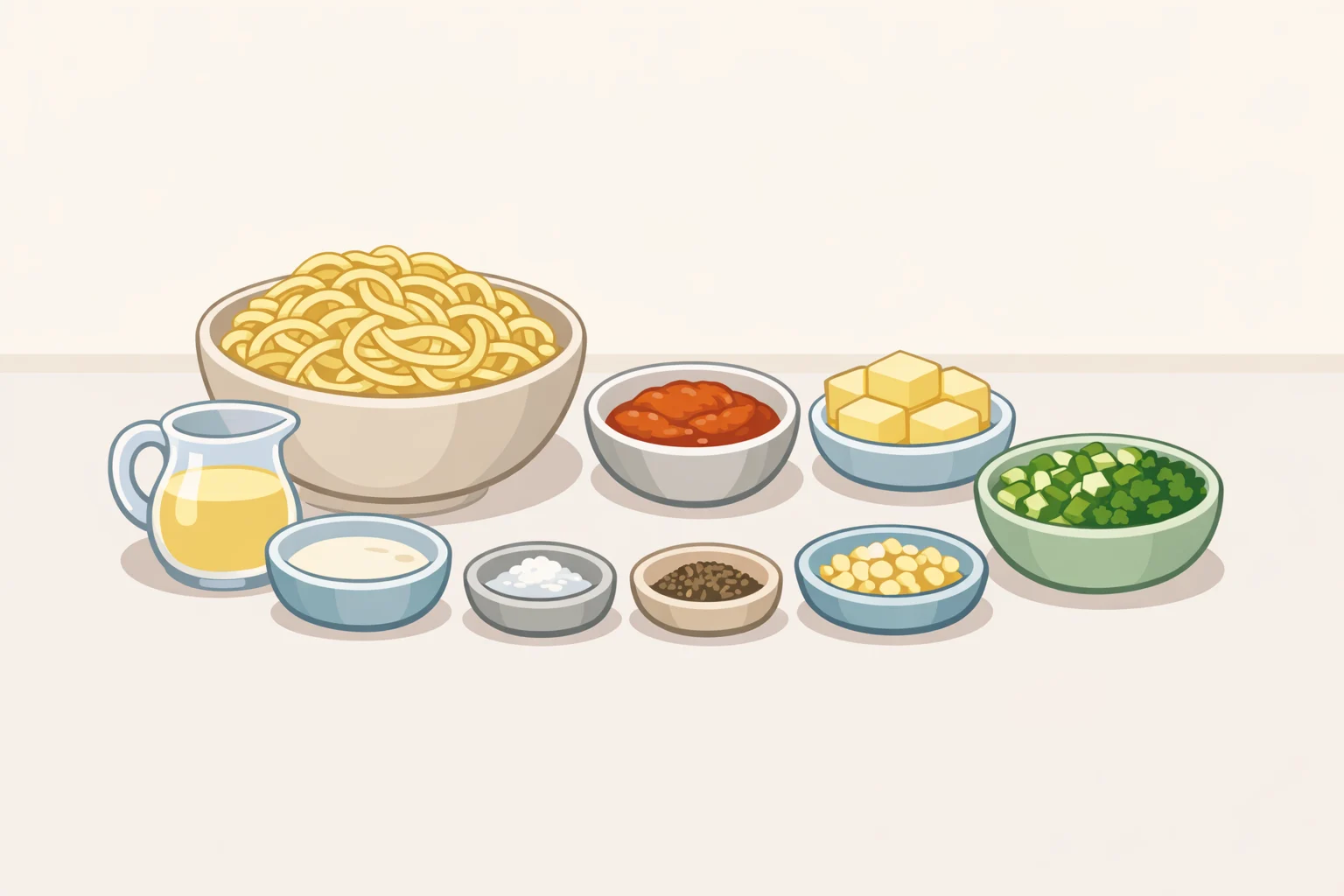
The steps below serve two. A wide skillet matters here, not a saucepan. Surface area is what lets you toss the pasta properly and gives the emulsification room to happen. The sequence is specific; this is what separates a glossy, cohesive lobster base pasta sauce from noodles with base distributed unevenly on top.
What you need: Half a pound of dried pasta, 3 tablespoons unsalted butter (divided), 2 garlic cloves, 1 teaspoon lobster base, kosher salt, black pepper, chives to finish (optional).
Step 1: Cook the pasta and save the water.
Boil the pasta in well-salted water until one minute shy of the package's al dente time. It finishes cooking in the skillet. Before draining, ladle out at least half a cup of pasta water and set it somewhere visible.
The starch in that water is what allows the sauce to come together as a cohesive coating rather than break into separate butter and liquid, per The Kitchn. Skipping this step isn't really an option if you want the sauce to work.
Step 2: Dissolve the lobster base into the pasta water.
Whisk one teaspoon of lobster base into the reserved half cup of pasta water until fully dissolved. The liquid turns amber-orange. Do this while the pasta is still boiling so it's ready when you need it.
This is the step most people skip or get wrong. Mixing the base in dry against hot noodles creates uneven seasoning, one bite mild and the next aggressively salty. Dissolved into liquid first, it distributes evenly through the sauce, as The Kitchn describes. The difference in the finished dish is noticeable.
Step 3: Build the garlic butter.
Melt one tablespoon of unsalted butter in a wide skillet over medium heat. Add two minced garlic cloves and cook for about one minute until fragrant. Pull back before the garlic takes on color. Browning introduces bitterness that competes directly with the delicate seafood flavor built into the lobster water, and there's no recovering from it once it happens.
Step 4: Toss the pasta with the lobster water.
Add the drained pasta and the lobster-base pasta water to the skillet together. Toss to coat, letting the pasta absorb the liquid and finish cooking through. The starchy water begins binding with the butter at this point, which is what starts producing a glossy sauce rather than a greasy one, per The Kitchn.
Keep the pasta moving. If the liquid absorbs faster than expected, add a splash more pasta water, a tablespoon at a time. The goal is a cohesive sauce that coats every strand, not a dry pan.
Step 5: Finish with butter off the heat.
Turn off the burner. Add the remaining two tablespoons of unsalted butter and stir continuously until melted and incorporated. Killing the heat before adding the last of the butter is the move that keeps the sauce smooth. Butter added to a pan still running hot breaks rather than folds in; you end up with grease pooling at the bottom instead of a glossy emulsion. Done right, the result is a smooth, glossy coating on every noodle, as The Kitchn puts it.
Step 6: Season and serve immediately.
Taste first, then add kosher salt only if needed. Finish with cracked black pepper and chives. Serve right away. The sauce tightens as it cools, and buttered noodles with lobster base are at their best the moment they come off the heat.
The one pitfall worth repeating: doubling the lobster base. One teaspoon for half a pound of pasta is the ratio that works. Beyond that, saltiness dominates and the seafood flavor turns aggressive rather than subtle. Start conservative, taste the finished dish, and decide whether future batches want more.
Why lobster base is worth having around
Lobster base is a concentrated paste, essentially reduced shellfish stock combined with salt and aromatics, sold in small jars. Because it's concentrated, a single container covers considerably more ground than its size suggests.
The practical argument for buying it rests less on this one dish and more on the range of things the same jar handles. The Kitchn lists lobster bisque, lobster mac and cheese, and lobster risotto as natural fits, alongside shrimp fried rice and seafood gumbo. Five distinct applications from one small jar changes the calculation considerably. A specialty ingredient that serves a single purpose is hard to justify; one that functions as a seafood flavor booster across multiple dishes is a different kind of pantry staple.
The culinary logic is the same in every context. Never Not Hungry used lobster bouillon in a spicy lobster pasta nearly two years ago for a straightforward reason: when you're not using shells or homemade stock, bouillon fills in the seafood backbone a dish would otherwise lack. That applies whether you're building a bisque or, as here, dissolving it into pasta water before finishing with butter. The base does the flavor work that a long simmer would otherwise require.
Think of it as a flavor switch rather than a specialty ingredient with a narrow purpose. Once that's understood, the jar gets used more broadly.
Additions, variations, and where to find it
The buttered noodles recipe works as written. It's a fast, complete weeknight dinner that comes together in under 20 minutes with a short ingredient list and no complicated technique.
For something more substantial, The Kitchn recommends sautéed shrimp or seared scallops tossed in at the end. Both keep the seafood thread running while adding protein, and the whole thing still qualifies as a quick weeknight dinner. The lobster base carries the flavor; whatever you add doesn't have to work hard.
A few things worth knowing before experimenting with variations:
- Pasta shape: Most dried pasta works here. Long noodles like spaghetti or linguine coat evenly and carry the glossy sauce well. Shorter shapes like rigatoni trap the sauce inside, which changes the texture but not the flavor.
- Scaling up: The method scales, but the ratio stays the same. Two pounds of pasta needs two teaspoons of lobster base, not more. Concentration doesn't change based on batch size.
- Serving timing: The emulsion holds beautifully right off the heat. Given time to sit, the sauce tightens and the noodles absorb the remaining liquid. Time the finish so the pasta goes directly from skillet to bowl.
As for sourcing: lobster base is typically stocked in the soup aisle or specialty section of well-stocked grocery stores, usually near the bouillon and broth concentrates. It's also reliably available online. Because the recipe calls for one teaspoon at a time, a single jar goes a long way across multiple uses. The first batch of buttered noodles effectively pays for the purchase. Everything after that is a bonus.