Overlooked Storage Spaces in Your Home: 8 Spots to Reclaim
Most homes have more storage than their owners realize. The overlooked storage spaces in your home aren't hidden behind walls or buried in blueprints they're the gap above your closet rod, the back of the door you walk past every morning, the recessed strip at the base of your kitchen cabinets. Pros spot them immediately. Everyone else walks past them for years.
This guide covers eight specific spaces that professional organizers and designers consistently identify as underused, ranked from zero-tool quick wins to worthwhile carpentry upgrades. By the end, you'll know which spaces to assess, what belongs in each one, and what the effort actually looks like.
Before working through the list, do two things: empty and measure the spaces you plan to use, and do an honest pass at what you actually need to store. Organizer Trish Johnson put it plainly earlier this year: "you don't need more bins, you need less stuff" (House Beautiful reported). Adding storage to a home full of things you don't use is rearranging the problem, not solving it.
Each space below includes an effort label (No-Install / Simple Install / Carpentry), a note on renter suitability, the best items to store there, and one common mistake to avoid.
Hidden storage spaces that don't need a contractor
Video of the Day
Pros prioritize these first because the barrier is low and the payoff is immediate. Most require only an over-the-door rack, a floating shelf, or a rolling cart. No permits, no landlord conversations, no tools you don't already own.
1. The back of room doors
Effort: No-Install | Renter-friendly: Yes
The back of any interior door is, as organizer Leslie Kilgour puts it, "a vertical goldmine." Slim over-the-door racks can hold scarves, belts, cleaning supplies, paper towels, snacks, gift wrap, or shoes depending on the room (Martha Stewart reported this past May).
Hang an over-the-door organizer on any bedroom, bathroom, closet, or laundry room door. This space works best for daily-use items that tend to pile up on surfaces the stuff you reach for and put down without a real home. Keep it light: over-the-door hooks are rated for lightweight loads, and overloading them stresses the door's hinges over time.
2. Inside cabinet and closet doors
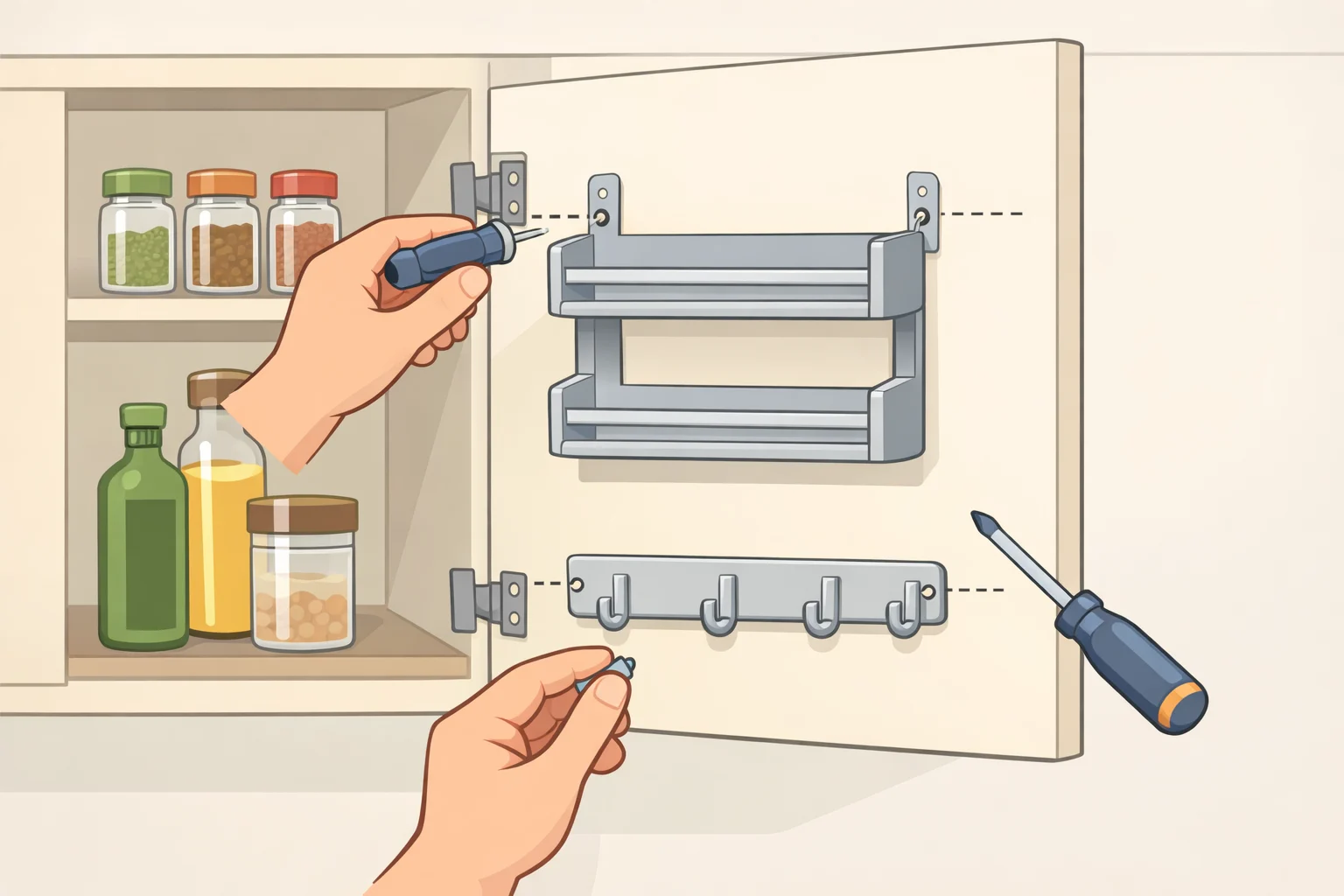
Effort: No-Install to Simple Install | Renter-friendly: Yes (Command strips) or conditional (screws)
The inner surfaces of kitchen cabinet and closet doors are mounting-ready storage that most people leave completely blank. Common uses include measuring cups hung inside kitchen cabinet doors, spice racks on pantry doors, and shallow baskets for toiletries inside bathroom cabinet doors, secured with Command strips or small screws (Home as We Make It reported late last year).
Mount a small rack or hook set on the inside of any cabinet door. It adds storage without adding furniture or consuming shelf space, effectively doubling what a single cabinet can hold. Match what you store to what's already in that cabinet: measuring tools near baking supplies, toiletries near the mirror, cleaning supplies near the sink. Don't load the door beyond what its hinges can handle.
3. Narrow gaps beside appliances
Effort: No-Install | Renter-friendly: Yes
The slender slots beside refrigerators, stoves, and side-by-side washer-dryer sets are too narrow for standard cabinetry but sized exactly right for slim rolling carts. They pull out for access and disappear when not needed (Home as We Make It).
Measure the gap width before buying anything. Carts come in widths starting around four inches, and a half-inch error means it won't fit. Spices, canned goods, and laundry supplies work well here. Skip cooking oils or anything heat-sensitive in the gap beside a stove sustained appliance heat makes that slot unsuitable for temperature-sensitive goods.
4. Above door frames
Effort: Simple Install | Renter-friendly: Conditional (requires holes for brackets)
The gap between any interior door's top casing and the ceiling is almost universally ignored. Organizer Erika Salloux notes that what you store there depends on the room: attractive cookware in a kitchen, seasonal apparel in a closet, small décor in a hallway (Martha Stewart).
Install a floating shelf or bracket-supported board above any door frame. It doesn't need to be deep a few inches handles most lightweight items. Reserve this space for seasonal or backup items accessed a few times a year. Height makes it slow to reach; anything you grab weekly belongs somewhere lower.
Video of the Day
The middle tier: architectural dead zones worth reclaiming
These spaces take a bit more thought and occasionally a drill. The geometry is already there your home built it in. The assessment costs nothing, and the payoff tends to be significant.
5. Inside closets: above the rod and behind the door
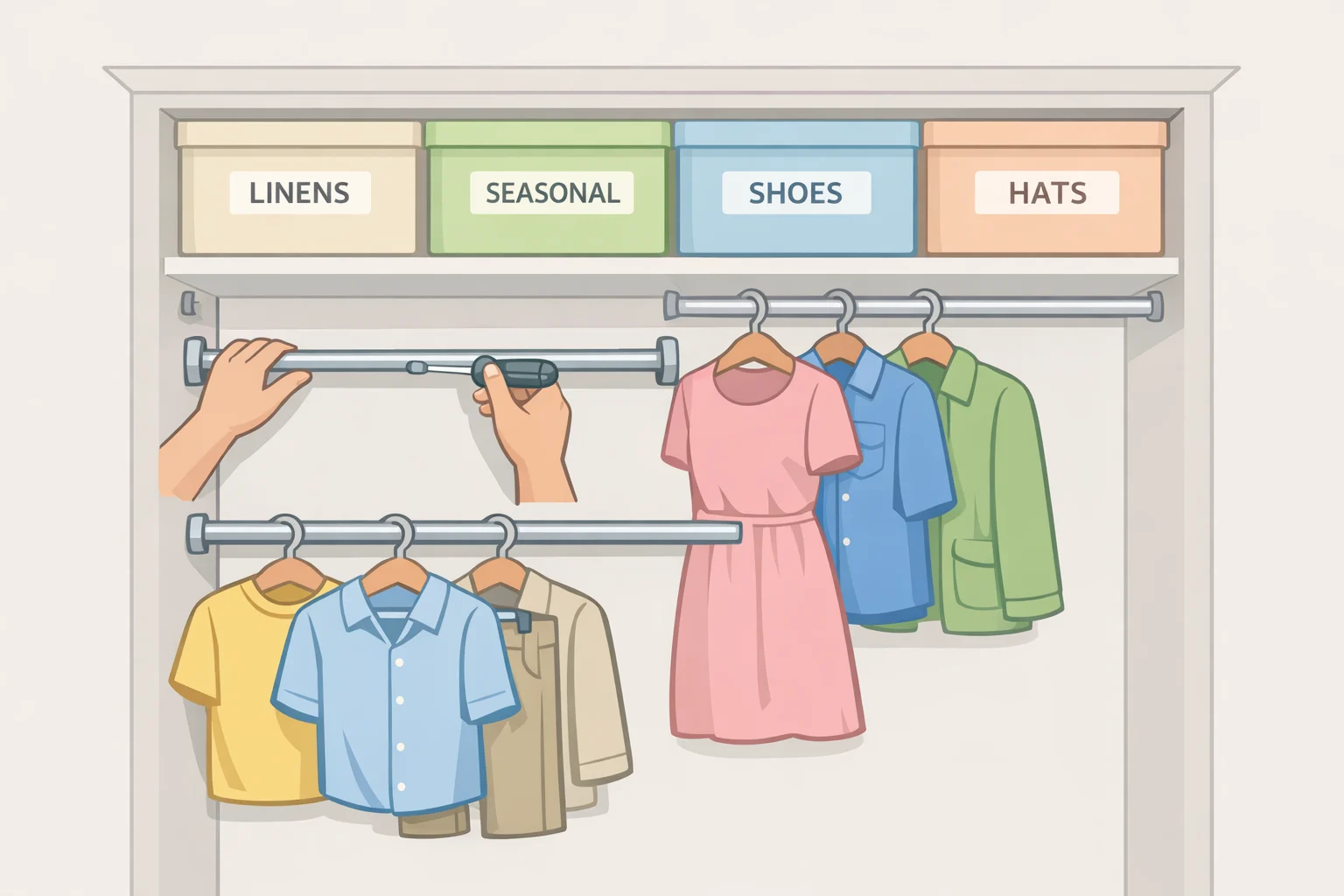
Effort: Simple Install | Renter-friendly: Conditional
Most closets stop at the top shelf and leave nearly half a meter of unused vertical space above it. Organizer Pawlik, quoted by Apartment Therapy last fall, describes the preferred fix as cabinetry built flush to the ceiling, with the upper section holding off-season clothes, spare bedding, or toys on rotation keeping the everyday space uncluttered without sacrificing accessibility.
For a faster, lower-commitment approach, adding a second hanging rod below the existing one can double the closet's hanging capacity without touching the ceiling at all (Home as We Make It). Assess the vertical gap above your top shelf. If it's more than 12 inches, a shelf with labeled bins is worth installing. If the closet door has an underused back, a slim over-the-door organizer for accessories can go in at the same time.
Ceiling-height storage is for light, infrequent-access items only. Heavy bins that require a step stool to move safely don't belong up there.
6. The space under the bed
Effort: No-Install to Simple Install | Renter-friendly: Yes
Platform beds with lift-up mattress bases reveal large storage compartments underneath. For existing frames, wheeled under-bed boxes slide out easily and work especially well in small bedrooms where there isn't enough floor space for additional furniture (Home as We Make It).
Measure the clearance between your bed frame and the floor before buying anything. Less than six inches and the space isn't usable without a different frame. When the clearance is there, it suits seasonal clothing, extra bedding, and shoes things you need occasionally but not weekly.
7. Under-stair space
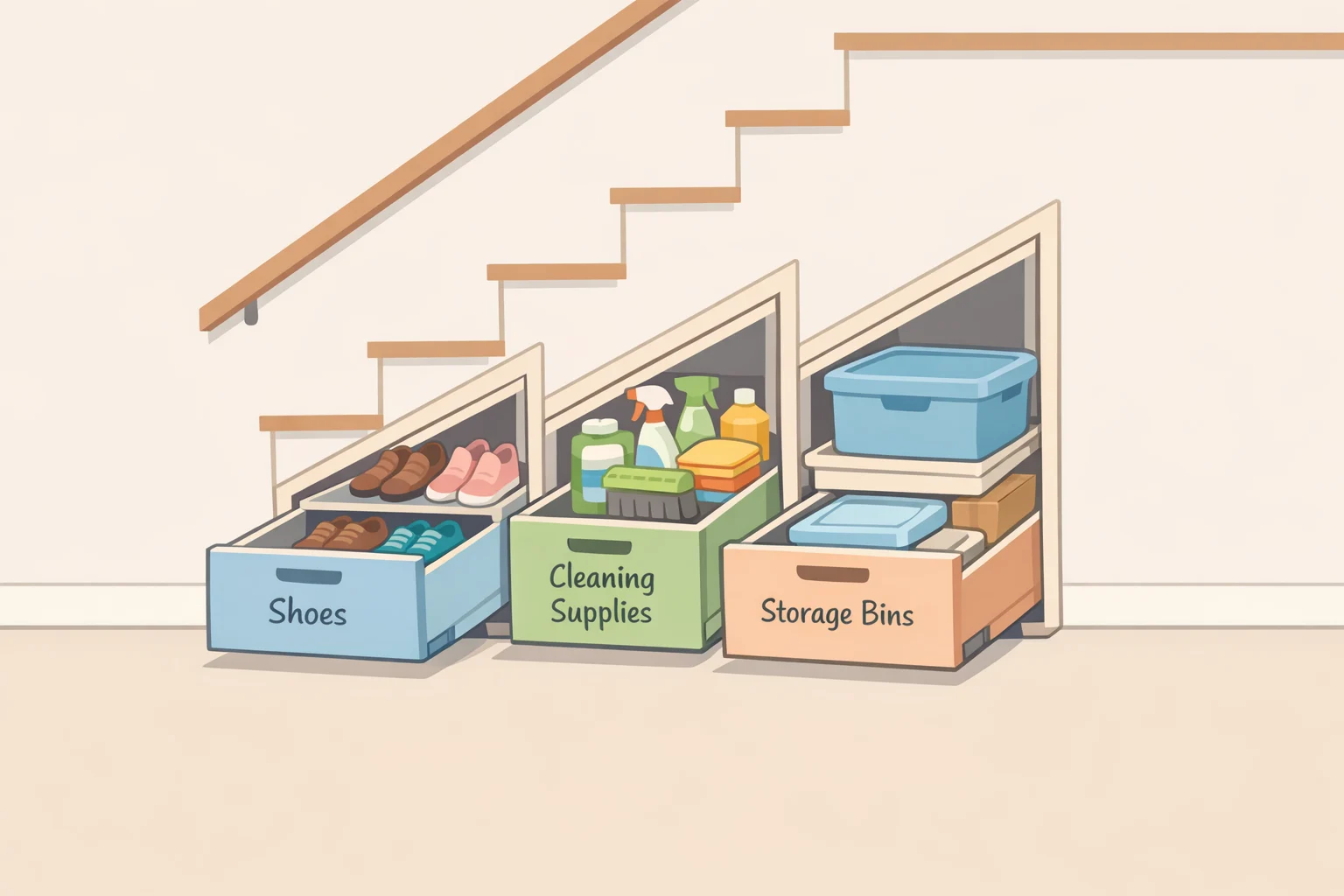
Effort: Simple Install to Carpentry | Renter-friendly: Conditional
Organizer Erika Salloux describes under-stair space as "ripe with possibilities" open stairs can take a small bookcase, while enclosed under-stair areas work for pull-out drawers, small closets, or a compact desk setup (Martha Stewart). Shallow doesn't mean useless: BHG documented an under-stair closet only eight inches deep that became a fully functional party pantry for cocktail glasses, drink mixers, candles, and cloth napkins, published earlier this year.
Start with what you already have. An enclosed under-stair door with existing space requires only labeled bins to become immediately useful no modification needed. Open-stair framing is a shelving project. Pull-out drawers mean hiring a carpenter. Match the effort to what you're actually storing: seasonal décor, entertaining supplies, and sports equipment are good candidates. Anything you reach for daily is not.
Worth the upgrade: bigger projects with lasting payoff
These require real effort and homeowner status. For anyone staying put, though, they add storage that no amount of bins or racks can match.
8. Toe-kick drawers under kitchen cabinets
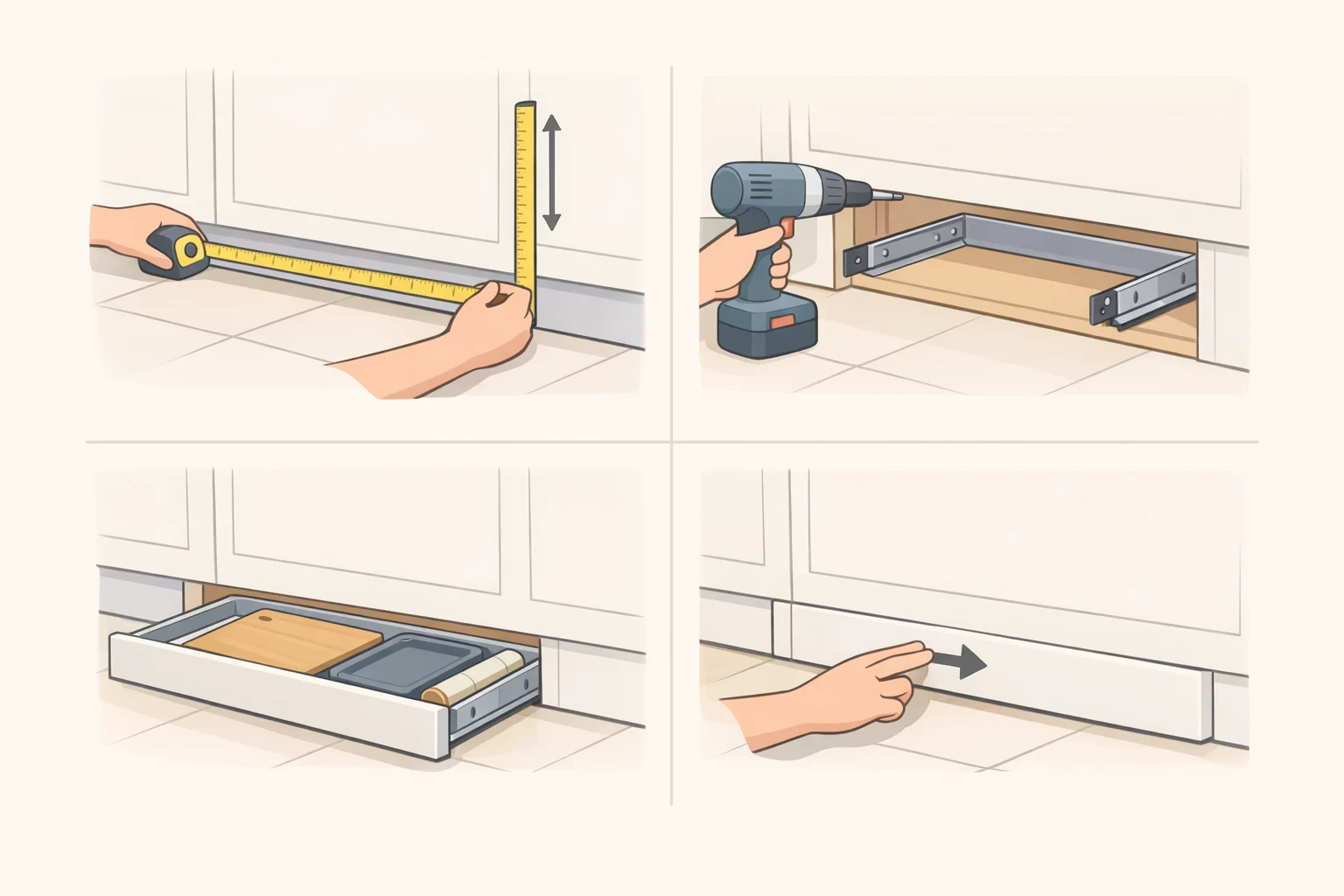
Effort: Carpentry | Renter-friendly: No
The recessed strip at the base of lower kitchen cabinets the toe kick is dead air in most homes. Organizer Leslie Kilgour recommends fitting it with shallow pull-out drawers for flat or low-profile items: baking sheets, cutting boards, place mats, pet bowls, spare sponges, and trash bags, none of which consume a single inch of visible cabinet space above (Martha Stewart). Salloux acknowledges the installation is a harder sell "I have to really work at convincing my clients to take it on" but considers the payoff worth it for any kitchen running short on cabinet space.
Before requesting quotes, measure the existing toe-kick depth typical depth runs three to four inches. Then hire a cabinet installer or experienced handyperson. This is not a weekend DIY project without carpentry experience. The drawers stay hidden when closed, keep rarely-used items accessible, and free up prime cabinet real estate. Don't use this space for heavy cookware; the drawer mechanism isn't built for that load.
A note on angled walls and eave spaces: If your home has sloped ceilings or eave walls, those awkward angles are buildable. Interior designer Cara Fineman turned one such bedroom into a well-organized space by building in storage flanking the bed: "We nestled the bed in between the built-ins, creating nightstands on either side of the bed, as well as space to display books and small accessories, and closed drawers below for overflow clothes from her closet" (Martha Stewart). Before committing to custom work, note that a shelf bump-out of just two inches can be deep enough for hardbacks, with adjustable brackets adding flexibility as needs change (BHG). Measure the usable height at the deepest point of the eave wall and find a shelving unit that fits within that clearance before spending on built-ins.
Before you buy anything
The highest-value moves on this list are mostly architectural spaces that already exist and cost nothing to access. The toe kick, the door back, the stair void, the ceiling of the closet. None of them require new furniture; they require attention and the right-sized solution.
Measuring comes first, every time. Organizer Tyler Moore is direct about why: clearing the space and taking precise measurements has to happen before buying anything, because getting it wrong "is super frustrating when you get it home and it doesn't" fit and it makes the whole project feel harder than it is (Real Simple, last fall).
Storage that isn't easy to use won't get used. Designer Angie Kreller's standard for any wall-mounted or hidden space is that shelves should balance functional items with accessible placement things stored there should be easy to grab and logically grouped (Apartment Therapy). Inaccessible storage is just organized clutter with extra steps.
Once these spaces are active, schedule a seasonal review. Rotate what lives where based on how often you actually reach for it, and clear anything untouched since the last round. These spaces fill back up just like visible ones the difference is you won't notice until you look.