How to get rid of silverfish in your home for good
A silverfish darting across the bathroom floor is not proof of a dirty house. It's a sign that two separate conditions, dampness and undisturbed clutter, have had time to overlap into something that functions as a habitat.
This guide walks through how to get rid of silverfish in your home: confirming what's actually crawling around, removing the moisture and clutter that sustain them, and knowing when sanitation needs backup from bait or a professional.
Silverfish do best at 70 to 80°F with 75 to 95 percent relative humidity (Texas A&M AgriLife, 6 months ago). They turn up most often in spaces with high humidity and little airflow, and large numbers sometimes show up in buildings where walls or plaster stay damp (University of Florida IFAS, 2022). Waiting for an obvious sighting before acting usually means those conditions have been building for a while already.
It's not one habit, it's two conditions working together
Video of the Day
Silverfish advice often gets compressed into a single tip: keep things dry. That's half the story. Moisture keeps them going. They favor damp, cool, poorly ventilated spots, and extension guidance recommends cutting humidity with air conditioning, fans, or a dehumidifier in infested rooms or anywhere books are stored (Texas A&M AgriLife, 6 months ago).
Clutter supplies the other half: food and shelter in the same stack of boxes. Silverfish eat starchy and sugary materials, including flour, glue, paper sizing, book bindings, and rayon fabric, so a pile of old newspapers works as a pantry and a hiding place at once (eXtension, 2022).
An unrepaired plumbing leak handles the moisture side. A closet full of unsorted paper handles the food and shelter side. Extension guidance treats the two as separate control steps, which is the logic behind the sequence below: confirm what's present, then remove water and food sources before reaching for any product.
Video of the Day
Confirm what you're seeing before you treat it
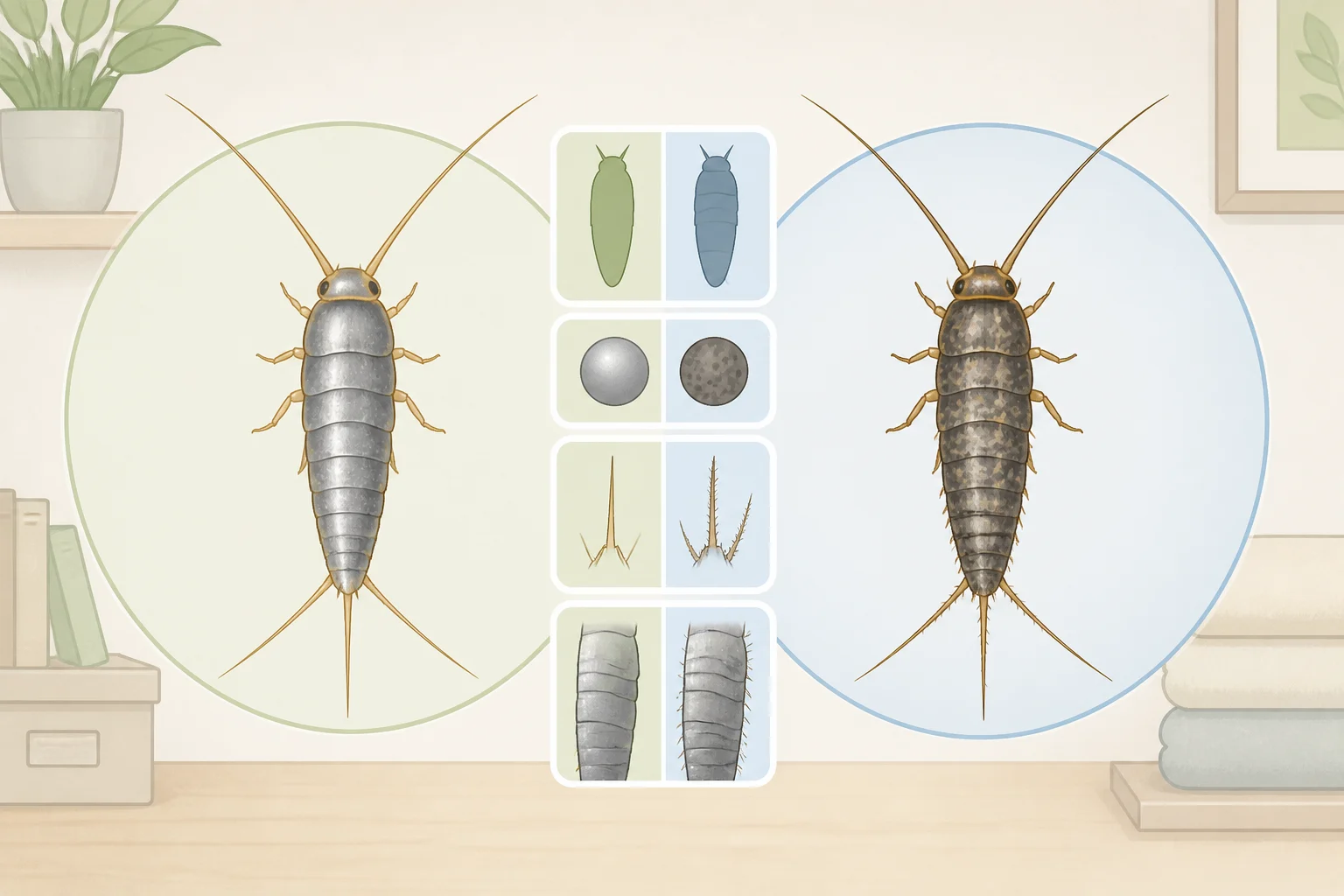
True silverfish are wingless, carrot-shaped, and covered in fine scales that give them a shiny silver or pearl-gray color. They run about one-third to one-half inch long, with two long antennae and three tail-like appendages nearly as long as the body itself (University of Florida IFAS, 2022).
Firebrats look similar but are mottled gray-brown, and they favor much hotter conditions, above 90°F, which puts them near ovens, dryers, and water heaters rather than bathrooms or closets (Texas A&M AgriLife, 6 months ago). Location alone is often enough to tell which one is in the house.
Both insects are nocturnal and bolt for new cover the instant a hiding spot gets disturbed, so a sighting almost certainly undercounts the real population (University of Florida IFAS, 2022). Common hiding zones include closets, attics, bookcases, and the gaps behind baseboards or window and door casings. In apartment buildings, they also travel along plumbing lines in search of moisture and food (Texas A&M AgriLife, 6 months ago).
How to prevent silverfish by removing what attracts them
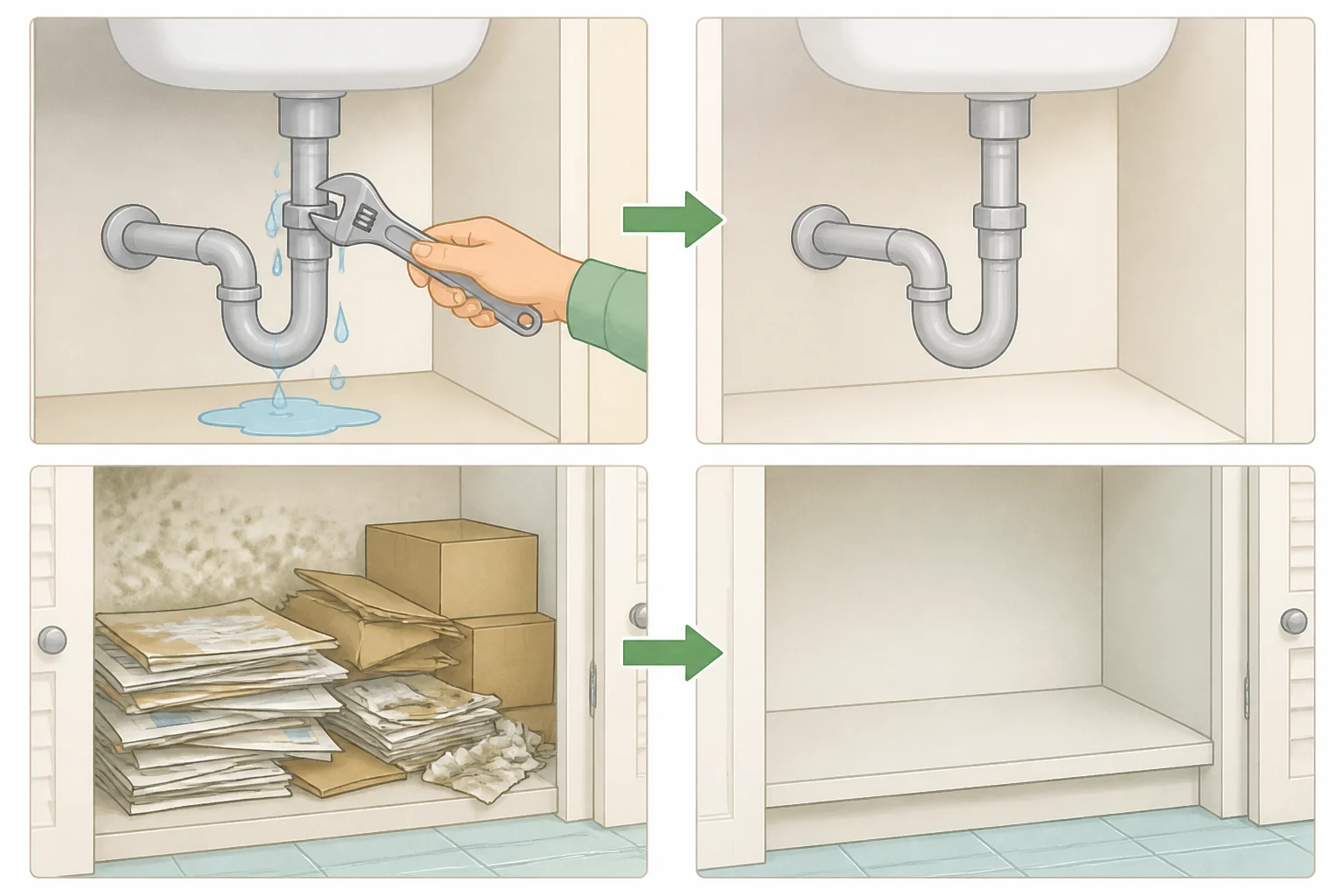
These silverfish prevention tips work in sequence: find moisture sources first, then clear away food and shelter. Work through them in order rather than skipping to a favorite.
- Inspect for leaks and damp spots. Check anywhere water collects or pipes run, and look for soft, discolored, or damp material. Repairing leaks cuts off a direct water source for silverfish (Texas A&M AgriLife, 6 months ago).
- Cut humidity in trouble zones. Running a dehumidifier, fan, or air conditioner in rooms where books or paper are stored is one of the more effective ways to reduce humidity and get rid of silverfish, since they favor 75 to 95 percent relative humidity (Texas A&M AgriLife, 6 months ago).
- Clear cardboard, newspapers, and starch-based clutter. This includes cornstarch-based cosmetics in bathrooms, since both double as food and shelter (eXtension, 2022).
- Vacuum closets, baseboards, and bookcases regularly, and clean up spilled food or drink right away. Vacuuming removes both the insects and the food they came for (University of Florida IFAS, 2022).
- Seal the gaps that give them somewhere to hide. Cracks and crevices around plumbing, wall molding, and windowsills eliminate harborage once sealed (eXtension, 2022). Separately, sealing cracks and holes on the exterior of the structure helps keep silverfish and firebrats from getting inside in the first place (Texas A&M AgriLife, 6 months ago).
- Protect valuable books or papers. If specific items seem at risk, seal them in plastic bags and freeze them for several days. It's a direct way to stop damage while the rest of the plan takes effect (Texas A&M AgriLife, 6 months ago).
- Inspect anything coming out of storage before it comes inside. Boxes, books, and furniture that have been sitting in storage are worth a look before they're unpacked into living space (Texas A&M AgriLife, 6 months ago).
Sanitation does most of the heavy lifting here, but extension research is clear that it can prevent infestations without necessarily eliminating one that's already established (Texas A&M AgriLife, 6 months ago). Treat it as the foundation the rest of the plan sits on, not the finish line.
When to escalate: signs sanitation alone isn't enough
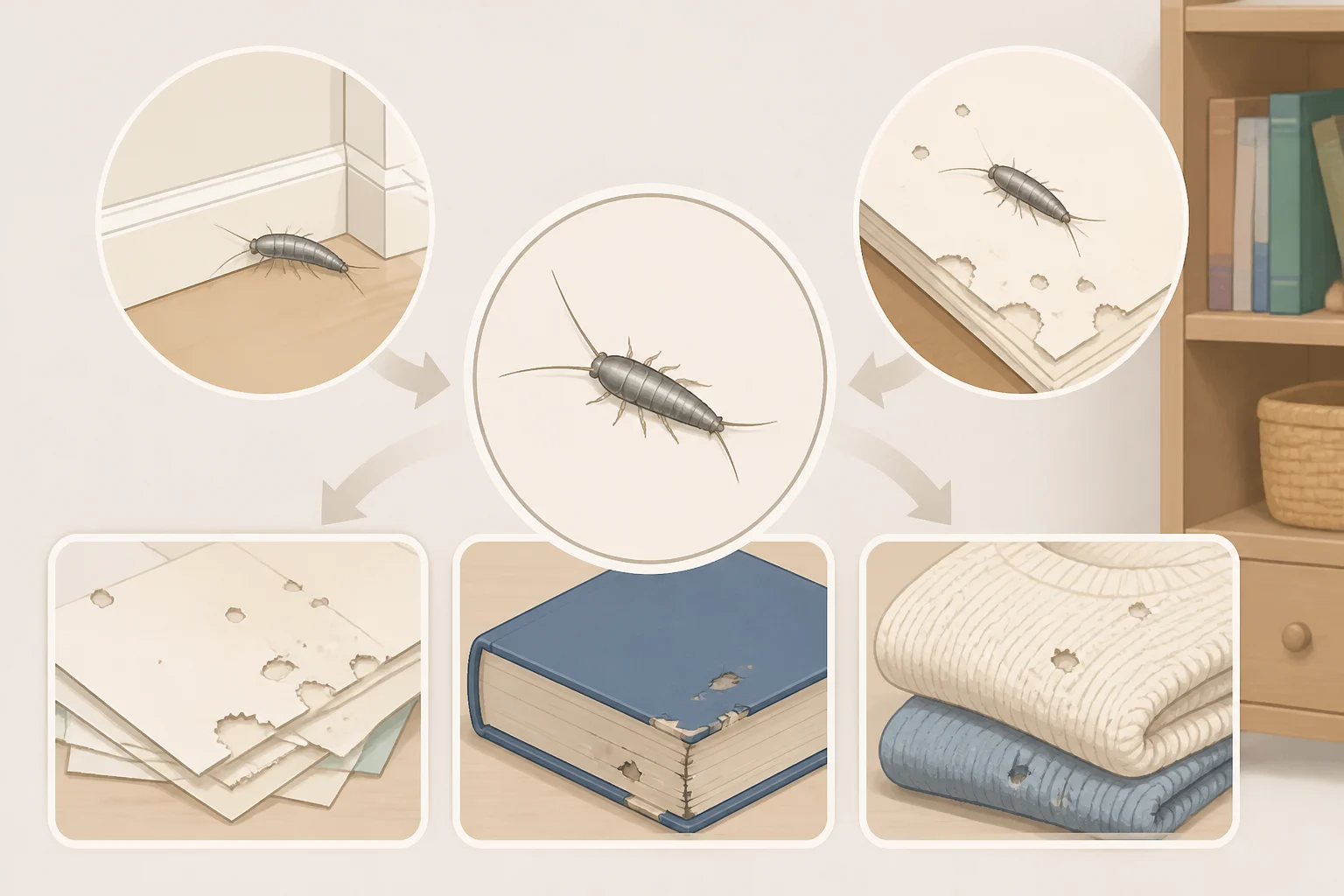
A single silverfish on the bathroom floor doesn't mean the house is overrun. Real damage generally shows up only after a large population has been established for a long stretch of time (Texas A&M AgriLife, 6 months ago).
What does justify moving past sanitation: sightings that keep recurring across more than one room, actual damage turning up on paper, books, or textiles, or a population that seems large, persistent, or hard to locate even after cleaning (Texas A&M AgriLife, 6 months ago). Any of those is a sign it's time to look at bait, dust, or professional treatment, which is how to stop a silverfish infestation that has moved past its early stage.
When sanitation isn't enough: bait, dust, and professional help
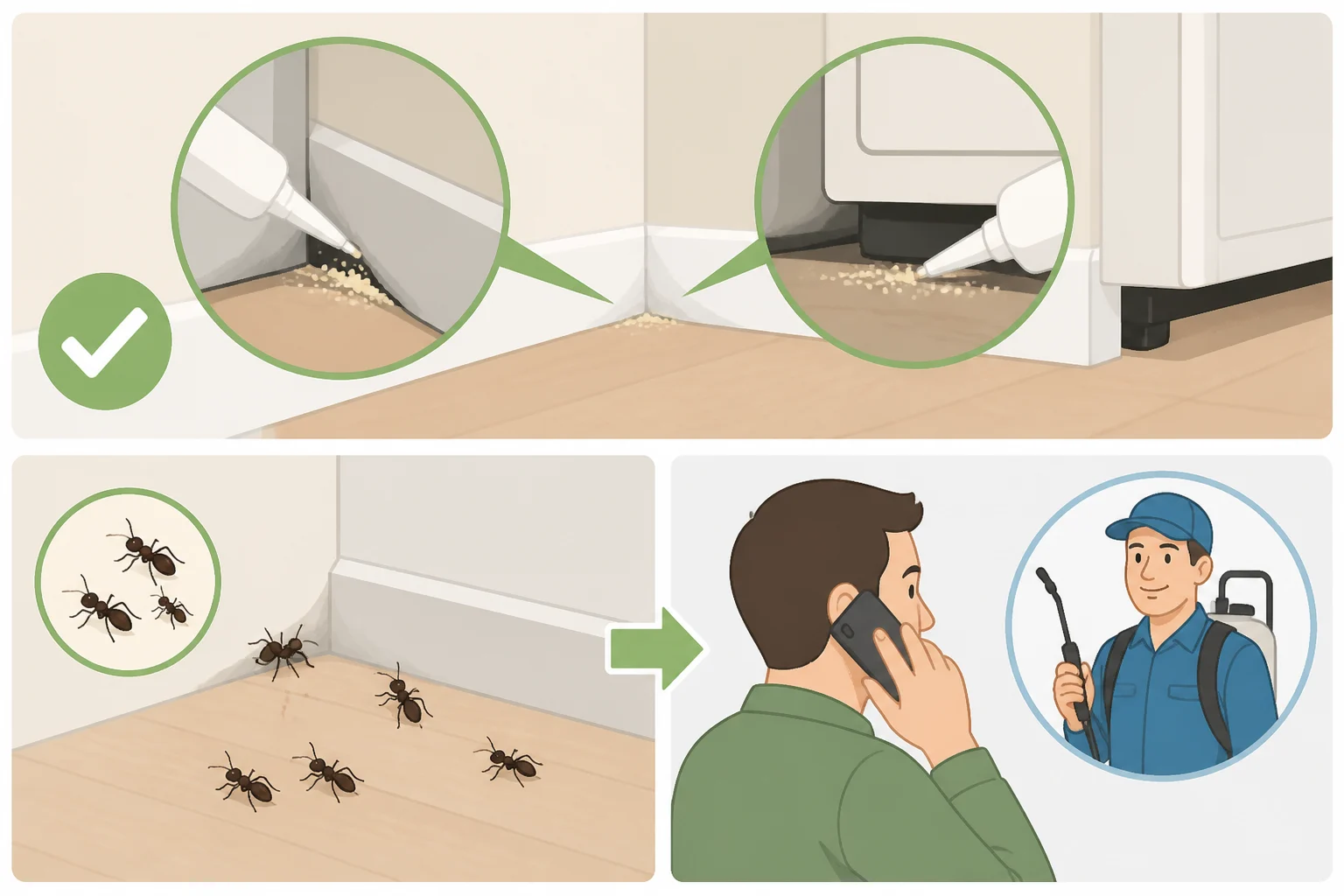
Once moisture and clutter are under control, look for products labeled specifically to control silverfish, firebrats, or bristletails. Natural active ingredients include diatomaceous earth, boric acid, and clove or thyme oil; synthetic options include bifenthrin and permethrin (Texas A&M AgriLife, 6 months ago).
Fine granular baits, including 20 percent boric acid products, are a common over-the-counter option (eXtension, 2022). Research on a related species, the long-tailed silverfish (Ctenolepisma longicaudatum), offers a useful pattern for how bait gets placed. In laboratory and field trials using indoxacarb bait droplets, spreading many small drops evenly along wall edges killed roughly four times more insects than clustering the same amount of bait together, and removing competing food sources improved results further (PLOS One, 5 years ago).
That study used a different active ingredient and a different species than most DIY boric acid products, so treat the placement strategy, spread it out, keep food sources scarce, as a directional guide rather than a guarantee. The same research gives a sense of the timeline involved. Combining widespread bait with sanitation cleared a population in an apartment complex in under 28 weeks, and took another 25 to 40 weeks in a single-family house after switching to broader bait coverage (PLOS One, 5 years ago). That result is specific to long-tailed silverfish, but the overall shape, weeks to months rather than days, holds for silverfish control generally.
Apply dusts and baits only in spots inaccessible to children and pets, avoid inhaling dust during application, and follow label directions regardless of which product is chosen (Texas A&M AgriLife, 6 months ago). If the population is still large, persistent, or hard to locate after that, it's time to call a pest control professional (Texas A&M AgriLife, 6 months ago).
Start with the dampest room in the house
The habit worth breaking isn't a single chore. It's letting dampness and undisturbed clutter sit in the same room long enough to become comfortable for something that shouldn't be there.
Start with whichever space in the house stays most humid, a bathroom, a basement, a closet near a leaky pipe, and work through the inspection and sanitation steps there first. Give it a couple of weeks, then reassess: if sightings continue or paper and fabric start showing damage, that's the cue to add bait or call in a professional. A drier, decluttered home won't erase silverfish entirely, but it strips away the conditions that favor them and makes whatever is left far easier to treat.