How to clean a dryer vent: steps, signs and safety tips
Emptying the lint trap after every load feels like enough maintenance. It isn't. The screen catches most of what a load sheds, but some lint always slips past it and settles into the exhaust duct, where it builds up whether or not someone empties the trap religiously (ExpertHome, yesterday). Learning how to clean a dryer vent, not just the trap, closes that gap.
Fall is a natural trigger for this task. Laundry volume climbs once school starts and the weather turns, with extra layers, sports uniforms, and blankets pulled back out of storage adding to the pile (Appliance Repair Guy, a month ago). Good Housekeeping's Home Care & Cleaning Lab points to the same seasonal window as the moment to get ahead of a chore most households put off (Good Housekeeping, today).
The stakes go beyond a slow drying cycle. The U.S. Fire Administration names failure to clean the vent as a leading contributing factor in home clothes dryer fires, and technicians routinely trace overheating back to restricted airflow from a clogged duct (ExpertHome; Appliance Repair Guy). This guide covers how to spot a clogged vent, how to clean it safely, and when the job is better handed to a professional.
Why fall is the right moment to clean a dryer vent
Video of the Day
The duct running from the back of the dryer to the outside wall does a different job than the lint screen. It carries hot, moist air, plus whatever lint escaped the trap, straight out of the house, and it needs attention the lint-screen routine simply doesn't cover (Good Housekeeping). Buildup inside that duct narrows the path, and a narrower path forces the dryer to run hotter and less efficiently. Because lint is combustible, that same buildup becomes a fire risk, according to Noah Pinsonnault, a reviews analyst at the Good Housekeeping Institute's Home Care & Cleaning Lab (Good Housekeeping).
Loose connections make the problem worse. A hose that's worked itself off the back of the machine, or one that got pinched the last time the dryer was shoved into place, lets lint-heavy air escape into the laundry room instead of venting outdoors (Appliance Repair Guy). It's worth pulling the dryer out every so often just to confirm the connection hasn't come loose, and checking that nothing is blocking the hose where it meets the wall.
Fall doesn't make vents dirtier on its own. It's simply a convenient checkpoint, since the start of the season is also a good moment to glance at the exterior vent opening for leaves and other debris that tend to collect as the weather turns (Good Housekeeping).
Video of the Day
Signs your dryer vent is clogged
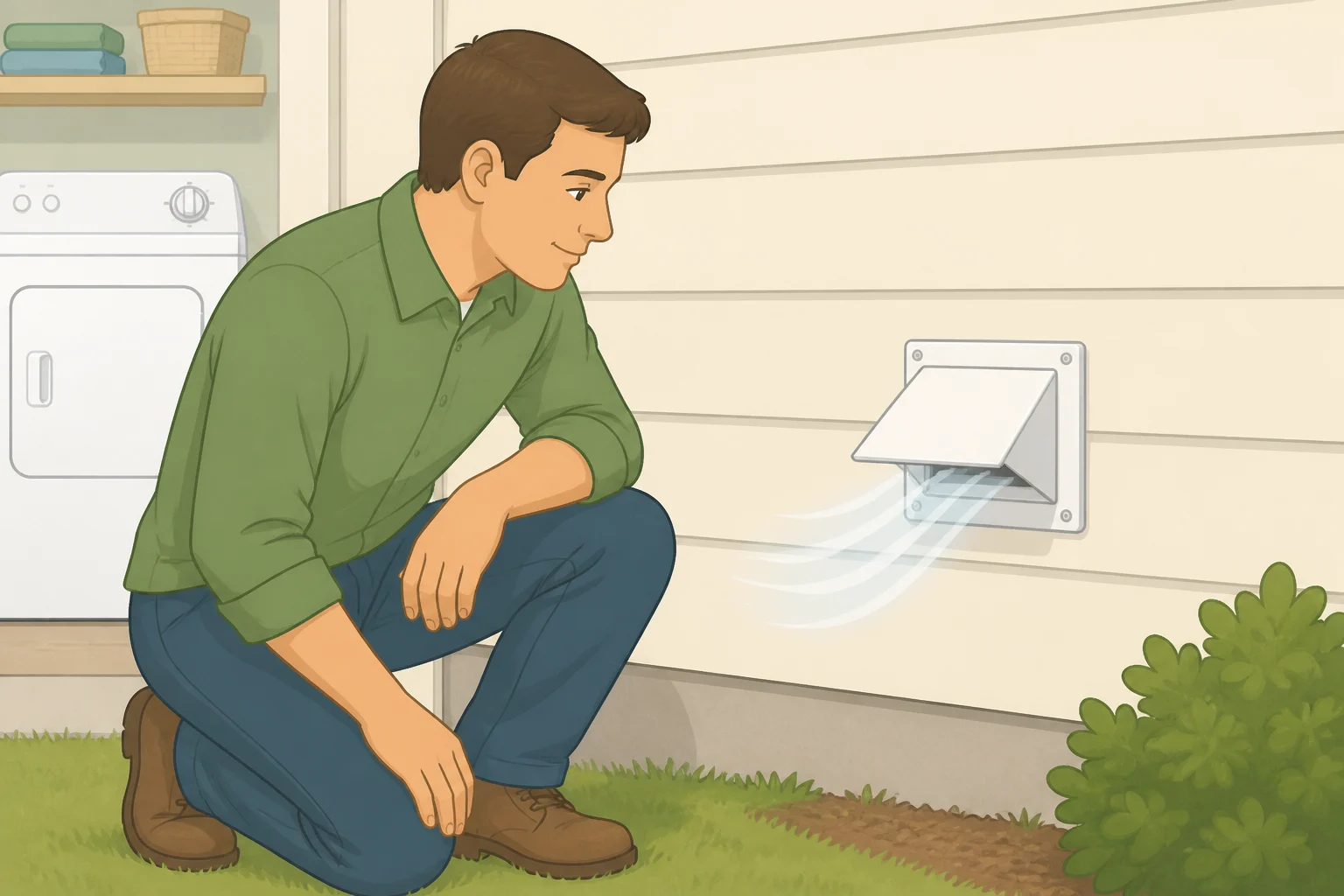
A clogged vent rarely announces itself outright. It shows up in small inconveniences first: clothes taking longer to dry, a dryer that feels unusually hot after a cycle, or outdoor vent airflow that seems weaker than it used to (Good Housekeeping).
Appliance repair technicians see a consistent pattern in service calls: a load that used to dry in 45 minutes stretching toward an hour and a half, usually traced to a clogged vent, a failing heating element, or lint buildup restricting airflow (Appliance Repair Guy). A normal full-size load should finish in 30 to 45 minutes. Running a load twice, or waiting well past an hour, is worth having checked.
There's also a simple outdoor test. Step outside while the dryer runs and check whether the exterior flap opens freely. A flap that barely moves, or airflow that feels faint, points to a blockage somewhere inside the duct (Appliance Repair Guy; ExpertHome).
A dryer that suddenly needs two cycles to finish a load it used to dry in one is another tell. A clogged exhaust makes it harder for the machine to release moisture, so clothes stay damp longer than they should (ExpertHome). If the outside of the dryer feels unusually hot, the laundry room runs warmer than normal mid-cycle, or lint is visibly collecting at the exterior vent flap, that points to the vent specifically rather than a failing part elsewhere in the machine (Appliance Repair Guy).
A burning smell is different from everything on this list. A faint warm smell during a cycle is normal; anything that reads as burning or electrical is not, and it means stopping the dryer immediately and not running it again until the cause is found (ExpertHome; Appliance Repair Guy).
Not every symptom traces back to the vent, either. A steady thump during a cycle usually points to a worn drum roller or a failing belt, and new squealing is often a belt or bearing starting to go, mechanical wear rather than restricted exhaust (Appliance Repair Guy). A dryer that starts, runs briefly, then shuts off on its own can point to a safety thermostat reacting to overheating, or a failing door switch, neither of which a vent cleaning will fix.
How to clean a dryer vent safely, step by step
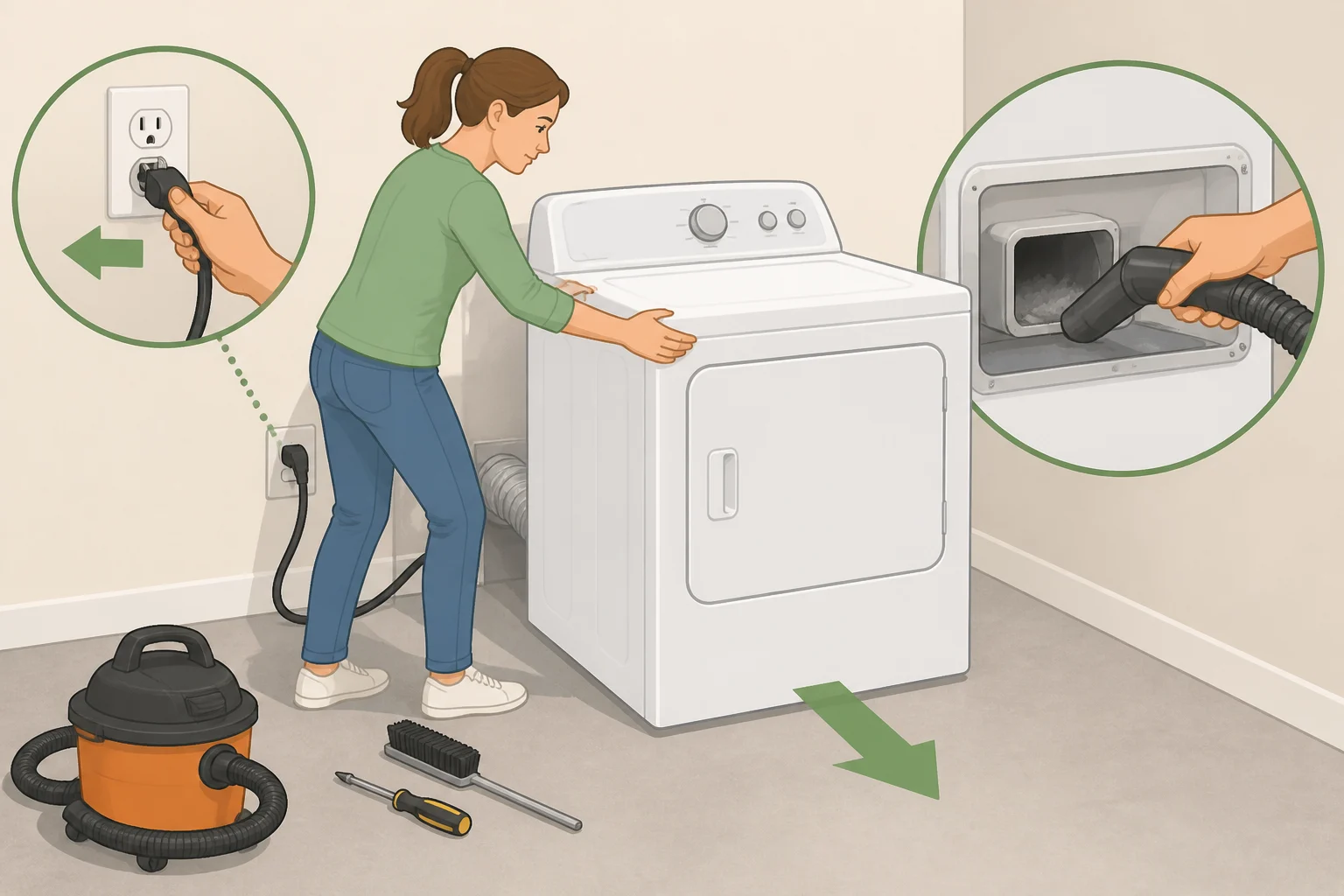
Before starting, gather a vacuum with a hose attachment, a dryer vent brush or cleaning kit, a screwdriver or nut driver for clamps, a flashlight, and gloves. Check the dryer's manual first for anything model-specific. If the machine is heavy, get a second set of hands to move it, and have something ready to protect the floor underneath (ExpertHome).
- Unplug the dryer. If it's a gas model, leave the gas line alone entirely. Straining or disconnecting it is a job for a professional, not a weekend project (ExpertHome).
- Pull the dryer away from the wall, carefully, enough to access the back of the machine without crushing or kinking the vent hose in the process (ExpertHome).
- Disconnect the duct from the back of the dryer and inspect it for visible buildup along the interior walls (Good Housekeeping).
- Vacuum or brush out the duct, working from both ends where the layout allows it. Clearing the lint screen alone won't touch material already lodged further down the line, so this is the step that actually restores airflow (ExpertHome).
- Check the exterior vent hood while everything's exposed, and clear away anything blocking the opening (Good Housekeeping).
- Reconnect the duct and confirm the connection is secure before pushing the dryer back into place, careful not to shove it so far that the hose kinks again (Good Housekeeping; ExpertHome).
Skip the urge to blow compressed air through the system to speed things up. It can leave compacted lint sitting right where it is, or worse, pop apart a weak duct joint. Brushing and vacuuming take longer but are considerably more reliable (ExpertHome).
Dryer vent fire prevention: when to call a professional instead
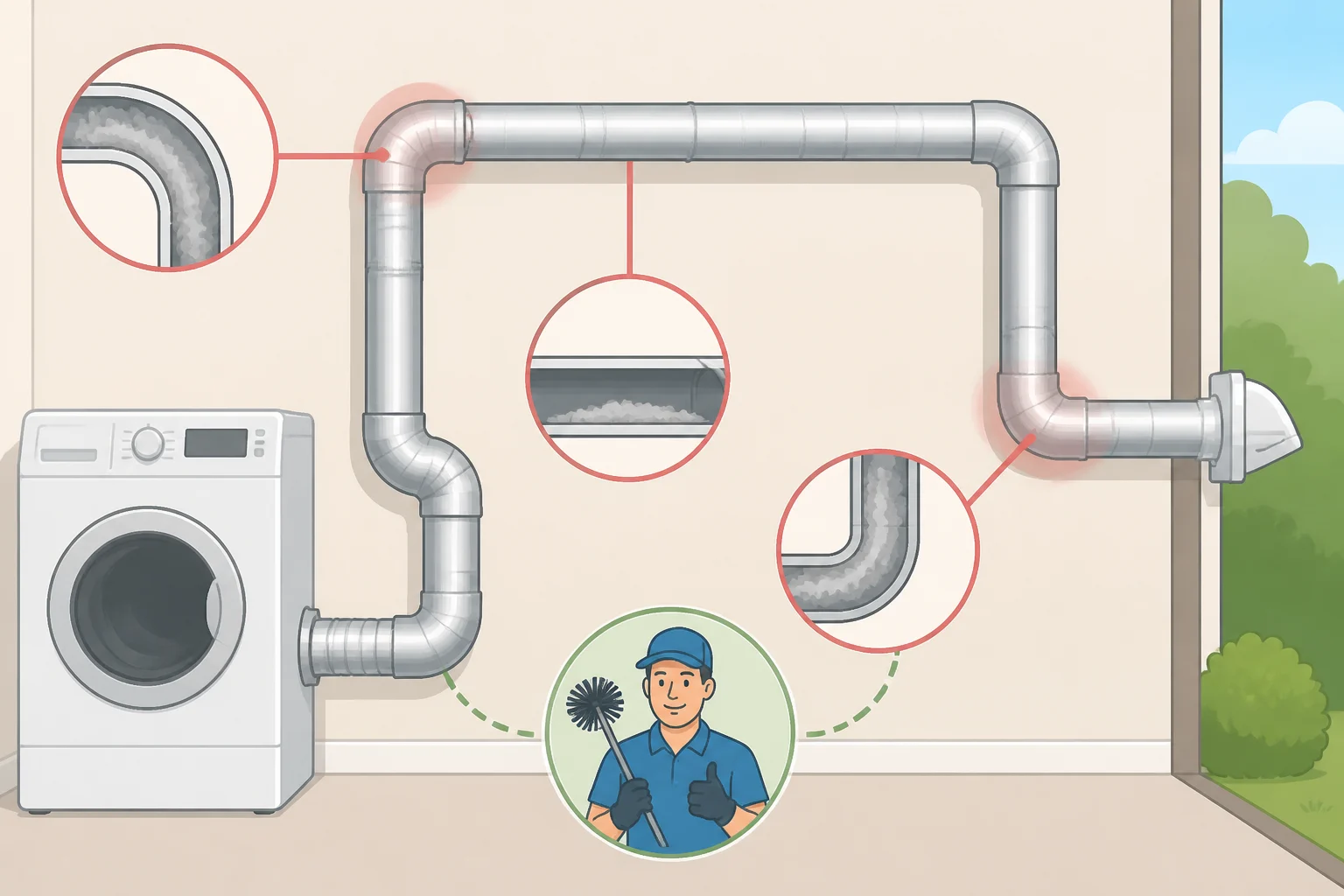
Not every vent is a DIY job, and knowing the difference matters for fire prevention as much as convenience. The Good Housekeeping Institute's Home Care & Cleaning Lab recommends calling in a professional for long or complicated duct runs, significant blockages, or any setup that requires disconnecting a gas line (Good Housekeeping).
The reasoning is practical, not just cautious. A professional can reach sections of duct that sit beyond the range of a home vacuum and check for obstructions that don't show up from either end of the line, exactly the kind of thing a DIY pass is likely to miss (Good Housekeeping).
How often to clean a dryer vent
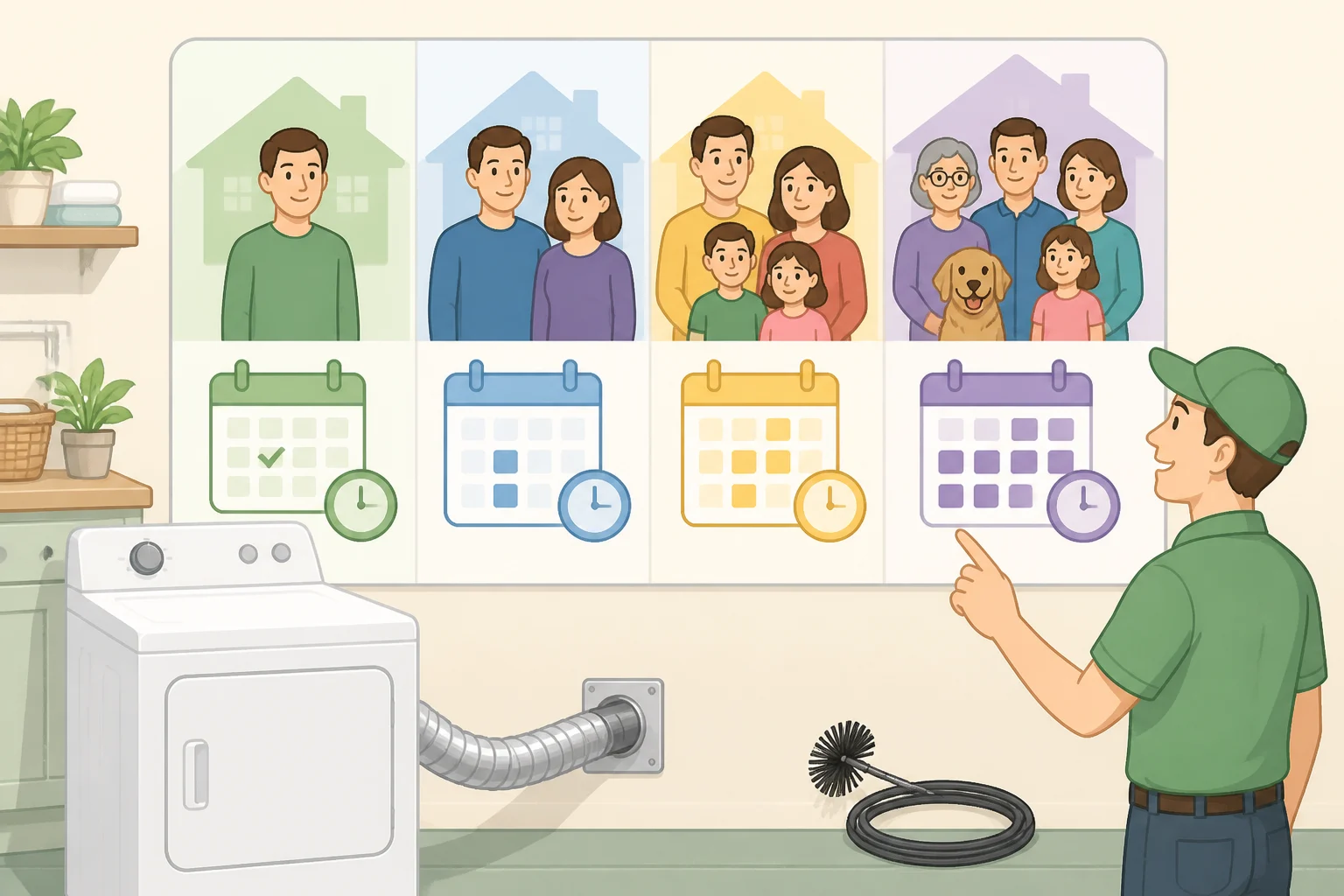
For an average laundry load, once a year is the standard recommendation, a figure the Good Housekeeping Institute and the U.S. Fire Administration land on independently (Good Housekeeping; ExpertHome). Households running heavy laundry volume, or anyone with a long duct run full of bends, should clean more often than that baseline calls for (Good Housekeeping; ExpertHome).
A vent that's gone unaddressed for years is one of the more common things technicians find behind a load that's suddenly taking twice as long as it used to. The duct builds up lint gradually over months, even in households that never skip the lint trap (Appliance Repair Guy).
Between full cleanings, a couple of lighter habits go a long way: clear the lint screen after every load, and every so often, glance at the exterior vent opening to make sure it isn't blocked by leaves or debris (Good Housekeeping; ExpertHome). It's also worth pulling the dryer out now and then just to check that the vent hose connection hasn't worked itself loose (Appliance Repair Guy).
A clear vent won't just lower fire risk. The Good Housekeeping Institute notes it can also mean lower energy use and less unnecessary wear on the appliance over time, since the dryer isn't fighting its own exhaust to finish a cycle (Good Housekeeping). None of that is guaranteed by a single cleaning, but it's a reasonable payoff for under an hour of work.
Treat this fall cleaning as the anchor point, not a one-off: lint screen after every load, a quick check of the exterior vent every so often, full duct cleaning at least once a year. A dryer repair in October is a scheduled inconvenience. A dryer that dies in the middle of the busiest laundry stretch of the season, with several loads of school clothes already waiting, is a real problem, and catching a sluggish vent now is the cheaper version of that lesson (Appliance Repair Guy).