Things to clean before leaving for vacation: a 7-step guide
Common problems that greet you after a trip usually trace back to food, trash, and trapped moisture, left alone in the house for days or weeks to do their damage. Working through the things to clean before leaving for vacation isn't really about tidiness. It's about controlling three specific risks: odor, pests, and mold.
The CDC's guidance on mold prevention comes down to speed. Once rain or a leak gets into a house, wet materials need to be cleaned and dried within 48 to 72 hours, and the area needs to stay ventilated in the meantime, since lingering moisture is exactly what mold needs to take hold (CDC). University of Florida's extension service, writing specifically about closing up a seasonal home in Florida, sums up the pre-departure routine in two words, clean and dry, since warm, humid conditions give mold and bacteria exactly what they need if surfaces are left dirty or damp (UF/IFAS). A North Texas cleaning service makes a similar point about its own climate, describing how summer heat and humidity can turn an empty house into a breeding ground for odors, mold, and pests (Denton Maids).
This guide walks through how to clean your house before vacation, whatever the length of the trip. It covers the seven tasks that matter most, the humidity and leak checks that back them up, the extra steps worth taking before a longer closure, and the optional tasks worth doing only if time allows.
Match your cleaning checklist before vacation to trip length
Video of the Day
There's no research that sorts vacations into neat categories. The tiers below are an organizing framework built for this guide, not a formula handed down by any of the sources cited here.
For a routine short trip of a few days, the basics cover it: clear anything that will spoil, take out the trash, and make sure nothing's left damp. Disconnecting the refrigerator or adjusting the water heater doesn't apply at this length; those are seasonal-closure steps, covered later in this guide.
For a week or two away, add a full pantry and pet-food sweep, empty every hamper, and pay closer attention to humidity. The longer a damp spot goes unnoticed, the more chance it gives mold to take hold, so a quick check of bathrooms and under sinks deserves a spot on the list, not just a walk-through the morning you leave.
For several weeks or a full seasonal closure, the routine gets noticeably longer. UF/IFAS's guidance for vacant Florida homes adds refrigerator shutdown, closet airflow, water heater changes, and a professional AC checkup, all addressed later as a separate set of steps rather than folded into the core cleaning list (UF/IFAS).
Video of the Day
Things to clean before leaving for vacation
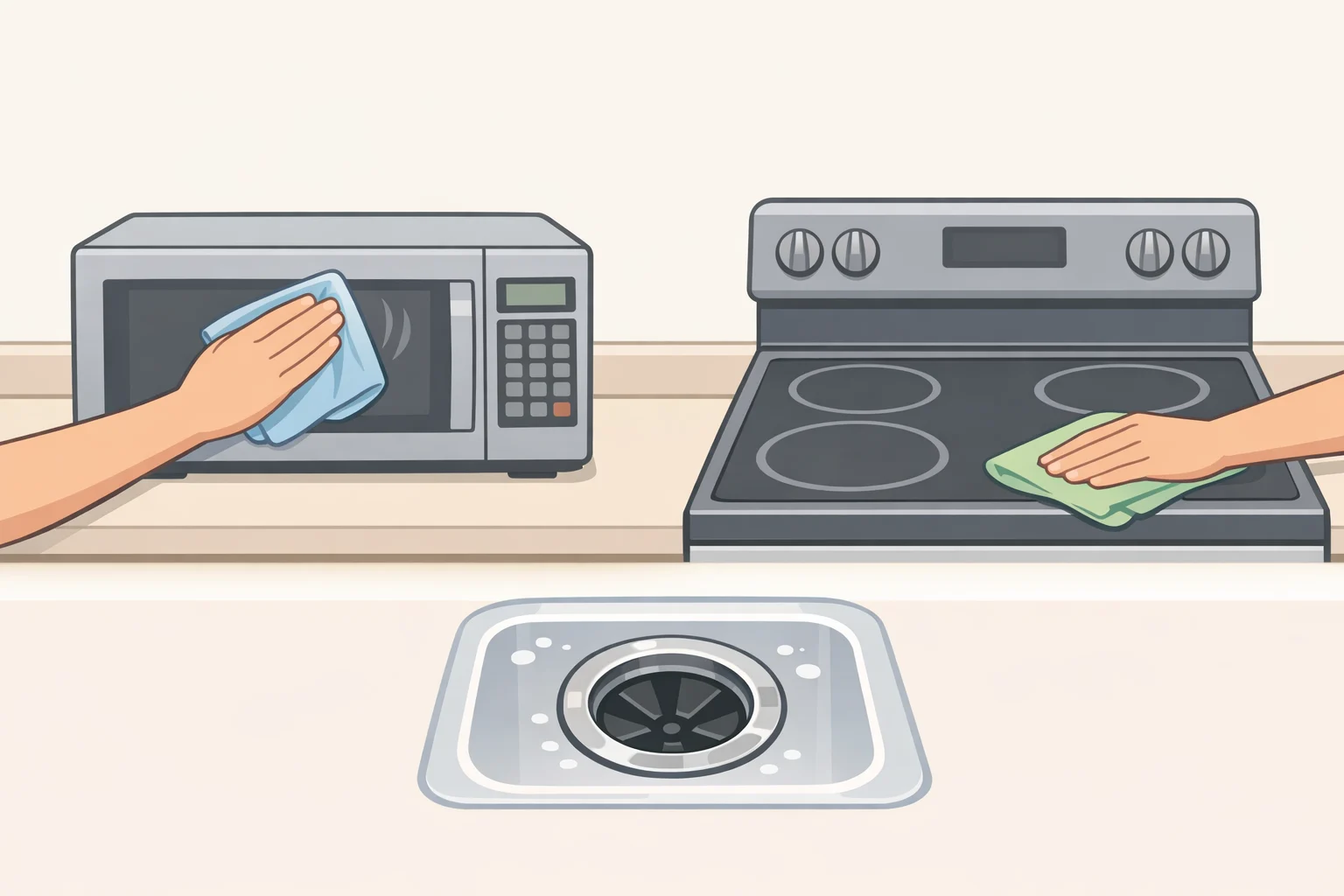
These seven areas address the risks this guide is built around: spoiled food, standing trash, and trapped moisture. Work through them in order, or skip around if time is tight.
-
Refrigerator and freezer. Toss anything that will spoil before you're back, then wipe down shelves, drawers, and door seals (Denton Maids). UF/IFAS suggests a simple baking-soda solution, one tablespoon per quart of water, to neutralize lingering food odors on interior surfaces (UF/IFAS). Disconnecting the fridge and propping the door open is part of UF/IFAS's guidance for closing a seasonal home over an extended absence, not a step tied to a specific weeklong cutoff.
-
Kitchen surfaces and disposal. Run the garbage disposal with citrus peels and baking soda to clear out food residue before you go, then wipe down the microwave, stovetop, and cabinet fronts (Denton Maids). Run water through the disposal afterward; no lingering smell means it's done.
-
Trash, recycling, and bins throughout the house. Empty and wipe out every bin, bathroom trash cans included, then carry the final bag out the morning you leave (Denton Maids). No bagged trash should sit inside past departure day.
-
Pantry staples and pet food. UF/IFAS specifically recommends clearing out open cereal, crackers, and pasta before a closure, since these attract household pests (UF/IFAS). Pet food bowls and bags get overlooked constantly, and they're another food source worth removing (Denton Maids). Check garages and sheds too, since forgotten food tends to hide there.
-
Bathrooms. Scrub the showers, tubs, toilets, and sinks (Denton Maids). The goal is dry surfaces, not just disinfected ones; a clean surface that's still wet hasn't finished the job.
-
Drains and other leak-prone areas. For longer absences, UF/IFAS recommends putting stoppers in drains throughout the house to limit sewer-gas odor and moisture exchange while it sits empty (UF/IFAS). Drying up any visible moisture and stoppering the drains covers the risk for a standard home; no sink basin, tub, or shower floor should have standing water left in it when you walk out the door.
-
Laundry: hampers, towels, and damp fabric. Empty every hamper and run one final load of towels before leaving, rather than sealing damp fabric inside a closed hamper for a week (Denton Maids).
Leftover food draws pests, and neglected trash adds odor. Damp surfaces are the third piece: CDC's guidance on mold after water exposure calls for keeping wet areas ventilated and discarding anything that can't be dried out, the same logic that applies to a bathroom or kitchen left damp for a week (CDC).
Humidity and leak checks before you leave
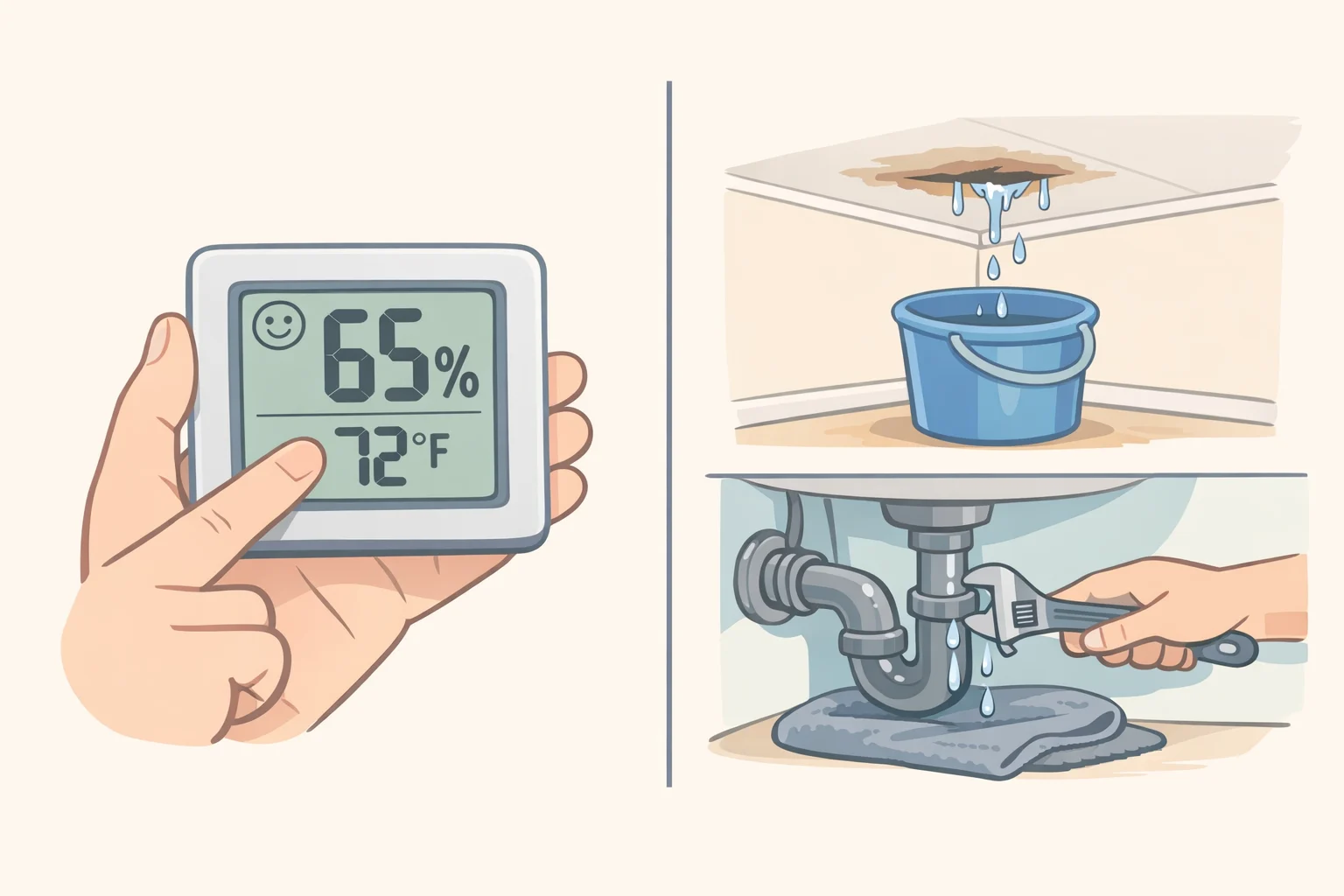
The checklist above clears out the food, trash, and residue that create odor and give pests a reason to stick around. Humidity control handles the other half of the equation: the moisture mold needs to take hold.
CDC's baseline advice treats any water exposure, whether from a storm or a slow leak, the same way. Dry it out fast or get rid of what can't be dried, and if mold shows up anyway, clean it with a solution of one cup of household bleach per gallon of water (CDC).
UF/IFAS gets more specific for closing up a seasonal home in Florida's climate, advising an air conditioner setting no higher than 85°F, since indoor humidity at higher temperatures can climb past the 55-60% range, creating conditions that may support mold and bacterial growth (UF/IFAS). That figure comes from guidance for a vacant Florida home during a seasonal closure, not a universal number for every climate or trip length.
Good Housekeeping's home-safety advice points in a similar direction for warm-weather homes, recommending a range of 80°F to 85°F to avoid dangerous humidity buildup without running up the energy bill (Good Housekeeping). Denton Maids, working from a North Texas climate, suggests a tighter 78-80°F setting while away, a local commercial example of balancing energy cost against safety rather than a competing standard to the climate-specific guidance above (Denton Maids).
Treat these ranges as a starting point to adjust for local humidity and climate, not a single number that fits every home.
Closing up the house for longer absences
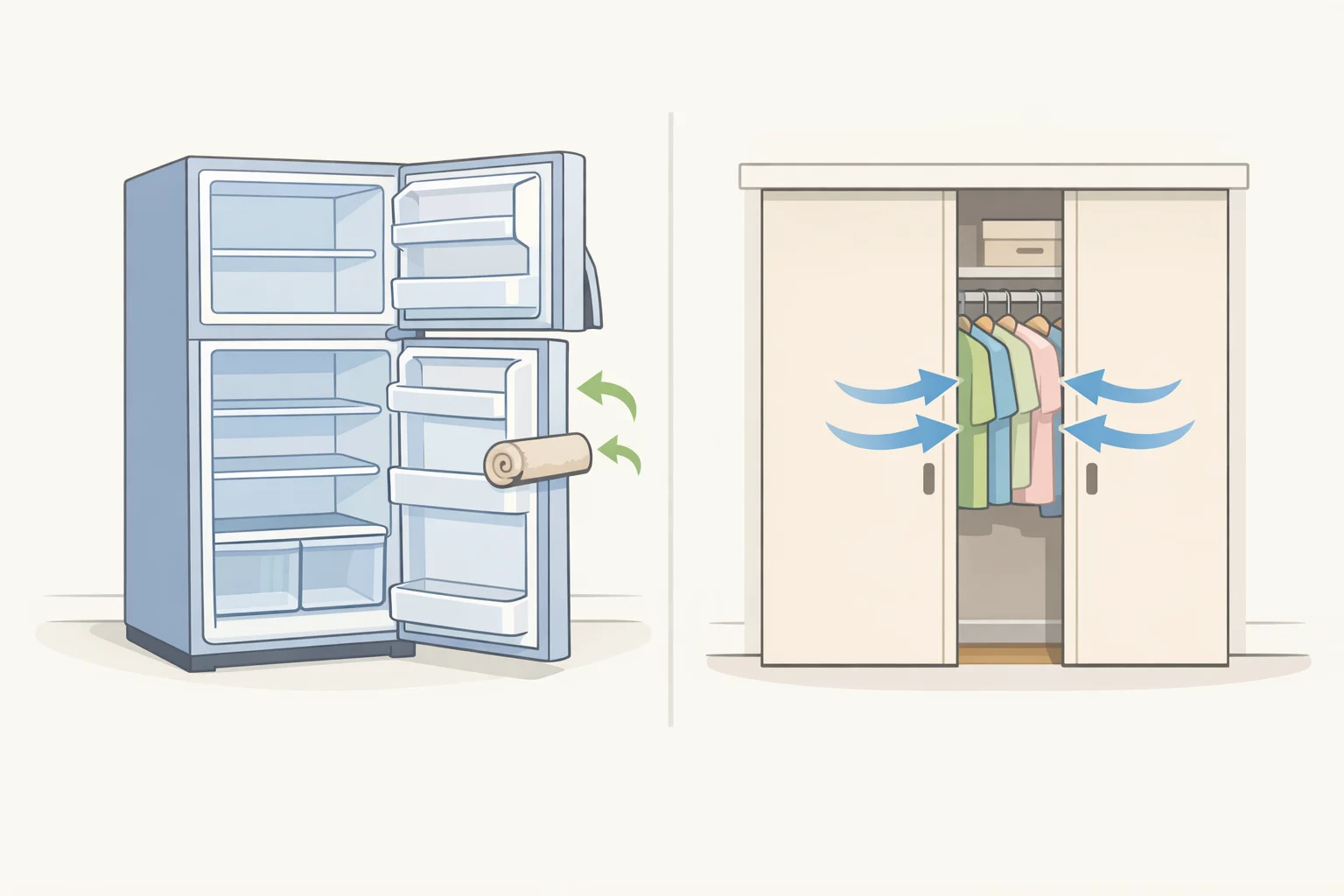
The seven cleaning tasks above are a practical checklist for the risks this guide is built around, not a full protocol for closing a home. The steps below apply specifically to extended absences, several weeks or a full seasonal closure, and come from UF/IFAS guidance written for a vacant Florida home.
Once the refrigerator and freezer have been emptied and wiped down, disconnect them and leave the door propped ajar; that's part of UF/IFAS's routine for a seasonal closure (UF/IFAS). Leave extra space between clothes in closets so air can circulate. For the water heater, UF/IFAS gives a procedure for shorter absences only, turning off power to the unit and setting its thermostat to the lowest setting; the research reviewed here doesn't specify a different setting for a full seasonal closure, so check with the manufacturer or a qualified professional before changing anything for an extended absence (UF/IFAS). Schedule a professional air conditioner checkup roughly three weeks before departure, since a system left unattended for a season needs to keep running reliably the whole time the house sits empty (UF/IFAS).
Optional tasks for a nicer homecoming
Everything below makes the house feel better to walk into, though none of it is presented in the research as reducing odor, pest, or mold risk the way the tasks above do. These are comfort and appearance tasks.
Making the bed with fresh sheets is a small touch worth doing if time allows; Denton Maids points out that nothing feels better than clean sheets after a long travel day (Denton Maids). Wiping down high-touch surfaces, dusting baseboards and ceiling fans, and washing curtains or throw blankets show up often on commercial cleaning checklists, framed there as comfort and appearance items rather than prevention (Denton Maids). Good Housekeeping frames the whole point of vacation prep around returning to a home that feels untouched, a peace-of-mind standard more than a risk-prevention one (Good Housekeeping).
Vacuuming and mopping under furniture is worth doing anyway, and it's part of Denton Maids' own pre-vacation routine (Denton Maids). The sources here recommend it as part of a deep clean but don't specifically establish a pest-prevention benefit; it takes only a few extra minutes and rounds out the appearance tasks above.
Pre-vacation cleaning checklist: what to do and when
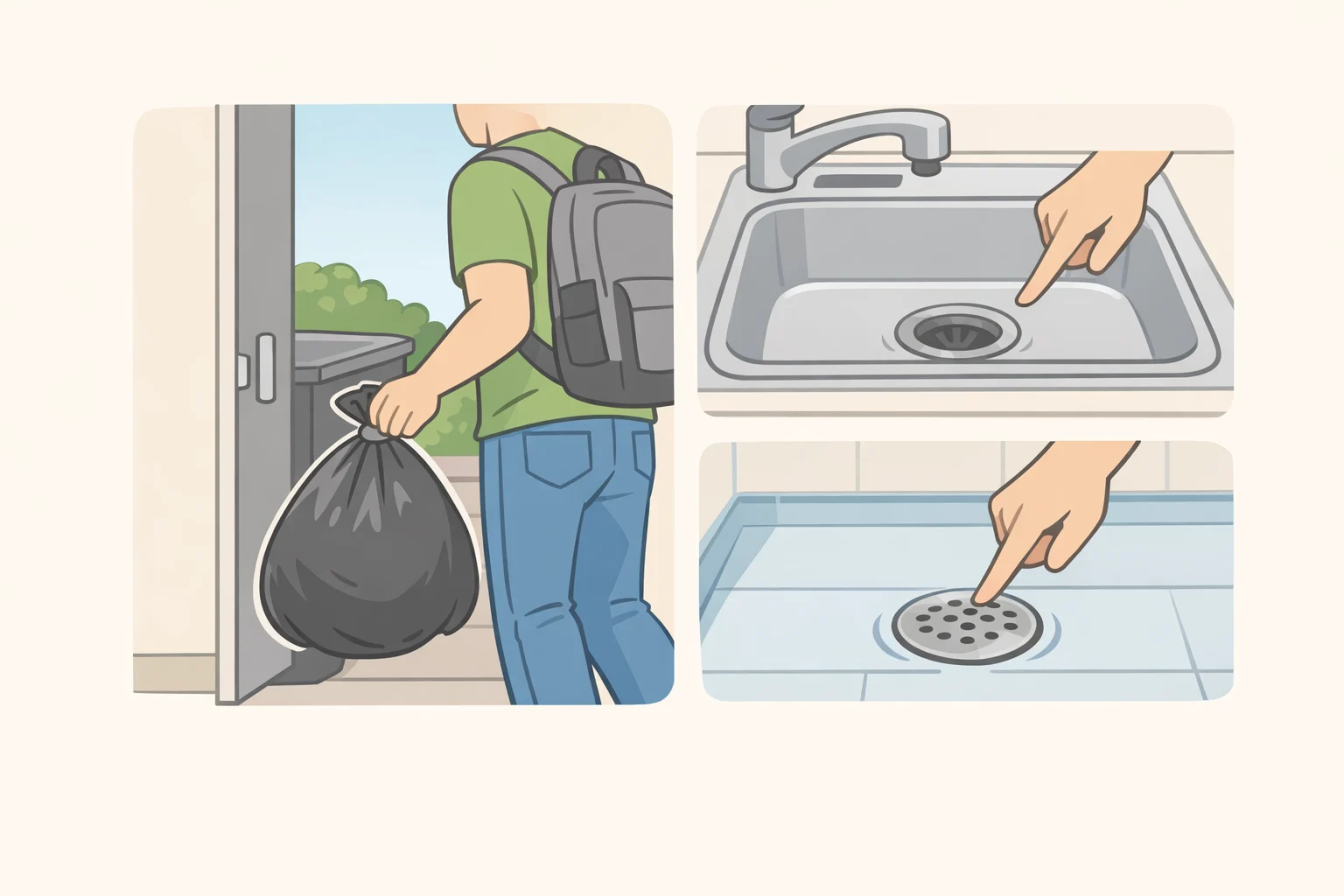
A few days before departure, use up perishables that won't keep and go through the pantry for anything open that could draw pests.
The night before you leave, finish the laundry, empty every hamper, and make sure bathroom and kitchen surfaces are dry, not just wiped down.
The morning you leave, take out the final bag of trash, empty pet food bowls, and do a last walk-through checking for standing water in sinks, tubs, or shower floors.
For a seasonal closure only, handle the AC checkup and appliance changes weeks ahead of departure rather than the night before, since scheduling a service call and adjusting the refrigerator and water heater takes more lead time than a routine cleaning pass (UF/IFAS).
Before you lock the door
Food, trash, and moisture drive most of the problems waiting in an empty house, and the tasks above are a practical way to handle those specific risks, not a universal protocol for every vacant home. For a short trip, clearing food and drying surfaces covers the basics; for a seasonal closure, the extra steps around appliances and AC servicing deserve their own timeline rather than a rushed afternoon before departure (UF/IFAS). The CDC's clean-and-dry principle is worth keeping in mind well beyond vacation planning: the same guidance applies after any leak or flood, whatever time of year it happens (CDC).