How to Keep Your House Cooler in a Heat Wave: 3 Steps
This guide walks through three actions you can take during a heat wave to keep indoor temperatures from climbing: block solar heat before it enters, use airflow only when conditions favor it, and stop adding heat from inside. It also tells you when those tactics stop being enough and what to do then.
Start with the heat you can stop. Blocking heat at the threshold is fundamentally easier than removing it once it's already inside, according to the PNNL Building America Solution Center. Most common heat-wave advice skips that logic, which is why homes still overheat despite the effort.
Two things worth knowing before you start:
- Indoor temperatures severe enough to cause heat exhaustion or heat stroke, both potentially fatal, can develop during prolonged extreme heat events, the EPA warns.
- The three steps below address comfort and mild-to-moderate heat. When indoor temperatures reach the mid-90s Fahrenheit, move from comfort tactics to heat safety. Skip to the safety section at the end.
Step 1: Block solar heat before it enters the house
Video of the Day
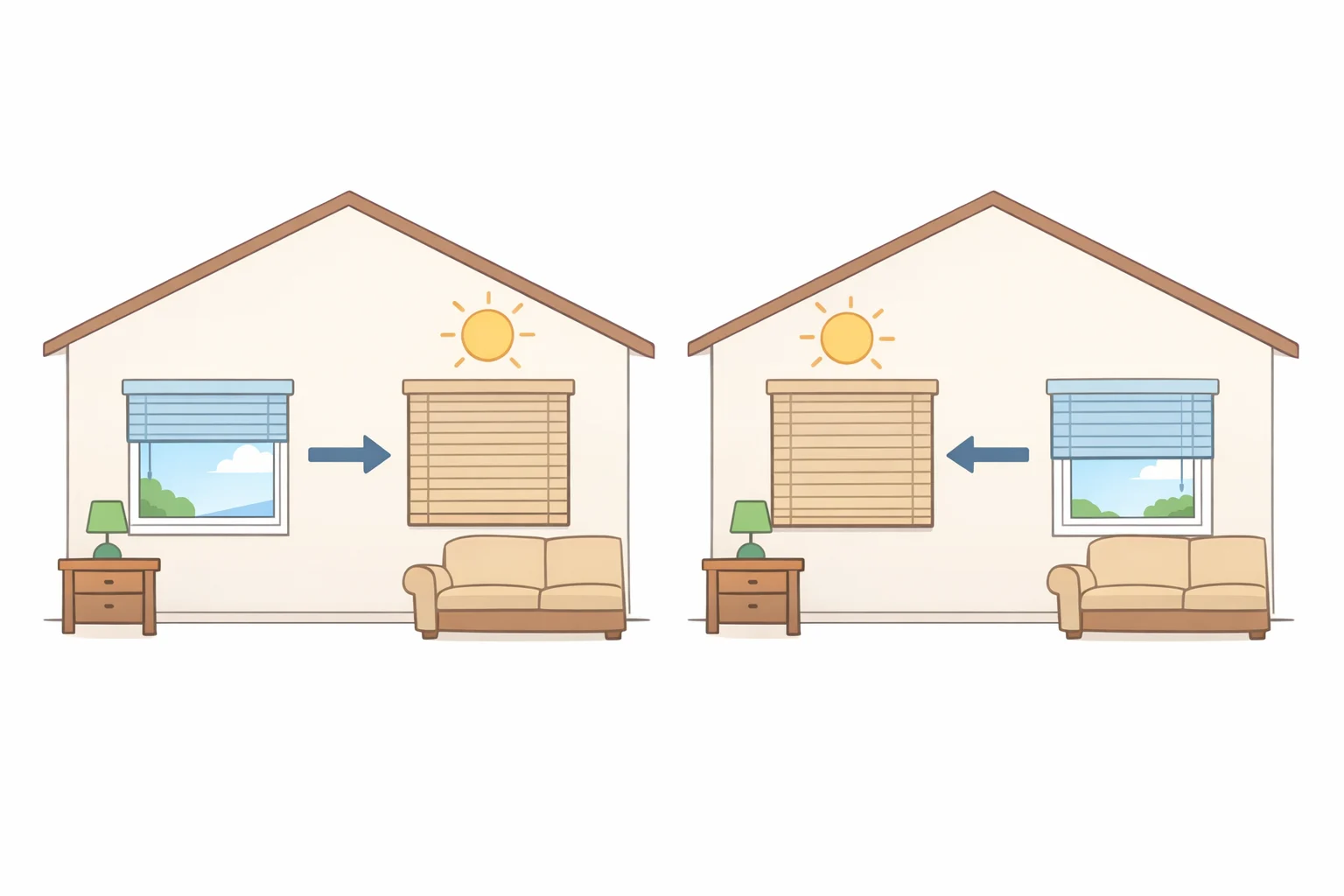
Solar control is the highest-use move available. Close the right shades at the right time and you're preventing a heat load from forming. Leave them open, and no fan will undo what accumulated through eight hours of direct sun.
Why east and west windows are the priority: At midsummer, east- and west-facing walls receive roughly twice the solar heat per square foot of north- and south-facing walls, while roof surfaces absorb three to four times as much solar radiation as those same north- and south-facing walls on a peak summer day, per the PNNL Building America Solution Center. That roof number matters even if you can't act on it directly: heat conducted down through an unshaded attic contributes to the same indoor temperature climb you're trying to prevent. East and west glass is where morning and afternoon heat loads enter; start there.
Among all available heat-reduction measures, solar control strategies rank as the most impactful, according to PNNL. Exterior shading outperforms interior shading because it stops radiant heat before it passes through the glass. The EPA specifically notes that outdoor awnings and louvers reduce heat gain more than indoor shades.
-
Close east-facing blinds, shades, or curtains before sunrise. Block the sun before it starts loading the room, not an hour in. Coverage matters more than the specific product: roller shades, blackout curtains, and cellular shades all perform the same basic function here.
-
Switch attention to west-facing windows by early afternoon. Close west-facing shades before the sun reaches them and keep them closed through sunset. Late-afternoon sun angles drive significant heat through west glass and are easy to underestimate.
-
Keep windows and exterior doors closed while outdoor air is warmer than indoor air. Heat also conducts through walls and infiltrates through gaps around windows, doors, and floors, per PNNL. Maintaining the thermal boundary matters even when opening a window feels like the obvious move.
-
Add exterior shading where you have access. Awnings, exterior solar screens, or removable panels stop radiant heat before it reaches the glass. For renters, removable exterior screen panels are worth investigating. The difference between exterior and interior shading is meaningful, not marginal.
Video of the Day
Step 2: Use ventilation and fans only when conditions actually support them
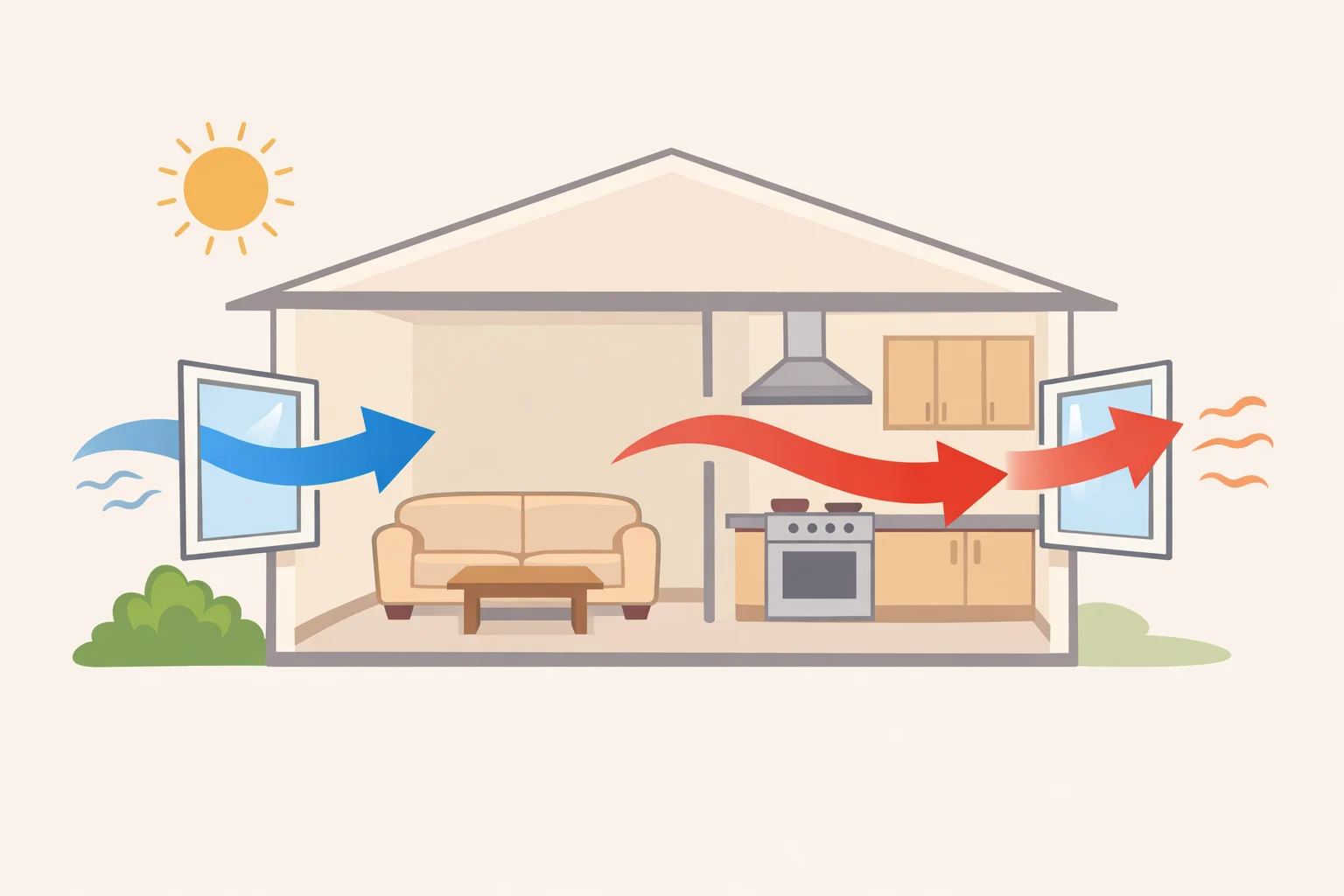
Opening windows and running fans are the two most commonly misapplied responses to heat. Used correctly and at the right time, they provide genuine benefit. Used when outdoor air is already hot, they accomplish little.
This is the rule that matters: Open windows when outdoor air is cooler than indoor air; close them when outdoor air is warmer. The EPA states this as the central ventilation principle.
Natural ventilation works best where nights are reliably cool and breezes are consistent, per the Department of Energy. In regions where nighttime lows stay elevated, that useful window barely opens. As a practical rule, comfort ventilation can substitute for air conditioning at indoor temperatures up to roughly 82°F under good airflow conditions, per the PNNL Building America Solution Center. Above that threshold, ventilation becomes progressively less useful.
- Check whether outdoor air is actually cooler before opening anything. Early morning, after nighttime temperatures have had time to drop, is typically the window. Open strategically then, and close before the day heats up. A simple thermometer near a window confirms what a weather app estimates.
⚠ Air quality first: Before opening windows, check local air quality, especially during wildfire or high-ozone days. The EPA advises this explicitly. Cooler air carrying smoke trades one problem for another.
-
Position fans to exhaust hot indoor air out, not just move it around. A fan aimed at an open window pushes hot air outside and draws cooler air through another opening on the opposite side of the house. Portable fans do not lower air temperature; they move air across skin to accelerate sweat evaporation, producing a cooling sensation, the EPA explains. Running a fan in a closed room with no airflow path simply circulates warm air. The EPA explicitly advises against it.
-
Know where fans stop being a safety tool. At indoor temperatures in the mid-90s Fahrenheit or above, portable fans will not prevent heat-related illness, the EPA states. That's no longer a comfort question; it's a health one. Turn the fans off and go to the safety section below.
Decision path: Outdoor air cooler than indoor? Open up and push air through. Outdoor air warmer? Stay closed and hold what Step 1 preserved. Indoor temperature at or above the mid-90s? Leave fans off and read the next section.
Step 3: Stop adding heat from inside the house
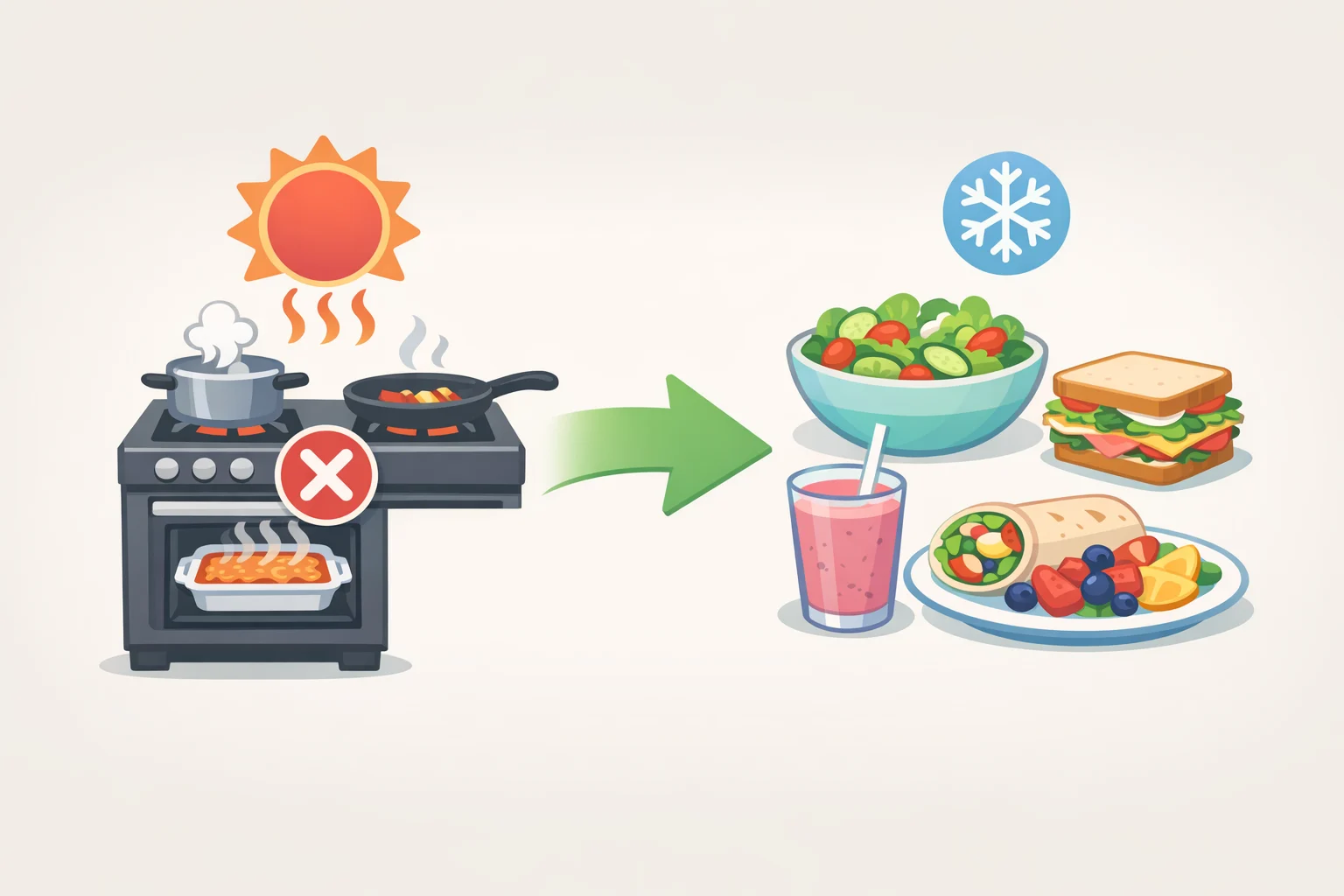
You've addressed what's coming in through windows and walls. The third lever is what your own household is generating. Cooking, large appliances, and hot showers all raise the indoor heat load. During a heat wave, those internal gains compound everything else already pushing temperatures up.
One rule covers most of this: Avoid running heat-producing appliances during the hottest part of the day, roughly late morning through early evening.
Internal heat gains come primarily from cooking, showers, large appliances, and the occupants themselves, with even efficient lighting and small appliances contributing, per the PNNL Building America Solution Center. These stack on top of solar and conductive gain during the same hours when outdoor temperatures are peaking. The EPA advises delaying or avoiding activities that generate indoor heat, especially cooking, when outdoor air is too hot to ventilate effectively. If you can't exhaust what you're generating, you're compounding what's already accumulating.
-
Shift cooking to early morning or after sundown. Ovens and stovetops generate significant heat and humidity. The priority here is high: cooking is the largest source of controllable internal heat gain during peak hours. During the hottest part of the day, rely on cold meals, outdoor grilling, or a microwave, which generates far less heat than a conventional range or oven.
-
Delay dishwashers, clothes dryers, and washing machines until evening. These appliances generate both heat and humidity while running. Moving them past sunset keeps them from contributing to daytime temperature peaks.
-
Turn off unused electronics and lights. Desktop computers, aging appliances, and inefficient lighting all emit heat as a byproduct of normal operation. The individual contributions are modest; across a full heat-wave day, the cumulative effect adds up.
There is a hard limit to all of this: no combination of passive tactics fully substitutes for air conditioning during prolonged extreme heat. The next section covers what to do when you reach that limit.
How to keep your house cool without air conditioning when a heat wave exceeds passive limits
Passive strategies have real ceilings. This section is about recognizing them quickly and acting.
Air conditioning is the most reliable protection available during extreme heat. The EPA is direct: use AC to keep indoor air cool during extreme heat events, and have units cleaned and serviced before heat arrives, not during the event. Older adults over 65, infants and young children, and people with chronic health conditions face elevated risk during heat events, the EPA notes. For these individuals, passive tactics supplement AC; they do not replace it.
If you don't have AC, identify air-conditioned locations now. Libraries, public cooling centers, and shopping malls all provide relief during the day, per the EPA. Spending as much time as possible in a cooled space reduces cumulative heat exposure, per the same EPA guidance.
If the power goes out: Fall back on the shading and ventilation steps above to slow how quickly indoor temperatures rise. Never run a generator indoors, in a garage, or in any enclosed space: generator exhaust contains carbon monoxide, the EPA warns. Run generators outside and at least 20 feet from any building.
⚠ Emergency: Heat stress, heat exhaustion, and heat stroke can all be fatal, the EPA states. If someone shows signs of heat-related illness, call 911 immediately. Learn the specific symptoms and responses at the CDC, as the EPA recommends. Do not wait to see if symptoms resolve.
Prepare before conditions deteriorate
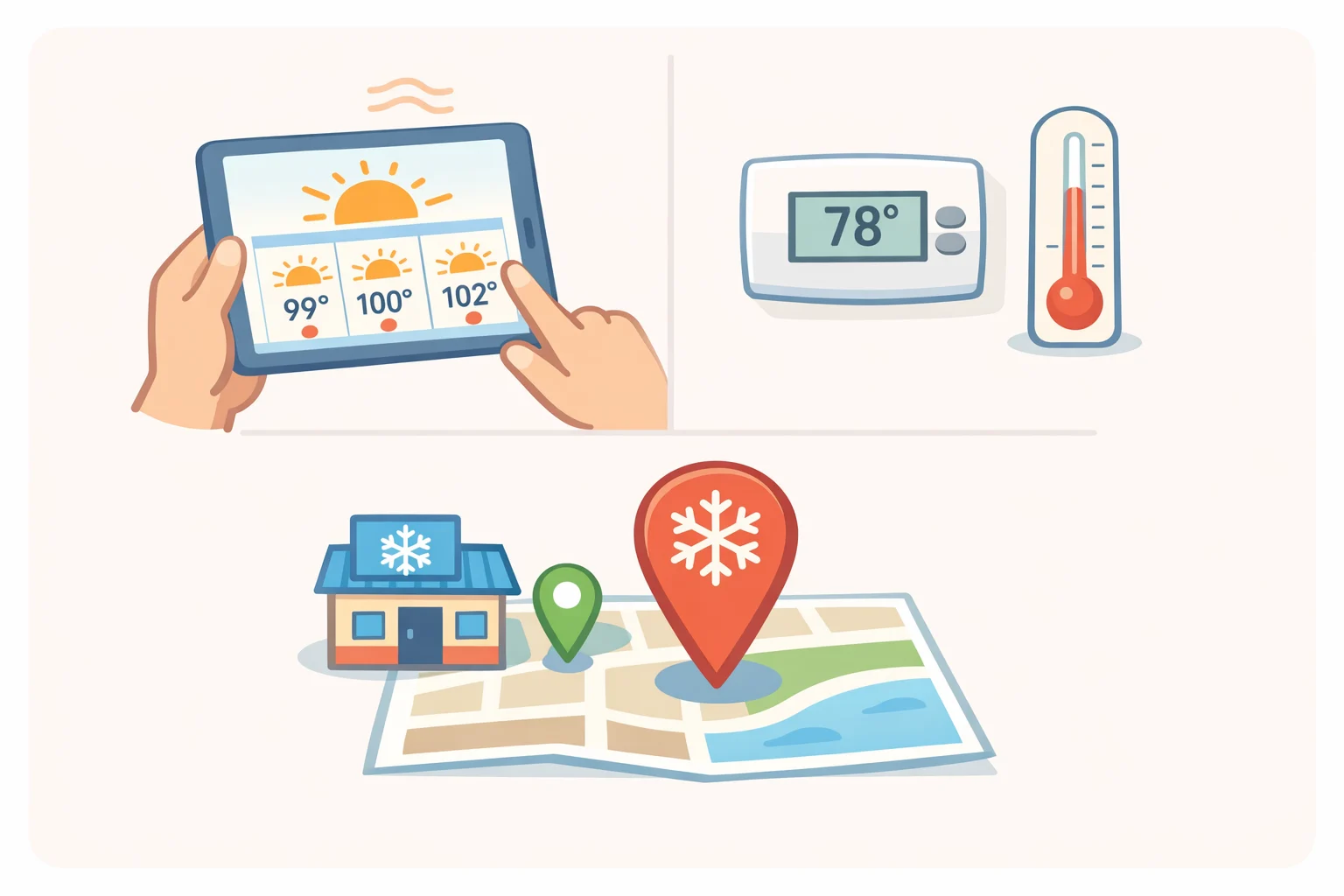
The sequence holds: shade east- and west-facing windows before heat builds, open for ventilation only when outdoor air is cooler, and keep heat-producing appliances off during peak afternoon hours. Get to air conditioning before indoor temperatures reach the mid-90s.
Pre-heat-wave checklist:
- Check the NOAA HeatRisk forecast. The HeatRisk index, referenced by the EPA, provides 24-hour risk forecasts for heat-sensitive populations. Use it to act before conditions become dangerous, not after.
- Verify your AC is serviced and functional, per EPA guidance. Finding it needs a repair call on day one of a heat wave is avoidable.
- Identify your nearest cooling center or air-conditioned public space before you need it, as the EPA recommends.
- Place a thermometer in your most-used rooms so you know actual indoor temperatures, not estimates.
Longer-term fixes that reduce the next heat wave's impact
Neither of these helps this week, but both change the calculus for every heat wave that follows.
Cool roofing materials can reduce peak indoor temperatures in homes without AC by roughly 2 to nearly 6 degrees Fahrenheit, and cut peak cooling demand in air-conditioned homes by 11 to 27 percent, per EPA research. Strategic landscaping, including trees, vines, and shrubs positioned to shade east- and west-facing walls and windows, extends those gains, per the Department of Energy.