How to Get Blood Stains Out of Clothes: Expert Guide
Scrubbing a blood stain with hot water feels responsible. It's exactly the wrong move. Blood is a protein stain, and heat cooks that protein much the way it firms up an egg white, making the stain cling to the fibers instead of lifting away, according to WonderHowTo. Learning how to get blood stains out of clothes starts with unlearning that instinct: cold water, not hot, is the foundation everything else builds on.
The American Cleaning Institute is just as direct: soak fresh blood in cold water, never hot, because hot water sets the stain. Tom Swantko, content director at FabricLink, distilled the whole strategy into four words when he spoke to Consumer Reports: "cold water and speed." Speed mattered enough to change outcomes in a real test. Wirecutter staff applied pig blood, chosen for its similarity to human blood, to common fabric swatches roughly three years ago, and most fresh stains came out with nothing more than cold water and inexpensive household cleaners when treated quickly, per WonderHowTo.
Four things make this job possible: cold running water, a clean cloth or soft toothbrush, mild detergent, and gloves if the blood isn't your own, per WonderHowTo.
Here's how the treatment splits, depending on what's already happened to the stain:
- Fresh stain → cold rinse from the back of the fabric, work in mild detergent, inspect.
- Dried stain → cool soak, then a label-approved enzyme treatment, inspect.
- Heat-exposed or already-washed stain → limited escalation: enzyme soak first, then peroxide or bleach only if the fabric and label allow it.
- Delicate or dry-clean-only fabric → stop improvising, follow the label, or hand it to a professional.
The sections below walk through each branch, along with the fabric and chemical-safety limits that keep a treatable stain from becoming a permanent one.
Removing fresh blood stains from clothing: cold water and mild detergent first
Video of the Day
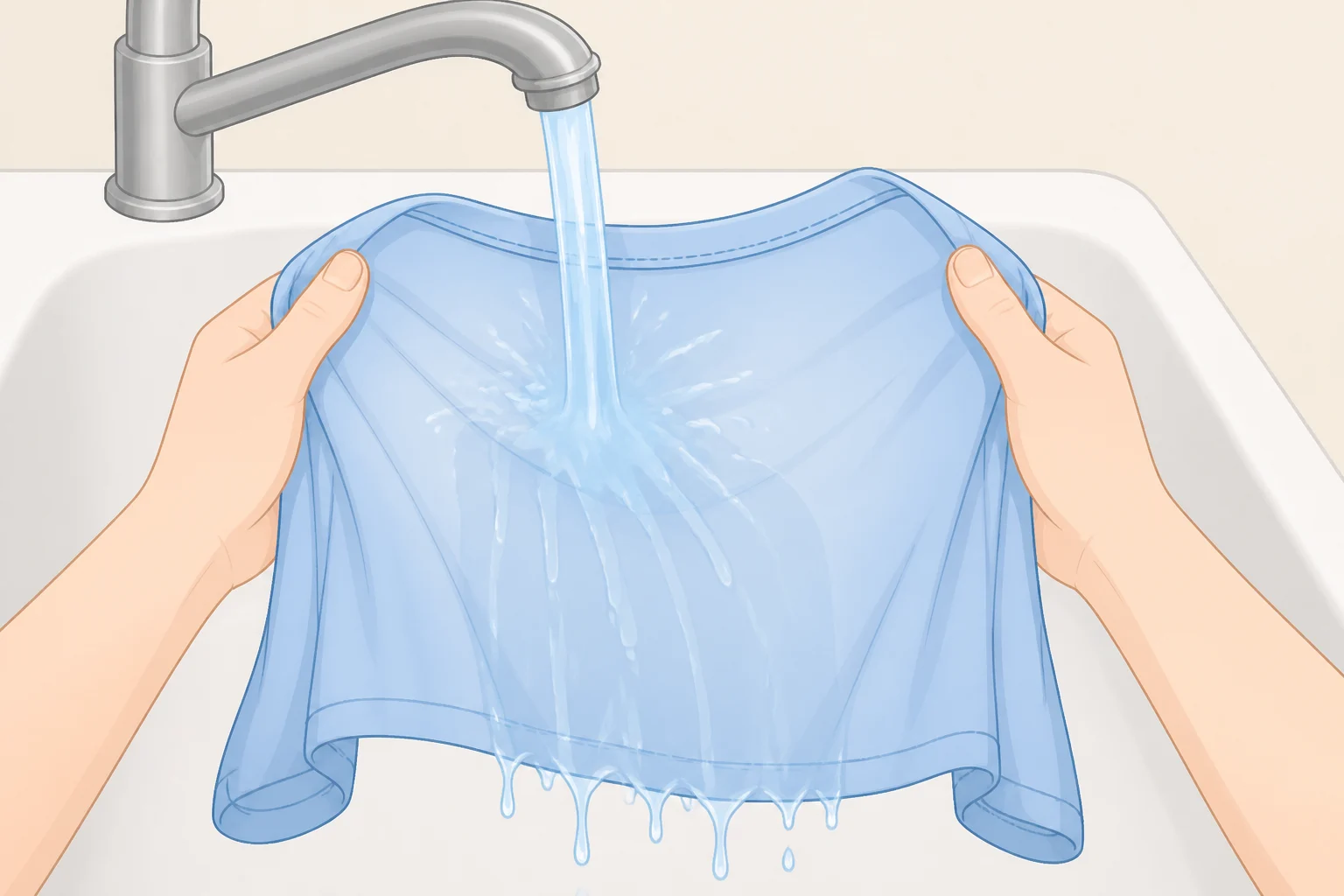
Check the care label before touching anything else. It determines what's safe at every later step, so it's worth the few seconds up front.
Flush cold water through the back of the fabric. UGA Extension's method, as reported by Launderwise, runs water through the reverse side so blood is pushed out of the weave rather than driven deeper into it. Texas A&M recommends the same reverse-side flush, according to the same Launderwise summary.
Work in a small amount of mild detergent or bar soap next. UGA Extension rubs in liquid detergent or bar soap, rinses, and repeats, per Launderwise. Consumer Reports' version, relayed by the same source, works detergent in with fingers or a soft toothbrush and lets it sit 10 minutes before a cold wash. Soap and detergent do most of the work at this stage; enzymes are a tool for later, once a stain has had time to set.
Rinse again and check the spot in good light. If it's gone, wash as usual on cold. If it's still visible, resist the urge to reach for something stronger on your own and move to the next section instead.
One thing to avoid along the way: rubbing a stain can work it deeper into the fibers rather than lift it out, a point Consumer Reports makes about stains generally, recommending a blotting motion instead, particularly on upholstery, where excess water can also leave a ring. On washable clothing, the gentle rubbing described above is still the standard method; save the lighter blotting touch for couches, car seats, and anything you can't throw in a machine.
Speed outperforms product choice here. Most fresh stains came out with cold water and inexpensive household cleaners when treated quickly, per WonderHowTo. There's no need to hunt for a specialty product first; whatever's already under the sink is probably enough, provided it goes on right away.
Video of the Day
How to get dried blood stains out of clothes
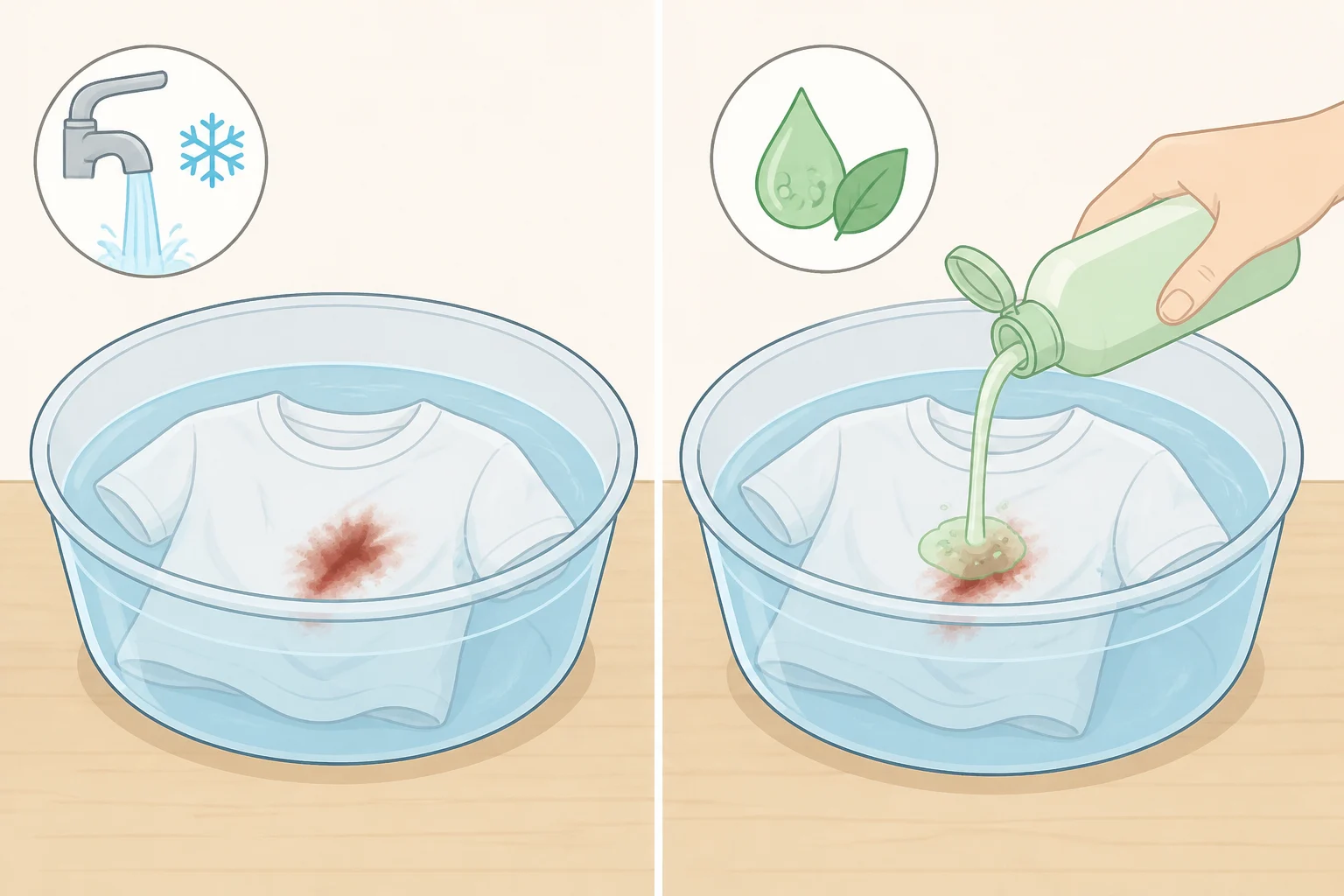
Dried blood needs more time than fresh blood, and a different tool, though the cold-water rule still governs the first move.
Re-check the label before going further, though it answers less than it seems to. A crossed-out triangle on the care tag rules out bleach, standard and oxygen alike, later in this process. It doesn't automatically clear or rule out enzymes, so check the product's own instructions too, especially given the silk and wool exception below.
Soak the garment in cool water for 30 minutes or longer. That's UGA Extension's first move on a stain that's already dried, per Launderwise, before trying anything stronger.
If the stain remains, move to a lukewarm enzyme pre-soak or enzyme detergent. The American Cleaning Institute recommends pretreating or soaking dried stains in a product containing enzymes, which target the protein residue plain soap can leave behind once a stain has set. Keep the water under roughly 100°F; hotter water risks setting whatever's left, according to guidance relayed by Launderwise.
Skip enzymes on silk and wool. The Smithsonian's Museum Conservation Institute, cited by Launderwise, warns that protein enzymes can damage those fibers. A silk or wool label is a cue to stop and consider professional cleaning instead of improvising a workaround.
Launder per the care instructions and inspect again before drying. Commercial enzyme products follow the same logic. Summit Brands markets its Zout remover by having users apply it, let it sit a few minutes, then wash on the warmest setting the fabric allows. That tracks with the enzyme approach described above, though it's worth reading as a manufacturer's description of its own product rather than independent testing.
Stains that have already been through a hot wash, dryer, or iron
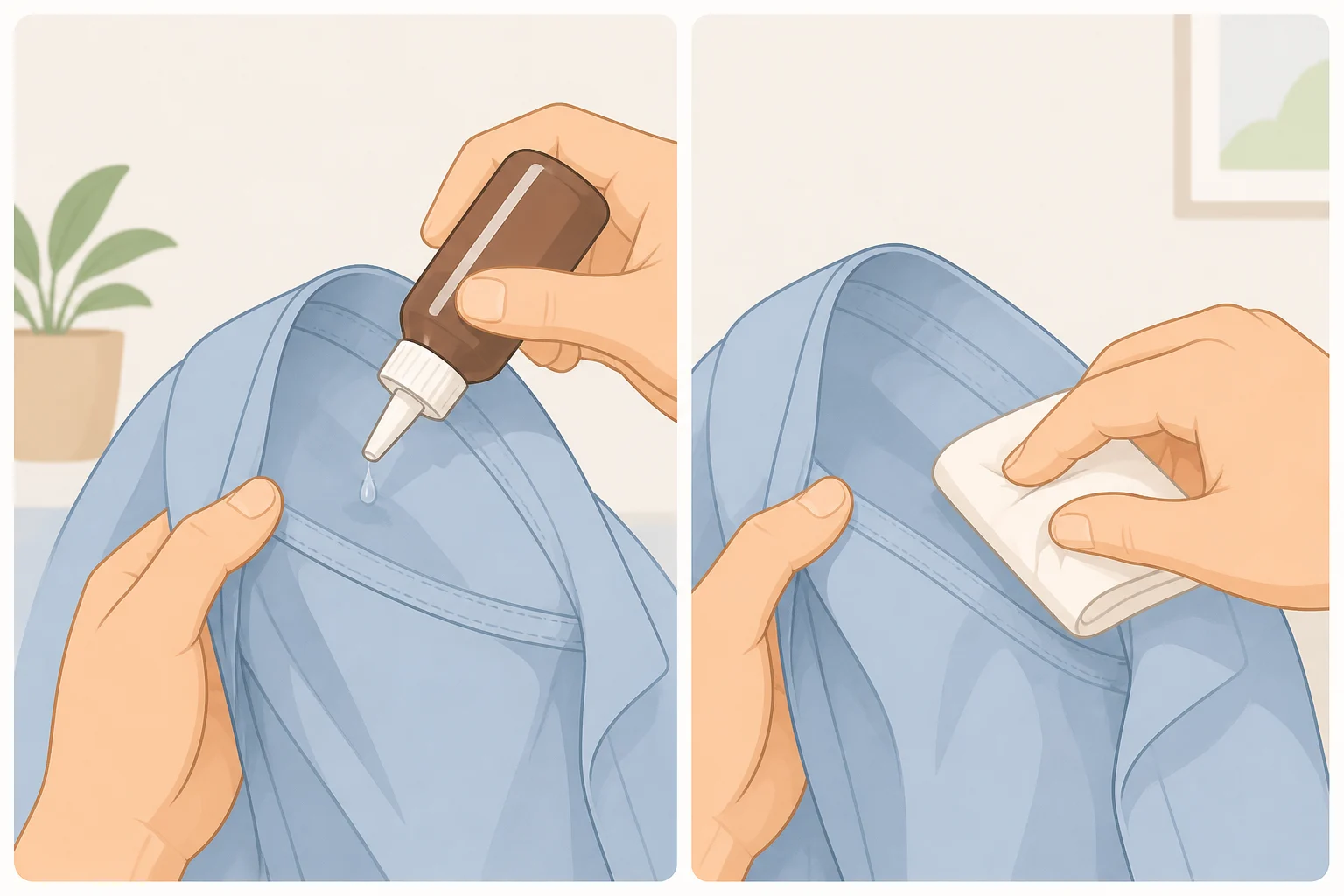
Heat from an iron or a dryer sets a protein stain just as effectively as a hot wash does, according to guidance relayed by Launderwise. Consumer Reports separately warns that dryer heat can lock a stain in, often permanently. Either way, a set stain isn't automatically a lost cause. It's generally worth one careful attempt before writing off the garment.
Start with the enzyme soak described above, even on an item that's already been through the wash. UGA Extension frames heat-set stains as difficult to remove, not impossible, per Launderwise, which is reason enough to try before giving up.
If a trace remains and the fabric is colorfast, test standard 3% hydrogen peroxide on an inside seam first. Apply a drop and blot afterward with a white cloth. Timing varies a little by source: WonderHowTo suggests waiting five minutes before blotting, while UGA Extension's routine, via Launderwise, calls for just one to three minutes. Either window is fine for a spot test; follow whatever the product's own instructions say. Peroxide is a bleach and can strip dye. If color transfers during the test, skip this fabric entirely rather than risk it on the visible stain.
If peroxide isn't suitable, or doesn't finish the job, and the fabric is washable, colorfast, and the label allows it, launder with oxygen bleach, or chlorine bleach only if the care tag specifically permits it. That's the American Cleaning Institute's direct recommendation for persistent bodily-fluid stains. Do not mix peroxide with bleach. If switching products, rinse the garment thoroughly first, and never combine bleach with vinegar or ammonia: the CDC links that combination to dangerous chlorine or chloramine gas, a warning Launderwise flags directly.
A stain that's been through heat may fade without fully disappearing. Given what the fabric has already endured, that's a reasonable result, not evidence of a missed step.
Fabric safety and when to call a professional
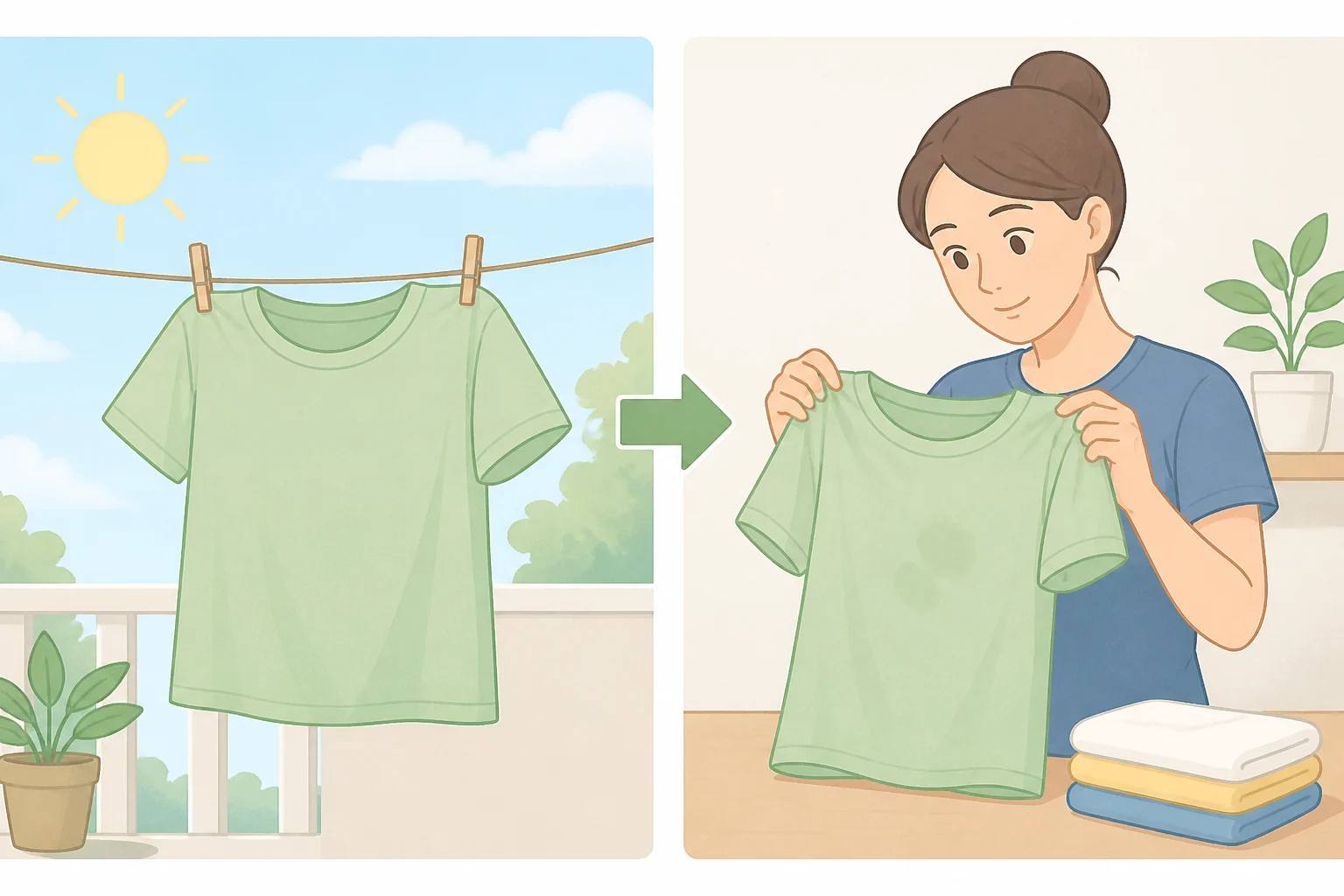
Check the spot in daylight before deciding what's next; artificial light makes a faint stain easy to miss.
If any doubt lingers after treatment, air-dry the garment instead of reaching for the dryer or iron. Heat can lock a stain in for good, so letting it dry naturally and checking again beats risking the dryer on a spot that still looks faint. If it's still visible once dry, repeat the enzyme or bleach step from the relevant section above rather than jumping to something harsher.
Respect the crossed-out triangle wherever it shows up. Hydrogen peroxide and oxygen bleach are both bleaching agents, so a label that rules out bleach rules out both, no matter how diluted the product.
For silk, wool, vintage textiles, or anything marked dry-clean-only, this is the point to stop improvising. Once enzymes and bleach are both off the table, a professional cleaner is usually the safer bet, and often cheaper in the end than risking an irreplaceable garment on a method with no fabric-specific backing.
Protein stains beyond blood
Blood isn't the only mark that follows this logic. Guidance relayed by Launderwise groups sweat, grass, and mud alongside blood as protein stains, which suggests the same cold-rinse-then-enzyme approach is worth trying on them too, even if each fabric and stain still deserves its own check before escalating. An enzyme-based detergent kept on hand covers more laundry accidents than just the one that prompted this guide.
That's really how to wash blood out of fabric without trading one problem for another: cold water first, heat only once the stain is confirmed gone in good light, and the care label as the referee the whole way through. Treat fresh blood immediately with cold water and mild detergent. For dried or heat-exposed stains, check the label before escalating to enzymes or bleach, and keep the garment out of the dryer until the mark is actually gone.