How to Keep a Glass Cooktop From Scratching: Prevention Tips
Sliding a pan a few inches instead of lifting it, or setting a pot down on a surface that still has grit underneath it: these are the habits that actually damage glass cooktops, not some dramatic drop or kitchen disaster. Figuring out how to keep a glass cooktop from scratching mostly means catching those two habits before they become routine.
Glass-ceramic cooktops are built from genuinely tough material. BORA, whose cooktops use SCHOTT Ceran glass ceramic, calls the surface "extremely strong," and the company is just as clear that it "is not invulnerable" (BORA). LG's owner's manual backs that up with a specific warning: even heavier-gauge, high-quality cookware can mark the surface if it's dragged instead of lifted (LG owner's manual via ManualsLib). Whirlpool offers a bit of reassurance for its WipeClean surface: light scratches can show up with normal use without affecting how the cooktop performs (Whirlpool).
This guide walks through a sequenced routine for protecting a glass cooktop: what to check before cooking, which spills demand immediate action, how to clean a glass cooktop without scratching it once it has cooled, and which marks signal a repair issue rather than a cleaning job.
Prevent scratches on a glass top stove before you start cooking
Video of the Day
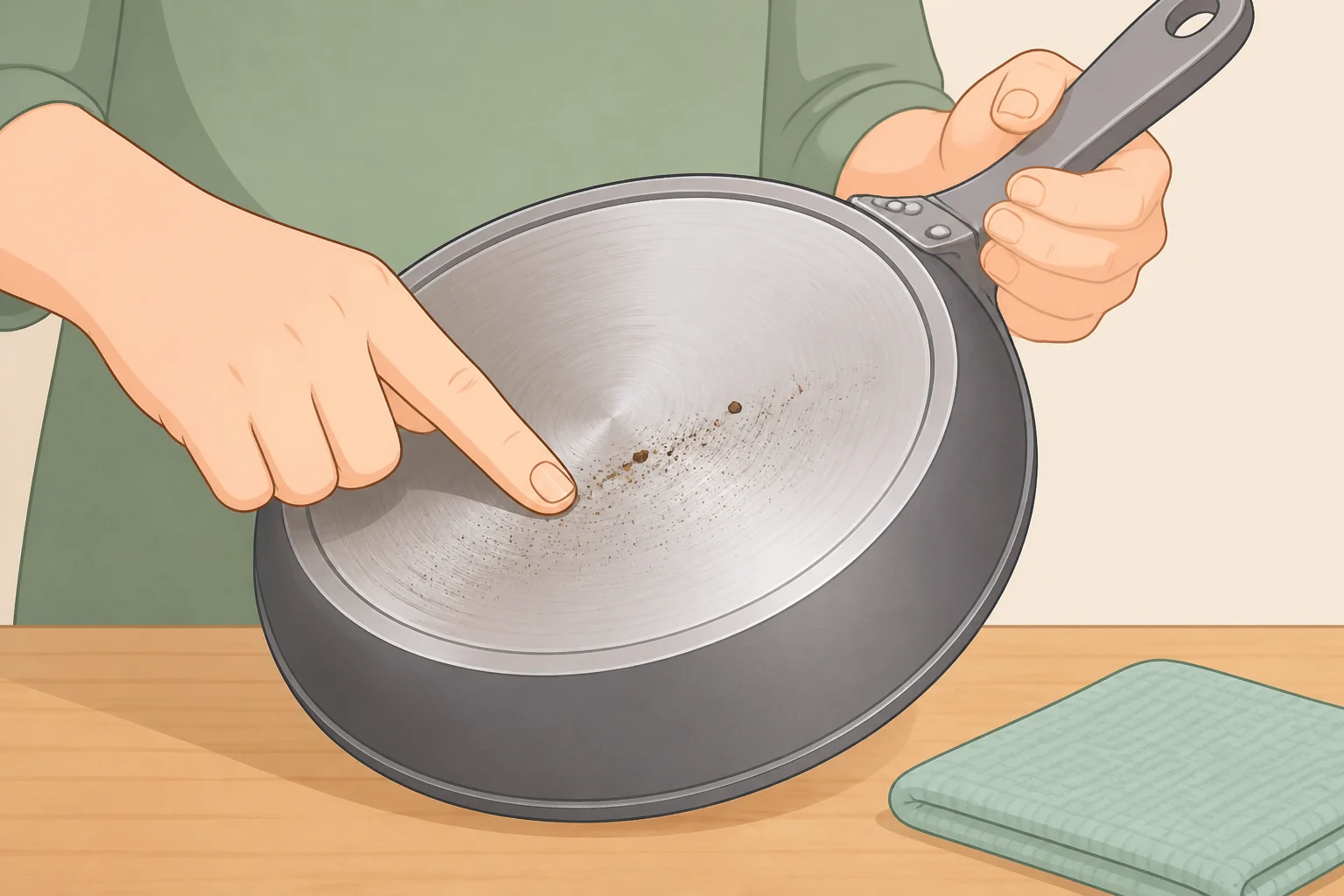
Most of this routine happens before a burner ever turns on. Check both the cookware and the cooktop itself, and most avoidable scratches never get the chance to happen.
- Run a fingertip over the pan's base. If it's gritty, greasy, or carries burned-on residue, clean it before it touches the glass (AG Appliance Service; BORA).
- Give cookware a quick wipe before each use. It's a small habit, but it prevents the scratches that come from grit trapped between the pan and the glass (BORA).
- Set the pan on a flat counter and watch for rocking. A warped or damaged base belongs in the recycling bin, not on a glass cooktop (AG Appliance Service).
- Don't assume good cookware is safe cookware. LG's owner's manual specifically warns that heavier-gauge, high-quality pans can still scratch the surface if the bottom is rough or dirty (LG via ManualsLib).
AG Appliance Service frames the trade-off simply: replacing one unstable pan costs less than replacing a damaged cooking surface (AG Appliance Service). It's advice worth taking literally, since a pan that rocks on the counter is an easy thing to retire and a cracked cooktop is not.
Video of the Day
Glass cooktop scratch prevention starts with how you move cookware
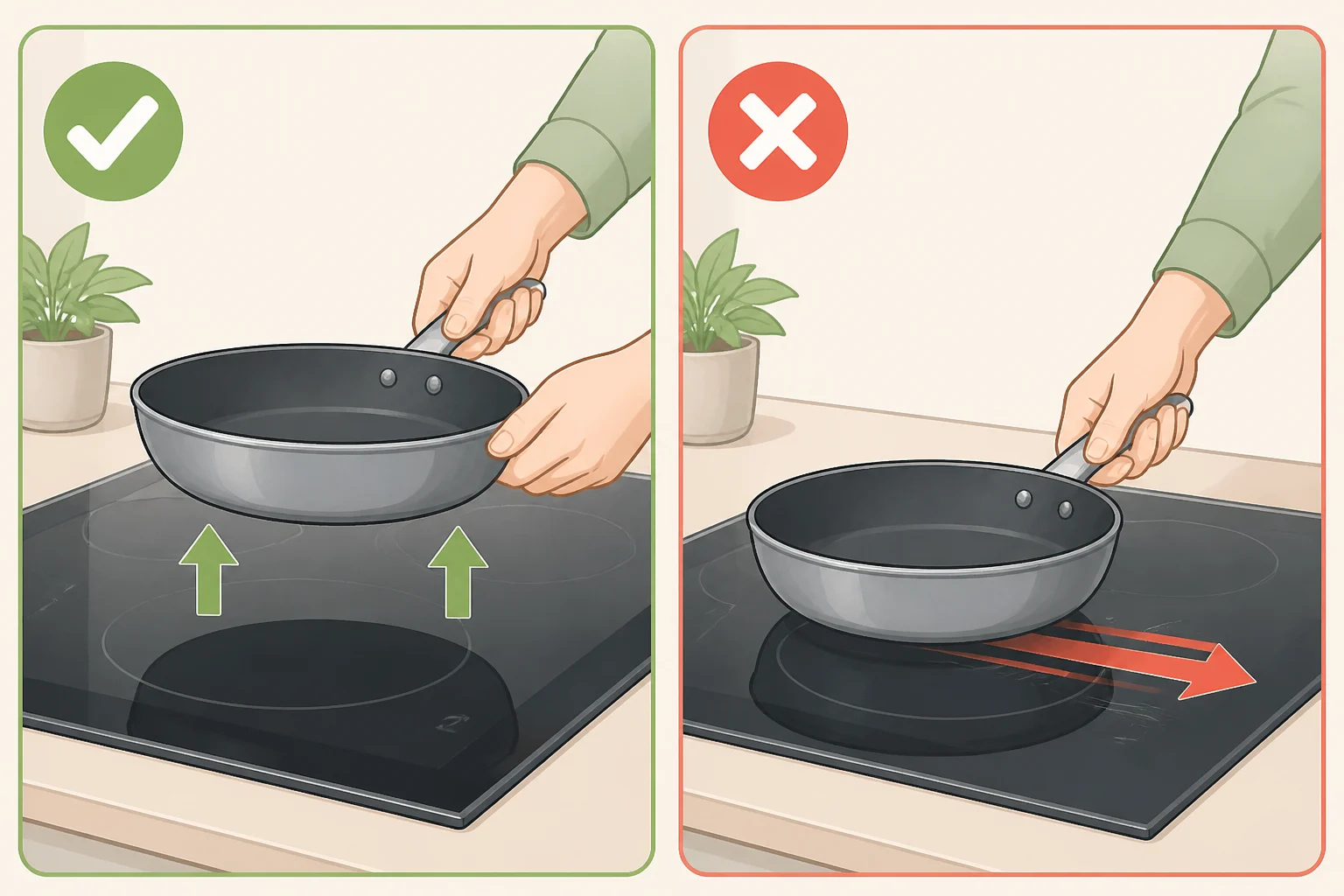
Sliding a pot across the glass, even a short distance, can scratch it. Lifting cookware instead when repositioning is the fix both AG Appliance Service and BORA point to, and it's the single easiest habit to build into regular cooking (AG Appliance Service; BORA).
Salt, sand, and coarsely ground spices cause a quieter version of the same problem. Trapped under a pan, they can scratch glass ceramic the moment that pan gets moved under pressure. BORA's advice here is specific: wipe these away while the cooktop is still running, rather than waiting for everything to cool (BORA).
Sugary spills, melted plastic, and aluminum foil are the exception to the "let it cool" rule. Left sitting on a hot zone, they can pit or permanently damage the glass, and both AG Appliance Service and BORA treat them as emergencies rather than routine mess (AG Appliance Service; BORA). How to remove them safely while the surface is still hot depends on the specific model, so check the manual before reaching for a scraper on anything but a cold cooktop.
Grease is a slower-moving version of the same issue. Residue baked onto a pan bottom can transfer to the glass and feed stubborn buildup over time, so it's worth wiping away even though it's not the kind of emergency sugar or foil is (AG Appliance Service).
Starchy boil-overs from rice, pasta, or oatmeal behave differently again. They dry into residue that gets harder to shift with each reheating, and in severe cases cookware can stick to the glass firmly enough that forcing it loose risks damaging the surface (AG Appliance Service; Wirecutter).
Not every mark is permanent damage, either. Pure copper or aluminum cookware can leave visible marks on glass ceramic, and Wirecutter notes that some metal pots leave scuffs that resemble permanent scratches without actually being structural (Wirecutter; BORA). Worth knowing before panicking over every mark on the surface.
How to clean a glass cooktop without scratching it
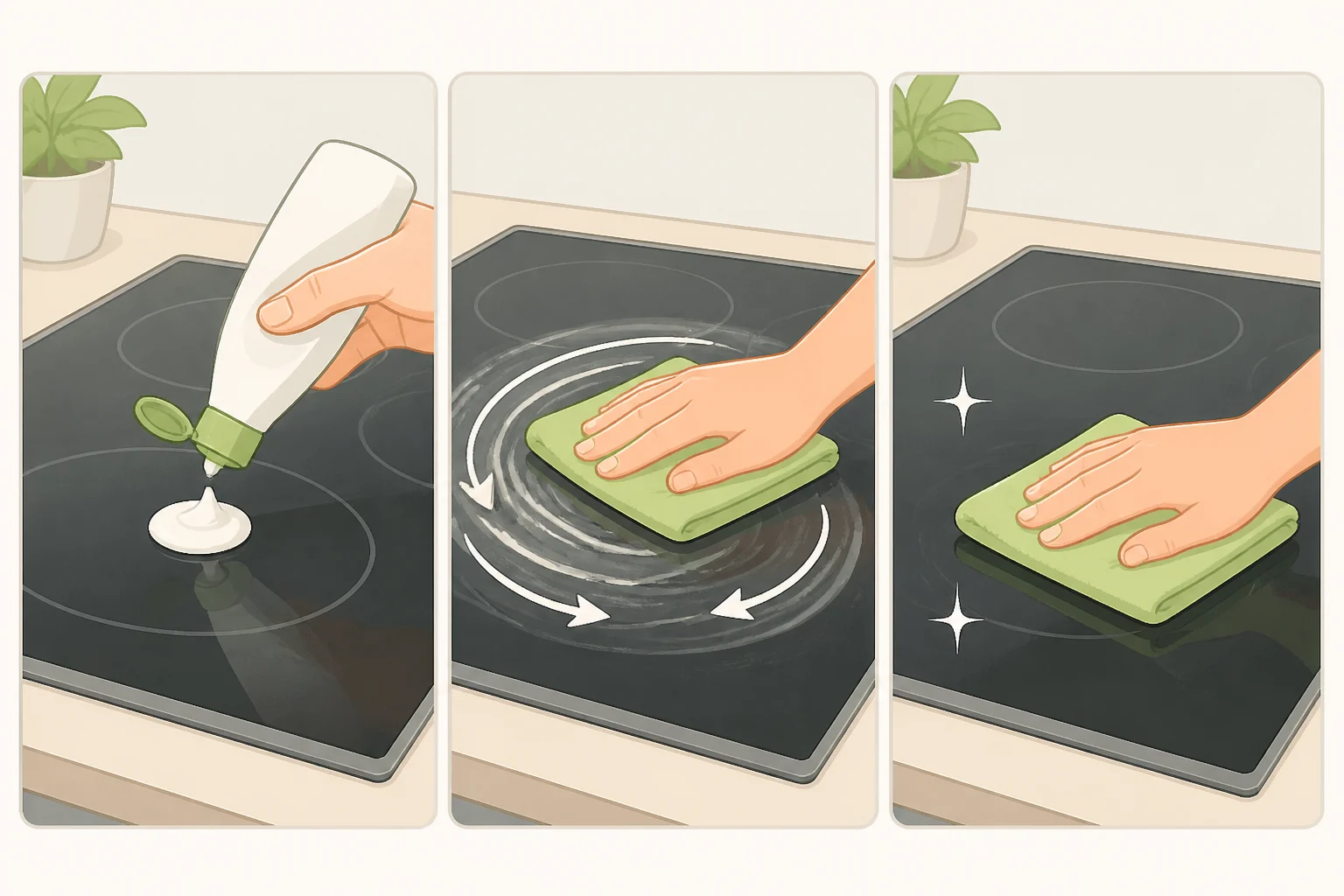
Once the surface is cool, technique and product selection matter more than scrubbing power. Clean after every use, once the cooktop has cooled completely, so residue doesn't get the chance to bake on (AG Appliance Service; BORA; LG via ManualsLib).
BORA's recommended sequence is straightforward:
- Loosen coarse residue first with a glass-ceramic scraper.
- Apply a special cooktop cleaner, about a hazelnut-sized amount, and spread it over the surface in circular motions using a dry microfibre cloth or paper towel.
- Wipe the cooktop down with a damp cloth.
- Dry it with a clean towel to avoid streaks (BORA).
Whirlpool's WipeClean guidance takes a different approach built around patience rather than pressure. Soak soiled areas with water for at least five minutes, stretch that to 20 to 25 minutes for heavy stains, and go as long as 45 minutes for the toughest soil, then wipe with a nonabrasive sponge. Longer soaking improves how easily the surface cleans while protecting the finish (Whirlpool).
Whichever sequence applies to a given cooktop, the materials to avoid are consistent: steel wool, scouring powders, abrasive pads, and harsh chemical cleaners like bleach or ammonia. All of them can dull or scratch the finish (AG Appliance Service; BORA; LG via ManualsLib).
Consumer Reports' lab testing found starchy water stains wiped away easily with almost any cleaner, but the publication still recommends a product formulated specifically for glass and ceramic cooktops as the better long-term option for keeping the surface looking new (Consumer Reports).
The core of ceramic glass cooktop cleaning tips comes down to four things: soften residue first, use minimal pressure, rinse the cleaner off completely, and dry the surface before the next use.
How to remove burnt-on food from a glass cooktop, and when to stop cleaning
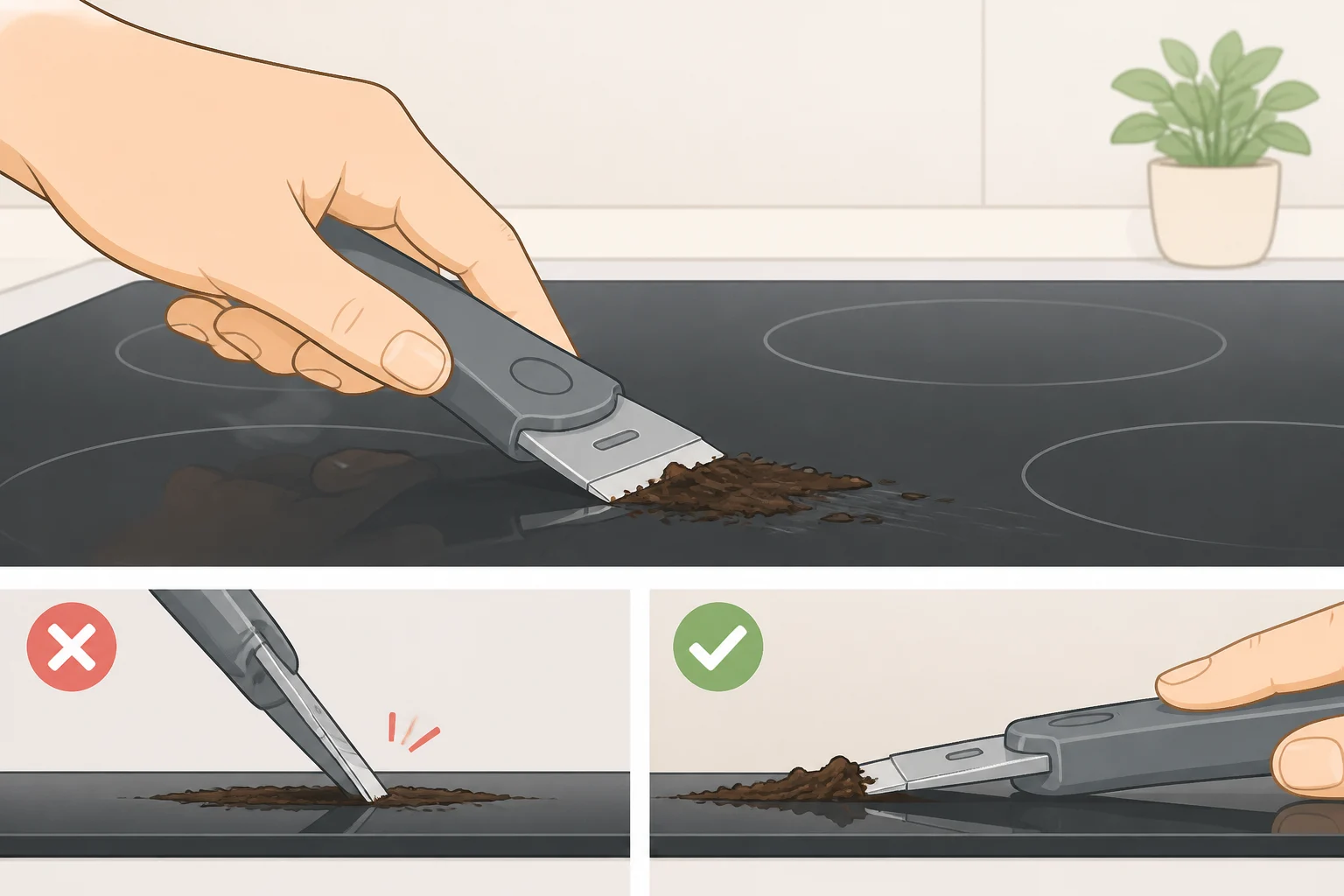
Here's the one piece of advice in this guide that depends entirely on what the owner's manual for the exact cooktop says: whether a scraper is safe to use at all.
AG Appliance Service and BORA both endorse a dedicated glass-ceramic or razor scraper for burned-on residue, held at a low angle with light pressure to lift the residue without gouging the glass (AG Appliance Service; BORA). LG's manual adds a caveat specific to its own cooktops: a metal razor scraper used carelessly can damage the seal around the surface (LG via ManualsLib).
Whirlpool goes further and advises against scrapers entirely on its WipeClean surface, warning that they may damage the coating and reduce how well the surface cleans going forward (Whirlpool). That's a direct contradiction of the scraper advice above, and it's not a mistake in this guide: it's a genuine split between manufacturers. Treat the exact model's manual as the final word, not a general blog post, this one included.
Some marks aren't a cleaning problem no matter what tool gets used. A cracked or chipped cooktop calls for cutting the power, not more scrubbing. If it's safe to do so, unplug the unit or switch off its dedicated breaker, then arrange a professional evaluation rather than continuing to use the affected zone (AG Appliance Service).
A pot that won't release from the glass is a different problem, and forcing it is the wrong move. Turn the appliance off, let it cool completely, and follow the manufacturer's instructions, or have a technician evaluate it, rather than pulling, twisting, or prying at a stuck pan (AG Appliance Service).
A "hot surface" light that stays on after the cooktop has cooled, or an unusual electrical odor, points to something happening underneath the glass: a faulty sensor, a shorted switch, wiring that needs a qualified technician's attention rather than a new cleaning product (AG Appliance Service).
A short list of rules that matter more than any product
Three habits carry more weight than anything else in this routine. Check the manual before using a scraper, since BORA and AG Appliance Service support the tool on their surfaces while Whirlpool's WipeClean line explicitly does not (Whirlpool; LG via ManualsLib). Stop using a cooktop the moment the glass cracks or chips, rather than treating it as a bigger cleaning job. And make a quick pan-bottom check part of setting up to cook, since it's the cheapest step in the entire routine.
None of this demands a particular level of diligence, just a different order of operations: inspect, lift instead of slide, react fast to sugar and foil, clean once the surface is cool. BORA's own guidance makes the simplest case for sticking with it: regular cleaning meaningfully cuts the risk of both scratches and burnt-on residue over the life of the cooktop (BORA).