How to Store Potatoes Long Term: Sort, Cure, Hold, Inspect
Most potato storage advice stops at "keep them somewhere cool and dark," which is true as far as it goes and not specific enough to be useful. Learning how to store potatoes long term means working inside a narrower band than people assume: potatoes held at a steady 40°F in very moist conditions can last four to nine months, while anything above 46°F cuts that window down to just two or three months (Colorado State University Extension; Oregon State University Extension).
Commercial growers divide that long stretch into four stages: field cooling right after harvest, curing, the long holding period, and a final warm-up before the crop moves out, run with ventilation and humidity systems no home kitchen has (UC ANR IPM). The number worth borrowing from that system is Iowa State's post-cure target of 40°F and 90 to 95 percent relative humidity (Iowa State University Extension).
This guide walks through a four-step system for getting potatoes through the winter: sort, cure, hold, inspect. Homegrown potatoes, dug fresh from the garden, need all four steps in order. Store-bought potatoes generally skip curing, since that step is designed to heal digging wounds and toughen skin that's still immature, conditions tied to being freshly dug rather than to produce that's already made it to a store shelf. Either way, "months" is only realistic for the right potatoes in the right space under the right conditions. A kitchen pantry at room temperature isn't cold enough to get there, not once storage life starts dropping the moment temperatures climb past 46°F.
Step 1: Sort your potatoes before anything else
Video of the Day
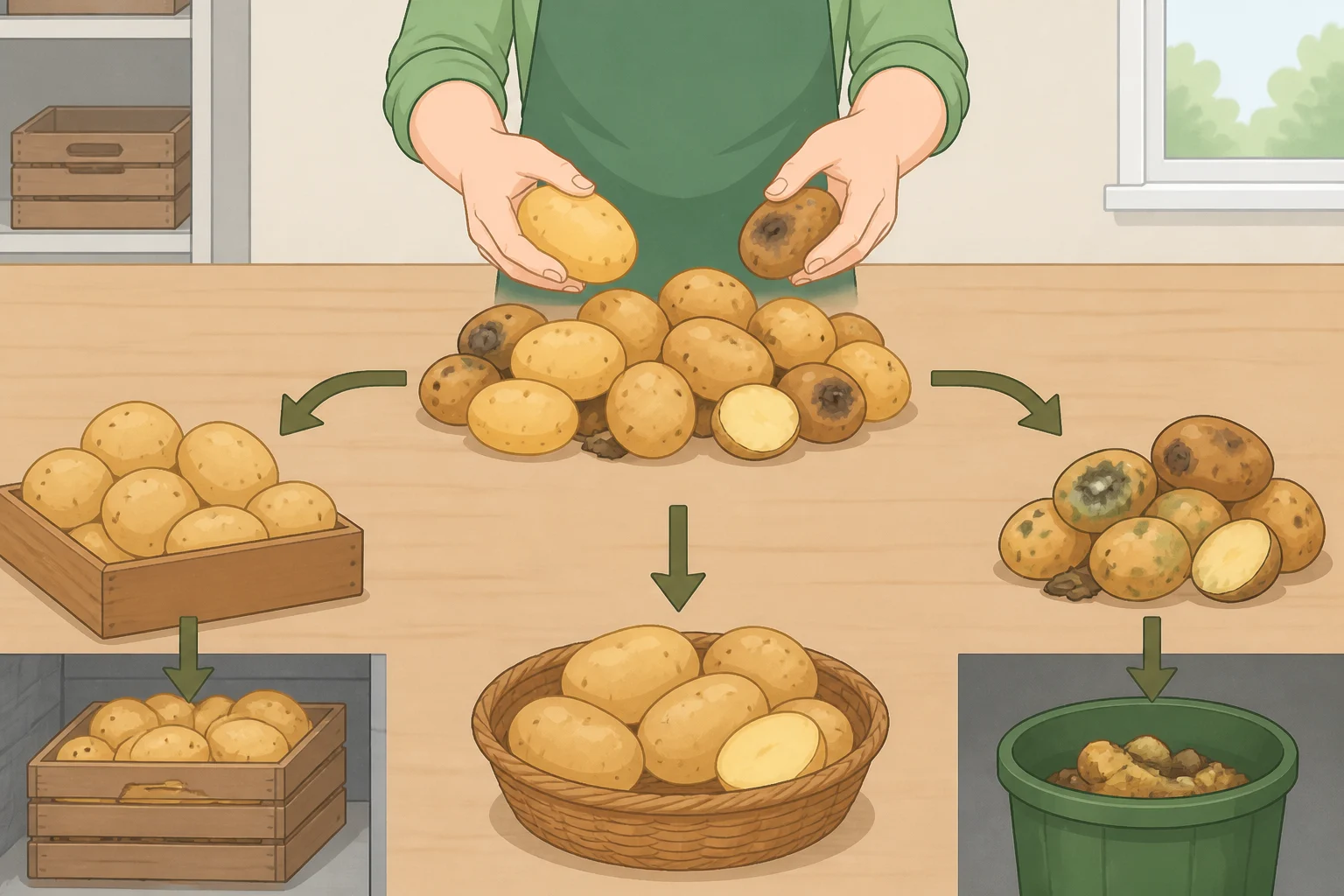
If you grew the potatoes yourself, timing the harvest matters more than people expect. Let the vines die back completely before digging, then test a tuber by rubbing the skin. If it rubs off easily, the potato isn't mature yet; give the row another week before digging the rest (Oregon State University Extension).
Variety sets a hard ceiling on how long anything will keep. Thick-skinned types like russets outlast thin-skinned reds, and late-maturing varieties store longer than early ones. Mature, late-season potatoes stored properly can hold for seven to eight months (Oregon State University Extension).
Regardless of where the potatoes came from, sort hard before storage. Anything with cuts, bruises, soft spots, or visible disease should go in the use-this-week pile rather than the storage pile. Damaged tubers store poorly on their own, and they can spread decay to everything around them (Oregon State University Extension; Colorado State University Extension).
Washing is where the extension offices disagree with each other. Colorado State recommends leaving a thin crust of dry soil on root crops to prevent shriveling; Oregon State advises cleaning and drying potatoes thoroughly before storage (Colorado State University Extension; Oregon State University Extension). Splitting the difference works fine in practice: brush off loose dirt, and if you do wash, make sure the potatoes are completely dry before moving to the next step.
This is also the fork in the road. Curing is primarily relevant to freshly harvested potatoes because it helps heal digging wounds and mature immature skin. Retail potatoes can generally move straight to storage, but handle them carefully and sort out damaged tubers.
Video of the Day
Step 2: Cure freshly dug potatoes (skip this if store-bought)
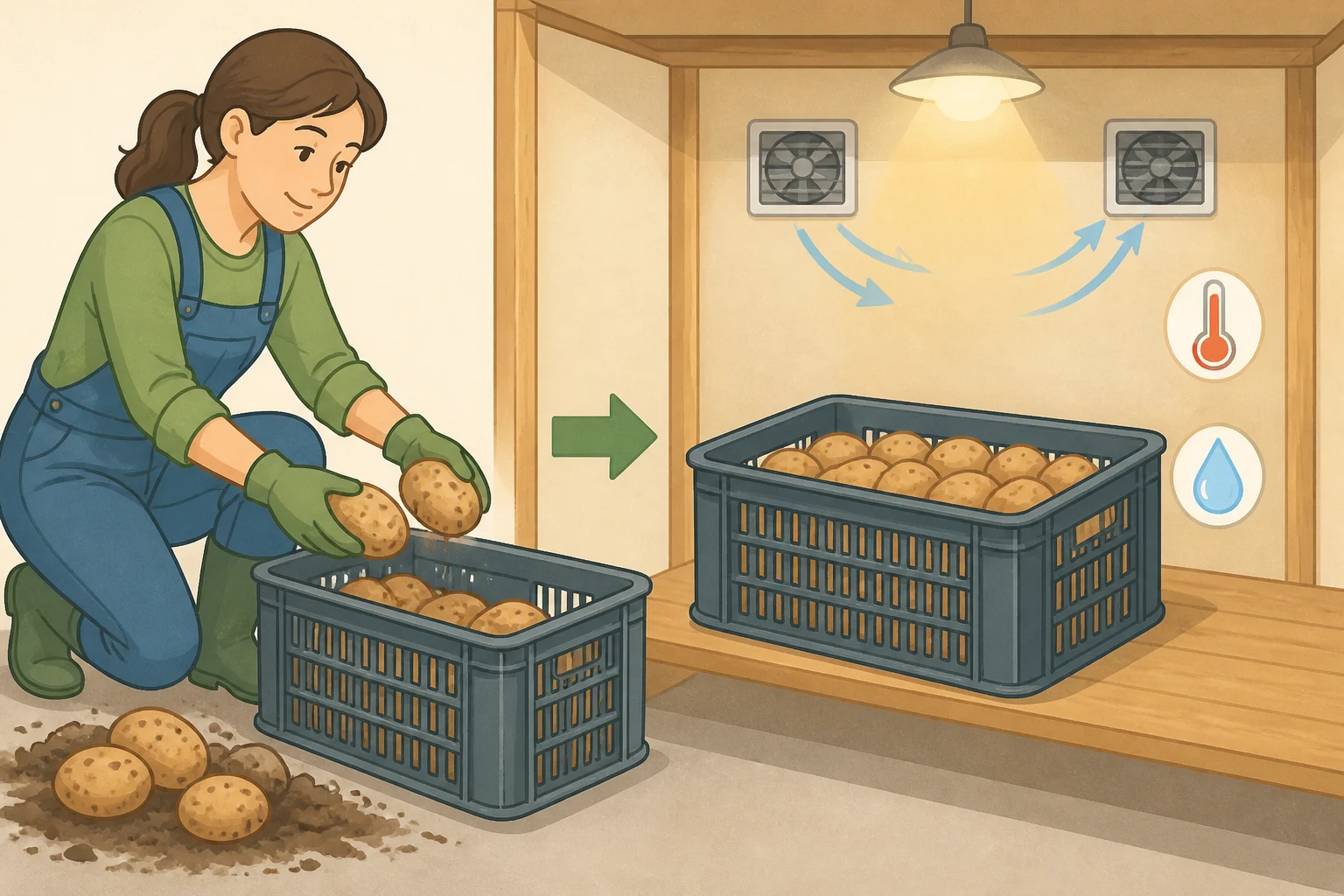
Curing isn't cosmetic. It heals surface wounds from digging and thickens immature skin, and both effects make tubers more resistant to decay later on (Iowa State University Extension; UC ANR IPM).
The recommended windows differ by source, though they land in the same general neighborhood. Iowa State suggests two weeks at 50 to 60°F with 85 to 90 percent humidity. UC ANR's commercial guidance calls for 50 to 55°F with humidity above 95 percent, held for a minimum of two weeks. Oregon State's window is shorter: seven to ten days in a dark, well-ventilated space with moderate temperature and high humidity (Iowa State University Extension; UC ANR IPM; Oregon State University Extension). Pick one and stick to it rather than splitting the difference between them.
Airflow is part of the recipe too. University of Minnesota Extension specifies curing tubers with good air flow to avoid moisture buildup around the skin (University of Minnesota Extension). In practice, that means a ventilated container, not a sealed one.
Few home growers have a dedicated curing room. A cool basement corner or insulated garage can work, provided it actually holds in the 50 to 60°F range for the full curing period; a thermometer left in the space for a day or two will tell you quickly whether it does.
Step 3: How to store potatoes in a cellar, basement, or refrigerator
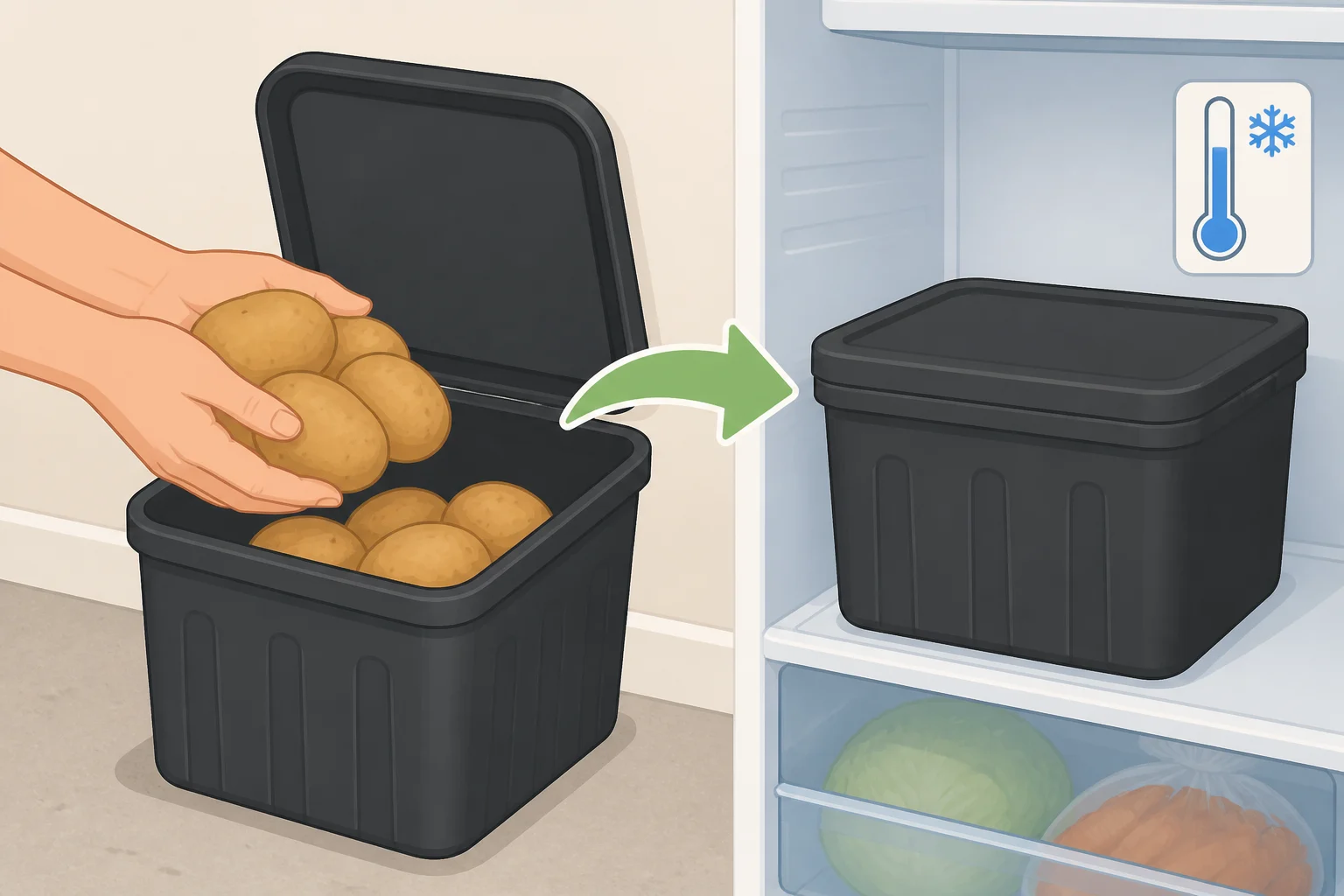
Once curing is done, the target for table-use potatoes is roughly 40 to 46°F with humidity around 90 to 95 percent (Iowa State University Extension; Oregon State University Extension). Commercial operations get there by lowering the temperature no more than 0.5°F per day after curing (UC ANR IPM). Most homes cannot reproduce that controlled cooling curve. Move potatoes into a stable, cool location while avoiding abrupt temperature changes and condensation.
Humidity matters because potatoes are roughly 80 percent water, and the goal is preventing shriveling without creating surface wetness that invites rot (Oregon State University Extension). Perforated plastic bags or other well-ventilated containers hold moisture around the tubers without trapping condensation (Oregon State University Extension; UC ANR IPM). A cardboard box with the flaps loosely closed, or a paper bag with a few holes punched through it, works for most home quantities: closed enough to block light, open enough to let air move.
Darkness is non-negotiable here. Light exposure causes greening, and while the green tint itself (chlorophyll) is harmless, it often signals the presence of solanine, a toxic compound. Oregon State's rule is simple: potatoes with more than a faint green tinge go in the discard pile, not the pot (Oregon State University Extension).
Where that container actually goes depends on what's available in the house:
- A dedicated refrigerator or drawer set to 40 to 46°F is one of the suitable spaces Oregon State lists (Oregon State University Extension). Check the temperature where the potatoes actually sit, not just the dial setting. University of Minnesota Extension has traced some cold-damage complaints back to potatoes kept toward the rear of a fridge, where it suspects temperatures run colder than intended (University of Minnesota Extension).
- A cool basement is also on Oregon State's list (Oregon State University Extension), provided it genuinely holds near that range. A corner away from a furnace or dryer tends to stay steadier than one beside it.
- An insulated garage counts too, as long as it's actually insulated (Oregon State University Extension). An uninsulated garage tracks outdoor temperatures too closely, and stored produce generally shouldn't be allowed to freeze (Colorado State University Extension).
- If nothing in the house holds near 40 to 46°F, don't force it. Oregon State's data shows that warmer conditions speed up decay, sprouting, and shriveling (Oregon State University Extension), so a harvest stuck in a warm spot is better treated as something to work through than something to bank on for winter.
A basic thermometer left in whichever space you use is worth more than any other tool here. Check it occasionally rather than assuming the spot holds steady on its own; a hygrometer is nice to have but not essential, since a well-ventilated, lightly enclosed container does most of the humidity work on its own.
Temperature mistakes fail in two different directions. Above 50°F, sprouting can start within two or three months; above 46°F generally, overall storage life drops to that same two-to-three-month range (Iowa State University Extension; Oregon State University Extension). Go too cold instead, below roughly 38 to 40°F, and starch converts to sugar, leaving potatoes with a sweet taste and a darker, oilier fry. Iowa State notes this is often reversible by resting the potatoes at room temperature for a few days before cooking (Iowa State University Extension).
Keep potatoes away from apples and other ripening fruit. The ethylene they release promotes sprouting in stored tubers (Iowa State University Extension).
Step 4: Inspect weekly to protect the whole batch
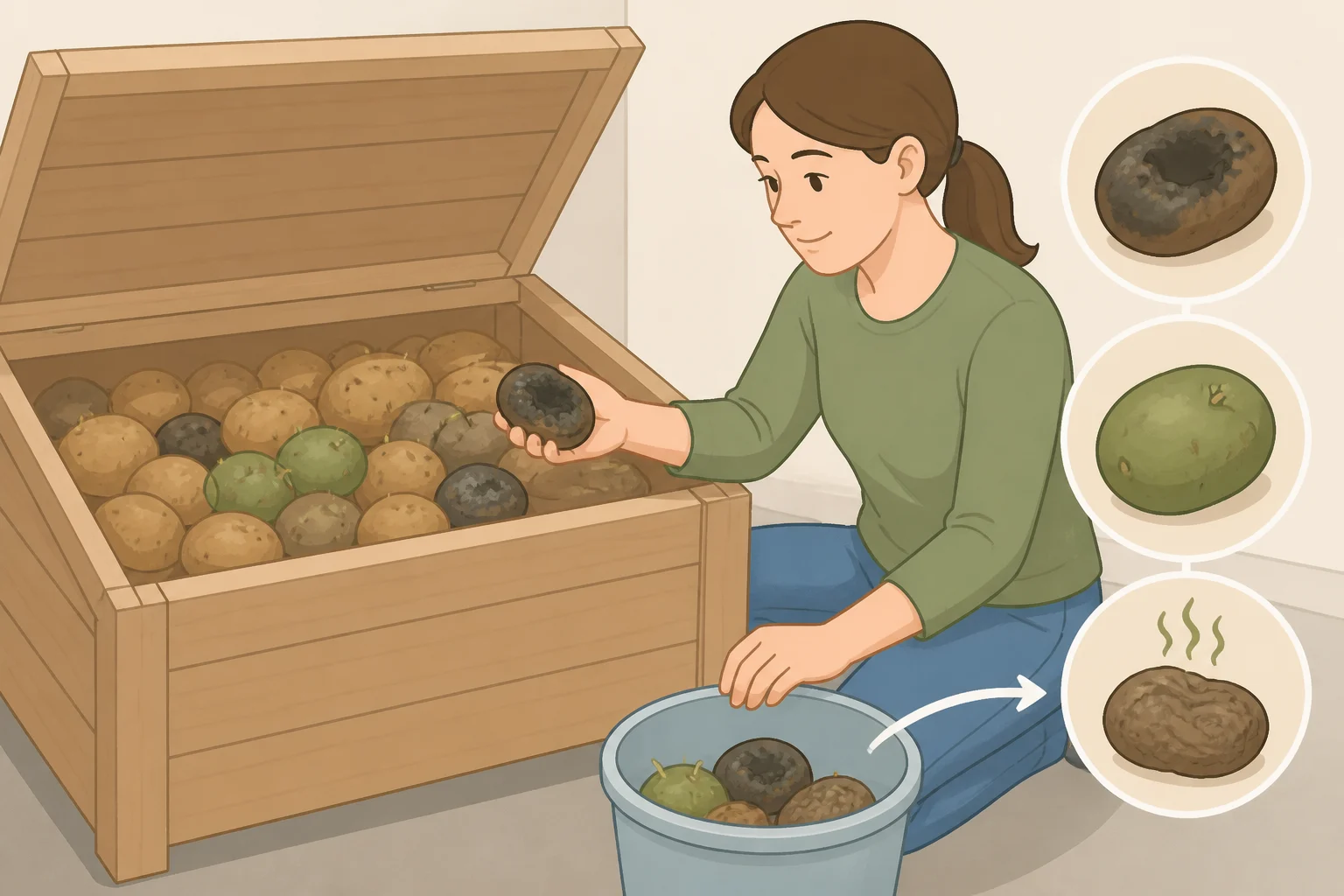
Make checking the bin a weekly habit. Commercial storage operations visit their lots at least once a week looking for problems, and the same routine at home catches trouble before it spreads (UC ANR IPM).
Pull anything soft, wet, moldy, foul-smelling, or excessively green the moment it turns up, and don't let heavy sprouting linger either. A single diseased or damaged potato can start decay that destroys the tubers around it or taints the whole bin with mustiness (Colorado State University Extension; Oregon State University Extension).
When something looks borderline, a faint green patch well short of Oregon State's excessive threshold, use it first rather than leaving it in the bin; the ones that still look perfect can wait their turn.
Resist the urge to handle every potato while you're checking the bin. Skin breaks and bruises sharply increase moisture loss (Colorado State University Extension), so touch only what needs pulling and leave the sound ones undisturbed.
Sort hard, cure if the potatoes are fresh from the garden, hold them near 40 to 46°F and 90 to 95 percent humidity, and check the bin every week. That sequence holds regardless of whether the harvest came from a backyard bed or a grocery bag. If no space in the house holds that range reliably, the better call is using the potatoes sooner rather than treating them as a long-term crop.