Dollar Tree kitchen cabinet door storage hack, tested
Two items from Dollar Tree, a wire dish drying rack and an adjustable over-the-counter towel bar, combine into a hanging organizer that turns the blank inside face of a lower cabinet door into hidden storage. No drilling, no hardware store run, no permanent modification to commit to. It's a Dollar Tree kitchen cabinet door storage hack that sounds almost too simple, which is exactly why it's worth a closer look before you buy anything (House Digest reported last year).
That simplicity comes with limits. The setup only works if your cabinet door can still close with the rack mounted, and it's built for a handful of light, narrow items, not a full decluttering project. If your kitchen's real headache is a blind corner cabinet you can't reach into, this isn't the fix, and forcing it will just cost you an afternoon.
This guide covers the actual shopping list, what to measure before you buy, the build itself with fall-prevention worked in from the start, what's worth storing in it, and a straight answer on whether it's worth your time.
What you need for this cheap kitchen cabinet storage solution
Video of the Day
The core build requires two products, both sold at Dollar Tree: an Essentials Wire Dish Drying Rack and an Essentials Adjustable Over-the-Counter Towel Bar (House Digest). That's the whole frame.
House Digest's coverage doesn't list a checkout total for these two items, so don't walk in expecting a fixed number. Check the shelf tags at your local store before you settle on a budget.
There's a third item most people forget to toss in the cart: zip ties, or bird netting and other lightweight material for a front barrier. Neither is required just to hang the rack, but if you're storing anything loose, you'll want a way to keep it from sliding out when the door swings. House Digest lists both as documented fixes for that exact problem, covered in more detail below (House Digest).
For a rough sense of what these wire-accessory Dollar Tree builds tend to cost, a similar project using four napkin holders and cable ties came to $6.50 before tax, according to Apartment Therapy's coverage from earlier this year. Different parts, different build, so treat that number as a ballpark rather than a receipt for this one.
Video of the Day
Measure first: what to check before you buy
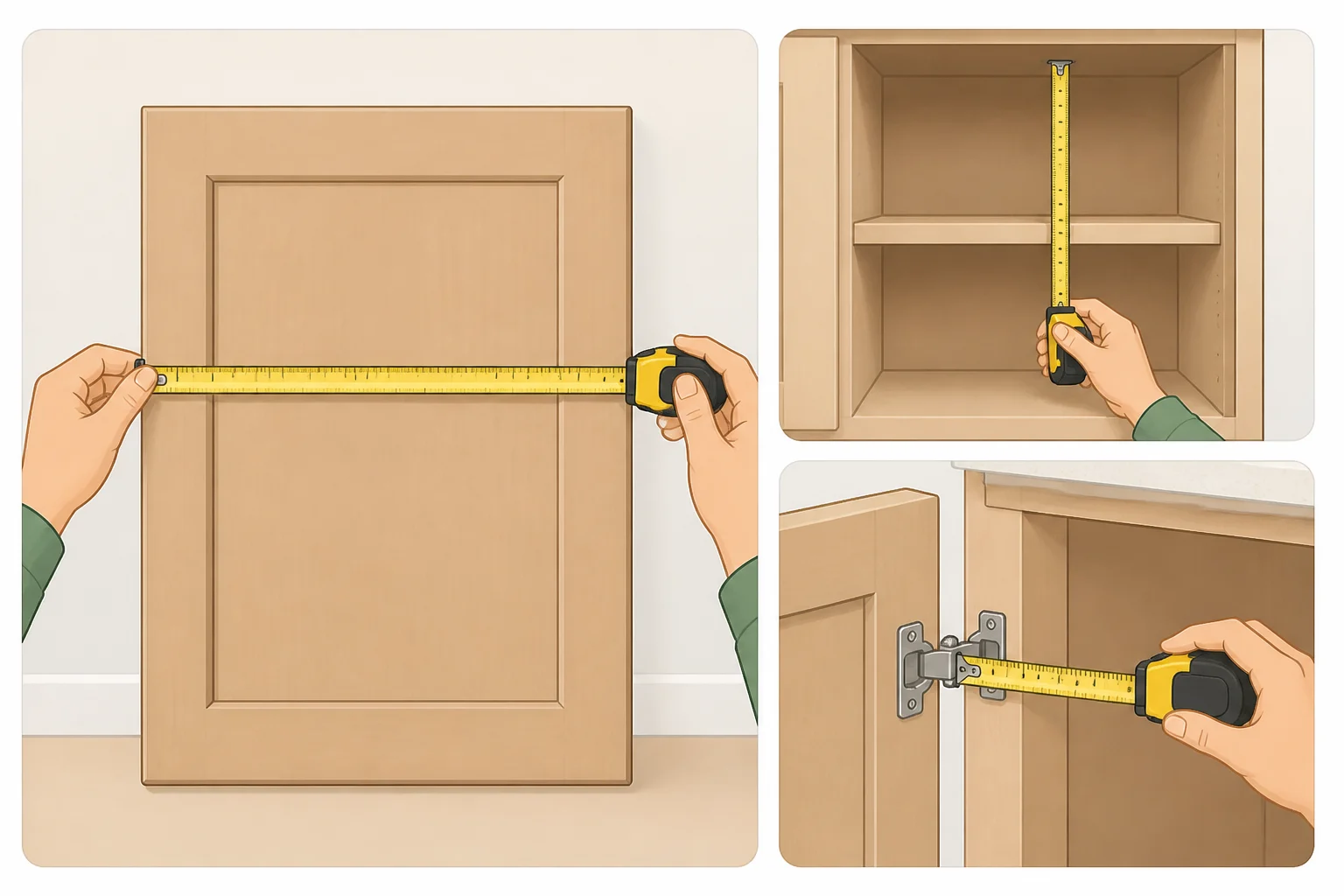
Measure the door and shelf clearance before buying anything. This is the step most guides skip, and it's the one that decides whether the rack fits at all.
- Door's usable flat width. Measure the flat inner panel of the cabinet door, avoiding any raised trim or frame edge, to confirm there's enough surface for the towel bar to sit across.
- Towel bar hook span and door thickness. Check whether the bar's hooks fit your door. Adjustable bars have some range, but cabinet doors, especially older ones, vary more in thickness than you'd expect.
- Rack depth once hanging. The dish rack adds depth to the inside of the door once it's hooked onto the bar. If a display model is available in-store, measure it there; the packaging doesn't publish this figure.
- Distance from the closed door to shelf contents. If items on the shelf sit close to the front edge, the hanging rack could collide with them before the door ever fully closes.
- Hinge-side and frame clearance. Position matters. A rack centered too close to the hinge can bind before the door latches.
A few minutes with a tape measure now saves a return trip to Dollar Tree later. If you can't measure the assembled unit ahead of time, treat the test-fit in the next section as mandatory, not optional.
How to build this Dollar Tree kitchen cabinet door storage hack
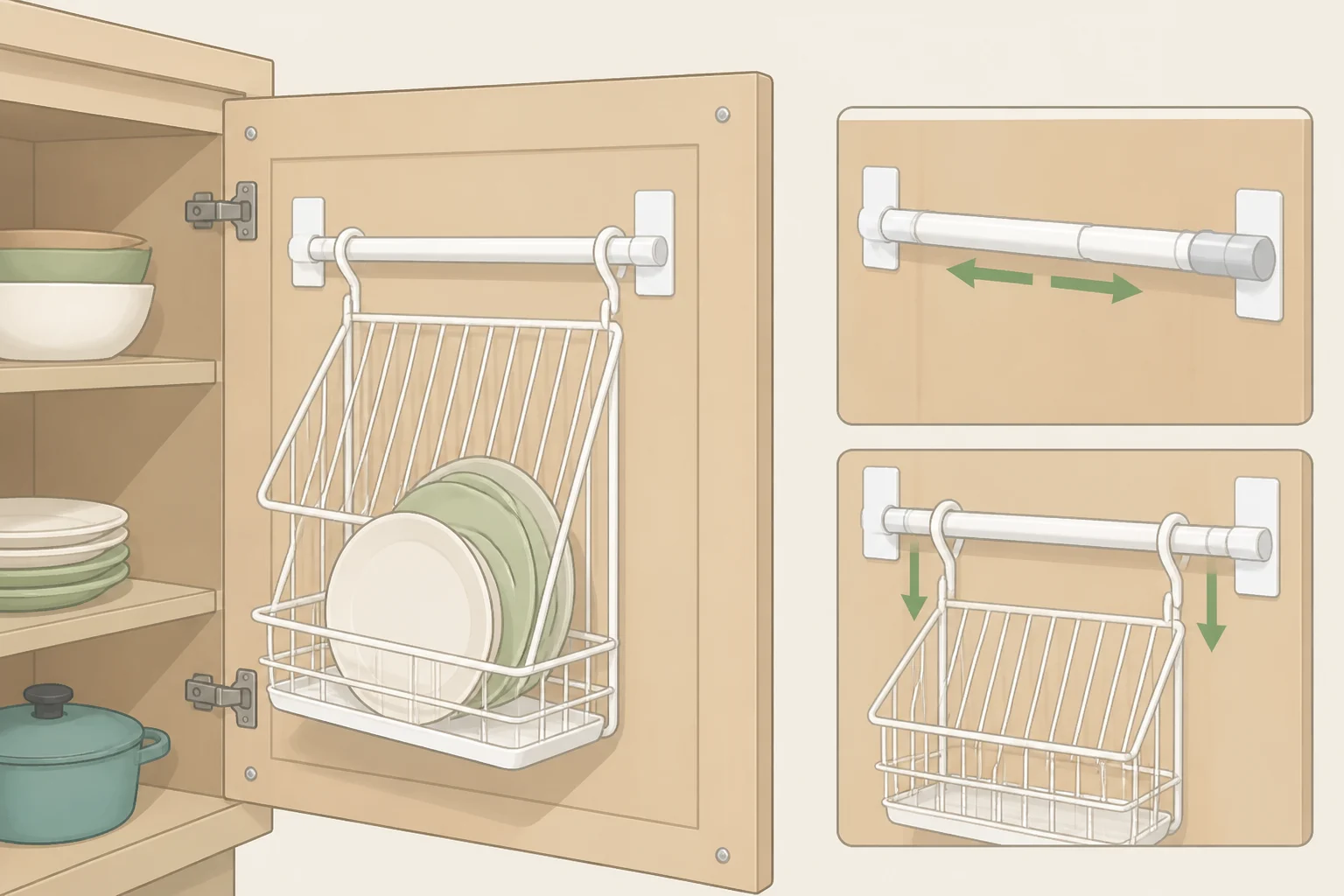
Once you've measured and you're confident the geometry works, assemble the pieces.
- Hang the towel bar across the inside face of a lower cabinet door. Position it where it clears any shelves and doesn't interfere with the hinge side (House Digest).
- Hook the top rung of the wire dish rack over the towel bar so the rack hangs vertically down the inside of the door (House Digest).
- Test-fit before loading anything. With the rack still empty, close the door slowly and watch for interference with shelves, the hinge, and the cabinet frame. No source specifies how far this rack protrudes once assembled, so this check is on you, not something the manufacturer guarantees. If the door catches or won't latch, stop, reposition, or skip the hack.
- Build in retention before adding contents. Two documented approaches exist, and they behave differently day to day:
- Zip-tie rung to rung on both sides of the rack. This addresses a known downside: opening or closing the cabinet door quickly, or with force, can send unsecured items sliding forward off the rack (House Digest).
- Attach bird netting or another lightweight material across the front with zip ties or twist ties for tighter containment. This changes how you load the rack: items go in from the side rather than the front, a trade-off worth weighing against how often you'll be reaching in (House Digest).
- Slide items into the slots and close the door. The storage disappears from view once the door shuts (House Digest).
Inside cabinet door storage ideas: what actually belongs here
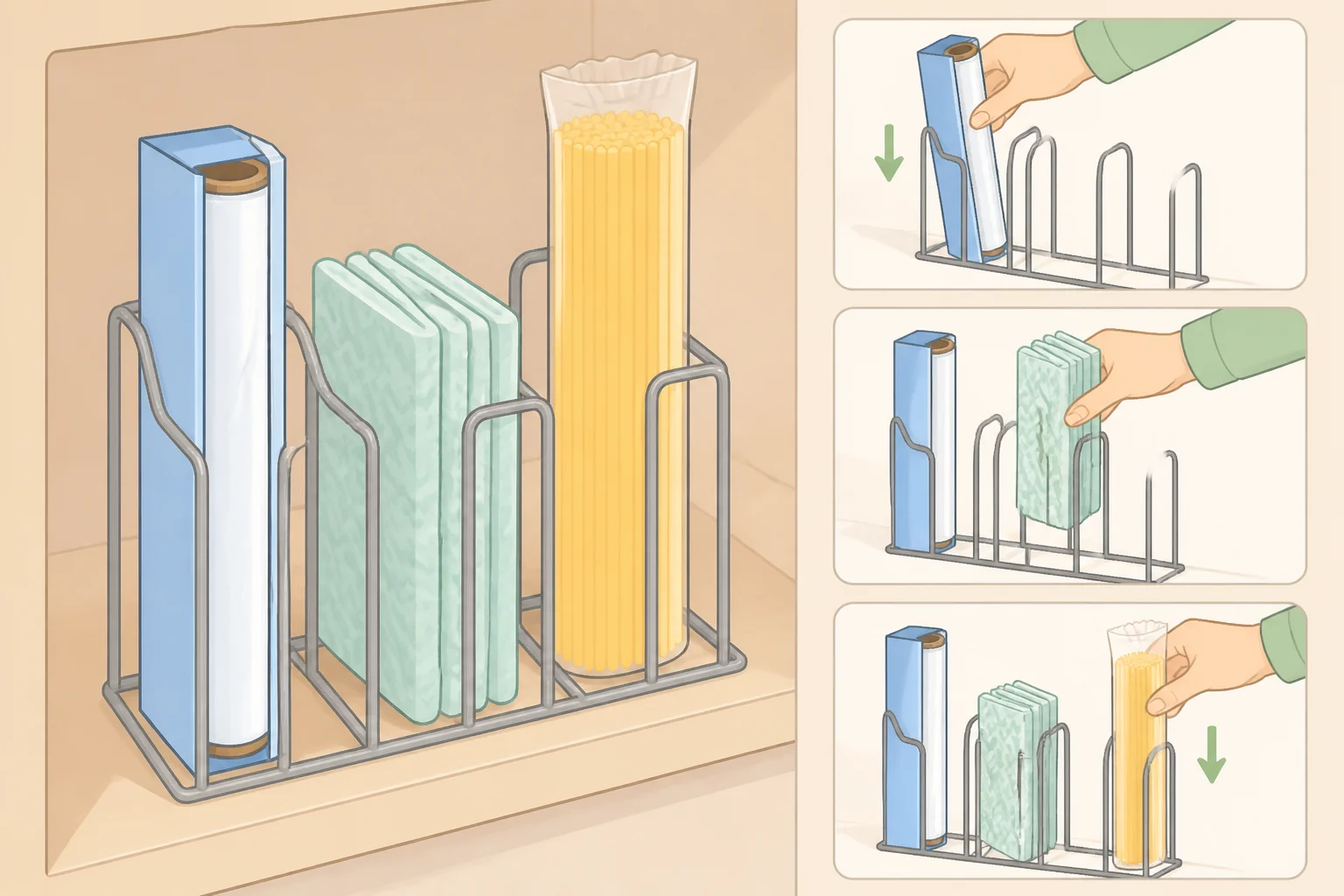
The documented uses for this build are specific and modest: plastic wrap, hand towels, and boxes of dry spaghetti all slide into the rack's slots (House Digest). Notice the pattern: everything on that list is flat, light, and narrow enough to fit between the rungs without stressing the frame.
No weight rating exists for this combination in the cited coverage. Stick with slim, genuinely light items until you've tested the setup yourself with something less breakable than a stack of plates.
The retention method you pick changes how the rack functions day to day. Zip-tied sides still let you load and unload from the front, handy if you're grabbing spaghetti mid-recipe. Netting across the front means side-loading only, which adds friction but holds contents more securely. Choose based on how often you expect to be reaching into it.
Worth knowing, though it's no substitute for testing this exact build: a separate Dollar Tree project made from four wire napkin holders and cable ties was shown storing a wider range of items, including crockery, dishes, cutting boards, towels, and Nespresso pods, arranged horizontally or vertically depending on what's inside, according to Apartment Therapy. Different hardware, different configuration; it doesn't tell you what the towel-bar rack can safely hold.
Use it or skip it
Use it if: the door closes cleanly during your test-fit, you're storing a handful of light, narrow items on what was otherwise a wasted door face, and you're building in a retention barrier before you load anything.
Skip it if: the door doesn't close with the rack test-fitted, or the items you want to store are heavy, bulky, or breakable, think dishes, jars, cookware. Don't assume this build can handle dishware just because a different napkin-holder hack was shown holding it; that's a separate product, not a stand-in for this one.
Worth pricing against before committing to the DIY route: a ready-made two-pack of five-slot organizers was listed at $12.99, with a comparable multifunctional organizer available on Amazon for a similar price, according to Apartment Therapy. Add up your local Dollar Tree total, including zip ties or netting, and see how it stacks up. Sometimes the DIY route wins on cost. Sometimes it doesn't.
If the real problem is a blind corner cabinet rather than a bare door, that calls for a different fix and a different budget entirely. The Kitchn's comparison, published last year, found blind-corner pull-out shelving systems priced roughly $510 to $544, with a temporary discount coupon some shoppers may have qualified for at the time. Different problem, different price tag; no amount of zip-tying bridges that gap.
Where this leaves you
A Dollar Tree towel bar and wire dish rack can turn a bare cabinet door into hidden storage for light items, but the retention barrier isn't optional. It's what decides whether the setup survives a door that gets swung open in a hurry.
Measure your door and shelf clearance first, pick a retention method that matches how often you'll reach into the rack, and price your local total against the $12.99 ready-made alternative before assuming the DIY route automatically wins on cost. Get those two things right, and a wasted door becomes real storage. If it works on one cabinet, there's no reason not to repeat the build on every lower door with room to spare.