How to do the 30 Bags in 30 Days decluttering challenge without quitting by day 10
Thirty bags sounds like a lot until you look at the daily math: one bag, and it can be a grocery sack you already have under the sink. That's the appeal of the 30 Bags in 30 Days decluttering challenge: one small task feels possible where a whole-house purge does not. The format replaces one exhausting weekend purge with smaller daily tasks, spreading a full home reset across thirty repeatable days instead of one brutal Saturday. (Martha Stewart, last year)
In a promotional LinkedIn post, Mary Montague of The Home Sale Concierge said the company is a fan of the challenge and frames its own version around donating, recycling, and rehoming items rather than sending them straight to a landfill. (Mary Montague/The Home Sale Concierge, LinkedIn, last year) That donation-first instinct is worth borrowing, because a full bag sitting in the hallway for a month isn't a win. This guide covers how the one bag a day decluttering challenge actually works, a realistic first-week plan, a decision framework for the items that make you freeze, what to do with the bags once they're full, and when a viral challenge isn't the right tool for what you're dealing with.
How does the 30 Bags in 30 Days decluttering challenge work?
Video of the Day
The rule is simple: fill one bag a day, every day, for thirty days, with items you no longer need. Bag size doesn't matter much. Grocery bags, reusable totes, and small kitchen trash bags all count, and grocery-sized bags are one commonly suggested option because they keep the daily task feeling small rather than looming. (Martha Stewart, last year)
What goes in the bag is wide open. Old clothes, worn-out linens, expired pantry goods, the junk drawer nobody wants to face, all of it qualifies. (Martha Stewart, last year) The one-a-day structure isn't limited to physical stuff, either. The same principle can apply to digital clutter, including an inbox that has become difficult to manage. (Martha Stewart, last year)
The structure turns one large project into smaller daily tasks. That's the whole mechanism, and it's also why the TikTok 30 Bags in 30 Days challenge is best treated as a flexible template, not a pass-or-fail rule.
Video of the Day
How to declutter your home in 30 days: a starter plan
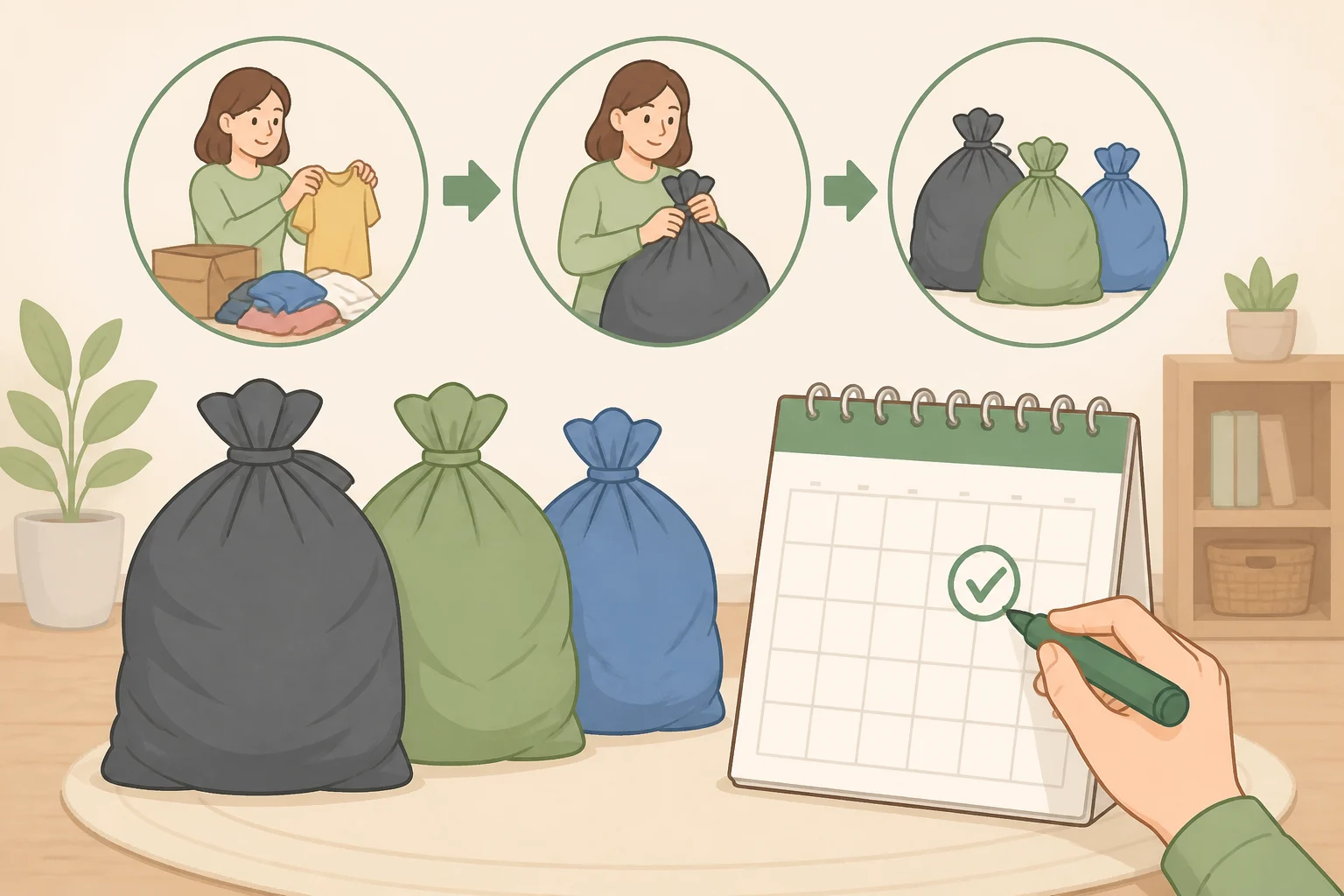
Three preparations make the challenge easier to follow.
Step 1: Pick a start date. Any day works, but a natural reset point makes the choice easier: the first of the month, the start of a new season or school year, or January 1. (Martha Stewart, last year)
Step 2: Gather your bags before day one. Grocery bags, reusable totes, or small trash bags all work fine, and having a stack ready means day one doesn't start with a supply run. (Martha Stewart, last year)
Step 3: Pre-assign a zone to each day. Planning the zones in advance means fewer decisions to make once the challenge is underway, not more willpower needed. A sample first week looks like this:
- Day 1: Junk drawer
- Day 2: Kitchen pantry
- Day 3: Kitchen drawers
- Day 4: Coat closet
- Day 5: All nightstands
- Day 6: Under the bathroom sink
- Day 7: Books and bookshelves
(Martha Stewart, last year)
Save the garage and the closet you've been avoiding for years for later in the month. Starting with the hardest zone can make the challenge feel harder than it needs to be, and the guidance behind the challenge is explicit that the first few days should feel almost too easy. (Martha Stewart, last year) Start easy, build momentum, then spend it on the room nobody wants to open.
The 30 bags 30 days decluttering checklist: deciding what goes in the bag
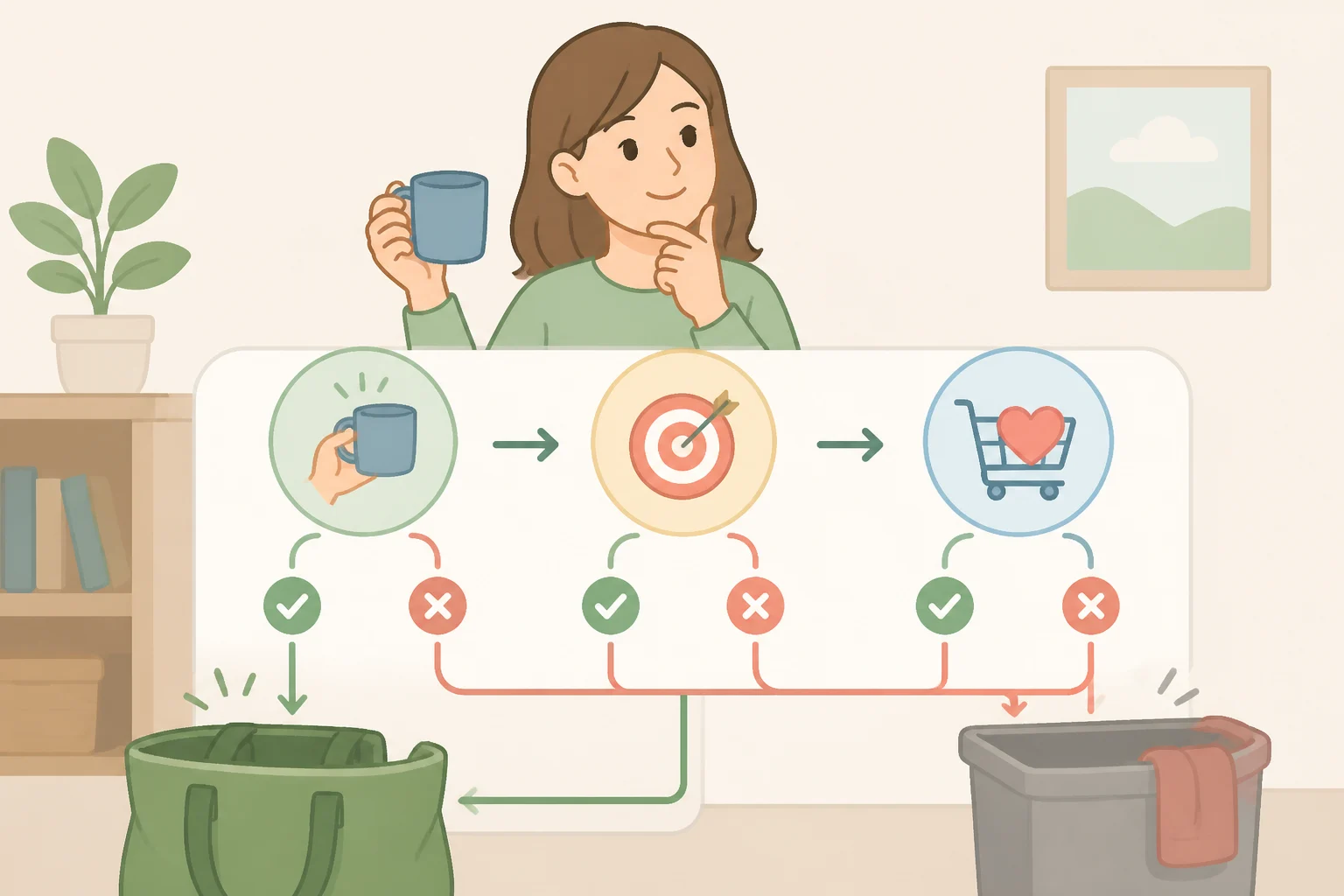
The goal isn't bag-filling for its own sake. It's making a thoughtful call about what actually earns space in your home. (Martha Stewart, last year) When you're stuck on an item, three questions cut through most hesitation: Do I use this regularly? Does it serve a purpose? Would I buy it again today? If the honest answer to all three is no, it goes in the bag. (Martha Stewart, last year)
A few practices, not part of the original challenge but worth adopting, help that checklist hold up day after day:
- One bag, one size. No upgrading to a bigger bag mid-session because the pile got out of hand.
- A timer for the zone. An open-ended session is how a fifteen-minute task eats an afternoon.
- Stick to the day's assigned area. Wandering into other rooms is how day 4 turns into a four-hour ordeal.
- A "maybe" box, if it helps. Some people find it useful to put anything they can't decide on into a separate box with a return date attached. If it's still unopened by then, it's worth revisiting rather than keeping by default.
Some items resist that logic entirely, and the reason has less to do with usefulness than with memory. Earlier this year, researchers invited 103 people experiencing hoarding symptoms onto a video call with a psychologist, where each person picked an object they were struggling to discard, identified images connected to the object, and then worked through one of two exercises: a therapist-guided technique called imagery rescripting, or thought listing, a verbal-processing method already used in hoarding treatment. (Decluttering the Mind)
Both exercises made discarding feel less aversive. Imagery rescripting had the edge immediately afterward, easing certain unhelpful beliefs about the object, lifting mood, and increasing how often people actually followed through and let the item go. A week later, the two techniques had evened out, with both groups showing reduced hoarding symptoms and similar discarding rates. (Decluttering the Mind)
That study involved a therapist-guided exercise and people experiencing hoarding symptoms, so it isn't evidence that thought listing will make an ordinary decluttering session easier. The findings suggest that the image attached to an object can add to the difficulty of discarding it.
What happens to the bags: donating, recycling, and getting them out the door
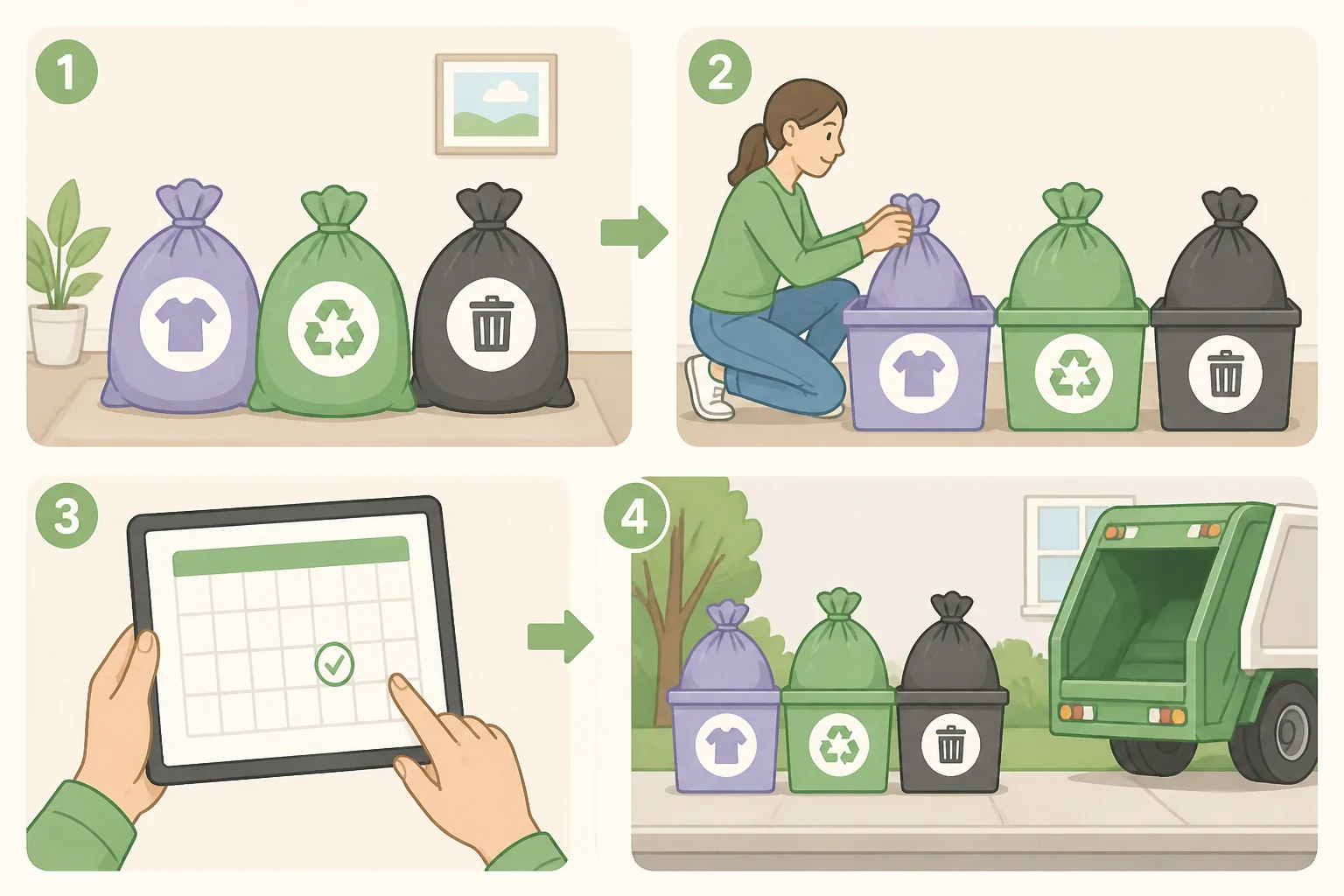
By day 30, the goal is thirty bags ready to donate, recycle, or discard. Treat that sorting as part of the challenge itself, not a chore saved for the last day. (Martha Stewart, last year)
The Home Sale Concierge names old paperwork, unused kitchenware, and tired linens as recurring categories worth clearing out, describing them in a promotional post as things that take up space without adding much to a person's life. (Mary Montague/The Home Sale Concierge, LinkedIn, last year) They're a reasonable place to build early momentum before tackling anything sentimental. The company frames its own process around donating, recycling, or rehoming as much as possible rather than sending things to a landfill, calling it a "guilt-free goodbye," though that's the business's own characterization of its work, not an independently verified outcome. (Mary Montague/The Home Sale Concierge, LinkedIn, last year)
A four-step sequence keeps thirty bags from turning into thirty new storage problems:
- Sort as you fill. Decide keep, donate, recycle, or trash while an item is in your hand, rather than dumping everything into one bag to deal with later.
- Label each bag by destination the moment it's full. Labeling the bag makes its destination harder to ignore.
- Set aside anything that needs special handling. Some items require special handling, and local rules vary. Check your municipality, pharmacy, retailer, or recycling program before putting them in a donation or trash bag.
- Pick a removal date before day 30 arrives. A donation drop-off or a curbside pickup should be on the calendar the same way the challenge itself got a start date.
Staying on track for all 30 days (and when to skip the challenge entirely)
Martha Stewart's advice for actually finishing includes mixing quick wins with bigger projects so no single day feels like the hardest one, setting a daily reminder so the task doesn't slip your mind, and celebrating a milestone every seven to ten days. (Martha Stewart, last year) Missing a day isn't a failure state. The guidance is explicit: move on to the next day rather than scrapping the whole month over one skipped afternoon. (Martha Stewart, last year)
Home-organizing influencer @lauren.clutter told Martha Stewart the challenge works well as a family activity, since the daily tasks stay short enough to hold a kid's attention, turning decluttering into a shared routine rather than a solo chore. (Martha Stewart, last year)
This challenge is a habit-building tool, not treatment. Hoarding disorder, marked by persistent difficulty discarding possessions and clutter that interferes with daily life, affects an estimated 2.5% of the general population. (Journal of Psychiatric Research, 2024) Clinical treatment for it looks substantially different from a self-guided bag-a-day plan. One randomized trial of 41 adults with hoarding disorder tested a group workshop augmented with in-home support, 16 weekly group sessions plus 20 hours of in-home uncluttering delivered by pairs of trained non-professional volunteers, spread across 18 weeks. Participants who received that combined treatment improved significantly more than a waitlist control group, with a large effect on hoarding severity (Cohen's d = 1.5). (Journal of Psychiatric Research, 2024) The comparison was against a waitlist, not against a challenge like this one, so the trial says something about what structured clinical support can do, not about what any self-guided plan should be measured against.
That trial required far more support than this self-guided format provides. If letting go of items causes real distress, or if clutter is making a room unsafe or unusable, that's a signal to look past a social media challenge and toward structured, supported help instead.
Where this leaves you
No one has run a controlled study on the TikTok version of this challenge itself. What exists is lifestyle guidance from outlets like Martha Stewart, plus adjacent clinical research on why discarding feels hard for some people. That gap is worth remembering before treating a viral checklist as anything more than a habit-building framework: useful for building a routine, not a substitute for proven psychological treatment when clutter has crossed into something more serious.
The version of the challenge that actually sticks isn't the internet's exact 30-day itinerary. It's whatever version fits the household running it: swap the zones around, change the removal plan the moment a donation bag stalls in the hallway, and skip a day without scrapping the month over it. Thirty days is a framework, not a test of character.