No-Knead Garlic Rolls Recipe: Same-Day or Overnight
Skip the stand mixer. This no-knead garlic rolls recipe trades the ten minutes of hand-kneading that a comparable kneaded roll recipe calls for, a milk-and-egg dough built for a machine or hand-kneading, for a longer, mostly hands-off rise instead (Sugar Spun Run, about nine months ago). The trade is real: less effort, not less time, once the roasting and both rises are added up.
This version makes twelve easy no-knead garlic rolls from a stirred-together, water-and-oil dough, with roasted garlic worked into the crumb and a garlic butter brushed on the moment they leave the oven. It isn't the crusty, overnight garlic bread rolls recipe that shares a similar name online, which relies on a wetter dough and a 12- to 18-hour countertop rise (Julia Meals, about seven weeks ago). What follows covers the dough, the bake, and two ways to schedule it: bake today, or refrigerate the dough and finish tomorrow.
Ingredients for soft no-knead garlic dinner rolls
Video of the Day
This formula, adapted from a fully quantified no-knead recipe developed for a dozen rolls, is the base for everything below (Touche Parfaite, about ten months ago):
- 4 cups all-purpose flour
- 2 teaspoons salt
- 1 teaspoon granulated sugar
- 2 teaspoons instant yeast
- 3 cloves garlic, for roasting
- 2 tablespoons chopped fresh herbs, such as rosemary, thyme, and parsley, or 2 teaspoons dried
- 1½ cups warm water
- 2 tablespoons olive oil, for the dough, plus a drizzle for roasting the garlic
All-purpose flour, rather than bread flour, is what keeps these tender instead of chewy. Bread flour's higher protein content produces a noticeably chewier crumb, according to the recipe developer behind this formula, while all-purpose works fine for a soft dinner roll (Touche Parfaite, about ten months ago). Dried herbs work as a substitute too, at about a third of the amount, since they're more concentrated than fresh (Touche Parfaite, about ten months ago).
A parchment-lined baking sheet or a greased cast-iron skillet holds the rolls for baking (Touche Parfaite, about ten months ago).
For the garlic butter topping, borrowed as a finishing technique from a separate garlic roll recipe (Sugar Spun Run, about nine months ago):
- 4 tablespoons salted butter
- 1½ tablespoons minced garlic
- 1½ tablespoons minced fresh parsley
- 3 tablespoons grated parmesan, optional
Video of the Day
How to make this no-knead garlic rolls recipe
-
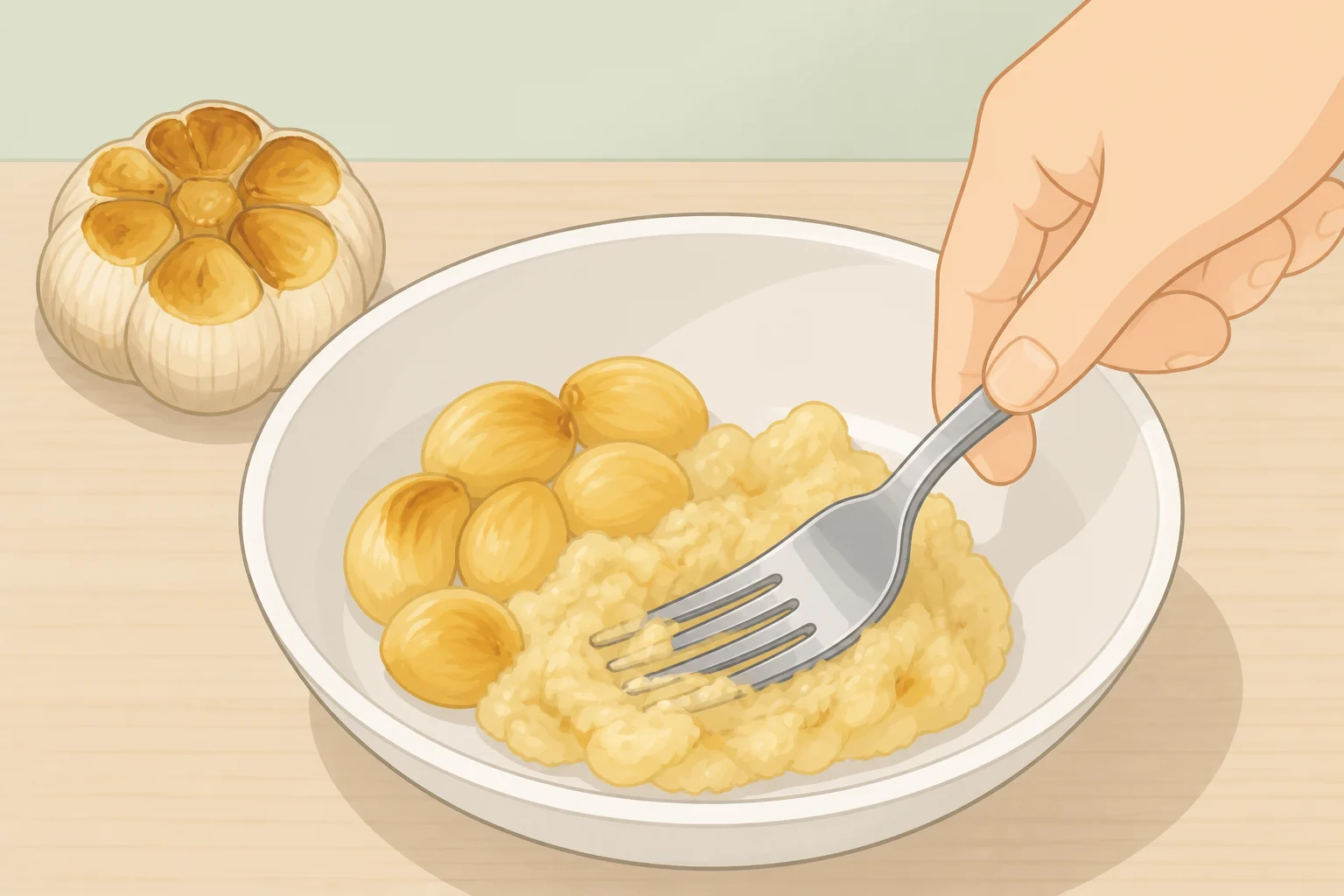
Roast the garlic. Preheat the oven to 400°F. Peel three garlic cloves, toss them with a drizzle of olive oil, wrap them in foil, and roast for 30 to 35 minutes, until soft and fragrant. Let the cloves cool for a few minutes, then mash them with a fork before working them into the dry mix (Touche Parfaite, about ten months ago).
-
Mix the dry ingredients. In a large bowl, whisk together the flour, salt, sugar, instant yeast, mashed roasted garlic, and herbs (Touche Parfaite, about ten months ago). Because this recipe uses instant yeast, it goes straight into the dry mix; there's no separate step for proofing it in warm water first.
-
Stir in the wet ingredients. Pour in the warm water and the dough's 2 tablespoons of olive oil, mixing with a spatula or wooden spoon until a rough, sticky dough forms with no streaks of dry flour (Julia Meals, about seven weeks ago). It will look shaggy and wet, nothing like a kneaded dough. That shagginess is standard for homemade garlic rolls without kneading, not a sign something went wrong.
-
First rise. Cover the bowl and let it sit somewhere warm and draft-free for 1 to 1½ hours, until doubled with bubbles visible on the surface (Touche Parfaite, about ten months ago). Volume is the cue that matters, not the clock. A cooler kitchen may need longer, while dough that's tripled in size and smells sharply of alcohol has gone past ready and should be shaped right away rather than left to climb further.
-
Shape twelve rolls. Turn the dough out onto a floured surface and divide it into 12 pieces, weighing the total dough and splitting it evenly if the pieces look uneven by eye. Roll each piece into a ball by tucking the edges underneath and pinching the seam closed on the bottom, then arrange the rolls on the parchment-lined sheet or in the greased skillet, leaving a little space between each (Touche Parfaite, about ten months ago).
-
Second rise. Cover loosely and let the rolls rise another 30 to 45 minutes, until puffy and nearly doubled (Touche Parfaite, about ten months ago).
-
Bake. Preheat the oven to 375°F and bake on the middle rack for 20 to 25 minutes, until the tops are golden brown and the rolls look cooked through (Touche Parfaite, about ten months ago). For a firmer check than color alone, a comparable enriched dough bakes to an internal temperature around 185°F, though that benchmark comes from a milk-and-egg dough kneaded by machine and hasn't been tested against this water-based formula (Sugar Spun Run, about nine months ago).
-
Finish with garlic butter. Melt the butter, add the garlic, and cook 30 to 60 seconds until fragrant but not browned, then pour it into a heatproof dish to cool slightly (Sugar Spun Run, about nine months ago). Brush it over the warm rolls as soon as they come out of the oven, enough to coat all 12, then sprinkle the parmesan on while the butter is still wet so it sticks. The same layering logic, garlic worked into the dough plus more brushed on after baking, is behind an updated garlic roll recipe built for a roll that tastes garlicky in every bite (The Kitchn, updated today).
-
Cool briefly, then serve. Let the rolls rest a few minutes on a wire rack before serving (Touche Parfaite, about ten months ago).
Same-day or overnight: scheduling the rise
Same-day is the more straightforward path: roast the garlic, then mix, rise, shape, rise again, and bake in one stretch. Touche Parfaite lists 20 minutes of active prep for this formula, covering the roasting, mixing, and shaping, though the source doesn't break down how much time goes to each (Touche Parfaite, about ten months ago). Add up the roasting, both rises, and the bake as written above, and the whole process runs roughly two hours twenty minutes to three hours fifteen minutes from garlic to table, not counting the few minutes spent mixing or letting the roasted garlic cool, which the source doesn't quantify.
Overnight no-knead garlic rolls are also supported by this formula, though the exact timing needs testing before it's a locked routine. Touche Parfaite's own instructions say the dough can be mixed and taken right up to the first rise, then refrigerated overnight, and brought back to room temperature the next day before shaping and baking (Touche Parfaite, about ten months ago). What the source doesn't say is how long that warm-up should take, whether the dough needs to look doubled again before shaping, or how the second rise shifts afterward. Treat it as a starting point rather than a fixed schedule: let the dough sit out until it looks like the doubled, bubbly dough described in the first-rise step, then move on to shaping and the second rise as written.
Storing and reheating leftover rolls
Cooled, baked rolls keep in an airtight container at room temperature for up to two days (Touche Parfaite, about ten months ago). For longer storage, wrap the cooled rolls individually or as a batch in plastic wrap, tuck them into a freezer bag, and reheat at 350°F for 5 to 10 minutes to bring the softness back (Touche Parfaite, about ten months ago).
For prep measured in weeks rather than days, King Arthur Baking's Test Kitchen built a separate parbake-and-freeze method using a flour-water slurry borrowed from yudane and tangzhong techniques, holding rolls in the freezer up to six weeks and finishing them in 8 to 15 minutes (King Arthur Baking, about ten months ago). It's a different dough built for a different problem, worth trying once this one feels routine.
Garlic and herb variations worth trying
Roasting the garlic, as this recipe does, trades raw garlic's sharpness for something rounder and deeper (Touche Parfaite, about ten months ago). Working raw, minced garlic straight into the dough instead, skipping the roasting step entirely, would likely give a sharper, more assertive bite, closer to the layering approach in an updated garlic roll recipe, though that's an untested variation on this specific formula rather than a confirmed swap (The Kitchn, updated today).
Fresh herbs add a brightness dried herbs can't fully match, according to the recipe developer behind this formula (Touche Parfaite, about ten months ago), which is part of why the ingredient list favors fresh rosemary, thyme, and parsley when they're on hand.
Worried about raw garlic killing the rise? At the small, cooked quantities used in the garlic butter topping, it isn't an issue. Only very large amounts of raw, uncooked garlic could potentially slow fermentation, according to the recipe this topping is adapted from, and that source doesn't establish a safe threshold for garlic worked directly into the dough itself (Sugar Spun Run, about nine months ago). Anyone testing a raw-garlic version of the dough should start small and watch the first rise rather than assume it behaves like the roasted version.
Once the base dough is dialed in, timing is what separates the two paths, not the dough itself. Mixing this afternoon means letting the first rise run its course before shaping and baking tonight. Mixing tonight for tomorrow's dinner means refrigerating the dough right after step 3, then picking up with the warm-up, shaping, and second rise the next day. Either way, the same visual cues, not the clock, decide when to move on.