Quick Pickled Beets Without Canning: Easy Fridge Recipe
A jar of tangy-sweet pickled beets is about a day away: boil, slice, brine, chill, no canner or pressure cooker required. That's the whole idea behind how to pickle beets without canning: cook the beets, pack them into a vinegar brine, and let the fridge do the preserving (Cultivating Flora).
Two pounds of beets makes roughly two pint jars, with a minimum 24-hour chill before the flavor really kicks in, usually around day two or three (Cultivating Flora). These are refrigerator pickles, not shelf-stable pantry preserves: hot brine goes into a jar, the jar goes into the fridge, and that's where it stays (Cultivating Flora). It's the easiest path for a small harvest, a weeknight batch, or anyone who wants a preserved side dish without touching a pressure canner (Cultivating Flora).
This guide covers the method itself, how long the jars actually keep, the real line between refrigerator pickles and shelf-stable canned ones, and which flavor swaps are worth trying.
How to make quick pickled beets without canning
Video of the Day
Before pulling out a pot, here's the shape of the project:
- Yield: about two pint jars from two pounds of beets (Cultivating Flora)
- Boiling time: about 30 to 45 minutes for medium beets (Cultivating Flora)
- Chill time: at least 24 hours before tasting, with the best flavor by day two or three (Cultivating Flora)
- Storage: refrigerator only, about three to four weeks (Cultivating Flora)
Gather clean glass jars with lids, a saucepan, and a paring knife or vegetable peeler before starting (Cultivating Flora).
Ingredients:
- 2 lbs fresh beets
- 1 cup vinegar, 5% acidity, white or apple cider
- 1 cup water
- ½ cup sugar
- 1 teaspoon salt
- Optional: 1 small onion, thinly sliced, and 1 teaspoon whole cloves or a cinnamon stick
(Cultivating Flora)
Steps:
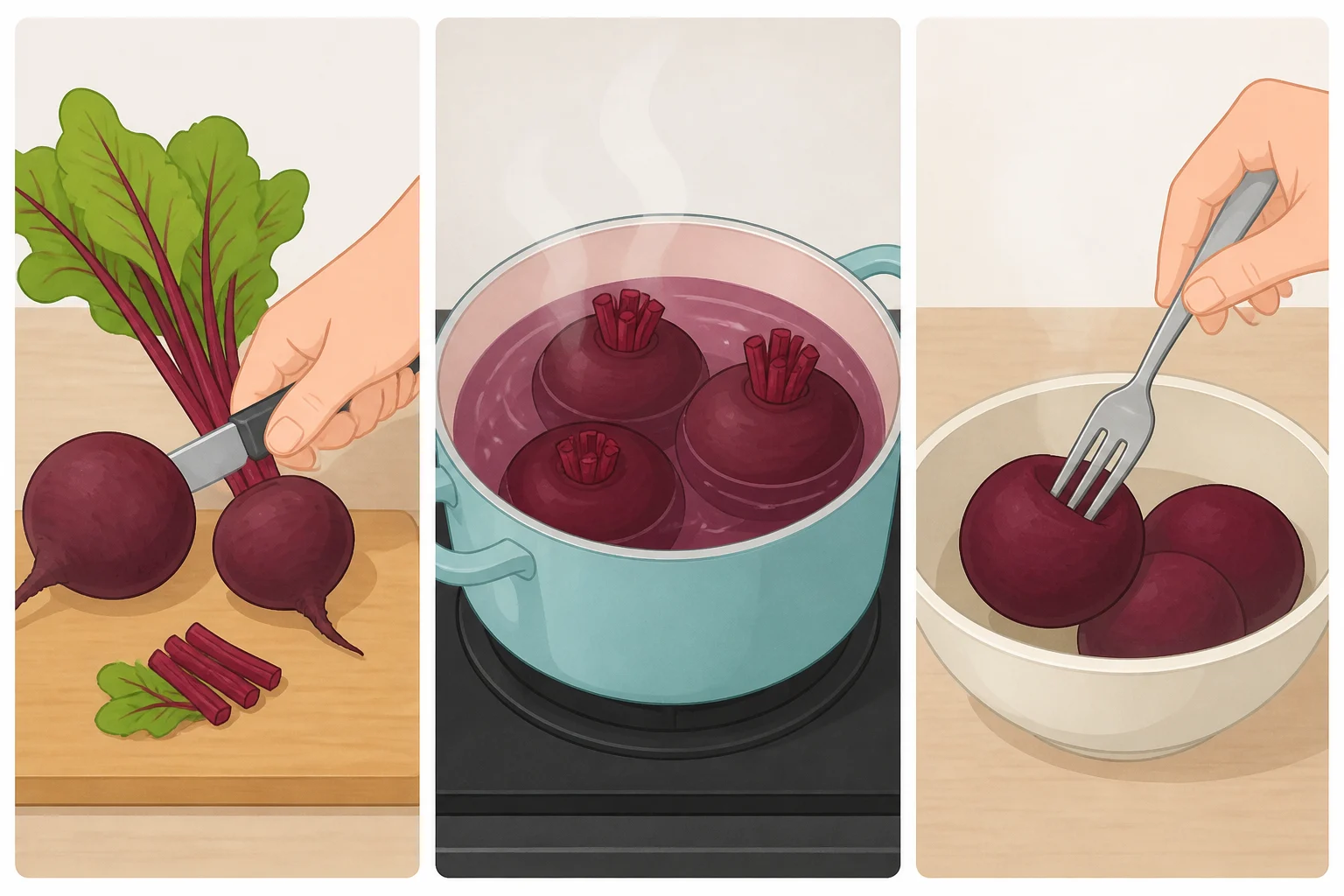
- Trim the beet tops, leaving about an inch of stem and root attached. That limits color bleed while the beets cook (Cultivating Flora).
- Scrub the beets and boil until fork-tender, about 30 to 45 minutes for medium beets (Cultivating Flora).
- Drain and let cool enough to handle, then slip off the skins and slice into rounds or wedges (Cultivating Flora). The beets are cooked before brining, so this is a tender-style pickle rather than a raw beet pickle.
- In a saucepan, combine fresh vinegar, fresh water, sugar, and salt, plus spices if using. Bring to a boil and stir until everything dissolves (Cultivating Flora).
- Pack the sliced beets into jars, layering onion slices between the beets rather than piling them on top so the brine reaches every piece (Cultivating Flora). Pour the hot brine over everything until fully covered.
- Cool the jars to room temperature, then cap and refrigerate (Cultivating Flora).
No processing, no water bath. Just beets in a vinegar brine, cooling in the fridge until they're ready to eat.
The recipe uses equal parts 5% vinegar and water, which matches OSU Extension's general rule of using at least as much vinegar as water in pickling recipes (OSU Extension). Stick to vinegar with a known 5% acidity, and skip anything homemade, since there's no reliable way to confirm its actual strength (OSU Extension). That ratio is sound kitchen practice, but it doesn't turn this into a tested shelf-stable canning recipe; it just makes for a properly acidic refrigerator pickle.
Video of the Day
How long refrigerator pickled beets actually last
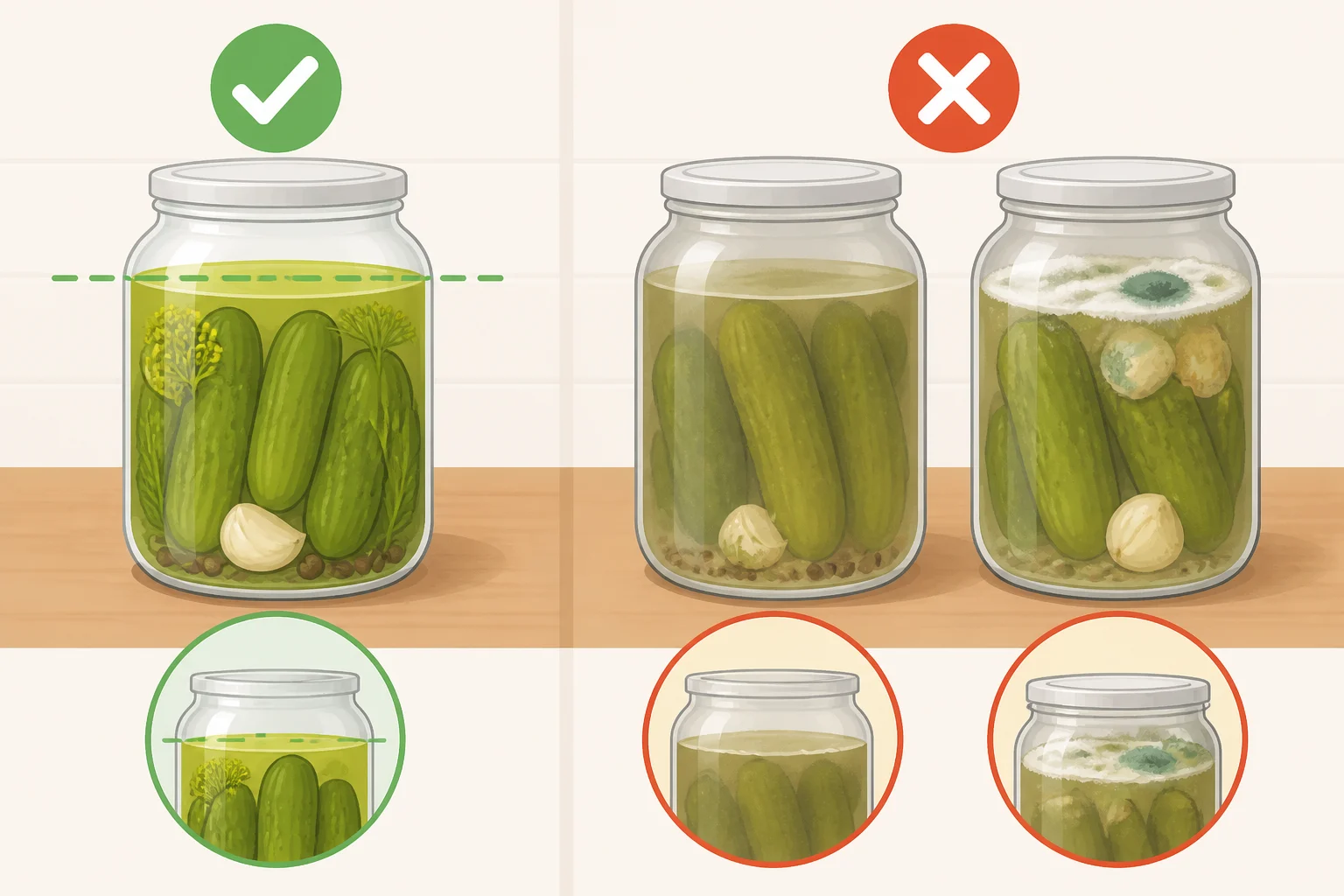
Plan to use refrigerator pickled beets within about three to four weeks, stored at 40°F or below in a clean, sealed container with the beets fully submerged in brine (Cultivating Flora). Taste them after 24 hours, but expect the flavor to improve noticeably by day two or three (Cultivating Flora).
Keep the beets under the brine line at all times, and use a clean utensil whenever serving some out of the jar. The source recommends both practices to help keep the batch in good condition (Cultivating Flora). It's also worth skipping the habit of leaving the jar out on the counter between servings; that's a room-temperature food, and this isn't one (Cultivating Flora).
If the brine turns cloudy, smells off, or shows any mold, discard the batch (Cultivating Flora). One caveat on cloudiness: non-iodized table salt can cloud brine on its own without causing any harm (OSU Extension). Cloudiness by itself isn't a reliable spoilage signal, but if there's any doubt about the cause, throw the jar out rather than guess.
Refrigerator pickles vs. tested canning: the line you shouldn't cross
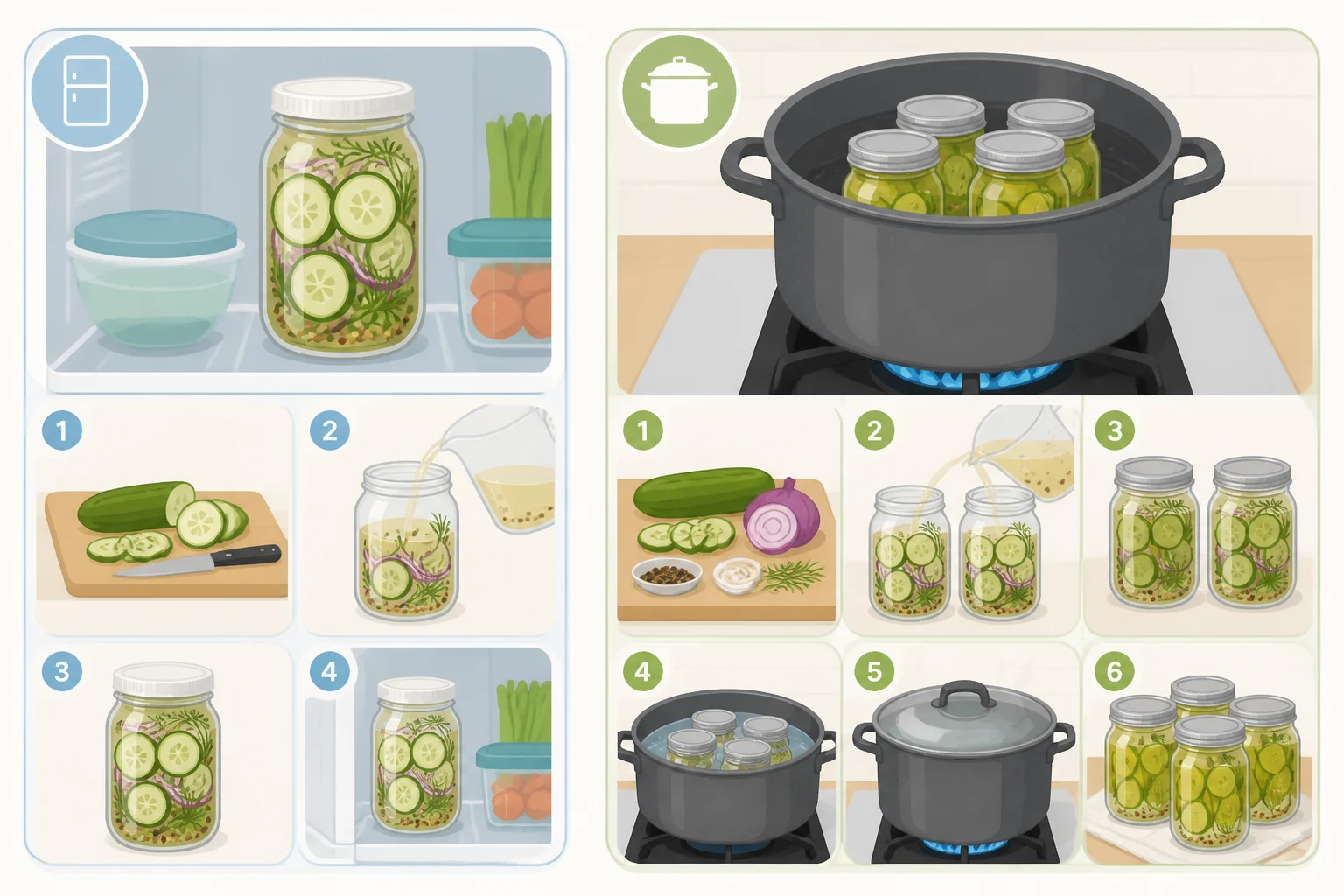
Plain beets are low-acid vegetables, which means they need pressure canning to be stored safely at room temperature (Cultivating Flora). Pickled beets are different: once they're acidified with vinegar, they become a high-acid food, and high-acid foods can be processed safely in a boiling-water canner (MSU Extension). MSU Extension explains that pickled beets can be water-bath canned when the recipe is specifically formulated and tested for that method. That tested process is separate from this refrigerator recipe.
The tested formula from the National Center for Home Food Preservation calls for 7 pounds of beets, 4 cups of 5% vinegar, 2 cups of water, 2 cups of sugar, and 1½ teaspoons of canning salt, processed in a boiling-water canner for 30 to 45 minutes depending on elevation, and it yields about 8 pints. That's roughly four times the size of the small-batch fridge version above, using entirely different proportions of vinegar, water, and sugar built specifically for canning. NCHFP specifies those proportions, headspace, and processing times for its own recipe. This refrigerator brine is different, so don't process it as though it were the NCHFP formula.
A natural follow-up: could the jars from the method above just go through a boiling-water canner as a shortcut to shelf-stable storage? No. Swapping in a different brine and adding heat afterward doesn't turn it into the tested recipe; it just applies heat to a brine that was never part of the formula. If shelf-stable jars are the goal, start with NCHFP's recipe from scratch rather than adapting this one.
Common questions
Can these sit on the counter instead of the fridge? No. Quick pickled beets without canning are a refrigerator food. They're not processed as shelf-stable preserves, so they need cold storage the entire time (Cultivating Flora).
How long do they last once made? Plan on three to four weeks in a clean, tightly covered container, kept cold with the beets covered by brine the whole time (Cultivating Flora).
Do golden beets work with this method? Yes. Golden beets pickle the same way but don't bleed color into the brine, so the jar looks milder while the flavor stays sweet and earthy (Cultivating Flora).
Is peeling necessary? Yes, after cooking. The skins slip off easily once the beets are tender, and peeling gives the finished pickles a cleaner texture (Cultivating Flora).
Flavor variations and serving ideas
Small swaps change the character of the jar without touching the safety math.
Vinegar: white vinegar keeps the beets bright red, while cider vinegar softens the flavor, though it may dull the color slightly (Cultivating Flora; OSU Extension).
Onion: red onion holds its color well, yellow onion gives a milder result, and sweet onion adds sharpness with a classic deli-style bite (Cultivating Flora).
Golden beets: same method, no color bleed into the brine, which makes for a milder-looking jar with the same sweet, earthy flavor (Cultivating Flora).
Less sweet, not less acidic: cutting the sugar to ¼ cup makes for a sharper pickle, but leave the vinegar amount alone. Moderating sourness with sugar rather than diluting the vinegar is the standard adjustment for this kind of recipe (Cultivating Flora; OSU Extension).
Warm spice: a cinnamon stick, whole cloves, or black peppercorns steeped in the brine add an old-fashioned edge without changing the base ratio (Cultivating Flora).
For serving, sliced pickled beets work well in grain bowls and green salads, layer neatly into a sandwich alongside something sharp like feta or goat cheese, or sit on a snack board next to olives and other pickles.
The takeaway
Boil, peel, slice, brine, cool, refrigerate. The method is simple enough to repeat from memory after one round, and it turns an underused vegetable into a condiment worth keeping in the fridge door. Once the base feels routine, the variations above (golden beets, a sugar-light batch, a jar steeped with cinnamon and cloves) turn one method into a rotating condiment.
Make this version when the goal is a refrigerated condiment ready within a day or two. Reach for the NCHFP recipe instead when the goal is shelf-stable jars for the pantry.